Reviewed · SUMO EXPERIENCES
Tokyo: Sumo Morning Practice Tour at Sumida City
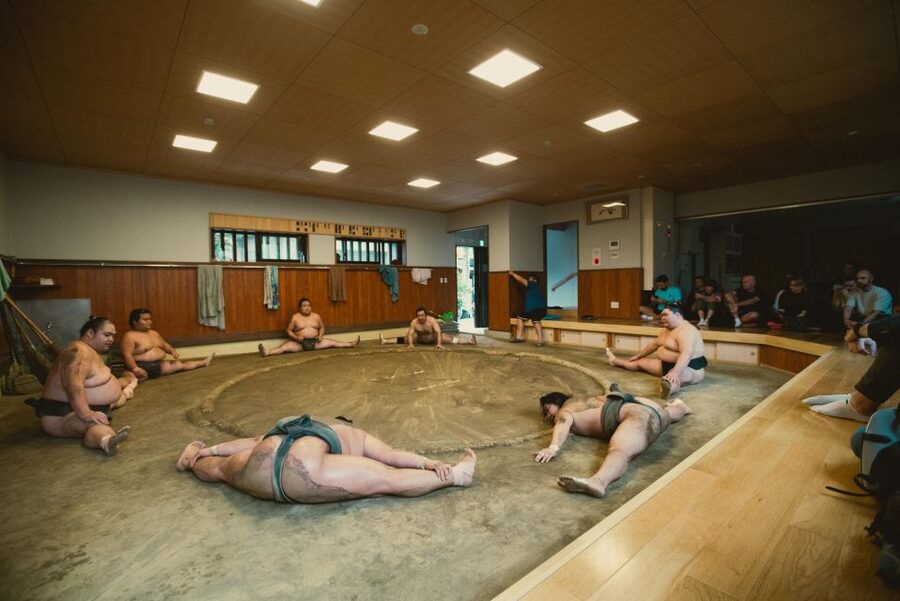
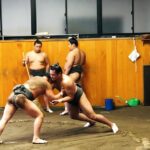
The most striking part of this Tokyo morning tour is the distance between you and the action. You sit on the stable floor, close enough to see the wrestlers’ footwork, breathing, stretching, and explosive one-on-one bouts. This is training, not a staged show, so the room feels quiet, focused, and intensely real.
In This Article
- Key points to know before you book
- Why this is more than watching a sumo match
- Meeting at Oshiage Station before 7:30 a.m.
- The short walk to a working sumo stable
- Sitting beside the ring during morning practice
- Seating, sightlines, and the comfort question
- Questions with the stable master after practice
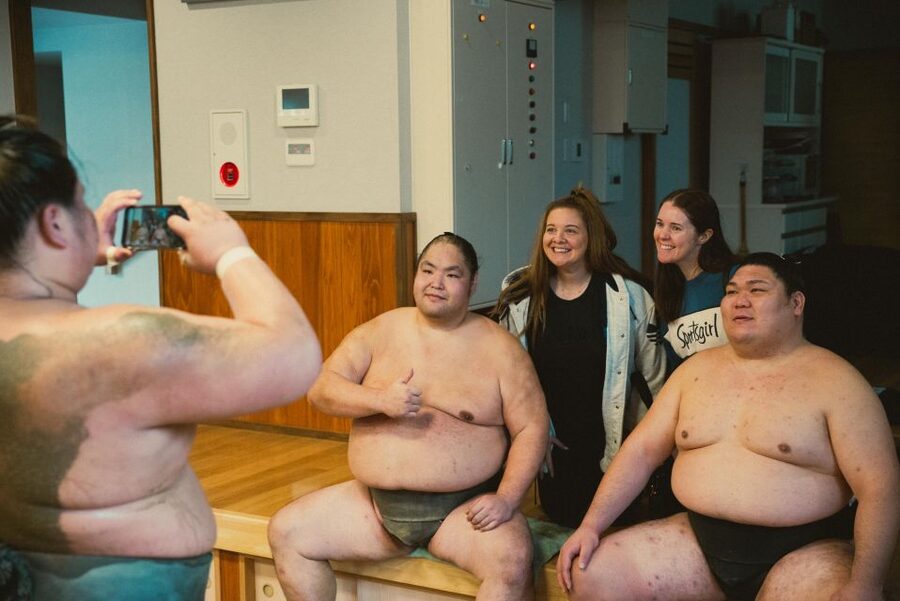
- Photos with the wrestlers, if the stable allows them
- What the $116 price really buys you
- Who should book this morning in Sumida
- FAQ
- Where is the meeting point for the sumo morning practice tour?
- How far is the sumo stable from the station?
- Can I use the restroom during sumo practice?
- Are chairs provided inside the stable?
- Can I take photos or videos?
- When are the tours unavailable?
- Should you book the sumo morning practice tour?
I like the close view of daily sumo life, and I like the chance to ask the stable master questions after practice. Guides including Tadashi, Yoko, Yukiko, and Yuriko have been praised for explaining the rules and customs clearly. The main drawback is simple: you sit cross-legged on the floor for about 90 minutes, with no chairs and no toilet break.
Key points to know before you book
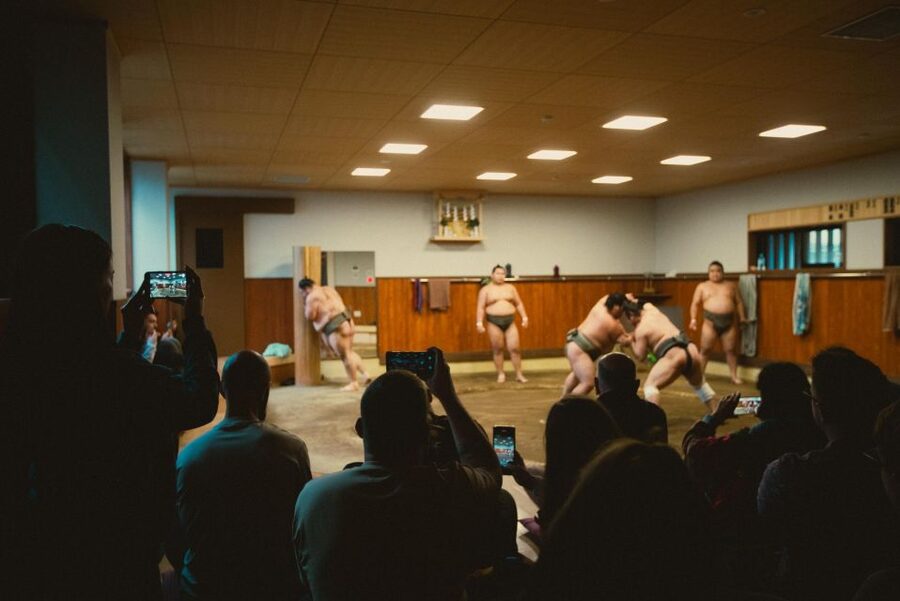
- Training happens at close range: Watch wrestlers stretch, practice rituals, and face each other just a few feet away.
- The stable master joins the discussion: After practice, you may ask questions about training, rules, and the wrestlers’ daily lives.
- The morning starts early: Meet at 7:15 a.m. near Oshiage Station, then walk 15 to 20 minutes to the stable.
- Floor sitting is part of the deal: There are no chairs, and you must watch silently without moving around.
- Photos come with strict rules: Flash and shutter sounds are not allowed, and images cannot be posted on social media.
- Tournament months affect availability: No tours are held in March, July, or November, and booking dates are released about one to two months ahead.
Why this is more than watching a sumo match
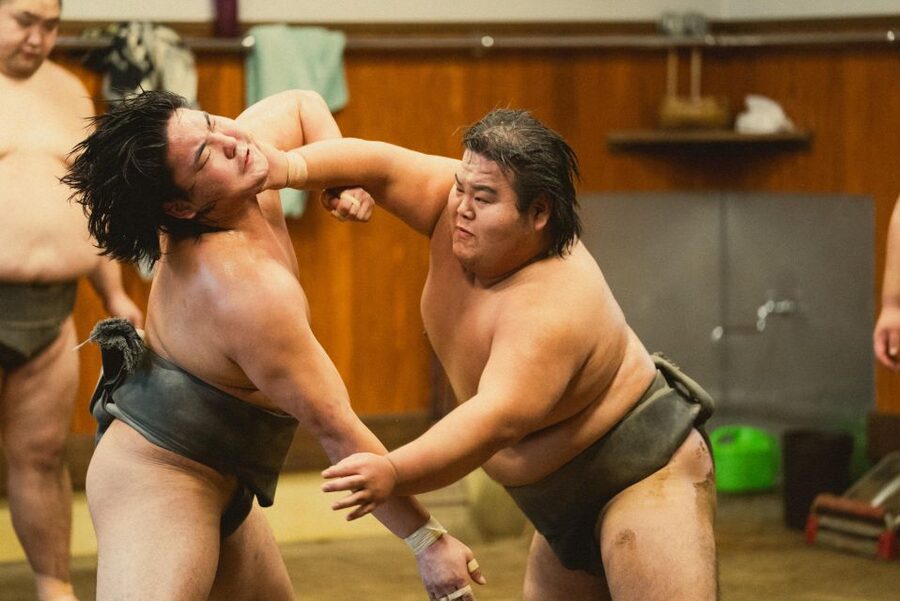
A professional bout lasts only a few seconds. Morning practice lets you see all the work behind those seconds: repeated pushing drills, stretching, balance exercises, ritual movements, and bouts that test strength and technique.
You also see sumo as a way of life rather than simply a sport. The stable is a training home, and the atmosphere depends on quiet attention. The wrestlers are not performing for an audience. They are working, and you are being allowed to observe.
That distinction matters. If you want a polished cultural show, this is not it. If you want a direct look at a Japanese sporting tradition that is usually difficult to access, the experience can be special.
The tour costs $116 per person. That is a serious price for two hours, especially when you are not attending a tournament and cannot count on seeing the most famous wrestlers. Still, the fee includes an English-speaking guide and entrance to the stable, which is the part you could not arrange easily on your own.
For many people, the value comes from access rather than length. You are entering a working sumo stable, sitting beside the training area, and taking part in a question-and-answer session with the stable master. I would consider it worthwhile if sumo or Japanese customs are high on your list. I would skip it if you mainly want a cheap morning activity or a guaranteed photo opportunity.
A few more Tokyo tours and experiences worth a look

Meeting at Oshiage Station before 7:30 a.m.
Your meeting point is the ground floor of the Toei Asakusa Line and Tokyo Metro Oshiage, Skytree Mae, Station A1 Exit. Meet at 7:15 a.m. The tour starts at 7:30.
Tokyo Skytree Town is nearby, which gives you an easy landmark and a useful place to orient yourself. Do not assume the station meeting point is the stable. The group walks for about 15 to 20 minutes, and one of the practical complaints about this arrangement is that the directions and meeting instructions can be confusing.
I would arrive early, especially if you are unfamiliar with the station. Oshiage is a large transport hub, and morning navigation takes longer than it looks on a map. Wear shoes that come off easily, since you will remove them at the stable. If rain is expected, bring a small towel to dry your feet after the walk.
If you miss the group, contact the provider at once. You may be sent the stable’s address, but you must wait outside for the guide. Do not enter on your own, ring the bell, or disturb the wrestlers. The stable is a working space, not a public attraction with an open reception desk.
The short walk to a working sumo stable
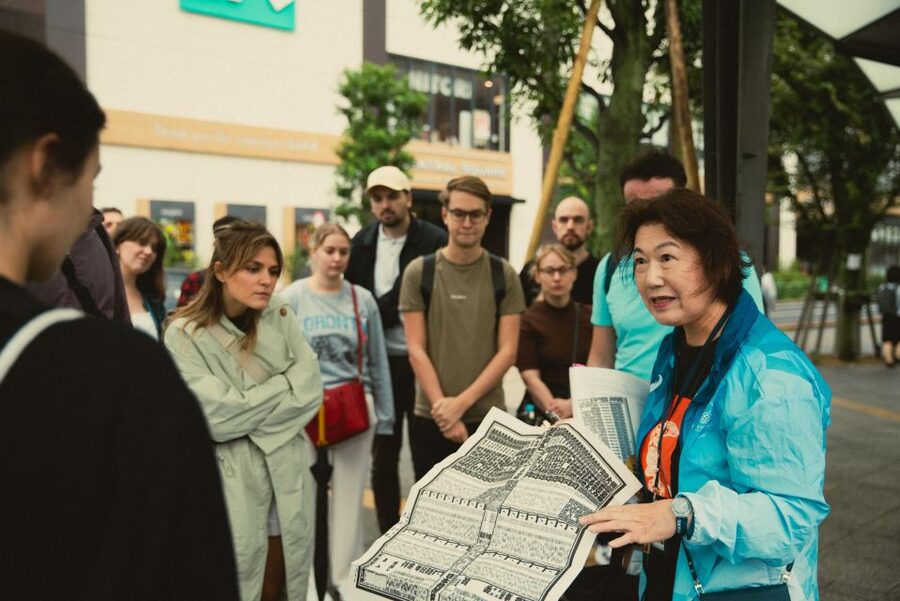
The walk from Oshiage gives your guide time to explain basic manners and the role of sumo in Japanese culture. Some guides hand out printed material, while others explain the customs on the way. The amount of background information can vary with the guide and the size of the group.
This is where guides such as Yoko, Yukiko, Yuriko, Tadashi, Kiyomi, and Oku have made a difference. Strong guides quietly explain what is happening without turning the walk into a lecture. They also tell you when to stay still, when photography is allowed, and why silence matters during practice.
One useful point to understand before entering is that sumo has strong ties to ritual and religion. The bowing, stomping, salt throwing, and deliberate movements are not filler between bouts. They connect the sport to older Japanese customs and help create the formal mood of the stable.
Not every guide gives the same amount of historical background. If the sport’s origins and traditions matter most to you, ask questions early or save them for the stable master. A few people have found that the printed notes covered the basics better than the spoken introduction, especially when the group was large or the guide spoke softly.
Sitting beside the ring during morning practice
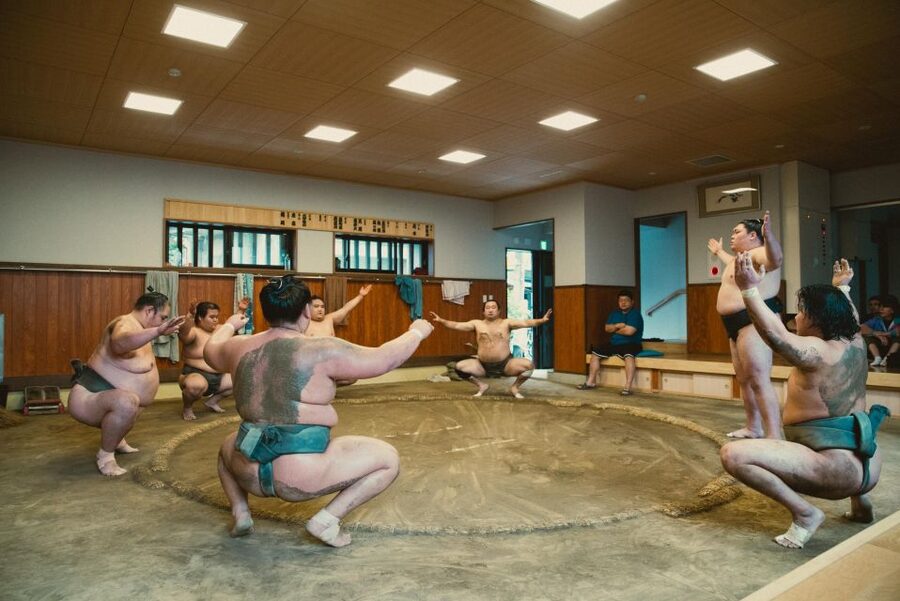
Inside, you remove your shoes and sit on the floor near the training area. There are no chairs. The standard arrangement calls for sitting cross-legged for about an hour and a half, although your exact position and viewing angle can vary.
The first sight of the wrestlers at close range can be startling. Television compresses their size and power. From the floor, you see the physical effort in their legs and shoulders, and you notice how quickly a large body can move. Their flexibility and balance are as impressive as their weight.
Practice may include stretching, warmups, repeated drills, and one-on-one bouts. Do not expect every visit to look identical. Training can be lighter around a tournament period, and a session may not include many full fights. One account described a shorter practice of about 80 minutes, so the advertised timing should be treated as an approximate schedule rather than a promise of nonstop bouts.
The best approach is to watch the details between the clashes. Notice how wrestlers prepare, how they reset after a bout, and how much repetition goes into each movement. The guide can help you understand what you are seeing, but the room itself often teaches you a great deal.
You must watch quietly. No food, drinks, hats, sunglasses, or flash photography are allowed. Phones may be used for photos and video only without flash or shutter sounds, and you cannot upload the images to social media. This rule protects the stable’s privacy and keeps the practice from becoming a noisy photo session.
Seating, sightlines, and the comfort question
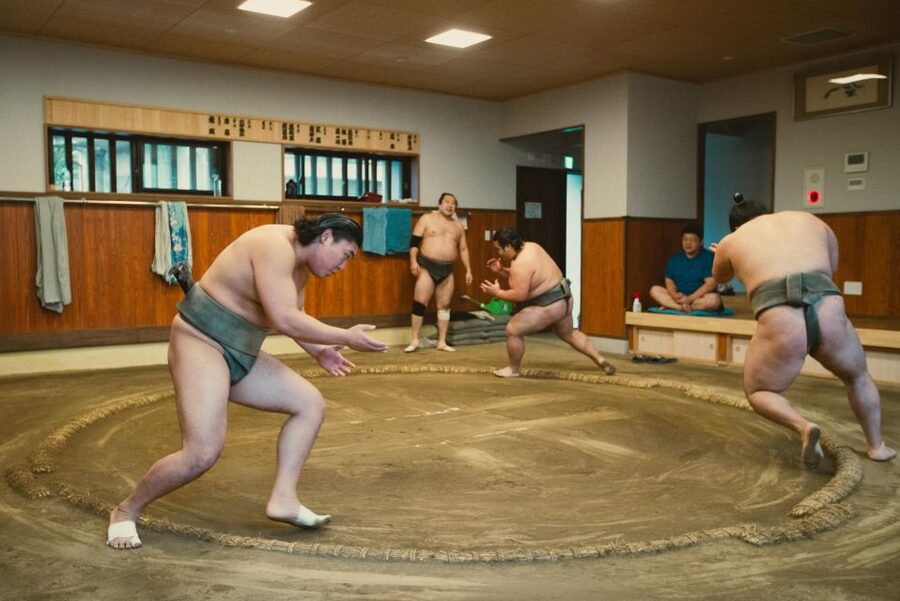
Your place in the room matters. Some groups have had excellent front-row views, while others have started farther back or found their sightline partly blocked by another group. The guide may rotate positions, but this is not guaranteed in every situation.
A visiting sports group or another tour can also affect where you sit. One group found that its seats were changed when an athletic team received priority. That does not cancel the value of the experience, but it is worth knowing that you may not have a perfect view for every bout.
The floor is the larger issue. Sitting cross-legged for 90 minutes can be hard on knees, hips, ankles, and backs. The provider specifically advises against booking if this position is not manageable, and the tour is not suitable for people with mobility impairments.
Use the restroom before meeting the group. You cannot leave for a toilet break during practice. This rule may sound minor, but it becomes important once everyone is seated in a quiet, tightly arranged room.
Families should also think carefully. The minimum age is six, but children must remain quiet and still. If a child moves around, talks loudly, or cannot follow the rules, the family may be asked to leave the stable during practice.
Other city tours we've reviewed in Tokyo





Questions with the stable master after practice
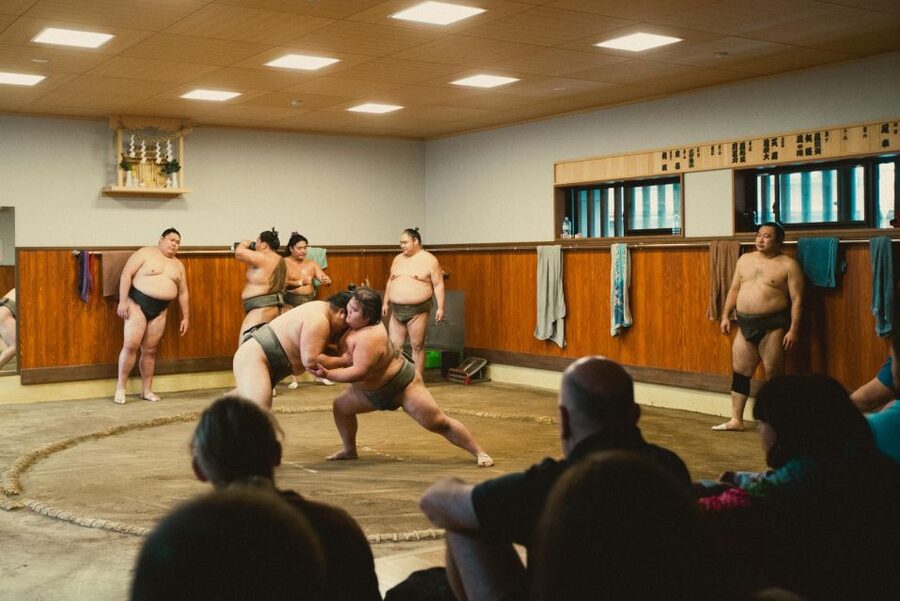
The question-and-answer period is often the most personal part of the morning. Once practice ends, the stable master may speak with the group and answer questions about the wrestlers, training, competition, and life inside the stable.
This is your chance to ask about the parts of sumo that a short introduction cannot cover. You might ask how wrestlers prepare for tournaments, how a stable organizes daily practice, or what life is like for trainees. The precise discussion depends on the stable master and the questions from your group.
Do not rush this part. The best conversations come from specific observations you made during practice. Ask about a particular drill or bout, and you are more likely to understand why it matters.
The stable master has often been willing to spend time with the group rather than simply pose for a quick greeting. That personal exchange helps justify the cost more than a standard guided explanation would. It also gives you a better sense of the human side of a demanding sport.
The guides can help translate and organize questions in English. This is one reason the guide matters even after you have entered the stable. Some guides, including Yoko and Yuriko, have been especially praised for clear explanations and for helping visitors understand what they were seeing.
Photos with the wrestlers, if the stable allows them
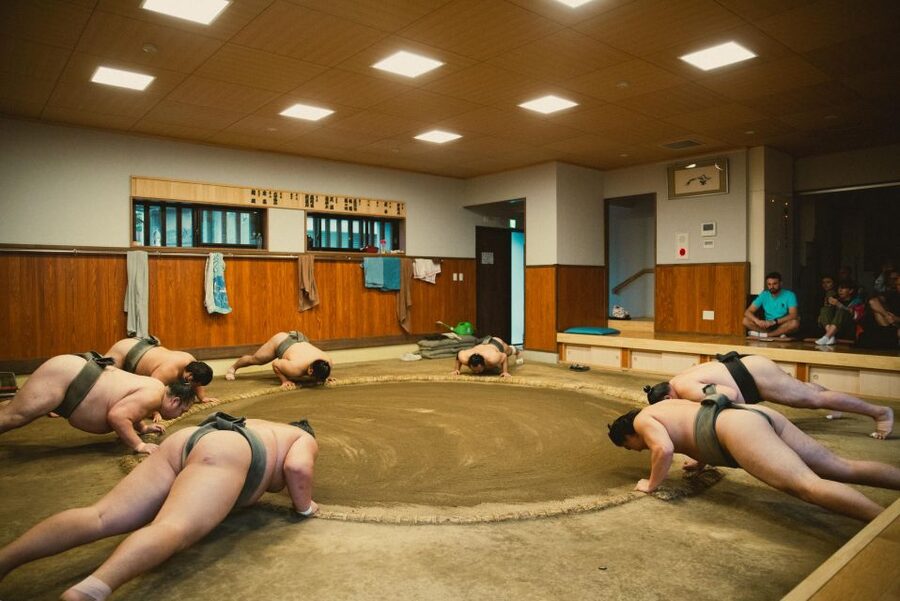
After practice and questions, you may have a chance to take a photograph with the wrestlers. Treat this as a possibility, not a guaranteed feature. The stable decides how photographs work that day, and the practice remains the priority.
Follow the photo rules carefully. No flash. No shutter sounds. No social media uploads. Keep the process quick and respectful, since the wrestlers are returning to their routine rather than attending a meet-and-greet.
A farewell from the wrestlers can be a memorable final moment. One group described the wrestlers standing to offer a friendly goodbye as visitors left. Small gestures like that can make the visit feel less like an attraction and more like a brief welcome into a private working world.
Bring a phone or camera only if you can use it discreetly. The strongest memory may not be the photograph anyway. It may be the sound of feet striking the floor, the sudden force of a bout, or the sight of a wrestler calmly returning to position after a hard exchange.
What the $116 price really buys you
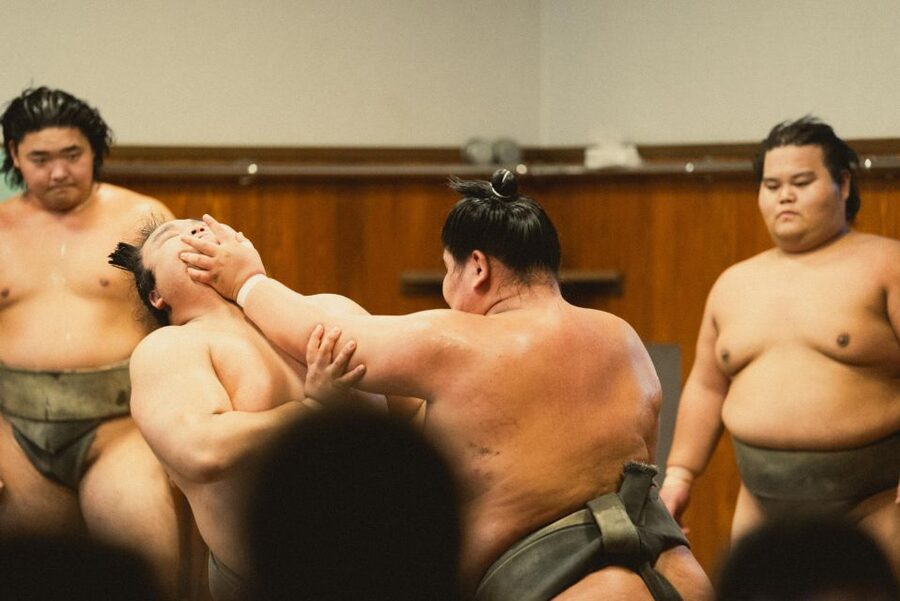
At $116, this is not a bargain activity. The tour lasts about two hours, and roughly 90 minutes may be spent watching practice. You also pay for a very early start, a short walk, and a floor seat rather than a comfortable spectator chair.
The price makes more sense when you look at access. A sumo stable is not a normal sightseeing stop, and entering one respectfully requires arrangements, translation, and knowledge of local rules. The English-speaking guide handles those details and helps you understand the customs that would otherwise be easy to miss.
I would compare it with the price of attending a tournament, but they are different experiences. A tournament gives you a formal contest and a large public arena. This tour gives you a closer look at training and daily discipline, but the wrestlers may be trainees rather than the sport’s top names.
The value is strongest for people who want cultural access and direct contact with a working tradition. It is weaker for anyone who wants a guaranteed star sighting, a comfortable seat, or a carefully staged presentation.
Free cancellation is available until two days before the activity. Check dates early, since the schedule is usually released one to two months ahead. No morning practices or tours are held in March, July, or November because Grand Sumo tournaments take place outside Tokyo during those months.
Who should book this morning in Sumida
I would recommend this to adults and older children who can sit still, follow quiet-room rules, and appreciate process as much as spectacle. It is a strong choice if you are curious about Japanese customs, traditional sports, or the discipline behind elite physical performance.
It also suits people who want something beyond Tokyo’s major sights. The tour begins near Skytree, but the important destination is the ordinary-looking working stable. You leave the polished sightseeing route and watch a private routine that most visitors would never find alone.
I would think twice if you have knee or back problems, cannot sit on the floor, need regular toilet access, or are traveling with a restless young child. I would also avoid booking if you expect two hours of nonstop bouts or a guaranteed photo with a famous wrestler.
For the best experience, arrive early, wear easy-off shoes, use the restroom first, keep your phone silent, and listen to the guide’s instructions. Save your questions for the end, and watch the practice as work rather than entertainment.
FAQ
Where is the meeting point for the sumo morning practice tour?
Meet at 7:15 a.m. on the ground floor of the Toei Asakusa Line and Tokyo Metro Oshiage, Skytree Mae, Station A1 Exit. The tour begins at 7:30 a.m.
How far is the sumo stable from the station?
The walk from the meeting point to the stable takes about 15 to 20 minutes. Bring a small towel if rain may make your feet wet before you remove your shoes.
Can I use the restroom during sumo practice?
No. You cannot go to the toilet during practice, so use the restroom before joining the tour.
Are chairs provided inside the stable?
No. There are no chairs, and you may need to sit cross-legged on the floor for about 90 minutes.
Can I take photos or videos?
You may take photos and videos without flash or shutter sounds. You may not upload the images on social media.
When are the tours unavailable?
Morning practices and tours are not held in March, July, or November because Grand Sumo tournaments take place outside Tokyo during those months. Dates are generally released one to two months ahead.
Should you book the sumo morning practice tour?
Book it if you want a close, quiet look at the training behind sumo and can handle sitting on the floor. The strongest parts are the physical intensity of practice, the access to the stable master, and the chance to see a living tradition without a theatrical gloss.
Skip it if comfort, flexible timing, or guaranteed star wrestlers matter more to you. At $116, the experience asks a lot in both money and manners. For the right visitor, though, those two hours near the ring can be one of Tokyo’s most memorable mornings.
More Morning in Tokyo


More City Tours in Tokyo
More Sumo Experiences in Tokyo

More tours in Tokyo we've reviewed












Sumo Experiences, compared.
 ★ 4.8Tokyo: Sumo Show Experience with Chicken Hot Pot and a PhotoFrom $1032 hours
 ★ 4.8Tokyo: Sumo Show and Dining ExperienceFrom $7990 minutes - 2 hours
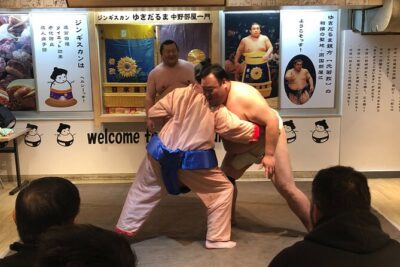 ★ 5.0the SUMO showFrom $89
 ★ 5.0Tokyo Sumo Entertainment Show with Chicken Hot Pot and PhotoFrom $106
 ★ 4.6Tokyo: Sumo Tournament Tour with Chair Seat TicketsFrom $141
 ★ 5.0Tokyo Grand Sumo Tournament Viewing Tour with TicketsFrom $124