Reviewed · SUMO EXPERIENCES
Tokyo Grand Sumo Tournament Viewing Tour with Tickets
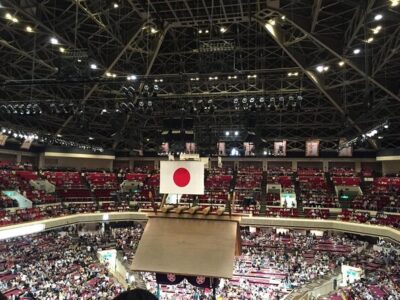
Tokyo’s Grand Sumo Tournament is not simply a series of wrestling matches. It is a carefully staged national ritual, with ceremonial entrances, formal gestures, ancient rankings, and sudden bursts of astonishing force. This tour gets you inside Ryogoku Kokugikan during the tournament season, when tickets can disappear almost instantly.
In This Article
- Key points to know
- Why a Grand Sumo Tournament Feels Different
- Starting at Ryogoku View Hotel
- Walking Into Ryogoku Kokugikan
- Understanding the Afternoon Tournament Schedule
- What the Guide Adds Inside the Arena
- Choosing Between S, A, and B Seating
- Is $124 a Fair Price?
- Important Practical Details Before You Book
- Who Should Book This Sumo Tour?
- FAQ
- Where does the tour begin?
- Where does the tour end?
- How long does the experience last?
- What time do S and A seat tours begin?
- What time does B-class seating begin?
- What is included with the ticket?
- What extras come with S and A seats?
- Can I choose a specific seat?
- Can my group sit together?
- Can I bring food, drinks, or alcohol into the Kokugikan?
- Can young children join the tour?
- Can I bring a stroller or suitcase?
- What happens if I arrive late?
- Is the tour refundable?
I like the English-language introduction, which gives you the rules and ranking system before the action begins. I also like the guide support inside the arena, especially when guides such as Miki, Michiko, Halle, Edi, Ako, and Shin explain wrestler backgrounds and rituals as the matches unfold. The main drawback is that second-floor seats can feel distant, and your exact seat may not be assigned until the day of the tour.
Key points to know
- Meet near the stadium: Start at Ryogoku View Hotel, only a short walk from the Kokugikan.
- Learn before you watch: A licensed English-speaking guide explains sumo customs, rankings, and match structure.
- Catch the afternoon highlights: Makuuchi bouts begin at about 4:00 PM, followed by the bow-twirling ceremony at 6:00 PM.
- Choose your seat level carefully: S and A chair seats include yakitori, a drink, and a cheering towel. B seats do not.
- Expect shared or separated seating: Groups may be spread across the east, west, main, or opposite sides of the arena.
- Plan for strict timing: Arrive 10 minutes early. Late arrivals can lose their reservations.
Why a Grand Sumo Tournament Feels Different
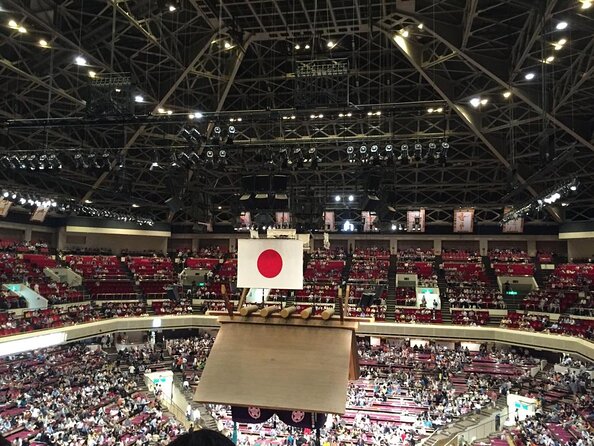
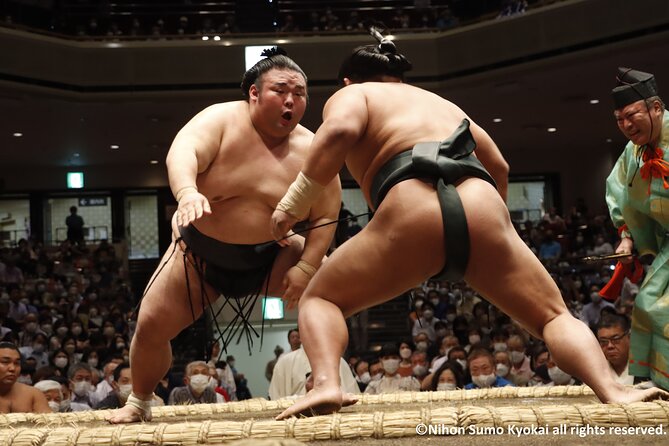
Sumo is easy to misunderstand if you arrive expecting nonstop wrestling. Much of the drama comes before the collision: the wrestler’s approach, the stamping, the stare-down, the scattering of salt, and the tense pause before the charge.
The actual bout may last only seconds. That does not make it slight. Two enormous athletes can spend several moments testing balance and nerve, then one pushes, twists, or throws the other out of the ring in a flash.
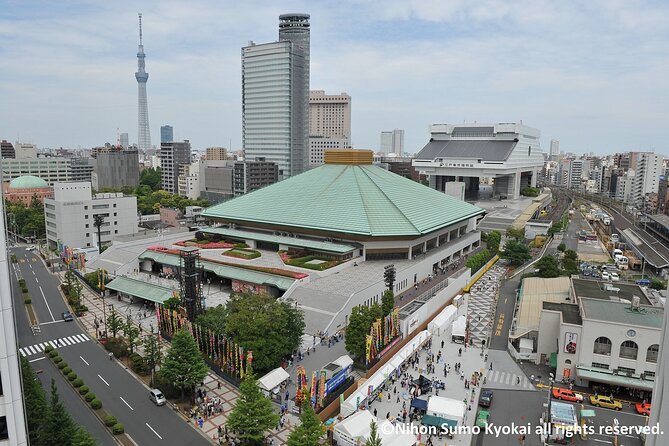
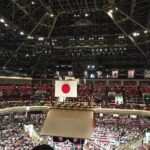
The tournament takes place at Ryogoku Kokugikan, Tokyo’s major sumo arena. The ring, called the dohyo, is made of clay and covered with sand. Around it, the crowd watches the top-ranked wrestlers compete in the Makuuchi division, the highest of professional sumo’s six divisions.
If you know little about the sport, the formalities can seem puzzling. The guide helps turn those puzzling moments into part of the fun. You learn why wrestlers perform certain gestures, how the rankings work, and why a Yokozuna, or grand champion, receives special treatment.
A few more Tokyo tours and experiences worth a look
Starting at Ryogoku View Hotel
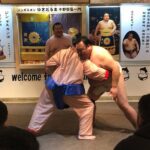
The tour begins at Ryogoku View Hotel, at 2-chome-19-1 Ryogoku. You should arrive at least 10 minutes before the stated start time. The meeting point is near public transportation and close to the arena, but do not cut it fine. The tour has a firm departure time, and late arrivals can have their reservations canceled.
The hotel stop includes a short lecture from a National Government Licensed English Guide Interpreter. The official schedule allows about 20 minutes. This is not a long classroom session, and that is probably a good thing. You have a full afternoon of sumo ahead, not a seminar.
The introduction covers the basic rules, the structure of the tournament, the lives of rikishi, or sumo wrestlers, and the meaning of the sport’s rituals. You also receive an English sumo pamphlet and the day’s ranking list. Keep both. The ranking sheet is especially useful once the matches begin, since you can follow the names and divisions as wrestlers enter the ring.
The hotel and nearby area also provide a chance to see sumo-related displays. Look for ceremonial aprons, championship flags, woodblock prints, folding screens, and other objects connected with sumo’s long tradition. The kesho-mawashi, an ornate ceremonial apron worn by Makuuchi wrestlers, is one of the most interesting details to watch for.
The quality of the explanation depends partly on your guide. Guides named Miki, Michiko, Halle, Edi, Ako, and Shin have been praised for making the rules easier to follow and for adding wrestler nicknames, personal stories, and background to the day’s bouts. That personal commentary can make a big difference, especially if you are new to sumo.
Walking Into Ryogoku Kokugikan
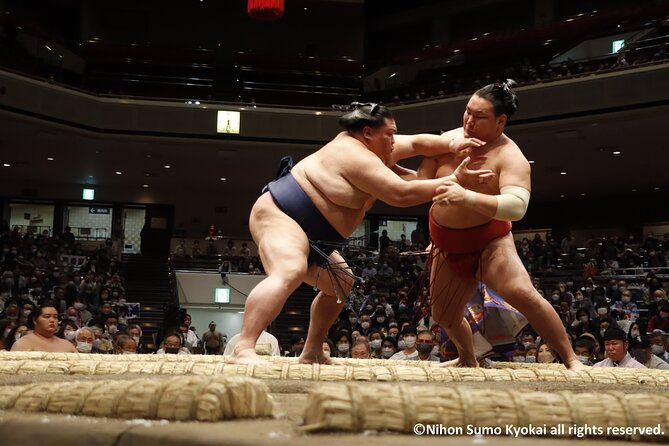
From the hotel, the guide leads your group to Ryogoku Kokugikan. The tour ends at the arena, so you are not escorted back to your hotel or onward to another part of Tokyo.
Give yourself time to enjoy the entrance lobby. Championship flags and objects presented to successful wrestlers are displayed here, and the lobby is a popular place for photographs. This is also where you begin to feel the scale of the event. Fans arrive with cheering towels, snacks, and a clear sense of which wrestlers they support.
The Kokugikan also houses a Sumo Museum. Displays include woodblock prints, folding screens, and other important sumo objects. The museum is a useful stop before or during the tournament, though the event schedule and crowd flow may affect how long you can spend there.
Food and drinks cannot be brought into the arena, including alcohol. You can buy refreshments from vendors on the first and second floors. If you have S or A seating, the tour includes one light snack of Kokugikan yakitori and one drink per person. The yakitori is a specialty associated with the arena, but vegetarian options are not available. If you do not eat it, no replacement is provided.
Understanding the Afternoon Tournament Schedule
The exact amount of match viewing depends on the seat category. S and A class chair seating is listed from 1:10 PM to 6:00 PM. B-class seating begins later, at about 2:30 PM, and continues until the end of the program.
The lower-ranked divisions usually compete earlier in the day. The matches build toward the Makuuchi division, where the best-known wrestlers compete. This gradual rise in rank helps the afternoon gain weight. The crowd becomes more attentive as the higher divisions approach.
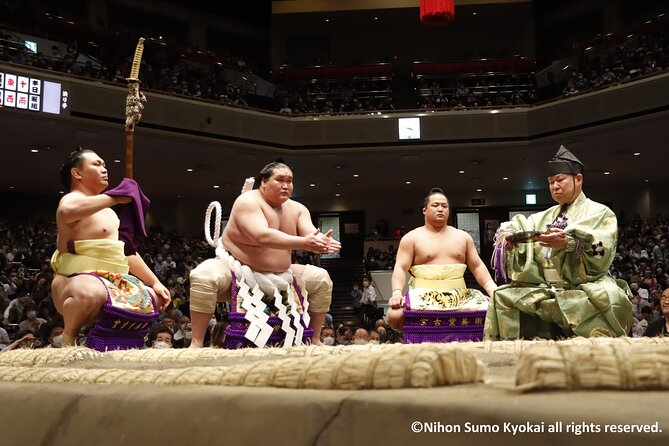
At about 3:40 PM, Makuuchi wrestlers take part in their ceremonial entrance. The Yokozuna grand champion ring entrance follows when a Yokozuna is present. It does not occur if there are no Yokozuna competing in that tournament.
At 4:00 PM, the Makuuchi bouts begin. This is the main event for many first-time spectators. You will see wrestlers enter the ring, perform their rituals, and face each other under the rules explained earlier.
The program ends around 6:00 PM with the bow-twirling ceremony. The wrestler performs the ceremony with a bow, bringing the official portion of the day to a formal close.
One practical point matters here. Seating may be delayed if a match, speech by the Sumo Association, wrestler entrance procession, Yokozuna entrance, or ritual stomping ceremony is taking place. You must wait until the activity ends before moving to your seat. The guide also cannot give explanations during these formal moments. This may feel inconvenient for a few minutes, but it is proper spectator etiquette and part of respecting the event.
What the Guide Adds Inside the Arena
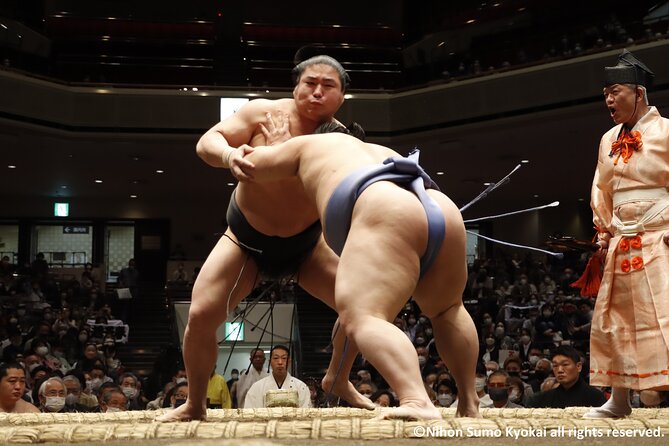
You can watch sumo without a guide, but understanding the ranking list and ceremonies makes the event much more rewarding. The guide gives you a framework for what you are seeing rather than leaving you to guess why a wrestler is throwing salt or why the crowd suddenly grows quiet.
The strongest guides do more than recite rules. They explain the backgrounds and nicknames of the wrestlers, point out major matchups, and help you follow the day’s ranking order. Halle, for example, was praised for her enthusiasm and for explaining the symbolism behind the ceremonies. Michiko was singled out for combining humor with clear explanations of history, rankings, and strategy. Edi was noted for keeping a group involved throughout the sequence of matches.
Your guide may sit near the group during the tournament, but do not expect a nonstop broadcast of every second. The event remains a live sporting program, and the guide cannot interrupt ceremonies or provide commentary during every bout. Think of the guide as a helpful interpreter and sumo companion, not a private announcer.
This works particularly well for families and first-time viewers. Children can enjoy the physical comedy and quick action, while adults can follow the customs and competition more closely. Children up to age three may attend but must sit on a parent or guardian’s lap. They do not receive the included snack, drink, or cheering towel with S or A seating.
A few more Tokyo tours and experiences worth a look

Choosing Between S, A, and B Seating
The supplied details specify second-floor chair seating, but the booking category may be S, A, or B. Seats may not be assigned in advance, and the exact location is provided on the day.
S and A seats include three extras:
- One yakitori snack
- One drink
- One cheering towel
The towel is a nice souvenir, especially if you follow a particular wrestler, but you cannot request a specific color or wrestler name. B seats do not include the snack, drink, or towel.
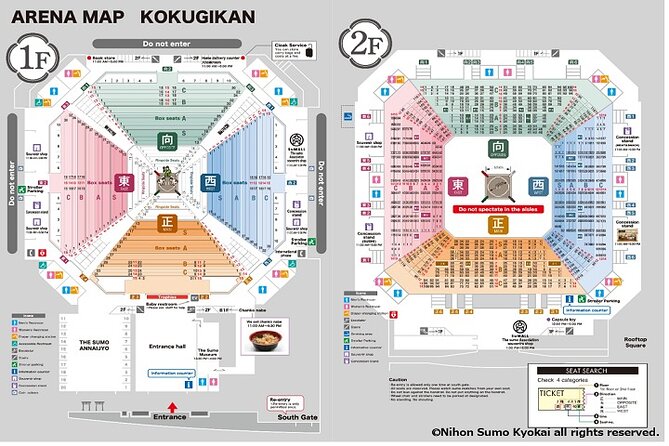
Second-floor seating offers a broad view of the ring and the surrounding crowd. The tradeoff is distance. Even A seats may feel far from the dohyo, though the overall ceremony and crowd atmosphere remain clear. If seeing facial expressions or close physical detail is your top priority, check the seat category carefully before paying.
Groups may be seated apart. Seating can be spread across the main, opposite, east, and west sides of the arena. If you book separate reservations for a larger party, add the names of accompanying group members in the remarks field, but do not assume that everyone will sit together.
The tour accepts groups of up to 19 people. A booking for 20 or more is divided into multiple groups. That is useful to know if you are arranging a school, corporate, or extended-family outing.
Is $124 a Fair Price?
At $124, this is not a cheap afternoon at a sporting event. You are paying for the tournament ticket, the English-speaking guide, the sumo information material, and, with S or A seating, the snack, drink, and towel.
The bigger value is access. Grand Tournament tickets are difficult to obtain, particularly if you are not familiar with the release system or cannot plan far ahead. The tour removes much of that uncertainty and puts you in the Kokugikan during one of Tokyo’s most distinctive events.
The price makes less sense if you already understand sumo, speak Japanese, and have secured a ticket on your own. For a first visit, though, the guide can prevent the event from becoming a confusing parade of rituals and unfamiliar names.
I would compare the price with the cost of buying a ticket independently, not with the cost of a standard museum visit. You are paying a premium for availability and assistance at a hard-to-book event. That premium is most reasonable for first-time visitors who want the cultural context as well as the matches.
Important Practical Details Before You Book
The tour is near public transportation, but hotel pickup and drop-off are not included. You must make your own way to Ryogoku View Hotel and arrange your own route after the tour finishes at Kokugikan around 6:00 PM.
Do not bring a suitcase or large bag to the meeting point. Luggage cannot enter the seating area, and it cannot be stored at Ryogoku View Hotel. Use a coin locker or leave larger items at your accommodation before arriving.
Strollers cannot be taken into the seating area. Storage areas are available on the first and second floors, but the operator accepts no responsibility for theft or damage.
This is a non-refundable experience, and changes are not allowed for any reason. Confirmation is sent within 48 hours of booking, subject to availability. Since tournament tickets can sell quickly, book only after checking your Tokyo dates carefully.
The tour is suitable for most people. Participants under 18 need written parental permission. Anyone under 15, or anyone not yet enrolled in middle school, must be accompanied by a parent or guardian.
Who Should Book This Sumo Tour?
I would recommend it most strongly to first-time sumo spectators, families, and visitors who want a reserved place at a Grand Tournament without trying to manage the ticket process alone.
It is also a good pick if you enjoy sports but want more than a match. The ceremony, rankings, costume details, fan behavior, and formal ending give the afternoon a cultural shape that you will not get from watching highlights online.
Experienced sumo followers may find the introductory lecture basic. You may also prefer closer seats or more freedom to explore the arena alone. Still, the included ticket and chance to hear background on the day’s wrestlers can make the arrangement worthwhile.
Book this tour if getting inside the Kokugikan is your priority and you want help making sense of what happens there. Skip it if you already have a ticket, know the customs well, or need guaranteed seats together. For everyone else, this is a practical way to see a hard-to-book Japanese tradition without spending the afternoon wondering what you missed.
FAQ
Where does the tour begin?
The tour begins at Ryogoku View Hotel, 2-chome-19-1 Ryogoku, Sumida City, Tokyo 130-0026, Japan.
Where does the tour end?
The tour ends at Ryogoku Kokugikan National Sumo Arena around 6:00 PM. You must continue to your next destination on your own.
How long does the experience last?
The experience lasts approximately four hours. The arena portion runs until about 6:00 PM, with the exact start depending on your seat category.
What time do S and A seat tours begin?
S and A class chair seating is scheduled from 1:10 PM to 6:00 PM.
What time does B-class seating begin?
B-class seating is scheduled from 2:30 PM to 6:00 PM.
What is included with the ticket?
The package includes second-floor chair seating, a professional guide, an English sumo information pamphlet, and a sumo-ranking list.
What extras come with S and A seats?
S and A seats include one yakitori snack, one drink, and one cheering towel per person. B seats do not include these items.
Can I choose a specific seat?
Seats may not be designated in advance. The seating information is provided on the day of the tour.
Can my group sit together?
Groups may be seated separately. Seating may be spread across the main, opposite, east, and west sides of the arena.
Can I bring food, drinks, or alcohol into the Kokugikan?
No. Food and drinks, including alcohol, cannot be brought into the arena. You can buy refreshments from vendors on the first and second floors.
Can young children join the tour?
Children up to three years old may join but must sit on a parent or guardian’s lap. They do not receive the snack, drink, or cheering towel included with S and A seating.
Can I bring a stroller or suitcase?
Strollers cannot enter the seating area, though storage areas are available on the first and second floors. Suitcases and other large luggage cannot enter the seating area and cannot be stored at the meeting hotel.
What happens if I arrive late?
Late arrivals may have their reservations canceled. Arrive and meet your guide at least 10 minutes before the tour start time.
Is the tour refundable?
No. The experience is non-refundable and cannot be changed for any reason.
More Tickets in Tokyo
More Sumo Experiences in Tokyo
More tours in Tokyo we've reviewed












Sumo Experiences, compared.
 ★ 4.8Tokyo: Sumo Show Experience with Chicken Hot Pot and a PhotoFrom $1032 hours
 ★ 4.8Tokyo: Sumo Show and Dining ExperienceFrom $7990 minutes - 2 hours
 ★ 5.0the SUMO showFrom $89
 ★ 5.0Tokyo Sumo Entertainment Show with Chicken Hot Pot and PhotoFrom $106
 ★ 4.6Tokyo: Sumo Tournament Tour with Chair Seat TicketsFrom $141
 ★ 5.0Tokyo Sumo Wrestling Tournament ExperienceFrom $124