Reviewed · MT FUJI DAY TRIPS
Mount Fuji Hakone with English-speaking Guide
Mount Fuji and Hakone make a tempting pair, but fitting both into one Tokyo day takes planning. This private charter gives you a car, hotel pickup, and an English-speaking guide, with room to adjust the route when weather or your interests change. One guide, Haseeb, helped a family cover Hakone Shrine, the ropeway, Owakudani, and the Open Air Museum before 5 p.m.
In This Article
- Key points to know before booking
- A private start from your Tokyo hotel
- Mount Fuji 5th Station, the highest planned road stop
- Lake Kawaguchi and the Kachi Kachi ropeway
- Oshino Hakkai and eight clear spring ponds
- Kitaguchi Hongu Fuji Sengen Shrine
- Arakurayama Sengen Park and the famous pagoda view
- Hakone Shrine, Lake Ashi, and the red torii
- Hakone Ropeway and Owakudani’s black eggs
- The Open Air Museum and the choices you must make
- How the English-speaking guide affects the day
- Is $387 good value for up to six people?
- Who will get the most from this tour?
- Should you book it?
- FAQ
- Where does the tour start?
- How many people can join the private group?
- How long does the experience last?
- Is the tour conducted in English?
- Can I customize the itinerary?
- Is the Mount Fuji 5th Station always included?
- Are food, drinks, cruises, and ropeways included?
- Is the tour wheelchair accessible?
- Can I cancel for a full refund?
I like the door-to-door service and the freedom to choose between a Fuji-area route and a combined Fuji-Hakone day. I also like the chance to avoid wasting time on public transport connections. The main drawback is simple: you must choose your stops carefully, since trying to do every listed attraction in one day is not realistic.
Key points to know before booking
- Private vehicle for up to six people: The $387 group price can be good value for a family or small group sharing one car.
- Two route choices: Pick a Fuji-area day or combine Fuji with Hakone. You should not expect to complete every suggested stop.
- Weather controls the Fuji views: The 5th Station and other viewpoints work best on a clear day, but no guide can guarantee a visible mountain.
- Guides can make the day efficient: Haseeb and Abdullah are named guides associated with highly positive bookings, though the guiding style may vary.
- Extra rides cost extra: Ropeways, cruises, museums, food, drinks, and the Mount Fuji entry ticket are not included.
- Watch the add-on charges: A 35,000 yen charge was reported for a special request involving luggage transport and ending in Hakone instead of returning to Tokyo.
A private start from your Tokyo hotel

Your day begins with pickup at your chosen location in Tokyo. That matters here. Fuji and Hakone are spread across a wide area, and public transport can turn a scenic day into a series of timetable checks and station changes.
The private format also lets you set the pace. You can spend longer at a shrine, shorten a stop if the mountain is hidden, or skip a paid ride that does not interest you. For a family, this is easier than keeping everyone together on trains and buses. For a group of six, it can also be more comfortable than buying several separate tickets.
The tour is advertised as a full-day outing, with a suggested hotel return around 6:30 p.m. Actual timing depends on your departure, traffic, weather, and route. One successful outing began at 7:30 a.m. and finished in Hakone around 5 p.m., after covering several major sights.
That flexibility has a limit. The Fuji and Hakone area is large, and Tokyo traffic can be slow. Think of this as a chance to see a selection of important places, not a promise to collect every stop on the long list.
A few more Tokyo tours and experiences worth a look

Mount Fuji 5th Station, the highest planned road stop
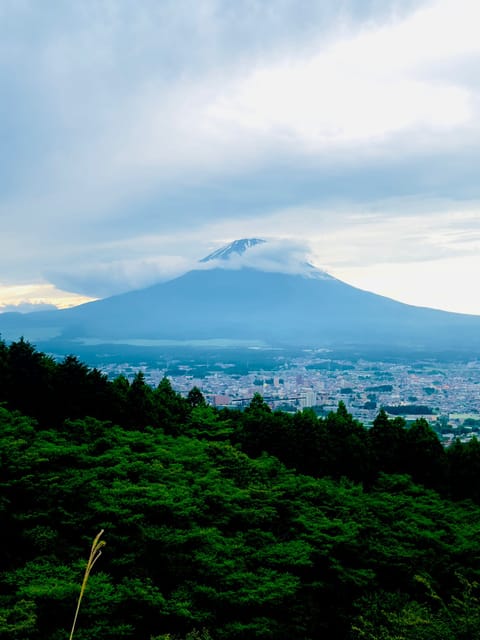
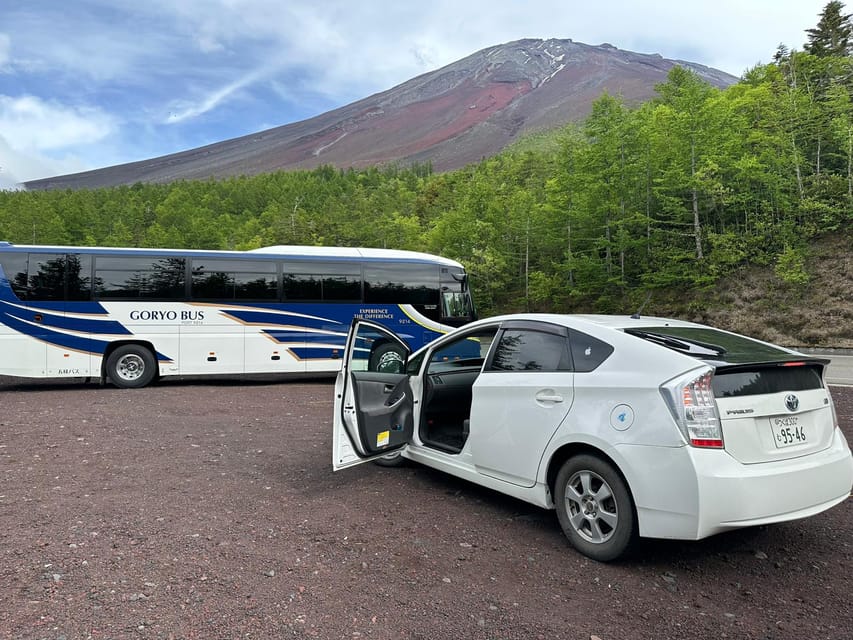
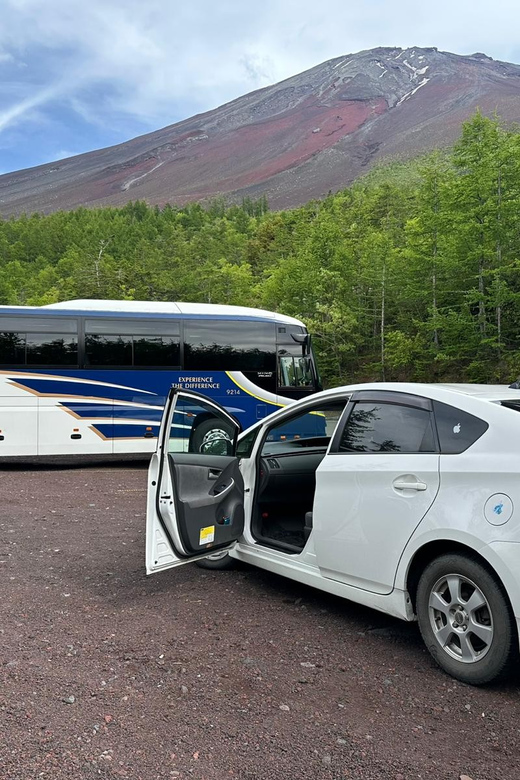
The 5th Station is described as the highest point on Mount Fuji that the vehicle can reach. It is a natural choice for anyone who wants to get close to the mountain without climbing.
You may have views across the surrounding area from here, but weather is the deciding factor. Clouds can hide the summit or block the view entirely. The tour information specifically notes that this stop depends on conditions, so keep your expectations flexible.
The planned stop is about 30 minutes to one hour. That gives you time to look around and take photographs, but not a long mountain visit. The Mount Fuji entry ticket is not included, and the listing does not give a fixed ticket price. Ask your guide about the current access conditions and cost on the day.
I would put the 5th Station near the top of your list on a clear morning. If the mountain is covered, Lake Kawaguchi, Oshino Hakkai, or the shrines may offer a better use of your time.
Lake Kawaguchi and the Kachi Kachi ropeway
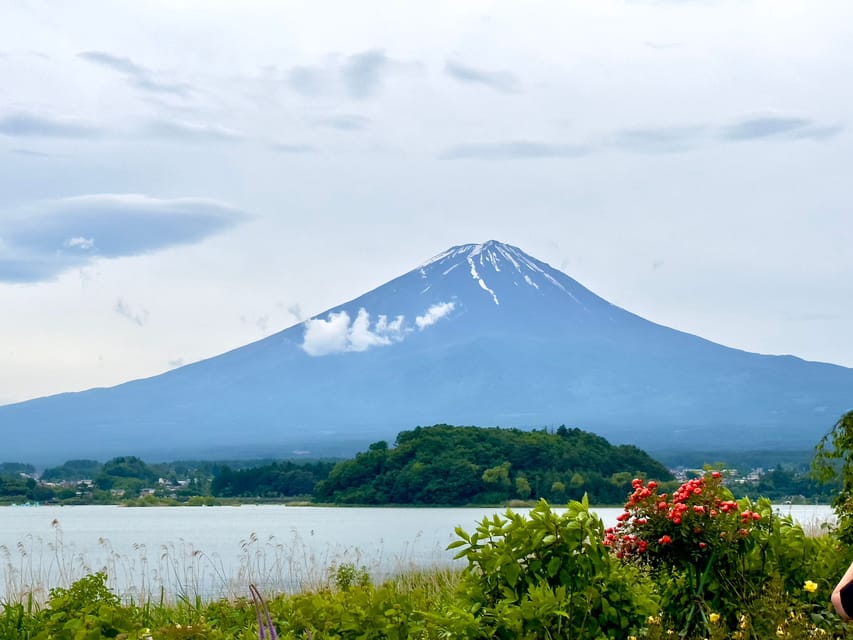
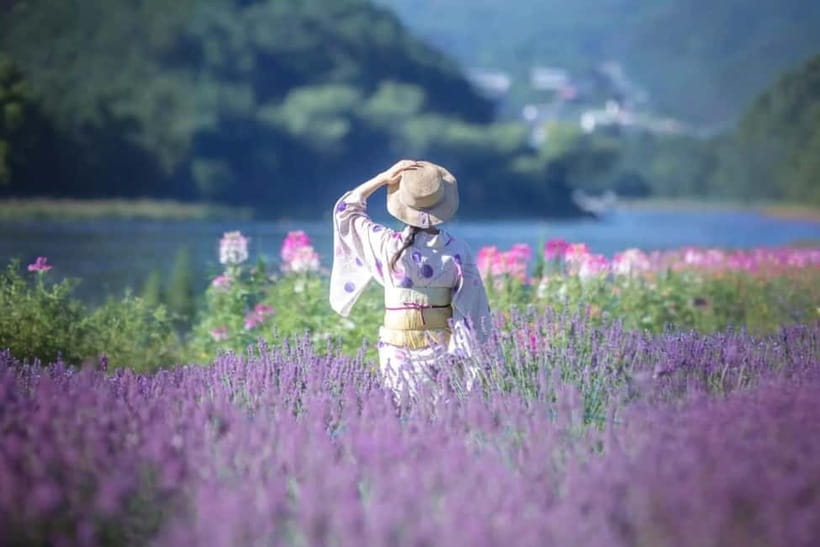
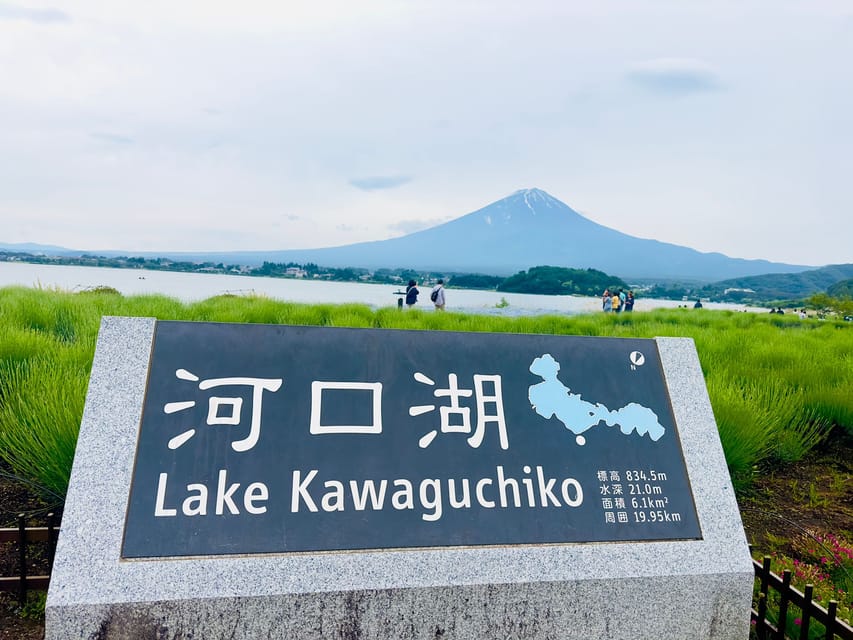
Lake Kawaguchi is one of the main viewing areas around Fuji. The lake itself gives you a calmer setting than a roadside viewpoint, and it can be paired with the Kachi Kachi ropeway for a higher lookout.
The ropeway is a paid attraction, so you will need to budget separately. A lake cruise is another possible activity, also at an extra cost. You should decide in advance if you want a ride, since adding both a ropeway and a cruise can use a large part of the day.
The tour allows about an hour here. That is enough for a focused visit, especially if you choose one paid activity. It is not enough for a leisurely exploration of every lakeside stop, a cruise, and several nearby shrines.
Lake Kawaguchi makes sense when your priority is a Fuji view. On a cloudy day, the lake still provides a pleasant stop, but the main reason to come is the mountain backdrop. Ask your guide to adjust the order if the forecast suggests better visibility later.
Oshino Hakkai and eight clear spring ponds
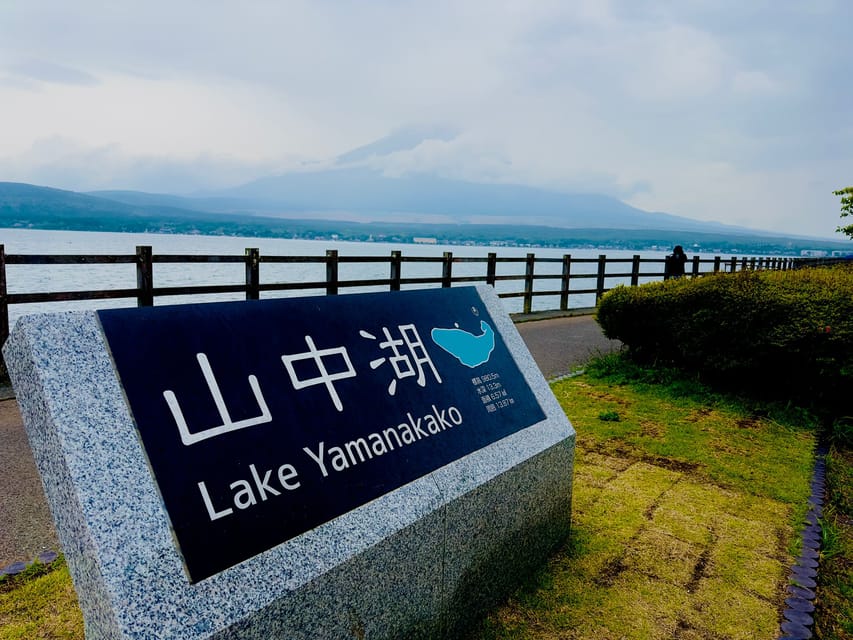
Oshino Hakkai is a small village known for eight ponds, Fuji views, food stalls, and souvenir sellers. It gives you a more traditional-feeling stop than a modern sightseeing facility, though it is also a commercial place.
You can walk between the ponds, browse the vendors, and try local snacks during the roughly one-hour visit. This is a good choice if you want a short break with food and photos rather than another major paid attraction.
The tradeoff is time. Oshino Hakkai is one of several possible stops, and adding it to a full Fuji-Hakone route may force you to drop something else. I would choose it for a Fuji-only day, or for a combined route only if you are happy with a quick visit.
Kitaguchi Hongu Fuji Sengen Shrine
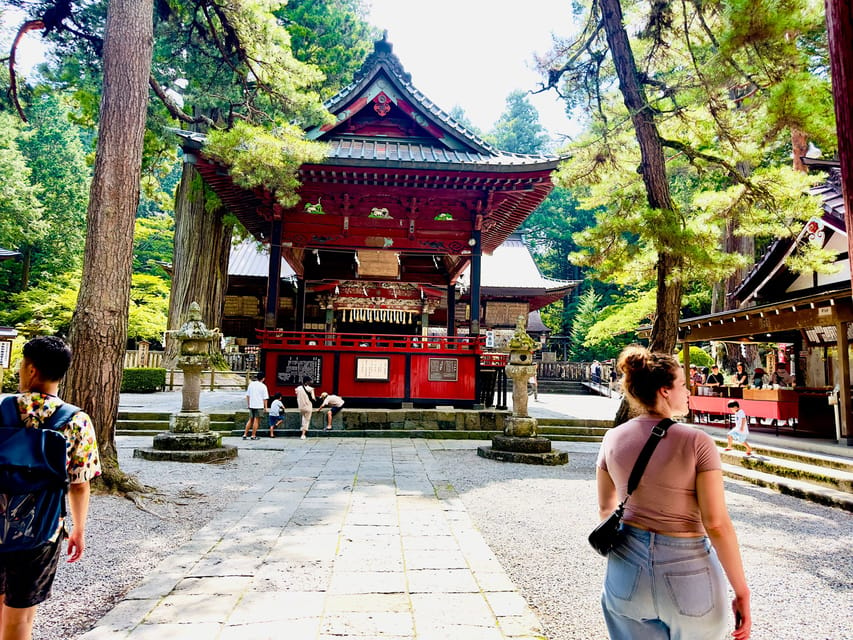
Kitaguchi Hongu Fuji Sengen Shrine has a strong connection to Mount Fuji climbing traditions. It was once a common starting point for people heading up the mountain from the north.
The shrine offers a quieter, more cultural stop than the ropeway or lake attractions. You can spend about an hour here, walk through the grounds, and get a sense of the religious side of Fuji rather than seeing it only as a scenic photograph.
I like this option for people who want historical context. If your main goal is maximum mountain viewing, you may prefer to use the time at Lake Kawaguchi or the 5th Station.
A few more Tokyo tours and experiences worth a look
Arakurayama Sengen Park and the famous pagoda view
Arakurayama Sengen Park is home to the well-known hilltop pagoda view facing Mount Fuji. Reaching the viewpoint requires 398 steps, so this is not the easiest stop for every group.
The reward is a classic composition: pagoda, hillside, and Fuji in the distance when the weather cooperates. The climb also means you should account for your group’s mobility and energy. The tour is described as wheelchair accessible, but the 398-step route to this particular viewpoint is a separate practical consideration.
A one-hour stop may be enough for the climb, photographs, and return. It may feel rushed if you want a slow visit. I would choose Arakurayama over another viewpoint if getting that famous image matters to you.
Hakone Shrine, Lake Ashi, and the red torii
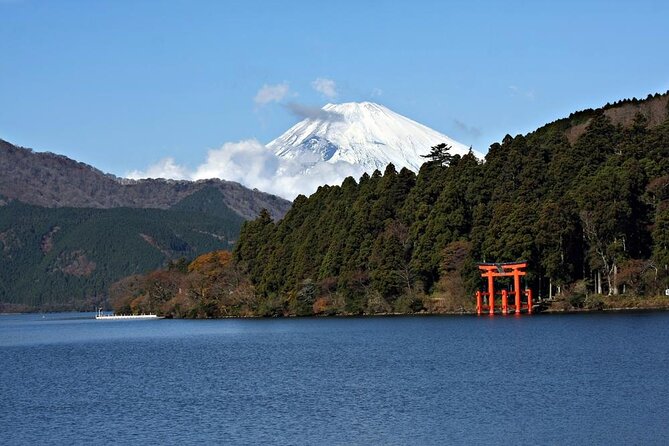
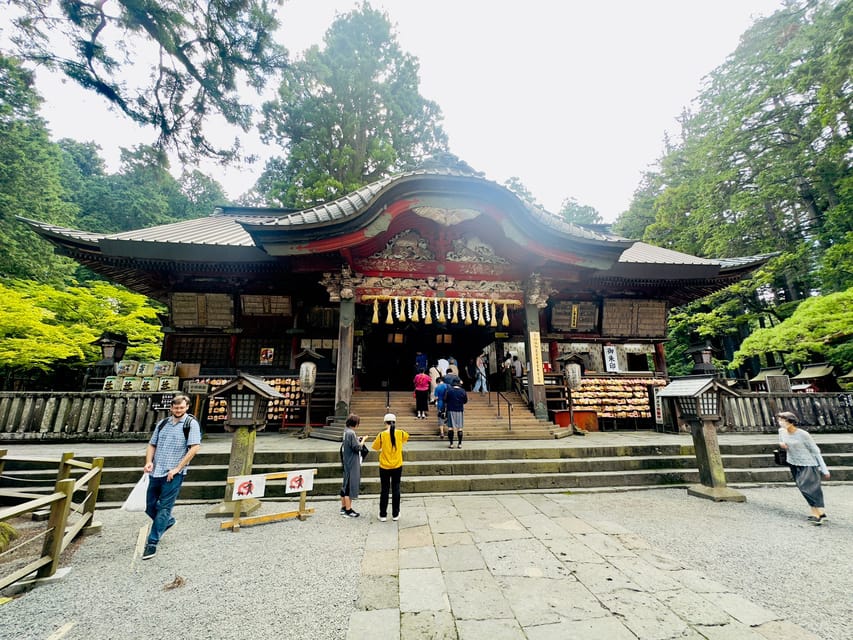
The combined route moves from the Fuji area toward Hakone. Hakone Shrine and its torii gate beside Lake Ashi provide one of the day’s strongest cultural and scenic combinations.
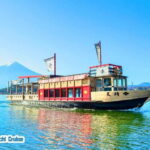
Lake Ashi, also called Ashinoko, is the setting for a possible pirate-style sightseeing cruise. The cruise costs extra and is not included in the group price. One family chose not to take the boat and instead focused on other Hakone sights.
That is a useful reminder about customization. You do not have to accept every suggested activity. If you prefer shrines and museums, your guide can use the time elsewhere. If you want a classic Hakone outing, the cruise may be worth the added fare.
The lake and shrine area can be busy, and a combined day involves more road time than a Fuji-only itinerary. You should choose Hakone and Fuji together because you value variety, not because you expect a slow visit to both regions.
Hakone Ropeway and Owakudani’s black eggs
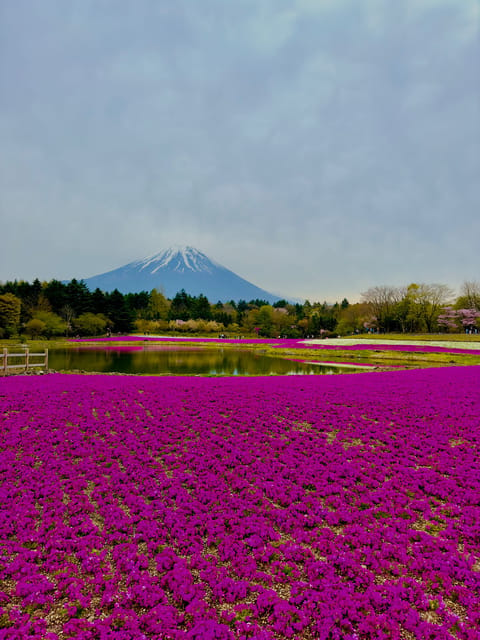
The Hakone ropeway is another paid ride, with several stations across the route. It gives you a different way to see the Hakone area, and the suggested plan includes the full four-station ride.
Owakudani is a volcanic area and is also known for black eggs. The experience is more active and unusual than simply stopping at a viewpoint. Admission and special rides are not included, so confirm the cost before committing.
One family managed to visit Hakone Shrine, the torii gate, the ropeway, Owakudani, and the Open Air Museum in a day. That shows what a well-organized private route can accomplish, but it should not be treated as a guarantee. Traffic, weather, queues, and your chosen stops can change the pace.
The Open Air Museum and the choices you must make
The Hakone Open Air Museum is another optional stop, and it gives the day a change of rhythm after lakes, shrines, and mountain viewpoints. It is not included in the tour price, so you pay admission separately.
The supplied plan also mentions Saiko Iyashi no Sato Nenba, a traditional Japanese village near the Fuji area. It can be added if time allows on a Fuji-surroundings route, but it is not something you should count on when combining Fuji and Hakone.
This is the key planning issue. You can select:
- A Fuji-area route, with stops such as the 5th Station, Lake Kawaguchi, Oshino Hakkai, Kitaguchi Hongu Fuji Sengen Shrine, Arakurayama Sengen Park, and Saiko Iyashi no Sato Nenba.
- A Fuji and Hakone route, with Lake Kawaguchi, the 5th Station, Kachi Kachi ropeway, Hakone ropeway, Lake Ashi, and Owakudani.
The descriptions indicate that you should select one route. Trying to squeeze in every place would leave you with short stops and little room for delays.
How the English-speaking guide affects the day
The service includes an English-speaking guide, with both live guiding and an English audio guide listed. The named guides connected with the bookings include Abdullah and Haseeb.
Abdullah is described as speaking English well and helping a family enjoy a good day. Haseeb was praised for organizing the time and knowing where to drop people for the main sights and activities. At the same time, one account made an important distinction: Haseeb was more of a capable driver familiar with the standard attractions than a formal guide providing detailed interpretation at every stop.
That distinction matters. If you want deep history talks at every shrine, ask before booking how much guiding and walking accompaniment is provided. If you mainly want efficient transport, local orientation, and help deciding what to do at each stop, this format may suit you very well.
A private driver-guide can also help you avoid small time losses. Knowing the right drop-off point, where an activity begins, and how long to allow can make a busy day feel manageable.
Is $387 good value for up to six people?
At $387 per group of up to six, the price works out to about $64.50 per person for a full group. That includes hotel pickup and drop-off, parking fees, and the private English-speaking guide.
For six people, that is a reasonable price for a private vehicle covering a long route from Tokyo. For two people, the per-person cost is much higher, and you should compare it with regular train and bus fares if keeping costs low is your main goal.
You still need to pay for food, drinks, ropeways, cruises, museum admission, and the Mount Fuji entry ticket. These extras can change the final cost. Decide which paid activities matter before you go, rather than adding every option on the day.
Be careful with special requests. One booking involved a 35,000 yen charge for transporting luggage and allowing the group to remain in Hakone instead of returning to Tokyo. That is a large extra fee. Get the price for any change in drop-off, luggage handling, or route before agreeing.
Who will get the most from this tour?
I would recommend this outing to a family, a small group of friends, or anyone who values a private vehicle and hotel pickup. It is especially useful if you want Fuji and Hakone in one day and do not want to manage several public transport connections.
It also suits people with mixed interests. One person can prefer shrines, another can want a ropeway, and someone else can focus on photographs. The guide can adjust the day around your priorities.
I would be cautious if you want a slow, detailed visit to every attraction. The distances are large, the day is busy, and clear views of Fuji are never guaranteed. You should also confirm exactly what your guide service includes if expert historical commentary is important to you.
Free cancellation up to 24 hours before the tour and reserve-now, pay-later booking give you some planning flexibility. The activity is listed as wheelchair accessible, but check the suitability of individual stops such as the 398 steps at Arakurayama Sengen Park.
Should you book it?
Book this tour if your priority is convenience, privacy, and a flexible route from Tokyo. The $387 group rate is most attractive for up to six people, and the included pickup, parking, and vehicle remove much of the day’s transport work.
Choose the Fuji-only plan if you want more time for viewpoints, shrines, ponds, and villages. Choose the combined Fuji-Hakone plan if you prefer a greatest-hits day with Lake Ashi, the ropeway, Owakudani, and Fuji-area stops.
Before paying, confirm the departure time, the exact route, the guide’s role, and the cost of any special request. If you accept that weather may hide Fuji and that paid rides cost extra, this is a practical way to cover a wide area without turning your day into a transport puzzle.
FAQ
Where does the tour start?
Pickup is included from your location in Tokyo. The tour returns to Tokyo after the day’s sightseeing under the standard plan.
How many people can join the private group?
The price covers a private group of up to six people.
How long does the experience last?
It is a one-day tour. The suggested schedule indicates a hotel return around 6:30 p.m., though the actual timing depends on the chosen route and conditions.
Is the tour conducted in English?
Yes. An English-speaking live guide is included, and English audio guide service is also listed.
Can I customize the itinerary?
Yes. The route can be adjusted to suit your interests, but you should select either the Fuji-area itinerary or the combined Fuji and Hakone itinerary.
Is the Mount Fuji 5th Station always included?
The 5th Station is part of the suggested routes, but access depends on weather conditions. The Mount Fuji entry ticket is not included.
Are food, drinks, cruises, and ropeways included?
No. Food and drinks, special rides, cruises, ropeways, museum admission, and other paid activities are separate costs.
Is the tour wheelchair accessible?
The activity is listed as wheelchair accessible. Some individual attractions may still have access limits, including the 398 steps to the Arakurayama Sengen Park viewpoint.
Can I cancel for a full refund?
You can cancel up to 24 hours in advance for a full refund. The booking also offers a reserve-now, pay-later option.
More Guided Tours in Tokyo


More Hakone Day Trips in Tokyo
More Mt Fuji Day Trips in Tokyo

More tours in Tokyo we've reviewed
Mt Fuji Day Trips, compared.
 ★ 5.0Mt Fuji and Hakone 1-Day Bus Tour Return by Bullet TrainFrom $163
 ★ 4.0Mt Fuji & Hakone Cruise, Drum Show Bullet Train 1 Day from TokyoFrom $149
 ★ 4.4Tokyo Mt Fuji 5th St & Hakone Cruise Bus Tour w/Bullet TrainFrom $15410 hours
 ★ 4.5From Tokyo: Mount Fuji Full-Day Sightseeing TripFrom $6810 hours
 ★ 4.7Tokyo: Mt. Fuji Tour, Hakone Ropeway, Owakudani, Lake AshiFrom $5410 hours
 ★ 4.4Tokyo:Mt.Fuji,Kawaguchiko Oishi Park,Arakurayama Sengen ParkFrom $5410 hours