Reviewed · SUSHI MAKING CLASSES
Sushi-Making Experience
The best part of this two-hour Tokyo workshop is that you do not just watch a chef prepare sushi. You handle the rice, fillings, and seaweed yourself, then sit down and eat the finished pieces. It gives you a useful look at sushi as both food and a careful Japanese dining custom.
In This Article
- Key points to know before booking
- Meeting your instructor opposite Tokyo Tower
- A short introduction to sushi in Japanese culture
- Learning three different sushi techniques
- Why the small group matters
- From preparation to your first sushi meal
- Japanese dining etiquette at the table
- What you take home after the class
- Is $106 per person good value?
- Who should book this workshop?
- Timing, language, and cancellation details
- Should you book the sushi-making experience?
- FAQ
- Where does the sushi-making workshop meet?
- How long does the sushi class last?
- Which sushi styles will I learn to make?
- Is the workshop taught in English?
- Are ingredients and a meal included?
- What do I receive to take home?
I like the small group of up to 10, since the instructor can explain each technique and help when your rolls go crooked. I also like the two take-home kits, which give you a practical way to repeat the lesson. The main consideration is the price: at $106 per person, this is not a cheap meal, so it makes the most sense if you want a hands-on cultural activity rather than simply a plate of sushi.
Key points to know before booking
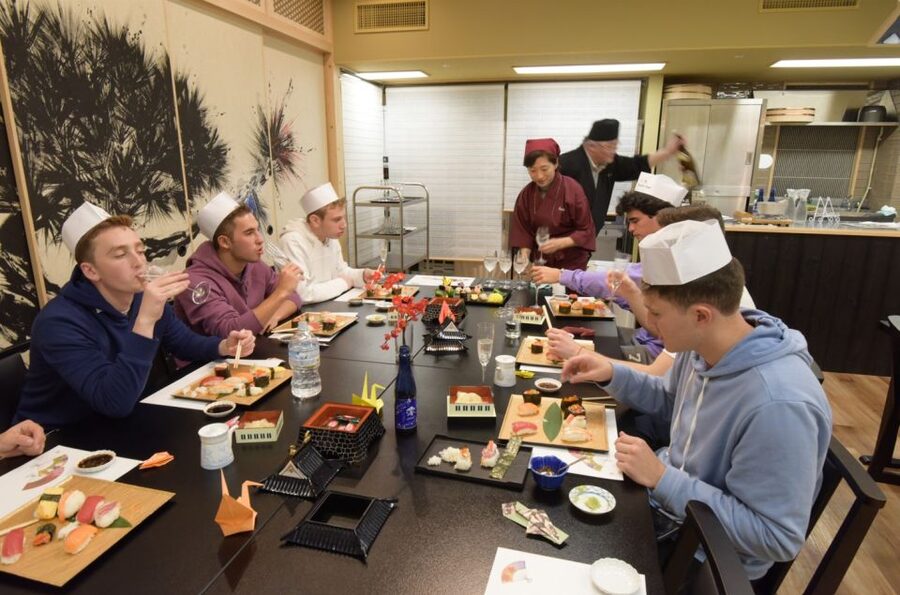
- Three sushi styles in one class: Learn to prepare nigiri zushi, gunkan maki, and hosomaki zushi.
- English instruction: A nationally accredited sushi instructor leads the workshop and explains the methods in English.
- Small class size: The group is limited to 10 participants, allowing time for questions and help.
- Eat what you make: Your finished sushi becomes the meal, served with traditional condiments and dining etiquette.
- Useful souvenirs: Two sushi-making kits are included, so you can practise at home.
- Easy Tokyo landmark meeting point: Meet at the Kikai Shinko Kaikan building opposite Tokyo Tower.
Meeting your instructor opposite Tokyo Tower
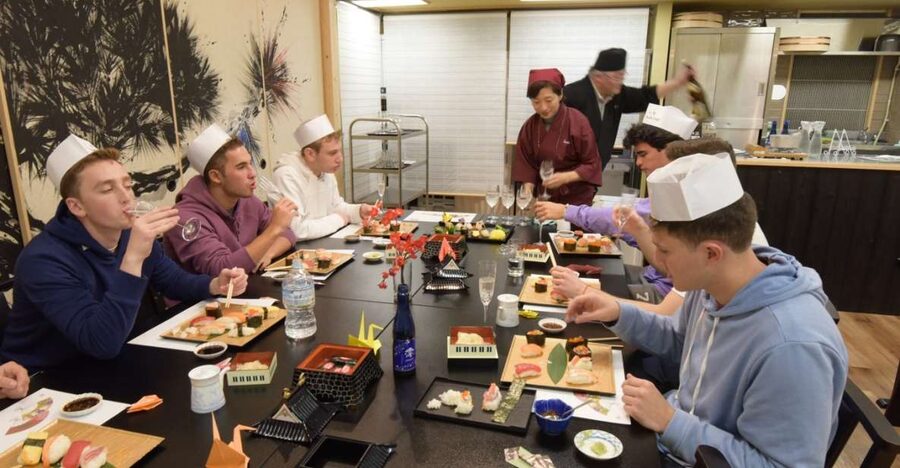
Your meeting point is the main entrance on the first floor of the Kikai Shinko Kaikan building, directly opposite Tokyo Tower. That landmark makes the area easier to identify, though you still need to enter the correct building and find the instructor at the entrance.
If you cannot locate the instructor, go to True Japan Tour in Room B109 on the basement level. This is a useful backup detail to save on your phone before you arrive. Hotel pickup and drop-off are not included, so you need to make your own way to the building.
The location also gives you a simple way to combine the class with time around Tokyo Tower. The workshop itself lasts two hours, which leaves room for sightseeing before or afterward without taking up your whole day. Check the available starting times when booking, since the activity does not list one fixed daily departure.
A few more Tokyo tours and experiences worth a look
A short introduction to sushi in Japanese culture
The class begins with an overview of sushi in Japanese culture. This matters because sushi is more than a set of ingredients rolled together. The shape, handling, presentation, condiments, and way of eating all form part of the experience.
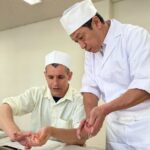
You then prepare the ingredients before watching a demonstration. The order is sensible: first you see the basic movements, then you try them yourself with an instructor nearby. If you have never made sushi, this gradual approach should feel less intimidating than being handed ingredients and told to get started.
The class is taught in English. That is especially helpful when you are learning small differences between the three styles. A quick demonstration can show how much rice to use, how to shape it, and how to keep the finished sushi neat.
Learning three different sushi techniques
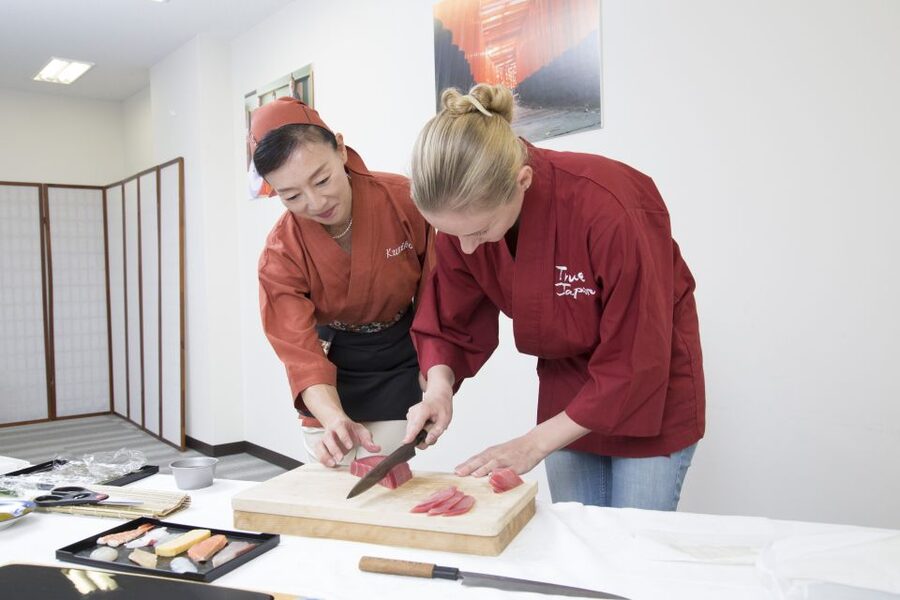
The workshop covers three familiar but distinct forms. Learning all three gives you a better sense of how sushi changes with its shape and construction.
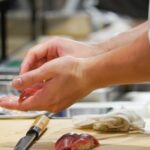
Nigiri zushi is the hand-formed style. Rice is shaped into a compact base, with a topping placed over it. This is often the style people picture first when they think of sushi, but getting the rice into a tidy form takes more care than it may appear.
Gunkan maki has a different structure. The rice is wrapped with seaweed to create a small vessel for its topping. The method is useful because it shows how seaweed can provide support rather than simply forming a tight roll.
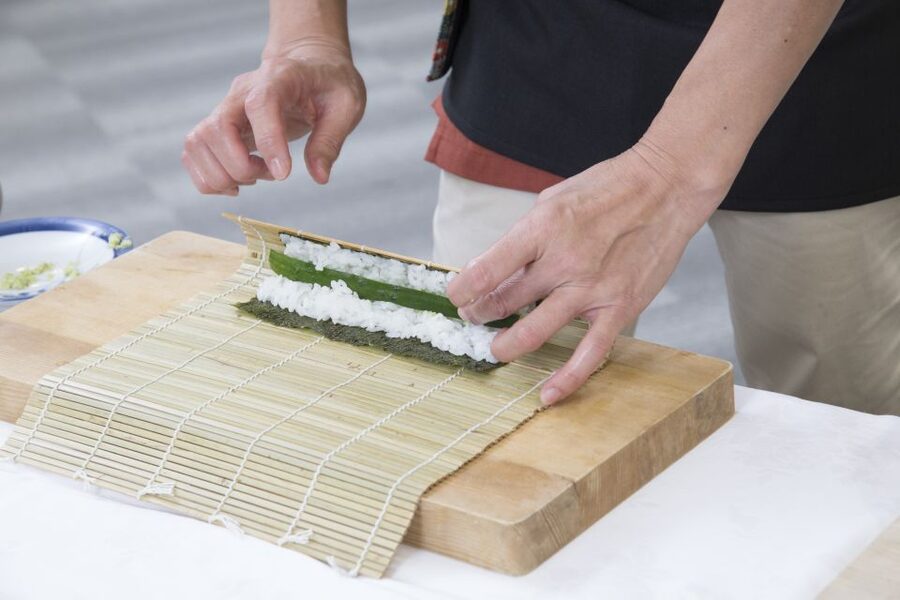
Hosomaki zushi is the narrow rolled style. You work with seaweed, rice, and filling to create a compact cylinder before cutting it into pieces. Rolling too loosely or using too much rice can affect the shape, so this is where hands-on guidance becomes valuable.
You make all three during the class, rather than choosing just one technique. That variety keeps the session active and gives you several methods to repeat later with the included kits.
Why the small group matters
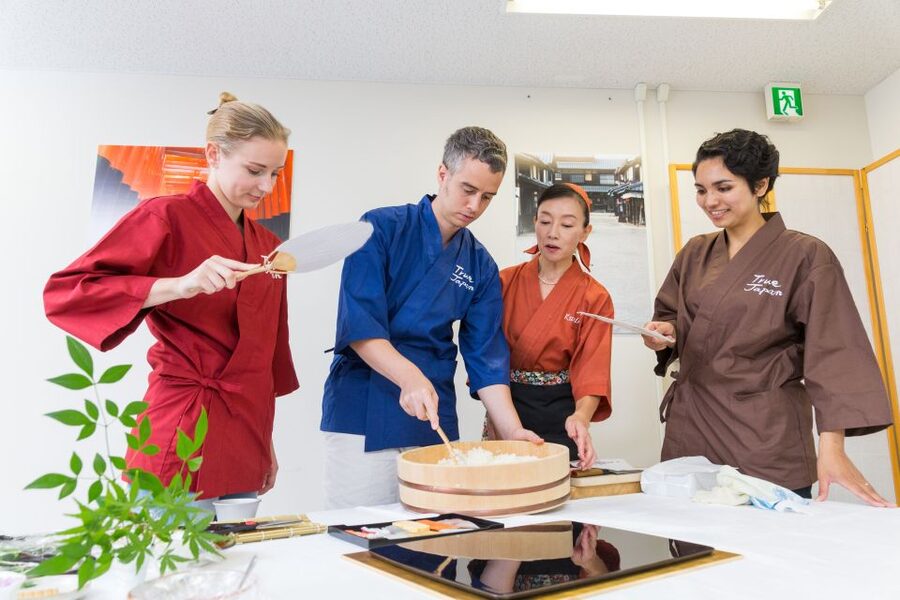
The class is limited to 10 participants. That is not a private lesson, but it is small enough to make questions and individual assistance realistic.
The available feedback points to the instructors explaining the process clearly and helping participants when needed. That is important in a practical class, where a short correction can make the difference between a firm roll and a loose one. You should expect a group setting, but not a large demonstration where you are left working on your own.
The activity is also listed as wheelchair accessible. Since no further access details are provided, you may want to confirm any specific requirements before booking, but the stated accessibility is useful for planning.
From preparation to your first sushi meal
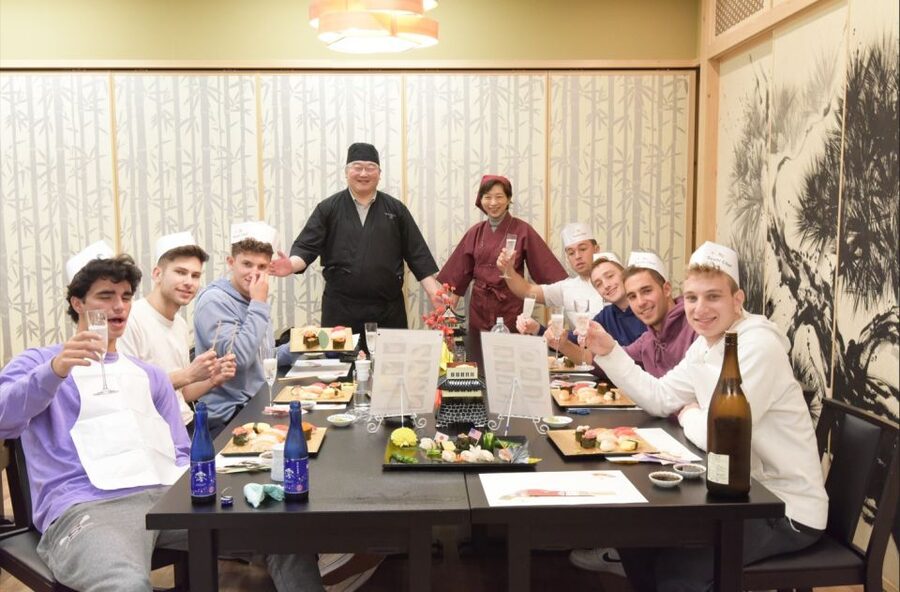
After the demonstration and practice, you finish making your pieces. This is the point where the class shifts from instruction to lunch or a light meal, depending on the starting time you choose.
Your sushi is described as traditionally made and photo-worthy, but the real benefit is that you understand the work behind the presentation. A neat piece depends on proportion and control. Even if your first attempt looks less polished than the instructor’s, you still get to eat the result.
A range of sauces and sushi condiments is provided. These let you try different flavor combinations and see how sushi is traditionally paired at the table. The class does not list every condiment, so you should not expect a fixed tasting menu or a specific set of fish beyond the ingredients supplied for the workshop.
One practical point: the ingredients and sushi meal are included in the $106 price. You are not paying the workshop fee and then buying a separate lunch. That helps the value, although the cost remains high compared with an ordinary sushi meal in Tokyo.





Japanese dining etiquette at the table
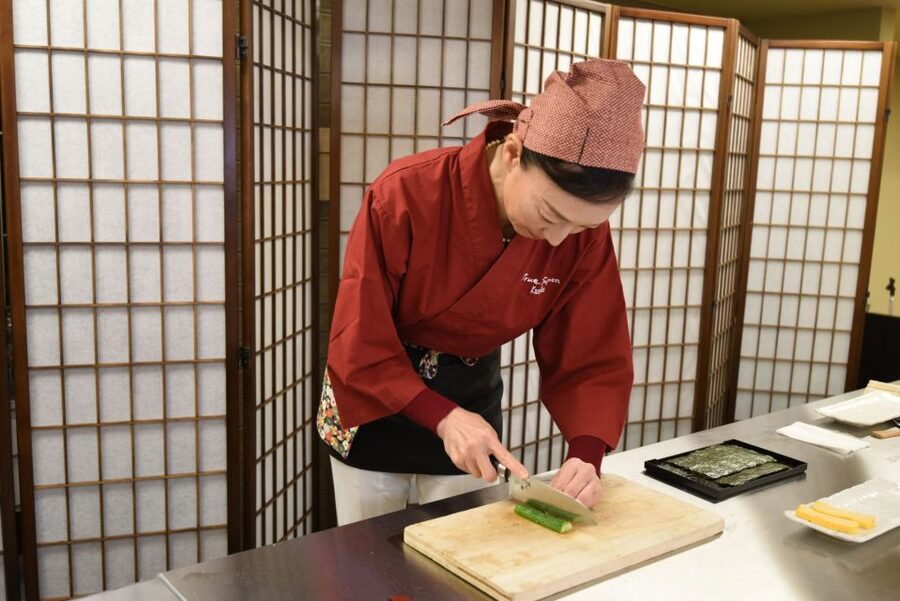
The final part covers Japanese dining etiquette while you eat the sushi you have made. This adds context that a standard cooking class may skip.
You learn how to approach the finished food, use the accompanying condiments, and take part in a meal in a more traditional way. The etiquette lesson is likely to be most useful for people who plan to eat at sushi restaurants during the rest of their Japan trip. It gives you a little more confidence at the table without turning the workshop into a formal lecture.
I would treat this as a practical introduction rather than a complete guide to Japanese dining customs. The activity lasts only two hours and has three sushi techniques to cover, so the etiquette section is one part of a broader class.
What you take home after the class
Two sushi-making kits are included. This is one of the strongest practical features of the experience because the lesson does not end when you leave the building.
The kits are described as easy to use and intended for practising at home. They give you a way to repeat the basic forms while the instructions are still fresh. You can also use them as a souvenir with a clear connection to the activity, rather than an ordinary Tokyo trinket.
The information does not specify the exact contents of each kit, so you should not assume they include all ingredients or specialist tools for a full sushi meal. Think of them as practice aids, not a complete home sushi kitchen.
Is $106 per person good value?
At $106 per person, this experience sits in the premium range for a two-hour activity. The price is easier to justify if you value instruction, cultural context, a meal, and take-home equipment as one package.
You receive:
- A workshop led by a nationally accredited sushi instructor
- All ingredients used during the class
- The sushi meal you prepare
- Two sushi-making kits
- Instruction in three sushi techniques
- An introduction to Japanese dining etiquette
If you only want to eat sushi, this is poor value compared with visiting a restaurant. You are paying for participation, not just food. If you want to understand how sushi is made and leave with skills you can practise, the package makes more sense.
The small group also improves the value. A large class could make $106 feel steep, particularly for beginners who need help. With no more than 10 participants, you have a better chance of getting direct guidance from the instructor.
Who should book this workshop?
This activity suits first-time visitors to Japan who want a straightforward introduction to sushi and Japanese dining customs. It also works well for couples, families, and small groups looking for something different from temples, shopping, and observation decks.
You do not need prior sushi-making experience. The structure starts with an explanation, follows with a demonstration, and then lets you practise three methods under guidance. That makes it a good choice if you enjoy learning by doing.
Food lovers will appreciate the chance to compare nigiri, gunkan, and hosomaki in one sitting. The take-home kits make the class more useful for anyone who likes to recreate holiday activities after returning home.
This may not suit you if you are looking for an in-depth chef training course, a long restaurant meal, or a private experience. It is also worth considering the cost if you are travelling on a tight budget. The class is friendly and practical, but it is still a short introduction rather than a full culinary programme.
Timing, language, and cancellation details
The duration is two hours, and starting times depend on availability. Build in enough time to reach the Kikai Shinko Kaikan building opposite Tokyo Tower, especially if you are unfamiliar with the area.
Instruction is in English. The group is limited to 10 people, and the activity is wheelchair accessible. Hotel transportation is not included.
You can cancel up to 24 hours before the activity for a full refund. The reserve-now-and-pay-later option also helps if your Tokyo schedule is still changing, since you can hold a place without paying immediately.
Should you book the sushi-making experience?
Book it if you want more than a meal. The strongest reasons are the three hands-on sushi styles, the small group, the English-speaking accredited instructor, and the two kits you can use afterward.
The class offers a good cultural stop near Tokyo Tower, especially on a day when you want an activity with a clear beginning and end. Just keep the price in mind. At $106, it is best for people who value instruction and participation. If you only want excellent sushi at the lowest cost, spend the money at a restaurant instead.
FAQ
Where does the sushi-making workshop meet?
Meet your instructor at the main entrance on the first floor of the Kikai Shinko Kaikan building, directly opposite Tokyo Tower. If you cannot find the instructor, visit True Japan Tour in Room B109 on the basement level.
How long does the sushi class last?
The workshop lasts two hours. Available starting times vary, so check the schedule when booking.
Which sushi styles will I learn to make?
You will learn three styles: nigiri zushi, gunkan maki, and hosomaki zushi.
Is the workshop taught in English?
Yes. The instructor teaches the class in English.
Are ingredients and a meal included?
Yes. Ingredients and the sushi meal are included in the activity price.
What do I receive to take home?
You receive two sushi-making kits for practising at home.
More Sushi Making Classes in Tokyo
More tours in Tokyo we've reviewed












Sushi Making Classes, compared.
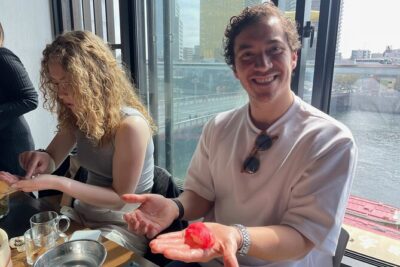 ★ 5.0Sushi Making Tokyo Roll and Authentic Japanese Sushi ClassFrom $59
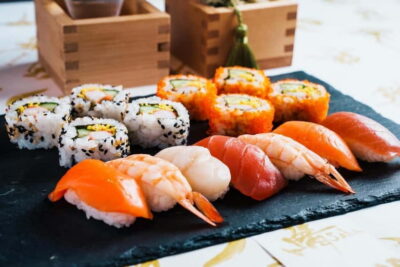 ★ 4.9Tokyo: Roll and Authentic Sushi Making Class in AsakusaFrom $581h 40m
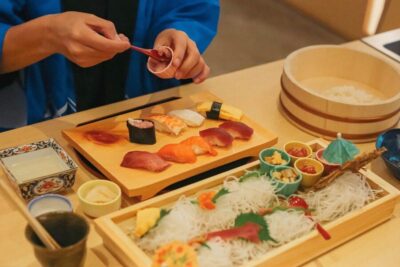 ★ 4.9Tokyo: Sushi Making Class in a Happi Coat near a Famous SpotFrom $421h 30m
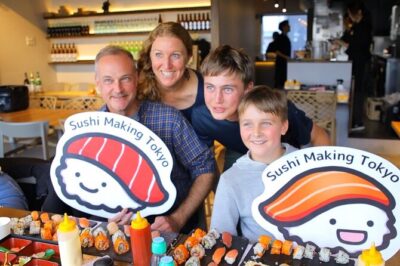 ★ 5.0Sushi Making Tokyo! Popular Maki Sushi & Japanese Sushi(+Recipe!)From $63
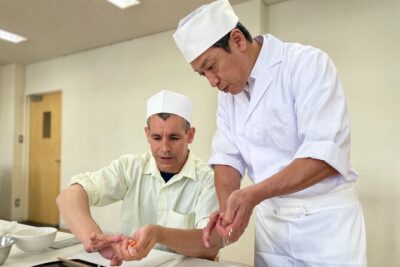 ★ 5.0Tokyo Sushi Making Class in Tsukiji with Professional ChefFrom $49
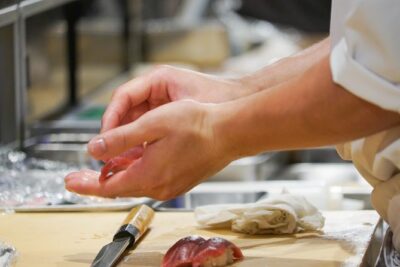 ★ 5.0Tokyo Night Foodie Tour in Shinjuku – Seasonal Sushi, Wagyu BeefFrom $111