Reviewed · NIKKO DAY TRIPS
Audio Guide App Japan Tokyo Kyoto Takayama Kanazawa Nikko and others
Japan is easier to enjoy when you can pause, change plans, and follow your own interests. This eight-day audio guide app gives you walking and car routes through Tokyo and Kyoto, plus material for Takayama, Kanazawa, Nikko, and other destinations. I like the mix of short audio stops and Google Maps links, and I like that you can build a custom route instead of following a fixed group schedule.
In This Article
- Key points at a glance
- What you are buying for $87
- How the audio format works in practice
- Tokyo, from Odaiba to the old temple districts
- Shibuya and Shinjuku, with room to choose
- Asakusa and eastern Tokyo
- Kyoto’s northern temples and garden routes
- Arashiyama, Gion, and Kyoto essentials
- Days three through eight: a major information gap
- Food routes and travel documents
- Language choice, access, and practical limits
- Who will get the most from this app
- Should you book the Japan audio guide?
- FAQ
- Where is this audio guide available?
- How long does access last?
- Which languages are available?
- Does the experience include walking routes?
- Does it include car routes?
- Can I make my own route?
- Is the experience refundable?
The package also covers food, temples, neighborhoods, and practical information about Japan. That makes it useful for a first visit, especially when you want some structure without hiring a private guide. The main concern is the app itself: one buyer could not use it because the access code never arrived and the instructions were not clear, so you should treat setup as an important part of the experience.
Key points at a glance
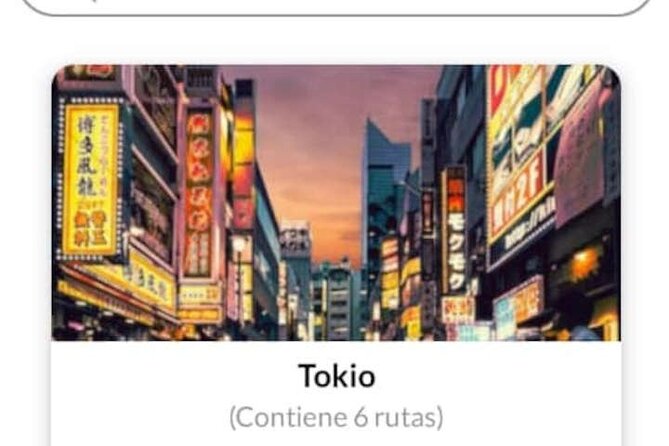
- Tokyo coverage is wide: Explore Odaiba, Shibuya, Shinjuku, Asakusa, central Tokyo, and eastern neighborhoods.
- Kyoto gets the deepest treatment: Routes cover northern Kyoto, Fushimi Inari, Higashiyama, Arashiyama, Gion, and the city’s major temples.
- Six languages are available: Choose English, Spanish, Portuguese, German, Italian, or French.
- Audio stops are brief and flexible: A Takayama user found the short explanations a good fit for a family with teenagers.
- Walking and car routes are included: You can follow neighborhood routes on foot or use the driving routes to connect spread-out sights.
- The web panel adds practical storage: Use it to customize a route and keep travel documents in one place.
What you are buying for $87
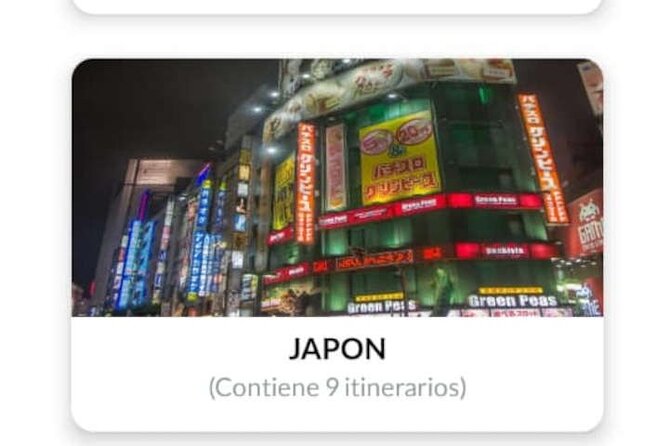
At $87, this is not a single guided walk. It is a broad digital sightseeing package meant to support up to eight days in Japan. The value depends on how much of the material you use and how many destinations are part of your trip.
If you visit only Tokyo, you may not use enough of the package to justify the full price. If your route includes Tokyo and Kyoto, with side trips to places such as Takayama, Kanazawa, or Nikko, the price becomes easier to defend. A live guide would give you conversation and immediate answers, but this app gives you control and a much lower commitment to a timetable.
I especially like the way the package combines neighborhood routes with individual points of interest. You are not limited to a list of monuments. You can choose a district, follow a suggested path, and listen only when you reach something that interests you.
The private-tour label needs a little care. This is a private activity in the sense that only your group participates. It does not mean you receive a live guide who walks beside you. The supplied information describes a mobile ticket, audio content, geolocation, and a web panel, not an in-person escort.
If you're still narrowing it down, here are other tours in Osaka we've reviewed.
How the audio format works in practice
Each destination is divided into points of interest with text and audio information. Locations connect to Google Maps, and geolocation helps you find your way to the next stop. You can use the walking routes for compact districts and the car routes for sights that are spread across a larger area.
That flexibility matters in Japan. Tokyo and Kyoto are not places you can neatly finish in one straight line. A temple may take longer than expected, a market may tempt you to stop, or a crowded street may make you change direction. An app lets you skip a stop without holding up anyone else.
The short format appears to be one of the stronger features. A family using the Takayama material found that brief audio clips gave teenagers enough information without asking them to listen to long lectures. That is a useful guide for your own planning: use the audio to add context, not to replace time spent looking around.
The weakness is the lack of clear detail about the app setup in the supplied information. One user reported no access code and found the application difficult to use. Since the experience is non-refundable, check your booking confirmation and access instructions promptly. If something is missing, contact the provider before your sightseeing days begin.
Tokyo, from Odaiba to the old temple districts
The Tokyo material is divided into several sections, which is a sensible approach for a city this large.
The first section covers Odaiba and nearby waterfront sights with 18 points of interest. You can expect stops connected with Tokyo Tower, the Fuji TV Headquarters, Daiba Park, Rainbow Bridge, the Statue of Liberty replica, Gundam, DiverCity, Miraikan, Aqua City, Roppongi Hills, Decks, Sengakuji Temple, the Nezu Museum, the Mori Art Museum, Shibakoen, the Ako Gishi Museum, and a Sumida river cruise.
This is a broad mix. You get modern Tokyo, museums, shopping areas, parks, and historical sites rather than one narrow theme. Odaiba’s points are spread out, so the car route may be useful if you want to cover the full section instead of building a walking day around just one area.
Central Tokyo includes Nezu Shrine, Shinobazu Avenue, Rikugien, Koishikawa Korakuen Gardens, Akihabara, Ginza, the East Gardens, and Kitanomaru Park. The route also covers the Bunkyo, Chiyoda, and Chuo districts by car.
I like this section for the contrast it offers. Akihabara and Ginza show very different sides of the capital, while the gardens and shrine areas give you quieter places to stop. The drawback is distance. These are not all next-door sights, so the car route is more practical than treating the whole list as one continuous walk.
Shibuya and Shinjuku, with room to choose
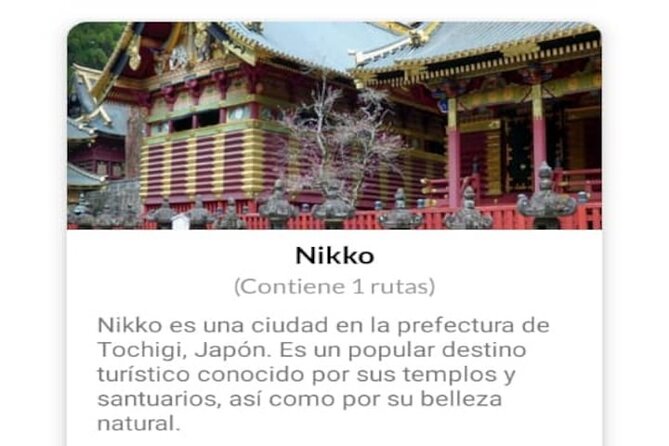
The Shibuya section contains 29 points of interest and two walking routes. Stops include Meiji Shrine, Omotesando Avenue, the Imperial Garden, the Hachiko Statue, Shibuya 109, the Nezu Museum, and Takeshita Street.
This is a good place to use the app selectively. You can listen at the major landmarks, then put the phone away while you watch the street life around Shibuya or browse Takeshita Street. Meiji Shrine and Omotesando also give the route a calmer counterpoint to the famous crossing area.
The inclusion of both Meiji Shrine and the Nezu Museum in the wider Tokyo coverage means you should check for repeated points before setting out. Repetition is not a serious problem in a large app, but it is worth planning your day so you do not cross the city twice for similar material.
Shinjuku has 13 audio stops, including Shinjuku Gyoen National Garden, the Tokyo Metropolitan Government viewpoint, Toho cinemas, and other neighborhood points. A car route is included.
Shinjuku is best treated as its own half-day or day, rather than squeezed into a larger Tokyo circuit. The app can help you connect the garden, viewpoint, and entertainment areas, but it cannot solve the city’s size for you. You still need to set a reasonable pace.
Asakusa and eastern Tokyo
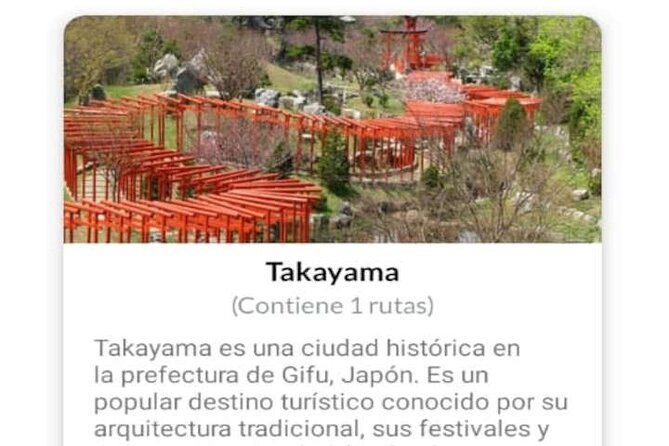
The temple and market section brings together Senso Temple, Kiyomizu Kannon-do Temple, Tokyo Skytree, Bentendo Temple, the Edo-Tokyo Museum, and Ameya-Yokocho Market. This is one of the most useful combinations for a first visit because it links religious sites, a major city view, museum time, and food shopping.
Ameya-Yokocho gives you a chance to pause the audio and simply explore. That is where a flexible guide earns its keep. You can listen before entering a temple, then spend as long as you like at the market without feeling tied to a schedule.
The eastern Tokyo section contains 14 points in the Edogawa and Koto areas. It includes Tokyo Big Sight, teamLab Planets, the Edo Museum, Tokyo Disneyland, Tokyo DisneySea, Funabori Tower Hall, and Kiyosumi Garden.
This section is ambitious. Some stops appeal to families, some to architecture and exhibition fans, and some to people who want a garden break. You should not expect to cover all of them in one easy outing. Use the map and geolocation tools to group nearby choices, then leave the rest for another day.
Kyoto’s northern temples and garden routes
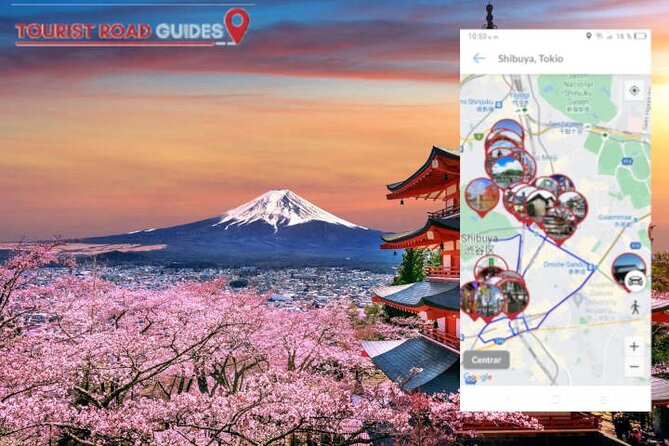
Kyoto receives the most detailed named coverage. The northern section has 19 points, including Kinkaku Temple, Ryoan Stone Garden, Shimogamo Shrine, Daikaku Temple, Myoshin Temple, Ryoan Temple, Mount Kurama, Kamigamo Shrine, and Kitano Tenmangu Shrine.
This is where a car route can save planning time, since the sights are spread across northern Kyoto. The audio stops should help you understand why each place matters, but you will still need to allow time for walking inside temple grounds and gardens.
The route also covers the southern and southeastern sights of Fushimi Inari Taisha Shrine, Daigo Temple, Ninna Temple, Jonangu Shrine, and other points. Fushimi Inari is particularly suited to self-guided use because you can decide how far along the torii path you want to go before returning.
Higashiyama has 27 points of interest. The list includes Heian Shrine, Kyoto National Museum, Sanjusangendo Temple, Eikan Temple, the Kyoto Art Museum, Nijo Castle, Chion Temple, and the Kyoto Railway Museum.
This is a substantial collection, not a single stroll. The app gives you a useful starting framework, but you should divide it into smaller outings. A day centered on museums and castles will feel quite different from a day focused on temples and gardens.
Arashiyama, Gion, and Kyoto essentials
Arashiyama includes the Bamboo Forest, Daikaku Temple, Tenryu Temple, Saiho Temple, and other stops connected by a walking route. The walking format suits this area better than a long list of separate map pins. You can use the audio at selected points, then take time with the paths and temple grounds.
The main caution is that the route may tempt you to pack too much into one visit. The Bamboo Forest, Tenryu Temple, and other sites each deserve attention. Pick your priorities before leaving, especially if you have only one day in western Kyoto.
The Gion route covers the geisha district, Yasui Sanctuary, Pontocho Street, and other local points. This is useful because Gion is easy to experience as a pretty collection of lanes without understanding how the district fits into Kyoto’s wider culture.
The Essentials of Kyoto section gathers Kiyomizu Temple, Ryoan Temple, Higashiyama Street, Heian Shrine, Kinkaku Temple, Nijo Castle, and the Philosopher’s Path. Think of it as a planning tool for your first Kyoto visit, not an instruction to see everything at once.
Days three through eight: a major information gap
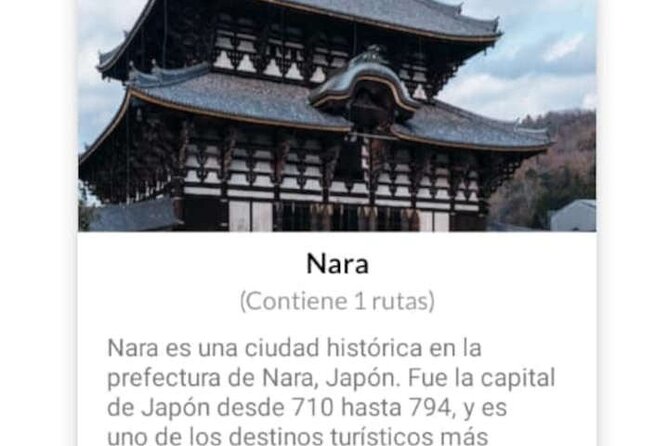
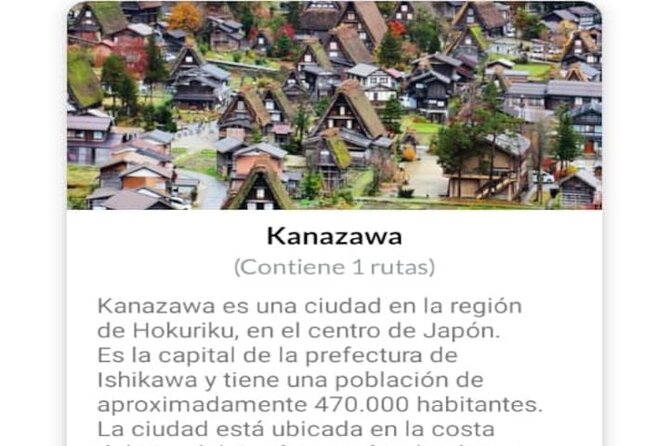
The first two days contain named routes and recognizable stops. Days three through eight are described only as individual points with detailed audio information. The supplied details do not identify those locations.
That matters when you are deciding how to plan an eight-day trip. The overall title indicates coverage of Takayama, Kanazawa, Nikko, and other Japanese destinations, and a Takayama user found the short audio stops useful. Still, you do not receive enough named information here to build a precise day-by-day plan for those places.
I would use the known Tokyo and Kyoto sections first, then open the app and confirm which points are available for your actual route. Do not assume that every destination has the same number of stops or the same type of walking and car route.
The Takayama material seems well suited to families because each stop can be brief and easy to skip. That is a practical strength in a smaller historic town, where you may want a little context at many places rather than a long lecture at one site.
Kanazawa and Nikko are named in the product title, but no specific points are supplied for them. The safest advice is simple: verify the exact content before you count on the app for those days.
Food routes and travel documents
The package includes gastronomic routes and general information about Japan. The supplied details do not name the restaurants, dishes, or food neighborhoods, so you should view this as guidance rather than a reservation service or food tour.
I like the idea of pairing food routes with sightseeing routes. Eating is one of the best ways to break up a temple-heavy day, and a route can give your day a useful theme. Still, the app does not replace checking opening hours, prices, or dietary needs yourself.
The web panel also acts as a repository for travel documents. You can customize your own route and keep trip material together, which is helpful if you are moving between several cities. Since this is an app-based product, keep your documents accessible before heading out rather than waiting until you are standing at the next point.
Language choice, access, and practical limits
Audio and text are available in English, Spanish, Portuguese, German, Italian, and French. That is a strong choice for mixed-language groups, and it lets you choose the language you understand best instead of relying on one shared guide.
The mobile ticket makes the experience portable, but your phone becomes the main tool for directions and commentary. The data provided does not explain offline access, battery use, audio duration, or how the access code is delivered. Those details are worth checking before you set off.
Most people can participate, and service animals are allowed. Confirmation is received at booking. The experience cannot be refunded or changed for any reason, so this is a poor fit if your Japan plans are still uncertain.
Who will get the most from this app
I would recommend it most to independent visitors who want a plan but dislike fixed schedules. It should also suit families, since the short audio format lets you skip stops and keep the day moving.
It is a good match for:
- First-time visitors who want basic context at major sights
- Families with different attention spans
- Small private groups that want to set their own pace
- People visiting more than one Japanese city
- Anyone who prefers text, maps, and audio in one place
I would be more cautious if you want a live expert, personal recommendations, or help when plans change. The app gives you information, but it does not provide a human guide to answer questions on the spot.
Should you book the Japan audio guide?
Book it if you are visiting several covered destinations and will use the routes over much of the eight-day period. At $87, the ability to explore Tokyo and Kyoto in several languages, then add material for Takayama, Kanazawa, Nikko, and other cities, can be good value.
Skip it if you want a single polished itinerary with every stop clearly named in advance, or if you are uncomfortable troubleshooting an app. The missing detail for days three through eight and the reported access-code problem deserve attention.
Before paying, confirm that the app opens, the access code works, and the destinations you plan to visit are present. If those basics are in place, this is a flexible way to add context to Japan without surrendering control of your day.
FAQ
Where is this audio guide available?
It covers Tokyo, Kyoto, Takayama, Kanazawa, Nikko, and other destinations in Japan. The supplied information gives the most detailed named coverage for Tokyo and Kyoto.
How long does access last?
The experience is designed for approximately eight days.
Which languages are available?
You can use the audio guide in English, Spanish, Portuguese, German, Italian, or French.
Does the experience include walking routes?
Yes. It includes walking routes through neighborhoods, temple areas, Arashiyama, and other points of interest.
Does it include car routes?
Yes. Car routes are provided for several areas, including parts of Tokyo and Kyoto.
Can I make my own route?
Yes. The web panel lets you customize your own route.
Is the experience refundable?
No. It is non-refundable and cannot be changed for any reason.
More tours in Osaka we've reviewed
Nikko Day Trips, compared.
 ★ 4.5Tokyo: Nikko Toshogu Shrine and Kegon Waterfall TourFrom $8410h 30m
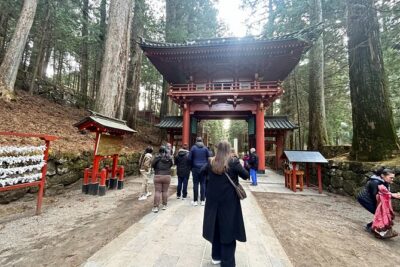 ★ 5.0Nikko, Kegon Waterfall & Chuzenji Lake from TokyoFrom $89
 ★ 4.4From Tokyo: Nikko, Toshogu Shrine, Waterfall & Chūzenji LakeFrom $54
 ★ 4.3Nikko: Edo Wonderland Edomura Cultural Theme Park TicketFrom $351 day
 ★ 4.8Tokyo: Nikko World Heritage Private Day Trip Hotel Pick-upFrom $39011 hours - 1 day
From Tokyo: Nikko World Heritage Sight Full Day Private TourFrom $36210 hours