Hakuho Sho is the greatest sumo wrestler of all time by almost any statistical measure. Between 2001 (his debut) and 2021 (his retirement) he won 45 tournament championships (yusho), more than any wrestler in the 400-year history of organised sumo. His closest statistical rival, Taiho, won 32. The gap between first and second place on the all-time list is larger than the gap between second place and tenth.
In This Article
- Quick facts at a glance
- Who is Hakuho Sho?
- What makes Hakuho the greatest?
- Tournament victories
- Match wins
- Consecutive winning streaks
- Yusho in consecutive years
- Why was his nationality controversial?
- What was distinctive about his fighting style?
- How did he retire?
- What does sumo look like post-Hakuho?
- Where can you see sumo in Tokyo today?
- What’s a sumo tournament actually like?
- How does Hakuho’s legacy affect today’s sumo?
- What about documentary and book sources?
- Is sumo worth watching as a tourist?
- Who are the Hakuho rivals you should know?
- How has sumo changed commercially since Hakuho?
- Final verdict on Hakuho
This guide walks through who Hakuho actually was, why his dominance matters culturally (he was Mongolian, not Japanese — which complicated his status as Japan’s national sport champion), what sumo looks like today post-Hakuho, and how visitors to Tokyo can see sumo in his legacy.
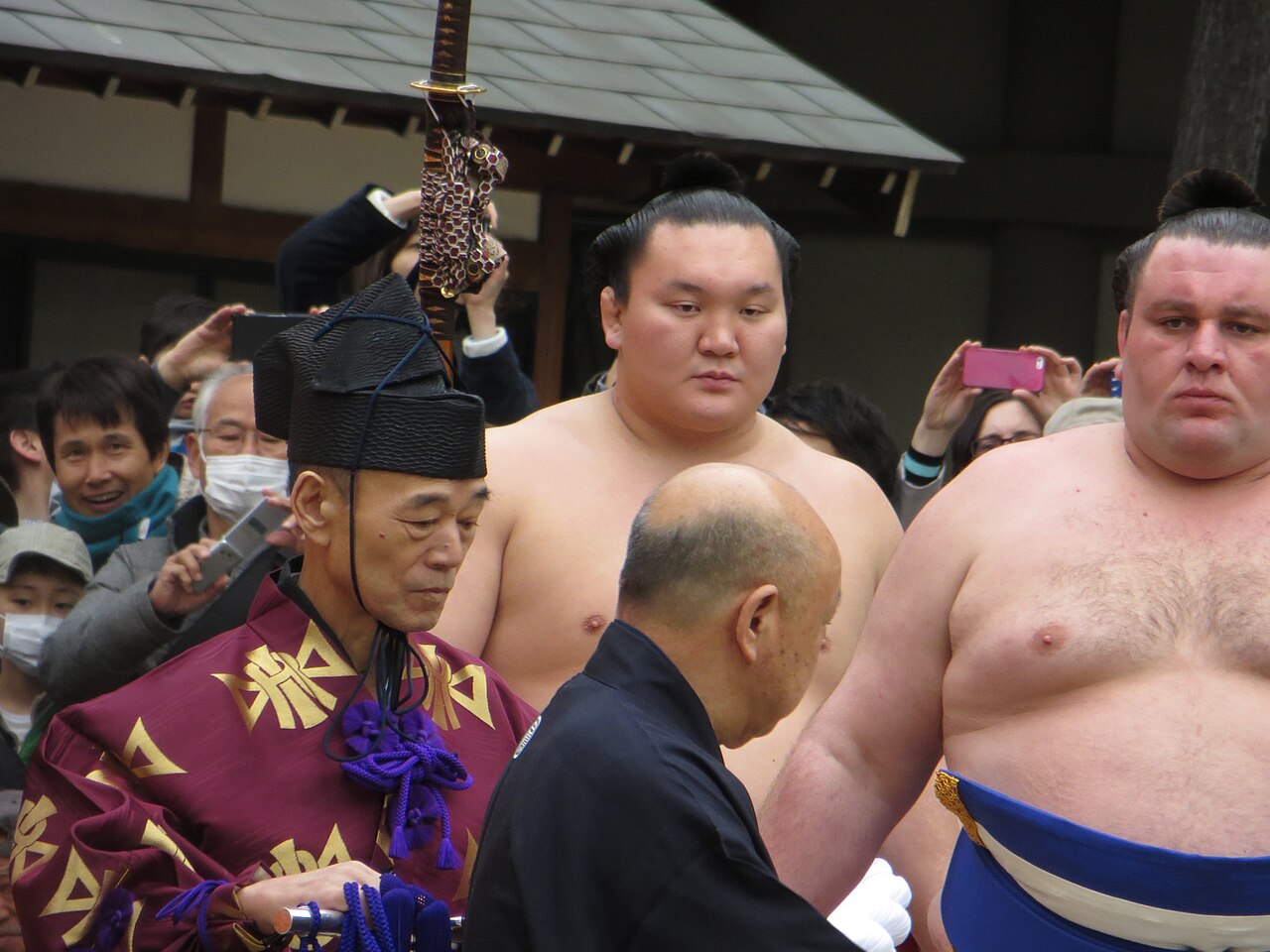
Quick facts at a glance
- Full name: Hakuho Sho (白鹏 翔), born Davaajargalyn Mönkhbat (Мөнх-Бат)
- Born: 11 March 1985, Ulaanbaatar, Mongolia
- Nationality: Japanese citizen since 2019 (born Mongolian)
- Career: 2001 debut, 2007 promoted to yokozuna, 2021 retirement
- Tournament championships (yusho): 45 — most in sumo history
- Height/weight at peak: 192 cm, ~155 kg
- Now: Stable master (oyakata) as Miyagino-oyakata, later rebranded; currently heading his own stable
- Legacy: The statistical gold standard; the wrestler by whom every future yokozuna will be measured
Who is Hakuho Sho?
Hakuho was born Davaajargalyn Mönkhbat in Mongolia, the son of the Mongolian wrestler Jigjidiin Mönkhbat who won a silver medal at the 1968 Mexico City Olympics. His father’s wrestling background shaped his early athletic training, but Mongolian wrestling is distinct from sumo — different rules, different body types favoured, different techniques.
Hakuho arrived in Japan in October 2000 at age 15. He was initially rejected by several sumo stables for being “too skinny” at 62 kg — well below the typical 100 kg minimum for new recruits. Miyagino stable eventually took him as a trainee after other stables passed.
His first professional matches were as a 17-year-old in 2001. Within six years he had reached yokozuna, the highest rank in sumo. He was 22 years old when he received his yokozuna promotion — not unusual but not early either. What was unusual was what came next: 14 more years at the top, dominating the sport at a level no previous wrestler had matched.
What makes Hakuho the greatest?
Four categories of dominance:
Tournament victories
45 yusho (tournament championships) is the unambiguous all-time record. The next-highest totals are Taiho (32), Kaio (missed yokozuna promotion but won 23 Makuuchi), Chiyonofuji (31), Asashoryu (25). Hakuho beat Taiho’s previous record by 13 championships, which is roughly double what most yokozuna win in their entire careers.
Match wins
1,187 Makuuchi division wins (the top division). Second place: Kaio at 879. The gap is larger than the gap between 2nd and 20th place.
Consecutive winning streaks
63 consecutive wins during 2010, the second-longest streak in modern sumo history (behind the legendary 69 by Futabayama in the 1930s). Hakuho also holds multiple records for consecutive tournament championships — 7 in a row being the standout.
Yusho in consecutive years
Won at least one yusho every year from 2007 through 2020 — a 14-year run of top-tier wins. No other modern yokozuna has come close.
Why was his nationality controversial?
Sumo is Japan’s national sport, inextricable from Shinto ritual and specifically-Japanese cultural identity. The yokozuna — the grand champion — has traditionally been framed as a representative of Japanese cultural values as much as a competitive athlete.
The Mongolian dominance that started with Asashoryu (yokozuna 2003) and continued through Hakuho and his Mongolian peers made this framing complicated. Japanese fans and commentators were divided: some celebrated the sport’s internationalisation; others worried that the Japanese national sport was being dominated by non-Japanese wrestlers. The commentary around Hakuho specifically often carried an undercurrent of “Mongolian dominance” criticism.
Hakuho addressed this partly by taking Japanese citizenship in 2019 and changing his legal name to the Japanese form, partly by becoming a stable master (an oyakata position only available to Japanese nationals), and partly by publicly engaging with Japanese cultural institutions. By his retirement in 2021, he was clearly inside the Japanese sumo establishment — though the cultural debate around Mongolian-era dominance continues.
What was distinctive about his fighting style?
Hakuho’s technical repertoire was wider than most yokozuna, including:
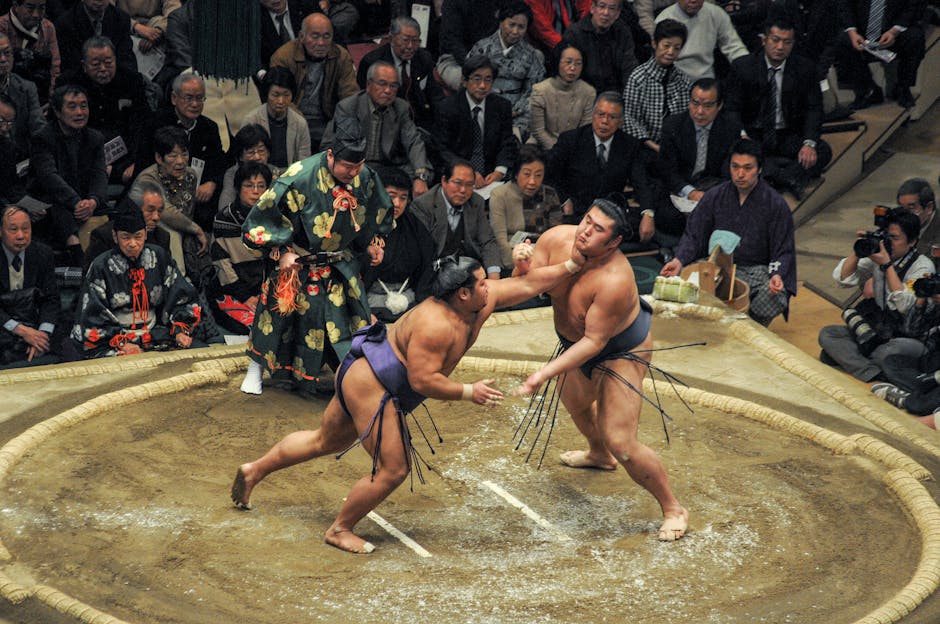
- Left hand inside grip (hidari-yotsu): His core winning position. From the left-hand inside grip he could execute multiple finishing techniques including yorikiri (force out), uwatenage (overarm throw), and shitatedashinage (pulling underarm throw).
- Harite (slap at the face): Controversially used against some opponents, particularly late in his career. Some traditionalists argued it was unsportsmanlike for a yokozuna to use face-slaps, though it was technically within the rules.
- Henka (sidestep at the start): A sidestep at the initial clash, sometimes used to evade an opponent’s charge. Another controversial-but-legal technique.
- Defensive dominance: Hakuho was almost impossible to throw or tip out of the ring in standard attacks. Opponents had to find unusual angles to win.
His win rate in year-long stretches routinely exceeded 90%. Several of his tournaments featured undefeated 15-0 records. The aggregate statistics are so lopsided that sumo commentators sometimes referred to the “Hakuho era” — meaning the 2010s–early 2020s, when he defined the top of the sport essentially alone.
How did he retire?
Hakuho’s final years were complicated by chronic injuries, occasional losses to younger wrestlers, and a series of public controversies around his use of harite and henka. His last tournament victory was in July 2021 — a 15-0 undefeated championship that was his 45th and final yusho.
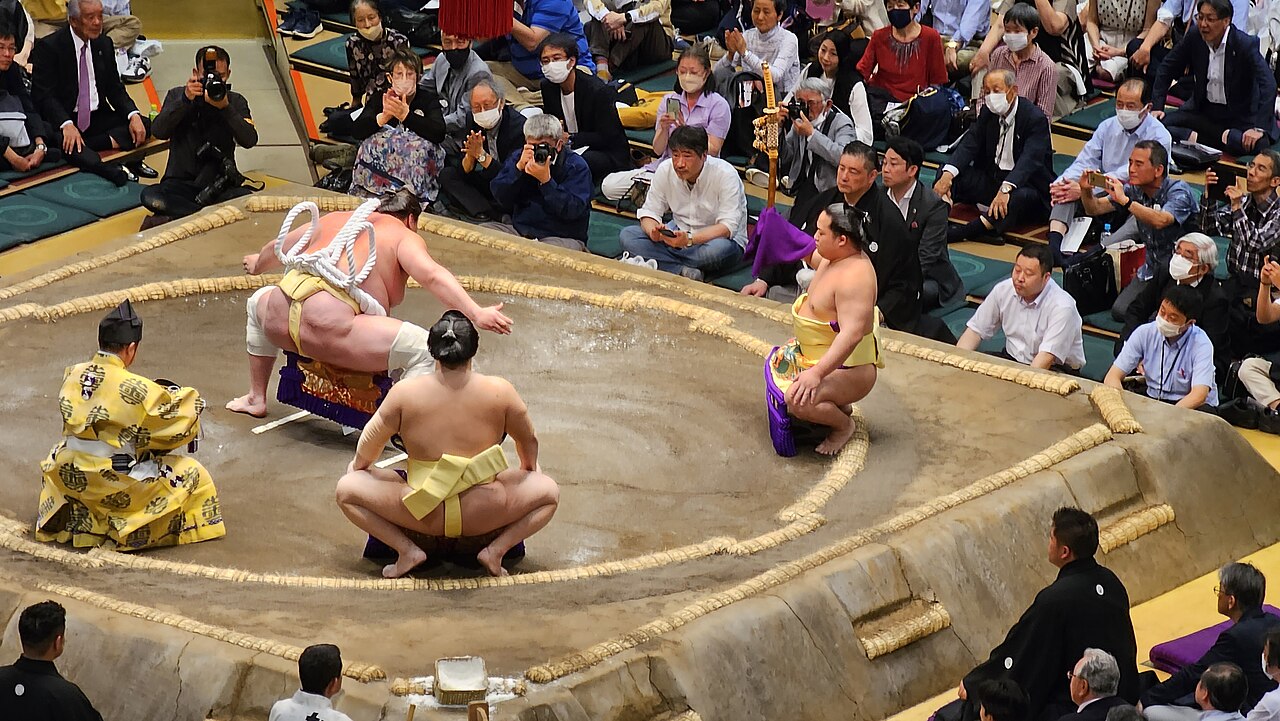
He announced retirement in September 2021 at age 36. His yokozuna retirement ceremony (danpatsushiki) took place at Ryogoku Kokugikan in January 2022 — the traditional topknot-cutting ritual in which each of hundreds of significant visitors takes a symbolic snip before the final cut by the stable master.
After retirement, Hakuho became a stable master under the oyakata name Miyagino, and now runs his own sumo stable training the next generation of wrestlers.
What does sumo look like post-Hakuho?
Messier. The sport has entered a period of greater competitive parity without a dominant yokozuna. Terunofuji, promoted to yokozuna in 2021, has been the active yokozuna since but has been limited by chronic knee injuries and missed multiple tournaments. The ozeki ranks rotate; no single wrestler has emerged as a clear Hakuho successor.
Tournament winners are now varied across multiple wrestlers each year, which makes the sport arguably more interesting as a spectator sport — harder to predict, multiple genuine contenders — but also means the absolute standard of excellence Hakuho defined has not been matched.
The Japanese wrestler pipeline is also narrower than it used to be. Sumo recruiting has struggled against baseball and football for athletic Japanese teenagers. The most recent native Japanese yokozuna (Kisenosato, promoted 2017) retired without defending his title seriously, and his Mongolian, Bulgarian, and Russian-born peers continue to occupy many of the top ranks.
Where can you see sumo in Tokyo today?
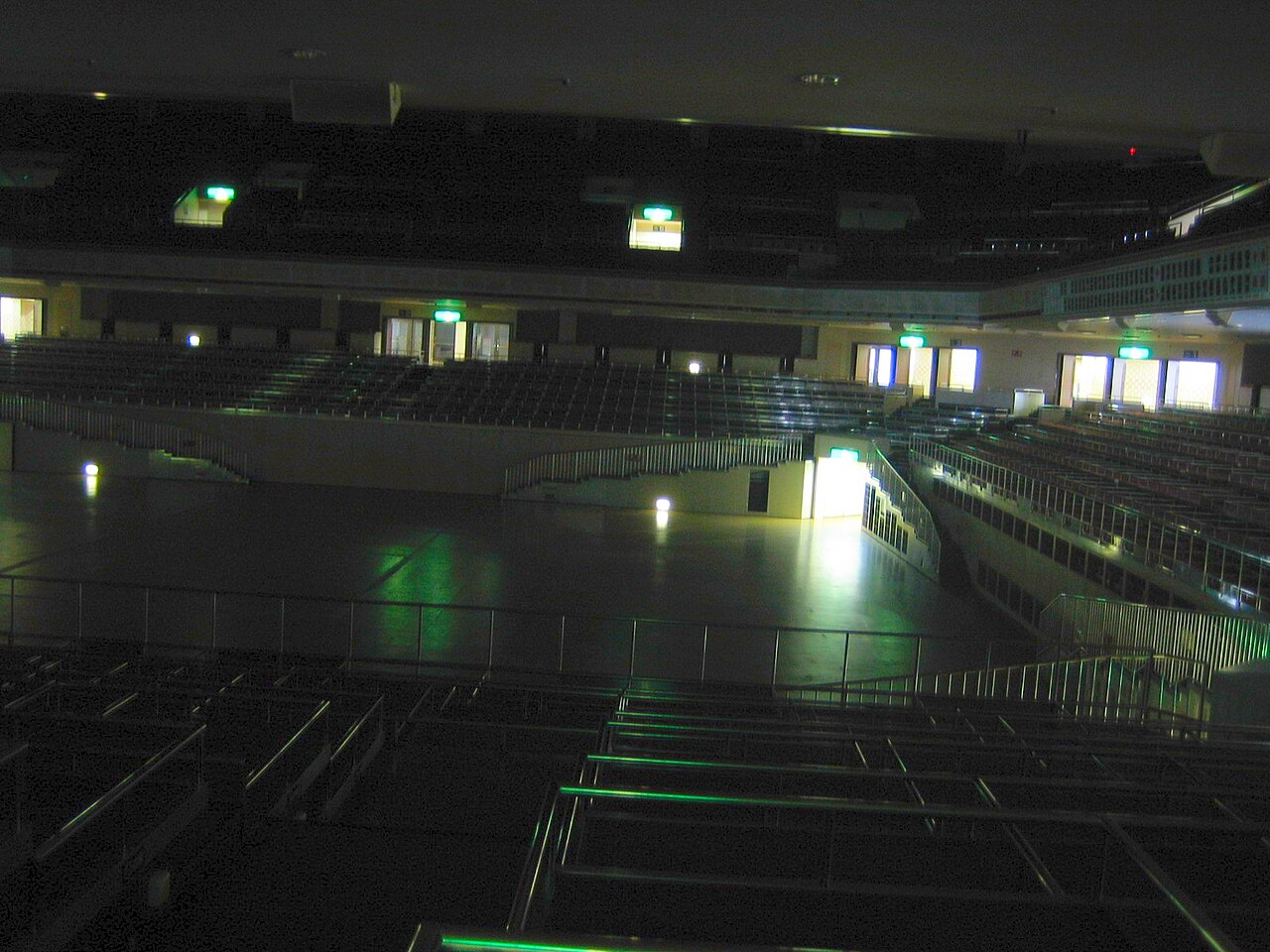
The three Tokyo tournaments run at Ryogoku Kokugikan each year:
- Hatsu basho (January): New Year tournament, first of the year
- Natsu basho (May): Early summer tournament
- Aki basho (September): Autumn tournament
Each tournament runs 15 days. Ticket prices range from ¥4,000 for cheap upper seats to ¥45,000+ for box seats. Tickets go on sale about one month before each tournament and the popular days sell out fast. Book through the official Japan Sumo Association website or through a reliable ticket agency.
Morning practice (keiko) at sumo stables can sometimes be visited by the public. Most stables require advance arrangement through a tour operator or stable connection. Arashio-beya is one of the more accessible stables.
What’s a sumo tournament actually like?
A full day at Ryogoku Kokugikan runs roughly as follows:
- 9am: Gates open. Lower-division matches begin. Almost no crowd, easy photos, worth arriving early.
- 12–2pm: Makushita and Juryo division matches. Crowd starts to build.
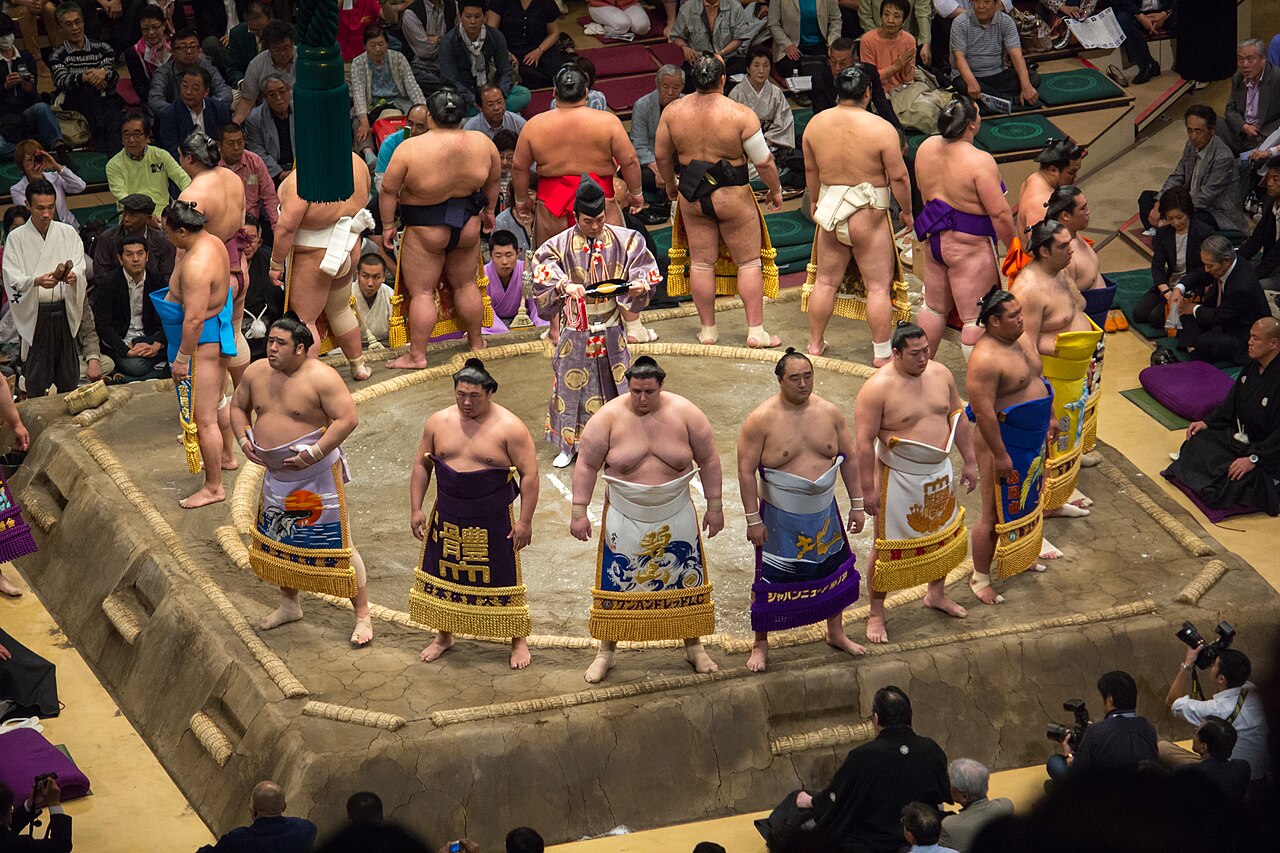
- 3:30pm: Makuuchi (top division) matches begin with the ring-entering ceremony (dohyo-iri).
- 5:30–6pm: Top match of the day (usually yokozuna or ozeki). Crowd peaks.
- 6pm: Closing ceremony. Day ends.
Food and drinks are available throughout. The chanko-nabe (sumo stew) sold at the arena is part of the experience — it’s the same food wrestlers eat to build bulk, available to spectators at ¥500–¥1,000 per bowl.
Sumo events are family-friendly, accessible for all age groups, and genuinely one of the best cultural experiences Tokyo offers. Even a budget ticket in the upper tiers gives you the full experience.
How does Hakuho’s legacy affect today’s sumo?
Three ways:
- Statistical ceiling raised: Every future yokozuna will be measured against Hakuho’s 45 yusho. The career arc of 10–12 yusho that used to mean “one of the greats” now reads as middle-tier. Expectations have shifted.
- Mongolian pipeline continues: Hakuho’s success inspired a generation of young Mongolian wrestlers to enter Japanese sumo. The foreign-born presence in top ranks remains high.
- Stable reforms: Hakuho as oyakata is now training the next generation at his own stable. His technical approach and emphasis on fundamentals will likely shape the next decade of top wrestlers.
What about documentary and book sources?
For readers who want to go deeper:
- Sumo: A Pocket Guide by David Benjamin is the best English-language introduction to the sport’s rules and culture.
- Sumo in the Popular Imagination by Lee Thompson covers the cultural framing of the sport through Japanese history.
- Hakuho’s autobiography (Japanese only) was published in 2021 and remains the primary source for his own account of his career.
- The NHK World documentary series on sumo has multiple Hakuho-focused episodes in its back catalogue, English-subtitled.
Is sumo worth watching as a tourist?
Yes. A sumo tournament day is one of the best single cultural experiences Tokyo offers, and the ticket prices are reasonable. You don’t need to understand the wrestlers’ names or ranks to enjoy the spectacle — the ritual, the atmosphere, and the physicality come across immediately.
If you’re visiting Tokyo in January, May, or September, dedicate one of your days to the Kokugikan — it’s worth the ¥4,000 minimum ticket, full stop. Skip it only if you genuinely hate all sports, which would be a strange disposition to bring to Tokyo in the first place. Arrive at 9am for the cheap seats and watch how the crowd and the intensity build through the day. By 5:30pm when the yokozuna takes the ring, you’ll understand why Japan treats this sport as a national institution.
If you’re in Tokyo outside tournament windows, the Sumo Museum at Ryogoku Kokugikan is open weekdays with a small but excellent collection. Morning practice at a sumo stable — if you can arrange one — is the most authentic way to see wrestlers up close.
Who are the Hakuho rivals you should know?
No dominant wrestler exists alone — Hakuho’s era was shaped by his rivals, even if he beat most of them more often than not:
- Asashoryu (yokozuna 2003–2010): The first Mongolian yokozuna. Aggressive, controversial, won 25 yusho before retiring under a cloud of scandal. Hakuho’s early-career nemesis — their rivalry defined the 2006–2010 era.
- Kisenosato (yokozuna 2017–2019): The last native Japanese yokozuna. Won 2 championships. His promotion was celebrated nationally as the end of the foreign-yokozuna era, but injuries ended his career early.
- Harumafuji (yokozuna 2012–2017): Mongolian. Won 9 yusho. Retired after a bar-fight incident.
- Kakuryu (yokozuna 2014–2021): Mongolian. Won 6 yusho. Quiet, technically clean, overshadowed by Hakuho for most of his career.
- Terunofuji (yokozuna 2021–present): Mongolian-born. The active yokozuna. His career was almost derailed by serious injuries in the mid-2010s but he climbed back up to yokozuna in 2021. Won 9 yusho by 2024.
Of these, the Asashoryu vs Hakuho rivalry is the one worth investigating deeper if you care about sumo history. Multiple documentaries cover it. Their style contrast — Asashoryu the brawler, Hakuho the technician — shaped how subsequent Mongolian wrestlers were trained.
How has sumo changed commercially since Hakuho?
Sumo’s commercial reach has grown significantly in the post-Hakuho period, partly through his own work as a stable master and ambassador. International streaming rights have expanded, Japan Sumo Association has invested in English-language coverage, and tournament broadcasts now reach a much wider audience than they did in 2010.
Ticket prices have risen — a cheap seat in 2015 was ¥2,000, now ¥4,000. Box seats used to top out around ¥25,000; now they reach ¥45,000. The product has become slightly more premium positioned, though the cultural accessibility remains: you can still walk into the Kokugikan on a tournament Monday and find cheap seats available at the box office.
Final verdict on Hakuho
Hakuho’s career is genuinely exceptional by any measure: technical dominance, statistical records, cultural significance, and the length of his top-tier run. He retired with multiple records that will probably stand for a generation or longer.
Whether he was the “greatest yokozuna of all time” depends partly on how you weight statistics versus the cultural framing of yokozuna as a specifically-Japanese role. By statistics, unambiguously yes. By tradition-focused cultural criteria, the debate continues.
For Tokyo visitors: knowing a little about Hakuho adds genuine depth to a sumo tournament visit. When you see the yokozuna ceremony now, you’re watching a tradition that Hakuho shaped for 14 years. The current wrestlers are still figuring out what sumo looks like without him.
For more Tokyo cultural reading, our Japanese martial arts history guide covers the broader context sumo fits into, our Ueno guide is the best pairing for a full-day cultural trip (Tokyo National Museum samurai galleries plus the Kokugikan are both in the east Tokyo cluster), and our irezumi tradition piece covers the visual-culture side of the samurai-era inheritance.