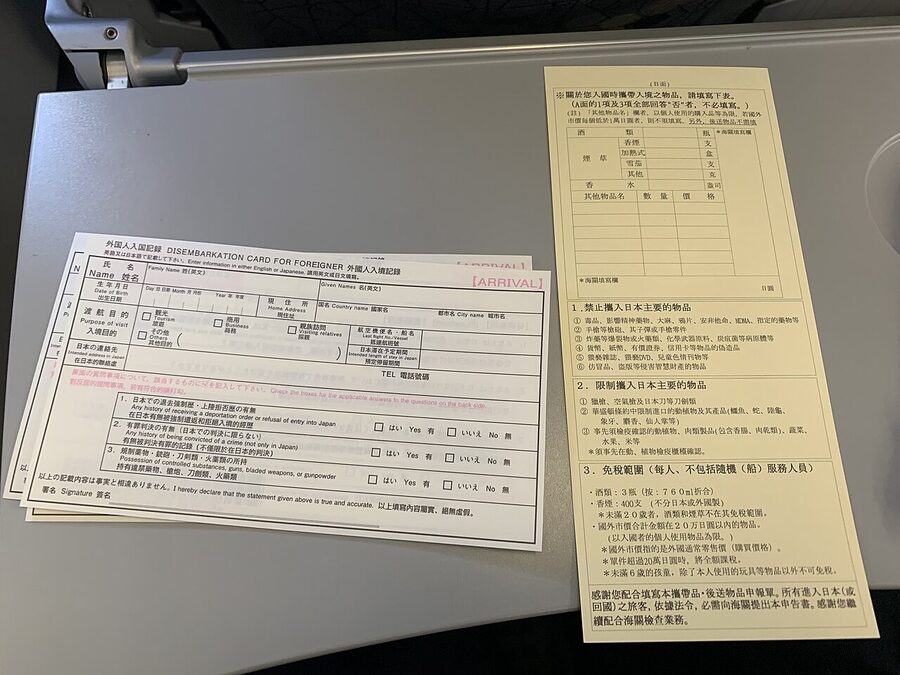
Before 2022, arriving in Japan meant filling out a paper landing card and a paper customs declaration while the plane descended, handing both to the immigration officer, getting stamps, and moving on. The process had worked that way for decades. The paper cards were annoying but reliable.
In This Article
- Quick facts at a glance
- What is Visit Japan Web?
- What changed in 2024–2025?
- January 2024: Single QR code introduced
- March 2024: New interface
- June 2024: Paper form phase-out at Haneda and Narita
- 2025: Airport enforcement hardening
- 2026: Expected updates
- How do you actually fill out VJW?
- Step 1: Create an account
- Step 2: Enter your traveller information
- Step 3: Register your trip
- Step 4: Answer the immigration questions
- Step 5: Answer the customs questions
- Step 6: Get your QR codes
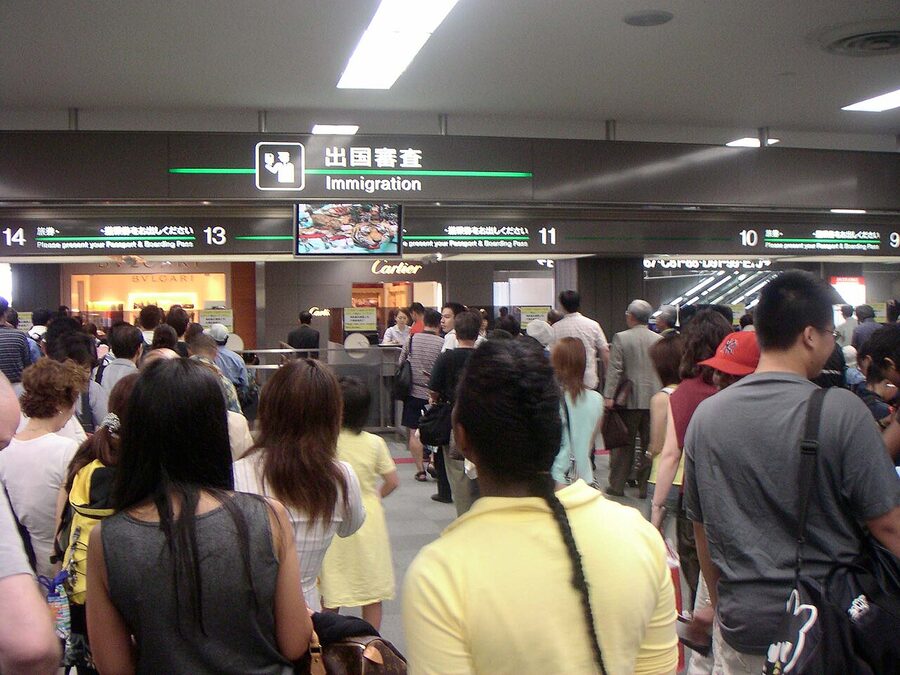
- What happens at the airport?
- What if you didn’t fill out VJW?
- Common VJW mistakes
- What about the tax-free shopping registration?
- Is VJW mandatory?
- What about the tax-free shopping experience?
- What’s the connection to the tourist tax?
- What about health and medical requirements?
- What about eSIMs and data?
- What’s different for longer stays?
- Final take
Visit Japan Web replaced both paper forms with a QR code you generate online before your flight. In 2024–2025 it became mandatory at all major Japanese airports, with continuing changes through 2026. This guide walks through what it is, how to fill it out, what changed recently, and what happens if you arrive without it.
Quick facts at a glance
- What it is: Web-based entry and customs pre-registration for foreign visitors to Japan
- URL: vjw-lp.digital.go.jp (official Japan Digital Agency portal)
- Status: Not legally mandatory but required for the fast lane at most airports
- What it replaces: Paper landing card, paper customs declaration
- Time to fill out: 5–10 minutes for first-time users
- When to fill it out: Within 6 hours before your flight arrives
- Cost: Free
- Languages: English, Japanese, Chinese, Korean, Spanish, others
- QR codes needed: Two separate ones — immigration + customs
What is Visit Japan Web?
Visit Japan Web (VJW) is the Japanese government’s digital-first entry system for foreign visitors. The system was introduced in November 2022 as part of the pandemic-era entry reopening, initially alongside the paper forms as an optional pre-registration. Over 2023 and 2024 it was progressively formalised until most major airports stopped accepting paper alternatives in early 2025.
The system consolidates three previously separate processes:
- Immigration landing card: Your entry details, passport info, reason for visit, duration, hotel address
- Customs declaration: What you’re bringing in, whether it exceeds duty-free limits
- Tax-free shopping registration: If you want to buy tax-free (optional)
You enter the information online before your flight. The system generates two QR codes. At the airport, you scan the immigration QR at the passport kiosk and the customs QR at the customs gate. The whole process takes about 2–3 minutes in the fast lane, compared to 10–15 minutes in the paper-form queue.
What changed in 2024–2025?
Multiple updates have streamlined the system:
January 2024: Single QR code introduced
Previously users had to show three separate QR codes (immigration, customs, tax-free). The January 2024 update consolidated these into two combined codes. The tax-free registration is now optional and integrated.
March 2024: New interface
The VJW website got a redesign focused on mobile use. The previous desktop-first interface was clunky on phones; the 2024 redesign is mobile-optimised.
June 2024: Paper form phase-out at Haneda and Narita
Both major Tokyo airports stopped routinely distributing paper landing cards on flights. Paper forms remain available by request but are actively discouraged.
2025: Airport enforcement hardening
Airports stopped providing free Wi-Fi in the immigration hall (you needed to fill out VJW before landing, not at the airport). Some airports introduced signage indicating that arrivals without VJW would be directed to a slower processing lane.
2026: Expected updates
The Japan Digital Agency has proposed extending VJW to integrate with the national Hoken health-insurance system for long-stay visitors. Further UI improvements and additional language support are expected through 2026.
How do you actually fill out VJW?
A step-by-step walkthrough:
Step 1: Create an account
Go to vjw-lp.digital.go.jp on a laptop or phone. Click “Start” and then “Create new account.” You need an email address and a password. Verify the email (confirmation link). Total time: 2 minutes.
Step 2: Enter your traveller information
Basic details for each traveller in your party:
- Passport: country of issue, passport number, expiry date
- Personal: name, date of birth, nationality, gender, occupation
- Contact: email, mobile phone
- Address in Japan (hotel name and address)
Children need their own entry, linked to the parent account. Total time: 3–4 minutes per traveller.
Step 3: Register your trip
For each trip:
- Flight number and airline
- Arrival date and time
- Departure airport (not arrival)
- Number in party
- Purpose of visit (tourism, business, family visit, etc.)
- Expected duration
You must register your arrival within 6 hours of the flight landing for the QR code to be valid. If you register too early, the code may not work — wait until within 24 hours of departure to be safe.
Step 4: Answer the immigration questions
Standard questions about:
- Have you been in Japan in the last 5 years? (Yes/No)
- Criminal record? (Yes/No)
- Previously denied entry? (Yes/No)
- Narcotic/drug conviction? (Yes/No)
- Public safety concerns? (Yes/No)
Answer “No” to all of these if true. If you answer “Yes” to any, you may be referred to secondary immigration review.
Step 5: Answer the customs questions
What you’re bringing:
- Currency over ¥1,000,000 equivalent? (Yes/No)
- Alcohol over 3 bottles? (Yes/No)
- Tobacco over 400 cigarettes, 100 cigars, or 500g? (Yes/No)
- Other goods over ¥200,000? (Yes/No)
- Meat products, fresh fruit, plants, or prohibited items? (Yes/No)
Answer truthfully. Lying here triggers the worst outcomes (questioning, re-inspection, possible fines).
Step 6: Get your QR codes
At the end, you get two QR codes:
- Immigration QR: Blue. Shown at the passport kiosk.
- Customs QR: Red. Shown at the customs scanner.
Screenshot both. Save them in your phone’s gallery. Don’t rely on internet access at the airport.
What happens at the airport?
If you have VJW completed:
- Plane lands, you get off. Walk to the immigration hall.
- Fast lane signage points to VJW-enabled kiosks. Follow it.
- Scan passport + immigration QR: The machine opens, you look into the camera for facial recognition, takes 30 seconds.
- Stamp: You get a 90-day Temporary Visitor stamp automatically.
- Baggage claim. Retrieve your bags.
- Customs: scan the customs QR. Green light = walk through. Red light = secondary inspection.
- Exit. You’re in Japan.
Total time in immigration hall: 10–15 minutes at peak hour. Half the paper-form time.
What if you didn’t fill out VJW?
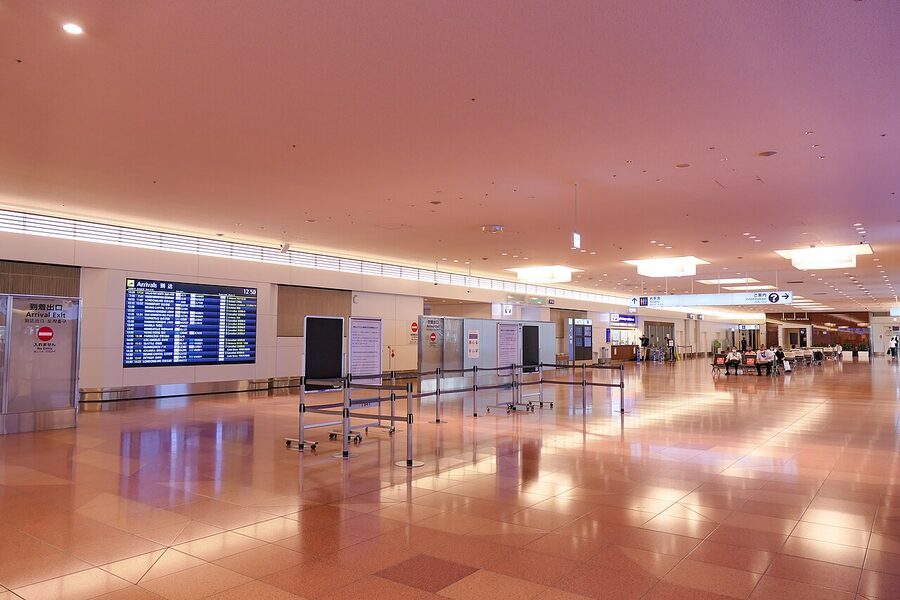
You can still enter Japan, but you’ll be directed to the slower paper-form processing lane. At Haneda and Narita, these queues are now significantly longer than the fast lane — sometimes 30–60 minutes at peak arrivals.
Your options:
- Fill it out in the immigration hall. If you have an eSIM or international roaming, you can complete VJW on your phone in the hall. This is technically possible but awkward — the Wi-Fi isn’t reliable and the form takes 5–10 minutes to complete.
- Take the paper lane. Request paper forms, fill them out, queue for manual processing. Works but slow.
- Ask a family member to fill it out for you remotely. Some travellers get a partner or hotel to complete VJW while they wait, then screenshot and send the QR codes. This works but requires coordination.
The time cost of not having VJW is genuine — you lose 30+ minutes of your first day. The time cost of filling it out ahead is 10 minutes on your phone. The calculation is obvious.
Common VJW mistakes
What goes wrong most often:
- Wrong flight number: The airline code matters. “AA123” not “American123.” Double-check your booking email.
- Filling out too early: If you register more than 24 hours before flight departure, the QR code may not validate. Safe window: 6–24 hours before your flight.
- Not screenshotting the QR code: The QR appears on the VJW confirmation page. Save it as an image. Don’t rely on being able to load the website at the airport.
- Missing the customs QR: There are two separate codes. Save both. Some users save only the immigration one and get delayed at customs.
- Trying to use someone else’s account: Each traveller needs their own VJW account, linked to their own passport. Family groups can be managed through a single account with multiple travellers.
- Last-minute flight changes: If your flight changes, update your VJW entry. Otherwise the QR code won’t match the flight manifest.
What about the tax-free shopping registration?
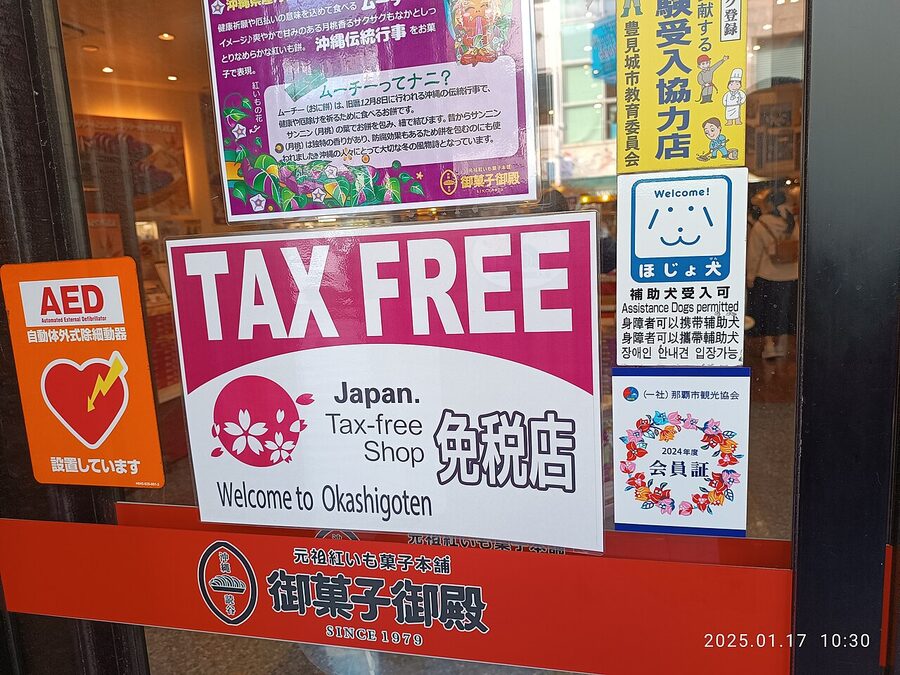
The tax-free shopping registration is an optional part of VJW. If you register, you can make tax-free purchases (saving 10% consumption tax) at participating retailers by scanning a QR code at checkout rather than presenting your passport.
The registration adds about 2 minutes to the VJW process. In return, you skip the “present passport, wait for tax-free stamp” step at each shop. If you plan to buy anything over ¥5,000 (the tax-free threshold), the registration pays off after 2–3 purchases.
Practical tip: register the tax-free part even if you think you won’t shop. Many visitors change their minds during the trip, and registering retroactively requires waiting in line at a tax-free counter for the same passport verification the registration was meant to skip.
Is VJW mandatory?
No. Legally, you can still enter Japan by filling out paper forms in the immigration hall. Practically, the fast-lane advantage makes VJW strongly recommended.
The Japan Digital Agency has stated the intent is that VJW will remain optional as legal standard but de-facto mandatory as operational standard. The fast lane will always exist for VJW users; the paper lane may become progressively slower or more restricted over time.
Expect the following likely changes over 2026–2028:
- Paper forms only available on request (current status)
- Paper forms relegated to specific desks with limited staffing (likely 2026)
- Paper forms requiring longer explanatory interviews (possible 2027)
- Paper forms formally phased out (unlikely before 2028)
The direction is clear. Fill out VJW.
What about the tax-free shopping experience?
Connected to VJW but worth covering separately: Japan’s consumption tax exemption for tourists works differently from European VAT refund systems.
- Tax rate: 10% consumption tax on most goods
- Tax-free threshold: ¥5,000 purchase minimum at a single store on a single day
- Verification: Passport (or VJW tax-free QR code) required at purchase
- Time: Tax is removed at point of sale. No post-purchase refund process.
- Limits: Goods must be taken out of Japan within 30 days; packaging may be sealed.
- Where it works: Most major retailers display “Tax Free” signs. Convenience stores, most restaurants, and second-hand shops don’t participate.
Compared to European VAT systems (where you fill out paperwork and get a refund at airport departure), Japan’s system is significantly simpler. The 10% savings are meaningful on electronics, luxury goods, or premium gift purchases.
What’s the connection to the tourist tax?
Separately from VJW, Japan charges a ¥1,000 departure tax (officially called the International Tourist Tax) on all travellers leaving Japan. The tax is typically included in airline ticket prices and not separately visible. It was introduced in 2019.
Political discussion throughout 2024–2025 has proposed raising this tax to ¥3,000–¥5,000 per departure. Our Japan anti-tourism politics article covers this discussion. Any tax increase would likely be implemented by embedding it in airline tickets rather than requiring a separate payment process.
What about health and medical requirements?
As of 2026:
- COVID-19: No requirements. Vaccination, testing, and quarantine rules have all been lifted.
- Yellow fever: Vaccination certificate required only if arriving from yellow-fever risk countries.
- Other diseases: No routine requirements.
- Mask wearing: Optional in almost all contexts. About 10–20% of residents still mask in crowded transit.
- Insurance: Travel insurance strongly recommended. Japan’s medical system is excellent but not free for non-residents — a single ER visit can be ¥50,000–¥500,000.
What about eSIMs and data?
VJW requires internet connectivity for registration but not at the airport (you fill it out before your flight). Still, most visitors want working data on arrival. Options:
- eSIM via Ubigi, Airalo, Sakura Mobile: Activate before landing. ¥2,000–¥5,000 for 7–14 days of data.
- Pocket Wi-Fi rental at airport: ¥5,000–¥8,000 for a week. Older option, still popular with multi-device travelers.
- Physical SIM at electronics shop: Bic Camera Haneda and Narita both sell tourist SIMs. ¥3,000–¥5,000 for a week.
- International roaming: Expensive but works. Check with your carrier.
eSIM is the current most-common answer. Airalo or Ubigi both work well with most modern phones; activation takes 5 minutes.
What’s different for longer stays?
VJW is specifically designed for short-stay tourist visits (90 days or less). If you’re arriving on:
- Working Holiday visa: VJW still applies for entry; additional paperwork at immigration.
- Work visa: VJW applies for entry; residence card issued separately.
- Student visa: VJW applies; further university-side registration.
- Spouse/family visa: VJW applies; residence card on arrival.
All non-tourist categories still use VJW for the initial entry. The difference is what happens afterward — residence cards, registration with city hall, tax registration, etc.
Final take
Visit Japan Web is the single most-valuable piece of pre-travel preparation for any trip to Japan. Ten minutes of form-filling saves 30–60 minutes at arrival and removes the risk of being directed to a slow paper-form lane that gets slower every year.
Fill it out the day before your flight. Screenshot both QR codes. Save them to your phone’s gallery. Go through the fast lane. Clear immigration and customs in 15 minutes. Move on with your trip.
For more Tokyo entry and practical information, our Haneda Airport guide covers the arrival experience in detail, our Tokyo Metro guide covers your next steps from the airport, and our dual pricing piece covers what to watch for as you start spending money.