
If you were in Tokyo between 2012 and 2020 and you did exactly one “weird Japan” thing, there is a very good chance it was the Robot Restaurant. The Shinjuku show became shorthand for modern Tokyo in the same way the Eiffel Tower is shorthand for Paris: everyone had heard of it, most people eventually went, and the reviews all ended with some version of “I cannot explain what I just saw.”
In This Article
- Quick facts at a glance
- What was the Robot Restaurant?
- What did the show actually contain?
- When did the Robot Restaurant open, and how did it get so famous?
- How much did it cost to build?
- What was it actually like to attend?
- Was the food any good?
- Why did the Robot Restaurant close?
- What is there now? The Samurai Restaurant
- How much does the Samurai Restaurant cost?
- Is the bento worth the extra?
- What time are the Samurai Restaurant shows?
- Where is it? How do I get there?
- Which Shinjuku Station exit?
- Is Kabukicho safe?
- Is it family-friendly?
- Where should I eat around Kabukicho?
- Is Samurai Restaurant Time worth it?
- What to bring (and what to leave)
- The wider Kabukicho context
- What if I just want to see the old Robot Restaurant on YouTube?
- Quick FAQ
- Final verdict
Then COVID closed the doors in March 2020 and they never reopened. The Robot Restaurant is, officially, permanently shut. But the ghost of it is still doing three shows a day in the same basement — it just goes by Samurai Restaurant Time now, run by the same people, with most of the same props, just fewer robots and more samurai.
This guide covers what the Robot Restaurant actually was at its peak, why Tim Burton and Anthony Bourdain loved it, why it died, and whether the Samurai Restaurant replacement is worth your ticket money today. Final verdict at the bottom.
Quick facts at a glance
- Original run: July 2012 – March 2020
- Current replacement: Samurai Restaurant Time, opened 2023, same location, same creators
- Where: B2F Shinjuku Bldg, 1-7-1 Kabukicho, Shinjuku-ku (inside the Gira Gira Girls building)
- Nearest station: Shinjuku (JR, Marunouchi, Oedo lines) — 7–10 min walk
- Show length: ~2 hours, three daily shows
- Price now: ¥7,000–¥14,800 depending on show time and season
- Age limit: 18+ only (the new venue is in an adult building, though the show itself is not adult content)
- Worth it? Yes, if you are already in Shinjuku. Skip if you are travelling across town for it.
What was the Robot Restaurant?
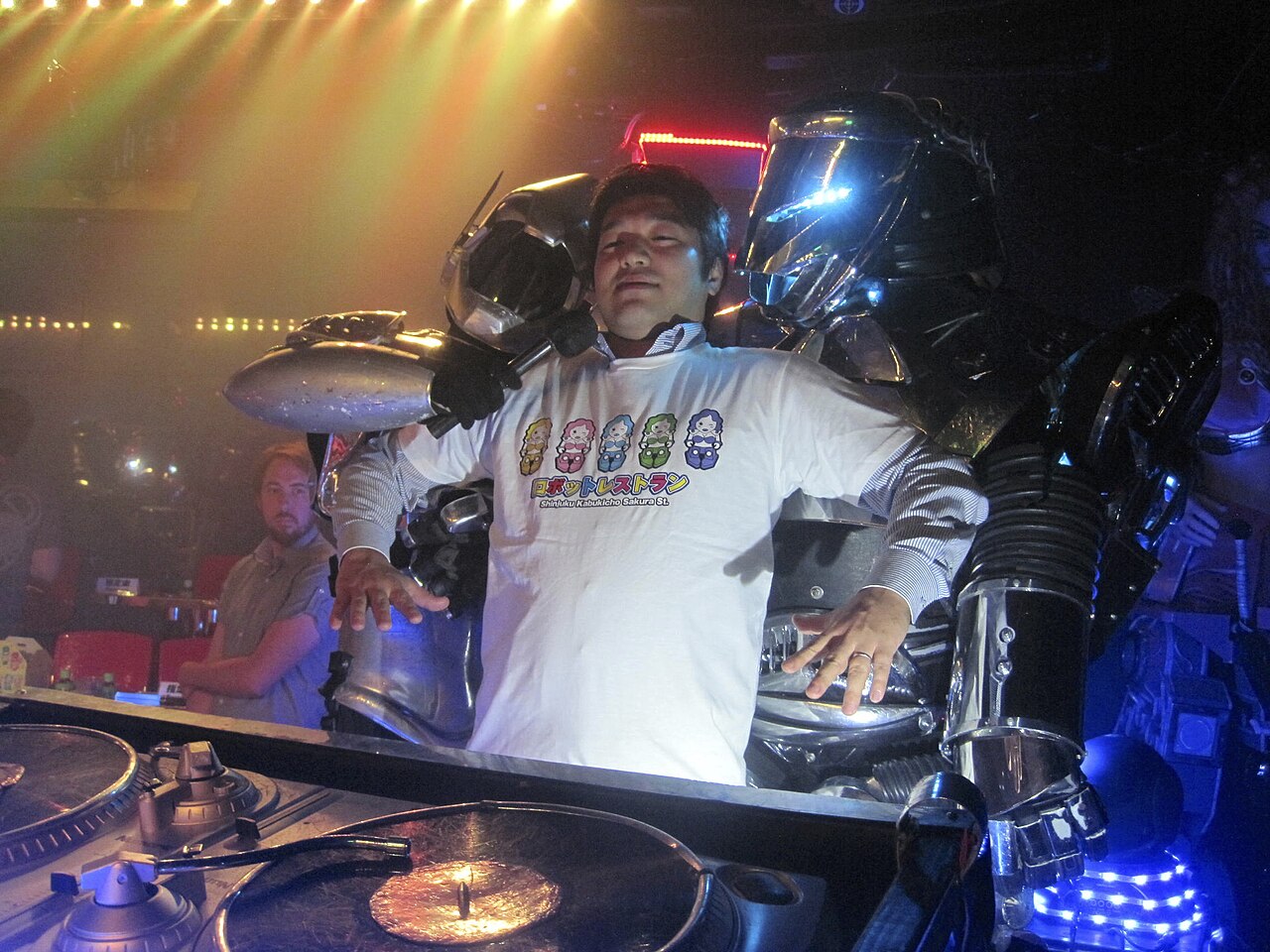
The shortest honest description: a two-hour cabaret show in a Kabukicho basement where women in bikinis drove mechanical dragons, men dressed as ninjas fought neon pandas, taiko drummers pounded through your chest cavity, and none of it had a coherent plot. You paid ¥8,000, you got two hours, and at the end you were ejected into a back alley to find ramen and wonder what had happened to your brain.
The name was a lie on two counts. It was not really a restaurant — the food was a mediocre bento box bolted onto the ticket. And the robots were mostly remote-controlled props, not autonomous machines. Neither of these things mattered. The show was a sensory-overload piece of pop-culture performance art, and for most of the 2010s it was the single most-recommended attraction in Tokyo on every travel blog, guidebook, and TripAdvisor list.
What did the show actually contain?
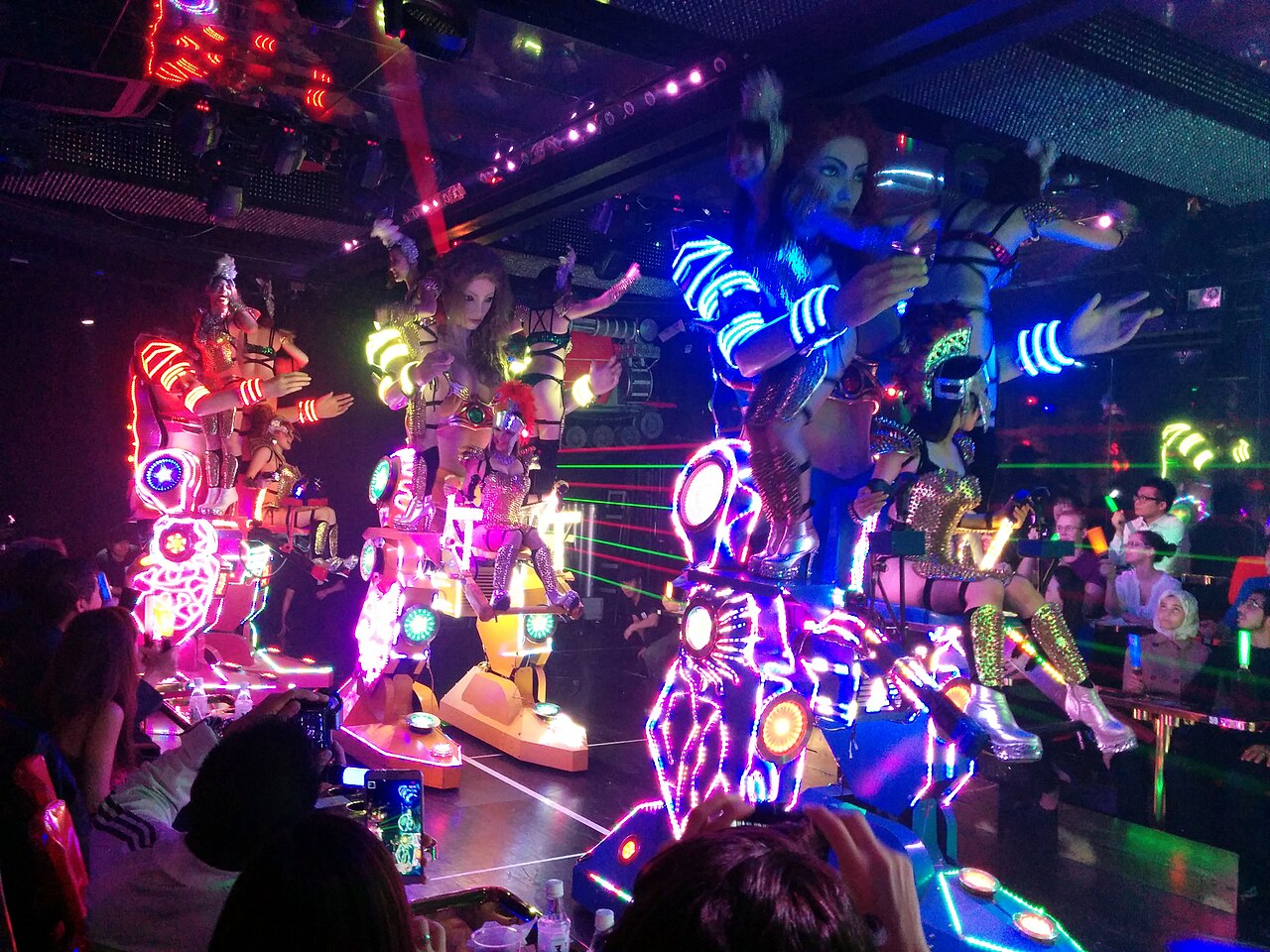
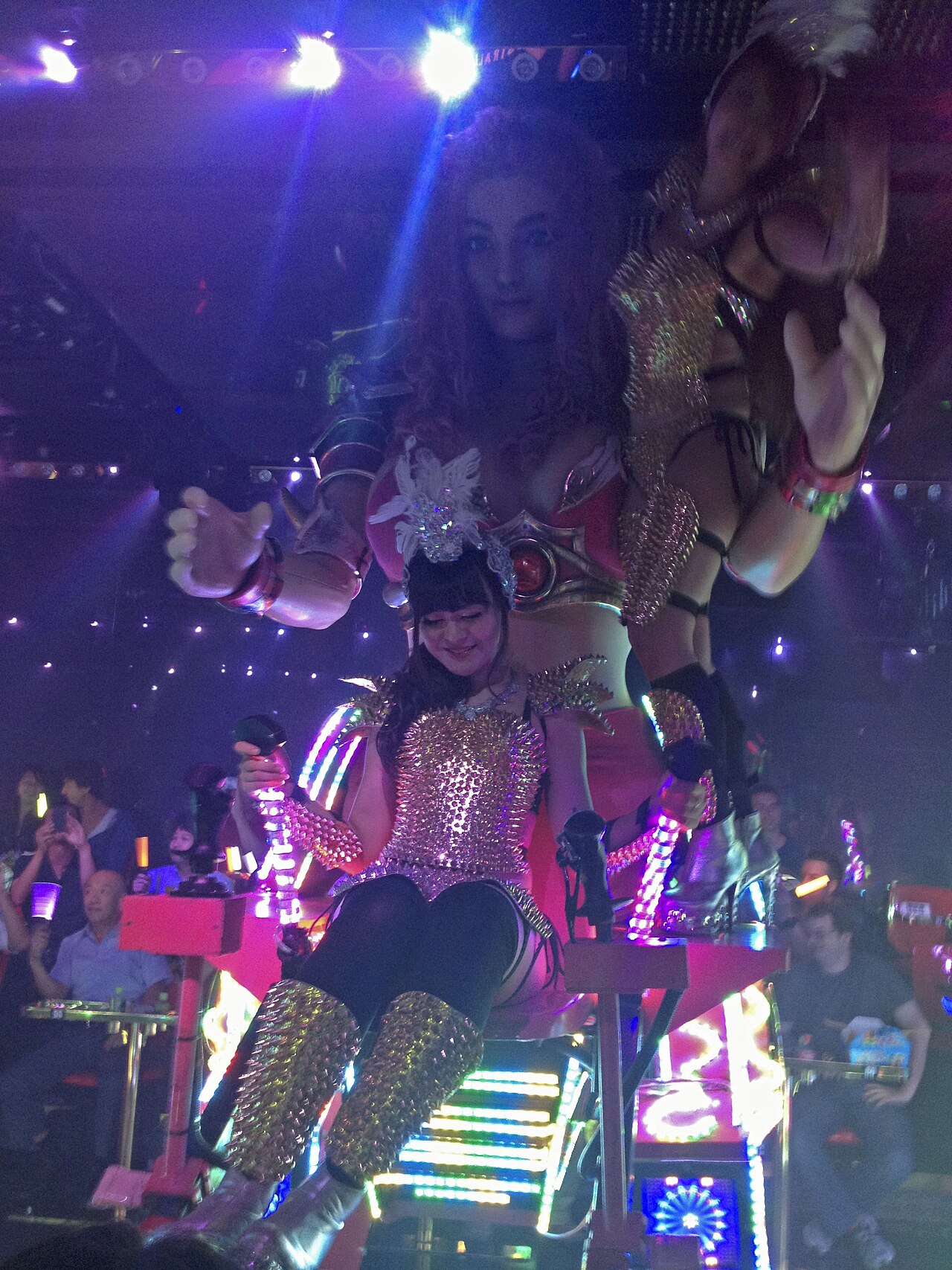
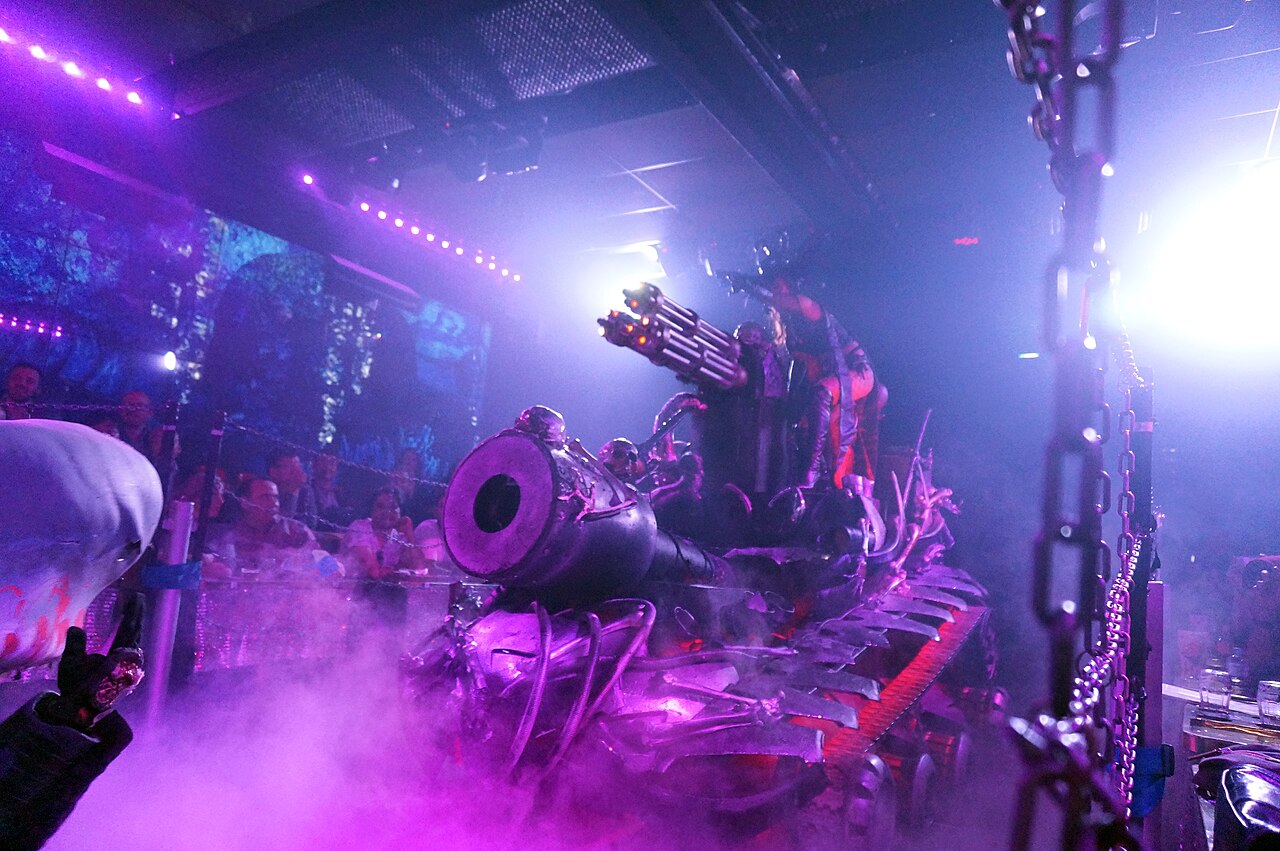
In any given two-hour slot you could expect some combination of the following: giant mechanical dragons with LED eyes, bikini-clad dancers wielding taiko drums, ninjas engaging in choreographed katana fights, a group of pandas, at least one Princess Ariel riding a giant lobster, a Las Vegas-style cabaret number, a Mad Max desert chase scene, and a musical interlude involving feathered singers attached to the front of a truck. No, this is not a joke — Simon at Never Ending Voyage described seeing “a guitarist covered in feathers attached by ropes to the front of a truck leading a band of brightly dressed musicians.” That was normal.
The sets looked battered up close. The costumes were patched and reused. The “robots” were remote-controlled monstrosities operated by pilots in black who made no attempt to hide. And somehow none of this dented the show. Tom Bricker at Travel Caffeine, who saw the Robot Restaurant six times over the years, put it this way: the one constant was that there was nothing constant. It was different every single time, sometimes dramatically so.
When did the Robot Restaurant open, and how did it get so famous?
The Robot Restaurant opened in July 2012. According to the academic Yuji Sone, writing in Japanese Robot Culture: Performance, Imagination, and Modernity (Palgrave Macmillan, 2016), the original pitch was aimed at local Shinjuku office workers. The tagline was something like “enliven the salarymen” — bikini-clad female dancers plus robots, designed as after-work entertainment for Japanese white-collar men.
That audience never materialised in the numbers hoped for. What did happen was that foreign tourists started turning up, filming the show on their phones, and posting it to YouTube. By 2014 the Robot Restaurant was a viral social-media destination, which is when the owners pivoted the marketing and theming to lean into the foreign-tourist audience. Announcements switched to English. The narrative skits incorporated more recognisably Japanese motifs — samurai, geisha, taiko — because that was what the Instagram audience wanted.
It helped that the show attracted celebrity visitors. Tim Burton went. J.J. Abrams went. Guillermo del Toro went. The late Anthony Bourdain featured it in his CNN show Parts Unknown as one of his favourite oddities in Tokyo, which Florentyna Leow at Truly Tokyo points out was probably the single biggest signal booster the restaurant ever got. The Bourdain seal of approval is how a niche show becomes a rite of passage.
How much did it cost to build?
The Robot Restaurant was not a small operation. Tom Bricker at Travel Caffeine reports a build cost of over $100 million USD — a staggering number for what is, in the end, a basement cabaret. Where the money went is visible in the sheer number of mechanical props, LED screens, costumes, and the elaborate mirrored corridors that led you from the box office to the performance hall. It was essentially a theme park ride priced as a dinner show.
That initial capital outlay is one reason observers always thought the show was more financially precarious than it looked from the outside. The economics depended on packing three to four shows a day, every day, for years. A single disruption — the wrong regulatory change, a bad tourism year, a pandemic — and the maths would stop working.
What was it actually like to attend?
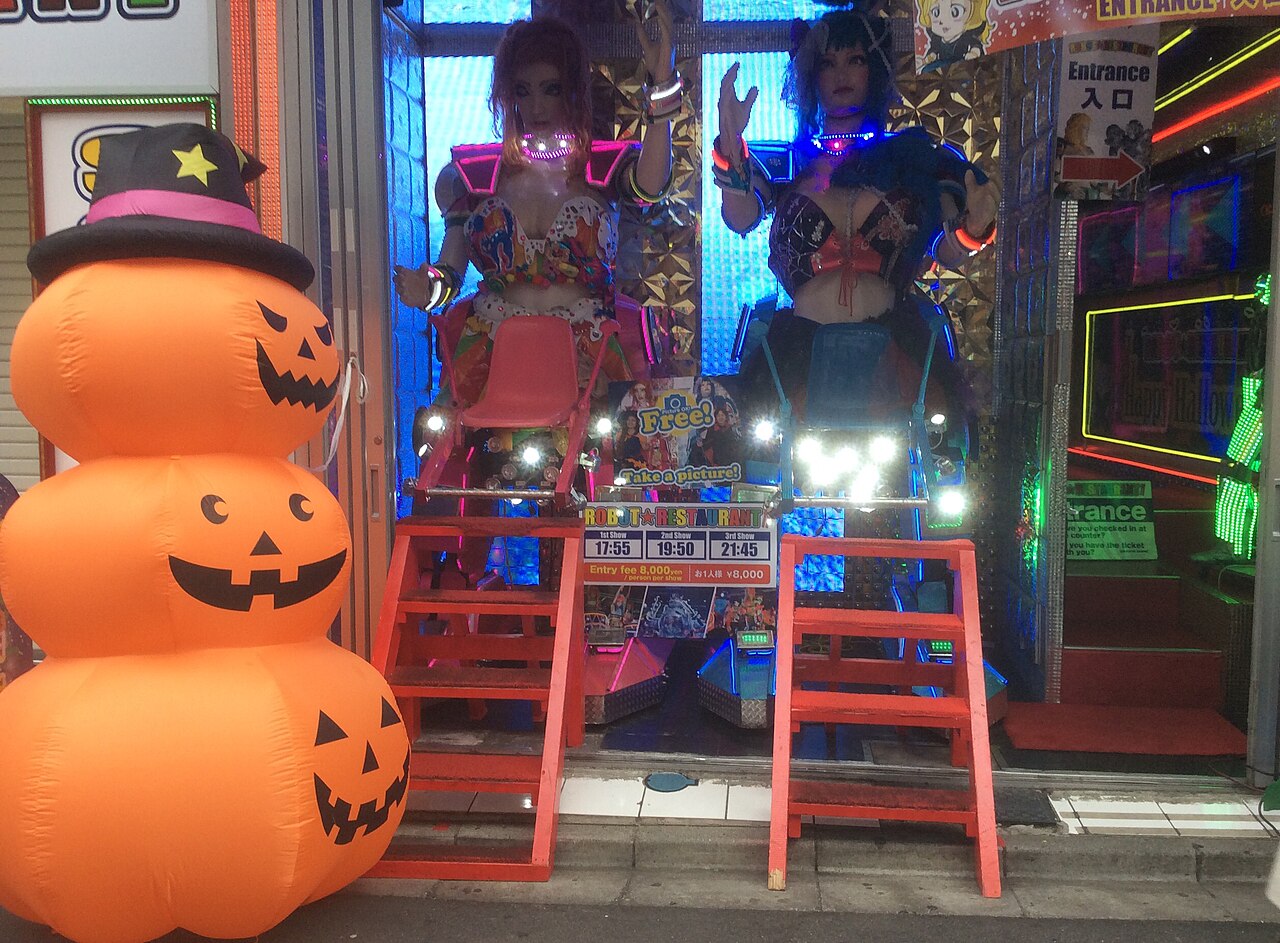
The sequence was always the same. You bought a ticket online (usually at a 30–35% discount through a booking platform, because paying the sticker price was a tourist-tax you could easily avoid), showed up at the ticket counter across from the venue, traded your voucher for a physical ticket plus a small kitschy gift — Florentyna Leow at Truly Tokyo got nail clippers that doubled as beer-bottle openers — and then you queued outside for about twenty minutes.
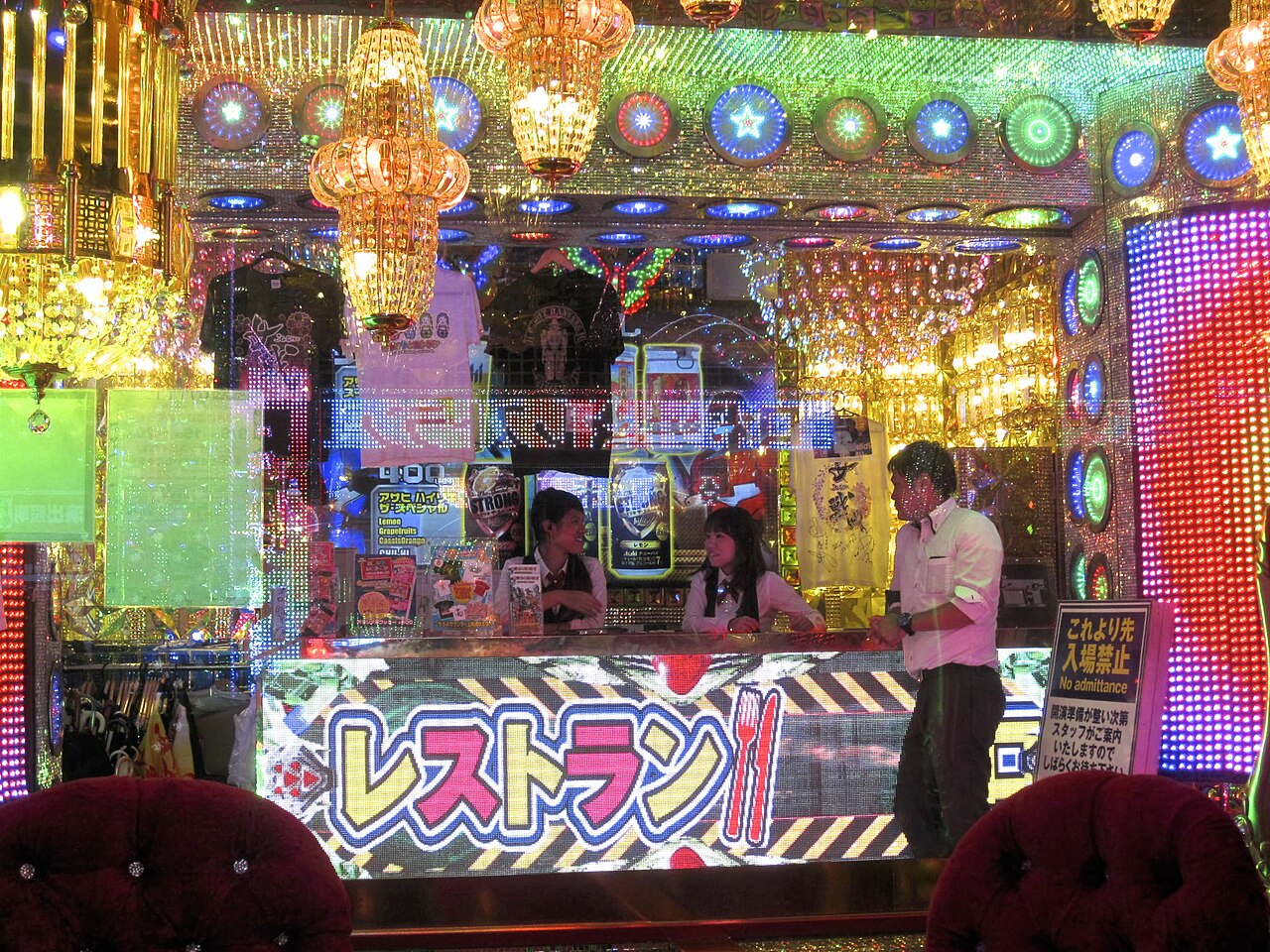
Once inside, you were funnelled up a mirrored elevator into a holding area. A live band played Disney show tunes in robot costumes while you sat on a stool and tried to decide whether to drink through the sensory overload or stay sober and take notes. Most people drank. The bar was not cheap.
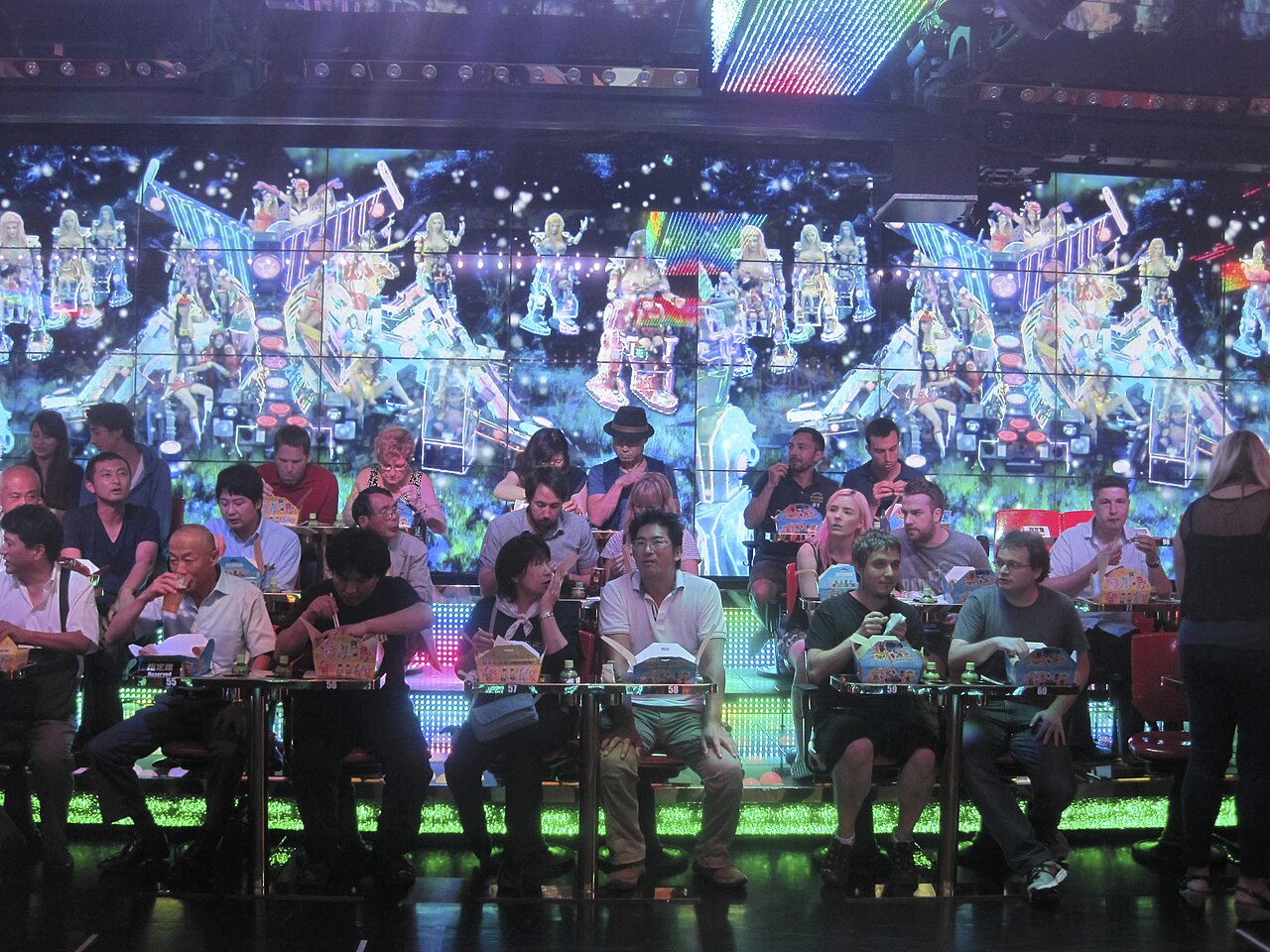
After about thirty minutes in the holding pen you were led down into the actual performance space: a long, narrow hangar about the size of a small airport departure lounge, lined on both sides with tiered seating. The seats were cramped. There were no bad seats, exactly — everything happened about five metres from your face. Front row got you closest to the robot combatants and also the most risk of being hit by debris, which the staff acknowledged by handing out crash barriers when things got lively.
The show itself ran for about 75 minutes, broken up by intervals where you could buy more beer and overpriced popcorn. Then, abruptly, it ended. You were ejected out of a side door into a Kabukicho alley and left to reassemble your sense of reality on the walk back to Shinjuku Station. If you enjoy an experience that goes from zero to unhinged in ninety seconds and leaves you unable to tell your friends what just happened — it was a bargain at ¥8,000.
Was the food any good?
No. That is the short answer. The Robot Restaurant was never really a restaurant.
In the earliest years the ticket included a cheap bento box that multiple reviewers described as genuinely bad — worse than a convenience-store lunch. Later on, the bento was made optional for an extra ¥1,000 and upgraded to a “lacquered” lunch box (actually plastic) with a small mixed-sushi selection. Still mediocre. Eat first.
Shinjuku has some of the best ramen and izakaya dining in Tokyo within a five-minute walk of the venue. Do yourself a favour and book dinner somewhere else on either side of the show, and treat the Robot Restaurant purely as a show, not a meal.
Why did the Robot Restaurant close?
Tokyo went into state of emergency on 7 April 2020 in response to the COVID-19 pandemic. The Robot Restaurant announced a temporary closure in March 2020, expecting to reopen when tourism resumed. It never did.
Youka Nagase reported for Time Out Tokyo in October 2022 that the Robot Restaurant was one of nineteen major Tokyo attractions that closed permanently during the pandemic years. The combination of the international tourism drought (Japan kept its borders closed longer than most OECD countries), the sheer daily overhead of running a three-show-a-day operation, and the specialised nature of the production — you could not just furlough robots and performers and wait it out — made the maths impossible.
For a while after 2022 the owners talked about reviving the concept. Alexandra Ziminski at Tokyo Cheapo reports that the planned Robot Restaurant revival was eventually abandoned due to “a mechanical malfunction.” The exact nature of the malfunction has never been officially explained. Tom Bricker at Travel Caffeine suspects it was essentially a face-saving announcement — the revival had already happened, just with a different theme, different name, and the Robot Restaurant brand was quietly retired.
What is there now? The Samurai Restaurant
Samurai Restaurant Time opened in 2023 in the exact same basement, run by the exact same operators, using a significant amount of recycled equipment and props from the Robot Restaurant. The only meaningful differences:
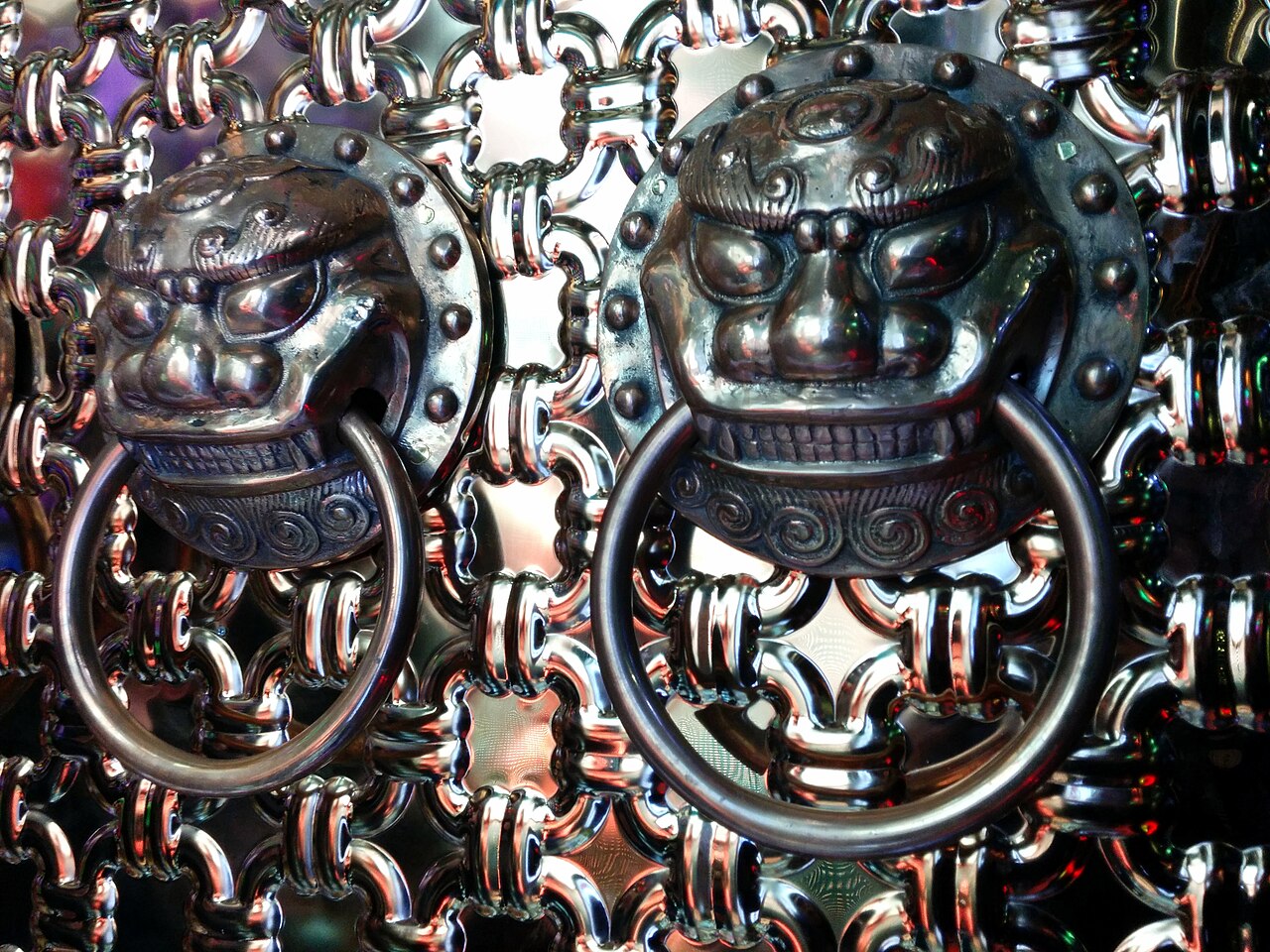
- The theme is samurai, not robots. Sort of. There are still mechanical dragons, there are still neon-lit dancers, there are still taiko drummers. It is just that the marketing emphasises swords and feudal Japan instead of robots.
- The venue is inside Gira Gira Girls (ギラギラガールズ), an adult building. You need to show a passport or driving license on the door to prove you are 18 or over. The show itself contains no adult content — it is exactly as family-weird as the Robot Restaurant was. The age restriction is about the building, not the show.
- Show times are earlier. Robot Restaurant ran four evening shows, the last starting at 9:45pm. Samurai Restaurant Time runs three daytime-to-early-evening shows.
Tom Bricker calls the “night and day difference” framing from other reviewers inaccurate. In his view, Samurai Restaurant Time is close to what the Robot Restaurant would have evolved into anyway after five years of iteration. Alexandra Ziminski and Jane Pipkin at Tokyo Cheapo, who revisited in August 2025 for a mini-chaos retreat, described the current show as “cartwheeling samurai, breakdancing ghosts, and taiko-drumming geisha among other madness and fun.” That tracks.
How much does the Samurai Restaurant cost?
Current Samurai Restaurant prices range from ¥7,000 to ¥14,800 per person depending on the show time and season. The earlier shows are cheaper. The Saturday evening peak slots are more expensive.
The sticker price at the door is the top of that range. Do not pay the sticker price. Book online through Klook, GetYourGuide, or Viator and you will typically see prices in the ¥9,000–¥10,000 range, and you will usually get a free drink or a simple bento included.
As a quick sanity check against getting overcharged:
- Klook: Samurai Restaurant package from ¥9,966 including bento plus drink
- GetYourGuide: Similar pricing, sometimes 2 drinks for the standard package
- Official site (samurai-restaurant.tokyo): Lists up to ¥14,800 at peak — only worth it if the online platforms are sold out
Pro tip: There are often people outside the venue handing out flyers with further discounts, especially for the earliest show of the day. If you are walking past and have not booked yet, take the flyer — Tom Bricker reports these sometimes beat the online prices.
Is the bento worth the extra?
Probably not. The bento is still a simple supermarket-grade sushi selection. The drink, on the other hand, is worth it — the in-venue drinks are overpriced and you will want something alcoholic or caffeinated for the next two hours.
What time are the Samurai Restaurant shows?
There are usually three shows per day:
- Morning: ~10:30–10:50 start, runs ~12:30
- Afternoon: ~13:50–14:00 start, runs ~15:40
- Early evening: ~16:30 start, runs ~18:10
Show times drift by 10–15 minutes depending on the day and the season, so always check the official samurai-restaurant.tokyo schedule before turning up. The full experience including queueing and the elevator trip up to the holding area takes about two and a half hours total.
The 10:30am show is the cheapest and also — surprisingly — often the most lively. Alexandra Ziminski at Tokyo Cheapo suggests the morning crowd is mostly tourists who have structured their day around it, which means everyone is already in the right frame of mind. The 4:30pm show tends to pull a mixed crowd. The afternoon show is the quietest.
Be warned: if you miss the start of a show, you cannot sneak in late. Once the hangar doors close, that is it. Arrive at the box office at least 30 minutes before your scheduled start time.
Where is it? How do I get there?
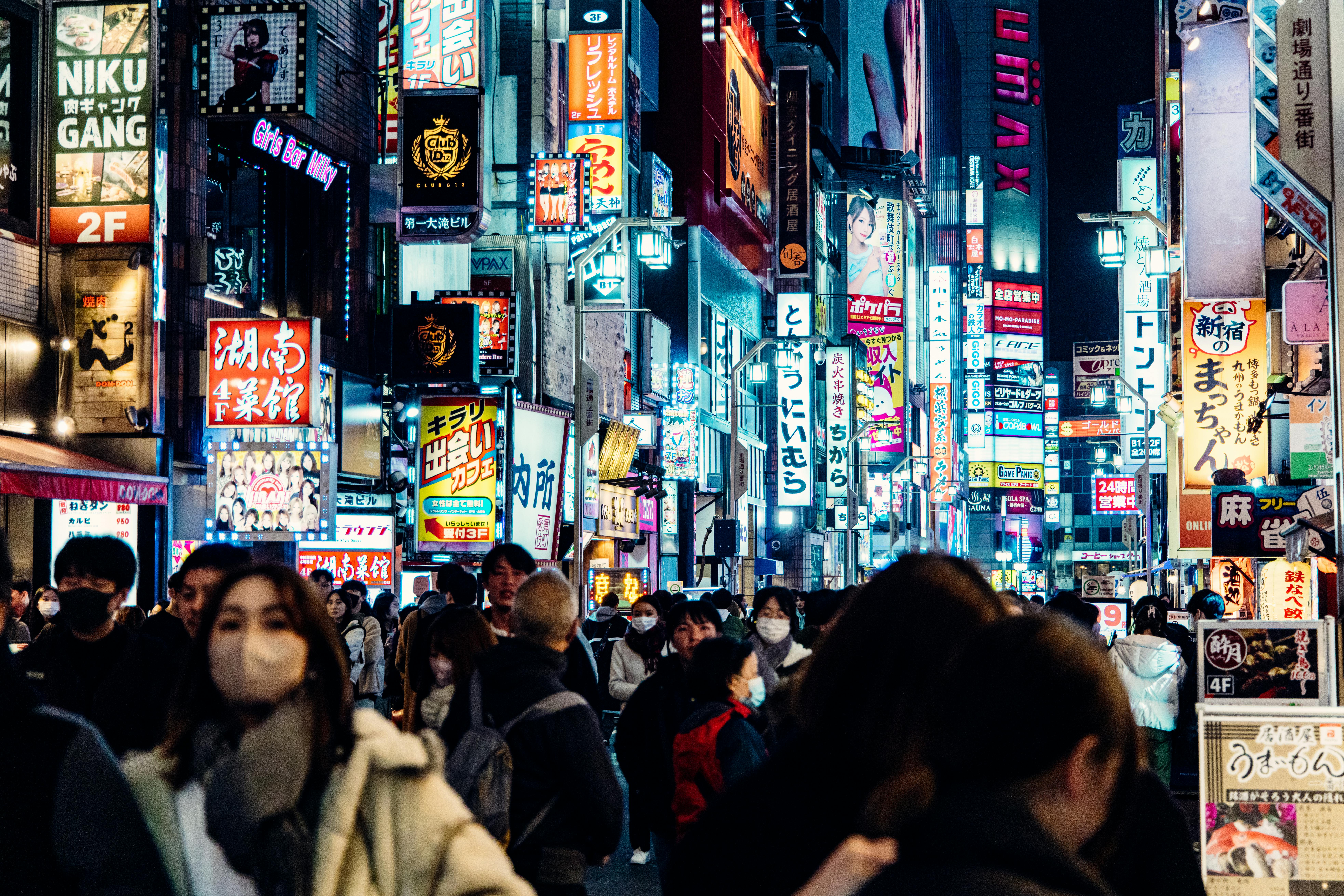
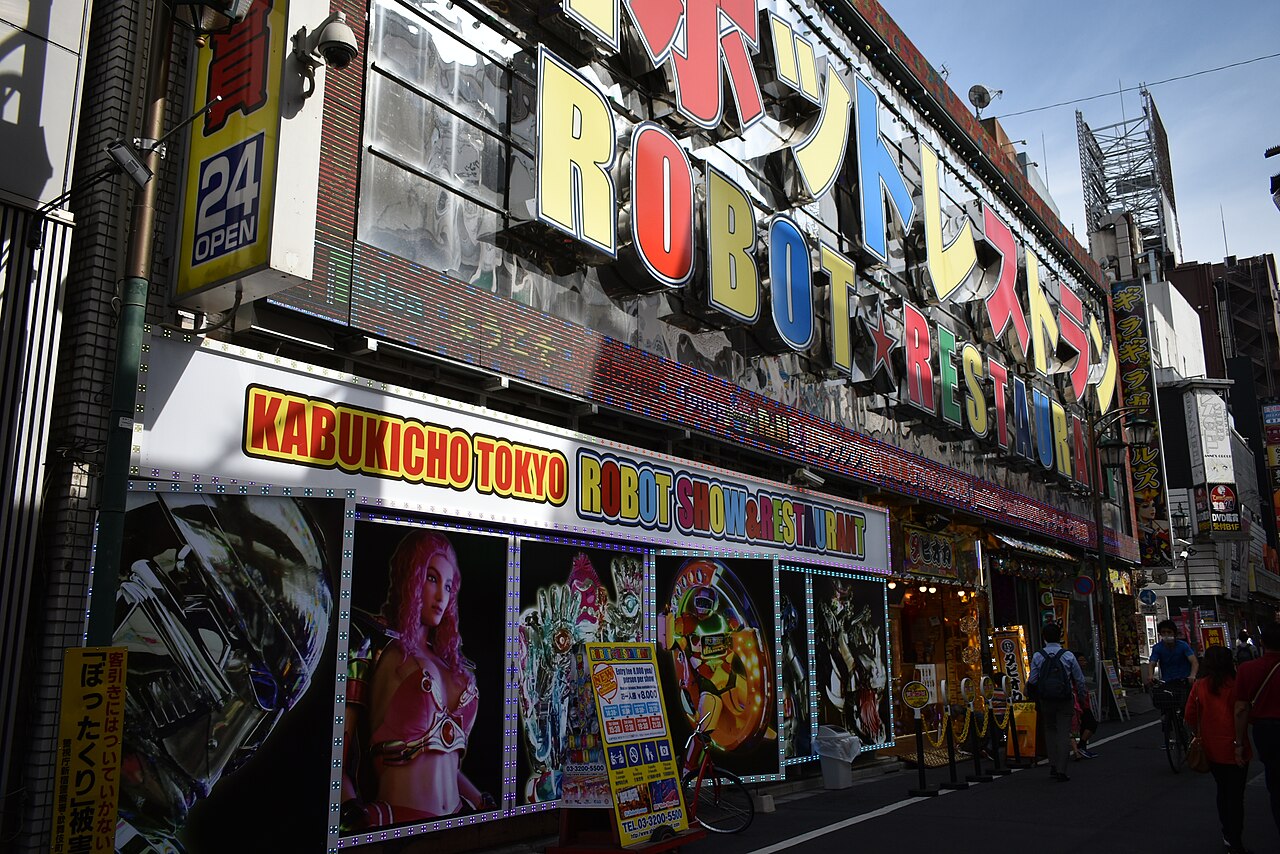
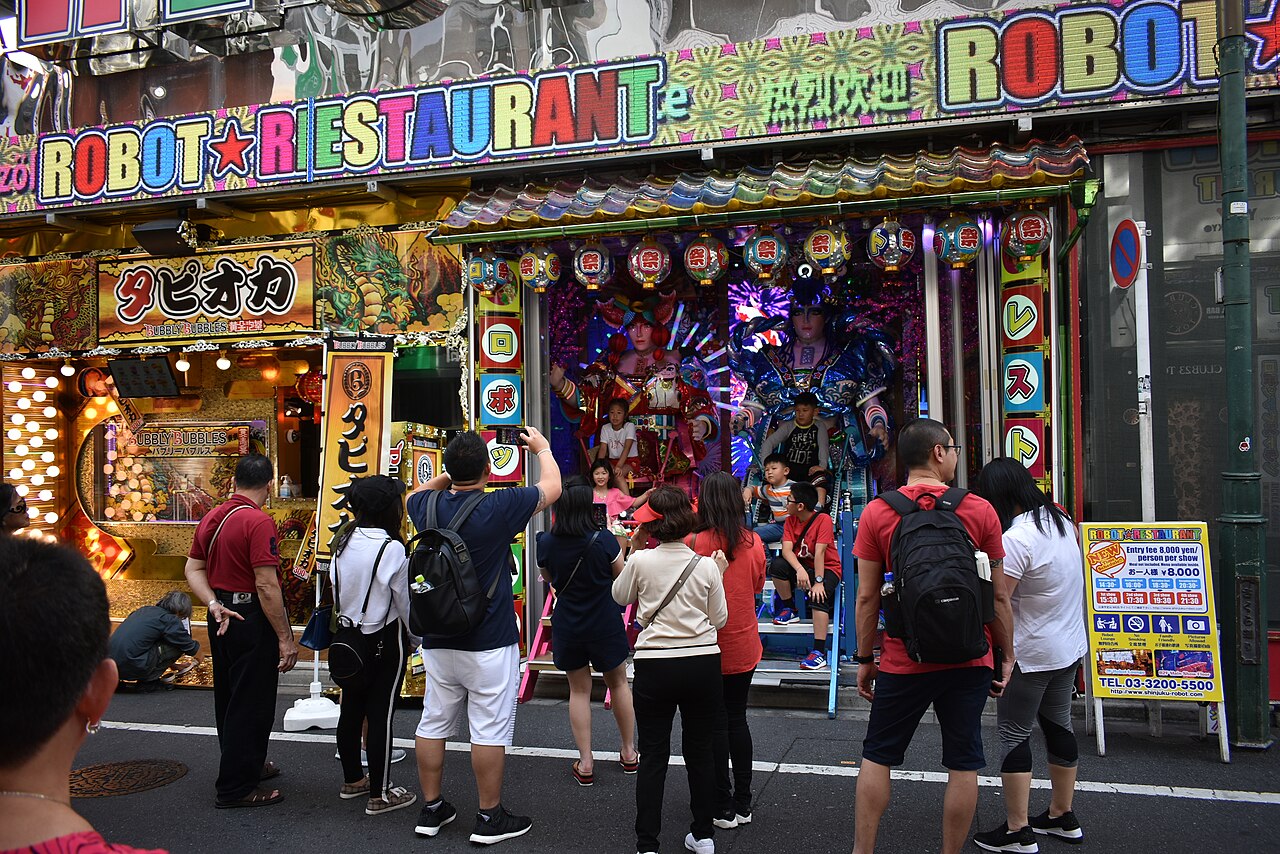
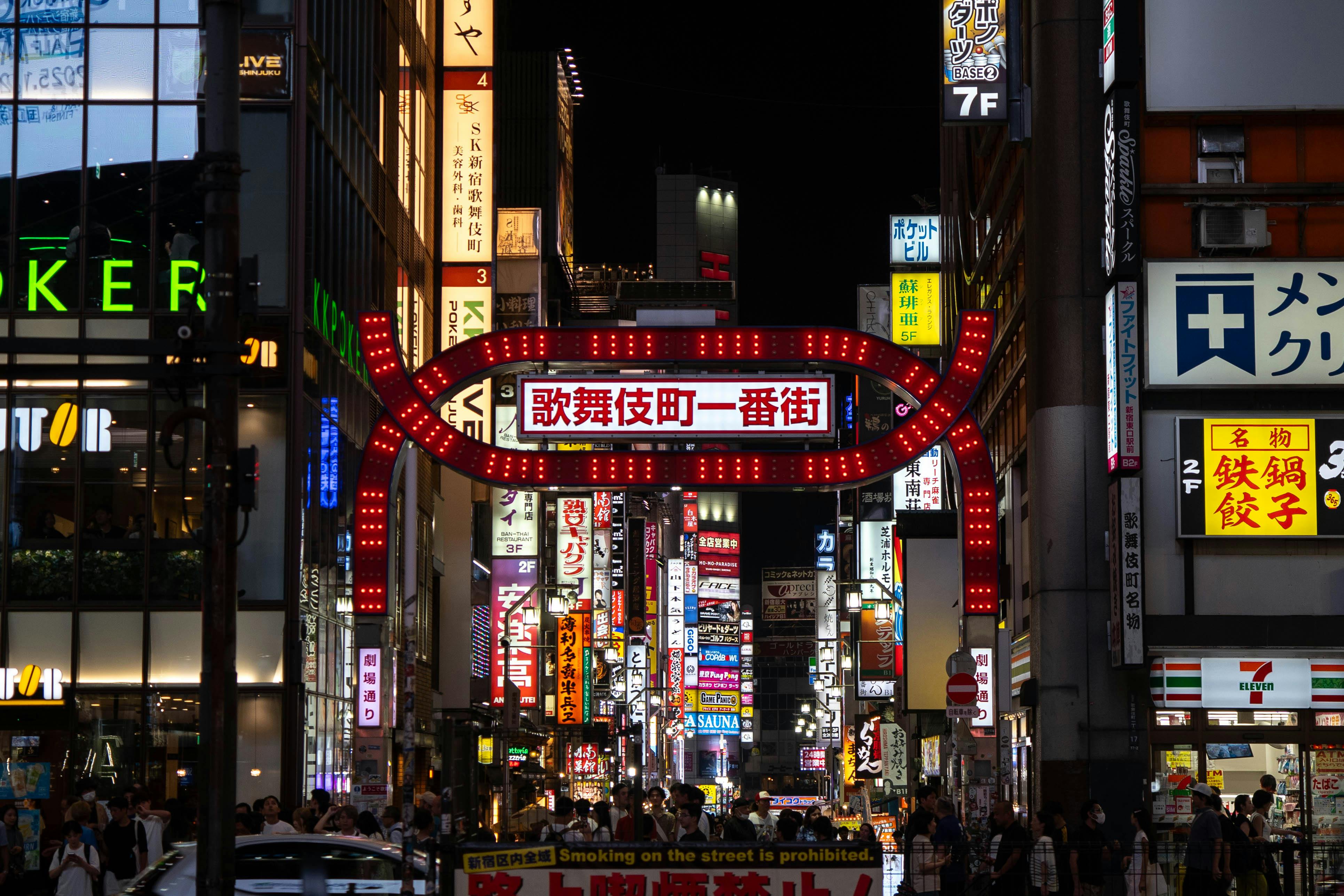
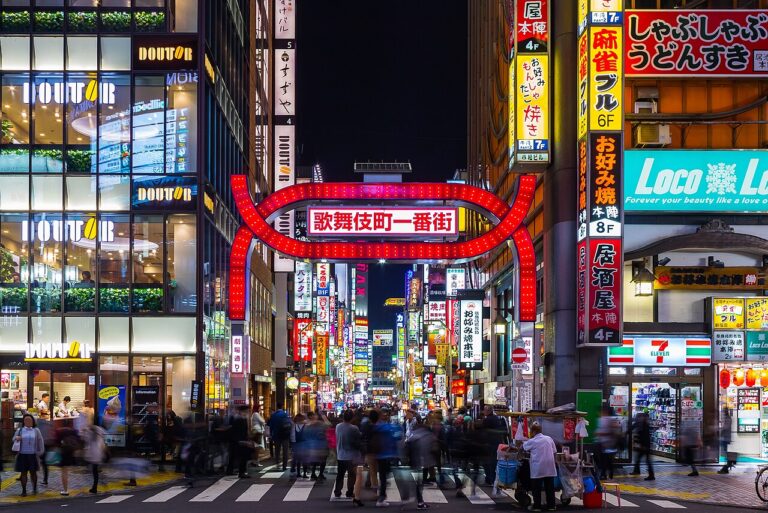
The venue is in Kabukicho, on the east side of Shinjuku Station. The address is B2F Shinjuku Bldg, 1-7-1 Kabukicho, Shinjuku-ku, Tokyo — or search for “Samurai Restaurant Time” on Google Maps and follow the pin. The signage on the street is the same garish neon-and-robot style that made the Robot Restaurant famous, because they never took it down.
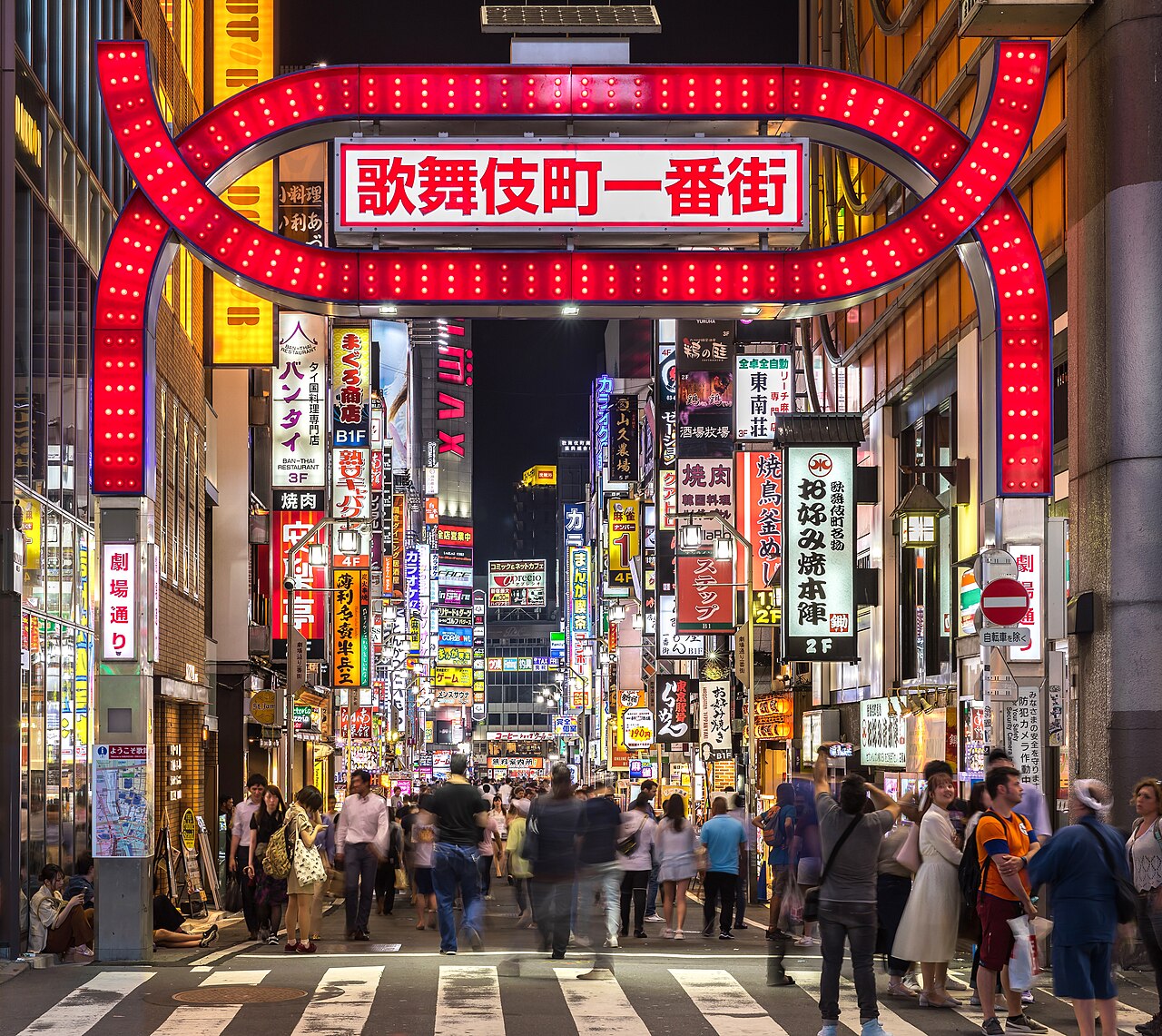
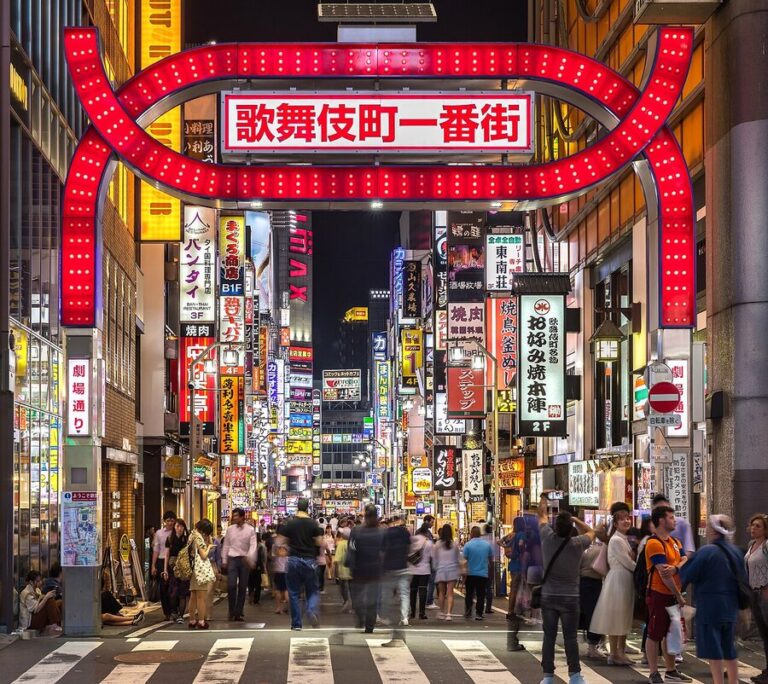
From Shinjuku Station, take the East Exit. Walk north-east up Yasukuni-dori for about five minutes until you see the bright red Kabukicho Ichibangai gate on your left. Pass under the gate, continue north for two more minutes, and you are in robot territory. If you find yourself in the Golden Gai tiny-bar alleys you have overshot — double back south-west two blocks.
Total walking time from the station: 7–10 minutes at a moderate pace, slower if you stop to photograph every third neon sign (you will).
Which Shinjuku Station exit?
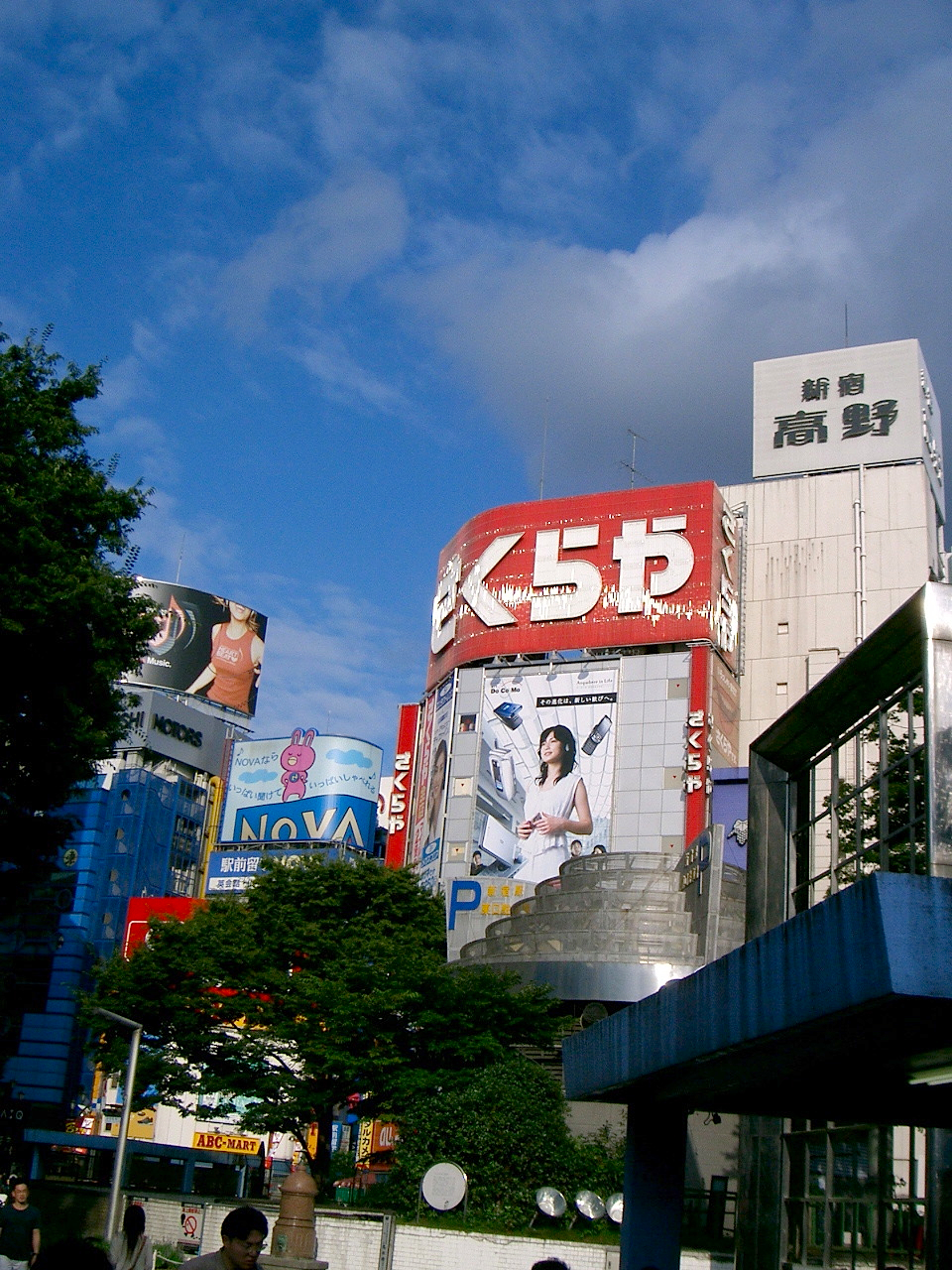
The East Exit (東口) is the closest to Kabukicho. From the JR platforms, follow the purple East Exit signs. If you come in on the Oedo Line, use Exit B13 which pops you up directly in front of the Kabukicho gate and saves you five minutes of underground navigation.
Is Kabukicho safe?
Yes. Properly speaking.
Kabukicho is Tokyo’s red-light district, and the reputation predates the Robot Restaurant by decades. The neighbourhood genuinely is the centre of the city’s adult-entertainment industry — hostess clubs, kyabakura, touts for various services, and a lot of bright signage. If you have read our deep-dive on Kabukicho and Tokyo’s nightlife industry, you know the full picture.
What Kabukicho is not is dangerous in the Western sense. Tokyo’s overall crime rate is remarkably low, and the Metropolitan Police has been running aggressive enforcement in the district since the mid-2000s. You are far more likely to encounter an aggressive tout trying to sell you an overpriced drink than you are to be mugged. The main rule is: do not follow a stranger into any bar whose prices you cannot see. Stick to venues you have booked online or found on Google Maps, and you will have zero trouble.
Tom Bricker, who visited both before and after COVID, notes that Kabukicho has gotten “sketchier” in the post-pandemic period — more visible touting, more street sellers — but it was never prim and proper to begin with. the evening buzz is part of the draw.
Is it family-friendly?
The Samurai Restaurant as a venue is 18+ because the building itself is zoned adult. The show inside is family-weird, not family-inappropriate — broadly equivalent to a Vegas cabaret in what it will show your teenagers.
In the original Robot Restaurant era, children were allowed and were given noise-cancelling headphones at the door. That is no longer the case at Samurai Restaurant Time because of the building’s licensing. If you are travelling with kids, this experience is off the table, and you should head for the Akihabara electric town area instead for the kid-friendly weird-Tokyo sensation.
Where should I eat around Kabukicho?
Good news: excellent food is everywhere.
Within a three-minute walk of the Samurai Restaurant you can find:
- Ramen: Takahashi and Menya Musashi both serve world-class ramen nearby. Takahashi is open late, convenient for post-show.
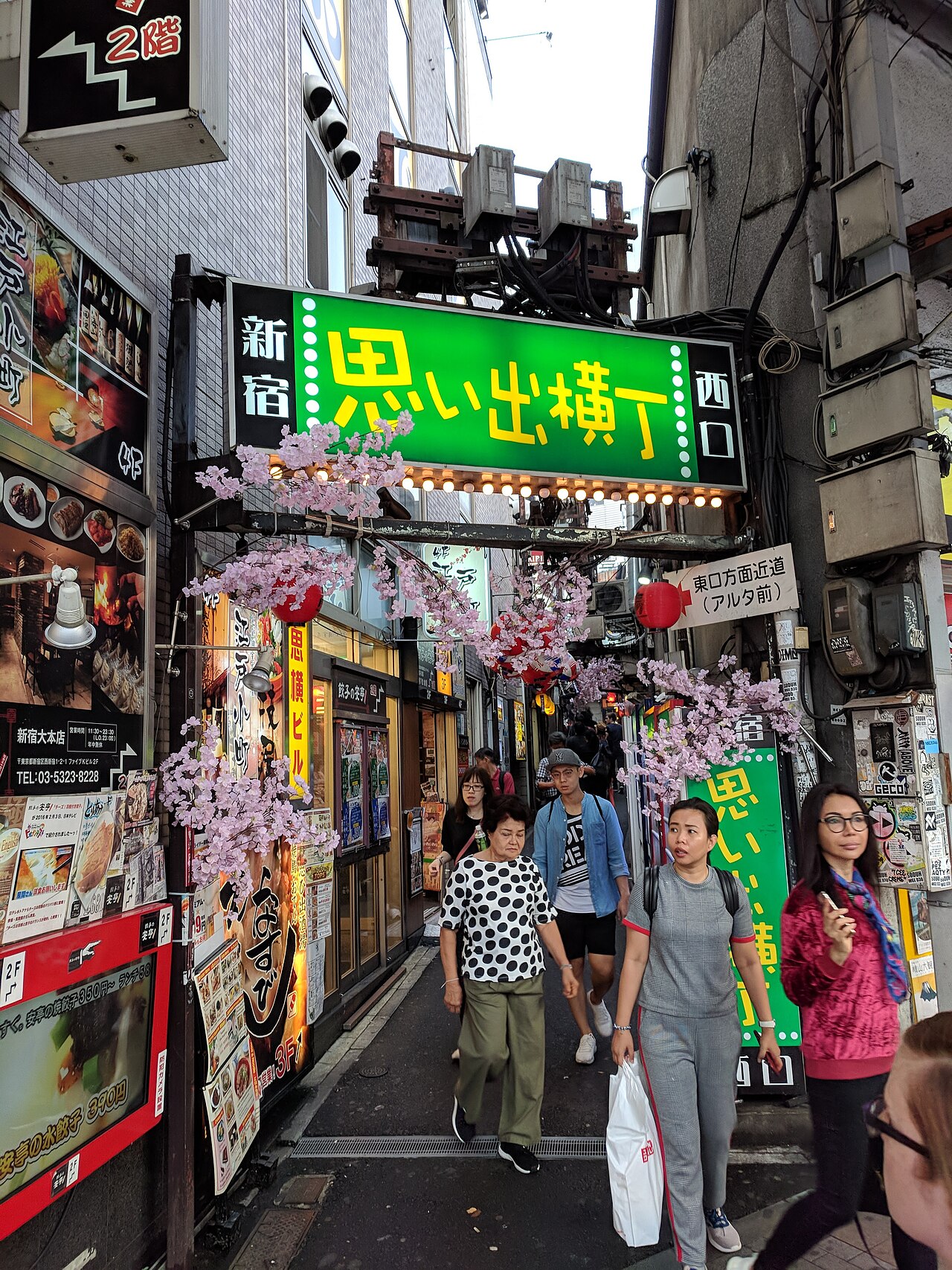
- Izakaya: Omoide Yokocho (“memory lane”), a couple of blocks west, is a maze of tiny smoke-filled bars serving yakitori and cheap beer. Very different energy from the show — that’s the point.
- Okonomiyaki: Zen is a long-running Shinjuku favourite for savoury pancakes. Vegetarian options available.
- Sushi: Multiple kaiten (conveyor belt) places nearby for quick cheap sushi, plus higher-end counters if you want to do it properly.
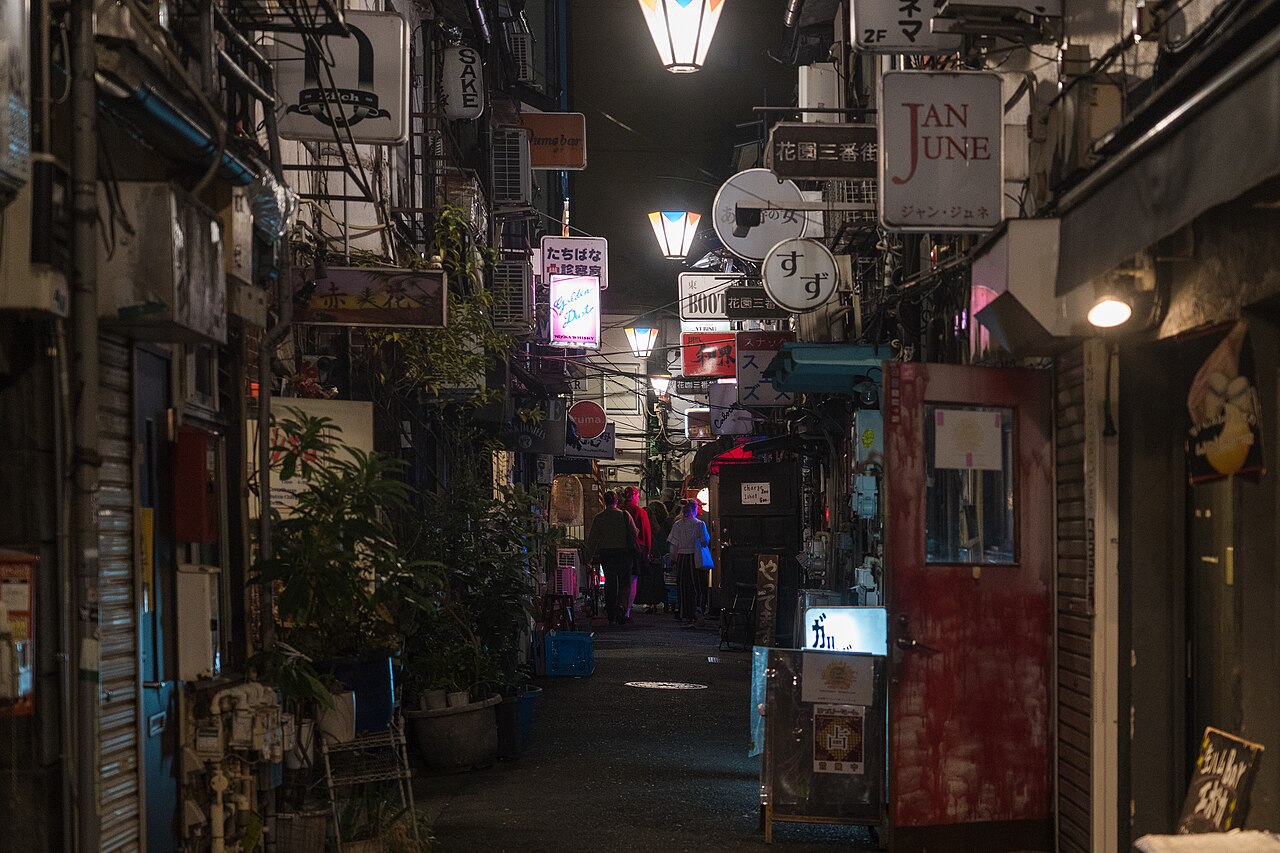
- Golden Gai: The famous tiny-bar district is five minutes east. Most bars have a cover charge of ¥500–¥1,000 but the atmosphere is unmatched.
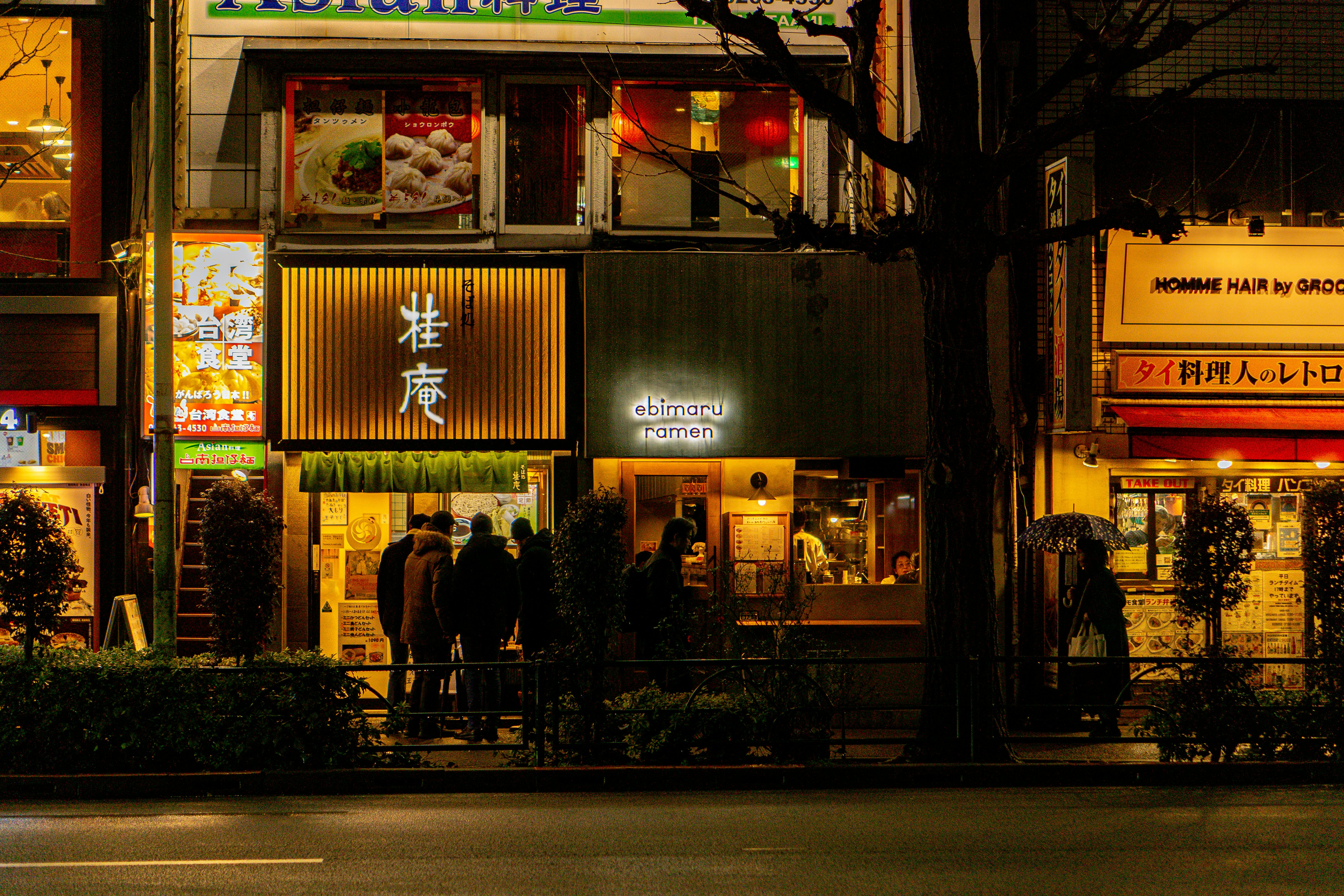
Pro tip: Eat before the show rather than after. Most of the good late-night ramen places get a queue around 9–10pm as post-show and end-of-shift crowds converge. If you eat before, you walk straight in.
Is Samurai Restaurant Time worth it?
Here is the verdict.
If you are already spending a day or more in Shinjuku, or if you were planning to see the Robot Restaurant before you learned it closed: yes, absolutely. The Samurai Restaurant delivers the same essential product — two hours of chaotic, high-energy, impossible-to-summarise Japanese cabaret — at a similar price point, with the same creators, same props, same basement. It is the closest thing to the original experience you will ever get.
If you are travelling specifically to Kabukicho from the other side of Tokyo, and the Samurai Restaurant is your main reason for the trip: less clearly. The show is excellent but the travel premium is not worth it unless you are combining it with dinner and drinks in the area.
If you want a more sedate, historically-grounded samurai experience: skip this. The show is named “Samurai Restaurant” but the connection to actual samurai history is close to zero. You will get more genuine samurai content from a 20-minute visit to the samurai sword and armour exhibits at one of Tokyo’s martial arts museums, or by booking an actual kenjutsu class elsewhere. The Samurai Restaurant is cabaret, not history.
What to bring (and what to leave)
Bring:
- Smartphone. You will want to film the show. Smartphone photos and video are allowed, flash is not.
- Cash. Drinks and snacks inside the venue are cash-preferred. A few vendors take cards. ¥3,000 in change covers a couple of drinks.
- Earplugs. Genuinely. The sound level is brutal in the front rows, and the staff no longer hand out noise-cancelling headphones to adults. If you are sensitive to loud noise, pharmacy earplugs (¥300 at any Don Quijote) will save your ears.
- Passport or driving licence. Non-negotiable for age verification at the door.
Leave:
- Large cameras. Allowed in theory but awkward in practice — seats are cramped, lighting is strobe-heavy, and most DSLR shots come out smeared anyway.
- Big bags. There is no real cloakroom, just the space under your seat.
- Outside food and drink. Technically not allowed. Nobody checks carefully, but don’t push it.
- Expectations of historical accuracy. Really. None of the samurai content is historically grounded.
The wider Kabukicho context
Whether you see Samurai Restaurant Time or skip it, it’s worth understanding what Kabukicho actually is now. The neighbourhood has gone through several identity shifts in the last decade. Once primarily an adult-entertainment district serving domestic Japanese salarymen, it is now visibly dominated by foreign tourists, new foodie openings, the Tokyu Kabukicho Tower (opened 2023, dominates the skyline), and a continued uneasy coexistence with the older hostess and host-club industries.
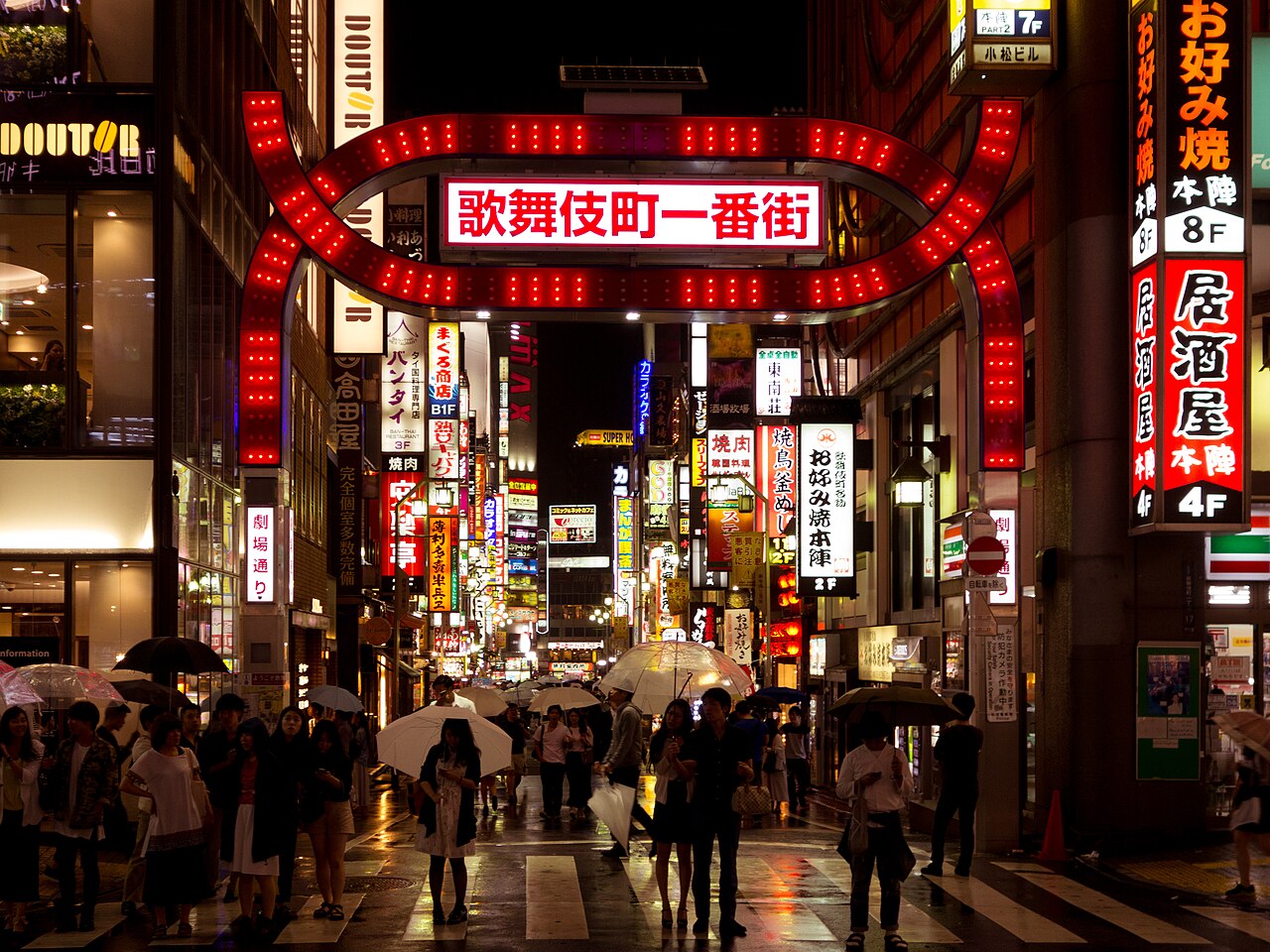
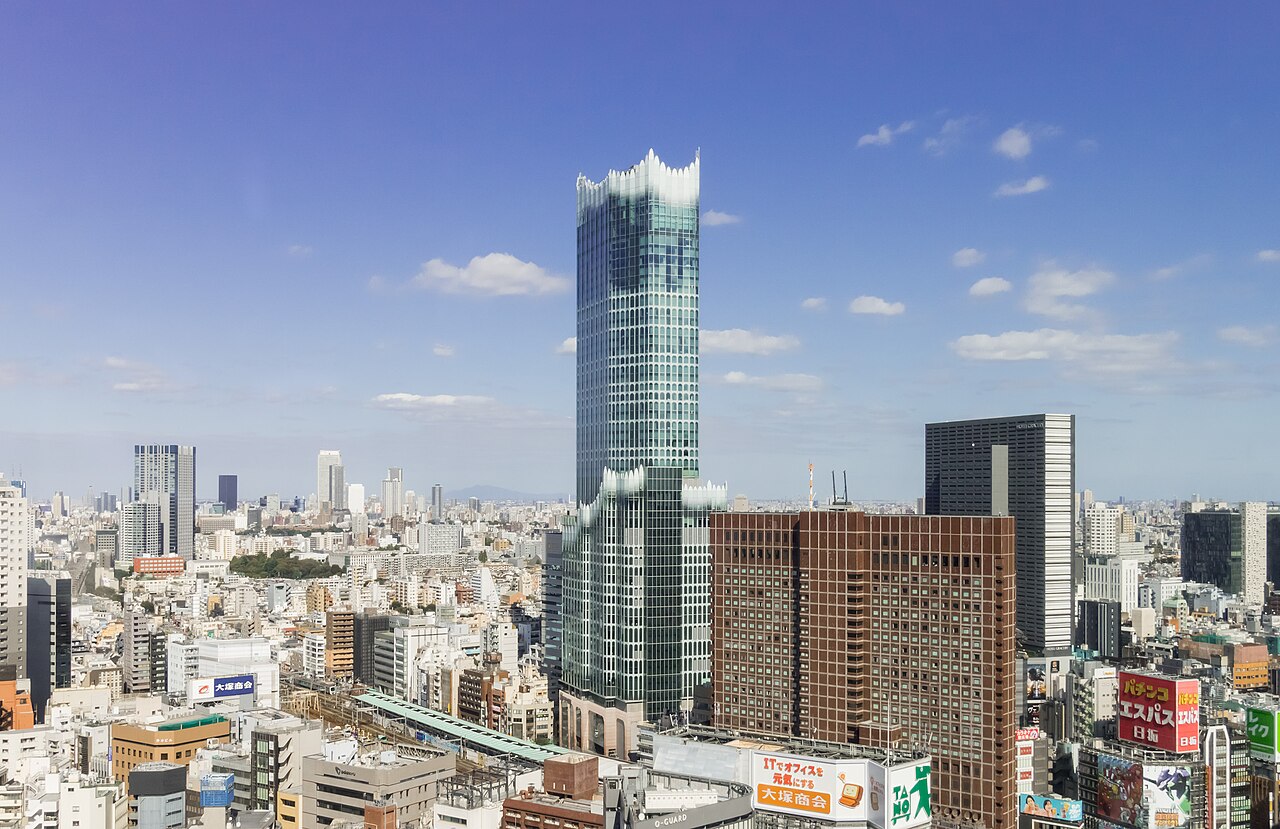
The Robot Restaurant was, for a decade, the one Kabukicho venue that foreign tourists actively sought out. That role is now split: Samurai Restaurant Time carries the cabaret torch, the Tokyu Kabukicho Tower handles the polished tourist-friendly restaurant and cinema offering, and the older host-club and kyabakura economy continues to trade primarily with domestic customers.
If you are curious about the full history of the neighbourhood — how Yoshiwara’s licensed quarter migrated to post-war Kabukicho, how the 2005 clean-up campaign changed the street-level economy, and why the current tourist-adjacent identity may not last — the long-form history is in our Kabukicho and Tokyo’s nightlife industry article.
What if I just want to see the old Robot Restaurant on YouTube?
Fair enough. There are dozens of full-length fan recordings from the 2014–2019 peak era on YouTube, and the quality is mixed but broadly watchable. Search “Robot Restaurant Tokyo full show” and sort by date — the most-viewed videos tend to be from 2016–2018, which is also when the show was at its absolute peak of production value.
That said, the video format fundamentally cannot capture what the show was. The whole premise was being physically surrounded by loud, bright, contradictory stimuli — which is not something a 1080p rectangle on your phone can replicate. It is a little like watching the Rio Carnival on a tablet. Technically the information is there. The experience is not.
Which is the biggest argument for actually going to the Samurai Restaurant while it is still running. The format of the show is inherently in-person, the successor venue is the closest you will get, and if the last few years have taught us anything, it is that these places can vanish faster than you expect.
Quick FAQ
Is the Robot Restaurant really closed?
Yes, permanently. It closed in March 2020 and will not reopen.
Is Samurai Restaurant Time the same show?
Same creators, same location, same basement, mostly the same props, same overall style. Different theme (samurai instead of robots) and different show times. About 80% of the experience.
How long is the show?
~100 minutes plus about 30 minutes of holding-area time beforehand. Plan for a 2.5-hour visit.
Do I need to book in advance?
Strongly recommended. Walk-up tickets exist at full price, but you can usually save 30%+ by booking online 24–48 hours ahead. Weekends and summer high season sell out.
Is English supported?
Yes — announcements, staff, and online booking are all in English. No Japanese required.
Can I see actual robots?
A few. Most of the “robots” are mechanical props with human operators. Do not come expecting Boston Dynamics.
Is it wheelchair accessible?
Partially. The venue is in a basement reached by elevator, but the seating area has steps and narrow aisles. Contact the venue directly via the samurai-restaurant.tokyo website for specific accommodations.
What’s the dress code?
None. Jeans and a t-shirt are perfectly fine. Most of the audience is in tourist casual.
Final verdict
The Robot Restaurant mattered because it was the one touristy thing in Tokyo that everyone, regardless of travel style or budget, could recommend to each other. It was weirder and more committed than any theme-park equivalent. It was run by people who understood that the key to cabaret is total commitment to material that should not work.
Samurai Restaurant Time inherits that DNA. The name is different, the costumes are different, the theme is different. But if you want to sit in a small hangar in a Kabukicho basement and have ninety minutes of high-volume nonsense pumped into your eyeballs and ears, it is still the best game in town. And if you were planning your Tokyo trip around the Robot Restaurant and just learned it was gone — book the Samurai Restaurant instead. You will not be disappointed.
Just eat first.


.jpg)
.jpg)
.jpg)


.jpg)

.jpg)
.jpg)
