
Mirai Kisaragi was 18 the first time she walked into a Kabukicho host club. She had run away from home at 14, escaping abusive parents, and had spent years between a care home, emergency stairwells, and the net cafés that line the edges of Shinjuku. Inside the host club, a man with a careful haircut and a soft voice said “welcome home” every time she opened the door — which, as she told AFP’s Tomohiro Osaki, was something no one in her actual home had ever said to her.
In This Article
- Quick facts at a glance
- What is a host club, exactly?
- The kake trap
- Who gets drawn in
- How the debt becomes sex work
- The December 2023 crackdown
- The 2025 law
- The hosts respond
- Okubo Park and the arrests that gave the story away
- The support workers
- What changed on the ground
- How this fits into the rest of Kabukicho
- Should visitors to Tokyo care?
- Final take
He felt, she said, like a saviour. What he was actually doing, as it turned out, was managing her as a prostitute. He installed her in one of the 24-hour net cafés that fill Shinjuku’s blocks, collected the money she made being dispatched on demand to clients, and booked her continued visits to his club on a running tab. By the time she was 23 and speaking to AFP, she was one of thousands of women in Tokyo whose emotional entanglement with a host had turned into debt, and whose debt had turned into sex work.
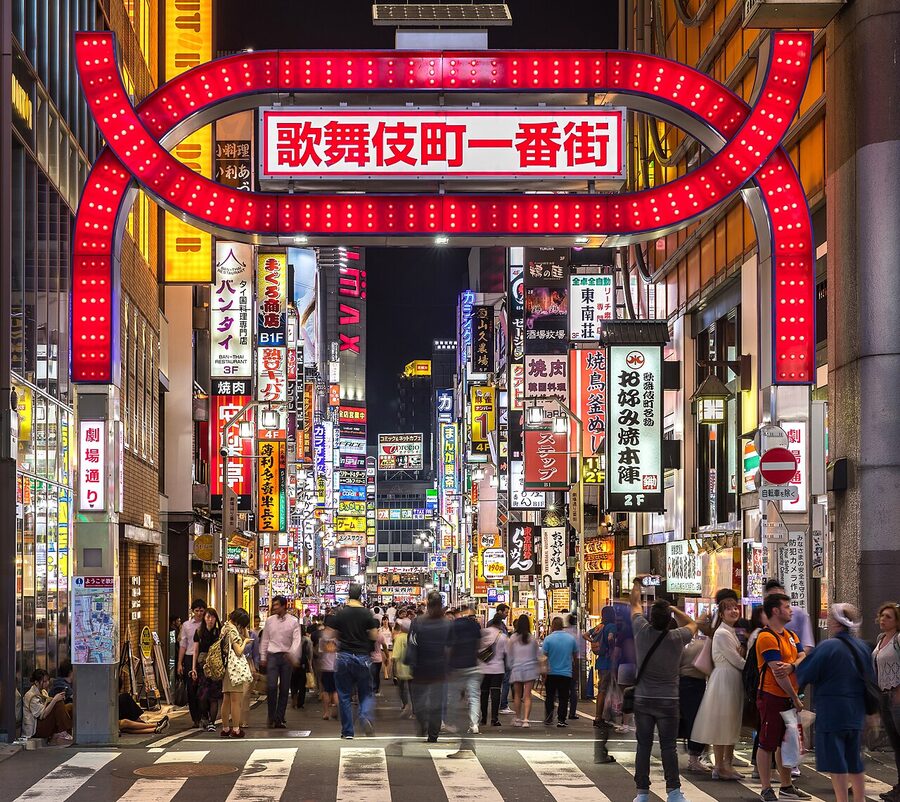
This guide walks through how that pipeline actually works — the kake running-tab system at the heart of it, the women who get drawn in, the route from Kabukicho to the sex work that clears the debt, the police crackdowns that started in December 2023, and the revised Entertainment Business Act that came into force in June 2025. It draws on named reporting by Justin McCurry at The Guardian, Tomohiro Osaki at AFP, Nobuaki Tanaka at the Asahi Shimbun, Karin Kaneko and Jessica Speed at The Japan Times, and on National Police Agency data.
Quick facts at a glance
- Where: Kabukicho, Shinjuku — roughly 200+ host clubs concentrated in one square kilometre
- Clientele: Japanese women; foreign tourists are not the target here
- Core mechanism: kake / urikake — the running-tab pay-later system
- First-visit price: often ¥2,000–¥3,000 for an hour of unlimited drinks
- Third-visit price: routinely ¥300,000 in the same evening (per NGO founder Hidemori Gen)
- Champagne bottle upsell: up to roughly $6,000 per bottle at the top end (CNN)
- Typical case debt: ¥1M–¥10M+ over weeks or months
- Police consultations 2024: 2,776 nationally (National Policy Agency, via Japan Times)
- Law change: Revised Entertainment Business Act (adult-entertainment amendment) in force since June 2025
- What changed: Romance-for-profit manipulation banned; “No.1” billboard advertising banned; threats to end the relationship if drinks aren’t ordered banned
What is a host club, exactly?
A host club is the mirror image of a hostess club. In a hostess club, the clients are men and the staff are women paid to flirt, pour drinks, and manage a rotation of regulars. In a host club, the clients are women and the staff are young men — bleached hair, contoured makeup, tailored suits — paid to do the same thing. Both are legal. Both have been part of Kabukicho for decades.
What separates host clubs operationally is the economics. Hostess clubs mostly extract money from men on expense accounts, in one evening, with relatively controlled margins. Host clubs extract money from women over time, on credit, with the margin structured so that the relationship has to keep going for the club to get paid. That time dimension is what the kake system was designed to produce, and what the 2025 law was ultimately written to break.
The kake trap
Nobuaki Tanaka, reporting for the Asahi Shimbun in April 2023, laid out the mechanism clearly through the case of a Tokyo woman in her 20s. She went on a friend’s invitation. The host told her she was cute. Her budget as a part-time worker was small, so she used the kake system — the club or the host himself would temporarily cover the bill, and she would pay later. She kept coming back. The host referred her to a sex-industry operator who could pay a “higher salary” to help her clear the tab. Her debts reached more than ¥10 million ($76,000). She still works in the sex industry to pay them off. She stopped going to the club.
A former host in his 30s, also speaking to the Asahi, was blunt about why the system exists: “Were it not for the kake framework, host clubs cannot continue their business.”
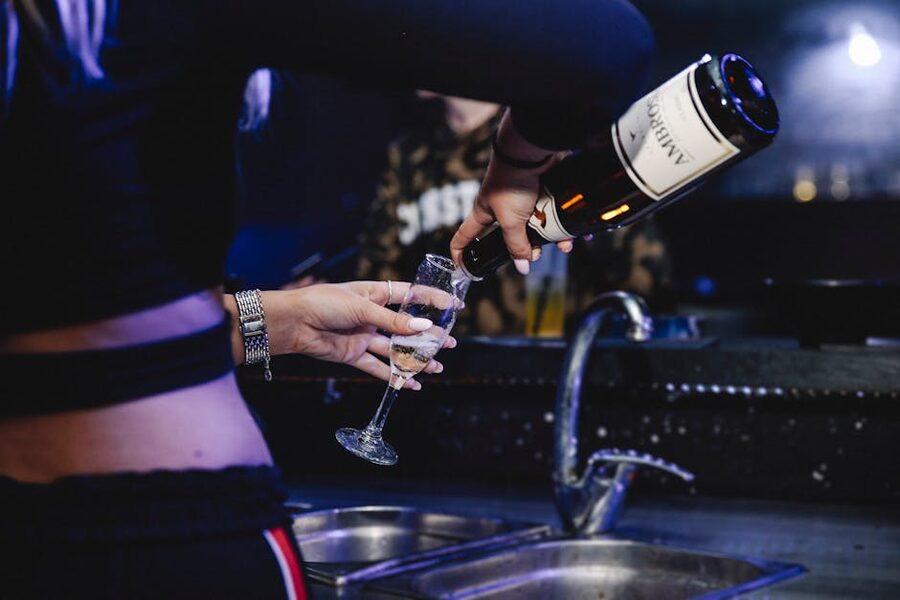
The price curve inside a single client relationship is the other half of the trap. The first visit is cheap by design — Justin McCurry at The Guardian documents first-visit unlimited-drinks specials at ¥2,000 to ¥3,000. The hosts then text. The woman comes back. On the third visit, according to Hidemori Gen, the founder of a Kabukicho support group who is quoted across the English-language coverage, the bill is typically ¥300,000. Champagne and branded alcohol move in hundred-thousand-yen bottles. CNN documented individual bottle upsells in the $6,000 range. Once the bill is more than the client can pay, the tab rolls to the next week.
Akihiro Kosuge, a lawyer who specialises in the nightlife industry and spoke to the Asahi, explained the structural reason this works: “Postponing payments from patrons makes it easier for clubs to force such customers to take responsibility for disproportionate sums.” The system is a credit line with no formal contract, no interest disclosure, and an escalating unit price set by the person emotionally invested in keeping the client attached.
Who gets drawn in
A striking pattern runs through the case studies the English-language press has reported. Mirai Kisaragi — homeless at 14, orphaned by choice, sleeping in stairwells — told AFP the host looked like a saviour. Riri, the 19-year-old whose story Karin Kaneko reported in the Japan Times, had been in orphanages since infancy and went to Kabukicho hoping to meet Roland, the celebrity host who appears on Japanese TV. Yuko’s daughter, the case at the centre of McCurry’s Guardian piece, was 24, at medical school, and met her future host through a dating app posing as a fellow student.
The target demographic isn’t the confident career woman the host industry likes to market itself around. It’s younger, more isolated, more materially precarious. “Many women feel isolated through their household conditions and other factors and have no one to talk to except hosts,” Shingo Sakatsume, chairman of the Niigata-based Futerasu NPO, told the Asahi. Renho Shiomura, a member of the Japanese national assembly who has campaigned on the issue, told CNN that clients “some as young as 18” often genuinely believe the host is their boyfriend. Hosts may have sex with their customers early in the relationship, Shiomura said, and some go as far as meeting the woman’s parents.
The scouting has moved online. Kabukicho street-level recruitment still happens, but TikTok has become the main front end. Women watch a specific host’s videos for months, as CNN reported of “Yu,” and arrive at the club already feeling they know him.
How the debt becomes sex work
The mechanism by which a host-club tab turns into a sex-work income stream is structural and documented.
Once the debt exceeds what the client can plausibly clear on her existing wage, the host introduces her to a “scout” — an industry intermediary who places women into sex work and earns a commission per placement. The scout places her in a fūzoku business (the licensed Japanese sex-industry sector, which runs from massage-only venues through to full contact), or in illegal street work, or, in the worst cases, into overseas trafficking. Mainichi reported the case of a Tokyo woman lured into prostitution in Macao specifically to pay off her host-club debt.
Hidemori Gen, whose support group for parents tracks these cases, told AFP that the cash flow between hosts, scouts, and sex-work venues amounts to “straight-up human trafficking.” His group recorded at least 250 such cases between July and December 2023 alone, up sharply from previous years. Gen summarised the calculus hosts use: “‘This woman must be worth 20 million yen’ — that’s the kind of thinking upon which host clubs exist.”
The December 2023 crackdown
The first large-scale law-enforcement response arrived in the second half of 2023. Tokyo’s Metropolitan Police Department ran a coordinated inspection of Kabukicho host clubs in December, and on 19 December 2023, as Mainichi reported, the inspection found legal violations at 145 Kabukicho businesses in a single sweep. Two clubs had their licences suspended in January 2024. By the end of 2024, 207 hosts had been arrested nationally for various predatory practices, according to National Police Agency figures cited in Japan Forward.
The more interesting piece of the December 2023 response was industrial, not criminal. Karin Kaneko reported in the Japan Times that a bloc of 19 host-club owners — between them operating most of Kabukicho’s host venues — pledged to end the kake system by April 2024 and to bar under-20s entirely from January 2024. Takayuki Makita, head of Group Dandy, the largest Kabukicho operator, told reporters the industry “has undoubtedly been aware” of the problem but “hasn’t taken it as seriously as we should have.” Prime Minister Fumio Kishida publicly urged action in the same month.
The 2025 law
The industry’s voluntary 2023 pledge was insufficient. Self-regulation failed to end kake in practice; Police received 2,776 consultations nationally in 2024 related to host clubs, as Jessica Speed reported in the Japan Times in March 2025. By the end of 2024 an NPA-convened panel was openly calling for stricter law, and the Kishida-era cabinet approved a bill on 7 March 2025.
The revised Entertainment Business Act — the same fūzoku-eigyō law that governs the licensed nightlife sector — passed the Diet in May 2025 and came into force in June 2025. The substantive changes are narrower than the headlines suggested but carefully aimed:
- Host clubs are formally reclassified as adult-entertainment establishments, bringing them under the stricter notification and inspection regime used for fūzoku venues rather than the looser one used for restaurants and bars
- Romance-for-profit tactics are banned — hosts can no longer say things like “I’ll break up with you if you don’t buy that bottle” as a sales technique
- Coerced-debt schemes are banned — using threats to push indebted customers into prostitution is now explicitly criminalised at the club level, not just the host level
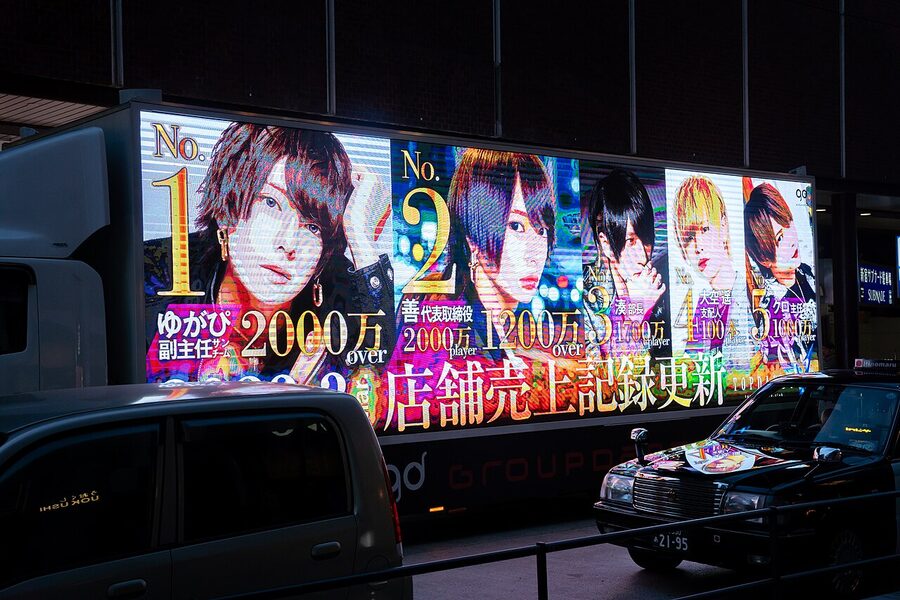
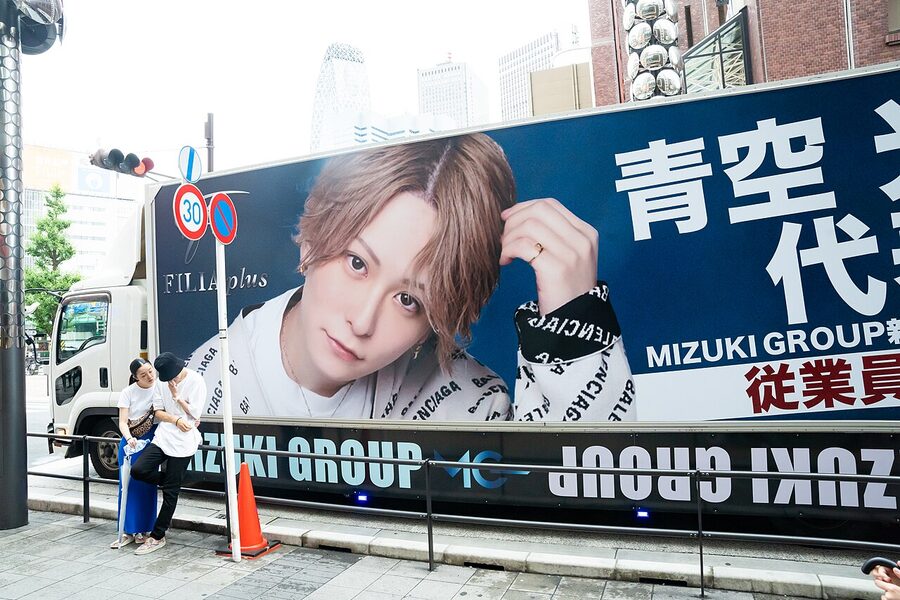
- Billboard culture is curtailed — the “No.1,” “conqueror,” “king of Kabukicho” portrait billboards that lined Yasukuni-dori are no longer permitted, because they were found to fuel the sales competition that pushes hosts toward exploitative tactics
- Penalties are stiffer — both individual hosts and club licences are easier to revoke

The hosts respond
The industry reaction, reported across Bloomberg’s June 2025 feature and the AFP wire picked up by France 24, Bloomberg, Straits Times, and The Independent in late July 2025, split two ways.
John Reno, a 29-year-old star host and owner of Club J in Kabukicho, described the crackdown as “unsurprising” given the rise of what he called “scammer-like hosts.” Reno told AFP that hosts used to employ intimacy “to entertain women,” but the newer cohort operates on a mindset of “if you love me, then don’t complain,” silencing women and exploiting emotional dependence. His framing is the industry-internal one: the problem is a bad subset of hosts, and the clean-up is overdue.
Ran Sena, the owner of Platina host club, took the opposite line in the same AFP piece. He called the new law “too vague.” His example: “If a client tells me, ‘I’m about to fall in love with you,’ does that mean I’ll have to forbid her from coming to see me again?” The regulatory boundary between paid companionship and coerced romance-for-profit is genuinely fuzzy, and Sena is correct that operators now have to interpret it in real time under inspection risk.
One Kabukicho host, Saito, who had spoken to AFP in December 2023 and only gave his last name, put a different kind of pushback on the record. “I always warn girls about the price tag before they order drinks,” he said. “So getting into debt is really their choice, but some still fail to pay, and I end up shouldering their debt.” Some share of the industry genuinely believes the debt-holder is the host, not the client.
Okubo Park and the arrests that gave the story away
The single clearest piece of evidence that the host-club debt pipeline was producing street-level sex work came from the Tokyo Metropolitan Police’s own arrest numbers near Okubo Park.
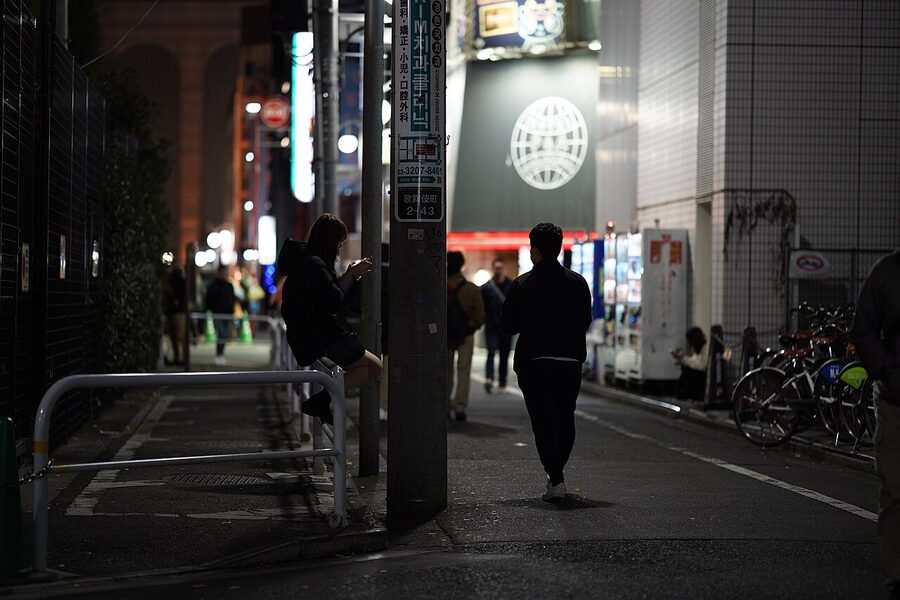
Street prostitution is legally banned in Japan and has historically been uncommon, because the licensed fūzoku sector absorbs most of the demand under regulated conditions. Visible soliciting on a Tokyo pavement is itself a signal that something else is happening. Justin McCurry reported in the Guardian that Tokyo police had arrested 80 women near Okubo Park on suspicion of breaking anti-prostitution laws between January and September 2023 — up from 51 arrests in all of 2022. About 70% of those arrested were in their 20s. Roughly 40% told police directly that they were making money to visit host clubs or concept cafés.
That 40% figure is effectively the receipt for the whole pipeline. The Guardian’s source was the Tokyo MPD’s own arrest data, not an advocacy estimate. It turned what had been an NGO claim into a police statistic.
The support workers
Three NGOs or campaigners appear across almost every English-language account of this story, and their positioning is worth understanding because they’re the reason the issue became legible to foreign press at all.
Hidemori Gen runs a drop-in consultation service for parents whose daughters have been trapped by host clubs. He is the source of the “straight-up human trafficking” framing, the ¥20-million-per-woman valuation quote, and the 250-cases-in-six-months tracking that put a number on the post-pandemic surge. His group’s work is consultative; families come to him.
Shingo Sakatsume at the Futerasu NPO in Niigata takes sex-worker-side calls. Many of his clients are women already placed in brothels, calling to try to work out whether they can leave. Sakatsume’s frame is that the isolation comes first and the host is the response — which means punishing only the host doesn’t fix the demand side.
Renho Shiomura, a sitting Diet member, is the political conduit. Her interviews with CNN, NHK, and the foreign press were what translated the on-the-ground reporting of Gen and Sakatsume into a legislative push. The 2025 bill that came out of the Kishida cabinet carries her fingerprints.
What changed on the ground
The visible difference in Kabukicho post-June 2025 is the billboards. The AFP wire documents clubs hurriedly covering their large-format “No.1” portrait signs with black tape, along with the slogans that called hosts “conquerors,” “kings,” or urged women to “drown” in love. That change is cosmetic but structurally meaningful — the billboards functioned as an internal sales-ranking display that drove hosts to push harder, and the law targeted the ranking-display mechanism rather than individual behaviour.
Inside the clubs the picture is less clear. The emotional-manipulation ban is, as Ran Sena complained, vague enough that enforcement depends on whether a specific customer decides to report her host. Most don’t. The kake system hasn’t ended; the industry’s 2023 voluntary pledge didn’t produce a full transition by April 2024, and the 2025 law stops short of banning pay-later tabs outright. Scout networks still operate. Okubo Park arrests have slowed but haven’t stopped.
How this fits into the rest of Kabukicho
The host-club pipeline isn’t the only predatory pattern running in this square kilometre. Our Kabukicho bar-scam piece covers the mirror-image story aimed at foreign men — drink spiking, drugging, and forced bill settlement at a cluster of unlicensed bars two streets north of the main host-club blocks. Our wider Kabukicho nightlife piece covers the licensed fūzoku sector that the host-club pipeline feeds into. Our yakuza piece covers the older generation of organised-crime entanglement that the modern host-scout networks have partially replaced. All four problems share the same postcode and the same demographic pressure; they’re variants of the same extraction model.
Our Japan anti-tourism politics piece covers the broader political register the 2025 law was drafted into — a Diet newly willing to legislate on nightlife after decades of letting the sector self-regulate. The host-club reform was the first concrete piece of that shift to pass.
Should visitors to Tokyo care?
Practically: as a tourist walking through Kabukicho on a weekend, you will not be a target of a host club. You will also not be a target of a scout. The pipeline described here is entirely aimed at domestic clients. The billboards you see, the neon-lit male portraits lining Yasukuni-dori, the mobile ad-trucks cruising at 2am — all of it is pitched at young Japanese women.
Legally: you can walk into a Kabukicho host club as a foreign woman. Some clubs accommodate. The economic dynamics that make the industry predatory for Japanese clients don’t reliably translate to tourists because the TikTok grooming and emotional-dependence sales cycle requires months of sustained contact. One-off walk-ins are a minor side business.
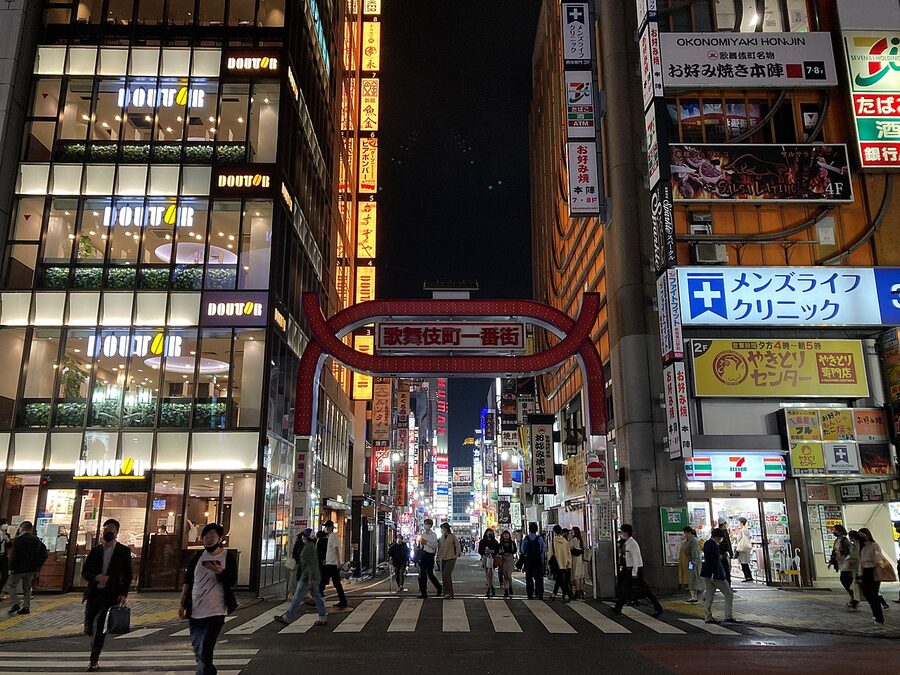
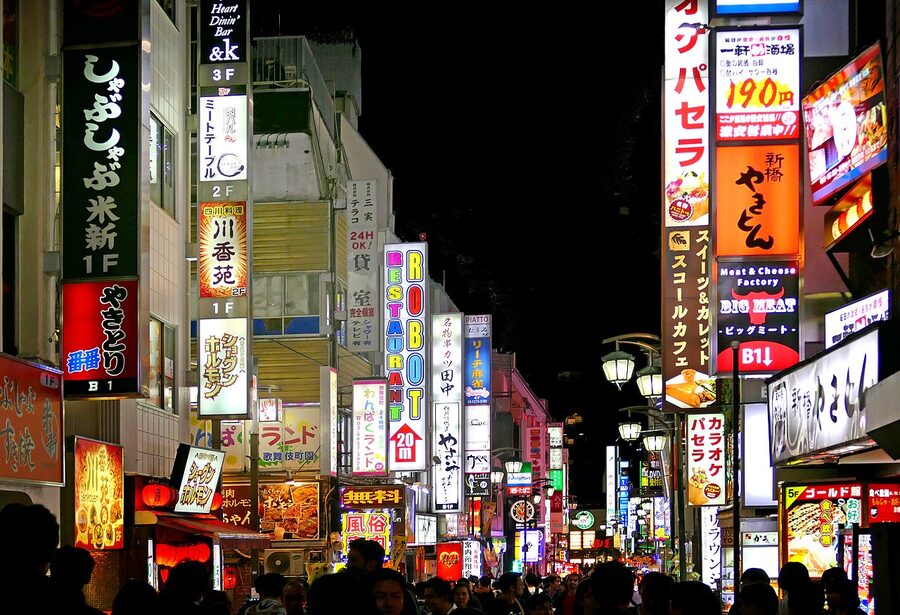
Culturally: understanding what happens on the other side of those billboards is part of understanding what Kabukicho actually is. The neighbourhood is routinely presented in English-language guidebooks as a colourful nightlife district with a mildly risqué edge. That framing is accurate as far as it goes but stops short of what the Tokyo MPD was arresting 80 women a year for doing across the street from Godzilla. The real Kabukicho runs on the pipeline this article describes, not on the Robot Restaurant aesthetics.
Final take
The host-club debt trap is a Japanese domestic scandal. It is not a tourist issue. It is, however, one of the rare cases where the Japanese political system has moved from “this is a regrettable individual problem” to “this is a structural mechanism and the structure is illegal” inside eighteen months — December 2023 raids, March 2025 cabinet approval, May 2025 Diet passage, June 2025 in force. That pace of legislation is unusual in Japan, and it happened because NGOs like Gen’s and Sakatsume’s, Diet members like Shiomura, and reporters like Tanaka, Kaneko, Speed, McCurry, and Osaki assembled a paper trail the police and the NPA eventually had to respond to.
The billboards are coming down. The kake tabs are not. Okubo Park is slower than it was. Mirai Kisaragi is still 23 and still has the debts she came out of the net-café with, as are most of the women the English-language press named before her. The 2025 law is better than what came before, and will not be enough. Whether any of this has bent the curve will show in the 2026 and 2027 consultation numbers — the single cleanest measure the NPA is publishing.
For related reading, our Kabukicho bar-scam piece covers the mirror-image problem aimed at foreign men, our wider Kabukicho nightlife piece covers the sector the debt pipeline feeds into, and our yakuza piece covers the generation of organised-crime infrastructure these modern host-scout networks partially inherited.



.jpg)


.jpg)


.jpg)
