
The Japanese toilet — specifically the washlet — is probably the single most practical feature of Japanese domestic life that foreign visitors consistently underestimate before arriving and rave about after leaving. Heated seat. Warm-water spray. Adjustable pressure. Deodorizer. Ambient noise generator for privacy. Lid that raises and lowers automatically. All of it is standard in homes, hotels, restaurants, offices, train stations, and airports across the country.
In This Article
- Quick facts at a glance
- What is a washlet, actually?
- How do you actually use one?
- Why is Japan so far ahead on toilets?
- 1. Cultural emphasis on cleanliness
- 2. Small homes with no dedicated bathtubs
- 3. Cold winters, no central heating
- 4. Toto’s commercial commitment
- 5. No path-dependence from a plumbing standpoint
- Where can you experience a washlet in Tokyo?
- What are the best washlets on the market?
- TOTO Neorest series
- Panasonic Arauno
- LIXIL Satis
- Can you buy a washlet to take home?
- Voltage compatibility
- Plumbing compatibility
- Should you install one at home?
- What about the smart toilets in public spaces?
- What’s the etiquette around washlets?
- How has the washlet affected Japanese travel?
- Is there a downside?
- Final verdict
This guide walks through what a washlet actually is, how to use one (without embarrassment), why Japan is so far ahead of everyone else on toilets, where to try one if you’re visiting Tokyo, and whether it’s worth bringing the technology home.
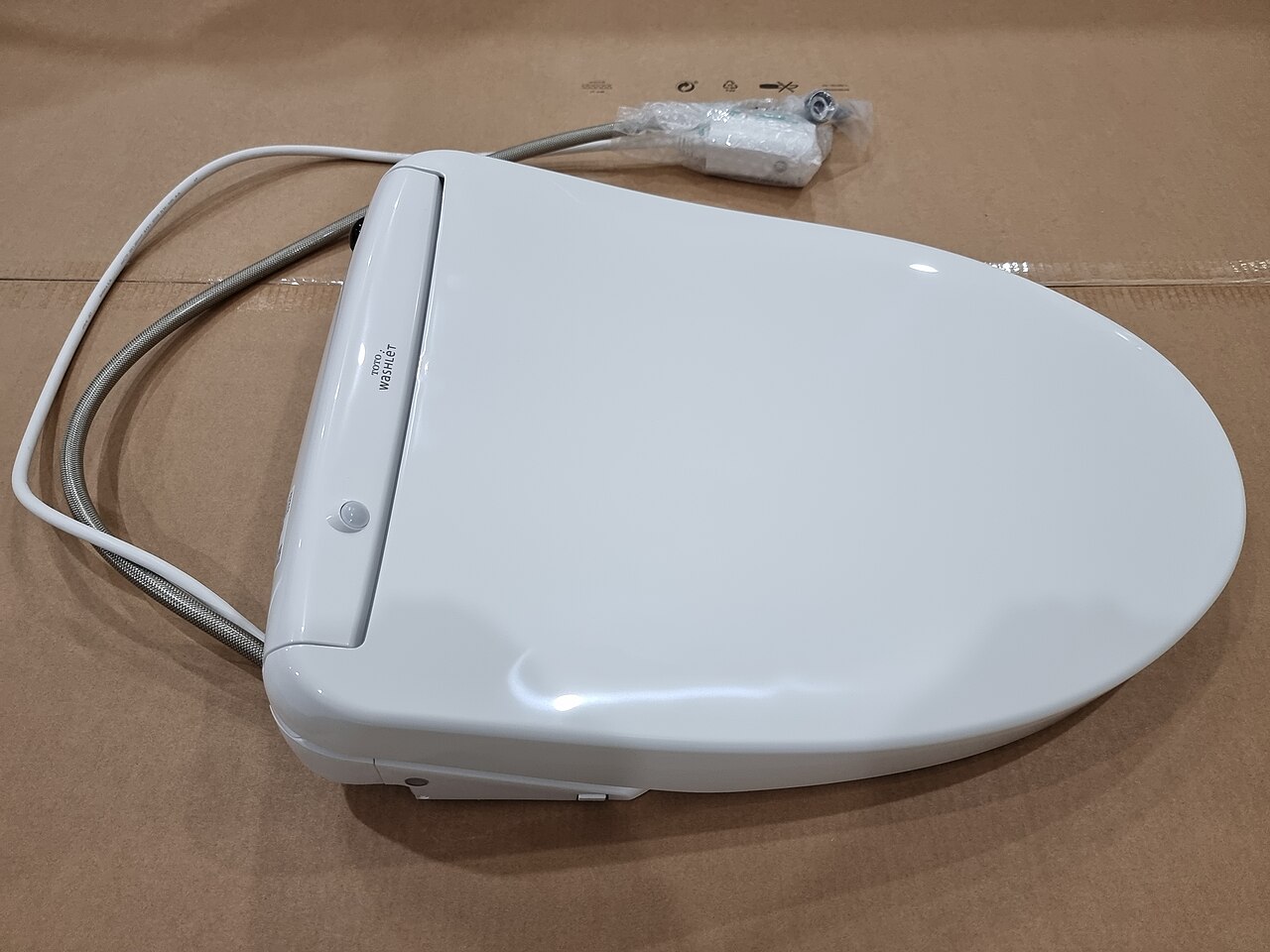
Quick facts at a glance
- What it is: Electronic bidet toilet seat with warm water spray, heated seat, and multiple adjustable settings
- Original brand: Washlet (ウォシュレット) is actually a trademark of TOTO, but has become a generic term
- Competitors: TOTO, Panasonic, LIXIL (INAX), Toshiba — all produce high-end electronic bidet seats
- Market penetration in Japan: 80%+ of Japanese households have one. Near-universal in businesses and hotels.
- Market penetration in the US: Under 10%, rising fast
- First introduced: TOTO Washlet G Series, 1980
- Cost in Japan: ¥40,000–¥200,000 for the seat alone; import versions sold abroad typically 2–3x the Japanese price
- Portable versions: Yes — travel washlets exist, popular with travellers who can’t bear to go back to regular toilets
What is a washlet, actually?
A washlet is a toilet seat that attaches to a standard toilet and adds electronic features. The core feature is a retractable wand that sprays warm water upward for cleaning after use. Around this central feature, the industry has added increasingly elaborate extras:
- Heated seat: Keeps the seat at body temperature. Genuinely a game-changer in a cold Tokyo winter apartment.
- Warm water spray: Pressure, position, and temperature are all adjustable.
- Oscillating and pulsating modes: Small movements or rhythm variations for better cleaning.
- Air dryer: Warm air drying after the water wash, reducing toilet paper need.
- Deodorizer: Carbon filter that removes odors automatically.
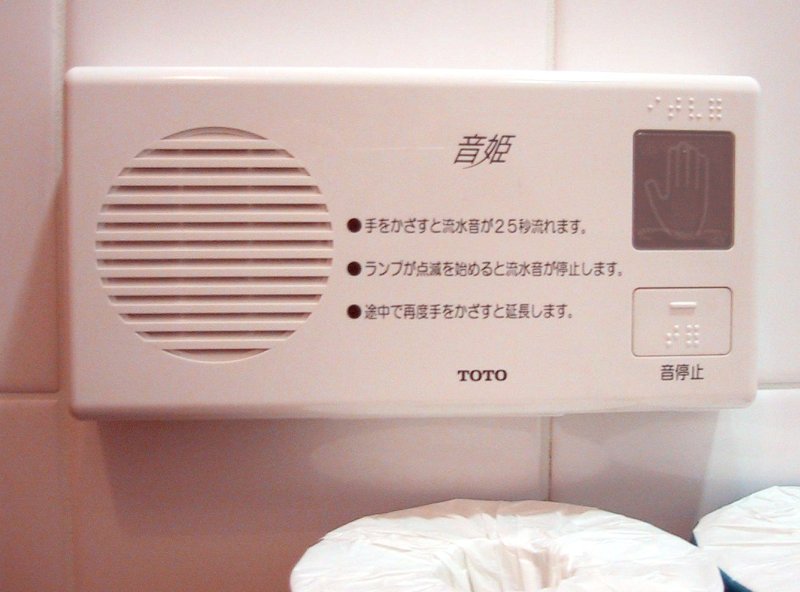
- Sound masker: Plays a flushing sound or running water to mask bodily sounds. The existence of this feature says a lot about Japanese social sensibilities.
- Auto-open lid: Motion-detecting lid that raises as you approach the toilet.
- Night light: Soft bowl-lighting for middle-of-the-night visits without blinding overhead lights.
- Self-cleaning: UV sterilization, electrolyzed water, or nanoe ion cleaning on top-end models.
The combined experience is meaningfully different from a standard Western toilet. Visitors often report, with some embarrassment, that they start to miss the washlet within 48 hours of leaving Japan.
How do you actually use one?
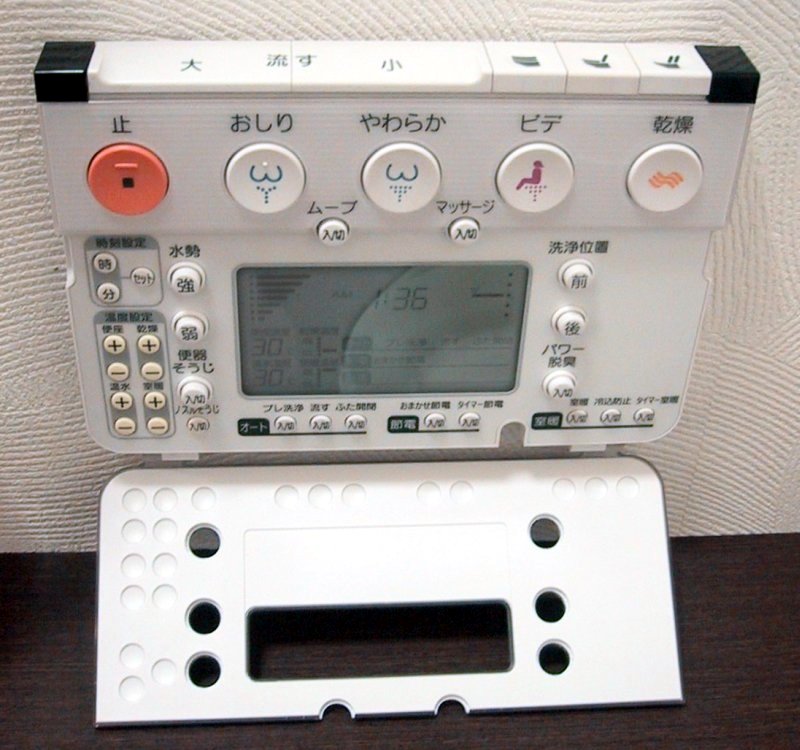
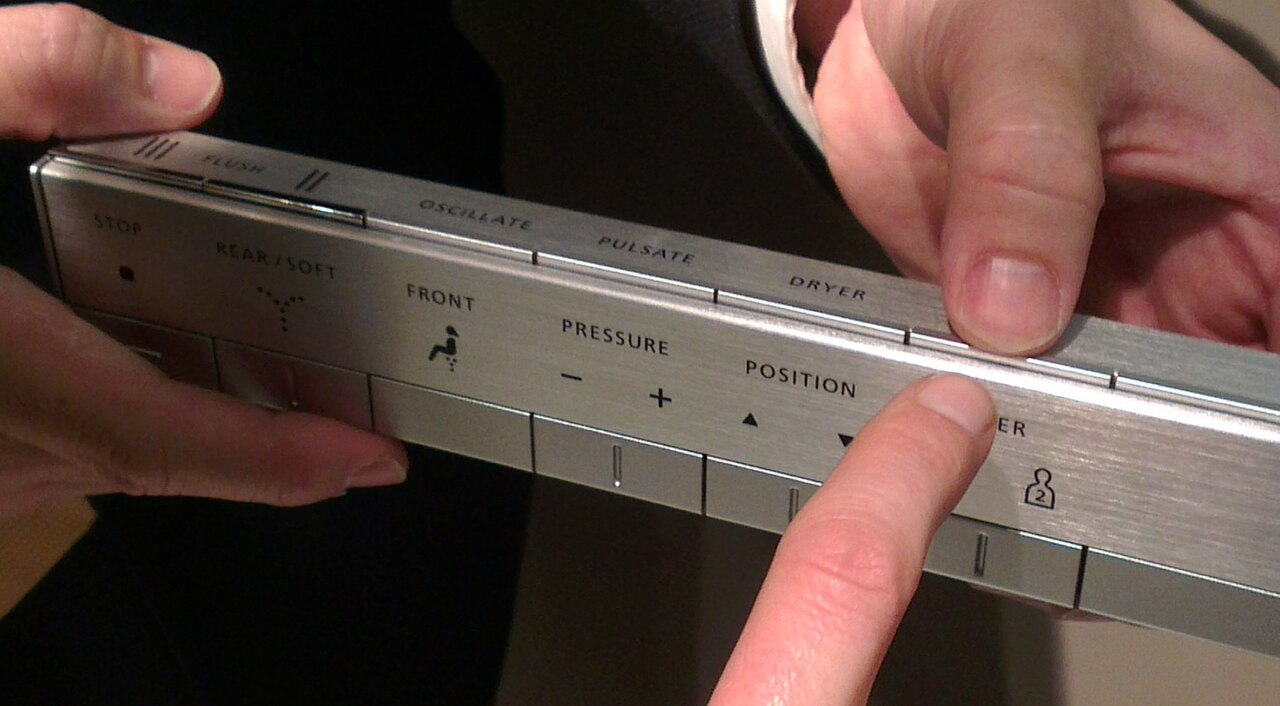
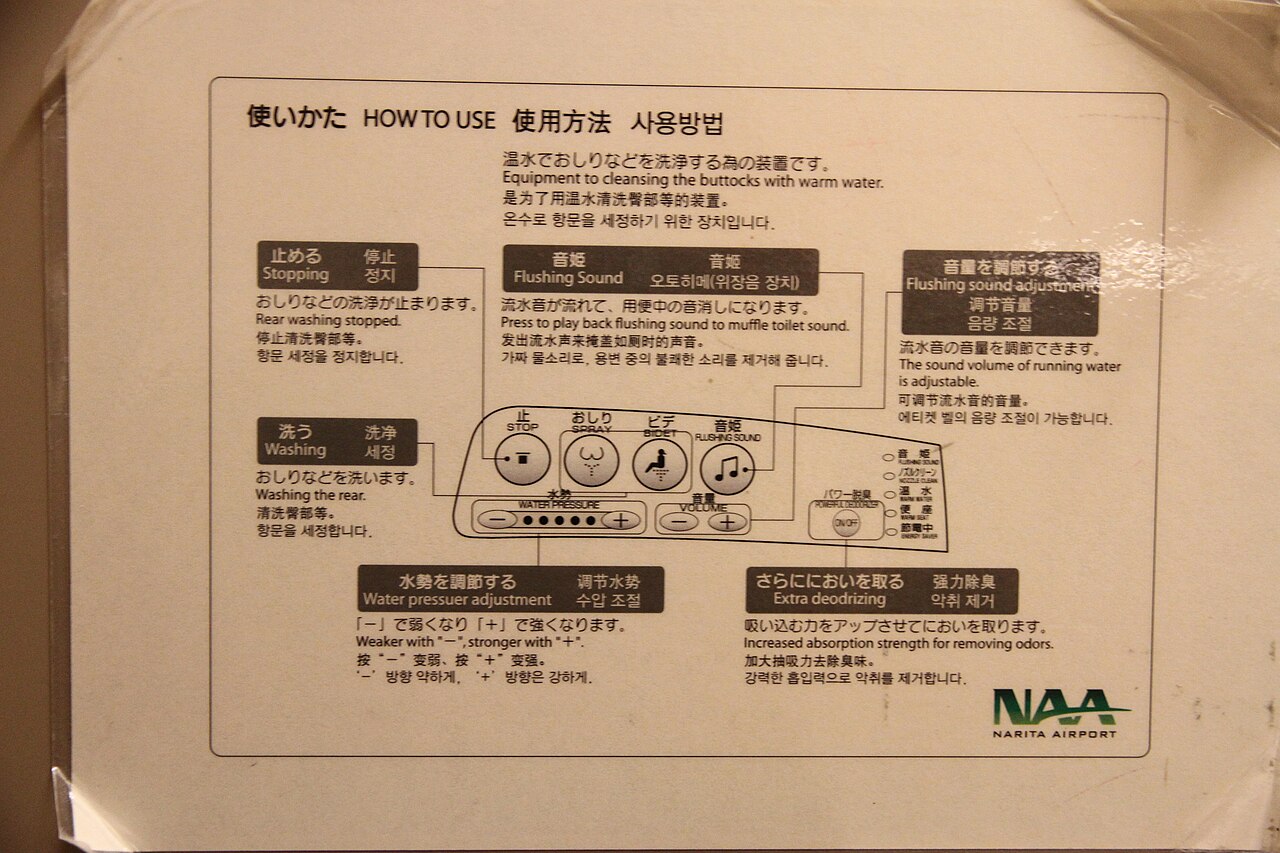
The control panel varies by manufacturer and model, but the basic buttons are universal enough to work out. Most panels have:
- Oshiri (お寿) / Rear wash: The main spray button. Sometimes labeled with a stick-figure-seated icon.
- Bidet (ビデ) / Front wash: A separate softer spray. The icon usually shows a different-coloured figure.
- Stop (止): The most important button. Red, always clearly marked. Press this to stop the spray.
- Pressure (+/-): Usually an up/down pair for spray intensity.
- Position (forward/back): Adjusts the wand position. Not all models have this.
- Dry (乾燥): The air dryer button.
- Sound / Otohime (音姫): The masking-sound generator.
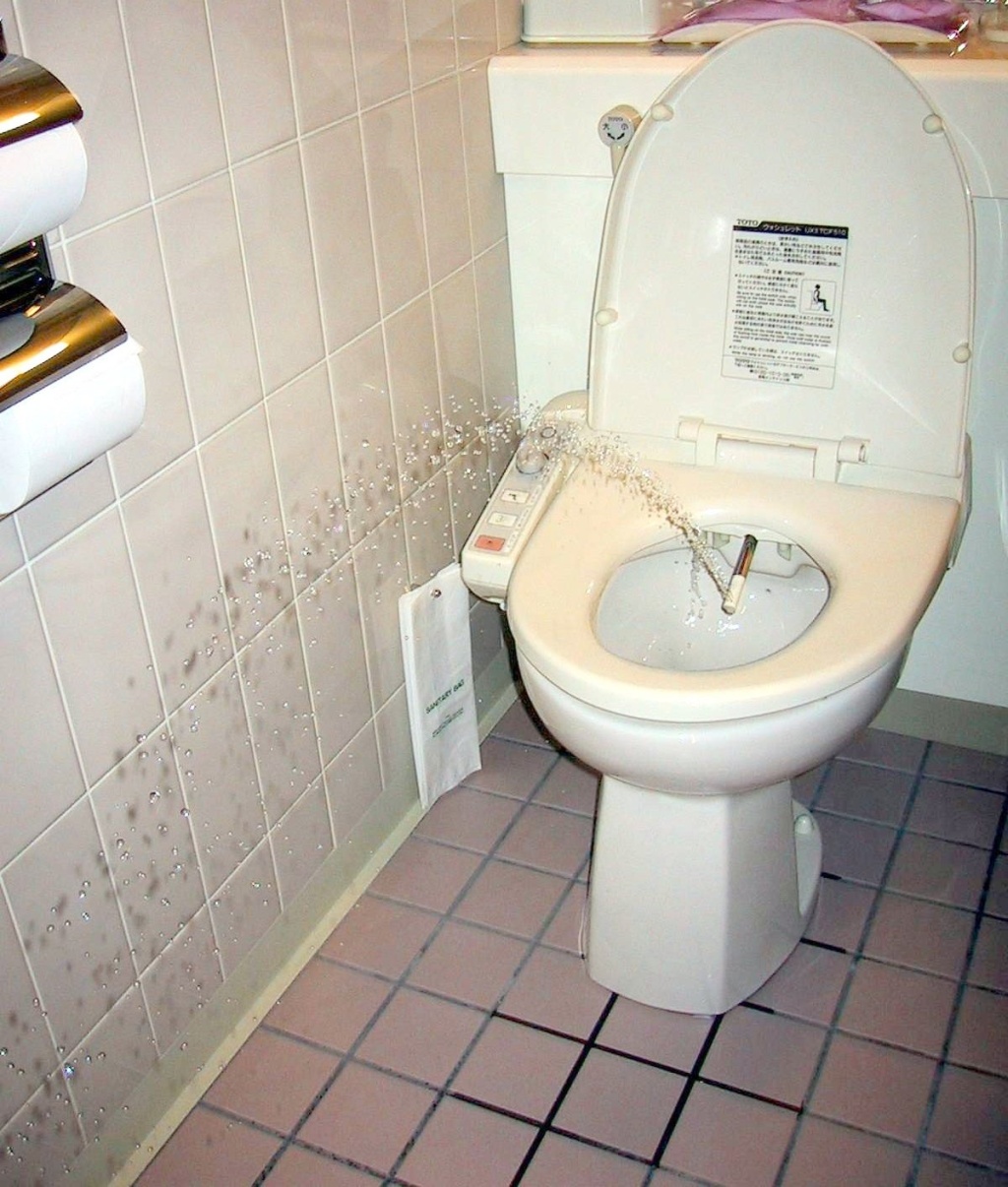
Pro tip: The first time you use a washlet, sit down first, then start the rear wash. Starting the spray before sitting results in a spray pattern that will soak your clothes, the floor, and your dignity. The wand is angled upward assuming you are seated on top of it.
Additional pro tip: The stop button is your safety net. If you panic for any reason (pressure too high, temperature wrong, confusion about which button does what), press stop. The wand retracts immediately and the water cuts off.
Why is Japan so far ahead on toilets?
Several overlapping reasons:
1. Cultural emphasis on cleanliness
Personal cleanliness is a strong Japanese cultural value with religious, social, and practical roots. Toilet-paper-only cleaning has always struck Japanese sensibilities as inadequate. The bidet spray resolves the problem.
2. Small homes with no dedicated bathtubs
Japanese urban housing is often small, and the toilet is typically in a separate small room from the bath. A sit-and-clean-in-place toilet is more space-efficient than a separate bidet fixture — which is how Europe handled the same problem.
3. Cold winters, no central heating
Most Japanese homes don’t have central heating. A toilet in an unheated bathroom in January is punishingly cold. The heated seat was an early commercial win for TOTO specifically because it solved an immediate domestic comfort problem.
4. Toto’s commercial commitment
TOTO, founded in 1917, made a deliberate corporate bet on the washlet segment in the late 1970s. Their 1982 “Oshiri datte, aratte hoshii” (“Your bottom wants to be washed too”) advertising campaign is legendary in Japanese advertising history for normalising the concept and driving mass adoption through the 1980s.
5. No path-dependence from a plumbing standpoint
Europe standardised on separate bidet fixtures; the US standardised on toilet-paper-only. Japan’s post-war infrastructure buildout happened to coincide with electronics-miniaturisation and allowed the electronic-bidet-toilet-seat category to exist as a new, distinct product class with no legacy alternatives. Japan didn’t have to change anyone’s mind about an incumbent product.
Where can you experience a washlet in Tokyo?
Everywhere. Washlet adoption is so complete that the better question is “where will you fail to find one in Tokyo.” Small rural train stations, budget hostels, and some older commercial buildings still have non-washlet toilets. Everywhere else — hotels, airports, department stores, office buildings, convenience stores — you’ll find one.
Some particularly good washlet experiences if you want to sample the high-end:
- TOTO Showroom (Shinjuku): Literally a showroom where you can try the newest models. The washlet demo booth on the first floor is open to walk-in visitors.
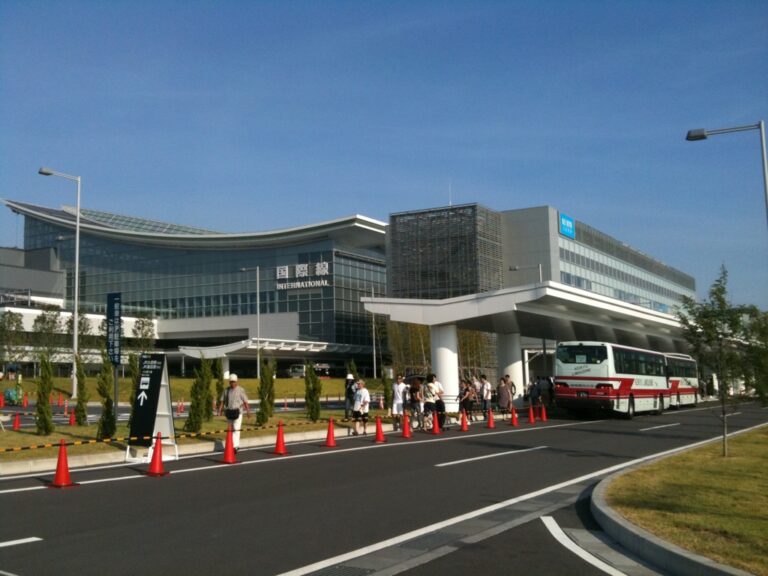
- Narita and Haneda airports: Both airports have premium public washlet installations with the newest features.
- Shinkansen (bullet train) toilets: Newer trains have washlets in their regular toilets. The Nozomi and Hikari trains on the Tokaido Shinkansen (Tokyo to Osaka) are the most reliably equipped.
- Luxury hotel rooms: Any 4-star or 5-star Tokyo hotel will have a high-end washlet in the room. The Aman Tokyo, Four Seasons, and Park Hyatt all stock top-tier TOTO or Panasonic units.
- Akihabara electronics stores: Yodobashi Akiba and Bic Camera have display washlets you can examine before purchasing. Not for actual use, but good for seeing the controls up close.
What are the best washlets on the market?
The premium tier of washlets has three major players:
TOTO Neorest series
TOTO’s flagship line. Fully integrated one-piece toilet-plus-seat units with all the features. The Neorest AH is the current top-of-the-line model at around ¥350,000. Self-cleaning UV, auto-flush, auto-open lid, nanoe air purification. This is the washlet as luxury appliance.
Panasonic Arauno
Panasonic’s competing flagship. Similar feature set to the Neorest with Panasonic-specific touches (nanoe ion cleaning, different interface design). Slightly cheaper than equivalent TOTO models in Japan.
LIXIL Satis
LIXIL (formerly INAX) makes the third major brand. The Satis G-Type is known for having the most comprehensive accessibility features (wide lid, auto-close, adjustable height) and is common in public buildings.
For mid-tier use: TOTO’s standard washlet seats (attachable to an existing toilet bowl) start around ¥40,000 and are what you’d actually install at home.
Can you buy a washlet to take home?
Yes, but with two key caveats:
Voltage compatibility
Japanese appliances run on 100V; US runs on 120V; Europe and most of the world run on 220–240V. A Japanese-market washlet will not work on a 220V outlet without damage. Always buy the export version of the washlet that matches your home country’s voltage.
TOTO, Panasonic, and Bio Bidet all sell 120V and 220V versions. These are available from Amazon, specialty bathroom retailers, and some department stores. The export models are typically 1.5–3x the Japanese price, partly due to smaller production runs and partly due to retailer markups.
Plumbing compatibility
Washlet seats need a water supply connection. Most Western toilets can be adapted using a T-fitting on the cold-water supply line, but confirm before buying. Older plumbing or unusual installations might need a plumber.
Should you install one at home?
If you’re renovating a bathroom or building new, absolutely. The going rate for a basic electronic bidet seat in the US or EU has fallen to $300–$500 for a decent entry-level unit (Bio Bidet, Brondell, TOTO C200). Installation is DIY-possible for anyone comfortable with basic plumbing.
If you’re renting or can’t run power to your toilet: portable travel washlets exist (TOTO, Hibbent, others) that squirt water from a hand-held bottle. Not the same experience, but better than nothing.
What about the smart toilets in public spaces?
Worth a specific mention. The public washlets in Tokyo’s high-end department stores and corporate headquarters are regularly better than what most Western hotels offer. Mitsukoshi Ginza, Isetan Shinjuku, and the top floors of the Ginza Six shopping complex all have lavish public washrooms with premium TOTO installations — heated seats, bidet spray, auto-open lids, scent diffusers, mood lighting.
If you’re curious about what the high end of public washroom design looks like, spend 10 minutes in one of these buildings. It’s a real cultural experience.
What’s the etiquette around washlets?
A few notes that might save embarrassment:
- Sit first, activate second. Never press the rear-wash button without sitting. Always.
- Use the stop button with confidence. If anything goes wrong, press stop. Do not press other buttons to “fix” it — stop first, then investigate.
- The masking sound feature is for social privacy. Japanese bathrooms are often shared or have thin walls; the sound generator exists so you can do your business without broadcasting. Use it without self-consciousness.
- The dry function is slow. It takes 60–120 seconds to dry properly. Most users still use a small amount of toilet paper afterward.
- Toilet paper still exists. Washlets supplement toilet paper; they don’t replace it. Every Japanese bathroom still has paper.
- Slippers. Many Japanese homes and some traditional restaurants have separate toilet slippers you change into when entering the toilet room. Change out of them when you leave. Walking back into the main house or restaurant in the toilet slippers is a classic foreign-visitor mistake.
How has the washlet affected Japanese travel?
Specifically: Japanese tourists abroad have been known to carry portable travel-washlet bottles specifically to replicate the experience when travelling to countries without washlet-equipped toilets. A few Japanese-oriented hotels in New York, London, and Paris have installed washlets specifically to attract Japanese guests.
The same has happened in reverse. Visitors from Western countries who try washlets in Tokyo consistently buy travel washlets to take home, and a small but growing subset install full units when they get back. The US washlet market has grown 25%+ annually since 2020, driven substantially by tourists bringing the experience home.
Is there a downside?
Not many.
The upfront purchase cost is meaningful. The installation requires power and water connections, which older homes may not have in the right configuration. Some elderly users report confusion with the control panel — though manufacturers have tried hard to simplify. The deodorizer filter needs replacing every few years.
The biggest downside is psychological: once you’ve used a washlet daily for two weeks, going back to a standard toilet is mildly disappointing. That’s the full complaint list.
Final verdict
The Japanese washlet is the kind of small, under-discussed technology that genuinely improves daily life for anyone who uses it. Japan has a 40-year head start on deployment, and the installed base is near-universal. Tokyo in particular offers an exceptional density of high-end installations, making it easy to experience the full range.
If you’re visiting Tokyo, don’t pre-judge the toilet situation. Try the washlet. Read the control panel. Use the stop button liberally. You will probably come home with a serious interest in installing one.
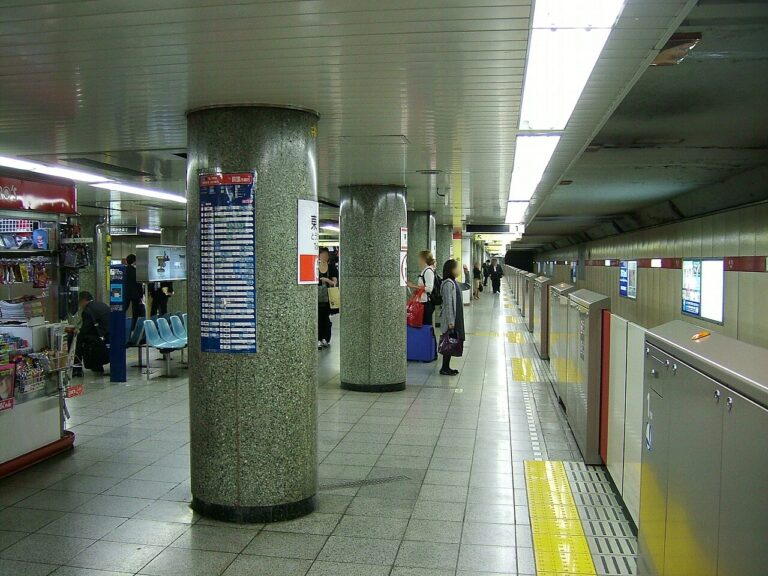
For more Tokyo practical reading, our Haneda Airport guide is a good place to start (all airport toilets are washlet-equipped), our Tokyo Metro guide covers the rest of the transit-system basics, and our Akihabara piece covers the electronics district where you can examine and buy washlet units directly.


_(cropped).jpg)
.jpg)