Tokyo’s subway network is world-class. It’s also complex, crowded at the wrong hours, run by two separate operating companies whose maps don’t quite match, and governed by unwritten etiquette rules that tourists routinely break. First-time visitors waste 20 to 40 minutes every day making the same five or six avoidable mistakes.
In This Article
- Quick facts at a glance
- Mistake #1: Buying individual tickets
- Mistake #2: Confusing Tokyo Metro with Toei Subway
- Mistake #3: Getting on the wrong type of train
- Mistake #4: Boarding the women-only carriage as a man
- Mistake #5: Talking on the phone or speaking loudly
- Bonus mistake #6: Blocking escalator traffic
- Bonus mistake #7: Using the wrong station exit
- Bonus mistake #8: Ignoring priority seats
- Bonus mistake #9: Rush hour chaos
- Bonus mistake #10: Eating and drinking on the train
- How do I actually plan a Tokyo subway journey?
- Where else can I go wrong?
- Is the Tokyo subway safe?
- Is the Tokyo subway worth using over taxis?
- Final verdict: is Tokyo’s subway hard to use?
This guide runs through the mistakes we see repeatedly, the rules that actually matter, and the small moves that will save you time and social embarrassment. We lean on Alexandra Ziminski’s reporting at Tokyo Cheapo for the cultural-etiquette side and combine it with our own daily commuter experience.
Quick facts at a glance
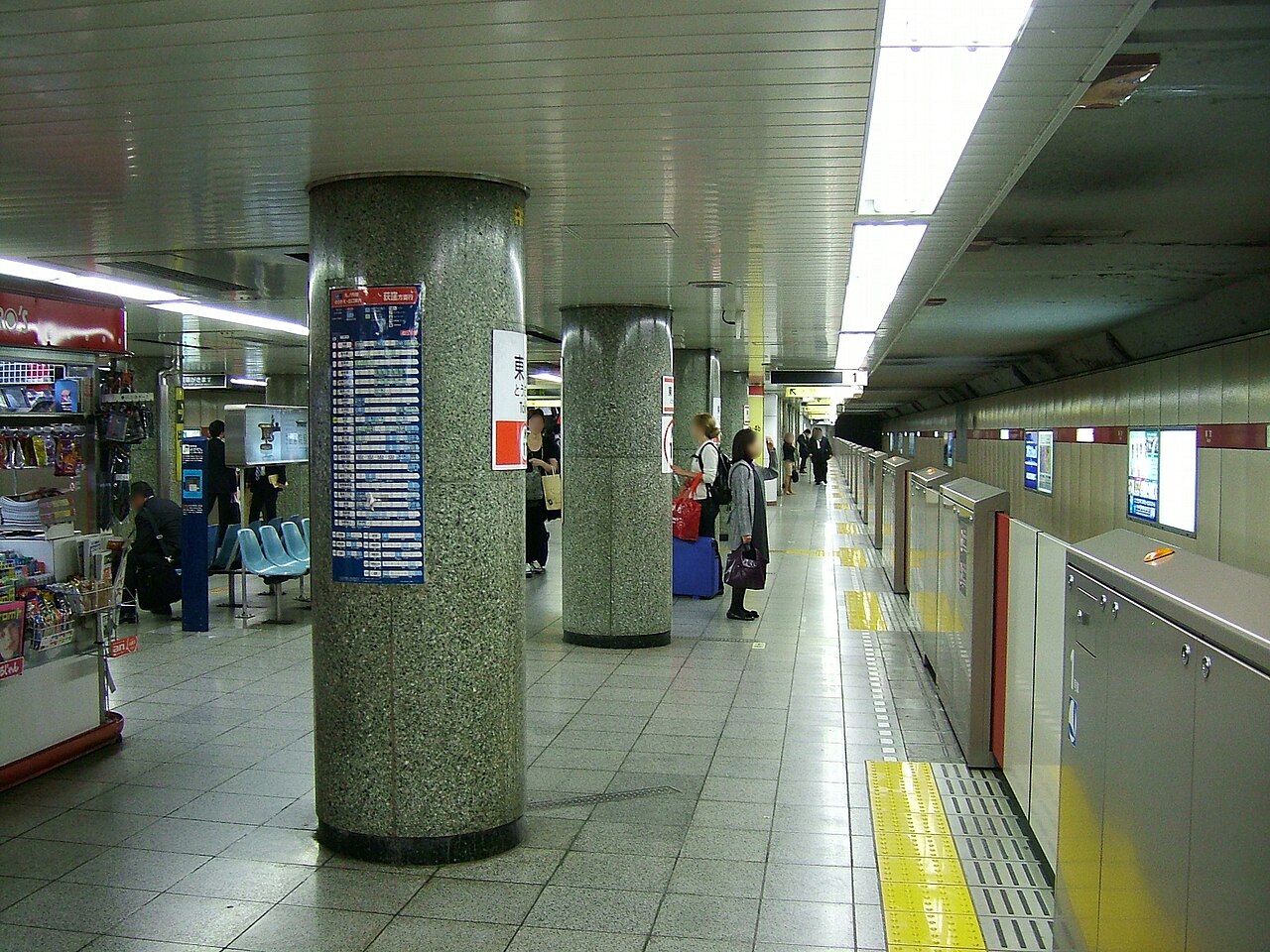
- Two subway networks: Tokyo Metro (9 lines) and Toei Subway (4 lines)
- Plus: JR lines (including the Yamanote Line circle), plus several private rail lines
- Cheapest fare: ¥180 (Tokyo Metro)
- Typical fare: ¥200–¥300 for most central Tokyo trips
- IC card: Get one immediately. Suica, Pasmo, or Welcome Suica. Everything else is a waste of time.
- Peak rush: 7:30–9:30am and 5:30–7:30pm — genuinely full trains
- No eating or drinking on trains (bottled water is tolerated; open coffee is not)
- Stand left, walk right on escalators in Tokyo (opposite in Osaka)
Mistake #1: Buying individual tickets
The single most common tourist mistake. You walk up to the ticket machine, puzzle over the fare table, push buttons until a ¥220 paper ticket comes out, and repeat the process every single time you travel.
Don’t do this. Buy an IC card instead.
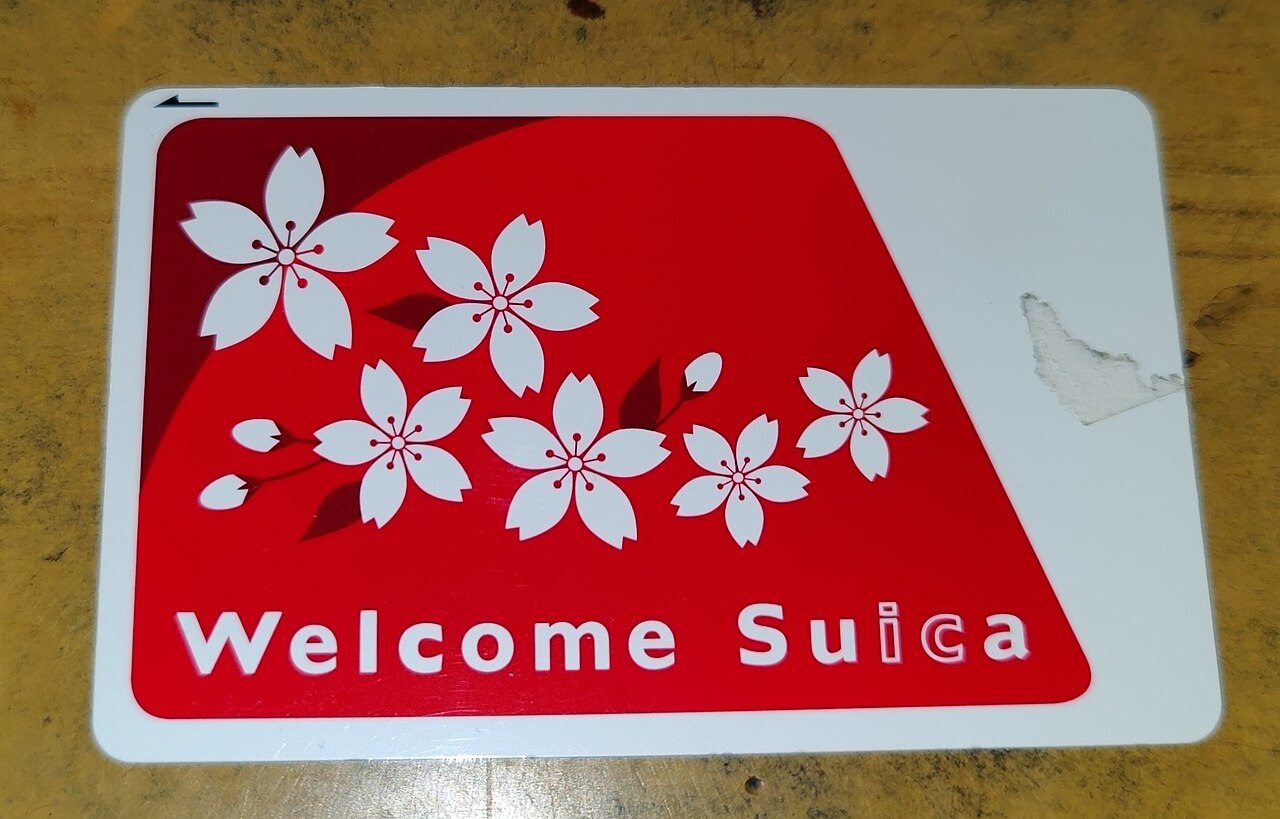
An IC card (Suica, Pasmo, or Welcome Suica) is a pre-paid rechargeable contactless card. You tap in at the gates, tap out at your destination, and the fare is deducted automatically. It also works on nearly every train, bus, taxi, vending machine, and convenience store across Japan. The switch from paper tickets to IC cards saves you about 90 seconds per journey, which adds up to an extra 20 minutes a day over a typical Tokyo trip.
- Suica (JR East): Buy at any major JR station. ¥500 deposit plus whatever you load.
- Pasmo (metro and private rail): Buy at Tokyo Metro or Toei stations. Same ¥500 deposit structure.
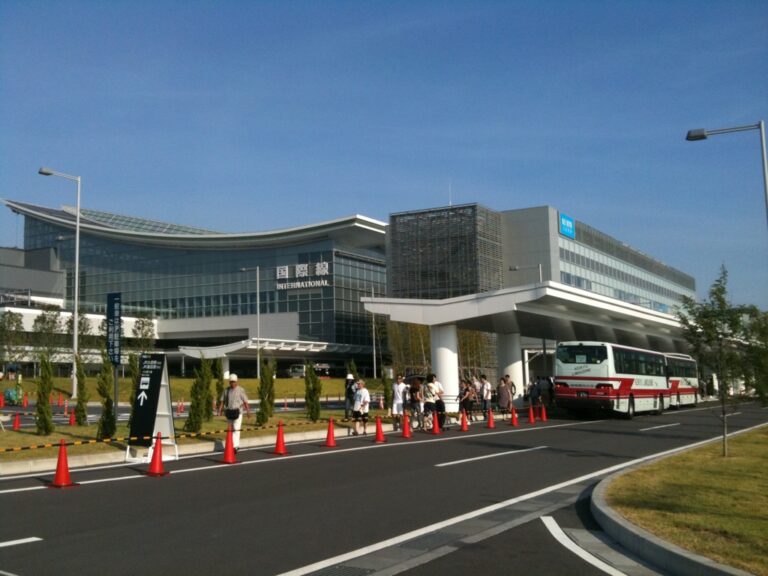
- Welcome Suica: Tourist version. No deposit required, valid 28 days, cannot be refunded. Buy at Haneda or Narita arrivals.
- Mobile Suica / PASMO: Add to your iPhone or Android wallet. No physical card, no deposit, top up from your phone. The best option if your phone supports it.
Pro tip: If you have an iPhone 8 or later or a modern Android, skip the plastic and add a Mobile Suica directly to Apple Wallet or Google Pay. It takes about 90 seconds to set up, there’s no deposit, and topping up is done from your phone without queuing at a machine.
Mistake #2: Confusing Tokyo Metro with Toei Subway
Tokyo has two separate underground networks and they are operated by two separate companies:
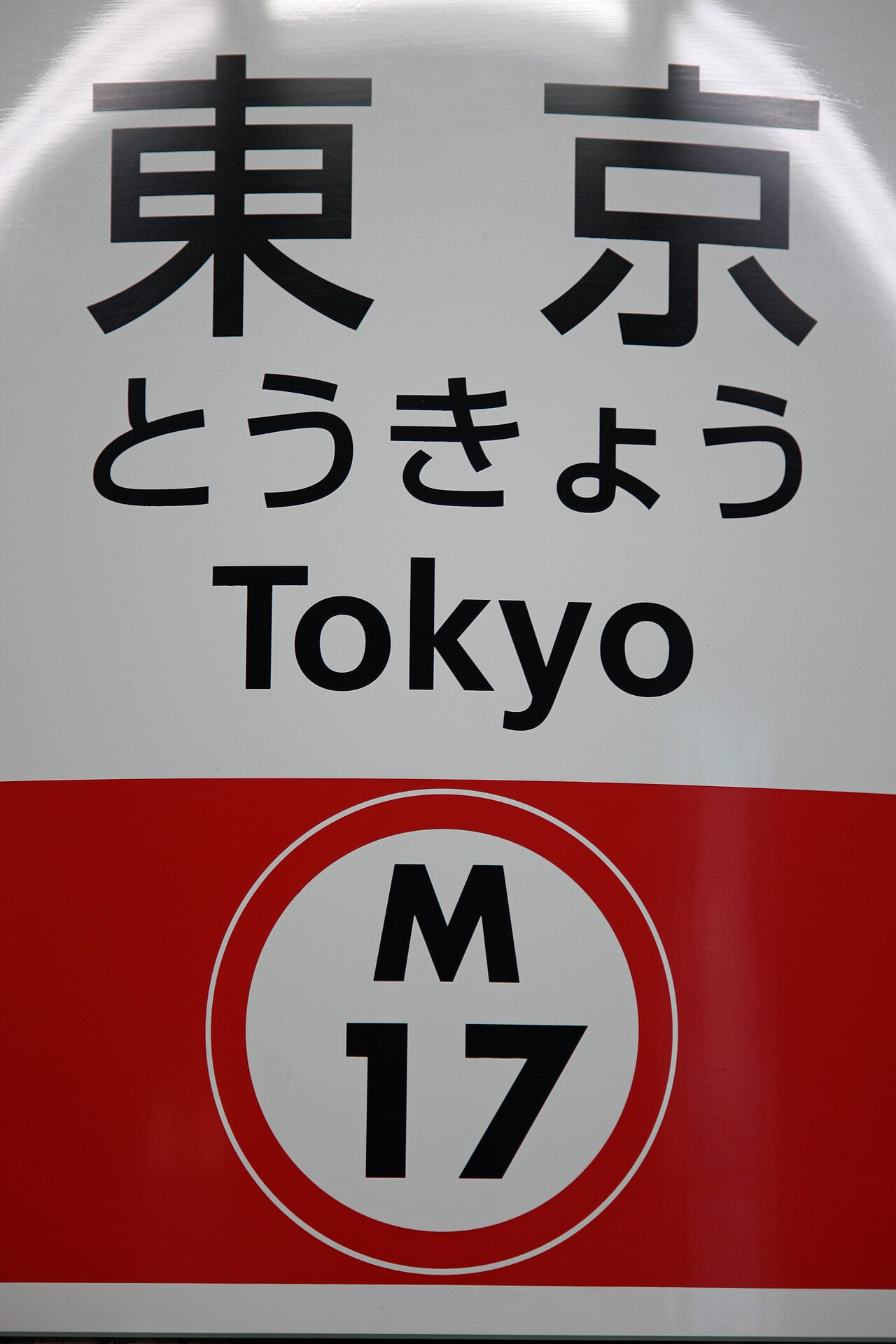
- Tokyo Metro (orange logo): 9 lines, including the major Marunouchi, Ginza, Hibiya, Chiyoda, Tozai, Yurakucho, Hanzomon, Namboku, and Fukutoshin lines.
- Toei Subway (green logo): 4 lines — Asakusa, Mita, Shinjuku, and Oedo.
On a typical Tokyo trip you’ll use both. The trouble is the day passes: Tokyo Metro has its own 24-hour pass (¥600), Toei has its own, and the combined pass covering both is ¥900 for 24 hours. If you buy one single-operator pass and try to ride the other system, the pass doesn’t work, you pay full fare separately, and suddenly your discount isn’t a discount.
Fix: If you’re going to use the subway seriously for a day, buy the combined Tokyo Subway Ticket (¥800 for 24 hours, ¥1,200 for 48 hours, ¥1,500 for 72 hours). It’s available to tourists at Haneda arrivals, hotels, and tourist information centres. Otherwise just use your IC card and pay per journey — for most visitors, that’s the better answer anyway.
Mistake #3: Getting on the wrong type of train
Most Tokyo lines run multiple train types on the same track:
- Local (各駅停車, kakueki-teisha): Stops at every station.
- Rapid (快速, kaisoku): Skips minor stations.
- Express (急行, kyuko): Skips more stations.
- Limited Express (特急, tokkyu): Skips even more stations and often requires a supplementary fare.
- Commuter variants (通勤快速 / commuter rapid etc.): Rush-hour-only services with modified stop patterns.
If you board an express train going the right direction but your stop isn’t on the express route, you will sail straight past it and have to double back. This is particularly brutal on the Odakyu line going to Hakone, where picking the wrong train can add 45 minutes.
Fix: Before boarding, look at the destination board on the platform. It shows the train type and the list of stations it stops at. If you’re using Google Maps for navigation, follow the specific train name it tells you to board — Google is almost always right about which train stops at your destination.
Mistake #4: Boarding the women-only carriage as a man
During weekday rush hours, one carriage per train on most Tokyo Metro and Toei lines is designated women-only. The carriage is marked with pink signage on the platform and on the train door itself. Men accidentally boarding these carriages is one of the top social mistakes foreign tourists make.
It’s not illegal to board one as a man — just socially awkward. Women-only carriages were introduced in 2000 to address chronic groping (chikan) on crowded trains. During rush hour they’re full of Japanese women who will give you a silently disapproving look, and staff may politely ask you to move to a different carriage.
- Most lines: women-only carriages operate only during morning rush (around 7:30–9:30am).
- A few lines (like the Keio Inokashira): extended hours including evening rush.
- Outside rush hours the same carriage is mixed-use.
Fix: Look at the platform signage. The women-only carriage is always at the same end of the train (usually front or back depending on the line) and is marked in pink. If you see pink, go somewhere else.
Mistake #5: Talking on the phone or speaking loudly
Tokyo trains are notoriously quiet. Not silent — people chat — but quiet. Phone calls are treated as actively rude. You’ll see signs in English and Japanese asking passengers to keep phones on silent and not take calls.
The etiquette:
- No phone calls. Full stop. Even a quick 30-second call will get you glared at.
- Texting is fine. Scrolling social media is fine. Watching Netflix with headphones is fine.
- Talk softly with your travel companions. A normal conversational volume feels loud on a Tokyo train. Drop it 30%.
- Music through earphones, not the speaker. Obvious, but occasionally violated.
- Priority seats: silent your phone entirely. The signs ask you to turn off your phone near priority seats. In practice everyone just silences it.
Pro tip: If you need to take a call, get off at the next station, take the call on the platform, and board the next train. Tokyo trains run every 2–5 minutes — you’ll lose maybe three minutes.
Bonus mistake #6: Blocking escalator traffic
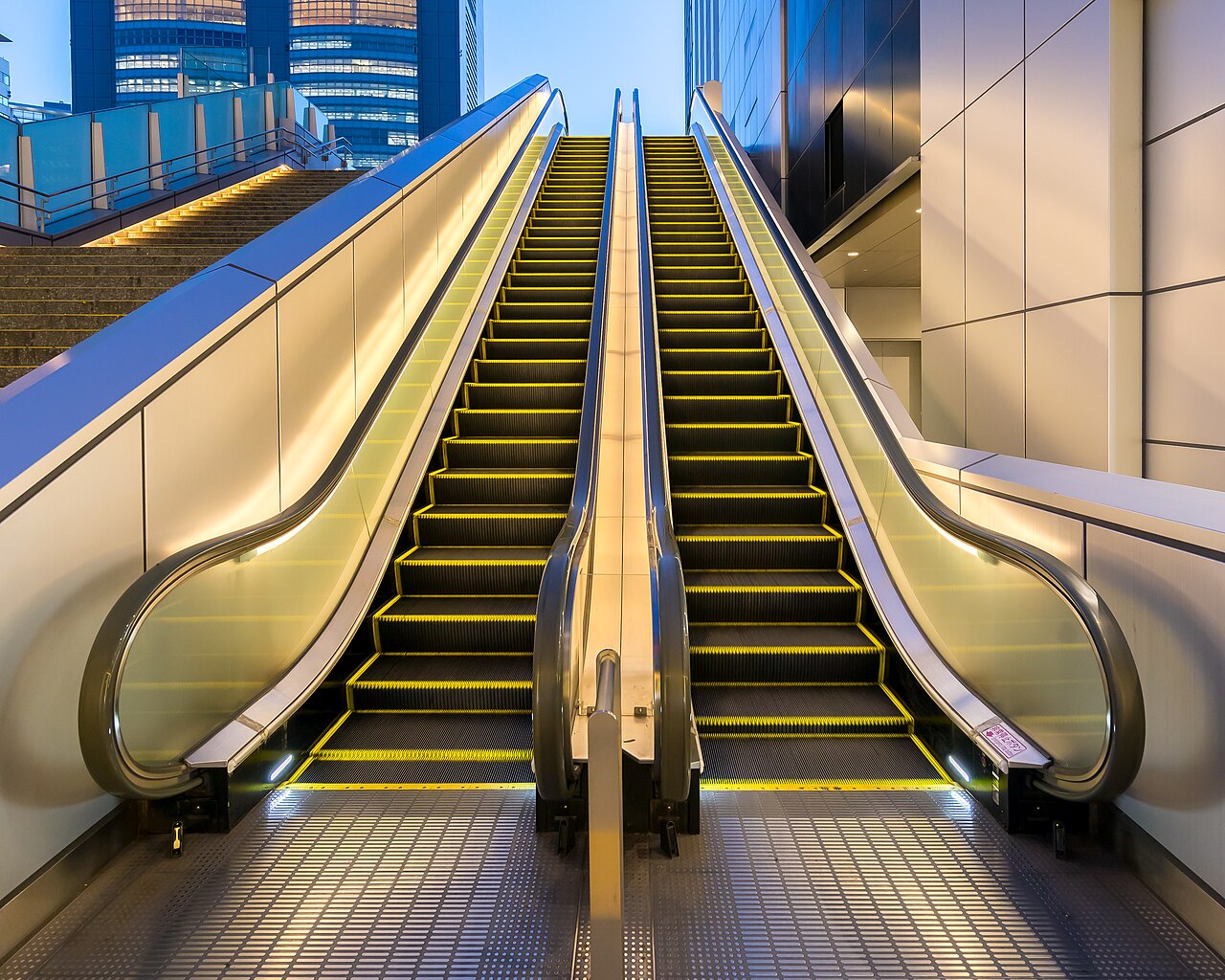
In Tokyo, people stand on the left side of the escalator and walk on the right. This is understood and absolute. If you stand on the right with your suitcase, you will physically block a dozen commuters trying to get past and you will feel the collective glare.
In Osaka (for reasons lost to history), the convention is reversed: stand right, walk left. Get used to switching if you travel between the two cities.
Note that Japan Railways has started running campaigns encouraging people to stand on both sides of escalators for safety reasons. These have made essentially no dent. Tokyo still stands left.
Bonus mistake #7: Using the wrong station exit
Shinjuku Station has over 200 exits across all the connected lines and concourses. Shibuya is similar. Ikebukuro is similar. If you come out of the wrong exit at one of these mega-stations, you can find yourself a 10-minute walk from where you meant to be — on the other side of a massive station complex you can’t cut through.
Fix: Before you board the train, look up your destination on Google Maps and note the specific exit number. Then follow the signs to that exit inside the station. Exits are numbered (like “Exit 3” or “South Exit”) and the signs are multilingual. Hotels and major destinations usually specify the preferred exit in their address line (“2 minutes from Shinjuku Station East Exit”).
Bonus mistake #8: Ignoring priority seats
Every Tokyo train has priority seats at the ends of each carriage, marked clearly in a different colour (usually orange). These are for elderly, pregnant, injured, or disabled passengers, or for anyone carrying small children.
The etiquette is nuanced:
- You can sit in a priority seat if it’s empty and no one who needs it is boarding. Just stand up immediately when someone who needs it gets on.
- In practice, most Japanese people avoid the priority seats entirely even when empty, preferring to stand rather than risk having to awkwardly vacate.
- If you’re clearly a visitor with heavy bags, you can take a non-priority seat without anyone caring.
The simplest rule: if you can stand, stand. If you must sit, take a non-priority seat.
Bonus mistake #9: Rush hour chaos
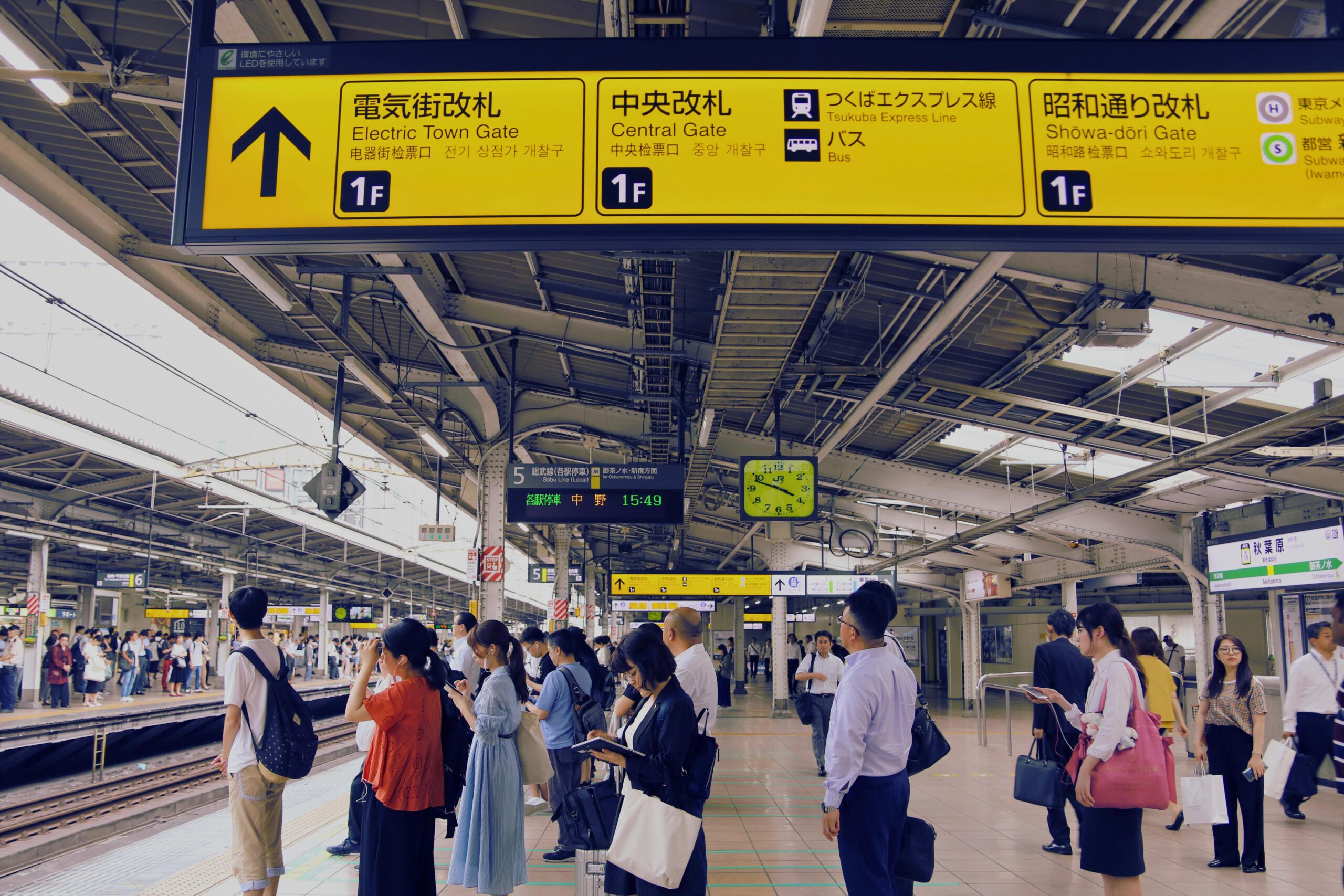
Japanese rush hour is not like rush hour elsewhere. Trains genuinely fill to 200% of seated capacity on the worst lines (Toyoko Line into Shibuya, Chuo Rapid into Tokyo, Namboku to Meguro all bad offenders). Staff in white gloves push passengers into carriages to get the doors closed. It’s a real thing and it’s dehumanising.
As a tourist:
- Avoid 7:30–9:30am and 5:30–7:30pm for any subway trip if possible.
- If you must ride during rush hour, travel against the commuter flow. Going from central Tokyo outward in the morning, or inward in the evening, is much less crowded.
- Never travel with a large suitcase in rush hour. It’s physically impossible on the worst lines, and painfully awkward even on the milder ones.
If you have a 10am museum booking, leave your hotel at 10am. Rush hour is over by then and the trains are pleasant again.
Bonus mistake #10: Eating and drinking on the train
No eating or drinking on local commuter trains in Tokyo. This is etiquette, not law, but it’s enforced by side-eye.
Exceptions:
- Bottled water is tolerated if you’re discreet.
- Shinkansen and limited express trains are fine for eating. The ekiben (station bento) culture explicitly assumes you’ll be eating on long-distance trains.
- Green Car reserved seating: fine to eat.
On the subway itself, hold off. You’ll be at your destination within 20 minutes.
How do I actually plan a Tokyo subway journey?
Use Google Maps. Honestly.
Google Maps in Tokyo is extraordinarily accurate. It shows you the specific train to board, the platform number, the car number (specifically which car to board for the fastest exit transfer), the cost in yen, and the walking directions to the exit. It also handles transfers between Tokyo Metro, Toei, JR, and private lines without forcing you to manually switch apps — something the individual operator apps don’t do well.
Alternative apps:
- Japan Travel by NAVITIME: Official tourism navigation app. Good if you want a backup. Includes airport transfers and JR Pass optimisation.
- Tokyo Metro Subway Navigation: Official Tokyo Metro app. Good for just Tokyo Metro; weaker for multi-operator journeys.
- Jorudan: The local favourite. Very detailed for everything rail in Japan.
For day one, Google Maps is enough. Add NAVITIME only if you’re hitting Japan for more than a week.
Where else can I go wrong?
A few shorter warnings:
- Shinkansen (bullet train) luggage rules. Large bags (over 160 cm combined dimensions) require advance reservation on Tokaido, Sanyo, and Kyushu Shinkansen since May 2020. Without a reservation you pay a ¥1,000 surcharge. Book your luggage seat when you book the ticket.
- Last train. Tokyo subways stop around midnight. Missing the last train can cost you a ¥5,000–¥10,000 taxi ride back to your hotel. Check Google Maps for the actual last train time on your line — it varies.
- Direction confusion. Many lines run in both directions on the same platform. Check the overhead signs before boarding — they show the next station, which tells you which way you’re going.
- Yamanote vs Chuo. The JR Yamanote Line is the circle line. The JR Chuo Line runs east-west across Tokyo and technically continues into Yamanote territory. Don’t mix them up when navigating.
- Free Wi-Fi on trains. Tokyo Metro Free Wi-Fi exists on most carriages but is unreliable. Don’t count on it for navigation. Have your route downloaded offline in Google Maps before you board.
Is the Tokyo subway safe?
Extremely. Violent crime on Tokyo trains is vanishingly rare. Pickpocketing is rare but possible during rush hour; keep your phone and wallet secured, but this is roughly the same level of caution you’d use on any major world metro.
The one specific safety-adjacent thing worth knowing about is chikan (groping) on rush-hour trains — which is why women-only carriages exist. If you experience it, shout “chikan!” (瘓漢) loudly, which is the culturally-accepted way to summon help. Japanese commuters and station staff will intervene immediately. It’s not common, but it’s common enough that the entire system has procedures for it.
Is the Tokyo subway worth using over taxis?
Yes, almost always.
Tokyo taxis are expensive (meter starts around ¥500, and ¥2,000–¥3,000 is a typical central-Tokyo short trip). The subway is usually faster for any journey over 2 km because of traffic. Even door-to-door, the subway often wins.
Taxi exceptions:
- Very late at night after trains stop.
- Multiple people travelling together (then taxi maths can actually work out).
- Heavy luggage, specifically between 7–10am or 5–8pm when the subway is too crowded to bring bags on.
- Short hops where a taxi is quicker than the walk-to-station-plus-ride-plus-walk chain.
For everything else, use the subway. You’ll spend less, you’ll move faster in traffic, and you’ll actually see the city.
Final verdict: is Tokyo’s subway hard to use?
It’s complex but well-designed. The signage is multilingual. The staff are genuinely helpful. Google Maps handles the routing. The trains themselves are punctual, clean, and frequent. Within a day you’ll have the rhythm.
the single biggest time-saver is buying an IC card (Suica or Pasmo) on arrival. That one move turns the subway from “slightly stressful puzzle” into “just tap and go.” Everything else on this list is secondary.
For more on Tokyo practical logistics, our Haneda Airport guide covers getting from your inbound flight to the subway system, and our Akihabara guide shows you how to use the metro to reach one of Tokyo’s most distinctive neighbourhoods. If you want a fully-laid-out Tokyo visual tour that uses the subway as its spine, our Japanese graphic design guide includes a one-day itinerary that hits four major museums and a bookshop — all easy to reach by subway.
Good luck out there. The trains are actually the easy part.