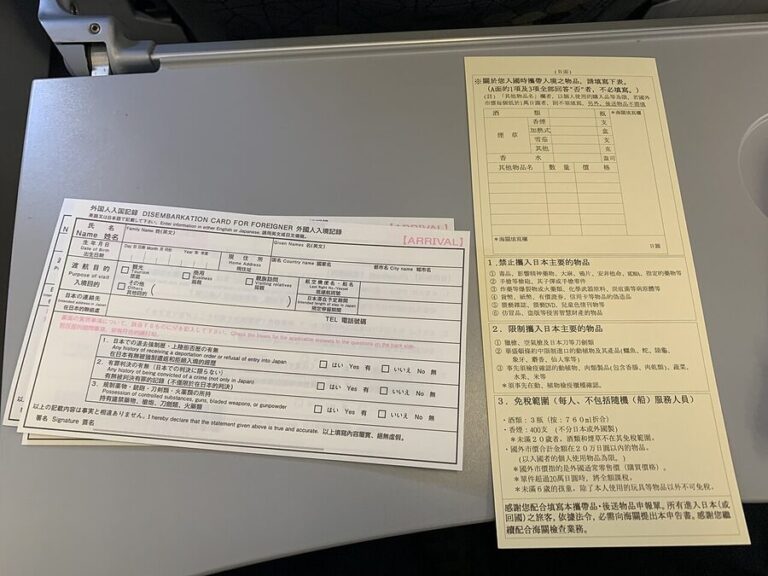
In July 2025, Junglia theme park opened in Okinawa. Anyone buying a 1-day ticket on the Japanese-language website paid ¥6,930. Anyone buying the same ticket on the English-language website paid ¥8,800. The ¥1,870 gap was the most-visible new example of Japan’s dual-pricing trend — the practice of charging foreign visitors more than Japanese residents for the same product or service.
In This Article
- Quick facts at a glance
- What specific examples exist right now?
- Junglia theme park (Okinawa)
- Tabelog booking system
- Tamatebako seafood buffet (Shibuya)
- Asakusa tonkatsu restaurant
- Various ryokan and tours
- Himeji Castle considered
- How is this different from global dual pricing?
- Is dual pricing legal in Japan?
- What’s the counter-argument?
- What do foreigners in Japan actually think?
- What does good dual pricing look like?
- What does the Japanese government actually say?
- What should visitors do in practice?
- Expect to pay more at specific venues
- Check Japanese booking platforms when possible
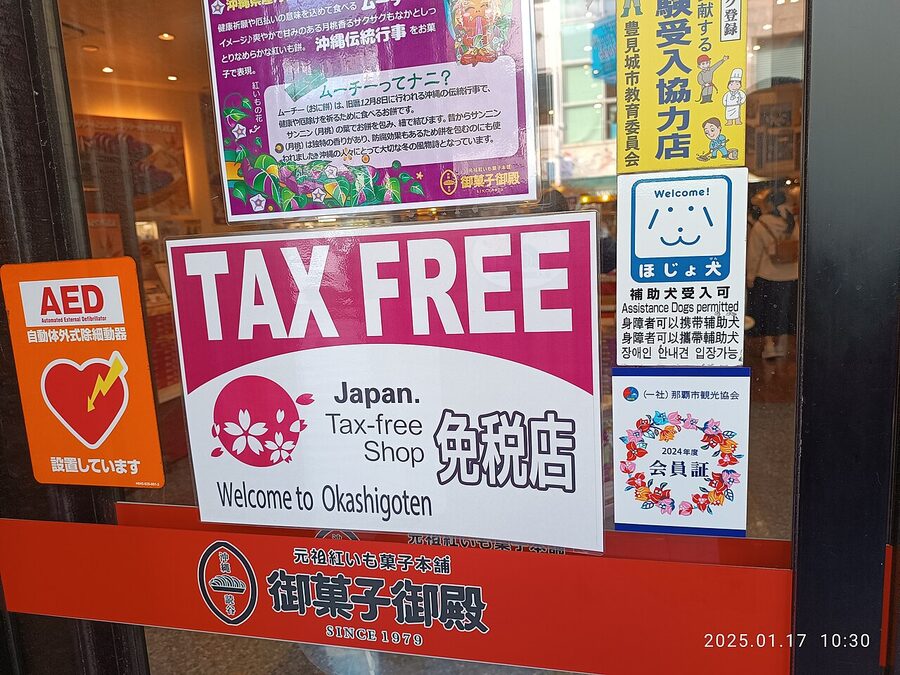
- Use the tax-free shopping exemption
- Understand you’re in a transitional period
- Respect resident foreigners
- What about the international optics?
- Where is this going?
- Scenario 1: Heritage-site adoption
- Scenario 2: Commercial normalisation
- Scenario 3: Political escalation
- Final take
Dual pricing is neither new in Japan nor unusual globally. What’s changed in 2024–2025 is the volume of examples, the public conversation about whether it should be formalised, and the specific mechanics of how venues verify customer residency. This guide walks through what’s actually happening, what’s legal and what isn’t, and what it means for visitors.
Quick facts at a glance
- Definition: Charging foreign visitors higher prices than Japanese residents for the same service or product
- Current status in Japan: Widespread but informal. A growing number of venues formalising it openly.
- Current examples: Junglia Okinawa, some restaurants in Shibuya and Asakusa, Tabelog booking platform, specific ryokan and tours
- Common foreign/local gap: 10–30% premium for foreign pricing in restaurant/attraction contexts
- Verification method: Language test (can they order in Japanese?) or residence card check
- Global context: Common in India, Southeast Asia, many US national parks, some European museums
- Counter-current: Japan’s 10% consumption tax exemption for tourists (effectively a reverse discount of similar size)
- Political stance: Japanese government hasn’t formally endorsed or banned dual pricing
What specific examples exist right now?
Junglia theme park (Okinawa)
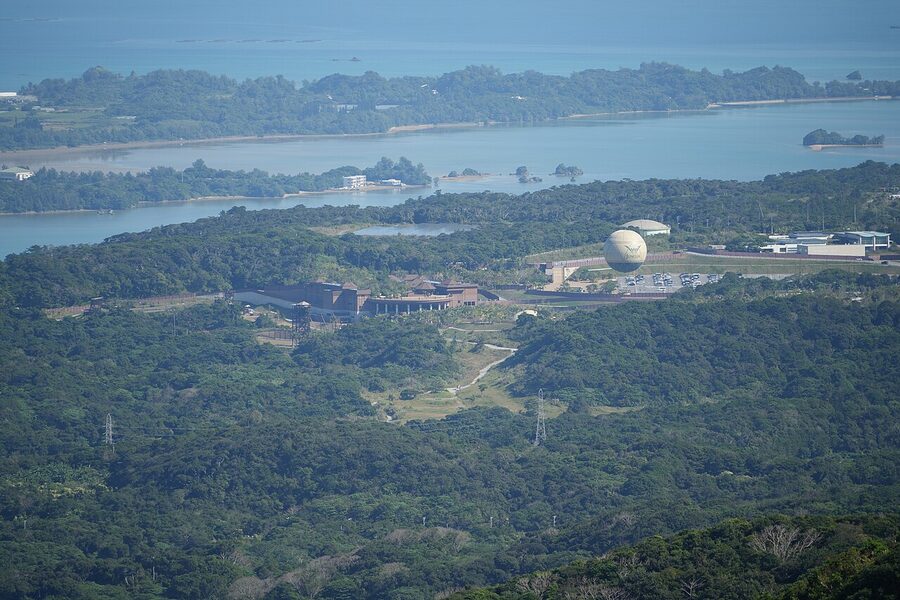
The most-publicised recent case. The new Okinawa theme park, designed by Katana Marketing head Morioka Tsuyoshi (the same consultant who turned around Universal Studios Japan two decades ago), charges ¥8,800 for foreign-site 1-day tickets versus ¥6,930 for Japanese-site tickets. The Japanese-site purchase requires a Japanese address and phone number. The park’s stated logic: inbound tourists spend three times as much as domestic visitors, so price-sensitivity is different.
Tabelog booking system
Japan’s largest restaurant review and reservation platform (the Japanese equivalent of Yelp plus OpenTable) operates separate booking systems for Japanese and non-Japanese users. The English, Chinese, and Korean versions require credit card verification and charge a ¥440 per-person booking fee. The Japanese site does neither. Tabelog’s stated logic: foreign-customer transactions have different risk profiles and operational costs.
Tamatebako seafood buffet (Shibuya)
A Shibuya all-you-can-eat seafood restaurant formally announced in early 2025 that foreign tourists would pay ¥1,100 more than Japanese nationals and foreign residents for the same buffet. Verification method: staff assess Japanese-language ability during ordering, or request a residence card. The owner told Yomiuri Shimbun that higher labour costs associated with foreign-customer service justified the differential.
Asakusa tonkatsu restaurant
In 2025, a tonkatsu restaurant in Asakusa announced a 10% service charge specifically for foreign tourists, with Japanese residents exempted. The venue became a social-media flashpoint, with backlash from both international visitors and long-term foreign residents who objected to being misclassified as tourists.
Various ryokan and tours
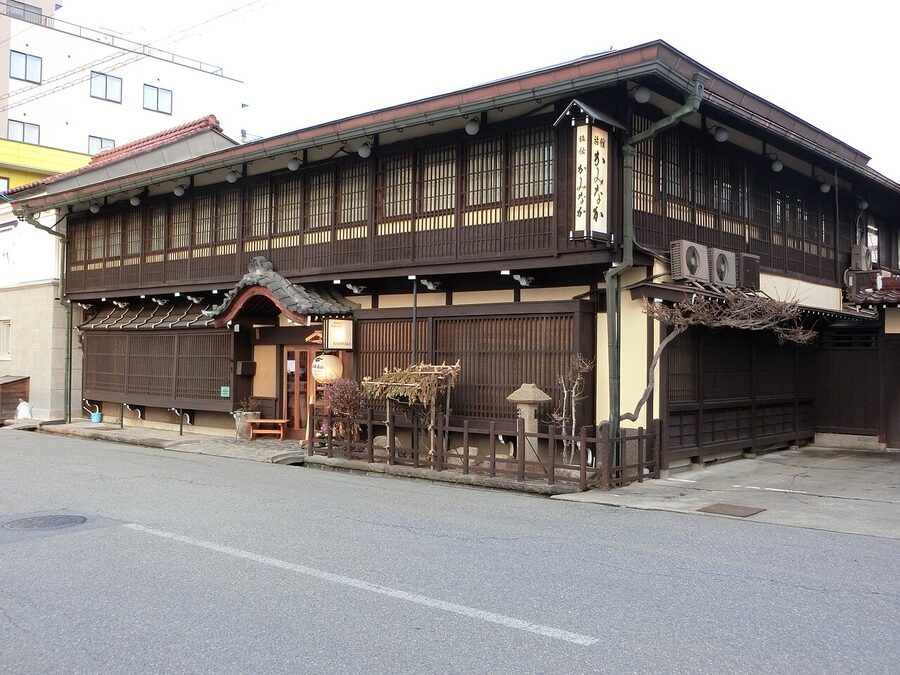
A growing list of traditional ryokan inns and guided tours have introduced foreign-customer premium rates, typically 10–25% above domestic rates. These are usually not advertised publicly but appear on booking platforms.
Himeji Castle considered
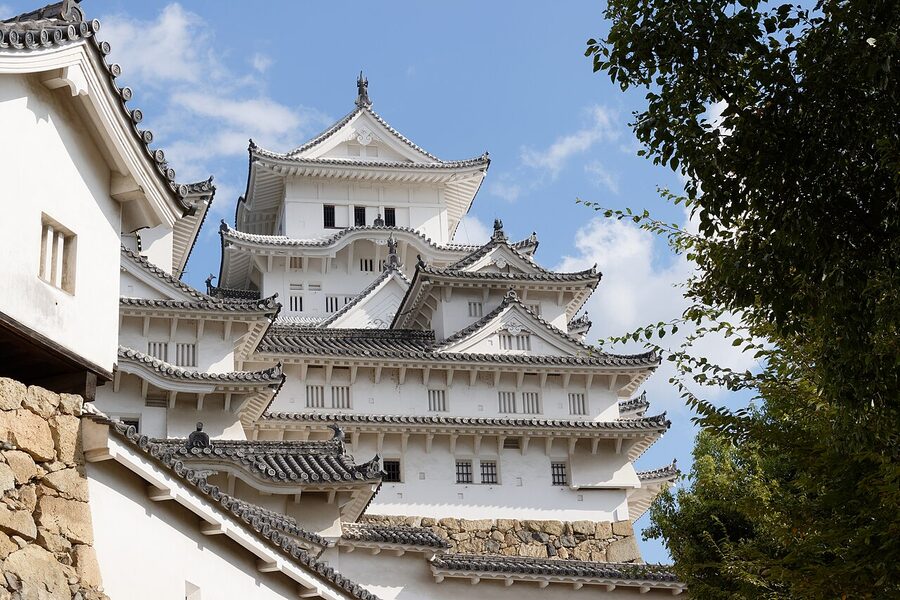
In 2024, the Himeji City mayor proposed formal dual pricing at Himeji Castle — one of Japan’s most-visited heritage sites. The proposal has been politically active but not yet implemented. The fact that a major elected official openly proposed dual pricing at a national heritage site indicated how mainstream the conversation has become.
How is this different from global dual pricing?
Japan is adopting a practice that’s standard elsewhere. International comparisons:
- India: Taj Mahal charges foreign visitors 1,100 rupees (~$12), Indian residents pay 50 rupees. Multiples of 20x+ are normal at major Indian heritage sites.
- Egypt: Pyramids and major sites charge foreigners 200–400 Egyptian pounds, Egyptian nationals 10–40 EGP.
- France: The Louvre is free for EEA residents under 26. All other over-18 visitors pay €22.
- Southeast Asia: “Foreigner rates” are institutional at temples, parks, and transport across Thailand, Vietnam, Cambodia, Indonesia.
- US national parks: Annual passes are cheaper for state residents. Some attractions offer US-citizen discounts.
The standard justification is fiscal: local residents fund maintenance through taxes, so visitors pay more at the point of entry to compensate. This logic is accepted at heritage sites and national parks globally without serious controversy.
Japan’s specific twist is that the dual pricing is showing up in commercial venues (restaurants, theme parks, platforms) rather than just public heritage sites. That’s the novel part — and it’s where the “is this discrimination?” debate gets more contested.
Is dual pricing legal in Japan?
Legally ambiguous. Japan has no specific anti-discrimination law covering commercial transactions (unlike EU member states, which generally prohibit nationality-based pricing for the same goods and services). Japanese case law has historically treated nationality-based pricing as a commercial decision rather than a protected-category issue.
The relevant legal concepts:
- Unfair Contract Terms Act: Doesn’t prohibit different prices, only unfair imposition of terms.
- Consumer Contract Act: Similar — focuses on transparency and fair terms, not price uniformity.
- Article 14 of the Constitution: Equality before the law, but applies to government action rather than private commerce.
- International law: No specific prohibition on tourism-targeted pricing in standard WTO or bilateral trade agreements.
Practically: a Japanese venue can charge foreigners more as long as the pricing is transparent at point of purchase. Hidden dual pricing (same advertised price, different actual charge based on appearance) would likely be illegal. Openly-declared dual pricing with transparent terms is almost certainly legal.
What’s the counter-argument?
Dual pricing in Japan specifically draws on the same debate playing out in European cities like Venice and Amsterdam. The concerns:
- Misclassification risk: Long-term foreign residents fear being treated as tourists. The Tamatebako Shibuya case specifically drew complaints from Tokyo residents with decades of residency who were asked to prove their status.
- Verification methods are crude: Asking customers to order in Japanese is an arbitrary test that can misclassify Japanese citizens who don’t fit the assumed language proficiency profile. Requiring residence cards is more accurate but creates a privacy-facing gate.
- Slippery slope concerns: Casual commercial dual pricing could normalize broader racial or nationality-based differentiation in Japanese public life. Japan has no strong anti-discrimination legal framework to prevent this.
- Asymmetric treatment concerns: Some critics point out that Japanese tourists abroad don’t face dual pricing in most destinations (because it would be illegal in most European markets), making the Japanese practice asymmetric and potentially damaging to international relations.
What do foreigners in Japan actually think?
The survey evidence is limited, but informal Reddit and Twitter reactions split into roughly three camps:
- Accepting: “I benefit from 10% tax-free shopping anyway, so paying a bit more at restaurants is fair.” This view is particularly common from short-term visitors who acknowledge they don’t pay Japanese consumption taxes.
- Annoyed but tolerant: “Don’t love it, but I understand the pressures. I’d prefer the venue to be direct about it rather than hidden.” The most common position among repeat visitors.
- Actively opposed: “This sets a bad precedent and normalises nationality-based discrimination.” Most common among long-term foreign residents who fear being misclassified.
A specific friction point: the distinction between “foreign tourist” and “foreign resident” is often not handled well in current dual-pricing schemes. Long-term residents with Japanese tax obligations, families, and community ties would prefer to be treated as locals for pricing purposes. Not all venues verify this cleanly.
What does good dual pricing look like?
Wakaba Oto at Tokyo Weekender argued in August 2025 that dual pricing can work when executed thoughtfully, and becomes problematic when sloppy. Her specific criteria:
- Transparency: Prices clearly posted at point of purchase. No surprise billing.
- Accessible verification: Easy, non-invasive methods to confirm resident status. Residence card OK; language tests dubious.
- Proportional gap: 10–20% differential is defensible; 50%+ differentials start to look punitive.
- Resident vs tourist distinction: Long-term foreign residents should pay local rates, not tourist rates.
- Revenue use: Ideally, the additional revenue funds tourism infrastructure that benefits the community rather than going to private profit margins.
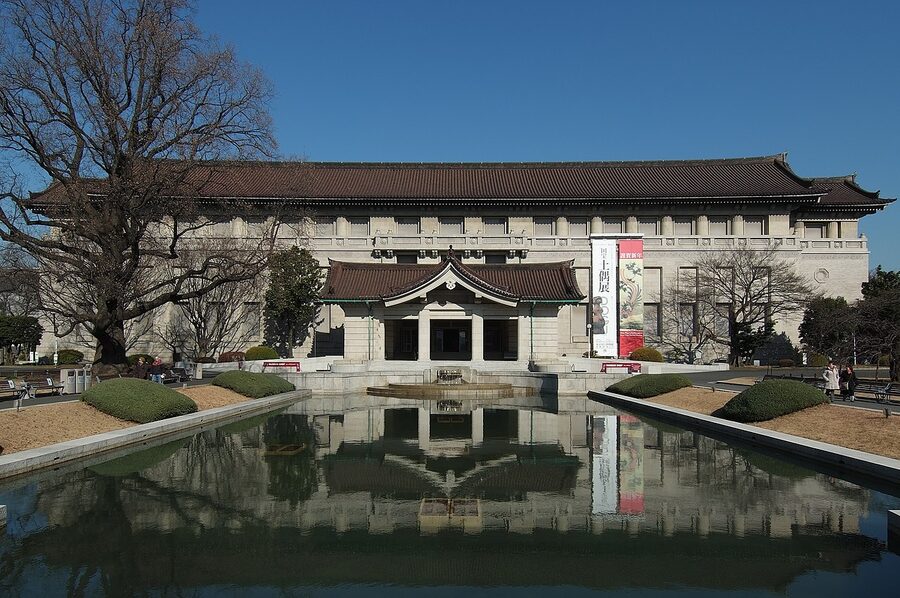
The National Museum model (free for residents on Culture Day, discounted for long-term foreign residents with residence card verification) is probably the cleanest example of dual-pricing execution in Japan. Commercial venues generally don’t match this standard yet.
What does the Japanese government actually say?
Officially, ambiguous. The Japan Tourism Agency has not formally endorsed dual pricing as a national policy but has also not prohibited it. Individual prefectural governments have taken different positions:
- Okinawa: Generally supportive (Junglia theme park example)
- Kyoto: Has preferred accommodation tax increases to direct dual pricing
- Tokyo Metropolitan: Has avoided formal dual pricing but raised various tourism-adjacent fees
- Yamanashi (Fuji): The Y2000 Mt Fuji climbing fee is effectively dual pricing (almost all climbers are foreign tourists) though not framed that way
The political debate is shaped by the current broader anti-tourism political climate. Our Japan anti-tourism politics piece covers how this fits into the Sanseito-driven political context. Our Mt Fuji overtourism article covers a specific overtourism response that includes de-facto dual pricing.
What should visitors do in practice?
Practical advice for 2026 visitors:
Expect to pay more at specific venues
If you’re visiting Junglia, booking through Tabelog’s English site, or eating at Tamatebako Shibuya, expect the foreign-visitor price. The gap is modest (10–20% typical) and the venues are transparent about it.
Check Japanese booking platforms when possible
If you read Japanese or have a Japanese-reading travel companion, Japanese booking platforms often offer lower prices than their English-language equivalents. Some platforms require Japanese address verification; others don’t.
Use the tax-free shopping exemption
This is effectively reverse dual pricing in your favour. Most major retailers offer 10% consumption tax exemption to foreign tourists with passport verification. Use this benefit — it largely offsets dual-pricing disadvantages elsewhere.
Understand you’re in a transitional period
Japanese dual-pricing norms are still forming. Some venues handle it gracefully; others don’t. If you encounter a dual-pricing situation that feels unfair, the right response is to leave rather than to argue with the venue. Social-media pressure on the worst offenders has produced meaningful changes.
Respect resident foreigners
If you see a long-term foreign resident being hassled about their status at a restaurant or venue, their frustration is legitimate. The dual-pricing debate is genuinely more challenging for residents than for short-term visitors.
What about the international optics?
Tokyo Weekender’s Oto raised a specific concern: if Japanese tourists went to Paris and found themselves charged higher restaurant prices for being Japanese, the reaction would be public outrage. The principle should arguably be the same in reverse.
This optics concern has some weight. Japan’s international image benefits from the country’s reputation for hospitality and fair treatment. Formal dual pricing at a national scale could damage that reputation in ways that offset the short-term revenue gains. Some observers argue that the current ad-hoc dual pricing is preferable to any formal government-endorsed system precisely because it avoids the diplomatic-signaling problem.
Where is this going?
Three likely scenarios over the next 3–5 years:
Scenario 1: Heritage-site adoption
Dual pricing at major Japanese cultural heritage sites (Himeji Castle, Nikko Toshogu, Kyoto temples) becomes normalised, matching the global pattern. Current free-or-cheap admission prices become Japanese-resident rates; foreign visitors pay a higher general-admission rate. Revenue used for site preservation.
Scenario 2: Commercial normalisation
A wider set of restaurants, ryokan, and attractions adopt transparent dual pricing, with resident-foreign vs tourist-foreign distinctions improving over time. The practice becomes unremarkable background noise of Japanese travel.
Scenario 3: Political escalation
If Sanseito or other anti-foreigner politics continues gaining ground, dual pricing could become a political symbol and be implemented aggressively at the government level. This would be most damaging to Japan’s international reputation.
Most observers currently expect some combination of scenarios 1 and 2. Scenario 3 would require significant further political escalation beyond current trajectories.
Final take
Dual pricing in Japan is a transitional-moment phenomenon. The practice reflects genuine pressure from overtourism, a weak yen, and a political environment that has become more receptive to differential treatment. It also fits a global pattern that’s been normal at heritage sites and national parks for decades.
For visitors, the practical impact is small: modest price premiums at specific venues, easy to spot and easy to avoid if they bother you. The cultural impact is larger: Japan is negotiating in public what its relationship with foreign visitors should look like over the next decade.
The worst-case scenario is a formalised national-level dual-pricing system that damages Japan’s hospitality reputation. The best-case is a thoughtful heritage-site tiered model matched with better resident-vs-tourist verification. Which way it goes depends on political and commercial choices that are actively being made right now.
For related reading, our Japan anti-tourism politics piece covers the broader political context, our weak yen tourism surge article covers the economic pressure driving dual-pricing debates, and our Mt Fuji overtourism piece covers the specific flashpoint location that accelerated the conversation.