Spend an afternoon watching Ryu ga Gotoku on somebody’s living-room screen and you could be forgiven for thinking that Japan’s tattoo tradition begins and ends with the yakuza. It does not. The story starts about two thousand years before anyone in this country so much as hired a stevedore, and it detours through fishermen, firemen, courtesans, Ainu hunters, Okinawan grandmothers, and an 1827 woodblock-print craze that made koi and dragons the most famous body art on Earth. The yakuza show up quite late, and — awkwardly for the cinematic version — they are about to be the first group to stop getting tattooed at all.
In This Article
- Two thousand years before Yakuza 0
- The Edo-period twist
- The Meiji ban that almost killed it
- What the tattoos actually mean
- Animals
- Flowers
- Figures from myth
- The tebori tradition
- The yakuza arrive late (and are about to leave early)
- The parallel traditions: Ainu and Hajichi
- The onsen problem
- Where to actually see this work
- Further reading
This is the long story. Names, dates, actual sources. I’ll keep it moving.
Two thousand years before Yakuza 0
Chinese observers writing about the Japanese in the third century had a lot to say and most of it isn’t flattering, but they did pass on one detail that has stuck. The Gishi Wajinden — the Japan section of the Chinese Book of Wei, written around 297 CE — records that “men young and old, all tattoo their faces and decorate their bodies with designs.” The specific word used was gei, a term that covered both tattoos and branding and which shows up in clay figurines (dogu) going back to the Jomon period, around 5,000 BCE.
That’s the foundation: tattooing in Japan is older than Japan, older than any government that tried to regulate it, and older than the idea of a criminal class as a distinct group. It was just what people did.
Then, at some point between the seventh and eighth centuries, something turned.
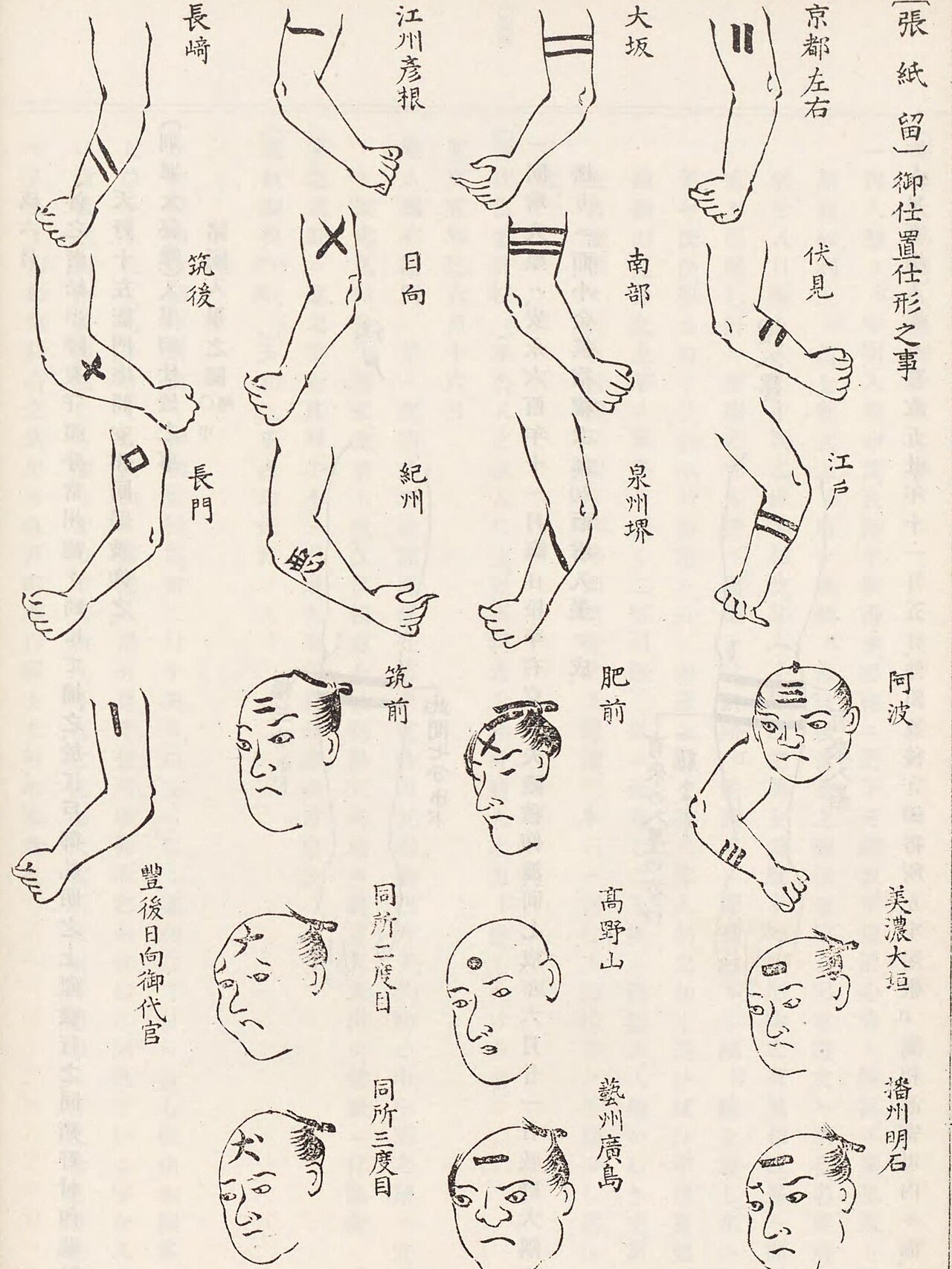
By 720 CE, the court was branding criminals with permanent marks — usually on the forehead or the upper arm — to signal past convictions. The Nihon Shoki, one of Japan’s two foundational chronicles, records the practice in its account of that year. It would last, in various forms, until the Meiji Restoration in 1868. For most of the next 1,100 years, if you saw a tattoo on a Japanese man, your default assumption was: prisoner.
You can guess what this did to the social status of decorative tattooing.
The Edo-period twist
Something strange happens in the Edo period (1603-1868). Punitive tattooing is still going strong. And yet, underneath it, a parallel tradition is quietly building: firefighters, palanquin bearers, dockworkers, travelling entertainers and professional gamblers (bakuto) are getting full-body decorative tattoos.
Why? Partly because Edo sumptuary laws had banned the lower classes from wearing elaborate silks, and ink under the skin was both a workaround and a boast. Partly because — and there is no elegant way to say this — many of these men worked naked or near-naked jobs, and a full-body suit of ink was its own kind of uniform. And partly because of a single publishing event in 1827.
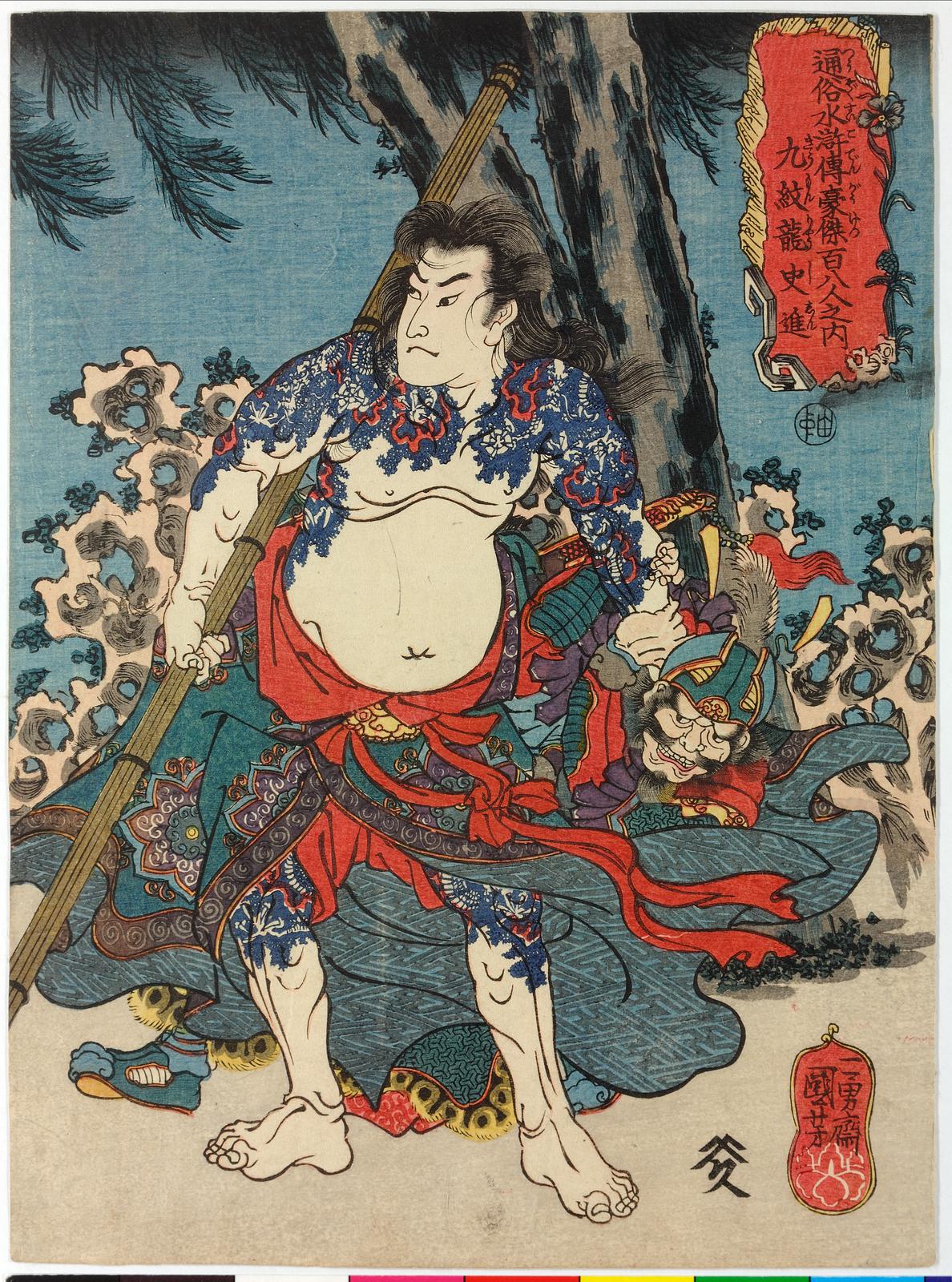
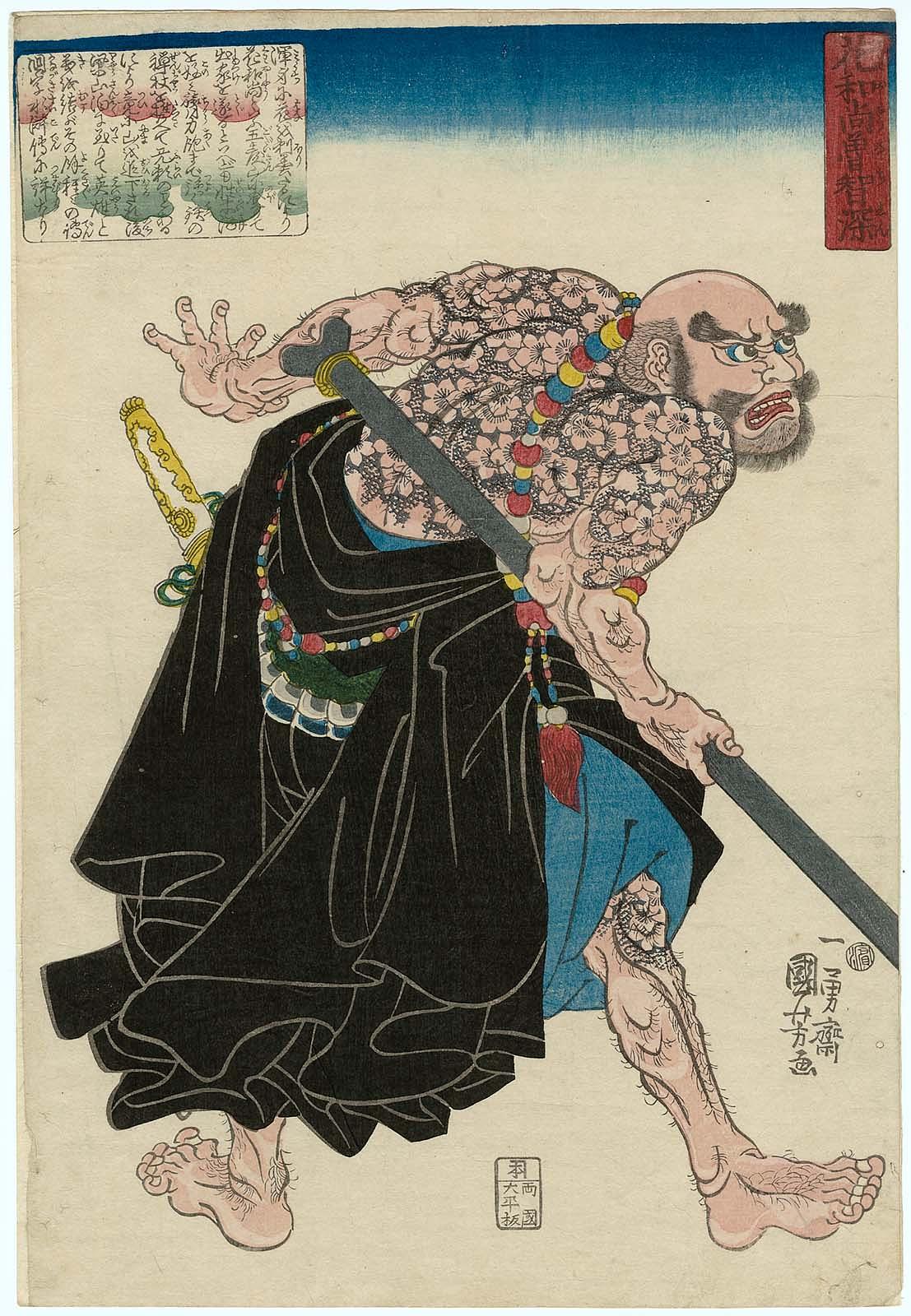
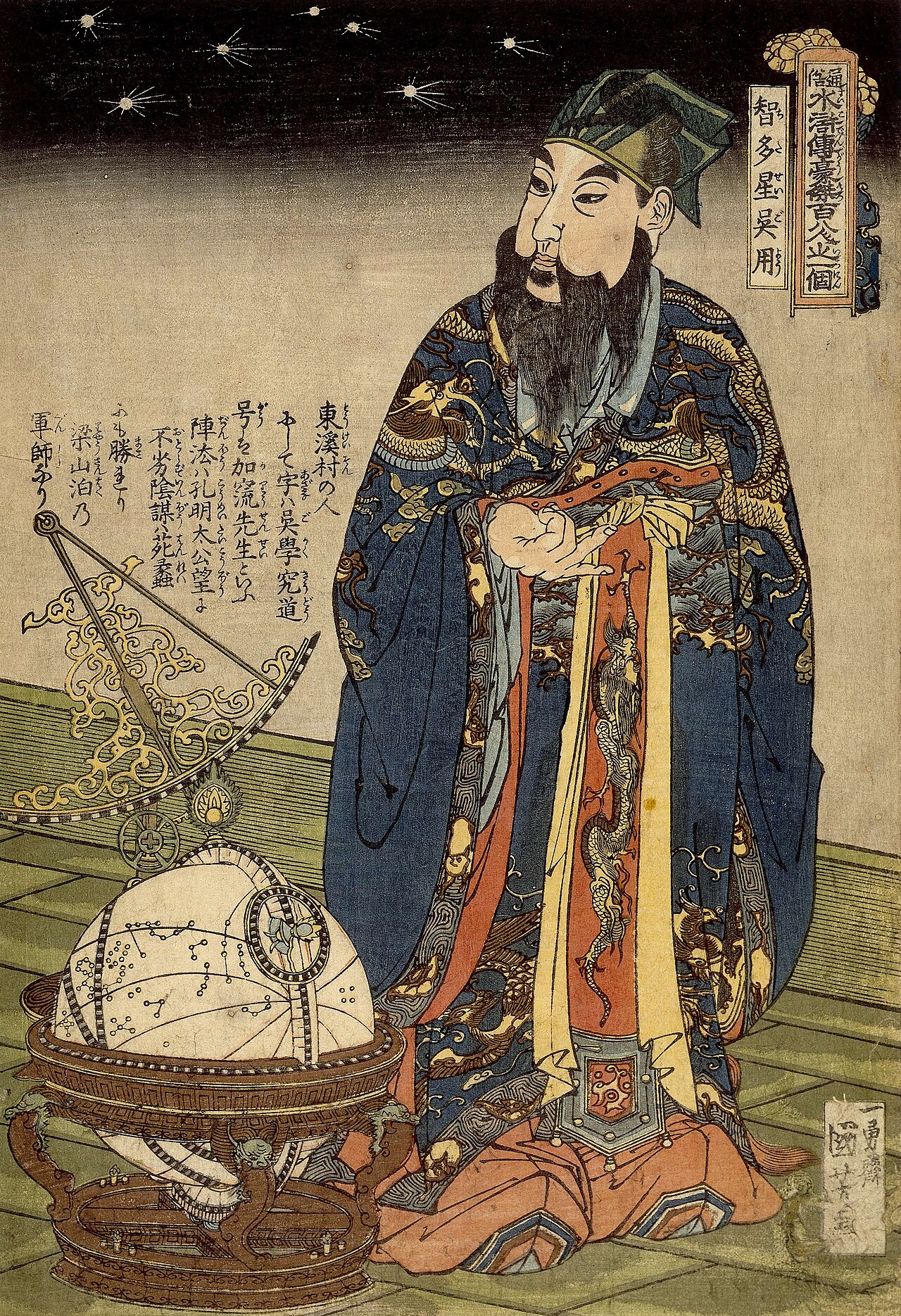
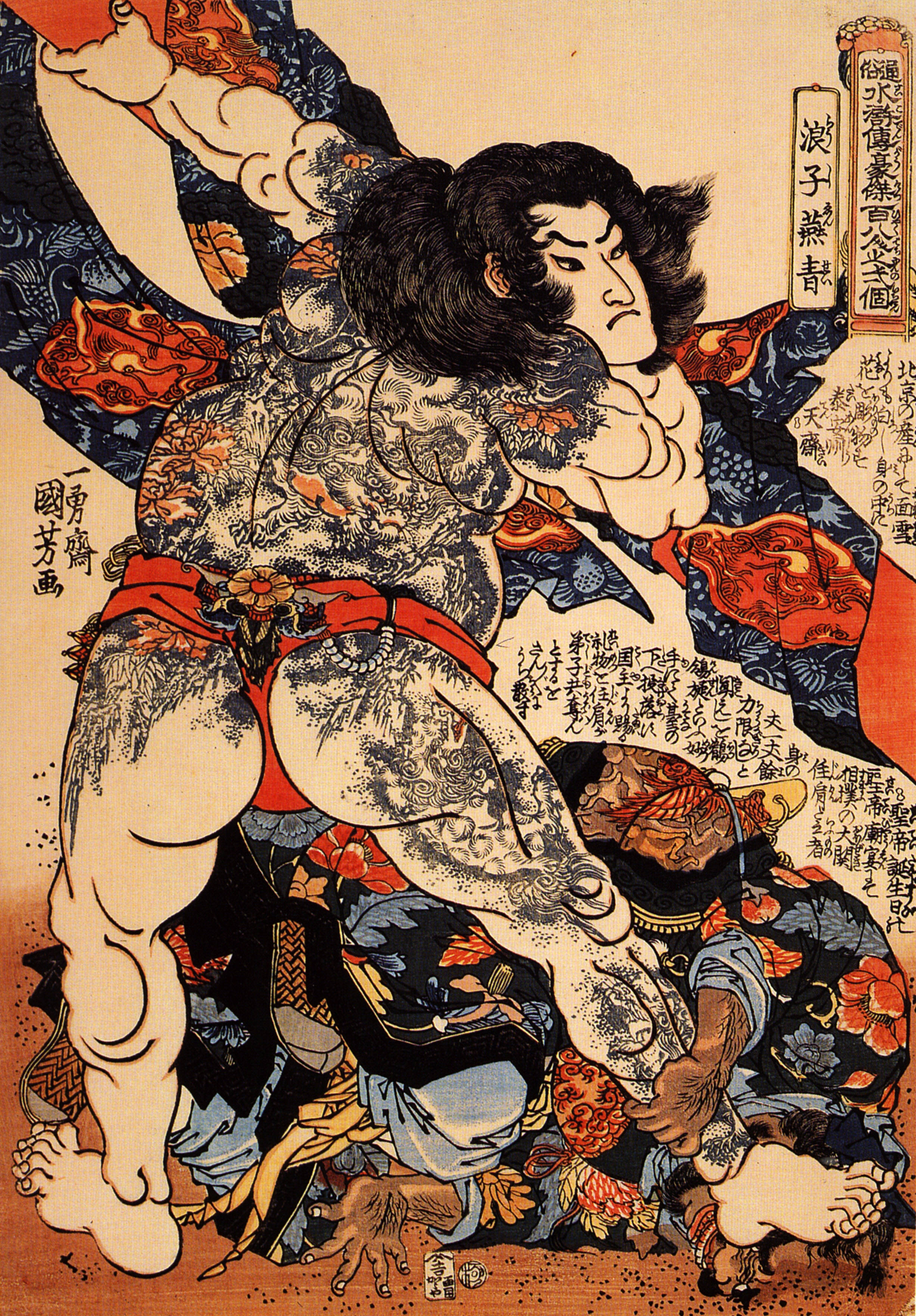
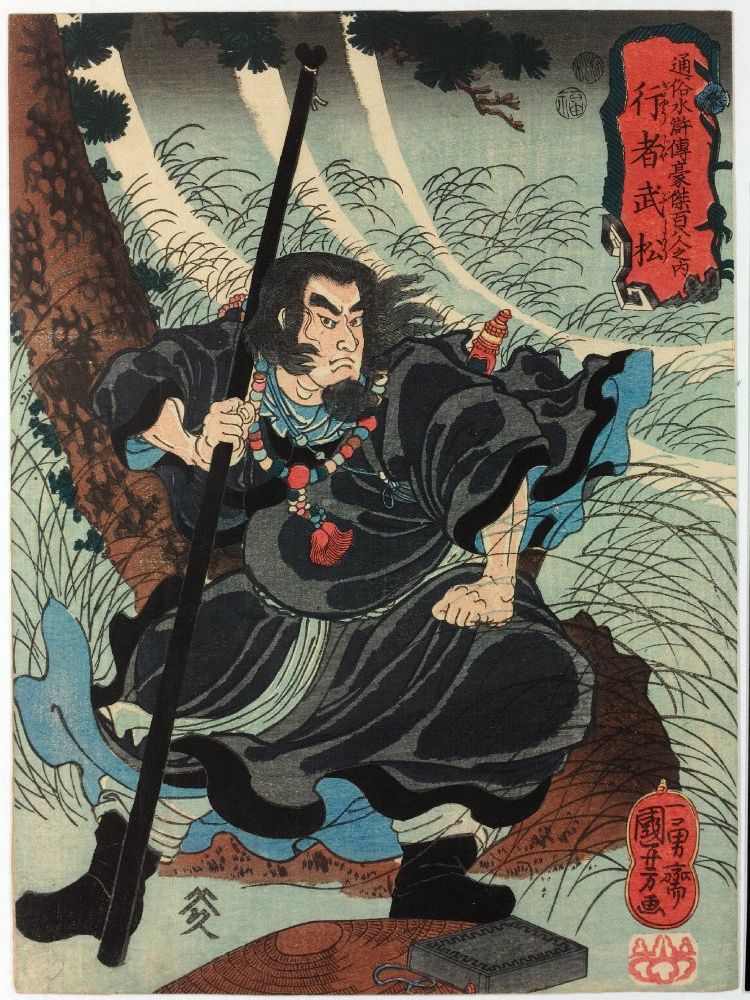
In 1827, the ukiyo-e artist Utagawa Kuniyoshi published a series of woodblock prints based on a Chinese novel called The Water Margin — in Japanese, Suikoden. The novel follows 108 outlaw heroes; Kuniyoshi, in a creative choice no one had asked for, drew all of them covered in colossal full-body tattoos.
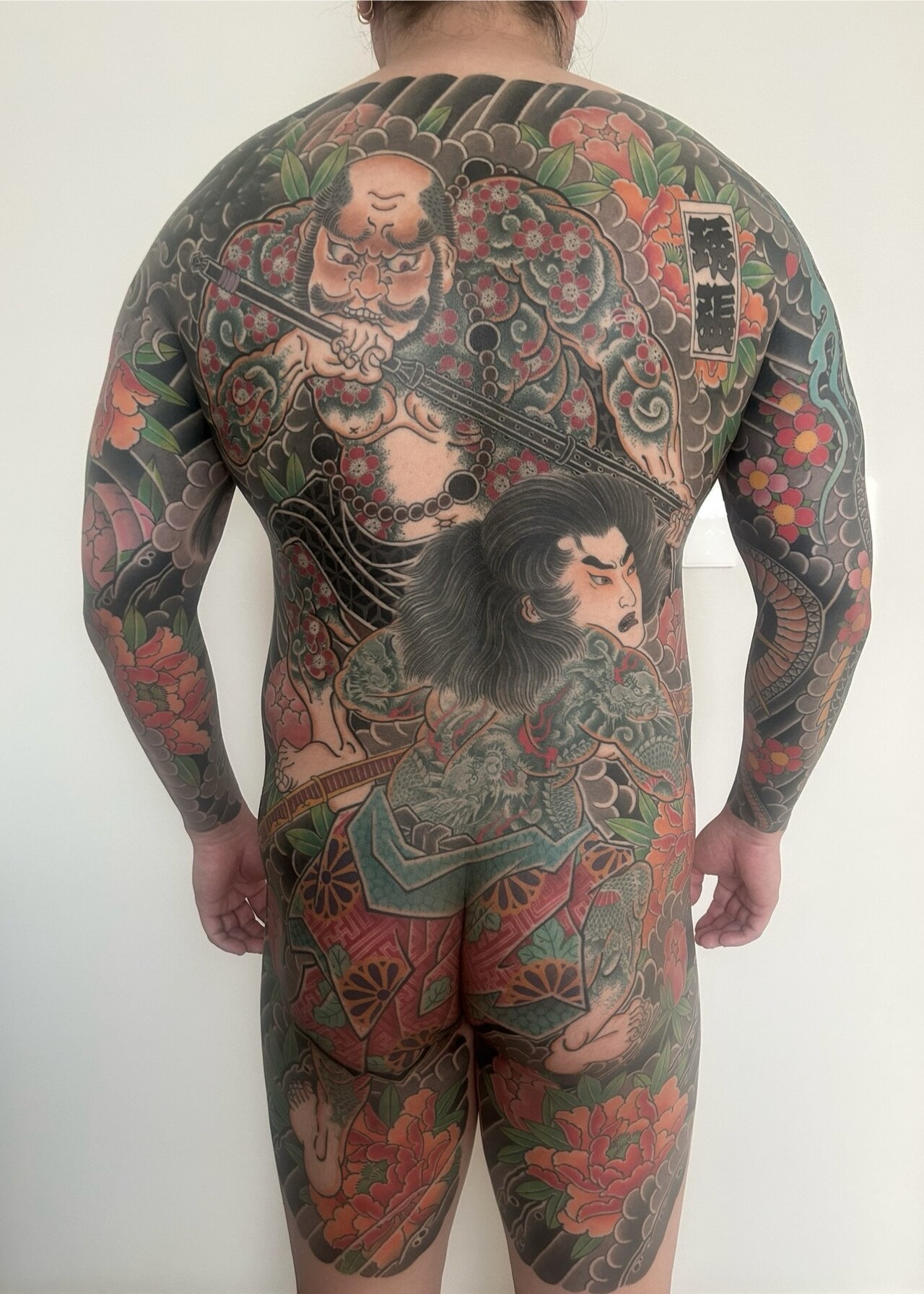
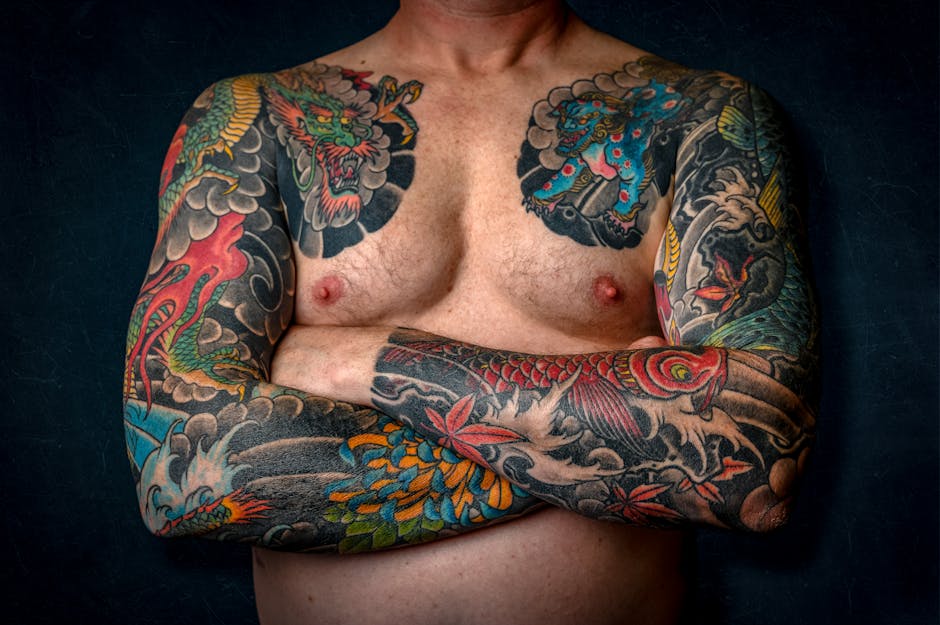
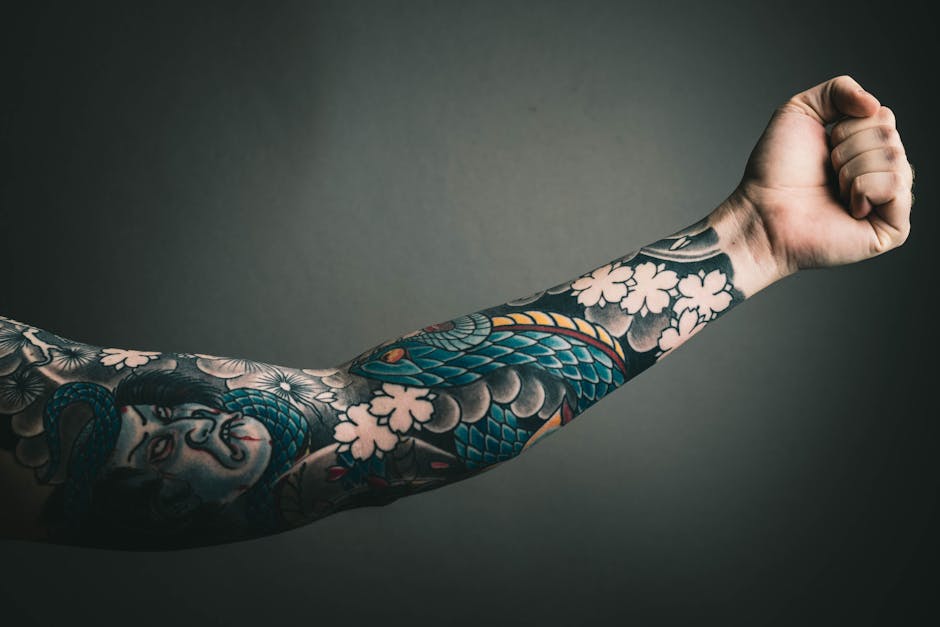
It was a hit. The prints sold in the hundreds of thousands, and they gave men who worked with their bodies a complete visual vocabulary to steal from: dragons, koi, fierce-faced deities, cherry blossoms, peonies, sea gods, waves, demons. The horimono style — literally “carved things” — crystallised within about a decade of the Suikoden series landing in print shops.
Tokyo’s firemen — an unusually prestigious trade in wooden Edo — got tattooed because they worked shirtless and because the imagery was seen as spiritual armour. The itinerant tekiya market traders and bakuto gamblers got tattooed partly to advertise loyalty to their guild structure. That guild structure, a century later, would become the skeleton of the yakuza.
The Meiji ban that almost killed it
In 1872, the new Meiji government — very concerned about how Japan would be perceived by Western diplomats now that the country was open — banned decorative tattooing outright. Punitive tattooing was also phased out, but the bigger change was on the civilian side. Tattoos were declared fuseizoku: contrary to public morals. Tattooists were fined or imprisoned. Getting caught displaying a full-body suit at a public bath could earn you a night in police custody.
The ban had one wonderful loophole. Tattooing foreigners was permitted. And foreigners — particularly British and Russian aristocrats working through embassies in Yokohama — could not get enough.
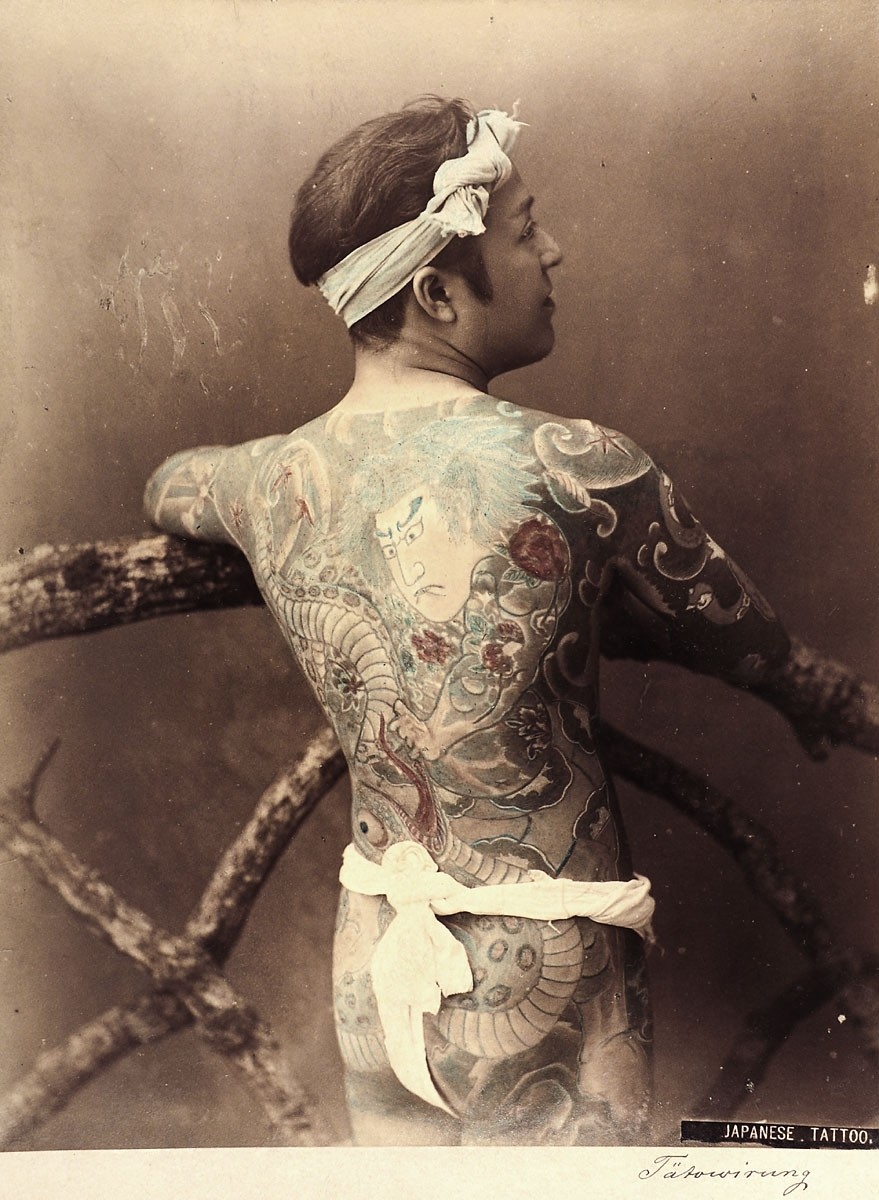
King George V of the United Kingdom, then the Duke of York, got an elaborate dragon tattooed on his arm by a Yokohama master in 1881, aged fifteen. Nicholas II of Russia got a similar piece a few years later. The Japanese tattoo industry quietly survived the Meiji ban by going export-only.
Inside Japan, horimono went underground and became the preserve of exactly the groups the Meiji reformers had hoped to stigmatise: firefighters, labourers, sex workers, and — increasingly — criminals. The ban stayed in place until 1948, when it was repealed under the US occupation.
What the tattoos actually mean
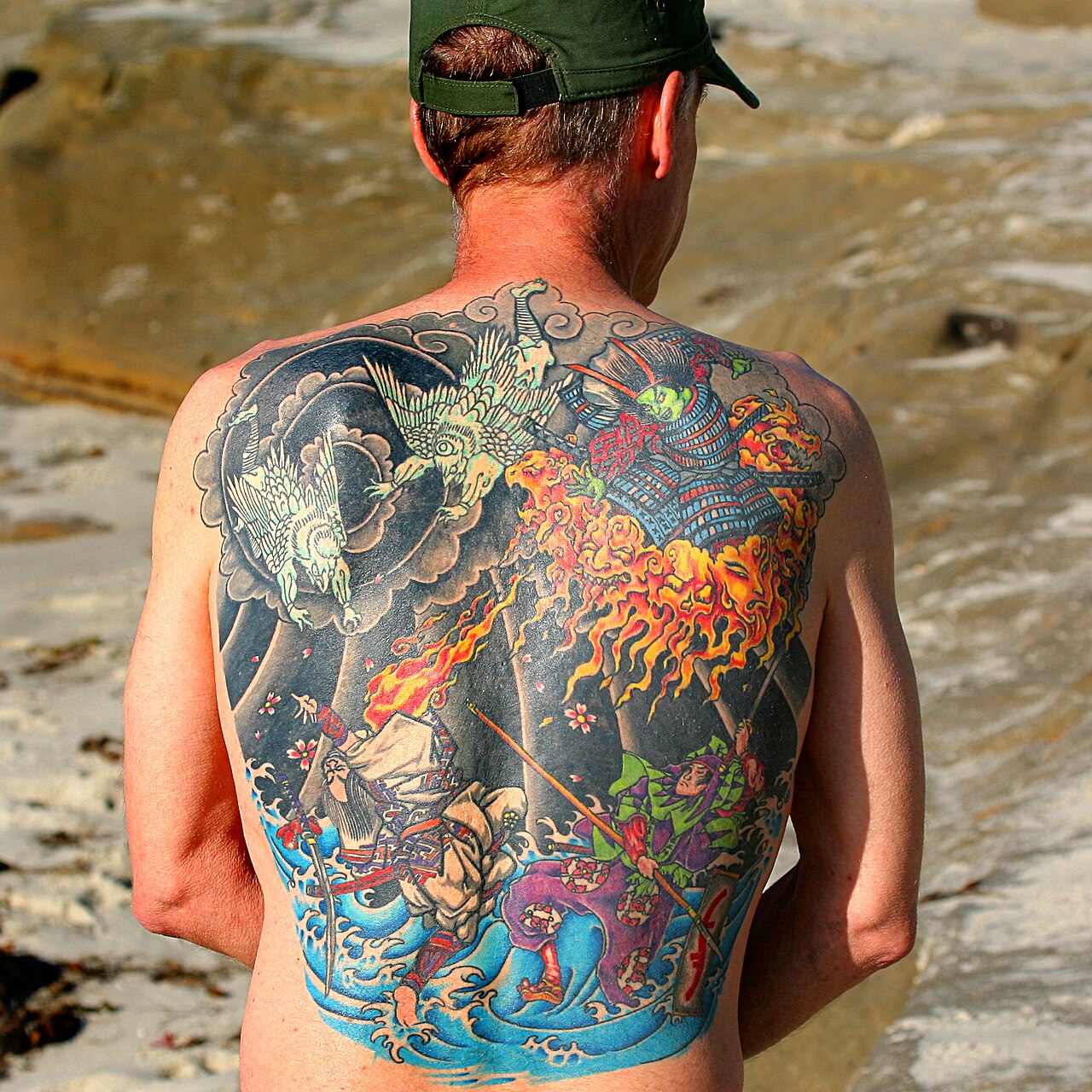
The horimono vocabulary is narrower than it looks and every element means something specific. A short guide:
Animals

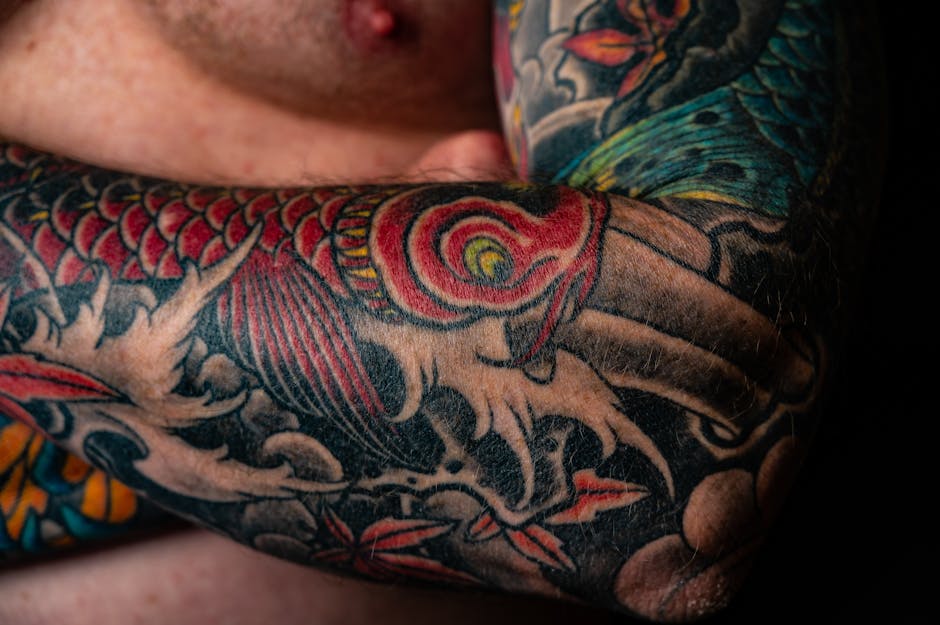
Koi climb waterfalls, which in Chinese-Japanese folklore turns them into dragons if they succeed. Koi are about perseverance and the hope of transformation. They are also the single most-common motif in Japanese tattooing, partly because of the symbolism and partly because their shape fits human anatomy beautifully.
Dragons in the Japanese tradition are not the fire-breathing European kind. They live in water, bring rain, and are broadly benevolent. A Japanese dragon has three toes, a slim serpentine body, and — importantly for compositions — fits along the length of a back, arm, or thigh.
Tigers represent protection from bad luck and disease. Lions (karajishi) are spiritual guardians, the same shishi dogs you’ll see at temple gates. Snakes are medicinal. Foxes (kitsune) are tricksters; you mostly see them on people who want to signal they’re not to be underestimated.
Flowers
Cherry blossoms (sakura) are about the transience of beautiful things. A sakura-covered forearm on a 70-year-old former sushi chef means something different to a sakura on a 22-year-old art student, but the root meaning — everything falls, so let it be beautiful while it lasts — is the same.
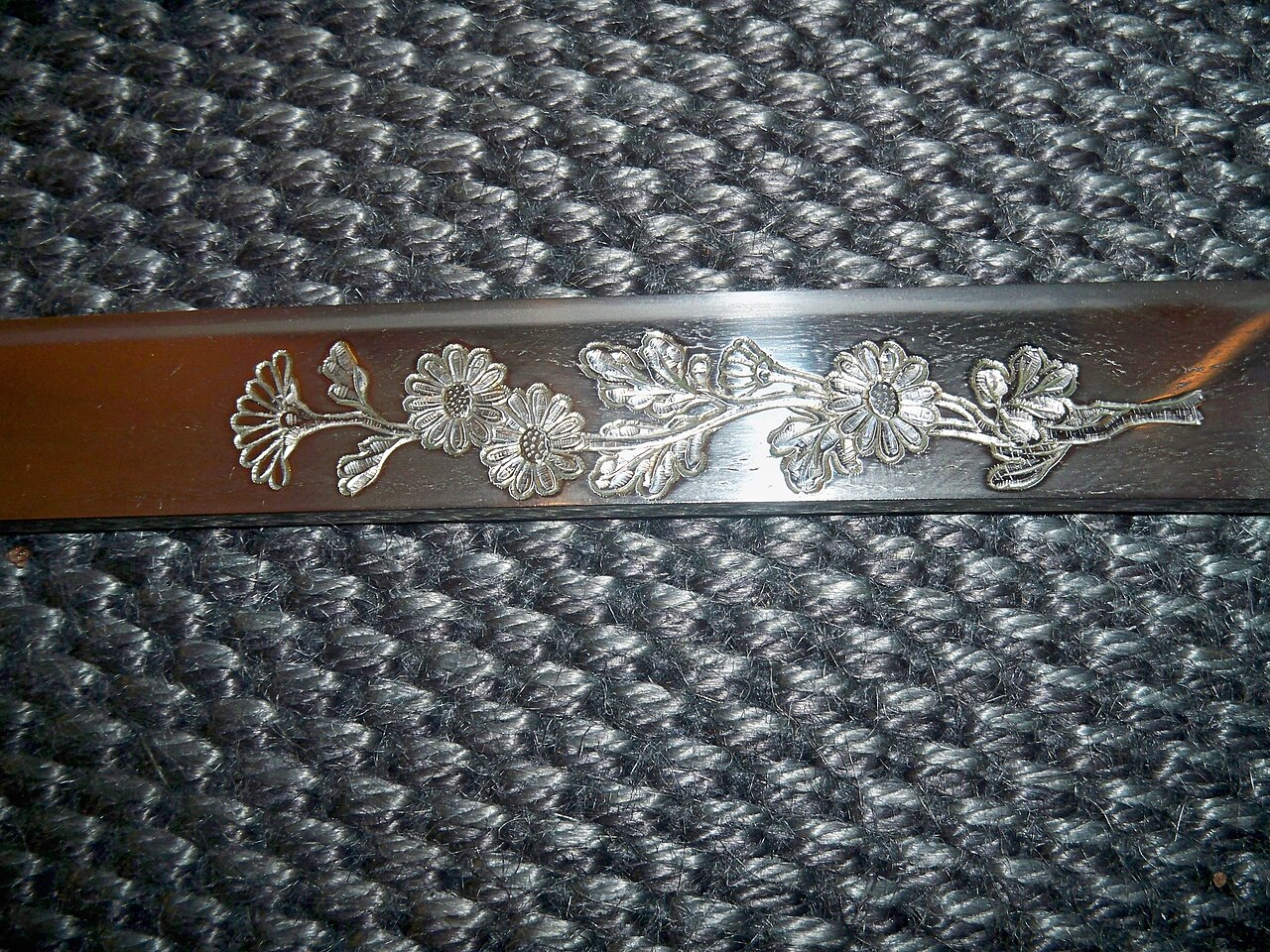
Chrysanthemums (kiku) are imperial, and so tattoos featuring them carry an echo of aristocracy or rebellion against it. Peonies are wealth. Lotus flowers are Buddhist — purity emerging from mud.
Figures from myth
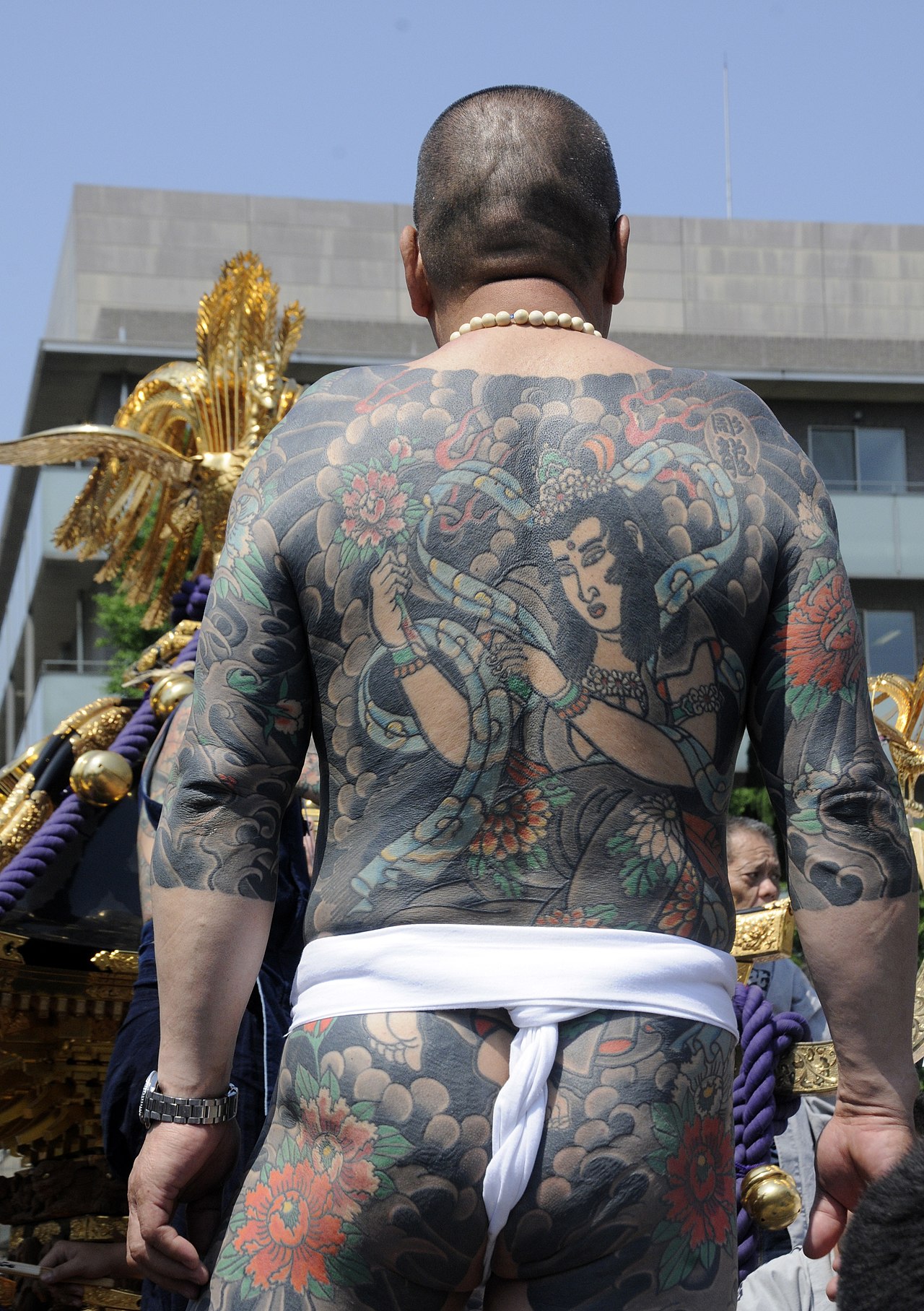
The fearsome bearded guy with a sword on the bicep is almost always Fudō Myō-ō, the immovable king of wisdom — a Buddhist deity popular among firemen because he burns away delusion and, usefully, is heavily associated with protection from actual fire.
Tengu are long-nosed mountain goblins, chaotic but broadly virtuous. Oni are demons; an oni on the back is a statement that the wearer has survived something. Kintaro, the folklore strongman, turns up on a lot of babies’ christening gifts and a lot of men’s shoulders.
The tebori tradition
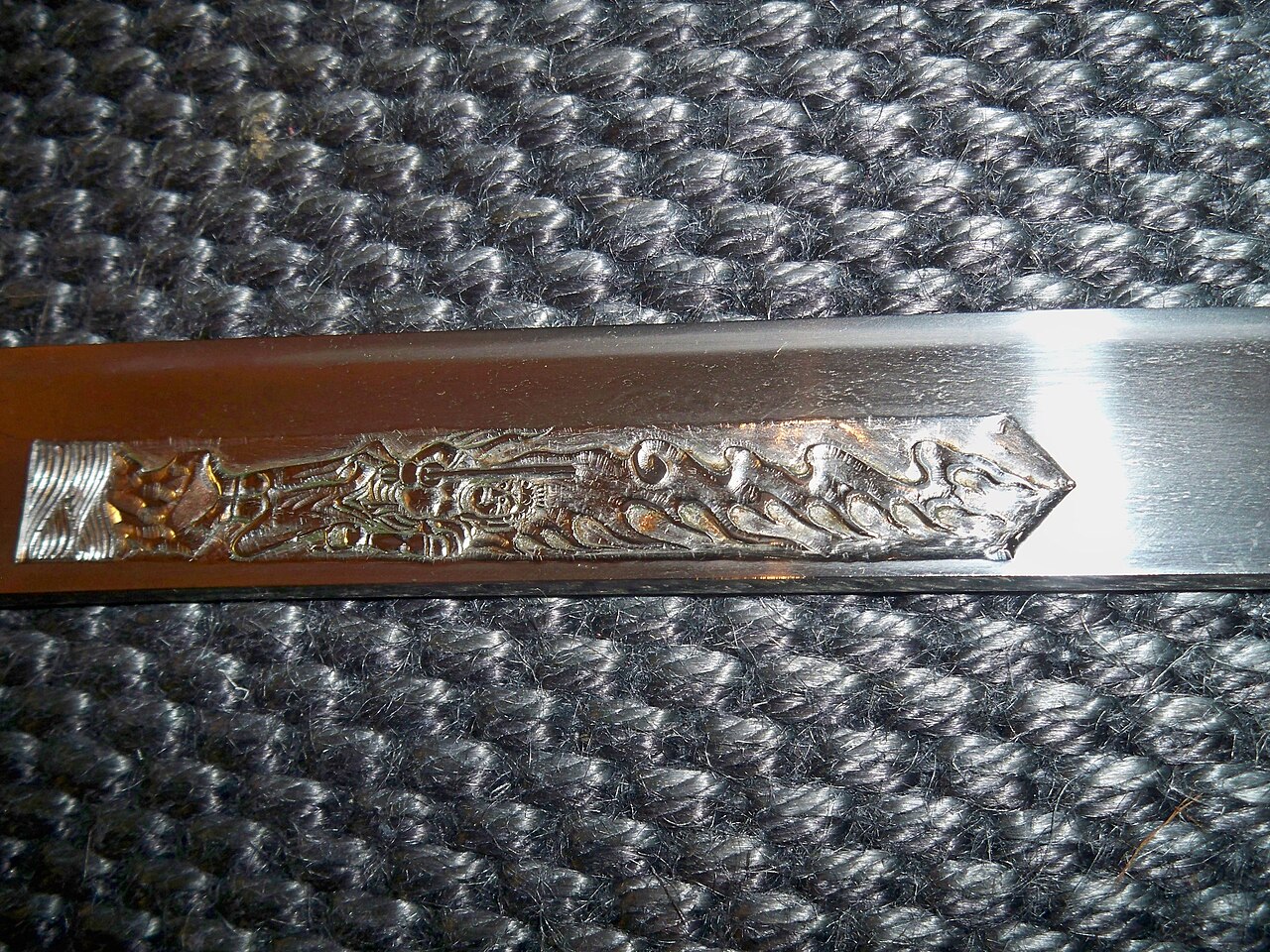
The traditional Japanese method is tebori, which literally translates as “hand carving”. A master works with a set of bamboo or metal rods tipped with tiny groups of hand-filed needles; the ink is pushed into the skin one rhythmic tap at a time. Done well, it produces colour saturation that conventional electric tattooing still struggles to match. Done badly, it scars.
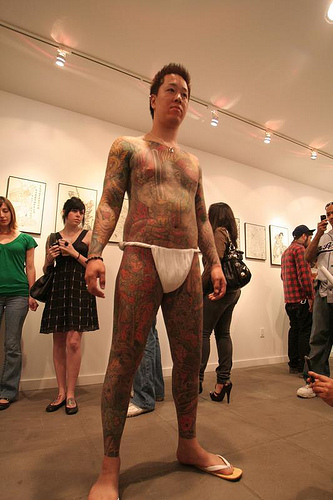
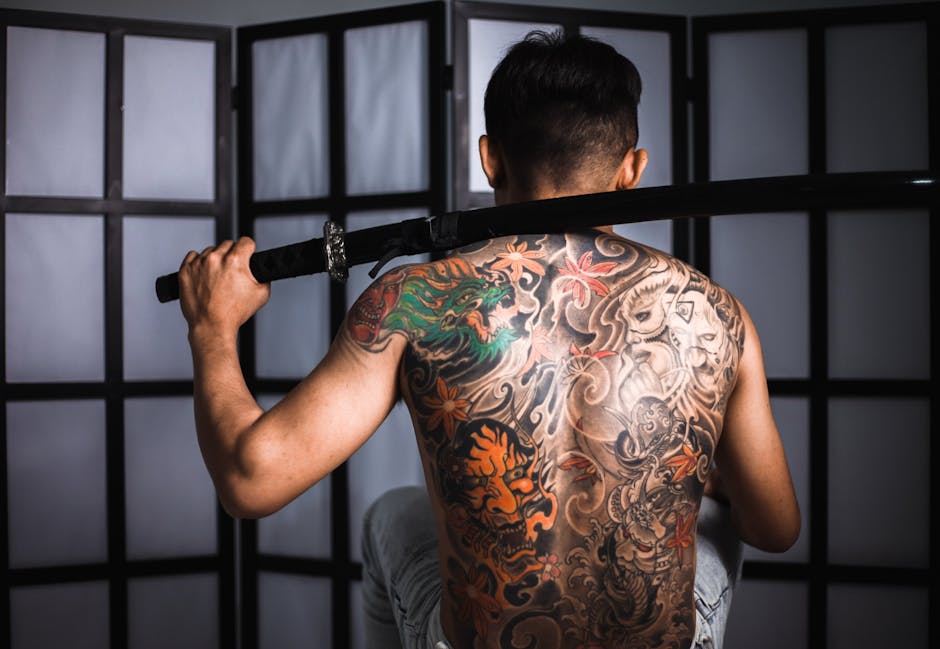
A full-body hikae — what you see on yakuza in films, covering back, chest, stomach, thighs, and upper arms — takes between 100 and 200 hours of tebori work. Most modern masters book out clients in two-hour weekly sessions; a full suit therefore takes two or three years, plus healing gaps, plus the inevitable life interruptions.
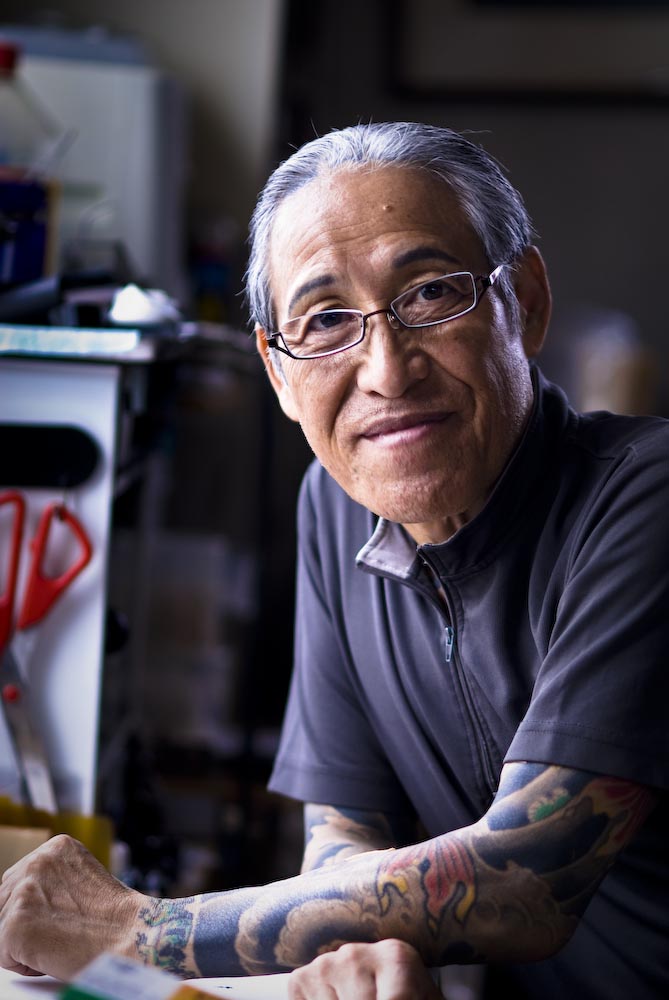
Horiyoshi III took the name in 1980 from his own master, Horiyoshi II, who took it from Horiyoshi I (Kuronuma Yoshitsugu), who in turn had worked with some of the last Meiji-era masters. The lineage is about five generations deep and broadly holds. If someone in Yokohama today is working with Horiyoshi-family tebori techniques, they are directly downstream of the Kuniyoshi prints. Most Japanese masters can trace their own pedagogical line back to the same handful of late-19th-century figures.
The yakuza arrive late (and are about to leave early)
The association between irezumi and organised crime is a specifically 20th-century phenomenon. Before about 1920, the image of a tattooed Japanese man could equally suggest a fireman, a palanquin-bearer, a gambler, or a man of the merchant class with more money than sense. After 1920, as the bakuto-derived yakuza crystallised into the three big post-war syndicates (Yamaguchi-gumi, Sumiyoshi-kai, Inagawa-kai), the full-body tattoo became specifically a yakuza signature.
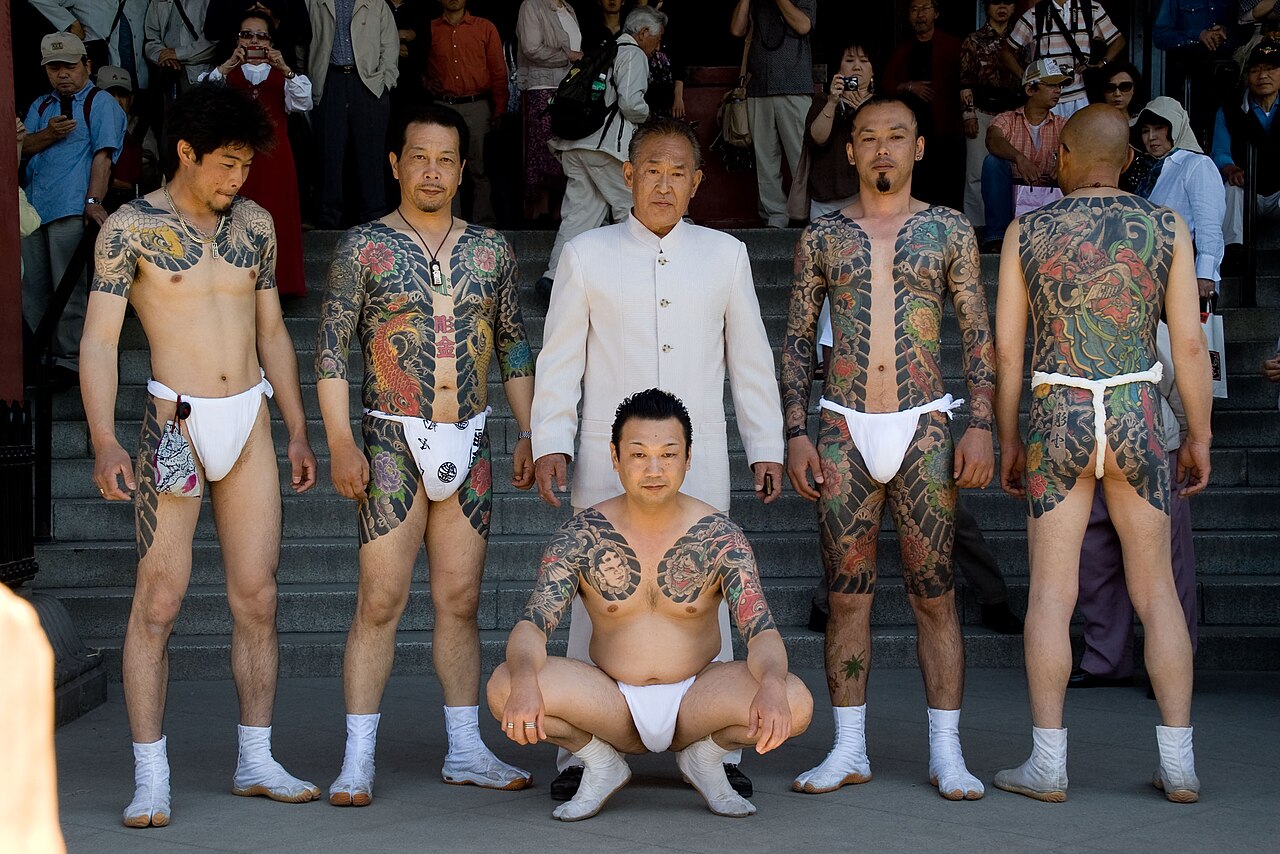
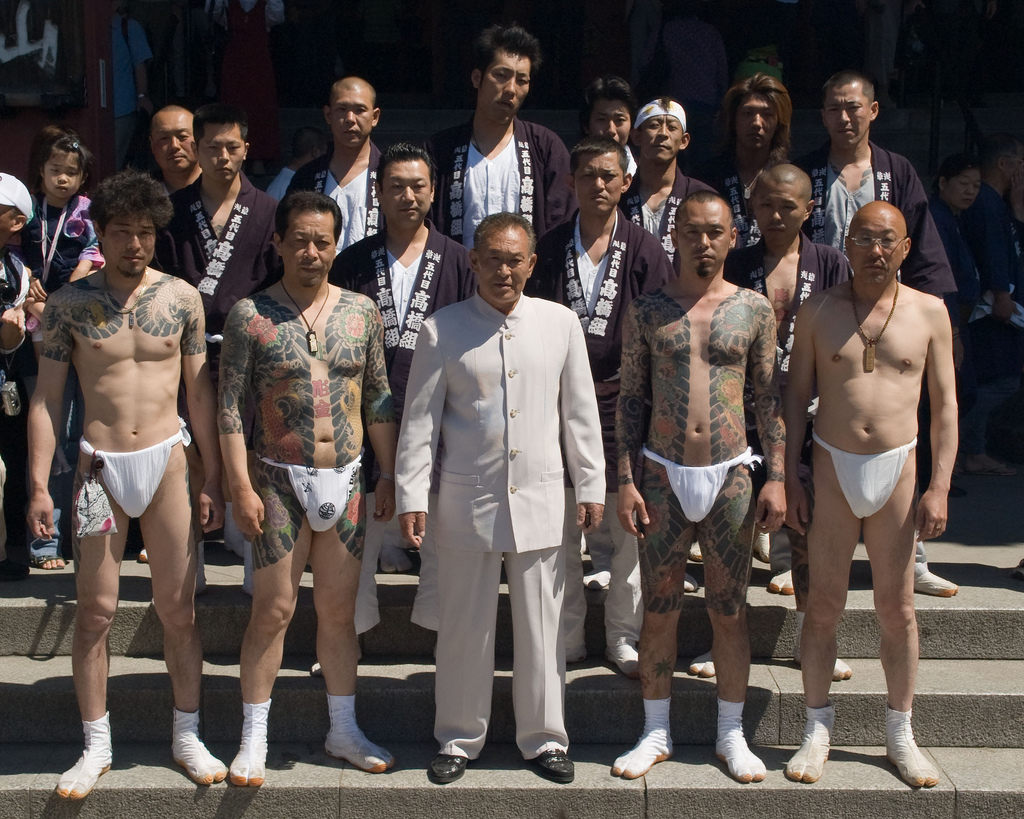
Kazuo Taoka, the man who built the modern Yamaguchi-gumi, was tattooed. So was Tadamasa Goto, whose 2008 UCLA liver transplant scandal drew Jake Adelstein’s reporting into international attention. So were most of their subordinates. By the 1990s, a full hikae was effectively a uniform inside organised crime.
That uniform is now a liability.
Japan’s 2011 Boryokudan Exclusion Ordinances made it functionally impossible for a designated member to open a bank account or rent a mobile phone. Police use tattoo presence as proof of affiliation in court. Smartphone cameras make every public moment searchable. An active yakuza in 2026 has every incentive to be invisible, and a sleeve that cost two years of Saturday afternoons is the opposite of that.
Traditional tebori studios in Tokyo, Osaka and Yokohama have consequently been watching their yakuza clientele age out without replacement for more than a decade. The irezumi tradition, ironically, is being saved from the yakuza by the yakuza’s own collapse.
The parallel traditions: Ainu and Hajichi
Irezumi is not the only Japanese tattoo tradition, even if it’s the one foreign readers usually mean when they say “Japanese tattoos”. Two other distinct practices existed inside the borders of modern Japan, and both were suppressed harder than mainland irezumi ever was.
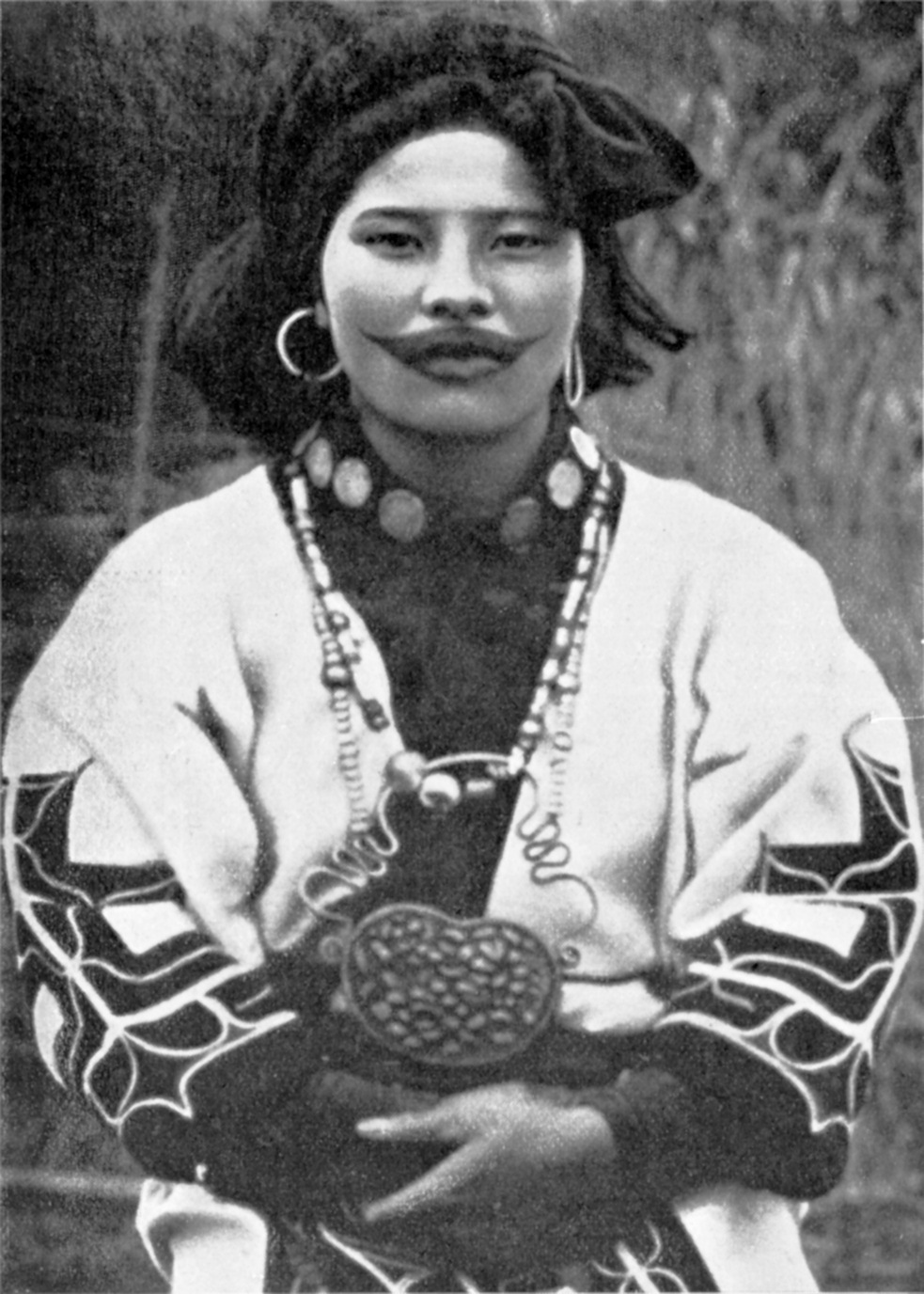
The Ainu of Hokkaido practised a long-established tradition of women’s facial and hand tattooing. Scholar Lars Krutak, who researched the tradition for the Smithsonian’s body-arts archive, has documented the practice back to at least the 15th century; most scholars believe it to be considerably older. Tattooing began in girlhood with a small patch at the corners of the mouth and was gradually extended, in multiple sessions over years, until a full blue-black band covered the lips and extended toward the ears. The practice was banned under the 1871 Hokkaido assimilation laws. The last women who bore full facial tattoos died in the 1990s, and the tradition is now entirely historical — though there is a small revival movement among contemporary Ainu artists.
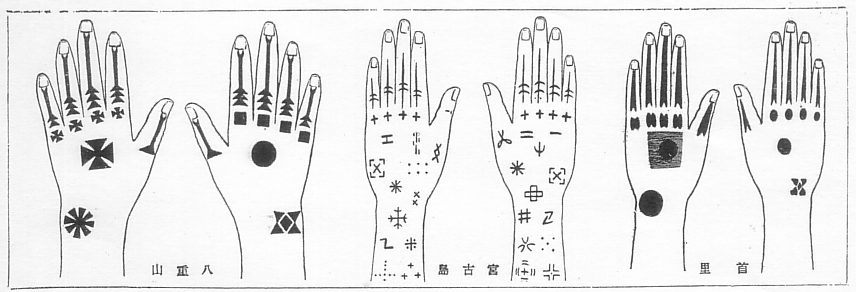
Further south, hajichi was the corresponding women’s tattoo tradition of the Ryukyu Islands — now Okinawa and the Amami archipelago. Hajichi marks covered the back of the hand and the fingers in geometric designs; they had specific meanings tied to marriage, age, and family. The Meiji government banned hajichi in 1899. Like Ainu tattooing, it nearly died out entirely, though a small revival has been underway since about 2010 led by practitioners including Moeko Heshiki, who has been written about by The Japan Times and the Okinawa-based journalist Jon Mitchell.
The onsen problem
If you’re a foreign traveller with a tattoo, the most practical question you will face in Japan is whether the onsen you booked will let you in. The honest answer in 2026 is: maybe.
The legal position is that public baths in Japan may refuse entry to tattooed visitors, and the established case law (from 2019) affirms that this is a private-business right rather than a form of discrimination. The rule exists because, for most of the 20th century, a visible tattoo was strong evidence of yakuza affiliation, and onsen operators did not want fights between rival kumi breaking out in their mineral pools.
The rule makes less sense in 2026, when most of the actual yakuza are too old or too cautious to be showing up at public baths in the first place. But the rule persists, partly because changing it would force Japanese onsen owners into a public conversation about racial and cultural profiling that nobody wants to have, and partly because the rule does not really inconvenience their core clientele.
The practical workarounds for foreign travellers are well established:
- Private baths — kashikiri-buro. Rentable by the hour at most ryokans and many onsen towns; no other bathers, no enforcement.
- Tattoo-friendly onsen directories. The Tattoo-Friendly Japan directory lists more than 600 establishments that explicitly welcome tattooed guests — a figure that has roughly tripled since 2020.
- Cover stickers. Large waterproof patches that hide the tattoo for the duration of the bath. They’re sold at most major onsen towns and in Don Quijote. Honestly, don’t bother for anything larger than a palm-sized piece — they peel off in hot water, and the failure mode is much more embarrassing than just booking a private bath in the first place.
- Ryokan with in-room baths. These have become the default recommendation for tattooed visitors doing longer Japanese trips.
Anecdotally, the rule is also being enforced less than it used to be, especially in tourist-heavy regions. The 2030 Osaka prefecture is actively encouraging onsen operators to loosen their policies ahead of anticipated inbound tourism surges. The direction of travel, slowly, is toward ordinary foreign tourists being admitted without issue.
Where to actually see this work
A surprising amount of historical Japanese tattoo material is in museums outside Japan. The British Museum’s Kuniyoshi collection is one of the finest anywhere; the Musée Guimet in Paris has an excellent holding of Yoshitoshi prints; the Boston Museum of Fine Arts and the Victoria and Albert in London both have large ukiyo-e collections that include most of the foundational tattoo iconography.
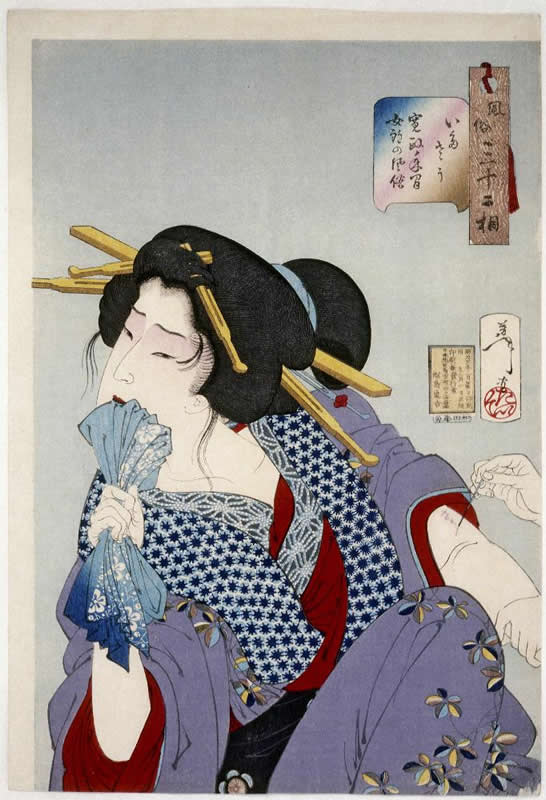
Inside Japan, the Yokohama Tattoo Museum (still operating as of early 2026) holds rotating exhibits on the history of tebori, the Kuniyoshi tradition, and the current state of the art. The Edo-Tokyo Museum in Tokyo has a standing exhibit on Edo-period fireman culture, including reconstructed hikeshi uniforms with period-accurate tattoo imagery.
For contemporary work, most senior tebori artists do not advertise. Appointments run through referrals. A few younger artists — particularly those at Tokyo Three Tides in Harajuku and Studio Muscat in Shibuya — are more approachable about foreign clients and are broadly considered the serious inheritors of the traditional style.
Further reading
- Donald Richie and Ian Buruma, The Japanese Tattoo (originally 1980, new edition 2019). Still the standard English-language introduction, written with photographs by Fukumi Tsukada.
- Horiyoshi III and Takahiro Kitamura, Bushido: Legacies of Japanese Tattoos (2006). Documentation of Horiyoshi III’s own work with commentary.
- Andreas Johansson and Björn Svensson, Irezumi: Traditional Japanese Tattoo Design (2020). Pattern book covering the full traditional vocabulary.
- The Pitt Rivers Museum body arts archive has the best scholarly overview of the Ainu, hajichi, and mainland irezumi traditions side by side.
- Lars Krutak’s Smithsonian essays on Ainu tattooing are the definitive English-language source on that tradition.
For the broader Tokyo context this article sits in, see our longer feature on the Yamaguchi-gumi — the organisation most associated with irezumi in Western eyes, and the one that is now, awkwardly, disappearing. Our Akihabara guide covers the area most popular with younger Japanese getting their first tattoos, and our Ueno district guide takes in the neighbourhood where the tekiya tradition that fed the modern practice had its strongest foothold.