A four hundred year old business is quietly falling apart in central Tokyo. Most foreign visitors walk straight through its remains, take photographs for Instagram, and think the bright lights are what they came to see.
In This Article
- Yoshiwara, 1617
- The Meiji reforms that almost didn’t happen
- The fūzoku workaround
- Kabukicho, the modern district
- Host clubs and the debt problem
- What tourists actually encounter
- Legal context for the traveler
- What actually changed in 2026
- A few notes on the ethics of writing this
- Where to walk, what to see
- Further reading
The bright lights are not the business. They never were.
This article is about the Japanese nightlife industry as it actually works, legally and economically, in 2026. It starts with the Yoshiwara licensed brothel system established in 1617, moves through the 1956 Prostitution Prevention Law that was supposed to end it all, explains the current fūzoku regulatory framework that replaced it, and finishes with a reporter’s note on what travelers actually need to know — including the specific scam operators currently working the Kabukicho love hotels.
The piece tries to do two things at once. First, take the subject seriously enough to earn the reader’s trust — this is a real industry that has employed millions of Japanese women and men across four centuries, and deserves a straight face. Second, be useful. If you are in Tokyo this week, you should come away understanding what you’re seeing, what you’re not seeing, and which specific operators to avoid.
Yoshiwara, 1617
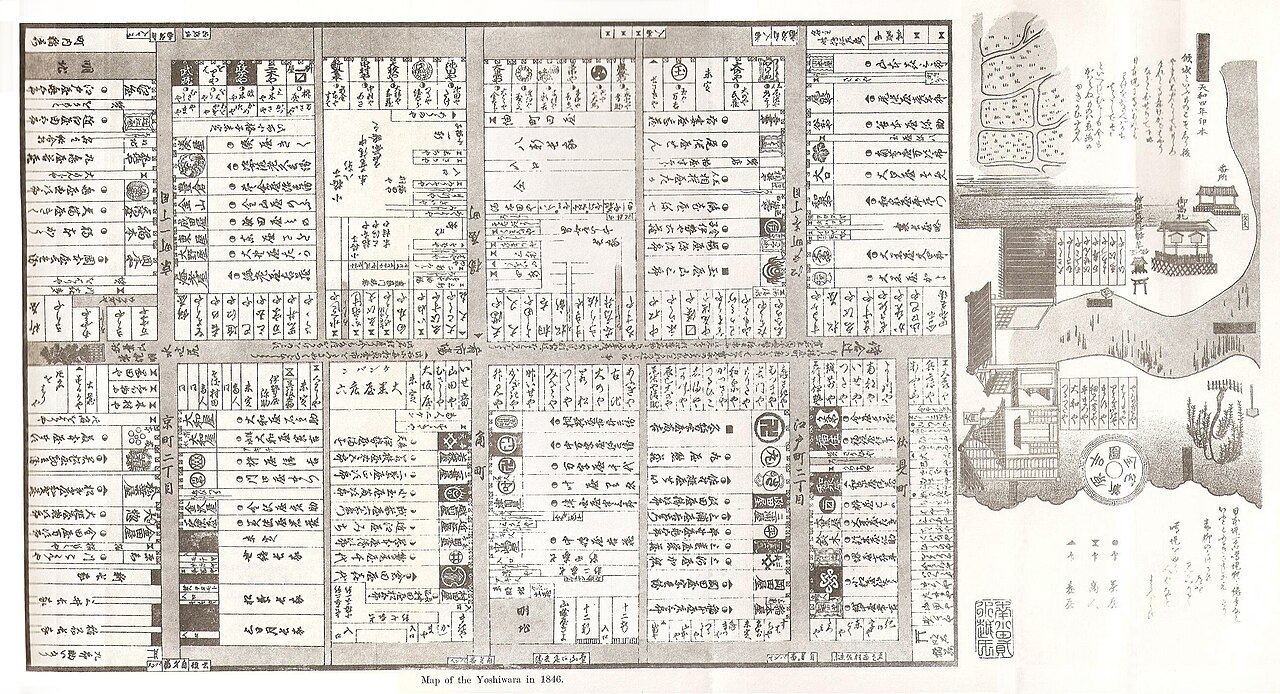
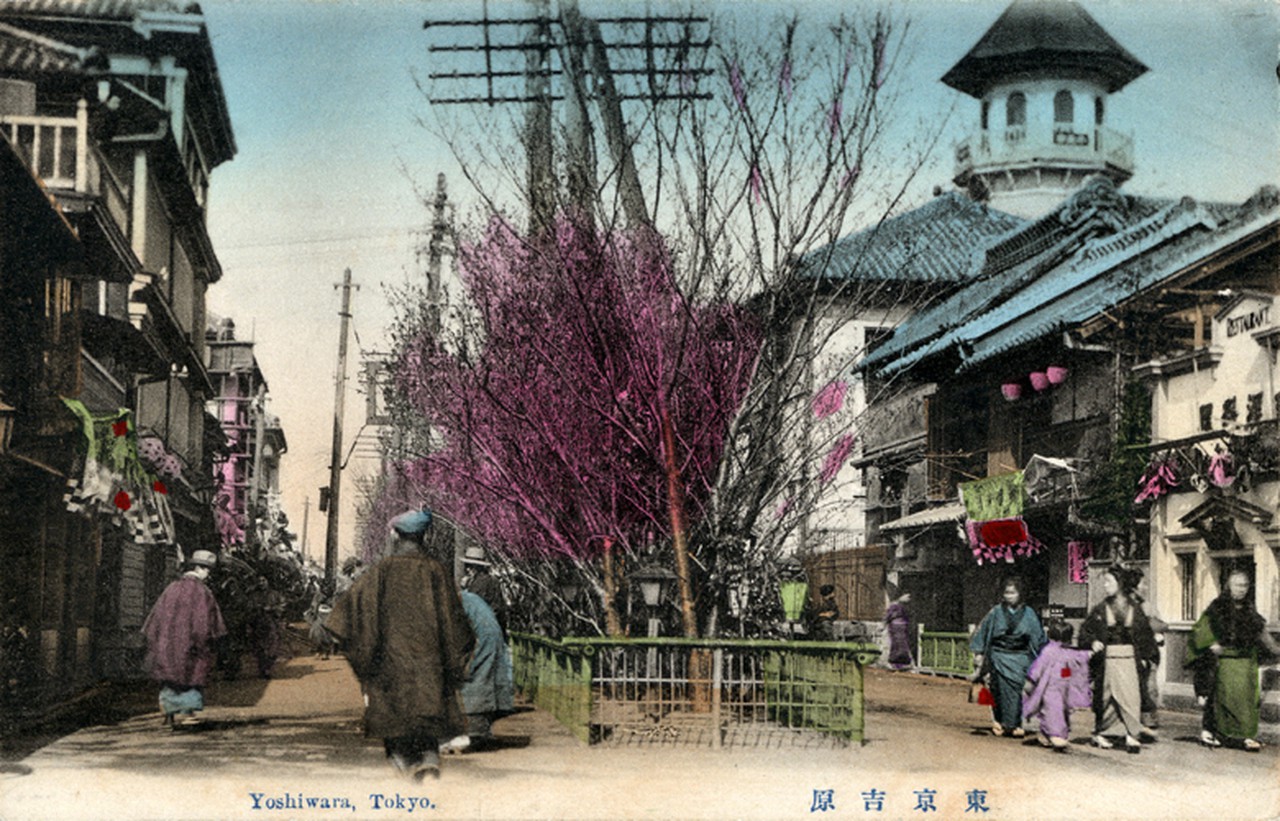
The Tokugawa shogunate licensed the first Yoshiwara district in 1617, in what is now Nihonbashi. It was moved in 1657, after the Great Fire of Meireki, to a site north of Asakusa — the area still called Shin-Yoshiwara (“New Yoshiwara”) today. The district was walled, moated, and accessible by a single bridged entrance. The women working inside were not permitted to leave.
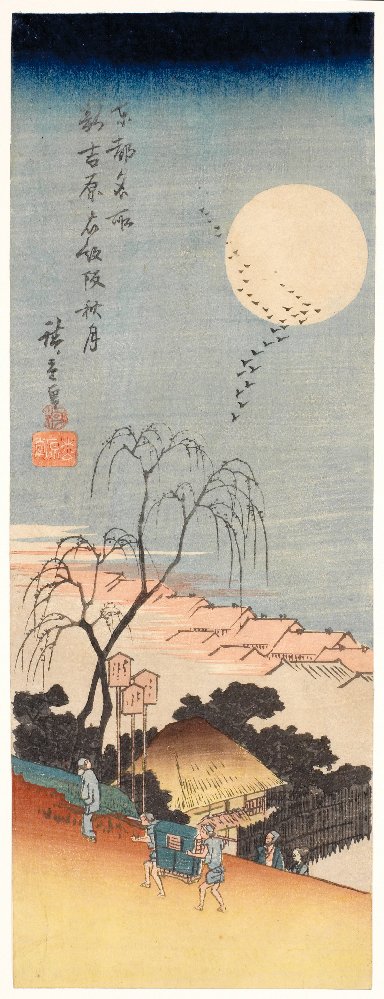
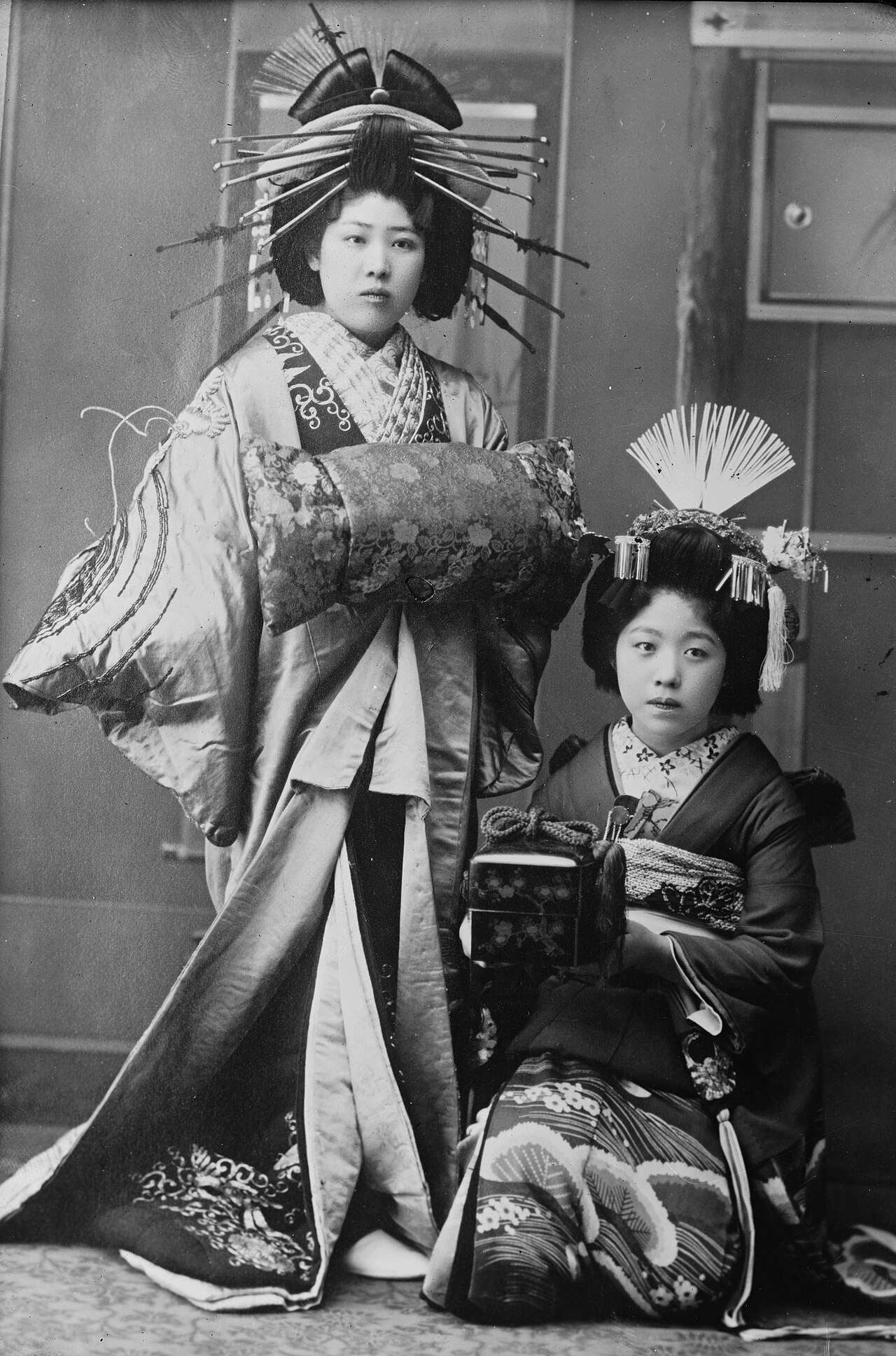
The district was hierarchical. At the top were the oiran — the highest-ranked courtesans, trained from childhood in calligraphy, classical music, poetry, tea ceremony, and conversation. Below them, various tiers of licensed women. At the bottom, women who had been sold by their families into indentured contracts that almost none of them ever paid off.
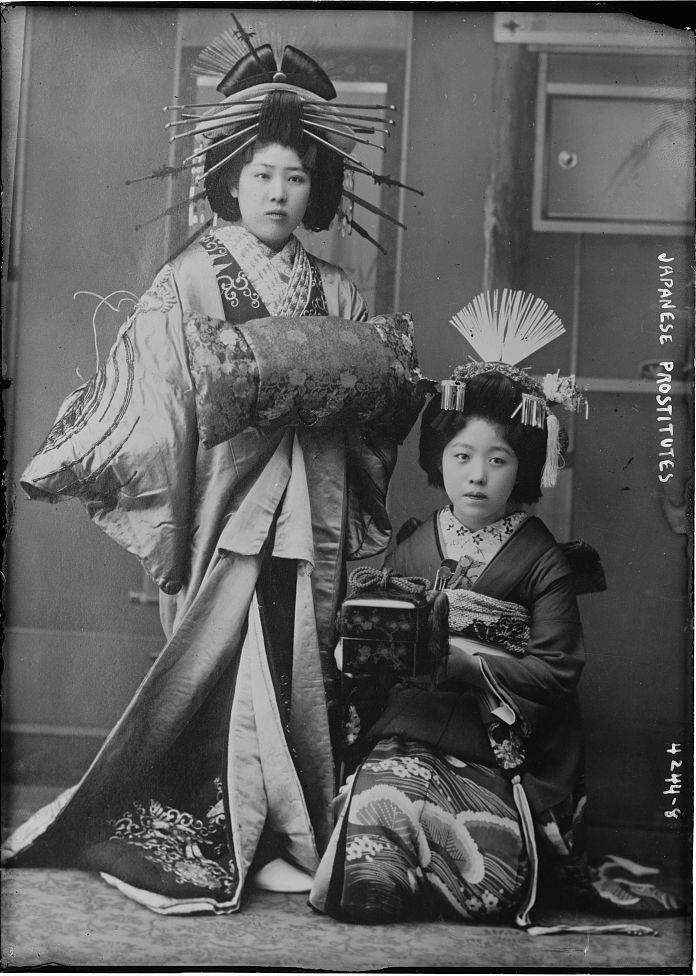
The Yoshiwara operated this way for almost three centuries. At its peak in the Edo period, the district contained more than two hundred brothels and employed roughly 3,000 women at any one time, rotating through a population that historians estimate at roughly 10,000 women per decade.
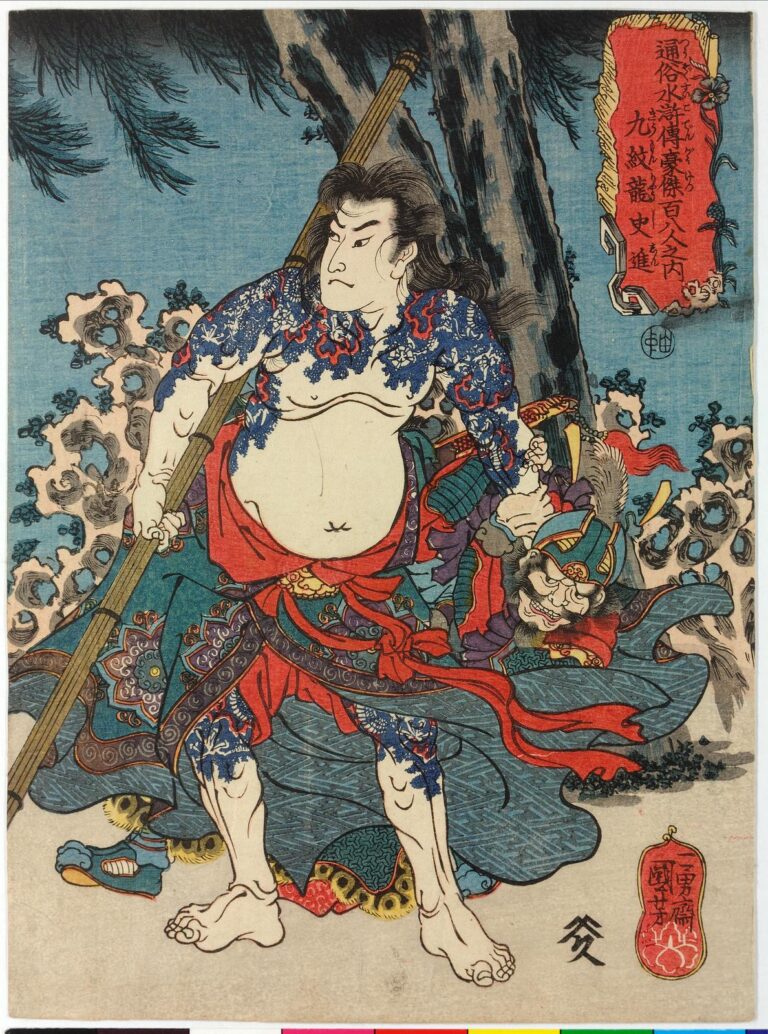
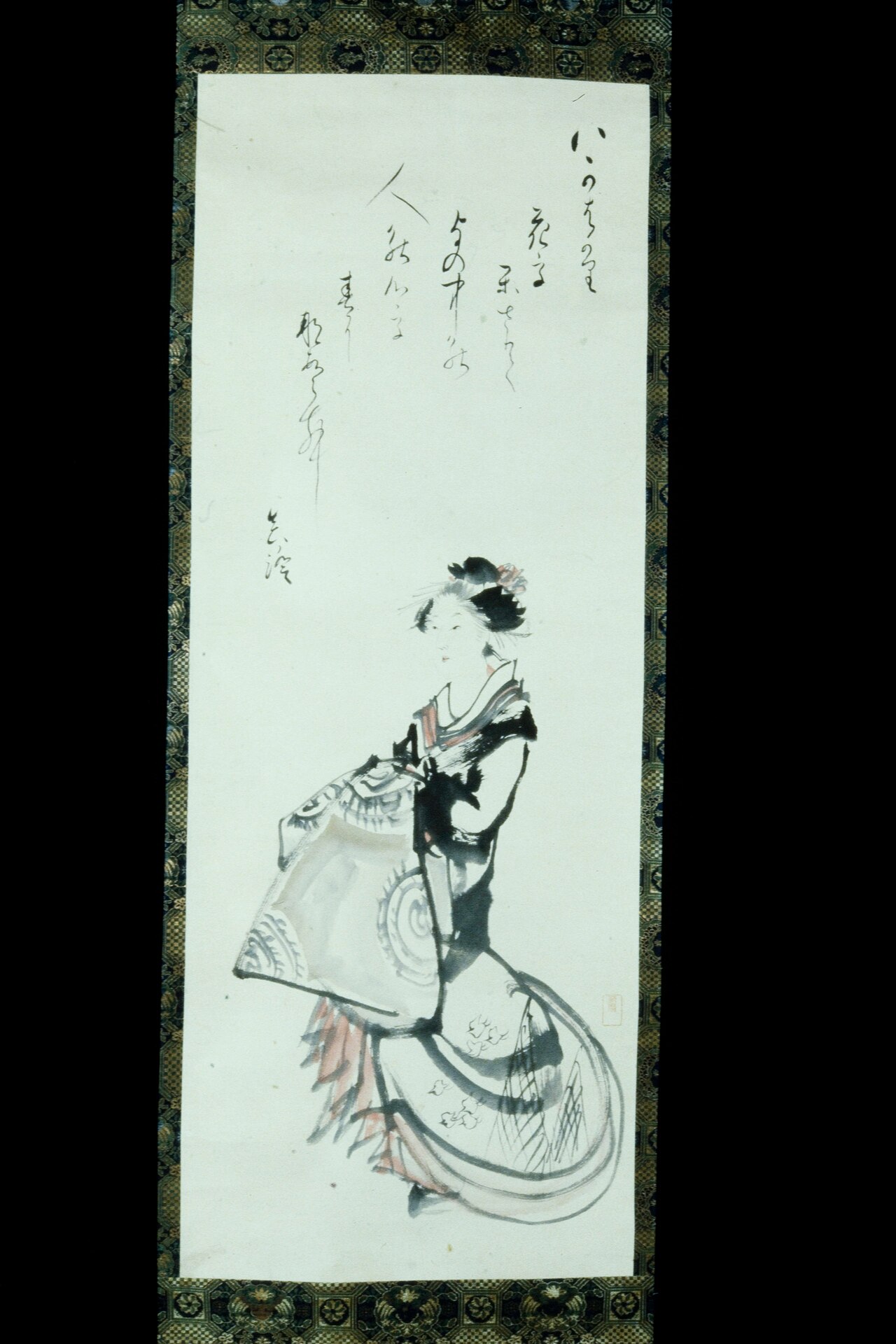
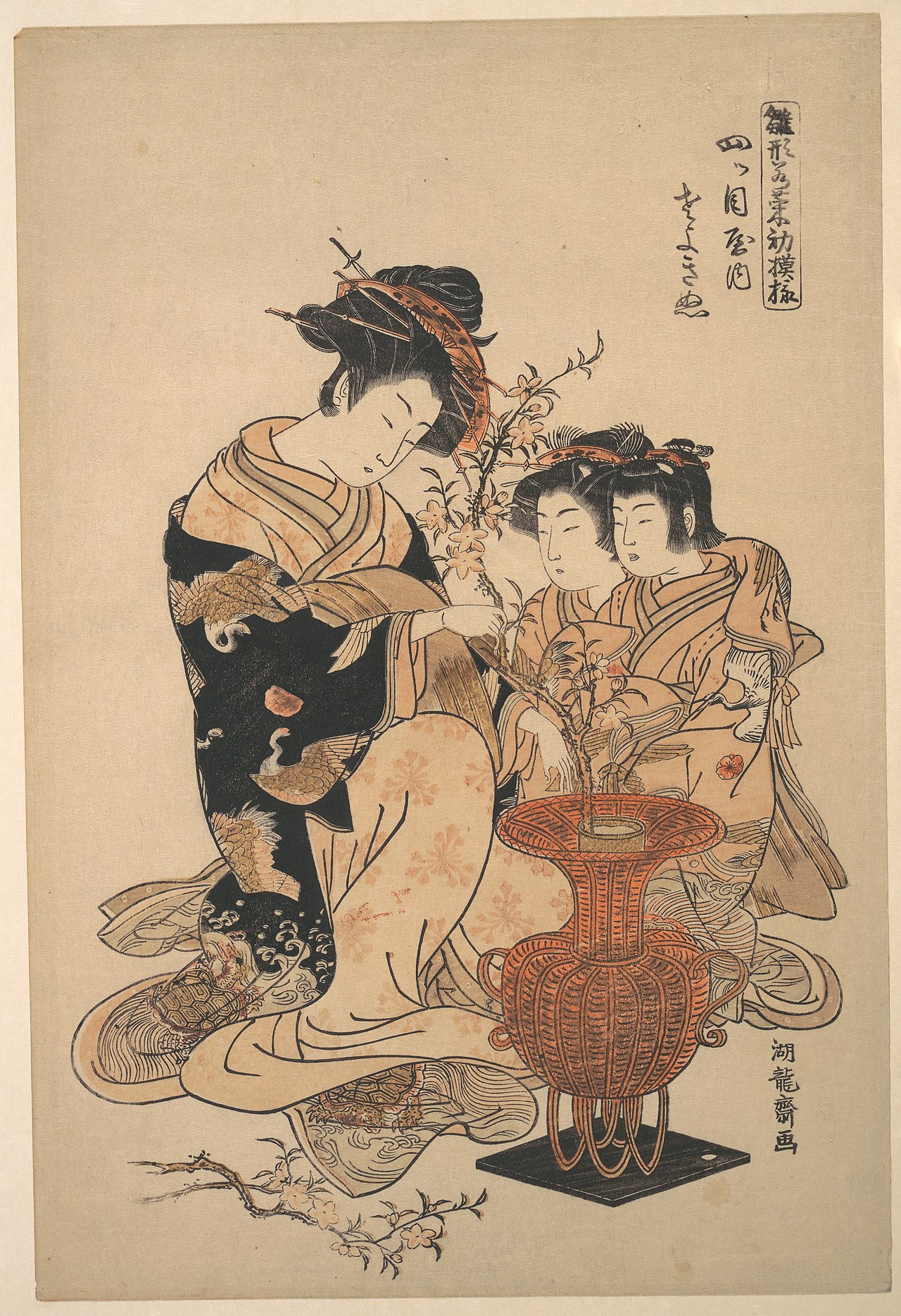
That indentured-contract structure is the part most ukiyo-e prints do not dwell on. The women depicted in Kitagawa Utamaro’s bijinga and Isoda Koryūsai’s brothel scenes were real people, working off debts that their families had taken on their behalf, in a system where escape was a criminal offence.
The Meiji reforms that almost didn’t happen
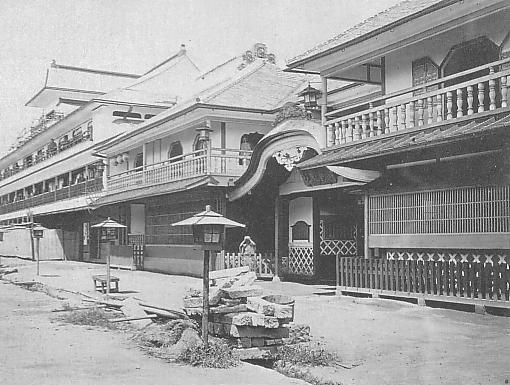
The Meiji government, desperate to present Japan as a modern nation equal to Western peers, passed the 1872 Geishagi Kaihōrei — the Liberation Edict for Prostitutes. The edict formally freed all women held under indentured contracts in licensed districts. Historian Harald Fuess, writing in the Journal of Japanese Studies, has shown that the functional effect was almost nil: the same women were rehired under voluntary contracts the following week, the same brothels continued operating, and the same debts were imposed on the women’s families.
The reason the edict happened at all was an international incident. In 1872 the Peruvian ship Maria Luz was found in a Japanese port carrying indentured Chinese “coolie” labour. Japan decided to release the Chinese men and punish the Peruvian captain. Peru’s response pointed out that Japan’s own licensed prostitution system was indistinguishable from what they were punishing. The Meiji government, cornered by the comparison, issued the emancipation edict. Most of it was theatre.
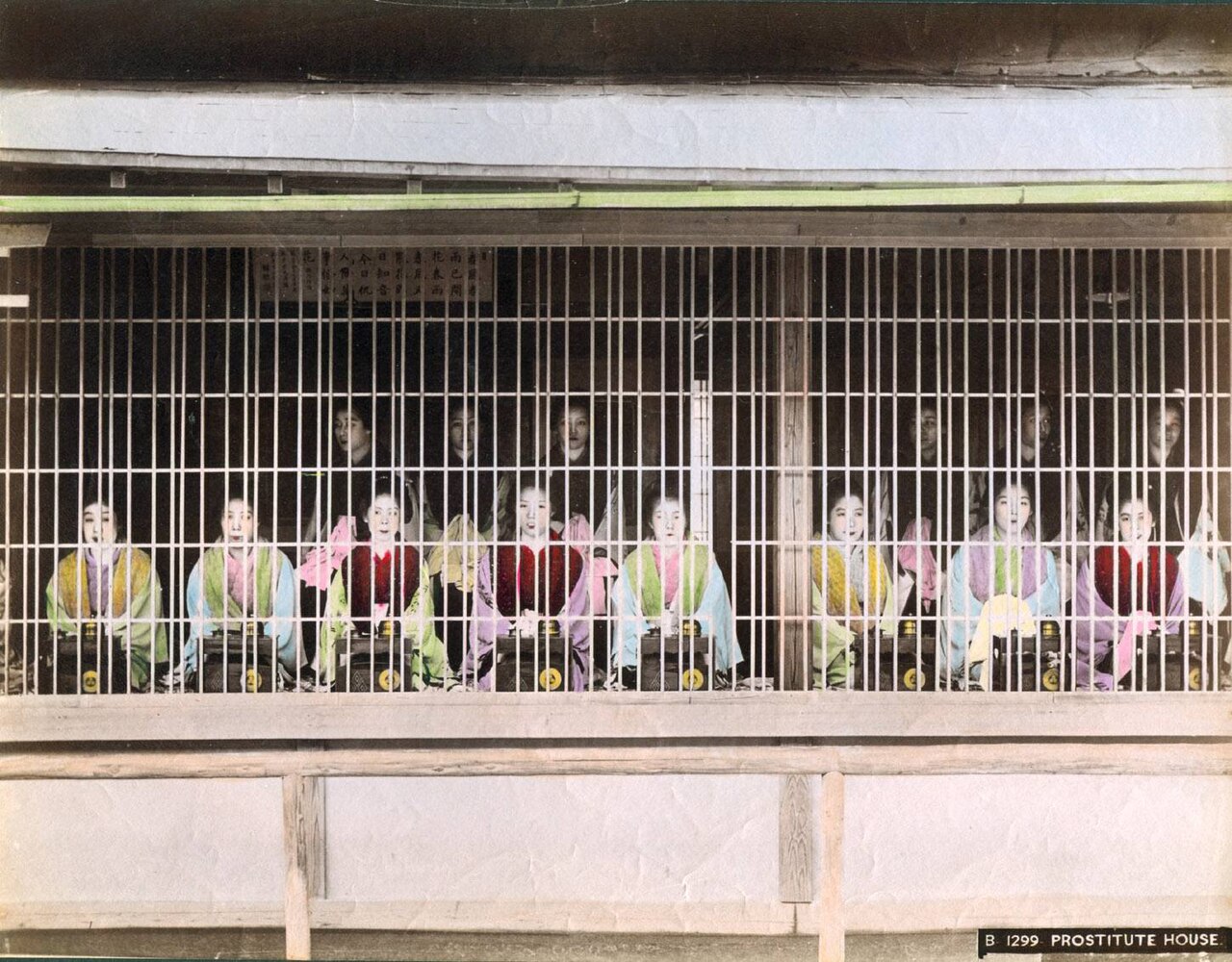
The real termination of the Yoshiwara system did not happen until the 1956 Baishun Bōshi Hō — the Prostitution Prevention Law — which came into effect in April 1958 and prohibited the act of selling sexual intercourse. What the 1956 law did not prohibit, and this is the critical detail, was the sale of any other sexual service.
The fūzoku workaround
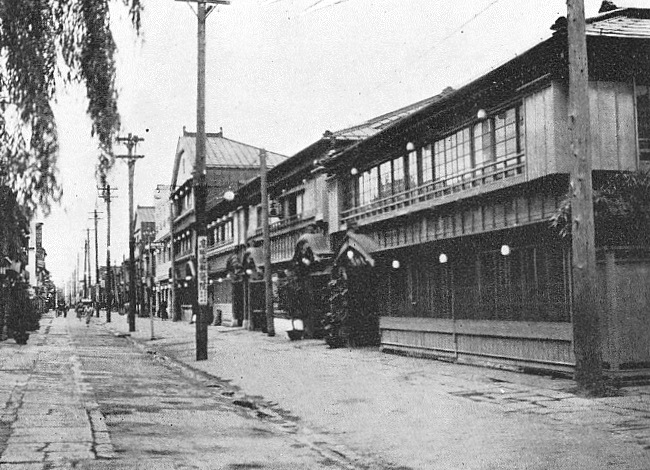
The 1956 Prostitution Prevention Law forbade “intercourse with an unspecified party for payment.” Lawyers for the industry read this sentence forensically. Two workarounds emerged almost immediately.
The first was the soapland — a bathhouse where a male customer pays for the services of a female “washing attendant” who gives him a bath. What happens between the attendant and the customer inside the private room is, legally, none of the state’s business, because the customer is not paying the attendant for intercourse. He is paying her for a bath. Any subsequent activity is between two consenting adults who happen to have developed a sudden personal affection for each other. The fiction is paper-thin and has never been seriously challenged by Japanese prosecutors.
The second workaround was the redefinition of everything that was not intercourse as “adult entertainment” — fūzoku eigyō. This category is regulated under the 1948 Fūzoku Eigyō Hō, a law that pre-dates the 1956 prostitution ban and was never intended to regulate the sex industry in its current form. It ended up doing so by default.
Under the fūzoku umbrella, Japan licensed a series of business categories that between them cover almost every sexual service short of intercourse. Pink salons, image clubs, health delivery services, hostess bars, host bars, girls’ bars, snacks, kyabakura. Each one has specific permitted activities, operating-hour rules, and advertising restrictions. The enforcement is patchy, the definitions are elastic, and the police mostly do not care as long as paperwork is filed and customers are not being overtly scammed.
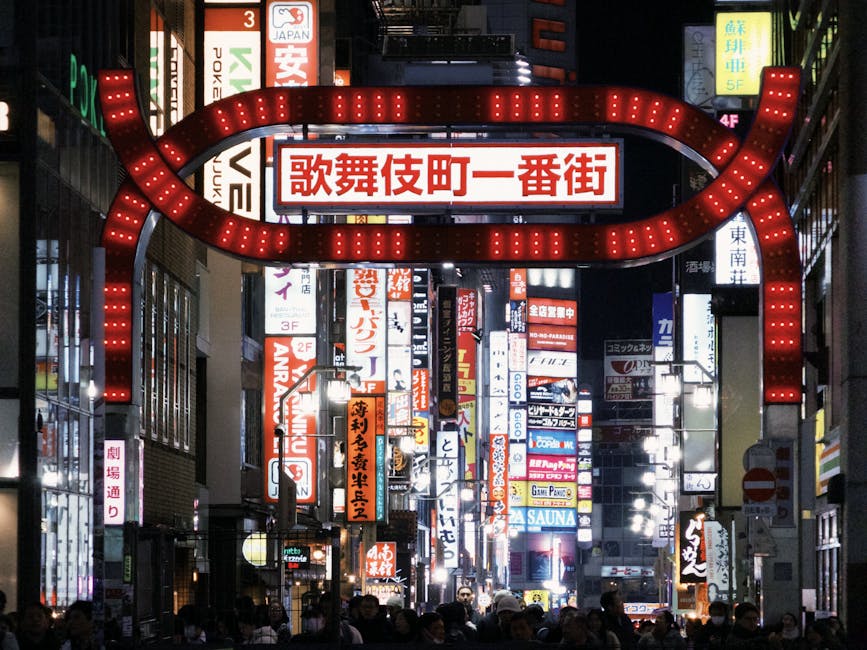
Kabukicho is where the largest single concentration of these businesses operates in Japan.
Kabukicho, the modern district
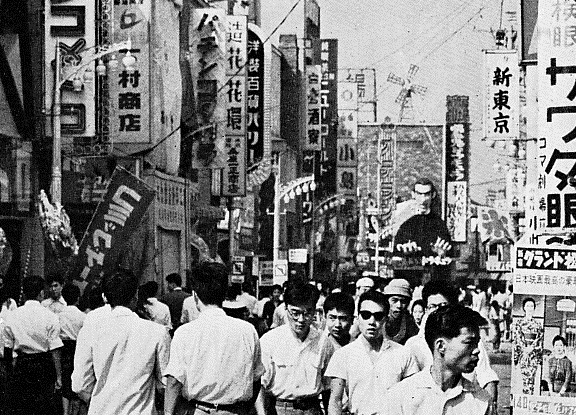
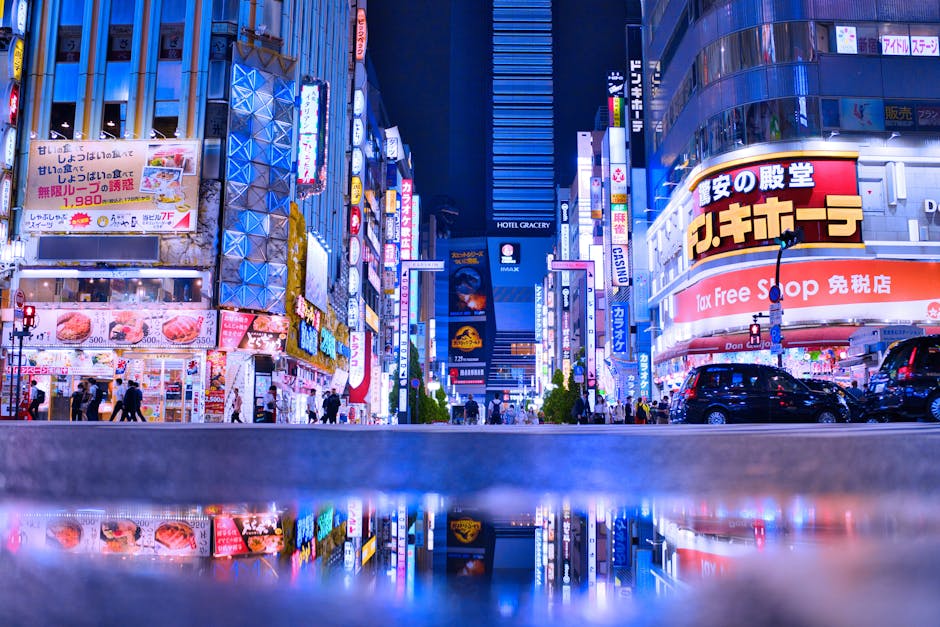
Kabukicho covers about 0.34 square kilometres of central Shinjuku, directly north-east of Shinjuku station. It is the most commercially-zoned piece of entertainment real estate in Japan, and in 2025 contained roughly 3,000 registered businesses, most of them bars, restaurants, hostess clubs, host clubs, and massage operations.
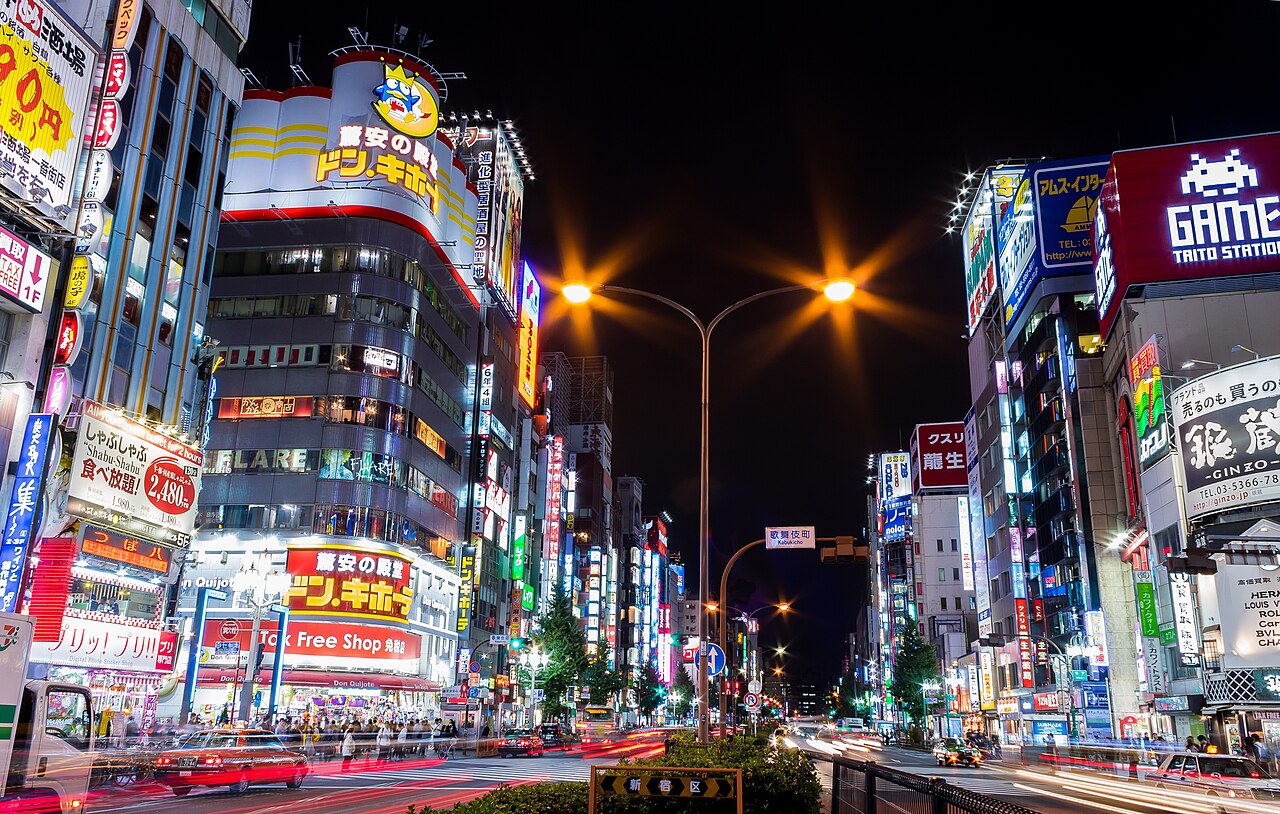
The district’s economic structure is worth understanding because it explains what follows. Most businesses in Kabukicho rent on short-term leases from a small number of landlords. Yakuza-affiliated front companies were historically significant landlords, although after the 2011 Boryokudan Exclusion Ordinances this has shifted and is now mostly legitimate commercial real estate. Rent in the prime buildings runs between ¥40,000 and ¥80,000 per square metre per month, which is roughly three times central Shinjuku office rent.
That rent is paid, in the end, by customers. A typical hostess-club evening costs a Japanese salaryman between ¥20,000 and ¥100,000 depending on which bottle he agrees to order. A high-end host-club evening, for a female customer, can run into hundreds of thousands of yen in a single night — and it is this specific industry segment that has generated the chain of consequences we will spend the rest of this article discussing.
Host clubs and the debt problem
Host clubs are the mirror image of hostess clubs: Japanese men in their early-to-mid twenties, dressed in a heightened version of the 1980s boy-band aesthetic, serving drinks to female customers who pay for their time and conversation. The industry is roughly forty years old in its current form; it peaked commercially in the 2010s and in 2026 is still the single biggest individual revenue stream inside Kabukicho.
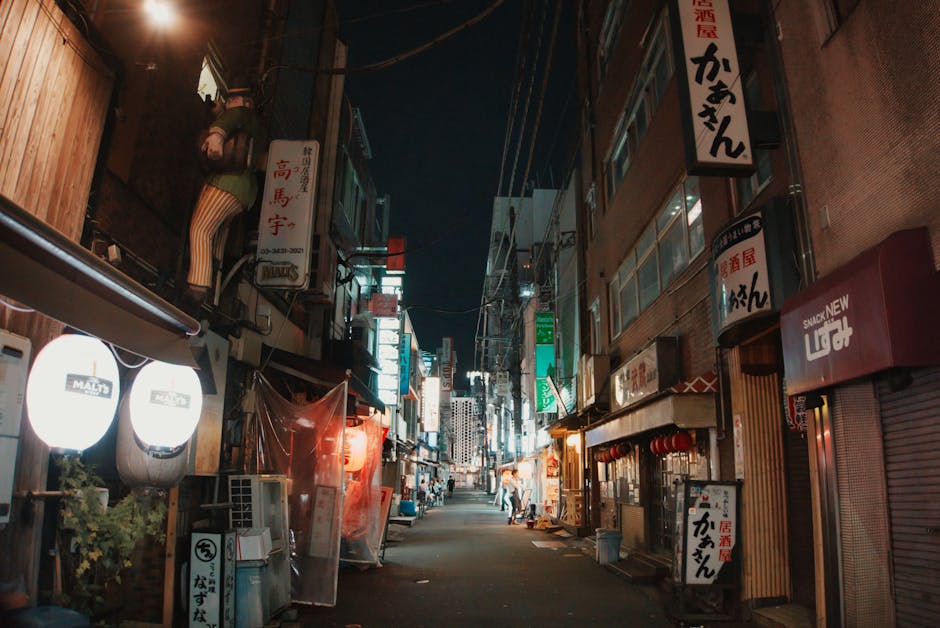
The business model, on the customer side, is extraction. Top-ranking hosts sell ornate bottles of champagne or whisky to their female clients, running tabs that routinely exceed a client’s monthly salary. Clients who cannot pay are permitted to run tabs — and this is where the story turns.
In a September 2024 reported piece for Tokyo Weekender, journalist Wakaba Oto documented the mechanics of how host-club debt now feeds directly into Kabukicho street prostitution. “In a place where nearly everything has a price,” Oto wrote, “these women have flipped the script, exposing just how easily desire can be manipulated into exploitation.” Oto’s piece profiled specific scam operators — one known on Japanese X as “Turtle Dash Yuri,” another as “Lightning-Fast Lila” — who target foreign men in Kabukicho rental rooms and sprint out with cash, usually ¥20,000 per mark, before any service is rendered.
The Asahi Shimbun, in a 25 July 2025 dispatch by staff writer Natsuno Otahara, published the police-data version of the same phenomenon. Seventy-five women were arrested for street prostitution near Okubo Park during the first half of 2025 — more than double the H1 2024 figure. Forty percent cited host-club debt as their direct motivation. The average age of those arrested was twenty-five. Nine were teenagers, up from one the year before. Six were current university students.
One arrested woman, Otahara reported, had served an average of five clients a day at ¥20,000-¥30,000 per transaction and had earned more than ¥110 million (approximately $750,000) over two years.
The women arrested had switched specifically to targeting foreign men. Otahara reported their own stated reason: Taiwanese and other tourist customers “were unlikely to be undercover police officers.” The women were using online group chats to share photographs of undercover officers and coordinate which streets to work. Transactions happened mostly in rental rooms around Okubo Park. The whole operation is a direct downstream consequence of the host-club debt economy.
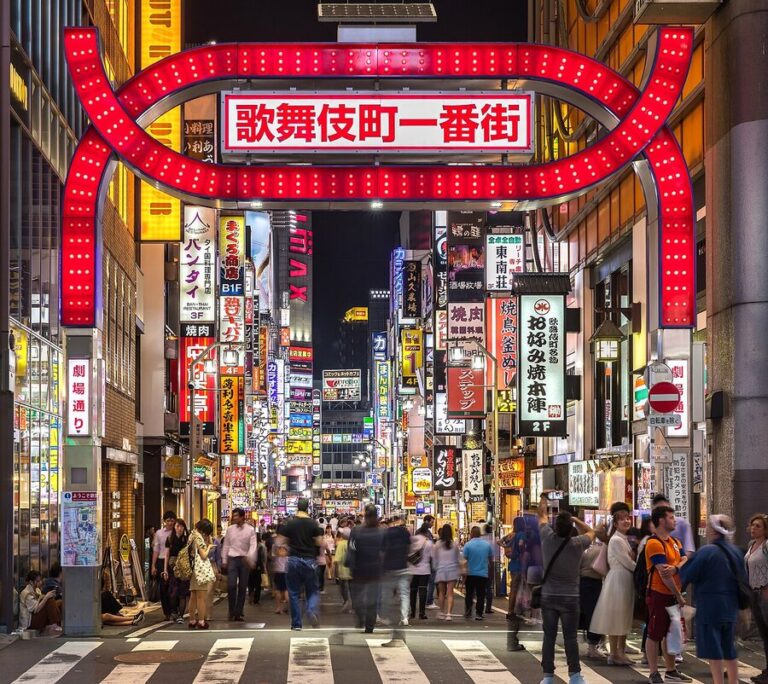
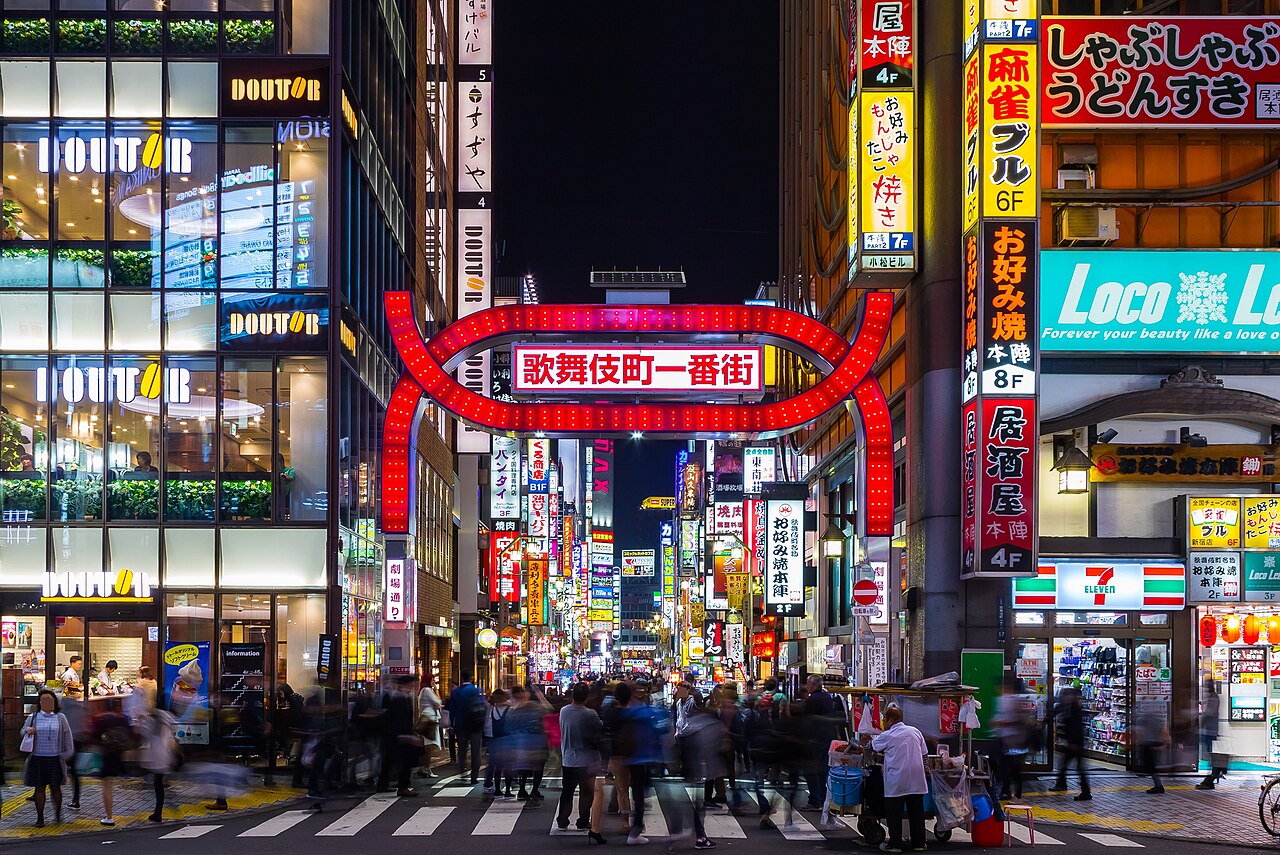
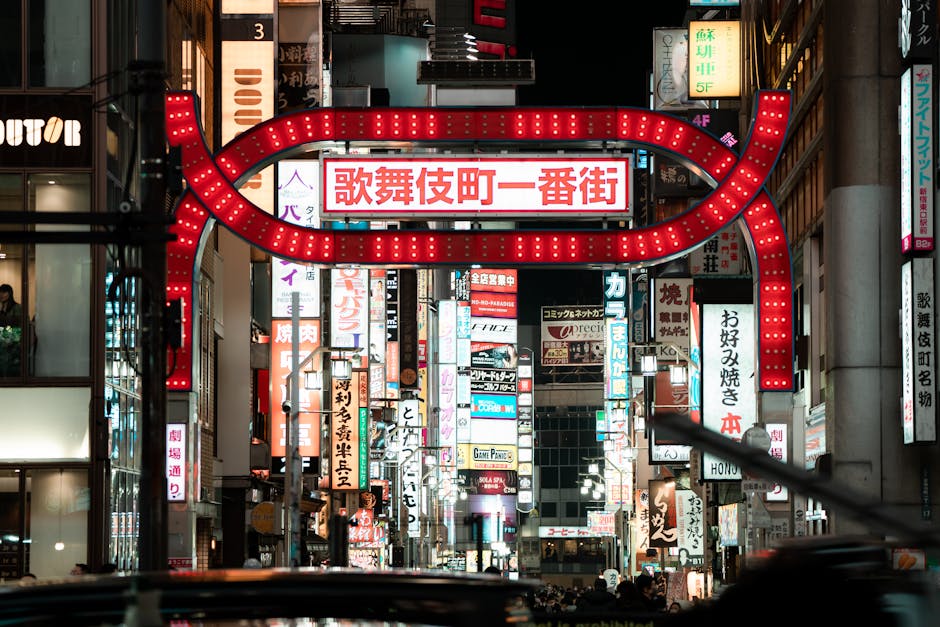
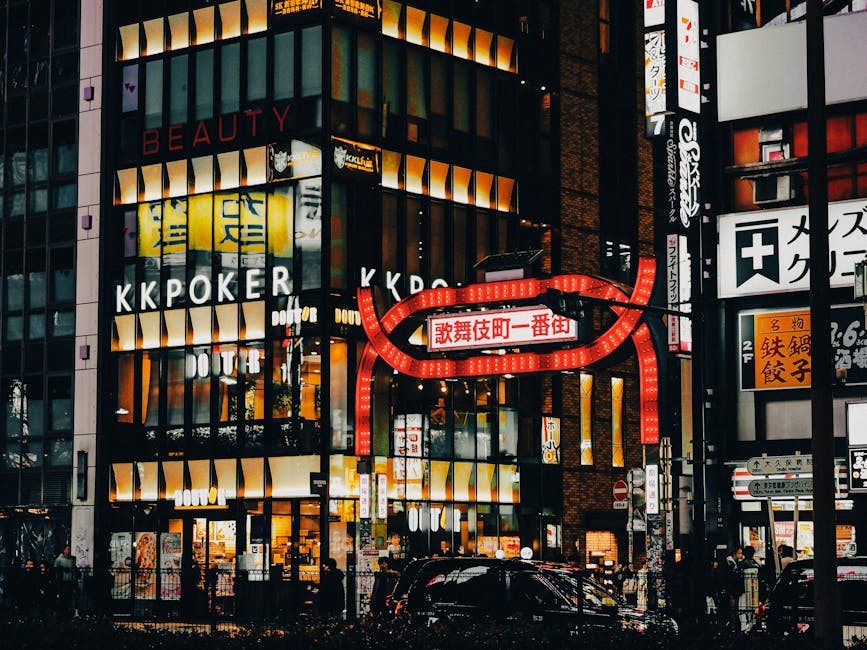
Okubo Park, for geographic reference, is two blocks north of the Kabukicho Ichibangai entrance. If you have walked the red archway for the obligatory photograph, you have walked past this.
What tourists actually encounter
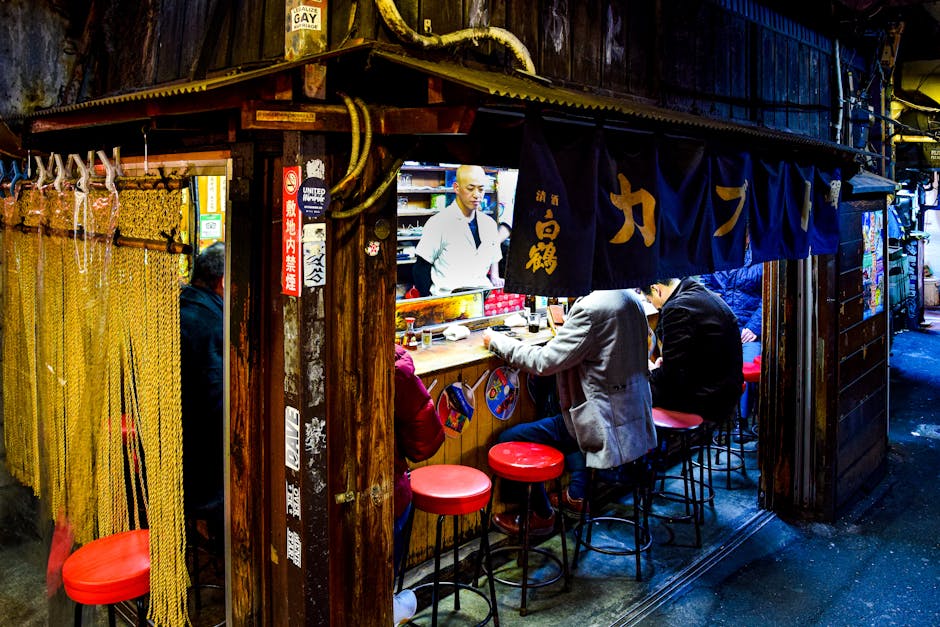
This section is the practical one. The short version: you will encounter almost none of what you have been led to expect, and most of what you do encounter is designed to separate you from money quickly.
The industry, for the most part, is not oriented toward foreigners. The genuine hostess clubs, host clubs, soaplands, and health-delivery services operate on Japanese-language customer relationships that a foreign visitor cannot enter even if he or she wanted to. The soaplands, in particular, will refuse foreign customers outright in most cases — not because of racism per se but because the operators do not want the legal exposure of a language-barrier incident. The genuine hostess clubs will admit you only as a guest of a Japanese regular. The host clubs will refuse you at the door unless you have been introduced.
What is oriented toward foreigners is a thin layer of tout-run operations designed to take money from visitors who misread the environment. The main categories:
- Tout-operated upstairs bars. A man (or, increasingly, a woman) stands on Kabukicho’s main streets and offers to take you to a “nice bar” for drinks. The bar is on the second or third floor of a building he is specifically routed to. Drinks that should cost ¥800 are billed at ¥8,000. Your ¥40,000 bar tab will include items you did not order. The standard Japan-side advice is: never accept an offer from anyone soliciting you on the street in Kabukicho. The legitimate businesses do not solicit.
- Massage parlours. Most of the “massage” operations visible from the street are legitimate massage businesses that have been priced for Japanese customers. Prices at around ¥6,000 per hour are ordinary. The smaller number of operations using sexualised marketing are mostly legal fūzoku businesses that will either politely refuse foreign customers at the door or attempt to run a tout-bar-style scam against them.
- The Okubo Park operators. These are the specific street-solicitation cases Otahara and Oto reported on. If a young woman approaches you between Okubo Park and Kabukicho Ichibangai and initiates conversation leading toward a rental room, you are almost certainly being worked by a scam operator who will take cash and run. The arrest statistics from H1 2025 make the scale of this unambiguous.
- Dating-app operators. Foreign tourists using Japanese dating apps during a short visit are disproportionately targeted by women running variations of the Yuri and Lila scams Oto reported on. The common signal is an unusually quick meeting time, a rental-room location, and an up-front cash request.
Legal context for the traveler
Japanese law distinguishes sharply between the customer and the worker in prostitution cases. The 1956 law targets both parties, but in practice police almost never prosecute customers who report scams. The July 2025 Asahi dispatch specifically described tourist-customer cooperation with undercover operations. If you have been separated from cash by a Kabukicho scam and are willing to sit through a police interview, Shinjuku police have a well-established procedure for these cases. The embassy route is also available but slower.
For legitimate adult-entertainment venues — bars, hostess clubs, host clubs, and similar — the baseline advice is: if you are not accompanied by a Japanese regular who can vouch for you, assume you will be refused or overcharged. This is not about you. It is about the legal exposure the operator has if something goes wrong and a non-Japanese-speaking customer cannot communicate with paramedics or police.
What actually changed in 2026
Several things shifted at once, and the net effect is that Kabukicho in 2026 is quieter, cleaner, and more police-monitored than it has been in a generation.
The 2011 Boryokudan Exclusion Ordinances forced most yakuza-affiliated operators out of direct ownership of Kabukicho businesses. The industry restructured under nominally legitimate commercial companies. Enforcement of the existing fūzoku licensing regime has tightened progressively since about 2018. The Metropolitan Police Department’s Kabukicho substation — always a visible presence — has added patrol capacity since 2022.
The specific problem of host-club-debt prostitution has, by the second half of 2025, become politically visible enough that the Shinjuku ward government is piloting a welfare-referral programme aimed at women arrested for street solicitation. The Asahi reporting credits this initiative to Shinjuku ward mayor Kenichi Yoshizumi, who has been on the record about host-club exploitation since 2023.
Whether any of this actually reduces the industry’s harm is an open question. The underlying economics — a post-bubble Japanese salary environment that has barely moved in thirty years, a cohort of young women for whom host-club relationships function as emotional substitutes for intimate partnerships, and a host-club industry that actively encourages debt-accumulation — have not changed. The law-enforcement response is downstream of all of that.
A few notes on the ethics of writing this
Every foreign-written piece on Japan’s sex industry has a problem. The subject is inherently tabloid, the historical record is romanticised by Western art-world writers who bought ukiyo-e without thinking about the women depicted, and the contemporary reporting is either sensational or simply wrong.
This piece has tried to hold to two rules. First, name the reporters whose work the article is built on — Wakaba Oto, Natsuno Otahara, and the Asahi and Tokyo Weekender desks they write for — because their reporting is the reason any of this is documented in a way we can link to. Second, include the women being reported on as subjects rather than spectacle. The fact that the Okubo Park operators are university students with host-club debt, not the femme fatales Western tabloids tend to construct, is structurally important to the story.
If you want a more complete picture, Jake Adelstein’s long-running coverage of the industry for his own newsletter and for The Daily Beast remains the single best English-language running source. Hiroko Tabuchi’s New York Times reporting on related Tokyo nightlife economics is the quality benchmark for foreign correspondence on this subject. Anne Allison’s academic book Nightwork: Sexuality, Pleasure, and Corporate Masculinity in a Tokyo Hostess Club (1994) is dated but remains the best ethnographic study of the hostess side of the same industry.
Where to walk, what to see
If you are in Tokyo and want to understand the district without being worked, here is the honest recommendation. Take the east exit of Shinjuku station, walk north past the Shinjuku Toho building and its giant Godzilla, photograph the red Ichibangai archway, and keep walking. The main east-west street, Central Road, is perfectly safe during daylight hours and still atmospherically interesting — the signage, the density, the smell of izakaya smoke. Do not stop for touts. Do not enter an upstairs bar on a stranger’s recommendation. Have dinner somewhere on the main drag before 10pm. Then leave.
For the historical layer of this same story, our Ueno guide covers the neighbourhood where Asakusa Yoshiwara began, and our Akihabara piece covers the area that replaced Kabukicho as Tokyo’s dominant youth-subculture district across the 2010s. Our longer feature on the Yamaguchi-gumi covers the organised-crime side of the industry that once dominated this neighbourhood and is no longer the story it used to be, and our irezumi history piece covers the cultural iconography that emerged from the same districts.
Further reading
- Wakaba Oto, “The Kabukicho Scam: The Sex Workers Preying on Tokyo’s Gullible” (Tokyo Weekender, 8 September 2024). The primary reported piece on the Yuri/Lila scam operators.
- Natsuno Otahara, “75 women arrested for prostitution at Kabukicho park” (Asahi Shimbun, 25 July 2025). The H1 2025 police-data dispatch on Okubo Park enforcement.
- Anne Allison, Nightwork: Sexuality, Pleasure, and Corporate Masculinity in a Tokyo Hostess Club (University of Chicago Press, 1994). The canonical academic ethnography.
- Jake Adelstein’s Substack, The Japan Subculture Research Center, is the running English-language source for ongoing coverage.
- Harald Fuess, “Prostitution, Intercolonial Imagination and Rights in Modern Japan” (Journal of Japanese Studies, various), covers the Meiji-era legal history in depth.
- For the Edo-era context, Cecilia Segawa Seigle’s Yoshiwara: The Glittering World of the Japanese Courtesan (University of Hawaii Press, 1993) remains the standard English-language history.