
On the evening of December 31, Tokyo’s mood changes. Shibuya’s commercial buzz quiets down. Most restaurants close. Train stations empty of the usual commuter flow and fill instead with family groups carrying small bags of offerings. By 11pm, three million people are walking toward a shrine somewhere in the city.
In This Article
- Quick facts at a glance
- What is hatsumode?
- Where should you go for hatsumode?
- Meiji Jingu (Shibuya/Harajuku)
- Senso-ji (Asakusa)
- Kanda Myojin (Akihabara)
- Yasukuni Shrine (Kudanshita)
- Tomioka Hachimangu (Monzen-Nakacho)
- Hie Shrine (Akasaka)
- Yushima Tenjin (Ueno area)
- What actually happens at hatsumode?
- Step 1: Arrival and purification
- Step 2: Queue for the main shrine
- Step 3: Pray
- Step 4: Buy amulets and charms
- Step 5: Draw a fortune slip (omikuji)
- Step 6: Eat
- When should you actually go?
- What should you wear?
- Is it okay for foreigners to participate?
- How does this connect to osechi and other New Year traditions?
- What’s the broader atmosphere in Tokyo during New Year?
- Practical logistics
- Should you plan a Tokyo trip specifically for this?
- Final take
This is hatsumode (初詏) — the New Year shrine visit that is, in practical cultural terms, the single most-observed religious ritual in Japan. For foreign visitors, it’s one of the most distinctive Tokyo cultural experiences available, and it coincides with the quietest week of the tourist calendar. This guide covers what it is, where to go, and how to participate respectfully.
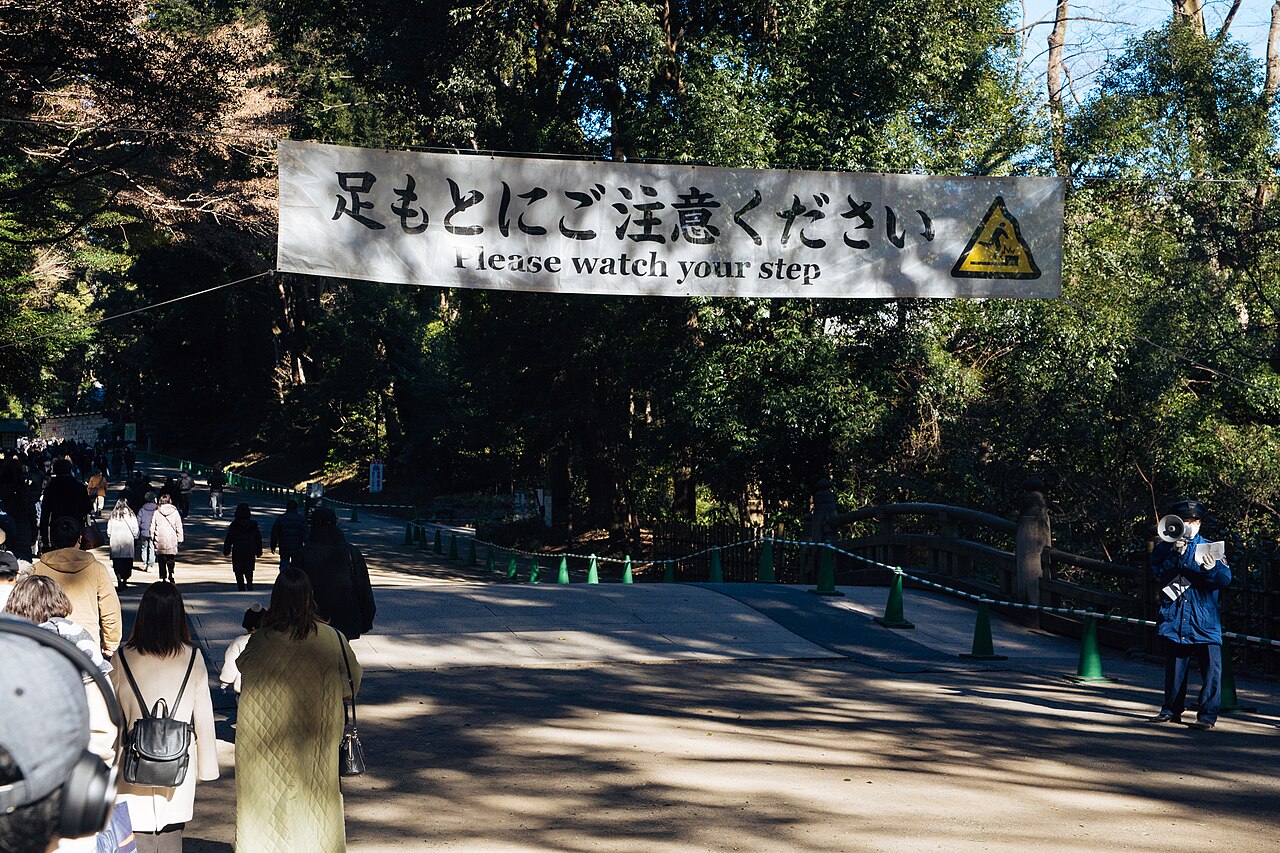
Quick facts at a glance
- What it is: First shrine visit of the new year, performed by 75–80% of Japanese adults
- When: Usually midnight December 31 through January 3. Some visit later in January.
- Top Tokyo shrines: Meiji Jingu (3 million visitors), Kanda Myojin (400,000), Tomioka Hachiman (500,000), Senso-ji (3 million technically a temple)
- Cost: Free. Optional donations ¥5 to ¥500+ are standard.
- Key activities: Praying for new-year wishes, buying amulets (omamori) and fortune slips (omikuji), eating street food, ringing the shrine bell (one large strike at midnight)
- Nightlife context: Most restaurants closed Dec 31–Jan 3. Tokyo operates on holiday schedule.
- Weather: 2–8°C typical, sometimes colder. Bundle up.
What is hatsumode?
Hatsumode literally means “first visit” — specifically, the first visit of the year to a Shinto shrine (or Buddhist temple). It’s the Japanese equivalent of a family Christmas or New Year’s Day tradition: a specific ritual that people do with family, that most of the country participates in, that carries deep cultural weight even for people who don’t consider themselves religious.
The purpose is partly religious and partly ceremonial. Visitors go to pray for the year’s wishes — good health, professional success, safe travel, matchmaking, academic success. Most shrines specialise in specific wish categories (Kanda Myojin for business success, Yushima Tenjin for academic success, Tokyo Daijingu for love). Visitors buy amulets (omamori) that embody the specific wish. They draw paper fortune slips (omikuji) that rank their year’s prospects on a scale from great blessing to severe misfortune.
Unlike Christmas, which Japan treats as a commercial couples’ date night (our Christmas in Tokyo article covers this in detail), hatsumode is a genuine family-oriented religious-cultural observance. It’s the tradition that most closely matches what Westerners would call a religious holiday.
Where should you go for hatsumode?
Tokyo has dozens of options. The majors:
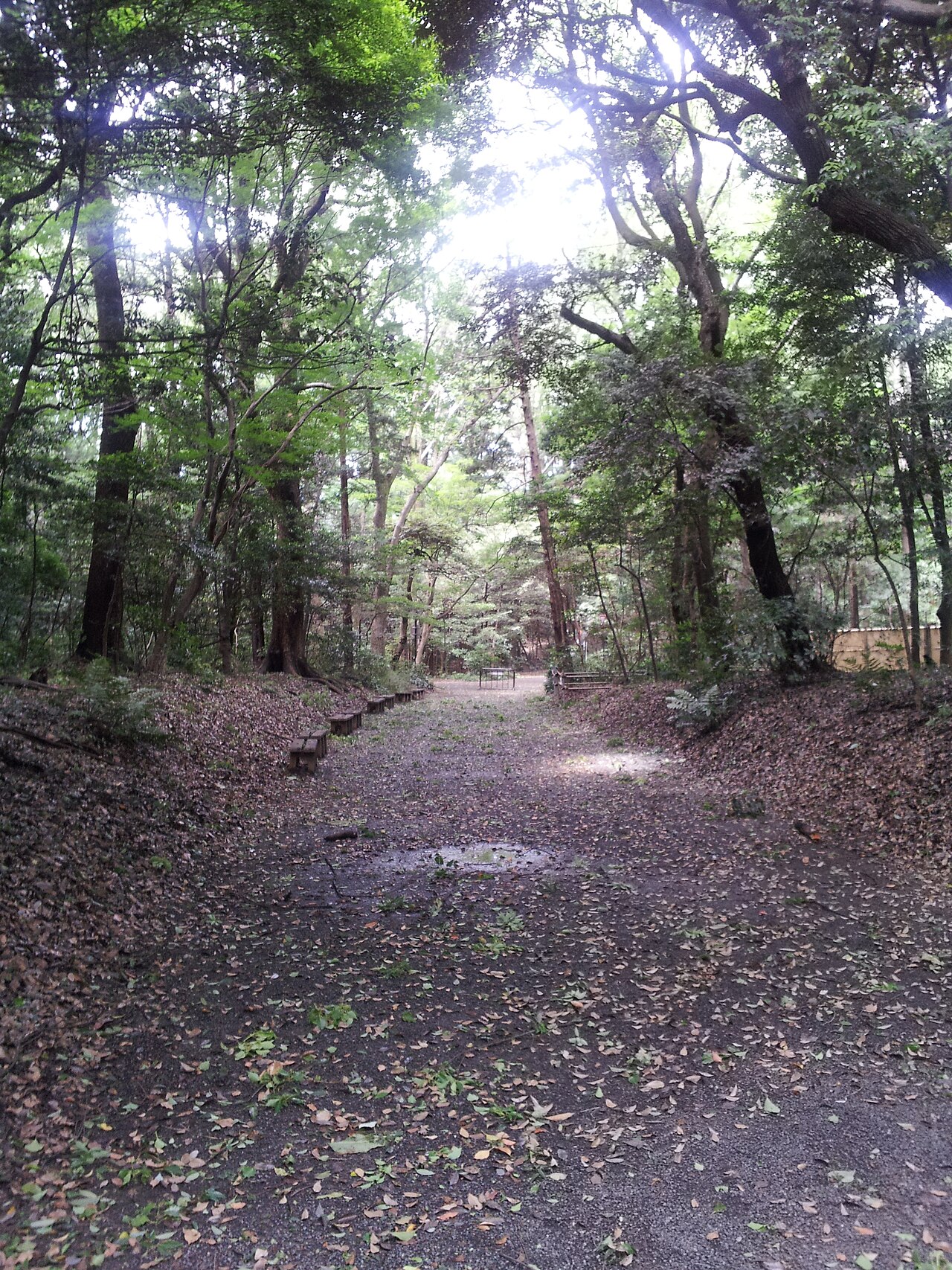
Meiji Jingu (Shibuya/Harajuku)
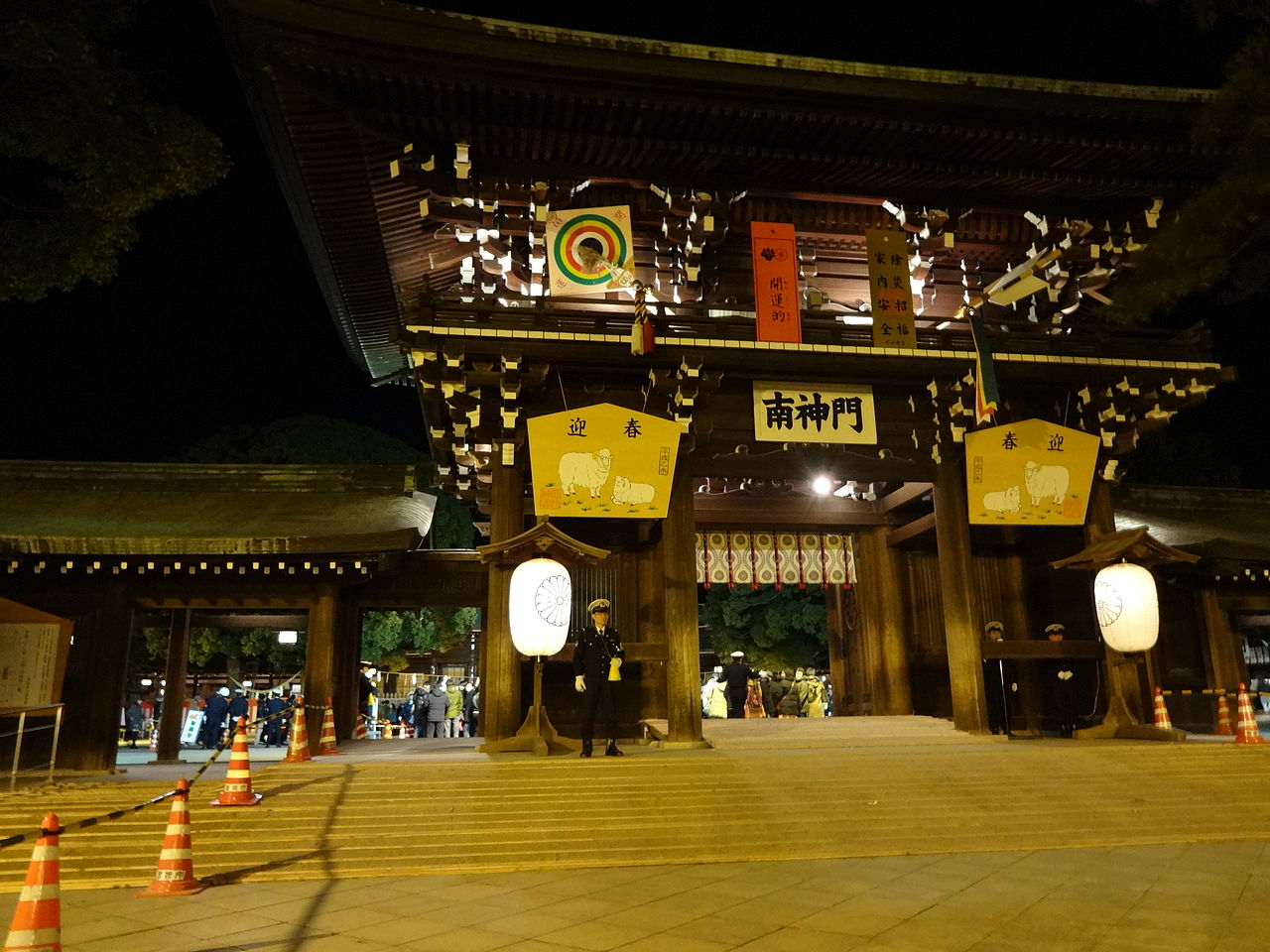
Japan’s most-visited shrine for hatsumode, with 3 million visitors across the first three days of the year. Built 1920 to commemorate the Meiji Emperor and Empress. The approach path through the forested grounds is spectacular under torchlight; the shrine itself at midnight is a full-spectrum cultural experience.
- Access: Harajuku Station (JR) or Meiji-jingumae (Tokyo Metro)
- Best time: Either midnight Dec 31 (peak) or early morning Jan 2–3 (busy but manageable)
- Be ready for: 1–3 hour queue for the main shrine at peak hours
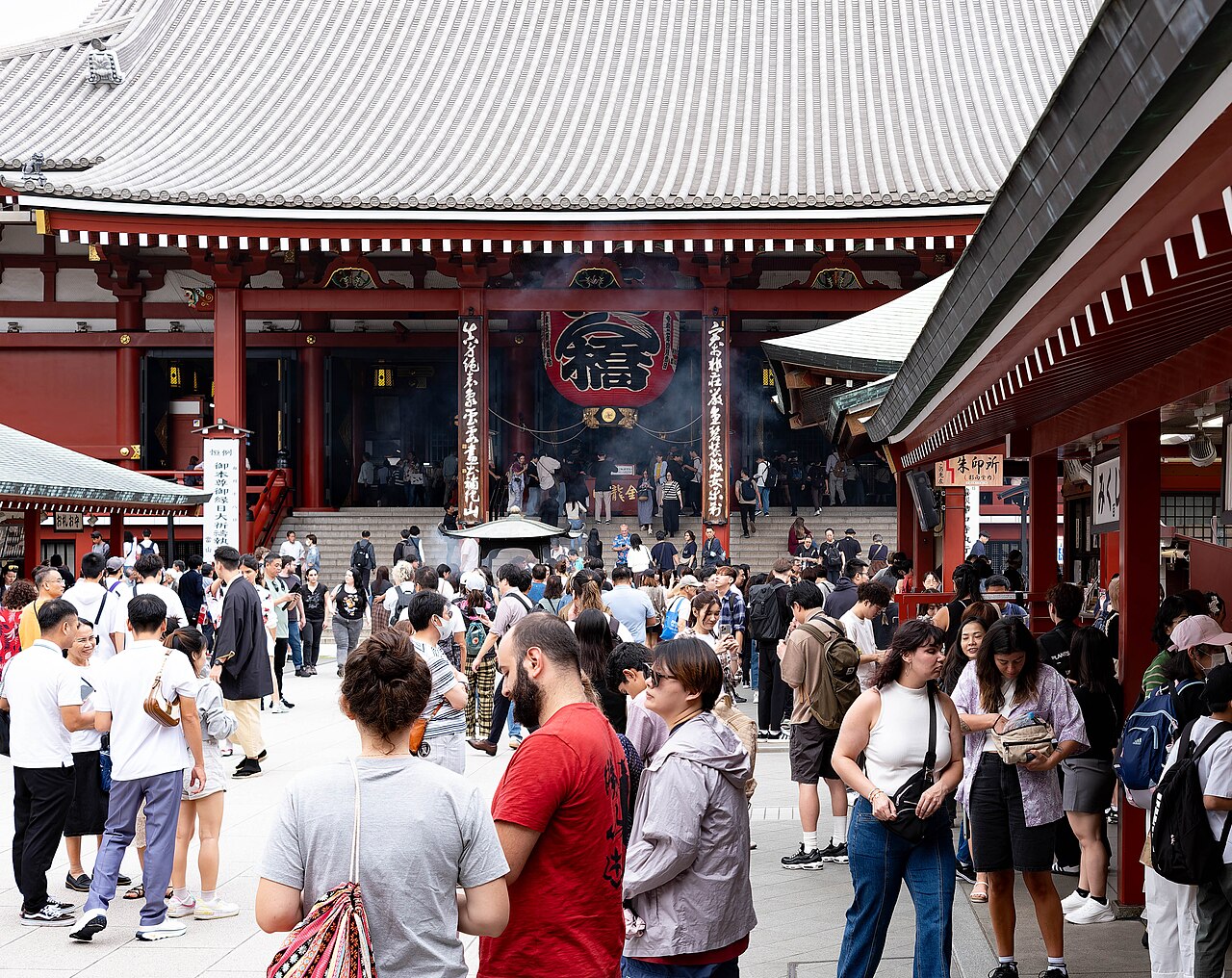
Senso-ji (Asakusa)
Technically a Buddhist temple, not a Shinto shrine, but functionally used the same way for hatsumode. 3 million visitors during the New Year period. The Kaminari-mon gate and Nakamise shopping street become a dense festival atmosphere. Less formal than Meiji Jingu, more communal.
- Access: Asakusa Station (Ginza, Asakusa, Toei Asakusa lines)
- Best time: 6am Jan 1 for sunrise visit, or late afternoon Jan 2–3
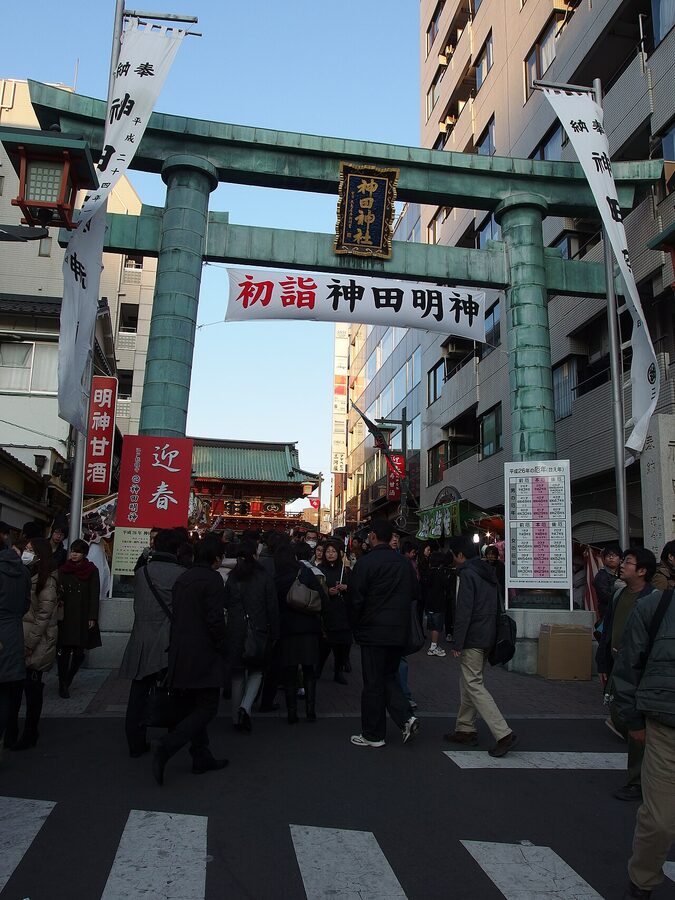
Kanda Myojin (Akihabara)
The IT-industry guardian shrine we cover in our Akihabara piece. 400,000 hatsumode visitors. Specialises in business success, which makes it popular with startup employees and salarymen. The modern Tokyo pop-culture tie-ins (Love Live anime, IT-safety charms) make it distinctive.
- Access: Ochanomizu or Akihabara stations, 10 min walk
- Best time: Weekday morning Jan 4–7 if you want to avoid the peak
Yasukuni Shrine (Kudanshita)
Politically complex — the shrine enshrines Class-A war criminals among other war dead, which makes it a political symbol. For foreign visitors, the hatsumode experience is still available but the surrounding political context is worth knowing about before deciding to visit.
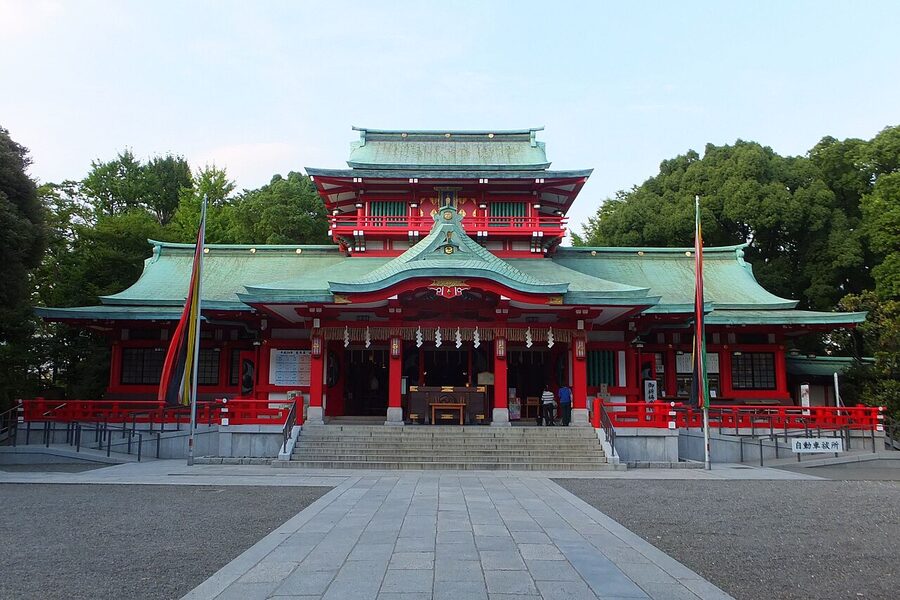
Tomioka Hachimangu (Monzen-Nakacho)
Edo-era shrine in east Tokyo, 500,000 hatsumode visitors, classic working-class Tokyo atmosphere. The midnight ringing of the bell is particularly loud and resonant. Good alternative to the tourist-heavy central shrines.
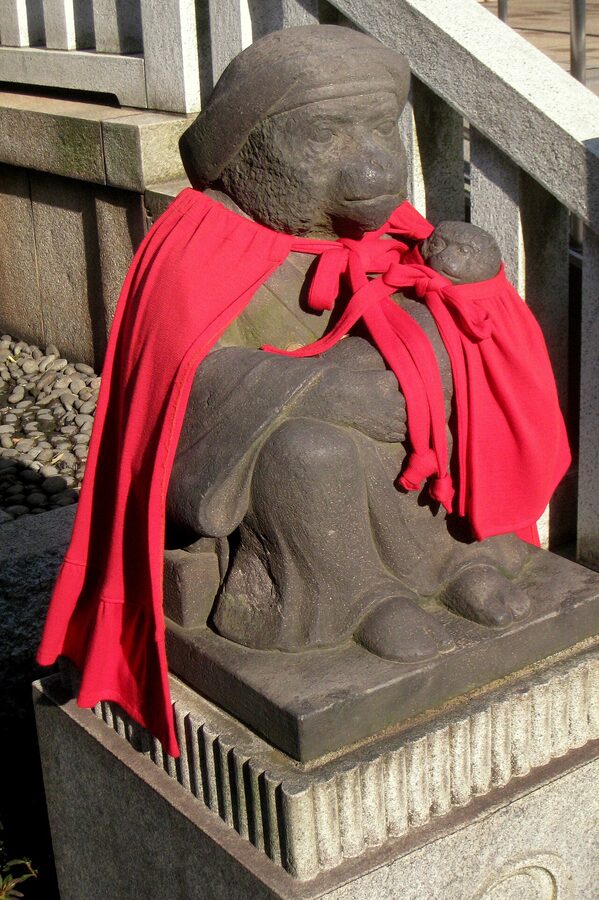
Hie Shrine (Akasaka)
Business-success specialty near the Prime Minister’s residence. Smaller than the majors but beautifully located. Less crowded, good atmosphere for photography.
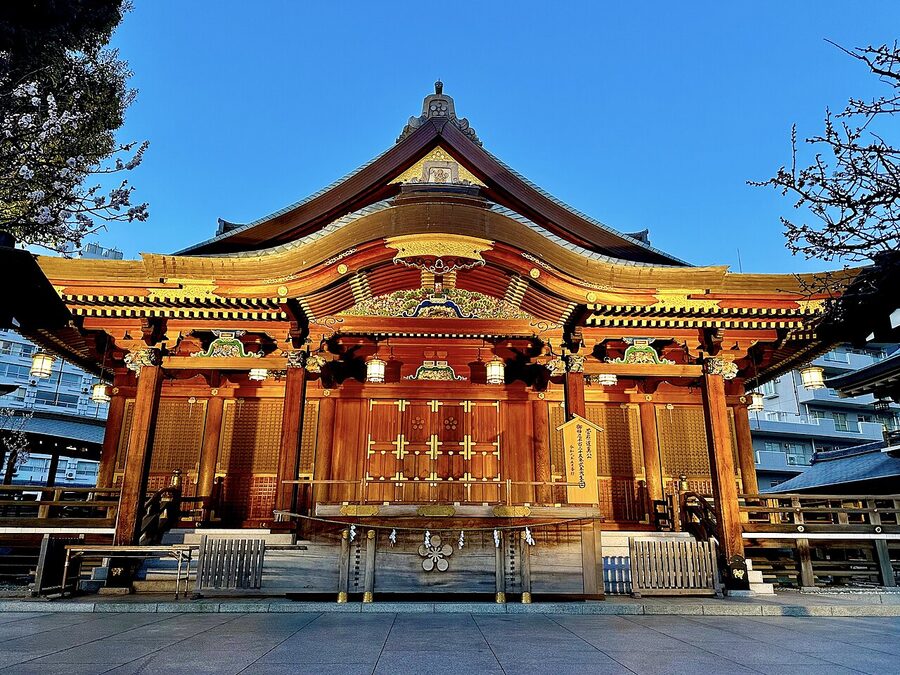
Yushima Tenjin (Ueno area)
Academic success specialty. Popular with families bringing children about to take university entrance exams. Lots of plum blossoms in February, but New Year crowds are serious.
What actually happens at hatsumode?
The sequence at a typical shrine:
Step 1: Arrival and purification
Approach through the torii gate (鳳居). Stop at the temizuya, the water pavilion near the entrance. Use the wooden ladle to rinse your left hand, then your right hand, then cup water in your left hand to rinse your mouth (spit discreetly to the side, don’t swallow). Return the ladle upright. This is a ritual purification.
Step 2: Queue for the main shrine
During hatsumode, the queue for the main prayer hall (honden) can be 30 minutes to 3 hours depending on the shrine and timing. This is normal. Everyone is waiting the same way.
Step 3: Pray
At the front:
- Toss a coin into the offering box (5-yen coins are traditional — the word “5 yen” sounds like “good fate” in Japanese)
- Ring the bell (if there is one with a rope)
- Bow twice deeply (to about 90 degrees)
- Clap twice
- Silently make your wish for the year
- Bow once more deeply
The sequence is “ni-rei, ni-hakushu, ippai” (two bows, two claps, one bow). Other shrines have slight variations but this works at 90%+ of Shinto shrines.
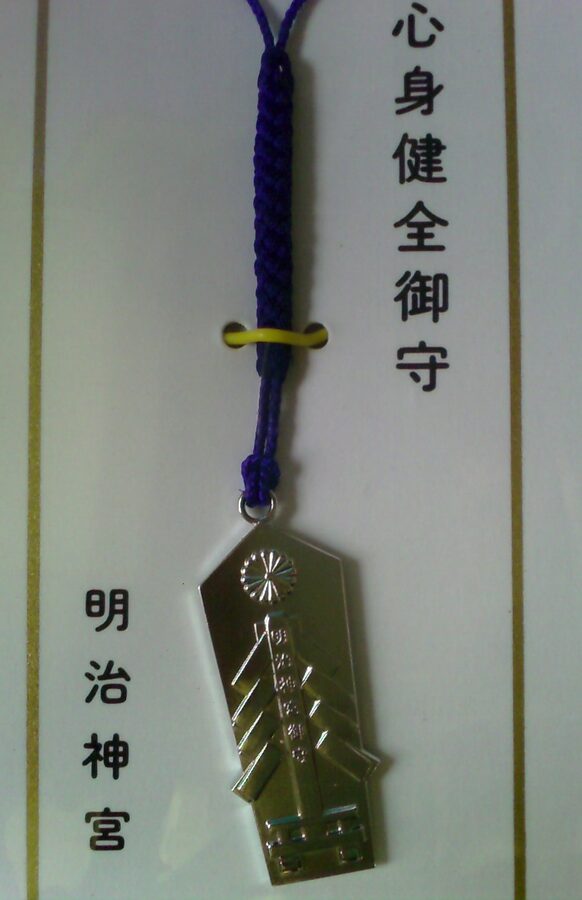
Step 4: Buy amulets and charms
After praying, most visitors buy omamori (お守り) — small cloth pouches embroidered with specific wishes. Categories:
- Kanai anzen: Family safety
- Shobai hanjo: Business prosperity
- Gakugyo joju: Academic achievement
- En musubi: Love / relationship-matching
- Kotsu anzen: Traffic safety
- Yakuyoke: Warding off bad luck
Prices: ¥500–¥1,500 per amulet. Most visitors buy 1–2 relevant to their year.
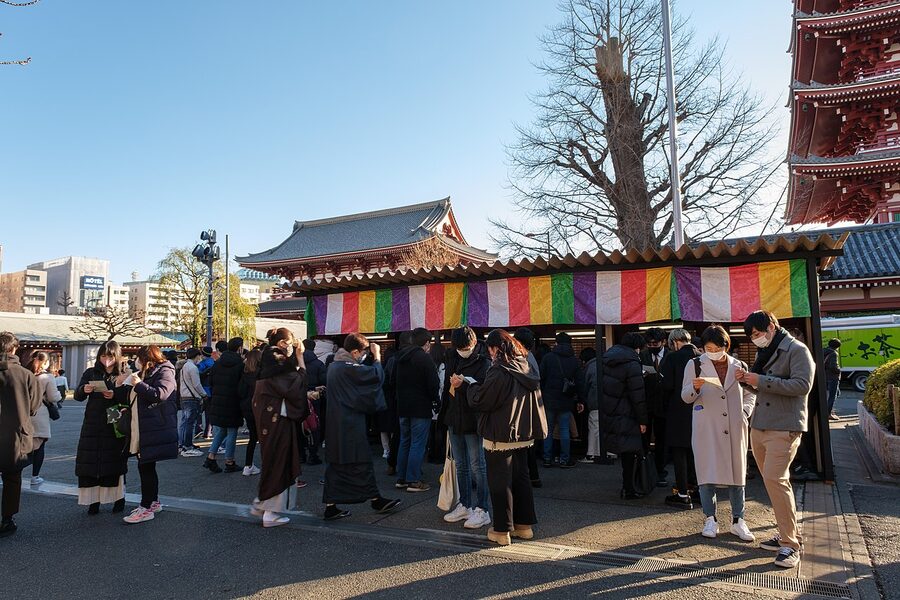
Step 5: Draw a fortune slip (omikuji)
For ¥100–¥500 you draw a paper slip from a bin. The slips rank your year from daikichi (great blessing) through chu-kichi and sho-kichi (medium/small blessing) to kyo (bad luck) and daikyo (severe bad luck). If you get a bad slip, tradition says to tie it to a tree or designated stand at the shrine to leave the bad luck behind.
Step 6: Eat
Most major hatsumode shrines have street-food vendors operating through the New Year period. Specialties: amazake (sweet non-alcoholic sake), yakitori, taiyaki (fish-shaped pancake with filling), kimono-stuffed mochi. Budget ¥500–¥2,000 for snacks.
When should you actually go?
The hatsumode period technically runs from midnight Dec 31 through the first week of January. Specific timing options:
- Midnight Dec 31 into Jan 1: The peak. Biggest crowds, most atmosphere. Prepare for 1–3 hour queues at major shrines.
- Sunrise Jan 1: Hatsuhinode (first sunrise) combined with hatsumode. Fewer crowds than midnight, best photography.
- Afternoon Jan 1: Still busy but more comfortable than midnight. Daylight viewing of shrine grounds.
- Jan 2–3: Holiday continues. Crowds remain heavy at majors.
- Jan 4–7: Fewer tourists, many families have returned to work. Comfortable crowds.
- Jan 8–15: Technically still hatsumode for late visitors. Quiet.
If you want the full peak experience, go at midnight on Dec 31. If you want the atmosphere without the worst queues, go at sunrise Jan 1 or weekday morning Jan 5–7.
What should you wear?
Many Japanese visitors wear kimono for hatsumode. This is considered beautiful and is completely acceptable for foreign visitors to do as well — most Tokyo kimono-rental shops are open during the New Year period specifically for this.
If you’re not wearing kimono:
- Smart casual is fine. Jeans and a warm coat are acceptable.
- Dress warmly. December 31 midnight in Tokyo is 2–5°C. You may wait outdoors for hours.
- Comfortable shoes. You’ll stand for 1–3 hours in queues.
- No explicit disrespect. Shirts with offensive imagery, or anything overly casual (flip-flops, beach wear) would be noticed.
Is it okay for foreigners to participate?
Yes. Absolutely, with genuine welcome.
Japanese Shinto is non-exclusive in a way that Abrahamic religions often aren’t — there’s no concept of “conversion” or membership. Anyone can approach a shrine, perform the rituals, and participate in the cultural observance. The shrine authorities actively welcome foreign visitors during hatsumode specifically because it spreads cultural understanding.
That said, respectful behaviour is expected:
- Follow the rituals properly. Purify at the water pavilion. Bow at the entrance. Don’t walk down the exact centre of the main approach path (reserved for the deity).
- Quiet respect at the prayer hall. No shouting, no loud photography, no flash when other people are praying.
- Small coin donation is the norm. If you participate, put 5 yen in the box.
- Take home an omikuji or amulet if you want a keepsake. This is encouraged, not presumptuous.
How does this connect to osechi and other New Year traditions?
Hatsumode is one part of the broader Oshogatsu (New Year) tradition. Other key elements:
- Osechi ryori: Elaborate traditional New Year food served on January 1. Preserved foods (simmered vegetables, boiled fish, sweetened beans) meant to last without cooking for several days. A hotel New Year osechi meal runs ¥8,000–¥30,000.
- Toshikoshi soba: Buckwheat noodles eaten on the night of December 31 — the long noodles represent longevity and the transition from old year to new.
- Kagami mochi: Decorative round rice cake displays on household altars, eaten around January 11.
- Otoshidama: Small cash gifts in decorative envelopes given to children by relatives.
- Nengajo: New Year greeting postcards. Japan Post delivers millions on January 1 each year.
- Joya no kane: 108-ring temple bell at midnight, symbolising the 108 worldly desires that Buddhism identifies.
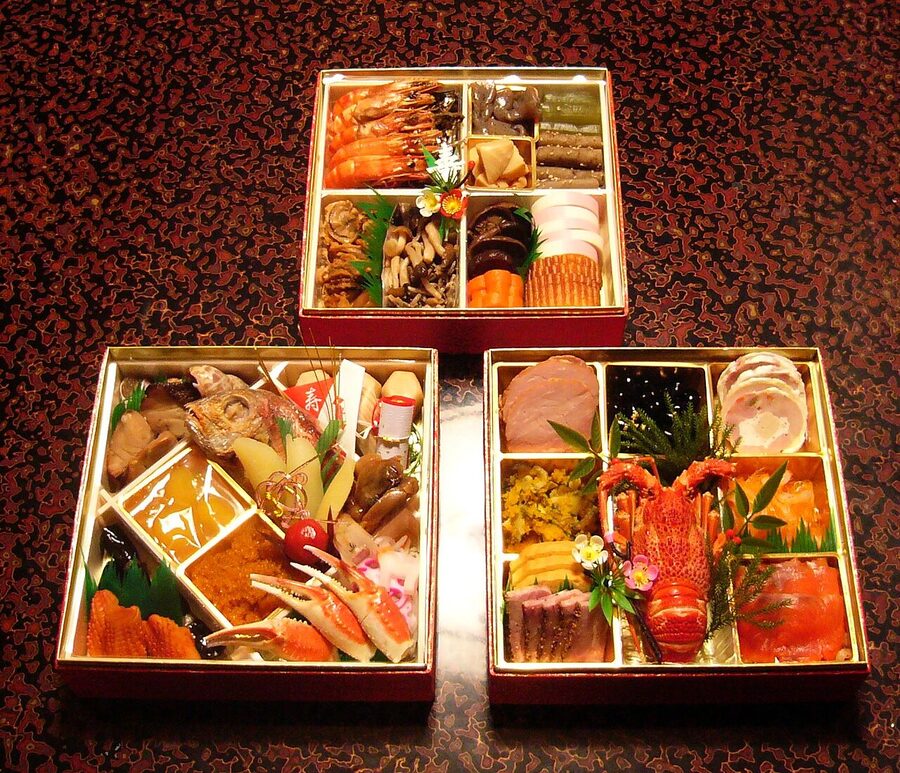
For a first-time Tokyo visitor during the New Year period, doing at least one of each of these is a full cultural immersion. Many hotels offer New Year osechi meals on January 1 as part of their packages.
What’s the broader atmosphere in Tokyo during New Year?
Most restaurants close. Most offices close. Train services run on reduced holiday schedules. Convenience stores stay open but inventory is limited.
What happens instead:
- Families gather. Japanese homes fill with extended-family visits through Jan 1–3.
- Department store sales (fukubukuro): Famous “mystery bags” with hidden discount value are sold January 2–3. Tokyo department stores have queues forming from 5am.
- Tokyo feels emptier. Many Tokyo residents travel to hometown regions for the holiday; much of the commuter population disappears.
- TV is full of specials. The Kohaku Uta Gassen singing competition on December 31 is watched by 30%+ of Japan. Movie specials run through Jan 3.
- Temples ring 108 times. At midnight, every Buddhist temple in Tokyo rings its main bell 108 times, symbolising the 108 worldly desires.
For foreign visitors this combination — emptier transport, atmospheric temples, late-night shrine crowds, shopping deals on Jan 2 — makes the New Year week one of the most-distinctive times to be in Tokyo.
Practical logistics
If you’re planning a Tokyo trip around hatsumode:
- Book accommodation early. Hotels around Shibuya, Harajuku, and Asakusa fill up 2–3 months ahead for New Year.
- Restaurants: reserve or plan around closures. Many close Dec 31–Jan 3. Chain izakaya and hotel restaurants stay open.
- Trains run on holiday schedule. Some lines run overnight on Dec 31 specifically for hatsumode; check the Tokyo Metro website for special services.
- Bring warm layers. You’ll be standing outside for extended periods.
- Bring a portable power bank. GPS, translation, camera all drain battery fast during cold outdoor activities.
- Cash in 5-yen coins. Many donation boxes accept only coins; 5-yen are the traditional hatsumode denomination.
Should you plan a Tokyo trip specifically for this?
If you want to see Japan at its most culturally distinctive, yes. The combination of empty weekday Tokyo, full midnight shrine queues, family-oriented cultural observance, and the broader oshogatsu ecosystem produces an experience that no other Tokyo week matches.
The trade-offs: many restaurants closed, some attractions on holiday schedule, cold weather, crowded shrines. Most visitors find the trade is worth it.
Combining hatsumode with a Christmas-week Tokyo visit (our Christmas in Tokyo article covers this) produces a 10-day trip that covers both the couples-date-night commercial Christmas and the family-oriented religious New Year — the two most-distinctive winter traditions. The gap between them (Dec 26–30) is also an underrated quiet period for Tokyo sightseeing.
Final take
Hatsumode is the one Japanese tradition that nearly everyone participates in. Seeing it as a visitor is a specific privilege — you’re standing in a shrine queue alongside Japanese families who’ve been doing this for generations, participating in something genuine rather than staged for tourists. The welcome is real. The atmosphere is real. The cold is definitely real.
If you’re in Tokyo between December 31 and January 7, make time for this. Meiji Jingu if you want the biggest experience, Kanda Myojin if you want something more manageable, any other shrine if you want a quieter neighbourhood option. Bring a 5-yen coin. Bring a warm coat. Remember the two-bows-two-claps-one-bow sequence.
For more Tokyo cultural context, our Christmas in Tokyo article covers the preceding week, our Akihabara guide covers the Kanda Myojin neighbourhood in detail, and our martial arts history piece covers the broader Shinto-cultural context that shapes shrine visits and rituals.
.jpg)

.jpg)


.jpg)