
TeamLab is the Tokyo-based art collective that has, over the last decade, become the world’s most-commercially-successful immersive digital art brand. Their permanent Tokyo installations draw millions of visitors per year. They have exhibited in Paris, London, New York, Seoul, Shanghai, Singapore, Melbourne, Abu Dhabi — essentially every major international art capital. For a lot of first-time visitors to Tokyo, a TeamLab visit is one of the most-photographed experiences of the trip.
In This Article
- Quick facts at a glance
- What is TeamLab actually?
- TeamLab Planets (Toyosu)
- What it contains
- Practical details
- TeamLab Borderless (Azabudai Hills)
- What it contains
- Practical details
- Which one should you pick?
- Pick TeamLab Planets if:
- Pick TeamLab Borderless if:
- Pick both if:
- When should you visit?
- How do tickets and booking work?
- Where to book
- Pricing details
- What should you wear?
- For TeamLab Planets specifically
- For TeamLab Borderless
- What’s the best photography approach?
- How does TeamLab fit into Tokyo’s art scene?
- Is the experience worth the hype?
- What about TeamLab elsewhere?
- What else is near each venue?
- Near TeamLab Planets (Toyosu)
- Near TeamLab Borderless (Azabudai)
- Final take
This guide walks through what TeamLab actually is, the two permanent Tokyo installations (TeamLab Planets Toyosu and TeamLab Borderless Azabudai), which one to pick if you only have time for one, and how the experience compares to the global hype.
Quick facts at a glance
- What it is: Immersive digital-art experience combining projection, sensors, sound, and physical installation
- Founded: 2001 by Toshiyuki Inoko and other alumni of Tokyo University
- Current Tokyo sites: TeamLab Planets (Toyosu, since 2018) and TeamLab Borderless (Azabudai Hills, since Feb 2024)
- Time needed per venue: 2–3 hours
- Ticket prices: ¥3,800–¥5,500 per site (dynamic pricing, book online)
- Best for: Anyone interested in modern art, immersive experiences, or Instagram photography
- If you have time for one: TeamLab Borderless in Azabudai is more ambitious; TeamLab Planets in Toyosu is more water-and-sensation-focused
- Worth visiting? Yes, absolutely — genuinely distinctive even by international immersive-art standards
What is TeamLab actually?
TeamLab is an international art collective (the team self-describes as “ultra-technologists”) founded in 2001 by Toshiyuki Inoko and university peers. The collective includes artists, programmers, engineers, mathematicians, architects, CG animators, and other specialists — over 600 people as of 2024.
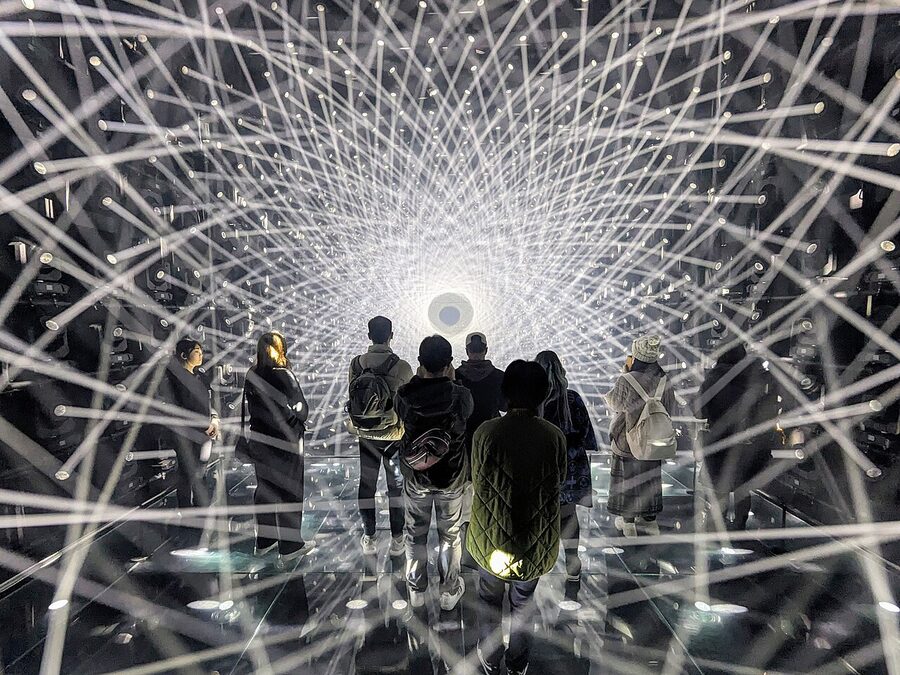
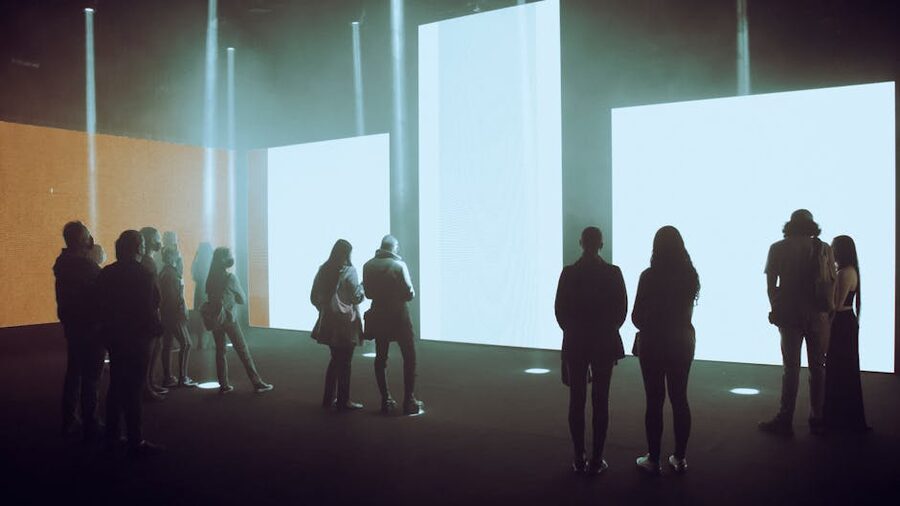
Their work combines projection-mapping, real-time computer graphics, sensor-driven interactivity, sound design, and physical installation into experiences that are neither purely digital nor purely physical. A TeamLab room typically has visitors walking through waist-deep water while projection-mapped butterflies respond to their movement, or lying on their backs under a ceiling of moving light, or being surrounded by mirrors reflecting an animated forest.
The work is genuinely technically distinctive — TeamLab has patented several of their interactive systems — and the aesthetic has become globally recognisable. Whether the artistic weight matches the technical impressiveness is a specific debate in the art world, but the commercial success is not in dispute.
TeamLab Planets (Toyosu)
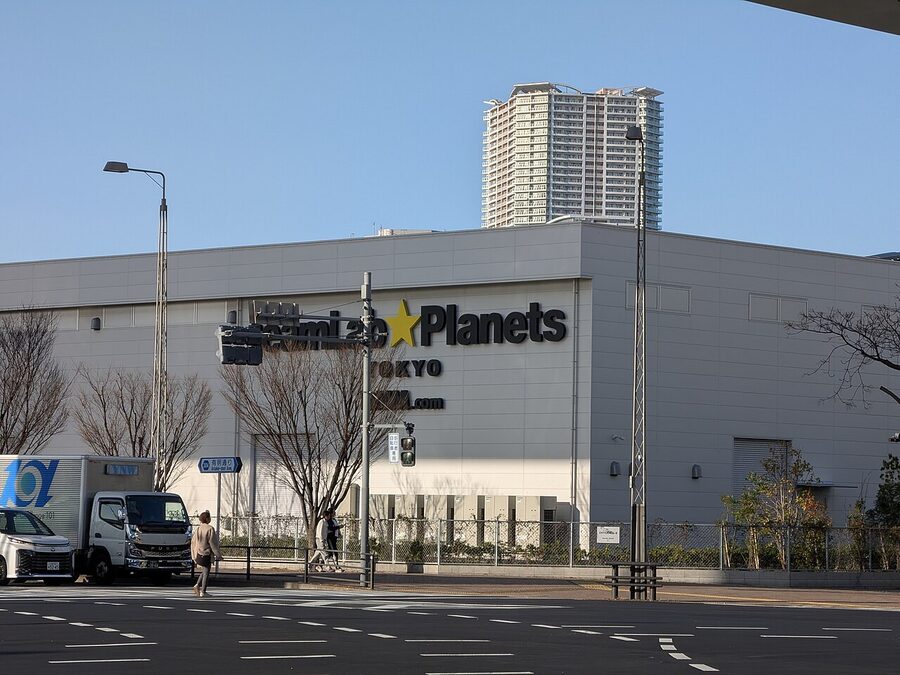
Opened June 2018 on reclaimed land in Toyosu, east Tokyo. The venue was originally intended as temporary but has been extended multiple times — currently confirmed through at least 2027.
What it contains
Seven main installations arranged as a walking sequence:
- Waterfall on Extreme Collision: Entry installation. Projection-mapped digital waterfall rendered in real-time based on viewer position.
- Soft Black Hole – Your Body Becomes a Space That Influences Another Body: Room filled with soft, foam-like “pillows” that sink under your weight. Genuinely unusual physical sensation.
- Expanding Three-Dimensional Existence in Transforming Space: Large room filled with inflated glowing spheres that change colour based on touch.
- Drawing on the Water Surface Created by the Dance of Koi and People – Infinity: The signature installation. Waist-deep water with projection-mapped koi fish that respond to visitors. One of the most-photographed TeamLab spaces.
- Floating in the Falling Universe of Flowers: Lying-down installation with projected flowers on the ceiling. Slow, meditative, sensory.
- Cold Life: A room of moving digital orchid flowers.
- Moss Garden: Outdoor garden installation with moving digital spheres among real moss.
Practical details
- Location: Toyosu, east Tokyo
- Nearest station: Shin-Toyosu (Yurikamome line) — 1 minute walk
- From central Tokyo: 25 min from Shimbashi Station via Yurikamome line
- Time needed: 2–2.5 hours
- Ticket: ¥3,800 adult
- Book: Online at teamlab.art or Klook
- Get wet: Yes — the water installations involve walking in water up to your knees. Roll up trousers or wear shorts.
- Accessibility: Partial. Two of the installations (Soft Black Hole, water koi) are not wheelchair accessible.
TeamLab Borderless (Azabudai Hills)
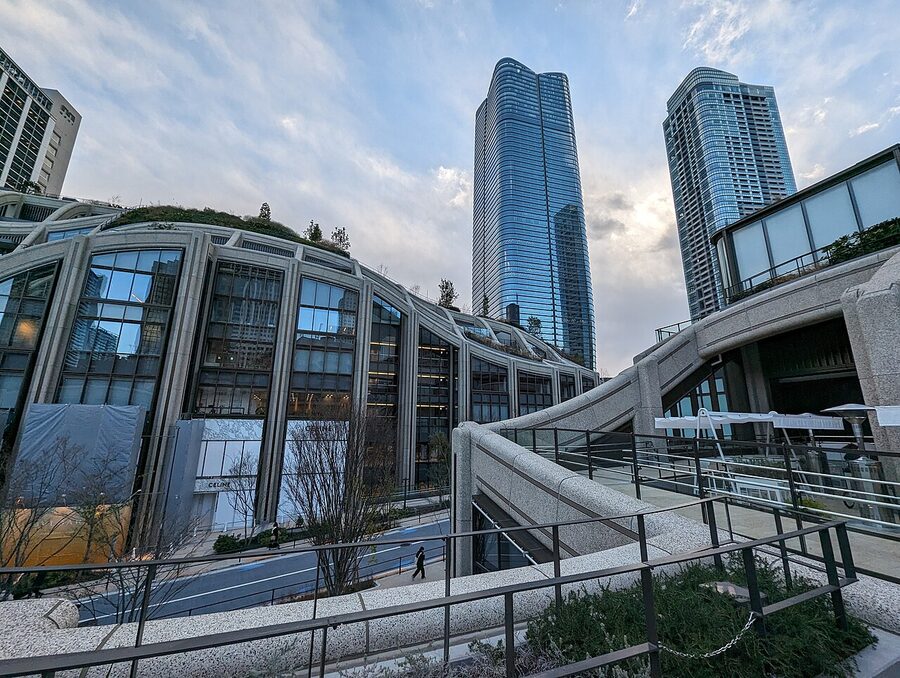
The flagship installation. The original TeamLab Borderless opened in Odaiba in 2018, closed in 2022, and reopened in February 2024 at the newly-developed Azabudai Hills complex in central Tokyo. The current iteration is the second version, expanded and updated from the original.
What it contains
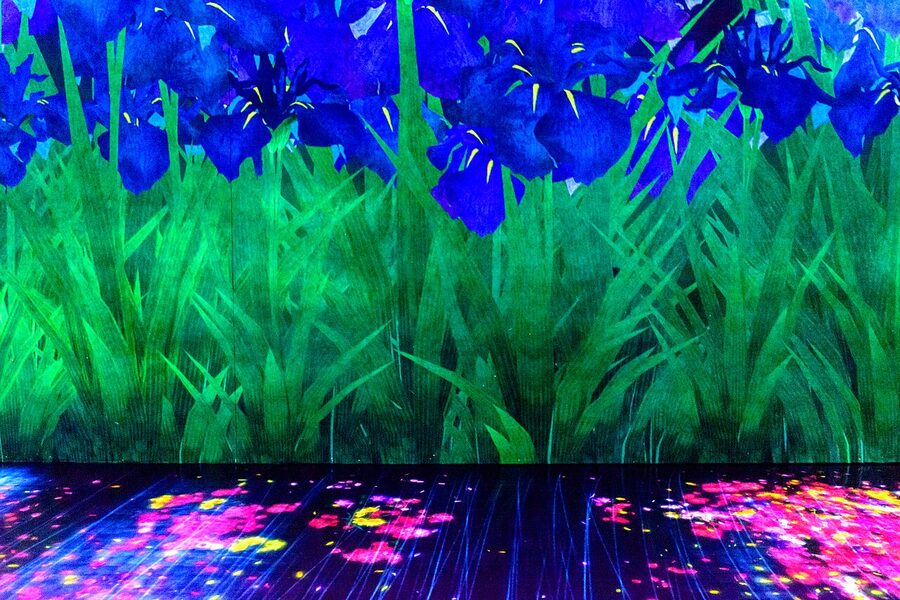
Over 50 interconnected installations arranged without a fixed walking sequence. Visitors wander freely, and the installations move between rooms, producing a “borderless” experience where you keep encountering new spaces. The Azabudai version is approximately 9,000 square metres, significantly larger than TeamLab Planets.
Notable spaces in the Azabudai version:
- Forest of Lamps: Hanging crystal lamps that respond to visitor movement, changing colour in cascading patterns. One of the most-recognisable TeamLab images worldwide.
- Floating Flower Garden: Live suspended flowers that move upward as visitors approach, creating a shifting spatial experience.
- Athletics Forest: Interactive physical-play installation where children and adults jump, climb, and touch projected animals and plants that respond dynamically. Genuinely fun for kids.
- En Tea House: A tea-drinking installation where each tea cup has a real-time projection of a flower that grows as you drink.
- Memory of Topography: Large room with projection-mapped seasons changing across walls and floor.
- Crows Are Chased and the Chasing Crows Are Destined to Be Chased as Well: Fast-moving projection sequence with the signature TeamLab crows animation.
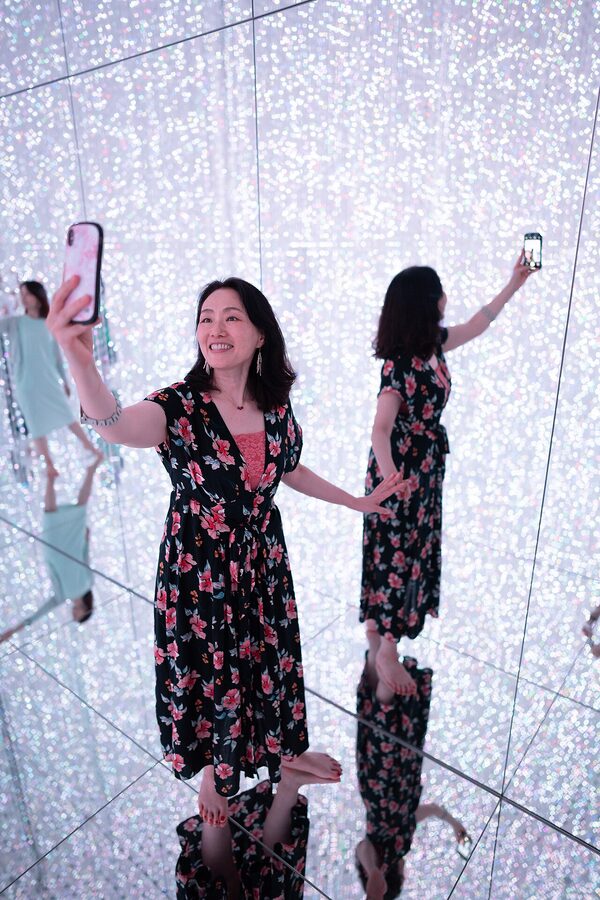
- Infinite Crystal Universe: Mirror-and-LED room creating the impression of infinite space.
Practical details
- Location: Azabudai Hills, central Tokyo (in the new Mori-developed complex)
- Nearest station: Kamiyacho (Hibiya line) or Roppongi-itchome (Namboku line) — 5 min walk
- From Roppongi: 10 min walk
- Time needed: 2.5–3 hours
- Ticket: ¥4,300–¥5,500 depending on day and time (dynamic pricing)
- Book: Online at teamlab.art, at least 1–2 weeks ahead for weekend slots
- Get wet: No — the Azabudai version is dry-experience
- Accessibility: Fully accessible. Wheelchair and stroller-friendly.
Which one should you pick?
Depends on your priorities:
Pick TeamLab Planets if:
- You want the water experience (genuinely distinctive — no other TeamLab site has this)
- You want a fixed-sequence walking experience with a specific start and end
- You’re staying in east Tokyo or visiting anyway
- You want a shorter, more-focused 2-hour experience
- You want the lower ticket price
Pick TeamLab Borderless if:
- You want the wider variety of installations (50+ vs 7)
- You want a non-linear wander-freely experience
- You’re interested in the current flagship presentation
- You’re travelling with children (the Athletics Forest is exceptional for kids)
- You’re staying in central Tokyo (Roppongi, Akasaka, Shibuya)
- You prefer full accessibility
- You want the most-Instagrammed installations (Forest of Lamps)
Pick both if:
You have time for multiple art-focused half-days during your trip. They’re different enough to justify separate visits. TeamLab recommends Borderless first, then Planets — the reverse feels slightly anticlimactic.
When should you visit?
Both venues use timed-entry tickets. Your entry window is a specific 30-minute slot on your booking date.
- Weekday mornings (10am–12pm): Quietest. Best for photography. Best for families with young children.
- Weekday afternoons: Moderate crowds. Still workable for photography.
- Evenings (5pm–8pm): Popular with couples. More crowded but atmospheric.
- Weekends: Busy. Book 2–3 weeks ahead.
- School holidays and Golden Week: Packed. Book a month ahead.
Both venues are fully indoor and climate-controlled, so weather doesn’t affect the experience directly. Rainy days can actually be good for visiting — fewer walk-in crowds.
How do tickets and booking work?
Both venues use dynamic pricing based on day and time slot. Weekend peak slots are most expensive.
Where to book
- Official teamlab.art website: Direct booking, Japanese or English. Most inventory available here.
- Klook: International travel booking platform. Sometimes has bundled deals or slightly-lower prices. Widely used by international visitors.
- GetYourGuide: Similar to Klook.
- At the door: Walk-up tickets are available but rarely — typically only for least-popular time slots. Not recommended.
Pricing details
- TeamLab Planets: ¥3,800 adults, ¥2,800 children (6–14), free under 6
- TeamLab Borderless: ¥4,300–¥5,500 adults depending on day, ¥3,000–¥3,500 children, free under 6
- Combined tickets: Available with 5–10% discount if you’re visiting both.
What should you wear?
For TeamLab Planets specifically
The water installations require wading through water up to your knees. Practical recommendations:
- Wear shorts or roll-up trousers. Lockers and towels are provided, but you’ll want to keep clothing dry.
- Skip the skirt if above knee-length. Visible from below in several installations due to mirrored floors; this is a recurring issue that has caused complaints.
- Bare feet. You remove shoes at entry. Bring socks if you prefer not to walk barefoot.
- Waterproof phone case: Optional but useful. Most installations allow photography.
For TeamLab Borderless
- Comfortable walking shoes. Non-slip preferred — some installations have glass floors.
- Casual clothing. Nothing special required.
- Camera or good phone. Multiple photography-friendly rooms.
What’s the best photography approach?
Both venues explicitly welcome photography — it’s central to the commercial positioning. Practical tips:
- Portrait orientation for Forest of Lamps. The hanging lamps work vertically.
- Low ISO, moderate shutter speed. The projections are usually bright enough; you don’t need aggressive high-ISO compensation.
- Don’t use flash. It disrupts other visitors and doesn’t help with projected images.
- Move through slowly. Let other groups clear before photographing. You won’t get the shot in a crowded room.
- The signature installations are worth waiting for. Forest of Lamps at Borderless, the koi pond at Planets — these rooms get emptier and fuller in cycles throughout the day. Wait 10 minutes and the lighting often improves.
How does TeamLab fit into Tokyo’s art scene?
TeamLab represents a specific slice of Japanese contemporary art — the highly-technical, internationally-ambitious, commercially-successful stream. They’re distinct from the more-traditional Japanese fine-art institutions (Tokyo National Museum, our Ueno guide covers this) and from the traditional Japanese graphic design world (our graphic design piece covers that).
The closest peer in the Tokyo art scene is probably the Mori Art Museum in Roppongi, which hosts more-traditional contemporary art exhibitions in a standard gallery format. TeamLab is the immersive-experience alternative.
Internationally, TeamLab sits alongside Meow Wolf (US), Superblue (UK/US), and other immersive-art brands. The Tokyo installations are the most ambitious and best-funded of this category globally.
Is the experience worth the hype?
Most first-time visitors report yes. A few caveats:
- It’s commercial. These are large-capacity ticketed experiences. The art-versus-commerce debate is real.
- Some installations are better than others. TeamLab Planets has 3–4 excellent rooms and 2–3 less-memorable ones. Borderless has more variety but also more filler.
- The Instagram-first framing is noticeable. Some installations feel designed primarily as photo backdrops rather than art experiences. This varies by room.
- Crowds degrade the experience. A packed room is much less compelling than one where you have 30 seconds to yourself. Weekend afternoons have too many crowds.
If you approach TeamLab with moderate expectations — an ambitious immersive-art entertainment experience (see teamlab.art for the current program) rather than a pure fine-art destination — the hype is about right. If you arrive expecting transcendent art-world-altering experience, you’ll be disappointed. The 2–3 signature installations per venue are genuinely excellent; the supporting rooms vary.
What about TeamLab elsewhere?
TeamLab has active installations in multiple cities worldwide. As of 2026:
- Macao, China: TeamLab SuperNature (similar to Planets)
- Shanghai: TeamLab Borderless Shanghai
- Jeddah, Saudi Arabia: TeamLab Borderless Jeddah
- Biel, Switzerland: TeamLab Borderless Biel
- Rotating international exhibitions: Typically 3–6 month runs in major cities
The Tokyo venues are the flagship installations with the deepest variety of work. If you’re specifically in Tokyo, see Tokyo. If you visit another TeamLab city, the core aesthetic is consistent but the specific rooms vary.
What else is near each venue?
Near TeamLab Planets (Toyosu)
- Toyosu Fish Market: 10 min walk. The successor to Tsukiji fish market. Tuna auctions happen here at dawn.
- Toyosu Waterfront: Walking paths along Tokyo Bay.
- LaLaport Toyosu: Large shopping mall.
- Odaiba: 15 min on the Yurikamome line. Separate entertainment district with Miraikan science museum.
Near TeamLab Borderless (Azabudai)
- Azabudai Hills complex: TeamLab is part of the larger development. Multiple restaurants, shops, the Mori JP Tower (Japan’s tallest building as of 2024).
- Roppongi Hills: 15 min walk. Mori Art Museum, Tokyo Tower viewpoint, upscale shopping.
- Tokyo Tower: 10 min walk. Classic observation deck.
- Zojoji Temple: 5 min walk. Traditional Buddhist temple.
- Atago Shrine: Nearby Shinto shrine. Less visited than Meiji Jingu.
Final take
TeamLab Tokyo is a specific experience that does what it promises. The installations are genuinely technically impressive. The photography opportunities are world-class. The crowd-management is well-executed. The overall package is one of the most distinctive art-related things you can do in Tokyo.
Pick Borderless if you only do one. Pick both if you have time. Book 2–3 weeks ahead. Arrive early for your time slot. Move slowly through the installations. Let the crowds cycle through so you get a clean moment in each room.
For related reading, our contemporary Japanese graphic design article covers the parallel design-tradition context, our Ueno guide covers the traditional fine-art museums as a contrast, and our Akihabara piece covers the adjacent pop-culture visual economy.

.jpg)

.jpg)