Reviewed · GO-KARTS
Official Street Go Kart Tour Akihabara 2nd
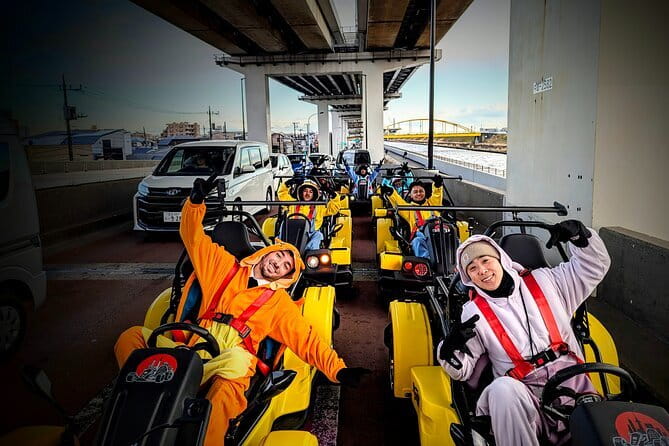
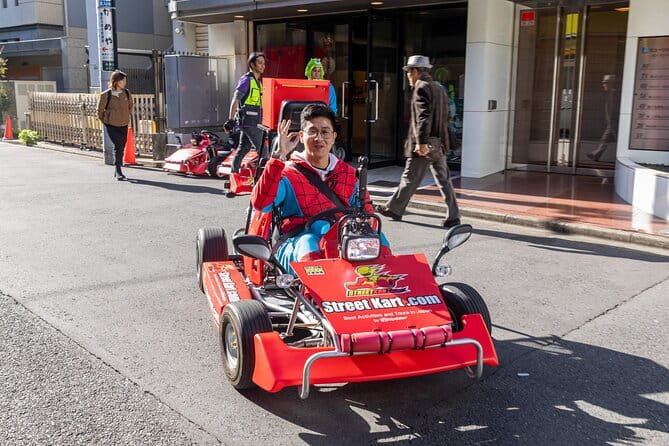
Tokyo is one of the few cities where you can legally drive a go-kart through busy central streets in a costume. This tour puts you behind the wheel, not in a sightseeing bus, with a guide leading a small group through Akihabara, Tokyo Station, Harajuku, and Shibuya Crossing. It is a strange, cheerful way to see familiar sights from street level.
In This Article
- Key points before you book
- What this Tokyo kart ride is really like
- Starting in Akihabara at Street Kart Akiba 2nd
- Tokyo Station, where the ride gets its grand opening
- Akihabara puts the costumes in context
- Around the Imperial Palace, not inside it
- Harajuku brings fashion and street style
- Shibuya Crossing is the big finale
- Photos, evening rides, and what is extra
- Is $62.40 a good value?
- The license rules are not a small detail
- Who should book this ride?
- My final call on the Akihabara 2nd tour
- FAQ
- How long does the go-kart tour last?
- Where does the tour start and finish?
- What places does the route include?
- Can I drive with only my home-country license?
- What documents must I carry?
- Can children or non-drivers ride in a kart?
- Are costumes included?
- Is insurance or camera equipment included?
I like two things here: the route gives you a quick look at several famous parts of Tokyo, and the guides take safety seriously. Sam, Khan, Madz, Julian, Billy, and others are praised for clear instructions, steady pacing, checking behind the group, and taking plenty of photos. The main drawback is just as clear: you must have the right Japanese driving documents, and concentrating on traffic can leave little time to admire the sights.
Key points before you book
- You drive a single-seat kart: Every participant drives, so children and non-drivers cannot ride along.
- The small group is a plus: The maximum group size is six, making it easier for the guide to keep track of everyone.
- The route covers major Tokyo scenes: You pass Tokyo Station, Akihabara, the Imperial Palace area, Harajuku, and Shibuya Crossing.
- Costumes are included: Character costumes are available, but Mario, Nintendo, and similar copyrighted designs are not permitted.
- Your license paperwork matters most: Bring a physical 1949 Geneva Convention International Driving Permit and your physical passport, with limited exceptions for certain countries.
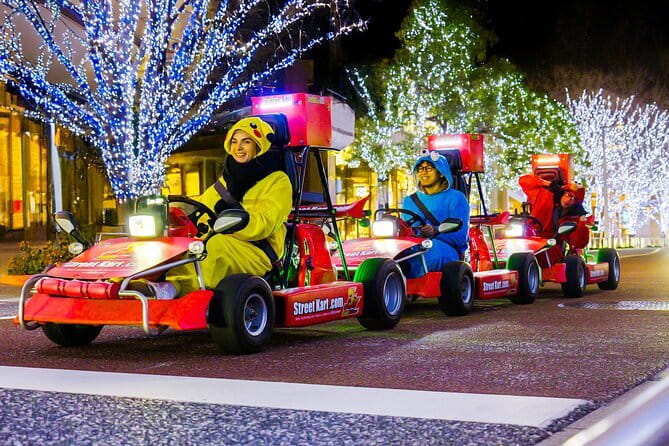
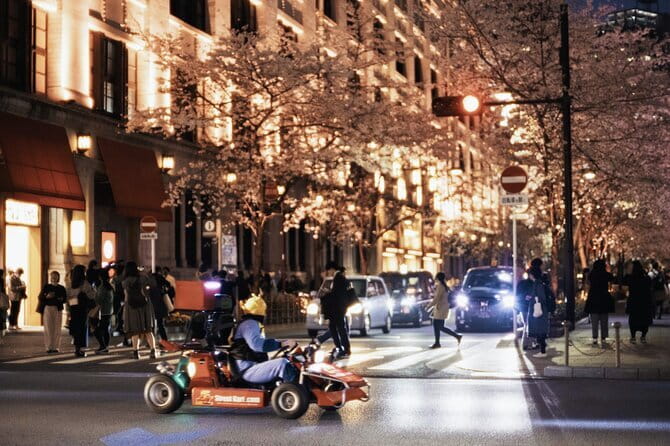
- Night rides change the mood: Morning can offer clearer roads, while evening brings city lights, more pedestrians, and more waves from the pavement.
What this Tokyo kart ride is really like
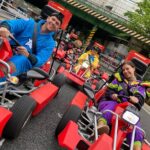
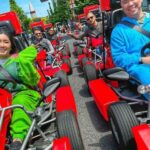
This is not a gentle sightseeing circuit in a quiet park. You drive a small go-kart on public roads among regular traffic, following a professional guide in another kart. The reward is the feeling of being part of Tokyo’s street life, with people waving, children smiling, and the city passing at eye level.
The tour lasts about one hour and 40 minutes to two hours. That is long enough to reach several districts without turning the outing into an all-day commitment. Since the group can have no more than six people, the guide can keep a close watch on the line, though you still need to manage your own kart and pay attention to traffic.
The guides are a major part of the outing. Sam is praised for clear instructions, a good pace, conversation, and photo taking. Khan is noted for checking on the group and helping nervous drivers feel more at ease. Madz is described as personable and reassuring, while Julian and Billy also receive warm praise for their guiding and friendly manner.
You should expect a short safety and driving briefing before setting off. The exact wording and timing are not provided, but clear instructions are central to the operation. If you feel uneasy at first, that is normal for a street-driving activity. You will need to stay alert, but the guide’s job is to lead the group and make sure nobody is left behind.
A few more Tokyo tours and experiences worth a look

Starting in Akihabara at Street Kart Akiba 2nd
You meet at STREET KART Akiba 2nd, at 4-chome 16, Kanda Sakumacho, Chiyoda City, Tokyo 101-0025. The shop is near public transportation, which makes it practical to reach before the start time. The tour also finishes back at this same meeting point, so you do not need to arrange a separate pickup.
Allow enough time to arrive calmly. You will need to show your physical driving documents, get fitted for a costume, and receive instructions. The activity includes the kart rental, costume rental, lead guide, and fuel surcharge. Food and drinks are not included.
The costumes add much of the playful tone, but do not arrive expecting Mario or Nintendo outfits. Copyright rules prohibit costumes, clothing, or items that suggest those characters. Other permitted character-style choices are available, subject to what the shop has on hand.
Wear closed shoes. Skirts and long dresses are not advised, partly because you are sitting in and operating a low vehicle. You should also tell the operator in advance about any hearing or mobility impairment. The tour requires a moderate level of physical fitness.
Tokyo Station, where the ride gets its grand opening
One route highlight is Tokyo Central Railway Station, specifically the red-brick Marunouchi Station building. This restored façade is one of the city’s most recognizable pieces of architecture, with a formal look that contrasts nicely with the comic-book costumes and tiny karts.
You will not stop for a full architectural visit. The point is the view as you drive past, so keep your eyes up when traffic allows. Tokyo Station is also a useful reminder that this outing is not only about spectacle. The route links modern pop culture with one of Tokyo’s classic civic buildings.
The tradeoff is time. You may have only a brief look at the building while following the group. If Tokyo Station is high on your sightseeing list, visit it separately on foot. Think of the kart ride as a moving introduction, not a replacement for a proper station-area walk.
Akihabara puts the costumes in context
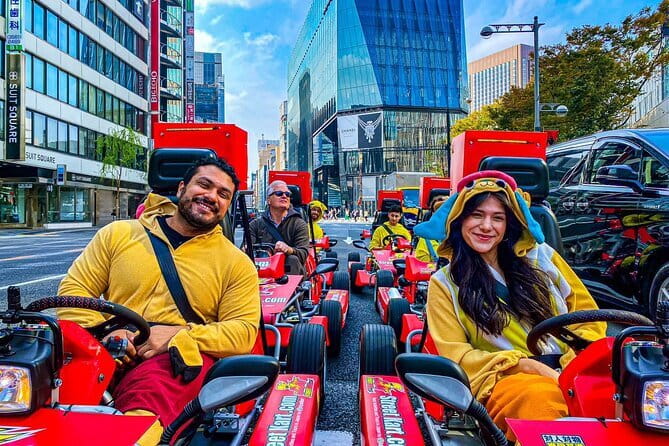
Akihabara is the natural heart of this route. Known worldwide for anime, games, electronics, and hobby culture, the district gives the costume element a fitting backdrop. Driving through the area dressed in a permitted character outfit feels less random here than it would in a quiet residential neighborhood.
You should not expect a shopping stop or time to browse stores. The attraction is the street scene and the reaction from people along the route. Several participants especially liked waving to children and passersby, and the guide may capture those moments in photos.
This is also where concentration matters. Akihabara can be visually busy, and your attention needs to remain on the road. I would treat the district as a lively passage rather than a place to study signs or shop windows. You can return later by train and explore it properly.
Around the Imperial Palace, not inside it
The route takes you around the Imperial Palace area. You do not drive into the palace grounds, and there is no palace admission included. That distinction matters if you are booking this for a palace visit.
Still, the surrounding roads give you a sense of central Tokyo’s formal side. The palace area is a useful change of pace after Akihabara, and it broadens the route beyond anime districts and famous crossings. You get a quick view of the city’s central government and royal setting while remaining on the public streets.
As with Tokyo Station, this is a pass-by sight. You will not have a guided palace tour or time to stop and explore. If you want gardens, stone walls, or a closer look at the grounds, plan a separate visit.
A few more Tokyo tours and experiences worth a look

Harajuku brings fashion and street style
The Harajuku section takes you toward Takeshita Street, one of the best-known fashion areas in Tokyo. The entrance arch changes design during the year, so the exact visual backdrop can vary depending on your visit.
Harajuku helps explain why the costume concept works so well in Tokyo. The district is associated with youth fashion and bold personal style, so your outfit becomes part of the scene rather than simply a novelty for the camera.
Again, this is a drive-through view. You will not have time to shop on Takeshita Street during the tour, and the busy pedestrian area is something you see from the kart route rather than explore on foot. I recommend returning later if you want the full Harajuku experience.
Shibuya Crossing is the big finale
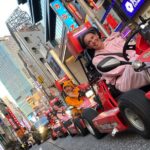
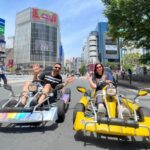
The route includes Shibuya Crossing, the famous scramble where streams of pedestrians cross from several directions. Driving through this part of Tokyo in a go-kart is the moment most likely to produce the photos you came to get.
The crossing also brings the greatest need for focus. You are not free to stop, pose, or look around whenever you wish. Follow the guide and traffic rules, keep your attention on operating the kart, and enjoy the scene in short glances.
The guide-led format helps here. The group stays together, and guides such as Khan and Sam are praised for checking behind them and keeping a safe pace. You may find yourself waving at people on the sidewalks, but remember that safety comes before getting a perfect reaction shot.
Photos, evening rides, and what is extra
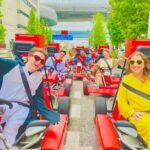
Guides take photos during the outing, and the experience can include a printed picture at the end plus a link to images taken during the ride. That is valuable because taking your own photos while driving is not practical or safe.
An action camera rental is not included. The listed extra includes the camera, mount, and SD card. You may also have the option of recording a point-of-view video, but you should treat that as an add-on rather than part of the base price.
The time of day changes the feel of the ride. A morning outing can mean clearer roads and fewer people, which may help if you are nervous about driving in traffic. An evening outing offers city lights, more pedestrians, and more chances for waves and reactions. One participant specifically found the night setting unforgettable, while another preferred the calmer morning conditions.
I would choose morning for confidence and evening for atmosphere. Either way, weather matters. The tour requires good conditions and can be canceled for poor weather, with the choice of another date or a full refund.
Is $62.40 a good value?
At $62.40 per person, the price is reasonable for a nearly two-hour guided activity that includes the kart, fuel surcharge, costume, and guide. You are paying for a street experience and a moving photo session, not for admission to attractions.
The value is strongest if you want something active and unusual. For the same money, you could take a standard observation or bus tour, but those would not give you the same sense of participation. You also avoid paying separate entry fees for the listed sights because this route views them from the street.
The price is less attractive if your main aim is detailed sightseeing. You do not get long stops at Tokyo Station, the palace, Harajuku, or Shibuya. You also pay extra for full coverage insurance, listed at ¥1,000 per person, and for the action camera package.
The base price covers the core outing well. Add the insurance if you want that extra protection, and decide on the camera rental only if recording your own view matters to you.
The license rules are not a small detail
You cannot simply show up with your home-country driving license. Most participants need a physical International Driving Permit issued under the 1949 Geneva Convention by a government-authorized association.
There are special rules for licenses issued in Switzerland, Germany, France, Taiwan, Belgium, and Monaco. In those cases, you need a Japanese translation issued by the Japan Automobile Federation, along with the physical domestic license.
Bring the physical document, not only a digital copy, and bring your physical passport. Licenses from countries not covered by the 1949 Geneva Convention, including China, Indonesia, Mexico, Qatar, and Saudi Arabia, are not accepted for driving in Japan.
The minimum age is 18. Every person in the group must qualify and drive. There are no passenger seats, so children and non-drivers cannot join as riders. If you are booking for friends or family, make one group booking rather than separate individual reservations. Separate bookings may not be placed together.
Confirmation is sent within 48 hours of booking, subject to availability. Free cancellation is available up to 24 hours before the start time for a full refund. Changes or cancellations inside that window are not refunded, and changes are not accepted. The weather exception is different: if the operator cancels because conditions are poor, you can choose a new date or receive a full refund.
Who should book this ride?
I would recommend it to adults who want a playful, active Tokyo memory and who are comfortable driving in city traffic. It suits couples, friends, and small groups who enjoy being noticed and photographed rather than quietly observing from the sidelines.
It is also a good choice for a repeat visitor who has already seen Tokyo’s major districts on foot. The route offers a new angle on familiar places, especially Akihabara and Shibuya.
I would be cautious about booking it for anyone who dislikes traffic, feels uneasy on a low vehicle, or wants a slow architectural tour. The sights pass quickly, and safety requires more attention than sightseeing. You also need the driving paperwork settled before you commit.
My final call on the Akihabara 2nd tour
Book this if you want Tokyo to feel like a moving stage set and you are prepared to drive responsibly in real traffic. The small groups, included costumes, photo help, and attentive guides such as Sam, Khan, and Madz make the outing feel organized rather than chaotic.
Skip it if you cannot obtain the required permit or translation, if you need a passenger seat, or if your priority is detailed visits inside the palace area, Tokyo Station, Harajuku, or Akihabara. For the right person, though, this is a memorable two-hour burst of city driving, costumes, lights, and waves from the sidewalk.
FAQ
How long does the go-kart tour last?
The activity lasts approximately one hour and 40 minutes to two hours.
Where does the tour start and finish?
It starts at STREET KART Akiba 2nd, Japan, 101-0025 Tokyo, Chiyoda City, Kanda Sakumacho, 4-chome 16, 1F. It ends back at the same meeting point.
What places does the route include?
The route includes Tokyo Central Railway Station, Akihabara, the area around the Imperial Palace, Harajuku near the Takeshita Street entrance, and Shibuya Crossing.
Can I drive with only my home-country license?
No. Most participants need a physical International Driving Permit issued under the 1949 Geneva Convention. Drivers from Switzerland, Germany, France, Taiwan, Belgium, and Monaco need a Japanese translation from the Japan Automobile Federation.
What documents must I carry?
You must carry your physical International Driving Permit, or the required physical domestic license and official Japanese translation for the listed exceptions. You must also carry your physical passport.
Can children or non-drivers ride in a kart?
No. The karts are single-seaters. All participants must be at least 18 years old and hold a valid license accepted for driving in Japan.
Are costumes included?
Yes. Costume rental is included, but Mario, Nintendo, and clothing or items suggesting those characters are not permitted because of copyright restrictions.
Is insurance or camera equipment included?
Fuel, the kart, costume, and lead guide are included. Full coverage insurance costs ¥1,000 per person, and action camera equipment is also extra. Food, drinks, and hotel pickup and drop-off are not included.
More Go-Kart Tours in Tokyo
More Akihabara & Anime Tours in Tokyo

More tours in Tokyo we've reviewed












Go-Karts, compared.
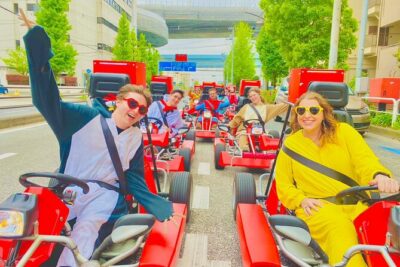 ★ 5.0Flagship 2-Hours Official Street Go-Kart Tour – Tokyo Bay ShopFrom $642 hours to 2 hours 30 minutes (approx.)
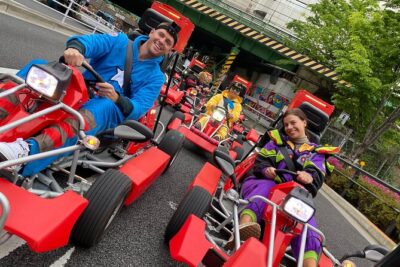 ★ 5.0Official Street Go-Kart in ShibuyaFrom $76
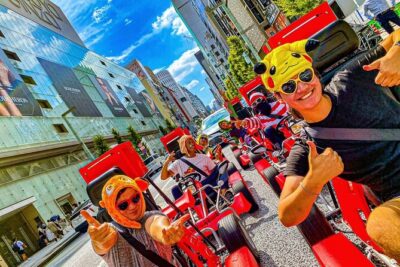 ★ 5.0Official Street Go-Kart Tour – AkihabaraFrom $61
 ★ 5.0Tokyo Go Kart: Asakusa, Skytree, and Akihabara **IDP MUST**From $99
 ★ 5.0Shibuya Official Street Go-Kart in Shibuya AnnexFrom $69
 ★ 4.6Tokyo: Asakusa and Skytree Go-Kart Tour and Photo ShootFrom $67