Reviewed · MT FUJI DAY TRIPS
Tokyo: Mt Fuji 3 Lakes Day Trip | 9-Guest Small Group
Fuji’s best moments are not always found at the famous postcard stops. This day trip takes you to Lake Shoji and Hirano Beach, two quieter places where the mountain feels less like a backdrop and more like part of the day. You also get the well-known Lawson store photo and a choice of three Kawaguchi attractions.
In This Article
- Key points at a glance
- Why this Fuji day trip feels different
- Leaving Tokyo between 7:30 and 8:30 AM
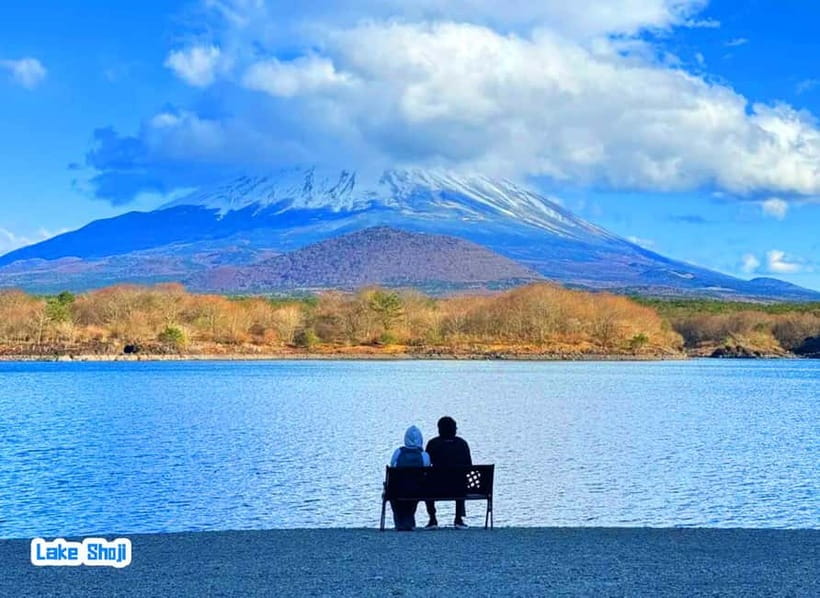
- Lake Shoji, Fuji’s quiet mirror
- Oishi Park and the long midday pause
- Choose one Kawaguchi activity
- The Lawson store and Fuji’s modern postcard
- Hikawa Clock Shop and a retro street view
- Hirano Beach at Lake Yamanaka
- Returning to Tokyo by about 6:00 PM
- What the $20 price really covers
- Who will enjoy this outing most
- Should you book it?
- FAQ
- Where does the tour start?
- What time is hotel pickup?
- What languages are available?
- Is lunch included?
- Are the cruise, ropeway, and museum included?
- How long does the tour last?
- Can I cancel for a refund?
I like the small nine-guest format, which is easier to manage than a full coach, and I like the seasonal planning: lavender, cosmos, cherry blossoms, autumn color, and winter snow can change the feel of the route. The main caution is timing. Stops may run long, optional admissions cost extra, and the return to Tokyo can be later than planned.
Key points at a glance
- Lake Shoji offers the quietest opening stop, with Fuji views, forest scenery, and Sengen Shrine.
- Oishi Park changes with the season, from lavender in summer to cosmos in autumn and snow displays in winter.
- You choose one paid Kawaguchi activity, such as a cruise, ropeway ride, or music museum visit.
- The Lawson store and Hikawa Clock Shop provide very different photo stops, one modern and familiar, the other built around a retro street scene.
- Hirano Beach gives you a calm finish, with a floating Fuji effect that depends on the weather and light.
- The $20 price covers transport and road costs, but not lunch, admission tickets, or a guide service.
Why this Fuji day trip feels different
Many Mt Fuji outings from Tokyo focus on one famous lake and a crowded viewpoint. This route spreads the day across three lakes and several smaller stops. That gives you more variety, but it also means plenty of time in the vehicle and a long day away from Tokyo.
The strongest feature is the mix of famous and less familiar places. Lake Shoji and Hirano Beach are the quieter bookends. Oishi Park supplies flowers and open views. The Lawson store is a quick social media stop. Hikawa Clock Shop adds a local street scene that feels more old-fashioned than the usual roadside viewpoint.
You travel in a van with a maximum group size of nine. That matters on narrow roads and at busy photo stops. It also means you are not moving with a large coachload, though the small vehicle does not remove the risk of traffic around Fuji or the Kawaguchi area.
English, Chinese, Japanese, and Traditional Chinese support is available. The driver provides the transport service, but a separate guide is not included in the price. You can still ask the driver for help and local facts, but this is not the same as booking a full guided sightseeing tour.
A few more Tokyo tours and experiences worth a look
Leaving Tokyo between 7:30 and 8:30 AM
The day begins with hotel pickup in selected central Tokyo wards, generally between 7:30 and 8:30 AM. Confirmed areas include Shinjuku, Chiyoda, Chuo, Shinbashi, Akasaka, Tamachi, Shiodome, Hamamatsucho, Roppongi, and Taito.
If you choose the meet-up option, you go to JR Tokyo Station’s Marunouchi North Exit. The exact time and pickup order are set by the driver. You should wait in your hotel lobby five to ten minutes early, then contact the driver by phone or WhatsApp after receiving the confirmation details.
The operator sends the vehicle type, license plate number, exact meeting point, pickup time, and direct driver contact the night before. Save this information. It is especially important in Tokyo, where a few minutes and one wrong station exit can spoil the start of the day.
Late arrivals are not accommodated, and there is no refund or alternate date for a no-show. That policy makes early preparation worthwhile. Bring water, wear comfortable shoes, and avoid planning anything demanding for the evening.
Lake Shoji, Fuji’s quiet mirror
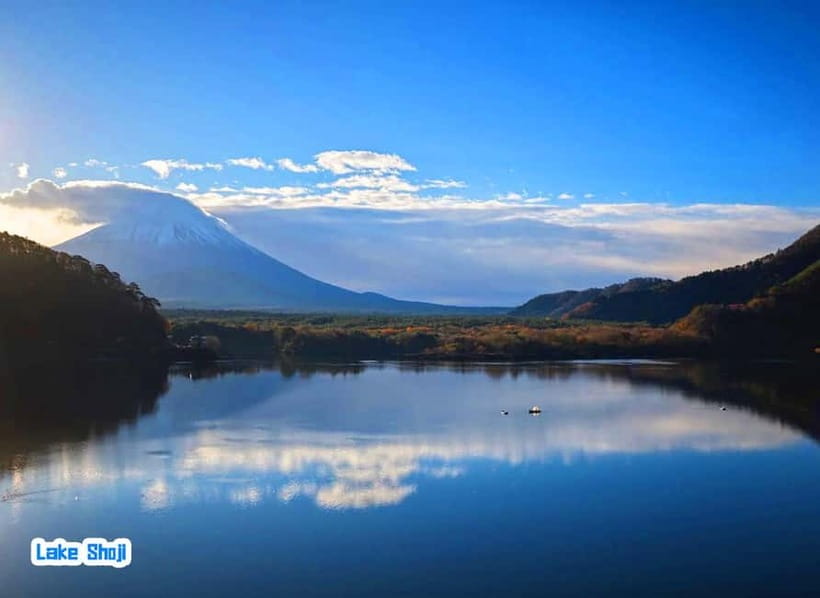
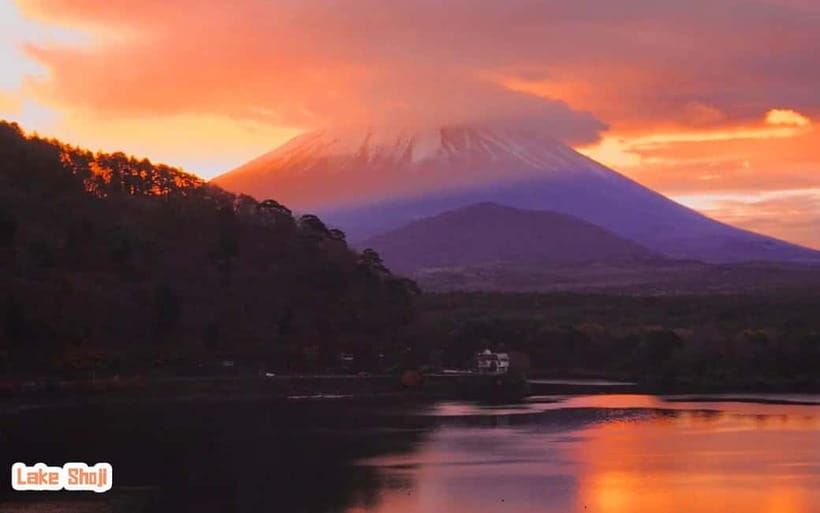
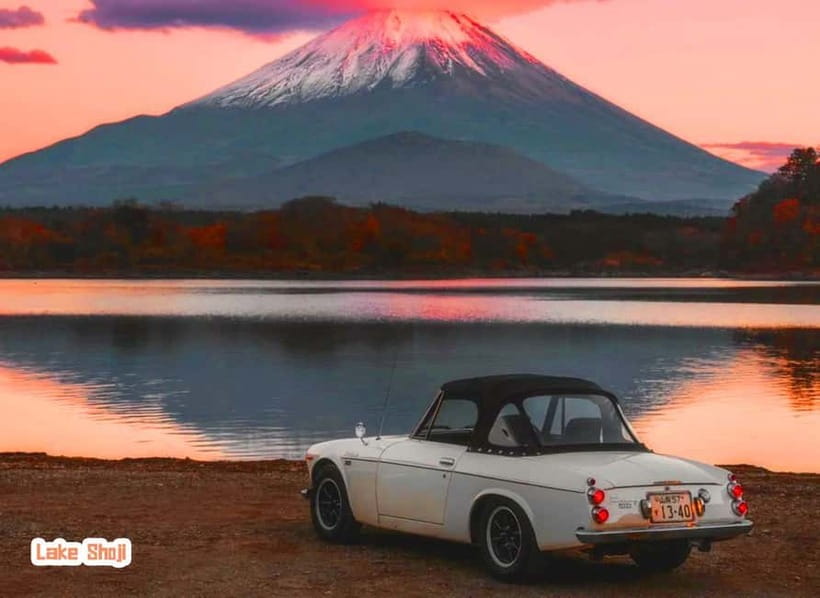
Lake Shoji is the first major stop, at about 10:00 AM. It is presented as the quietest of the Fuji lakes on this route, and that is the main reason to value it. You get time for open views without making the whole morning about the most famous tourist angle.
The scene changes sharply through the year. Spring brings cherry blossoms. Summer brings green forest surroundings. Autumn adds strong leaf color, while winter can turn the shore quiet and snow-covered. Fuji views depend on the weather, but the lake gives you something to enjoy even when the summit disappears.
The nearby Sengen Shrine adds a spiritual side to the morning. Fuji has long been linked with shrine worship and mountain traditions, so this stop gives the trip more context than a simple photo break. It is a useful place to slow down before the busier part of the day.
In August, the Suzumi-no-Matsuri festival may add taiko drumming and local street food. Festival details can vary by date, so do not book this trip solely for that event. Treat it as a possible seasonal bonus.
Oishi Park and the long midday pause
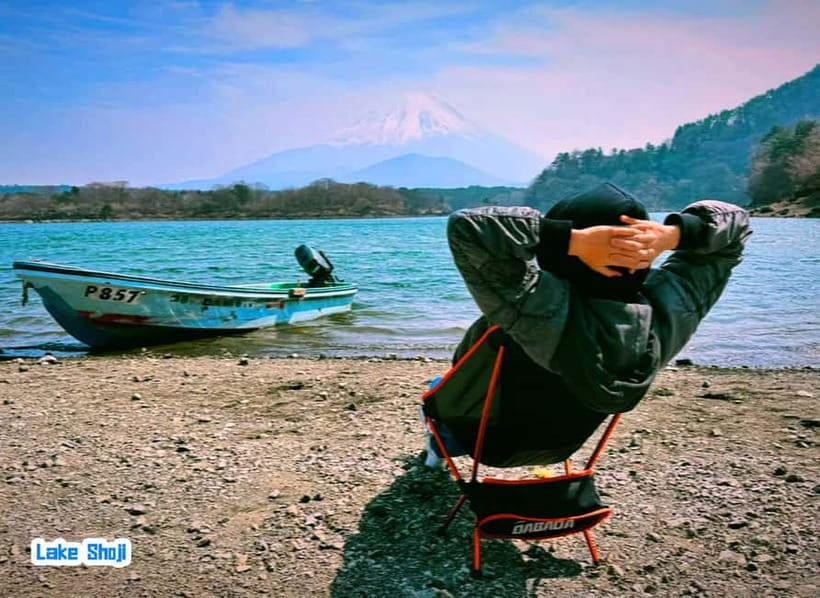
At around 11:30 AM, you reach Oishi Park or a seasonal alternative for roughly 150 minutes, including lunch time. This is the longest single portion of the itinerary, and it gives you room to walk, take photographs, eat, and enjoy the view without being rushed.
Oishi Park is known for its flowers and Fuji backdrop. Lavender is the main summer draw from June through July. Cosmos flowers appear around September and October. From December through February, snow displays can give the park a very different look. In spring, the Lake Kawaguchi Cherry Blossom Festival is scheduled from March 25 through April 15, with pink trees and festival snacks.
This seasonal approach is useful because Fuji’s surroundings can feel completely different from one month to the next. It also means you should check the likely condition for your travel date instead of assuming the promotional flower scene will be present.
Lunch is not included. You have 150 minutes, so you should have enough time to buy food or bring your own for the stop, but food and drinks are not allowed in the vehicle. The long pause is a benefit if you dislike rushed tours. It may feel excessive if the flowers are not at their best or if your optional activity is unavailable.
Choose one Kawaguchi activity
You choose one of three options during the Oishi Park portion. The admission fee is extra, so budget for it before you book.
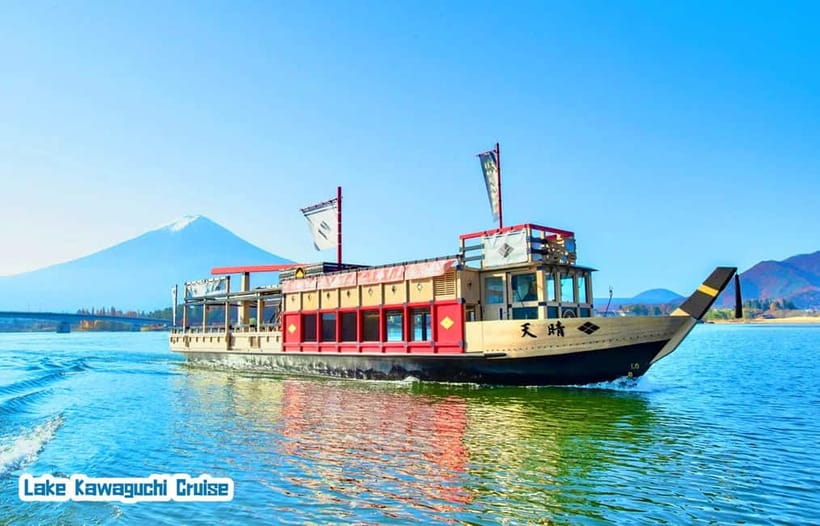
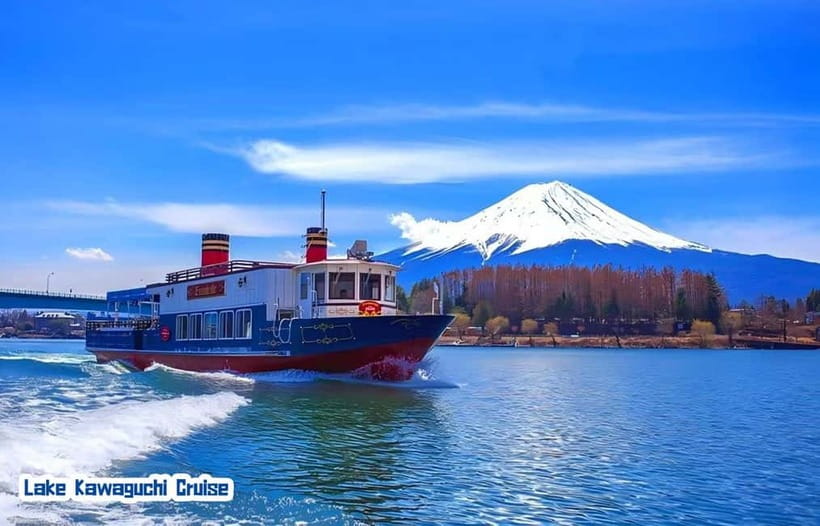
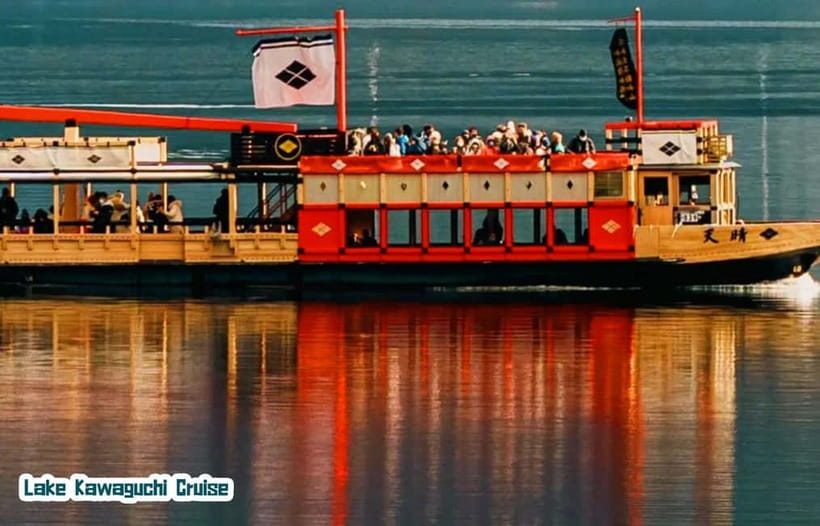
Lake Kawaguchi cruise: The Tenkyo sightseeing boat takes about 20 minutes. Its design is modeled after a 16th-century warship, and the ride gives you a water-level view of Fuji. On a clear day, you might see the mountain reflected in the lake, creating the familiar upside-down Fuji image. Samurai costumes are available for photographs, and the boat is wheelchair-accessible.
Mt. Kachikachi Ropeway: The ride to Tenjozan Park takes about three minutes and leads to a higher viewpoint. The area has rabbit and raccoon statues and shrines, grilled dango rice dumplings, clay disc throwing for luck, and the Bell of Heaven, which couples can ring together. The ropeway is a good choice if your priority is a broad view from above, but availability can change. One account of the outing found that this option was not possible on the day.
Lake Kawaguchi Music Forest Museum: This is a European-style garden with antique music boxes and organs, including a Titanic replica. The site also offers weekend concerts, lakeside dining, souvenir shopping, and music box-making workshops. It gives you a more structured cultural visit than the cruise or ropeway.
The itinerary can change when an attraction is closed or unavailable. On one outing, the planned museum stop required a 20-minute walk each way rather than a direct vehicle stop. Ask the driver early in the day how your selected option will work, especially if you have limited mobility or do not want an extra walk.
A few more Tokyo tours and experiences worth a look



The Lawson store and Fuji’s modern postcard
At about 2:10 PM, the van stops at the famous Lawson convenience store. Fuji is framed behind the store in a composition that has become a popular online image. It is a brief, very modern kind of sightseeing: a Japanese convenience store, a mountain, and a camera-ready street view.
Do not expect a long visit. This stop is mainly for photographs. It also shows how Japan’s everyday places can become tourist landmarks when the setting is right. Follow the driver’s instructions carefully, since the area can be busy and the road is not the place to linger.
Hikawa Clock Shop and a retro street view
Around 2:50 PM, you visit Hikawa Clock Shop. The area has more than 1,000 handcrafted clocks and a retro alleyway feel, with Fuji views that depend on visibility.
This stop helps break up the day. After the polished flower park and the highly recognizable Lawson photo, you get a smaller streetside scene with traditional details and old-style shop character. It is not a major museum visit, so keep your expectations modest. Its appeal comes from the combination of clocks, alleyway views, and Fuji in the distance.
Weather matters here. If clouds cover the mountain, you can still enjoy the shop and street, but the famous composition will not be guaranteed.
Hirano Beach at Lake Yamanaka
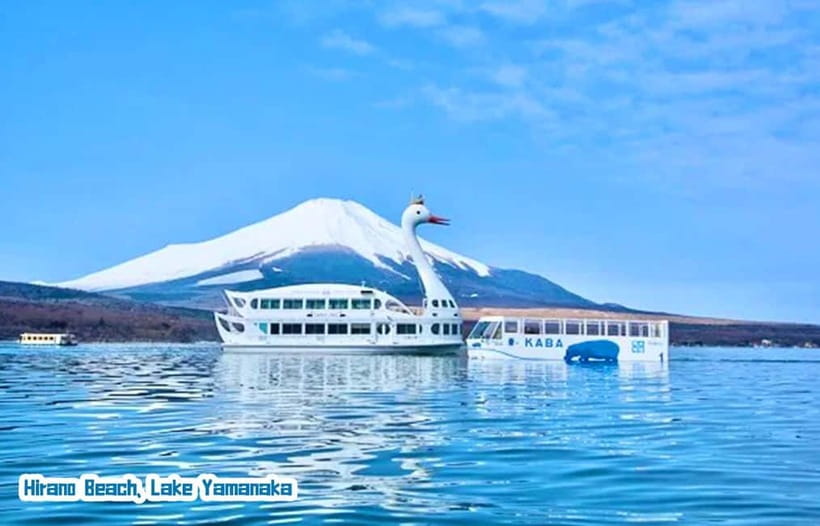
The final scenic stop begins around 3:20 PM at Hirano Beach on Lake Yamanaka, Fuji’s highest-altitude lake. The shore is intended as a quieter place to relax after the more structured stops.
The key photo effect is floating Fuji, when the mountain seems to hover above the water. This depends on the light, the lake surface, and visibility. Golden-hour conditions may help, but the schedule does not guarantee a sunset scene. Even so, the shore gives you a peaceful ending and a chance to take a final set of photographs without another admission ticket.
This is one of the better reasons to choose the tour over a route that only visits Kawaguchi. You see a second side of the Fuji area, not just the busiest lakefront viewpoints.
Returning to Tokyo by about 6:00 PM
The planned return is around 4:00 PM, with drop-off at JR Tokyo Station or your original pickup point by about 6:00 PM. Traffic can change that estimate, and the day may run late if a stop changes or takes longer than expected.
Build in a buffer. I would not schedule a theater performance, airport transfer, restaurant reservation, or long-distance train shortly after the tour. The drive from Fuji back to Tokyo can be tiring, especially after ten hours on the road.
A previous outing had more time at some stops than expected and finished late in the evening. That can be good if you prefer a relaxed pace, but it is less helpful if you want a tightly controlled schedule. You may feel tired by the end, so keep your evening simple.
What the $20 price really covers
At $20 per person, this is unusually inexpensive for a ten-hour excursion from Tokyo. The price includes van transport, the driver service, fuel, tolls, and parking. For someone who wants to reach several Fuji-area sites without arranging trains, buses, and local connections, that basic transport value is strong.
The low price does not cover everything. You pay separately for lunch, personal expenses, the ropeway, cruise, or museum admission. A guide is also not included, even though multilingual driver support is available.
Think of this as an affordable shared transport tour with a planned route, not a private sightseeing guide. You pay for convenience and access to several places. You do not pay for detailed commentary at every stop or for a fully flexible private itinerary.
The nine-guest limit improves the value. You get a smaller vehicle and a simpler group to manage than on a large coach, while still paying a shared-tour price. The tradeoff is less control than you would have in a private car.
Who will enjoy this outing most
I would choose this trip if you want Fuji scenery but do not want to build a full day around public transport. It suits first-time visitors who want a broad sample of the area, including lakes, flowers, a shrine, a shop street, and one paid attraction.
It also suits photographers who want several different settings. Lake Shoji offers a quiet shore, Oishi Park provides seasonal plants, the Lawson stop gives you a familiar modern frame, and Hirano Beach offers the floating Fuji possibility.
You should think twice if you need a strict timetable, guaranteed access to the ropeway, or a fully guided cultural tour. The route can change, and the driver decides the pickup order and daily timing. It is also not suitable for pregnant women, people with heart problems, or people over 70 years old.
The vehicle is smoke-free, and alcoholic drinks, food, and drinks are not allowed inside. Comfortable clothing and shoes are sensible because several stops involve walking outdoors.
Should you book it?
Book this tour if you value variety, small-group transport, and quieter Fuji stops more than a perfectly fixed schedule. The combination of Lake Shoji, Oishi Park, Hikawa Clock Shop, and Hirano Beach gives you more range than a basic one-lake excursion.
Skip it if the optional attraction is the main reason you are going. The ropeway, cruise, or museum may not always be available as described, and entry fees are extra. For the best experience, confirm the pickup details with the driver, keep your evening free, and treat the route as weather-dependent.
At $20, it is a practical way to reach the Fuji area from Tokyo. Just understand what you are buying: transportation, a well-planned set of stops, and multilingual driver support, not a private guide or a guaranteed mountain view.
FAQ
Where does the tour start?
You can meet at JR Tokyo Station’s Marunouchi North Exit, or use hotel pickup in selected wards including Shinjuku, Chiyoda, Chuo, Shinbashi, Akasaka, Tamachi, Shiodome, Hamamatsucho, Roppongi, and Taito.
What time is hotel pickup?
Hotel pickup generally takes place between 7:30 and 8:30 AM. The driver sets the exact time and pickup order.
What languages are available?
Support is available in English, Chinese, Japanese, and Traditional Chinese.
Is lunch included?
No. Meals are not included, so you should budget for lunch during the Oishi Park stop.
Are the cruise, ropeway, and museum included?
No. Admission to the Lake Kawaguchi cruise, Mt. Kachikachi Ropeway, and Lake Kawaguchi Music Forest Museum costs extra. You choose one activity when that part of the route is available.
How long does the tour last?
The scheduled tour duration is ten hours. Return to Tokyo is planned for around 6:00 PM, but traffic and changes during the day can make the return later.
Can I cancel for a refund?
You can cancel up to 24 hours in advance for a full refund. Late arrivals and no-shows do not receive a refund or an alternative date.
More 1-Day Tours in Tokyo
More Mt Fuji Day Trips in Tokyo

More tours in Tokyo we've reviewed

Mt Fuji Day Trips, compared.
 ★ 5.0Mt Fuji and Hakone 1-Day Bus Tour Return by Bullet TrainFrom $163
 ★ 4.0Mt Fuji & Hakone Cruise, Drum Show Bullet Train 1 Day from TokyoFrom $149
 ★ 4.4Tokyo Mt Fuji 5th St & Hakone Cruise Bus Tour w/Bullet TrainFrom $15410 hours
 ★ 4.5From Tokyo: Mount Fuji Full-Day Sightseeing TripFrom $6810 hours
 ★ 4.7Tokyo: Mt. Fuji Tour, Hakone Ropeway, Owakudani, Lake AshiFrom $5410 hours
 ★ 4.4Tokyo:Mt.Fuji,Kawaguchiko Oishi Park,Arakurayama Sengen ParkFrom $5410 hours