Reviewed · SUMO EXPERIENCES
Tokyo: Sumo Morning Training Visit
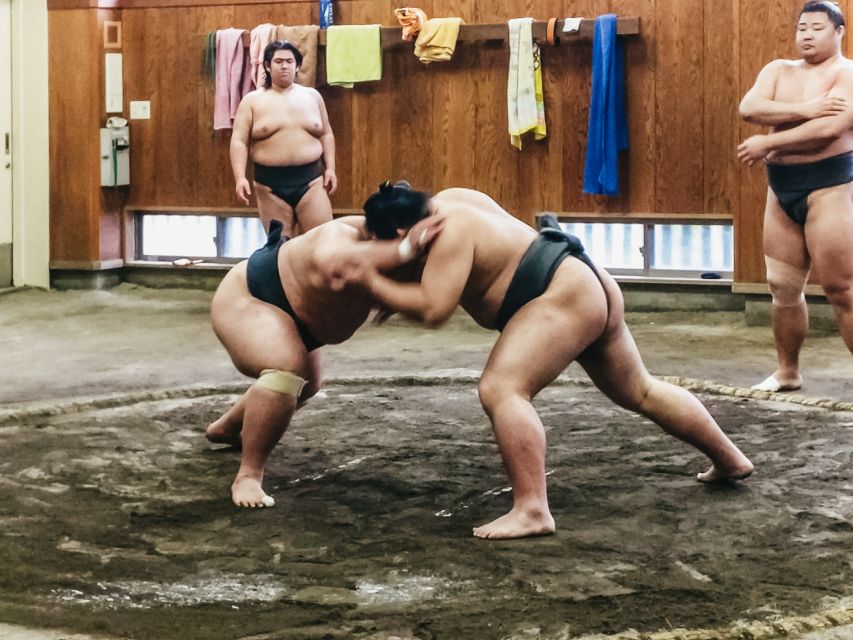
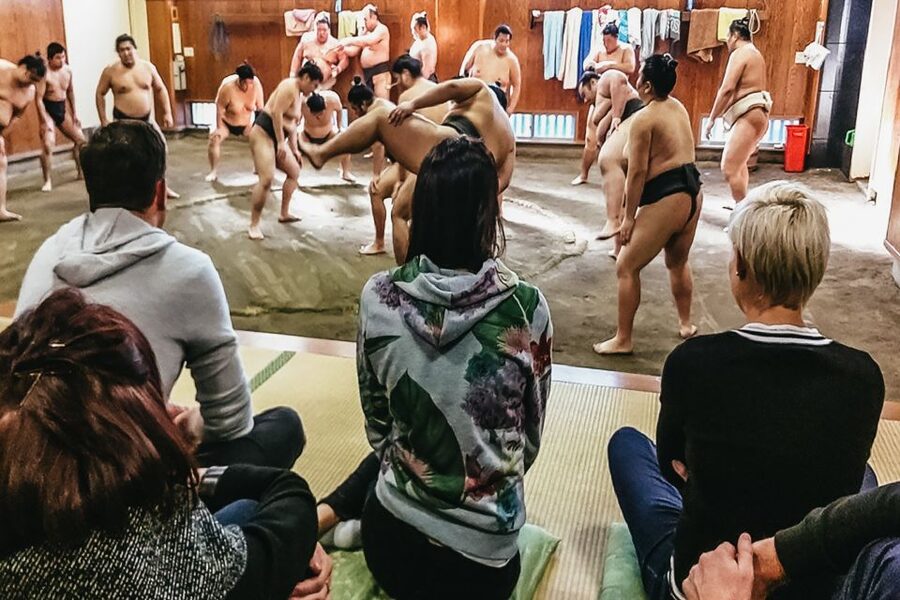
Sumo training is not a staged show. You sit quietly inside a working stable while powerful professional wrestlers stretch, practice footwork, push one another, and sometimes spar hard enough to make the floor seem to shake. Seeing that work from close range is the most memorable part of this one-hour Tokyo experience.
In This Article
- Inside a Working Tokyo Sumo Stable
- What the Morning Usually Feels Like
- The Best Seat Is Usually the First Available One
- How Much English Help Will You Get?
- The Training Is Impressive Because It Is Not Polished
- The Group Photograph Comes at the End
- Price: Good Value for Close Access, Less So for a Lecture
- Getting There Takes Careful Reading
- Who Will Enjoy This Most?
- Practical Ways to Prepare
- Cancellation and Timing Details
- Should You Book This Sumo Visit?
- FAQ
- Where does the sumo training visit meet?
- How long does the sumo training last?
- Can I choose the sumo stable?
- Is the experience guided in English?
- Can I take photos or videos?
- What should I bring?
- Can I leave before training ends?
- Is hotel pickup available?
I like two things here: you get into a real sumo stable rather than watching from the distant seats of a tournament arena, and the small-group setting can give you a clear view of the wrestlers’ speed, balance, and technique. The chance to pose for a group picture afterward is a fine souvenir. The main drawback is that the English guidance can be very limited, and sitting still on the floor for an hour or longer is not easy for everyone.
- Watch real morning keiko: See professional wrestlers warm up, drill, push, and spar in their own training space.
- Stay close to the action: You are much nearer than you would be during a major tournament.
- Arrive early for the view: Seating is free, and a late arrival can leave you behind other people.
- Respect stable rules: No loud talking, food, drinks, hats, sunglasses, large bags, or flash photography.
- Expect schedule changes: The stable, meeting time, and meeting place are confirmed shortly before the visit.
- Know the tournament-month limit: In January, May, and September, training may last only about 30 minutes.
Inside a Working Tokyo Sumo Stable
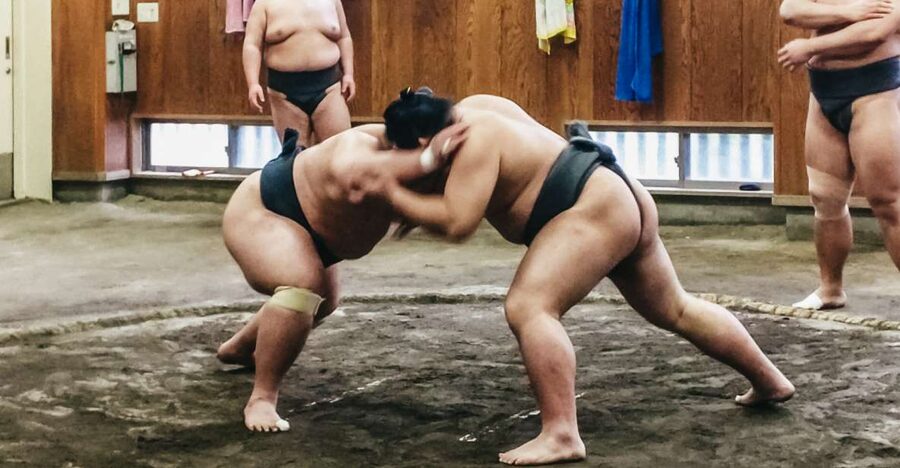
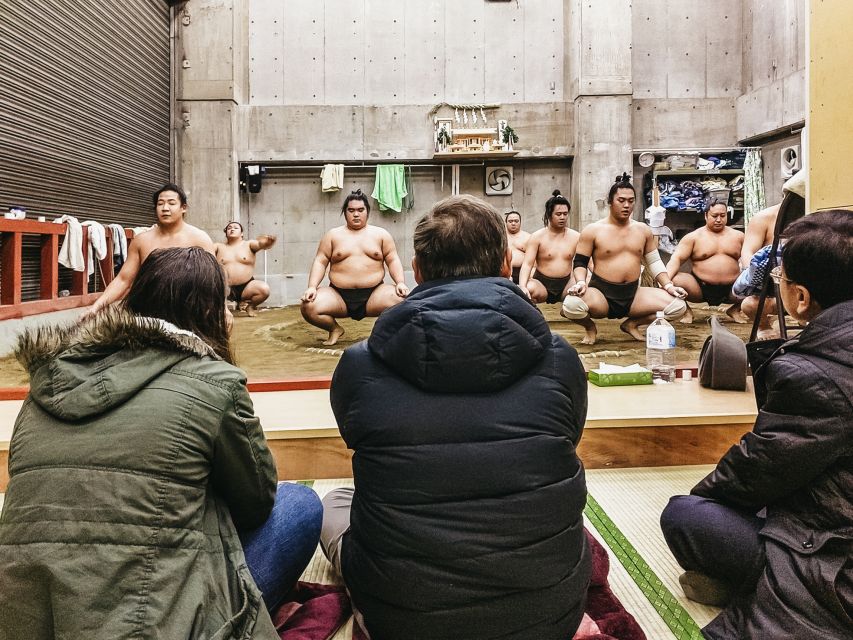
The appeal of this visit is simple: you see sumo before it reaches the polished tournament stage. There is no theatrical match designed for an audience. The wrestlers train according to the stable’s routine, and you watch from the side of the practice area.
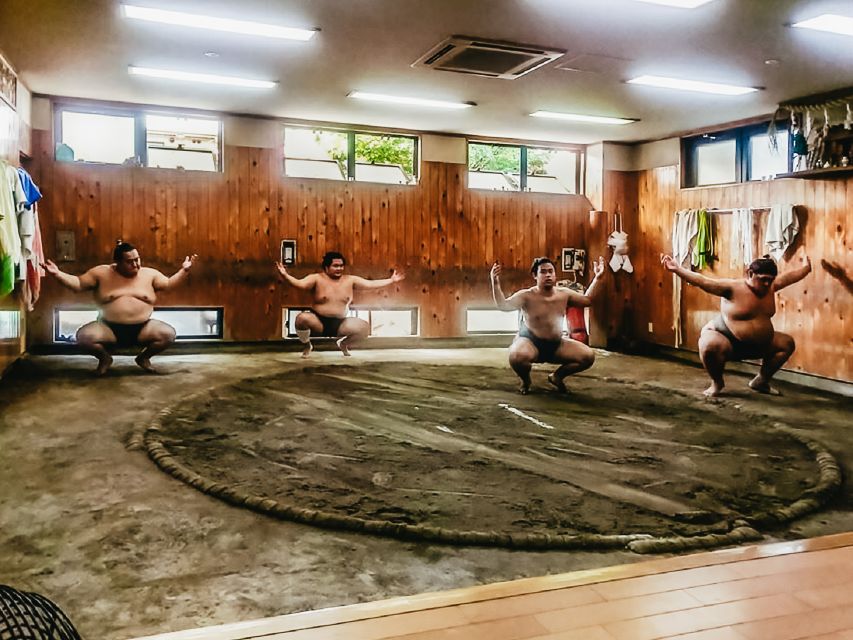
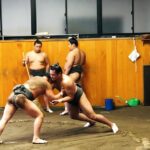
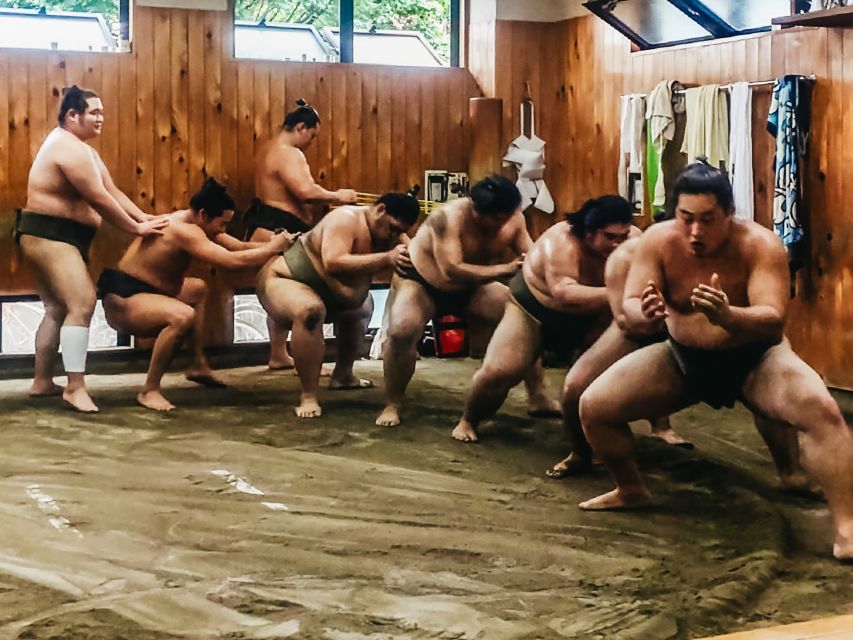
A session can include warmups, repeated exercises, footwork, pushing drills, and bouts between wrestlers. The most impressive moments are often not the loud collisions. Watch the way a wrestler shifts his weight, keeps his feet under him, or absorbs a powerful shove without losing balance.
You may also notice how much repetition is involved. Sumo is often presented as a quick clash in a tournament, but training shows the work behind that brief contest. The wrestlers practice timing, posture, grip, force, and control again and again.
The advertised visit lasts one hour. Actual training can run longer, and several people have found themselves sitting for 90 minutes or even two hours. The stable decides the pace, so do not plan a tightly timed activity immediately afterward.
What the Morning Usually Feels Like
You meet the host or greeter outside the assigned stable, then enter with the guide. You are not permitted to enter the building alone. The host checks names and explains the basic behavior expected inside.
Once seated, you watch the training in silence. Phones must be on silent, and loud conversation or unnecessary movement is not allowed. This is not the place for a running commentary, a snack, or a casual drink break.
The stillness is part of the experience, but it can also be its hardest feature. Some people are comfortable sitting on the floor with their legs tucked in. Others find it painful, especially after a long session. If you have knee problems or need a chair, arrange it in advance. Do not assume one will be available when you arrive.
You also need to think about restroom access. One account describes remaining seated without toilet breaks, food, or drinks for the full session. The safest plan is to use a restroom before check-in and bring no refreshments into the stable.
A few more Tokyo tours and experiences worth a look

The Best Seat Is Usually the First Available One
Seating is free rather than assigned. Arriving at the proper meeting time gives you a better chance of sitting near the front, while arriving late may put you in the back or behind other people.
That matters because this is a low-angle viewing experience. A person in front can block part of the practice area, especially during floor exercises. In some stables, the audience sits on two sides of the dohyo, or sumo ring, but the exact arrangement depends on the stable and the day.
Do not arrive early and enter on your own. Check-in begins at the stated meeting time, and the instructions specifically say not to ring the doorbell or go inside if you get there early. Wait nearby and meet the host as directed.
The meeting place is not reliably shown by the automatic voucher or the Google Maps point. The actual stable and directions are sent separately, generally two or three days before the visit. Read that message carefully. A mistaken assumption about the original map location has caused people to miss part of the training.
How Much English Help Will You Get?
The activity is listed with an English-speaking host or greeter, but you should not book it as a guided lesson in sumo. The host may mainly lead you to the stable, check your name, and explain the rules.
Some sessions have included little or no spoken explanation once the training began. That means you may not learn the names of the rituals, the meaning of specific movements, how wrestlers enter the ring, or how a stable functions unless the guide happens to provide that information.
This is the biggest gap between the experience and a full cultural tour. The training itself is easy to appreciate, but a short introduction would help you understand what you are seeing. If you want context, read about basic sumo rules and rituals before arriving. Knowing the purpose of shiko, the heavy leg-lifting exercise, or butsukari-geiko, a pushing drill, can make the quiet hour much more rewarding.
English ability can vary. Some people have found communication smooth and helpful, while others have experienced weak English or confusion at the meeting point. The confirmation email includes a contact number, and prompt assistance has been available when people had trouble finding the stable.
The Training Is Impressive Because It Is Not Polished
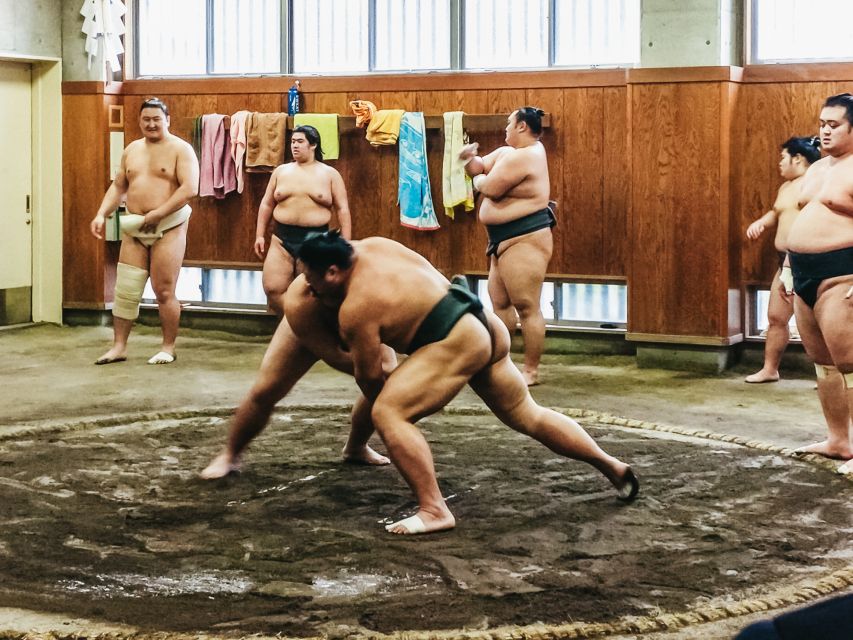
Sumo can look slow during a televised bout, but close-range training reveals surprising speed. A large wrestler can move quickly, lower his center of gravity, and react with impressive precision.
The sound is also part of the lesson. When two wrestlers collide, you hear the force rather than simply seeing it on a screen. The practice shows that sumo is not only about size. Balance, foot placement, leverage, stamina, and discipline matter just as much.
Do not expect every visit to include dramatic bouts. The stable may focus on warmups or technical drills. One session included four wrestlers doing relatively gentle keiko, with pushing practice rather than full contests. Another morning included vigorous sparring. The schedule depends on the wrestlers’ condition and the stable’s plans.
That uncertainty is worth accepting. You are attending real training, not buying a guaranteed performance. If you need a scheduled match, a tournament ticket is the more suitable choice.
The Group Photograph Comes at the End
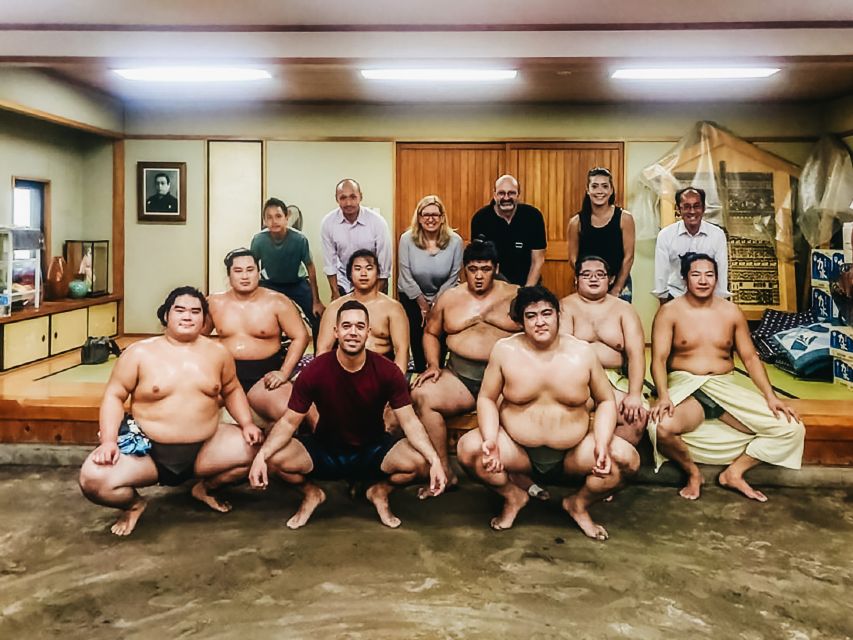
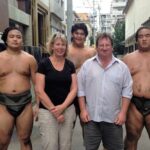
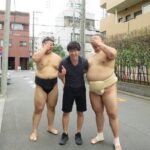
After training, you get a group picture with the wrestlers. It is a rare chance to stand beside athletes you normally see only from a great distance.
The photograph is included in the price, but you must remain until the end to receive it. If you leave early, you lose that part of the visit. This matters if the training runs longer than the one-hour description or if you have children who become restless.
Photography rules are strict. Flash photography is forbidden, and videos require permission in advance. Do not film casually from your seat. Follow the stable’s instructions, keep your phone silent, and wait for the approved moment for photographs.
Hats and sunglasses are not allowed inside, and food, drinks, luggage, and large bags must stay out. Bring a face mask or protective covering, as requested in the activity information.
A few more Tokyo tours and experiences worth a look


Price: Good Value for Close Access, Less So for a Lecture
At $77 per person, this is not the cheapest short activity in Tokyo. You are paying for access to a working stable, a managed entry, a close view of professional training, and the group photo, not for a long guided tour.
I think the price makes sense if your priority is proximity and authenticity. A tournament offers the spectacle of formal competition, but tickets can be difficult to secure, and the wrestlers are viewed from much farther away. This visit gives you a rare look at preparation, which many people find more revealing than a single match.
The value is weaker if you expect an educational presentation, comfortable seating, or a guaranteed two-hour program. The host’s role can be limited, and the meeting details arrive late. During the Tokyo Grand Sumo Tournament months of January, May, and September, training may last only about 30 minutes, with no refund for the shorter visit.
If a tournament is taking place during your stay, compare the two choices carefully. Choose the stable visit for close-up access and training. Choose the tournament for the formal bouts, crowd atmosphere, and full competition setting.
Getting There Takes Careful Reading
The stable is somewhere within Tokyo, but the precise location is selected for the day and cannot be requested. The final meeting point and directions are sent by email about three days before the scheduled date.
Build in extra time for the journey. Tokyo’s train system is excellent, but a wrong map pin or a misunderstood instruction can cost you part of the training. Save the confirmation email offline, keep the contact number handy, and check both the email and voucher before leaving your hotel.
An optional one-way hotel transfer is available for an additional arrangement. It is limited to hotels within Tokyo’s 23 wards, serves a maximum of four passengers, and uses Japanese-speaking drivers who do not speak English. Your hotel must have a front desk, and you must send the hotel name, check-in date, reservation name, and a Japanese mobile number after booking.
The pickup time arrives by email at least one day before the visit. If you are more than 10 minutes late for pickup, it is treated as a missed service. For most people, independent travel may be simpler if the stable directions are clear.
Who Will Enjoy This Most?
This suits you if you like traditional sports, Japanese culture, and behind-the-scenes experiences. It is especially good for anyone who has already seen sumo on television and wants to understand the preparation that produces those short, explosive bouts.
Older children can enjoy it if they can remain quiet and still. One family found that even children aged nine and twelve stayed captivated, and a three-year-old was given friendly attention during the photograph. Still, you know your child best. There are no games, snacks, or freedom to wander around.
It is less suitable if you have difficulty sitting on the floor, need frequent movement, or want a highly narrated tour. You may also want another option if your schedule is tight. Training can last longer than expected, and leaving early means giving up the group picture.
Practical Ways to Prepare
Before the morning, read a short explanation of sumo basics. Learn the names of a few common exercises and rituals so you can follow the action without needing constant narration.
Wear clothing that allows comfortable sitting. Avoid bringing a large backpack or suitcase, since large bags are not allowed. Leave food and drinks behind, switch your phone to silent before entering, and do not wear a hat or sunglasses.
Arrive at the meeting point on time, but not early enough to disturb the stable. Once inside, follow the host’s instructions and avoid leaning on walls or pointing your feet toward the practice area. The setting is formal, and respectful behavior matters more here than getting the perfect photograph.
If you need a chair or special seating, request it before the visit. Do not count on being able to rearrange your place after training begins.
Cancellation and Timing Details
You can cancel up to 11 days before the scheduled date for a full refund. The activity lasts about one hour on paper, but the stable may run a longer session. During tournament months, the published training period can drop to about 30 minutes.
The meeting time and stable are confirmed shortly before the date. Specific stable requests cannot be accommodated, and all assigned stables are in Tokyo.
Should You Book This Sumo Visit?
Book it if you want to see professional sumo wrestlers at close range and are willing to treat the morning as quiet observation rather than entertainment. The physical power, precise movement, and serious repetition make this one of Tokyo’s more unusual cultural activities.
Skip it if you need comfortable seating, detailed English instruction, or a guaranteed full-length training session. For the best experience, arrive on time, prepare for floor seating, study a few sumo terms beforehand, and keep your schedule open after the visit. At $77, it is a fair choice for access to the stable, but the real value lies in seeing authentic training, not in the amount of explanation provided.
FAQ
Where does the sumo training visit meet?
The actual meeting place is decided two or three days before the scheduled visit. You receive the stable location and directions by email. The Google Maps location and automatic voucher may show sample information, so check the final email and the stable named on your voucher.
How long does the sumo training last?
The normal training session lasts about 60 minutes. It may run longer, with some sessions lasting 90 minutes or two hours. During Tokyo Grand Sumo Tournament months in January, May, and September, training may last only about 30 minutes.
Can I choose the sumo stable?
No. The stable and meeting location depend on the day, and specific location requests cannot be accommodated. All assigned stables are within Tokyo.
Is the experience guided in English?
An English-speaking host or greeter is provided. The host may mainly handle check-in and entry, and the amount of spoken explanation can be limited. You should not expect a full lecture on sumo rules or rituals.
Can I take photos or videos?
You may take photos according to the stable’s instructions, but flash photography is forbidden. Videos may only be taken with prior permission. A group photograph with the wrestlers is included at the end.
What should I bring?
Bring a face mask or protective covering. Do not bring food, drinks, luggage, or large bags into the stable. Hats and sunglasses are also not allowed.
Can I leave before training ends?
Yes, you may leave early, but you will not receive the group photograph. Since training can last longer than the advertised hour, plan your schedule with some flexibility.
Is hotel pickup available?
An optional one-way hotel transfer is available for hotels within Tokyo’s 23 wards. It is limited to four passengers, uses Japanese-speaking drivers without English, and requires a hotel with a front desk. A pickup more than 10 minutes late is treated as a missed service.
More Morning in Tokyo
More Sumo Experiences in Tokyo

More tours in Tokyo we've reviewed












Sumo Experiences, compared.
 ★ 4.8Tokyo: Sumo Show Experience with Chicken Hot Pot and a PhotoFrom $1032 hours
 ★ 4.8Tokyo: Sumo Show and Dining ExperienceFrom $7990 minutes - 2 hours
 ★ 5.0the SUMO showFrom $89
 ★ 5.0Tokyo Sumo Entertainment Show with Chicken Hot Pot and PhotoFrom $106
 ★ 4.6Tokyo: Sumo Tournament Tour with Chair Seat TicketsFrom $141
 ★ 5.0Tokyo Grand Sumo Tournament Viewing Tour with TicketsFrom $124