Reviewed · SUMO EXPERIENCES
Tokyo Sumo Morning Practice Tour at Stable
Sumo practice is not a staged dinner show. You sit close to the ring while professional wrestlers stretch, clash, and repeat the hard drills that prepare them for Japan’s national tournaments. I like the real working stable and the chance to see many bouts without the long ceremonies of a formal match. I also like the guides’ explanations, which make the rituals and ranking system easier to follow.
In This Article
- Key points to know before booking
- Why morning practice beats a polished sumo show
- Meeting at Ryogoku Station at 7:45am
- Entering a working sumo stable
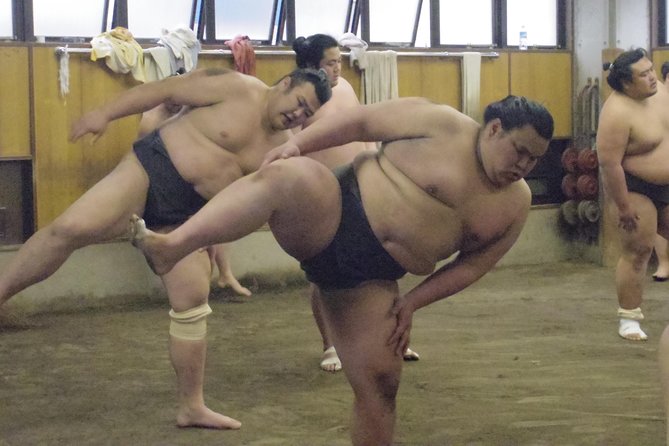
- What the 90-minute practice actually shows you
- The guide’s role, and the headset issue
- Seating, photos, and the close-up view
- Heat, comfort, and what to bring
- Is $83.57 a fair price?
- Who should book this morning?
- Simple etiquette that makes the visit better
- FAQ
- Where does the tour meet?
- How long does the experience last?
- How many people can join?
- Can children join the tour?
- Are photos and videos allowed?
- Can I leave the stable during practice?
- Is the stable air-conditioned?
- Should you book the Tokyo sumo morning practice tour?
The early start is the main hurdle. You meet at 7:45am, seating can affect your view, and the stable may be hot and quiet rather than comfortable and air-conditioned. Commentary through headsets helps, though some visitors have found the audio hard to hear or distracting during the practice.
Key points to know before booking
- Watch real morning training: This is a working sumo stable, not a theatrical performance built for tourists.
- See the action from close range: You sit near the practice ring, with front seats sometimes reserved for sponsors.
- Learn how sumo works: Guides explain Shinto customs, rankings, training, and the six annual Grand Tournaments.
- Arrive early for better seating: The group enters together, and the first people in may get the second row behind reserved seats.
- Expect strict etiquette: Stay silent, keep phones quiet, avoid flash and video, and never step onto the sandy ring area.
- Plan for summer heat: There is no air conditioning, though water and sports drinks are allowed inside during summer.
Why morning practice beats a polished sumo show
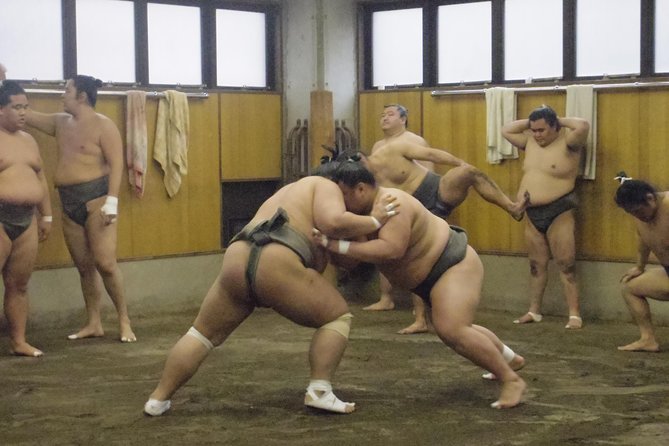
The most valuable part of this experience is its lack of polish. You are not watching actors in costumes or a short demonstration designed around applause. You are watching wrestlers work through a demanding morning routine inside the place where they train for competition.
That distinction matters. A tournament gives you the complete public ritual, ranking drama, and packed-arena atmosphere. Morning practice gives you repetition. You may see wrestlers pushing, slapping, grappling, and resetting again and again. One practice session included dozens of exchanges, giving the group more actual wrestling than a formal tournament schedule might offer in the same amount of time.
The setting also changes how you see the sport. From the seats near the ring, you notice the silence before a bout, the controlled movements, and the force of each collision. Sumo looks slow on television until you see the speed and power at close range. Then the sport makes much more sense.
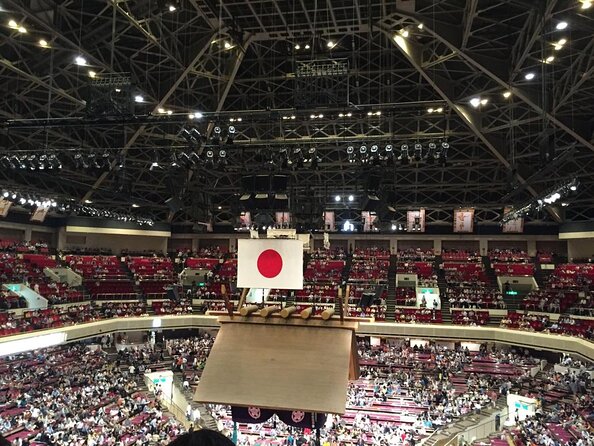
This is also a useful choice if you cannot attend one of Japan’s six Grand Tournaments. Three take place in Tokyo, with one each in Osaka, Nagoya, and Fukuoka. Each lasts 15 days, but tournament dates may not match your trip. Practice runs throughout the year, subject to the stable’s schedule and the content of that morning’s training.
A few more Tokyo tours and experiences worth a look
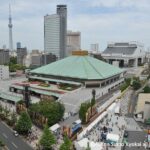
Meeting at Ryogoku Station at 7:45am
The experience begins near Ryogoku Station, in Tokyo’s Sumida area, at 7:45am. Ryogoku is closely tied to sumo, so even the starting point puts you in the right part of the city. Your guide gathers the group, gives an introduction, and may lead you by train to the stable.
Pay close attention to your confirmation email. The meeting point can vary by booking option, and one part of the process may involve taking a train after the group meets. Some people have also found map directions slightly off, so allow a little time to identify the exact meeting place.
The group can include up to 20 people. That is not a private visit, but it is small enough for a guide to keep everyone together and provide explanations through an audio system. The early hour is practical, since morning practice is part of the wrestlers’ normal routine, but it means this tour works best when you are already staying somewhere with an easy route to Ryogoku.
Use the restroom before meeting the group. Once inside the stable, leaving halfway through is discouraged, and you cannot re-enter after leaving.
Entering a working sumo stable
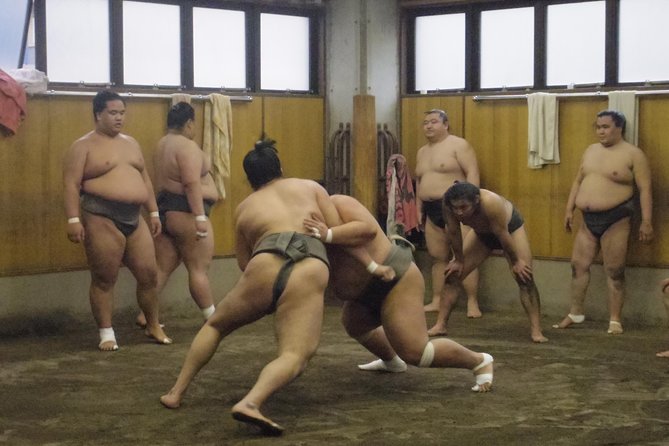
A sumo stable, or heya, is both a training place and a home base for wrestlers. This visit gives you access to one of roughly a dozen stables in the local sumo district that prepare athletes for professional competition.
You remove yourself from the usual sightseeing rhythm as soon as you enter. There is no browsing, wandering, or taking pictures whenever you like. You sit in the assigned area and watch the practice unfold in front of you. Depending on the stable, seating may be on low stools rather than floor mats, a detail that can make the long viewing period easier.
The ring is sacred to the wrestlers. Do not step onto the raised ring or the surrounding sandy area. Keep your legs from pointing toward it, since showing the soles of your feet is considered rude. These rules are not fussy extras. They help protect the stable’s normal training routine and show respect for a place tied to Shinto tradition.
The guide explains the setting before the practice begins. Guides named in feedback include Seiji, Yumi, Noriko, Nobu, and Cameo. The strongest descriptions of the experience consistently point to clear, warm instruction that helps first-time viewers understand what they are seeing without turning the morning into a lecture.
What the 90-minute practice actually shows you
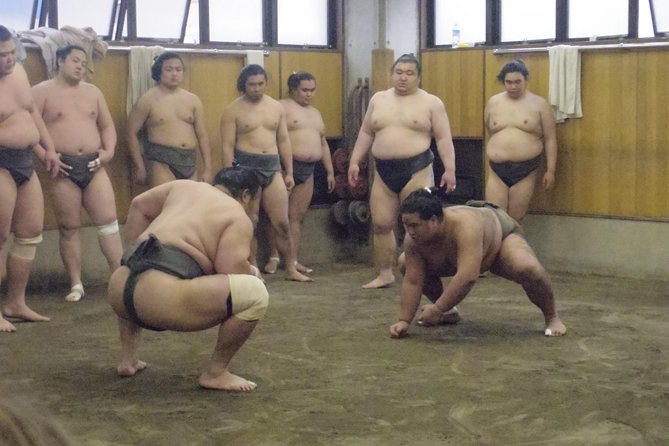
The listed practice time is about 90 minutes, though the exact length can change according to that day’s training. Some mornings may be shorter or longer. The athletes’ work, not a fixed stage schedule, controls the pace.
You might first see stretching and basic exercises, followed by more direct practice bouts. As the session develops, the wrestling can become more intense. The contrast between the enormous size of the athletes and the precision of their movements is the main visual lesson.
Watch for the effort between bouts. Sumo is not only about the final shove outside the ring. The wrestlers repeat movements, build balance, brace their bodies, and work on timing. A guide may point out the difference between a simple practice exchange and a more serious clash between seasoned wrestlers.
Your job is to watch quietly. Phones must be on silent, and photos are allowed only without flash or shutter sounds. Video is not allowed. You cannot ask wrestlers to pose while practice is still underway, and you should avoid any movement that might break their concentration.
This quiet format can feel unusual at first. You may want to whisper a question or comment to the person beside you, but resist that impulse. The silence lets you hear the room, the impacts, and the rhythm of training. It also keeps the group from becoming a distraction.
The guide’s role, and the headset issue
The guide is more than a person who leads you from the station. Before you sit down, the guide explains sumo’s religious roots, its long development, the tournament calendar, and the ranking system. For someone who knows little about sumo, that background is useful.
During practice, commentary helps identify what is happening. You may learn why wrestlers perform certain exercises, how the competition process works, and what separates training from a tournament bout. Several guides have been singled out for clear English and strong enthusiasm for the sport.
The audio setup is the weakest part of the experience for some people. Static or low volume can make the commentary difficult to follow. A running explanation can also compete with the action, especially when an important exchange is happening right in front of you.
I would treat the headset as a helpful aid, not the main event. Listen before the practice begins and during pauses, then give your eyes priority when the wrestling becomes intense. If you have a question, save it for the end if the guide offers time for discussion. One useful improvement would be a short handout or advance briefing covering basic rules, leaving the live commentary for moves and moments that need explanation.
The amount of question time depends on the morning. Some groups have had a useful discussion afterward, while others felt they left with unanswered questions. If learning the rules is your main goal, do some preparation before you arrive.
A few more Tokyo tours and experiences worth a look


Seating, photos, and the close-up view
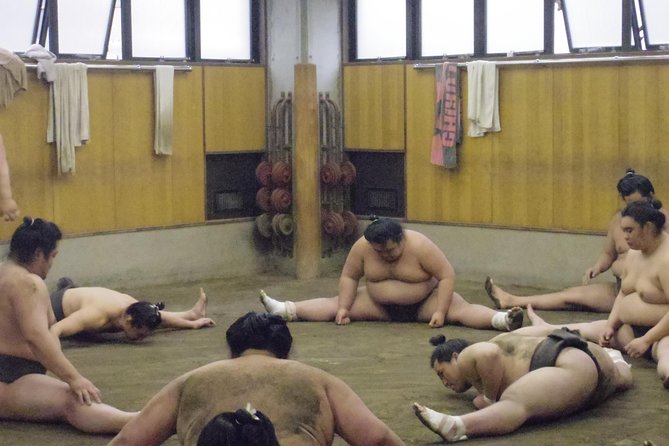
Seating can shape the experience. The front area may be reserved for sponsors or other people connected with the stable. Arriving early helps you enter near the front of the group and may put you in the second row, which can offer a very good view.
Even from farther back, the practice area is close enough to feel immediate. Still, the group sits in one assigned viewing area, and you cannot move around to chase a better angle once training is underway. If perfect sightlines matter to you, arrive promptly and follow the meeting instructions closely.
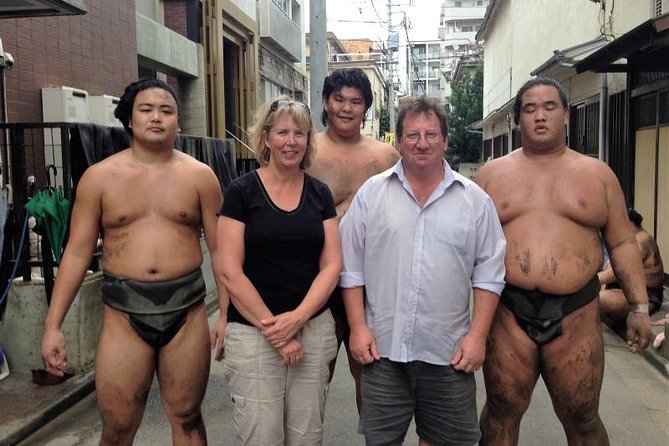
A short photo opportunity may take place after practice. Some groups have been able to take pictures with wrestlers, sometimes with two athletes posing for each group. This is a welcome finish, but do not treat it as guaranteed extended social time. The photo period can last five minutes or less, and the group may be moved out soon afterward.
Photography has strict limits. Flash and shutter sounds are forbidden, videos are not allowed, and pictures cannot be used without permission. Respect privacy and image rights. Most important, never interrupt practice to request a photo.
Heat, comfort, and what to bring
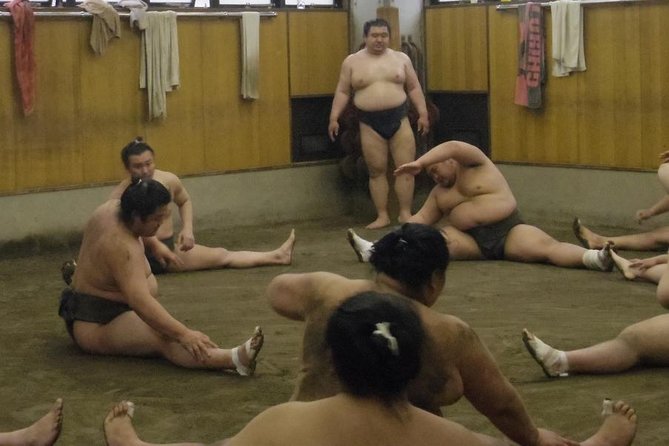
There is no air conditioning inside the stable. Tokyo summers can be very hot, and the still air may make the two-hour morning harder than expected. During summer, you are allowed to drink water and sports drinks inside, which is a practical exception to the normal no-eating-and-drinking rule.
Bring water for the journey and consider an ice pack or cold towel in hot weather. Wear clothing that will keep you comfortable while sitting quietly. Sunglasses and hats are not allowed inside the stable, so you will need to remove them before entering.
Do not arrive if you are feeling unwell. You will be expected to remain seated and quiet for much of the visit, and leaving in the middle is discouraged. That makes the restroom stop and summer planning more important than they might sound.
Children must be at least 12 years old. Kids 11 and under cannot enter the stable, so this is not a family activity for younger children.
Is $83.57 a fair price?
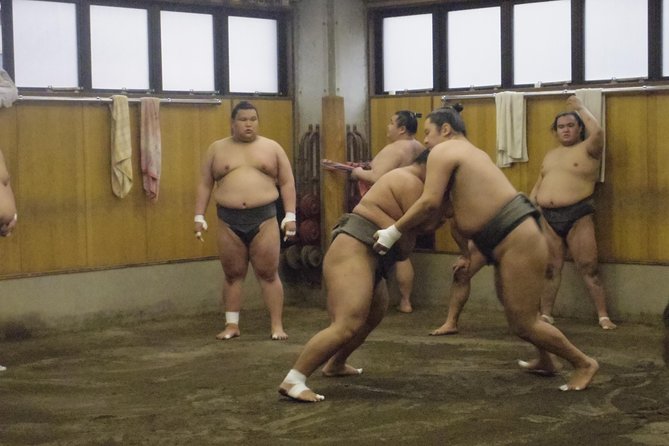
At $83.57 per person, this is not a cheap two-hour activity. You are paying for access to a working stable, a guide, coordination with the venue, and a rare chance to observe professional wrestlers at close range.
The value depends on what you want. If you simply want to see a sumo wrestler, there are less expensive ways to encounter the sport from a distance. If you want to attend a tournament, the ticket cost and scheduling can be different, and the tournament may not be running during your visit.
For a first visit to Tokyo, I think the price is easier to justify if you care about real cultural access rather than a quick photo stop. The best moments come from watching training that has not been redesigned for an audience. You may see hard sparring, learn about wrestlers’ rankings and daily discipline, and leave with more respect for how much work goes into a public bout.
The value drops if you expect a formal show, a long meet-and-greet, guaranteed photographs, or a detailed rules class. Commentary quality also matters. If the headset has static or the narration feels too constant, the experience can seem expensive for the amount of structured instruction provided.
The tour has a 4.8 rating from 298 ratings, with 96 percent recommending it. Those numbers point to a strong overall experience, but the practical complaints are worth taking seriously: seating can affect the view, photo time is brief, and the audio is not perfect for everyone.
Who should book this morning?
I would choose this tour for a first-time sumo viewer who wants a close look at training and does not mind following strict etiquette. It suits adults and children aged 12 and older who can sit quietly and appreciate an unscripted cultural experience.
It is also a good fit if your Tokyo dates do not overlap with a Grand Tournament. Practice gives you a way to see the sport’s physical side without waiting for a tournament schedule.
I would hesitate if you dislike early mornings, struggle with heat, need to move around often, or want a lively guide-led attraction. This is observation, not participation. You cannot enter the ring, touch the athletes, film the practice, or chat freely during training.
The experience may be especially rewarding for sports fans. You will see preparation rather than just competition, and the guide’s explanations can help you follow the ranking system and tournament structure when you later watch sumo on television.
Simple etiquette that makes the visit better
Follow these rules and the morning should feel respectful and smooth:
- Keep your phone silent.
- Take photos without flash or shutter sounds.
- Do not record video.
- Do not eat or drink inside, except water or sports drinks during summer.
- Do not wear sunglasses or hats in the stable.
- Do not step onto the ring or sandy area.
- Do not point your feet toward the ring.
- Stay through the practice whenever possible.
- Do not speak loudly or distract the wrestlers.
- Do not ask for photos during training.
These are small acts, but they matter in a working stable. You are being allowed to watch a private training routine, not attending a public performance.
FAQ
Where does the tour meet?
The standard meeting point is near Ryogoku Station, with the guide meeting the group at 7:45am. Check your confirmation email because the meeting location can differ by booking option.
How long does the experience last?
The experience lasts about two hours. The practice itself is listed at roughly 90 minutes, but the total length can be a little shorter or longer depending on that morning’s training.
How many people can join?
The tour has a maximum group size of 20 people.
Can children join the tour?
Children must be at least 12 years old. Kids aged 11 and under cannot enter the sumo stable.
Are photos and videos allowed?
Photos are allowed without flash or shutter sounds. Videos are not allowed, and you cannot request photos with wrestlers while practice is still taking place.
Can I leave the stable during practice?
You should use the restroom before arriving and do your best to stay until practice ends. Once you leave the stable, you cannot re-enter.
Is the stable air-conditioned?
No. There is no air conditioning inside the stable. During summer, water and sports drinks are allowed, and bringing an ice pack or cold towel is recommended.
Should you book the Tokyo sumo morning practice tour?
I would book it if you want close-up, unscripted sumo training and can handle an early start, quiet seating, and possible summer heat. The chance to watch repeated practice bouts inside a real stable is far more revealing than a quick tourist photo or theatrical sumo show.
Go in with realistic expectations. The viewing area may not give everyone the same angle, the photo opportunity is short, and the headset commentary may not be perfect. But if you respect the rules and value access over comfort, this $83.57 experience can give you a lasting understanding of why sumo is much more than two huge athletes pushing each other out of a ring.
More Morning in Tokyo
More Sumo Experiences in Tokyo

More tours in Tokyo we've reviewed












Sumo Experiences, compared.
 ★ 4.8Tokyo: Sumo Show Experience with Chicken Hot Pot and a PhotoFrom $1032 hours
 ★ 4.8Tokyo: Sumo Show and Dining ExperienceFrom $7990 minutes - 2 hours
 ★ 5.0the SUMO showFrom $89
 ★ 5.0Tokyo Sumo Entertainment Show with Chicken Hot Pot and PhotoFrom $106
 ★ 4.6Tokyo: Sumo Tournament Tour with Chair Seat TicketsFrom $141
 ★ 5.0Tokyo Grand Sumo Tournament Viewing Tour with TicketsFrom $124