Reviewed · SUMO EXPERIENCES
Tokyo: Sumo Tournament Tour with Chair Seat Tickets
Tokyo sumo is not a staged dinner show or a quick demonstration. It is the real tournament, with wrestlers competing for rank while the crowd reacts to every slap, shove, and sudden throw. I like the local arena atmosphere and the way a guide such as Mieko, Taka, Mia, or Hiro can explain the rules, rankings, rituals, and wrestlers as the action unfolds.
In This Article
- Key points to know before booking
- Why Tokyo sumo is worth planning around
- Meeting near JR Ryogoku Station at 2:15 PM
- What happens inside Ryogoku Kokugikan
- The guide changes how much you understand
- Choosing between 2F chairs and 1F box seats
- Sumo customs make the afternoon more than a sports match
- Food, lunch options, and what to bring
- How much value do you get for $141?
- Who should book this sumo experience?
- Should you book it?
- FAQ
- Where does the tour meet?
- What time do the main ceremonies begin?
- When do the Makuuchi matches start?
- Are the seats on the second floor?
- Are 1F box seats shared?
- Is food included?
- Is an English-speaking guide included?
- Can children attend?
- Can I cancel the booking?
I also like that this tour solves the hardest part: finding a ticket to an event that can sell out quickly. The main consideration is the seating. Your 2F chair may be fairly high, and you cannot select the exact seat, though Ryogoku Kokugikan is compact enough that the view is generally good. If you choose 1F box seats, you get a private seating space rather than sharing with other ticket holders.
Key points to know before booking
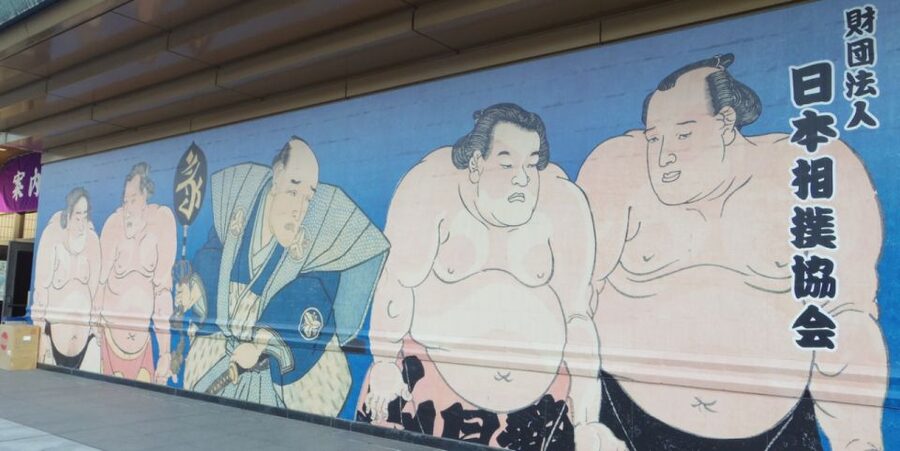
- This is a genuine tournament: You watch scheduled matches involving highly ranked wrestlers, not a performance created only for tourists.
- The timing favors the big names: The Makuuchi ring-entering ceremony is at 3:40 PM, Yokozuna ceremony at 3:55 PM, and top-division matches begin at 4:10 PM.
- Your guide adds real value: Guides explain rankings, customs, sponsor banners, tactics, and who to cheer for.
- 2F chairs offer a broad view: Seats can feel distant on the map, but the arena is small and the elevated angle helps you follow the ring.
- Ticket access is the main reason to book: Official tickets may disappear fast, so paying more can be sensible if seeing a tournament matters to you.
- Check your option carefully: Box seats, lunch, the cheer kit, and entrance assistance vary by booking choice.
Why Tokyo sumo is worth planning around
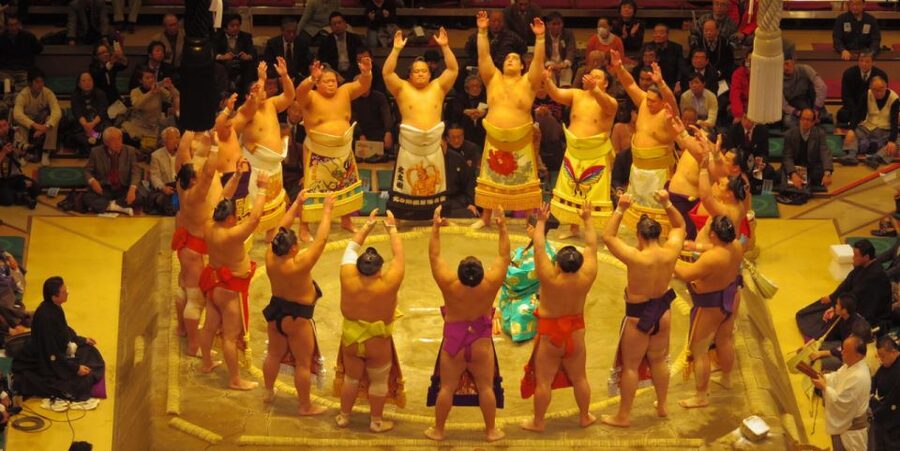
Sumo tournaments are not held every day. The Tokyo event is one of the limited annual opportunities to see the sport in its full setting, with formal ceremonies, ranked divisions, sponsor displays, and a crowd that knows the wrestlers.
That scarcity matters. If your Tokyo dates overlap with a tournament, this can become one of the most distinctive experiences on your schedule. If they do not, there is no simple substitute inside this booking. A stable visit or demonstration may teach you about sumo, but it will not give you the tension of a live bout that counts in the tournament.
I especially like the contrast between the sport’s formal customs and its short, explosive matches. A bout can end almost immediately when one wrestler pushes the other out of the ring or forces any part of his body to the ground. The ceremony takes time and follows strict rules. The match itself may last only moments.
For a first visit, that contrast is easy to miss without help. The guide gives you a framework, then points out what matters as the day progresses. You begin to understand why one wrestler draws more sponsor banners, why the crowd favors a certain competitor, and why rank affects the order and ceremony.
Meeting near JR Ryogoku Station at 2:15 PM
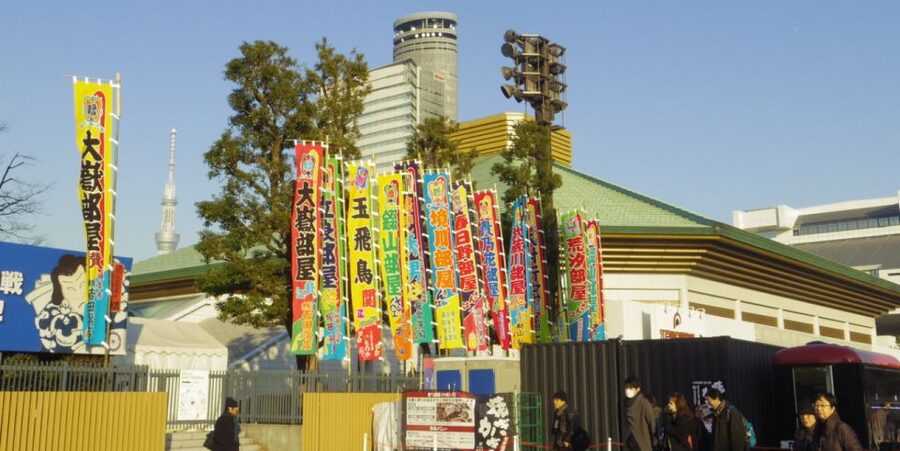
The standard meeting time is 2:15 PM at the West Gate of JR Ryogoku Station. This is a useful starting point because the station is close to Ryogoku Kokugikan, the sumo hall, and the guide can get the group moving in the right direction.
Allow extra time to find the correct group. Several groups may meet around the same place, and the booking instructions can include a color and group number. Keep the voucher and your booking messages available, especially if you will not have a reliable internet connection. A clear photo of the meeting point would help, so read the exact instructions instead of relying only on the station name.
The meeting point can vary according to the option you book. That detail matters because a lunch version or entrance-assistance version may follow a different arrangement. Check the final meeting instructions before leaving your hotel.
The guide then leads the group toward the stadium. This short walk is not a major sightseeing stop, but it removes the stress of navigating the arena entrance and finding the correct gate. One guide may escort you to your seats and remain available during the event. An entrance assistant option is different: staff take you to the stadium but do not enter with you.
What happens inside Ryogoku Kokugikan
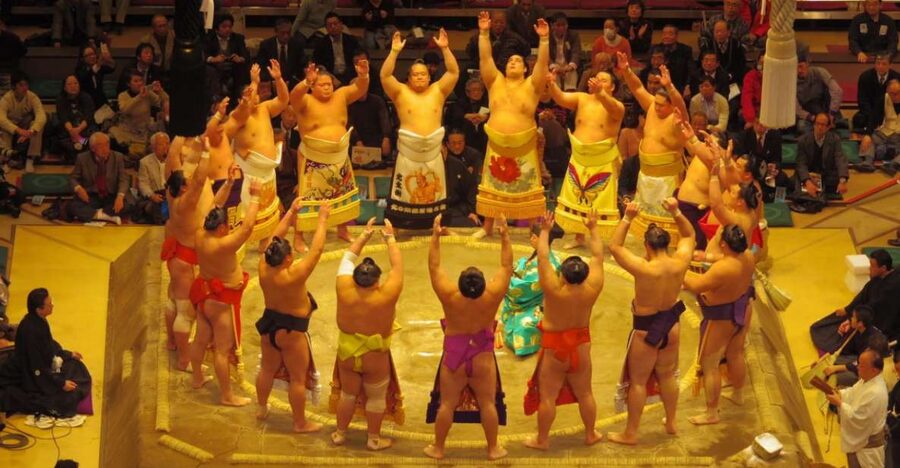
The main action for this tour begins in the afternoon. Lower-ranked bouts may already be under way before you arrive, but the schedule supplied for this experience focuses on the major ceremonies and the Makuuchi division.
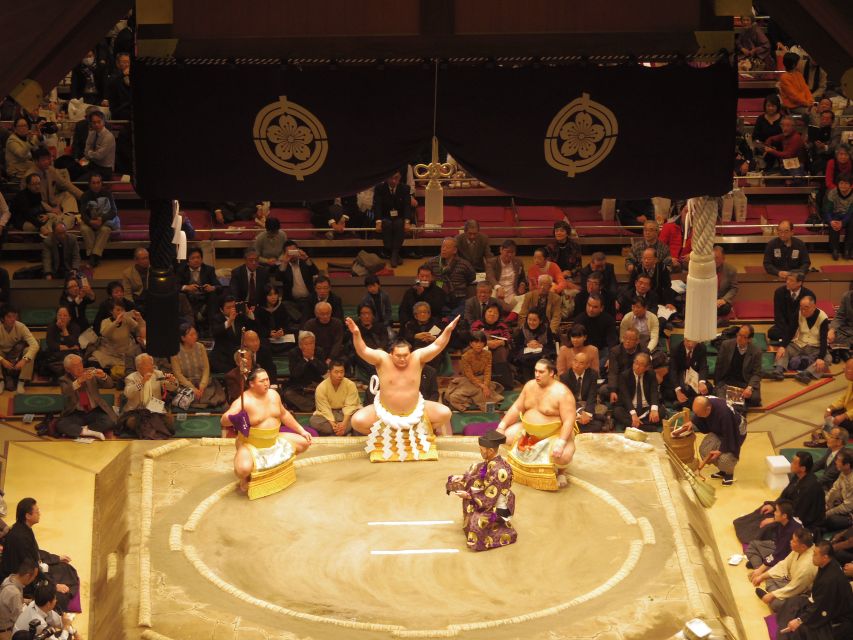
At 3:40 PM, the Makuuchi wrestlers take part in their ring-entering ceremony. These are the top-division competitors, and the ceremony gives you a chance to see the wrestlers together before the individual bouts begin.
Five minutes later, at 3:55 PM, the Yokozuna ceremony takes place. Yokozuna are the highest-ranked wrestlers, so this is one of the key moments of the day. Your guide can explain what you are seeing and help you connect the formal movements with the sport’s customs.
The Makuuchi matches begin at 4:10 PM and continue until the tournament finishes at about 6:00 PM. This gives you close to two hours of top-division action, though the pace is broken by introductions, rituals, and preparation between bouts.
That rhythm is part of the appeal. Sumo is not nonstop wrestling. The pauses build suspense and give the crowd time to react. The wrestlers face each other, prepare, and wait for the right instant. Then the contest may be over before you have finished deciding which move won it.
The guide changes how much you understand
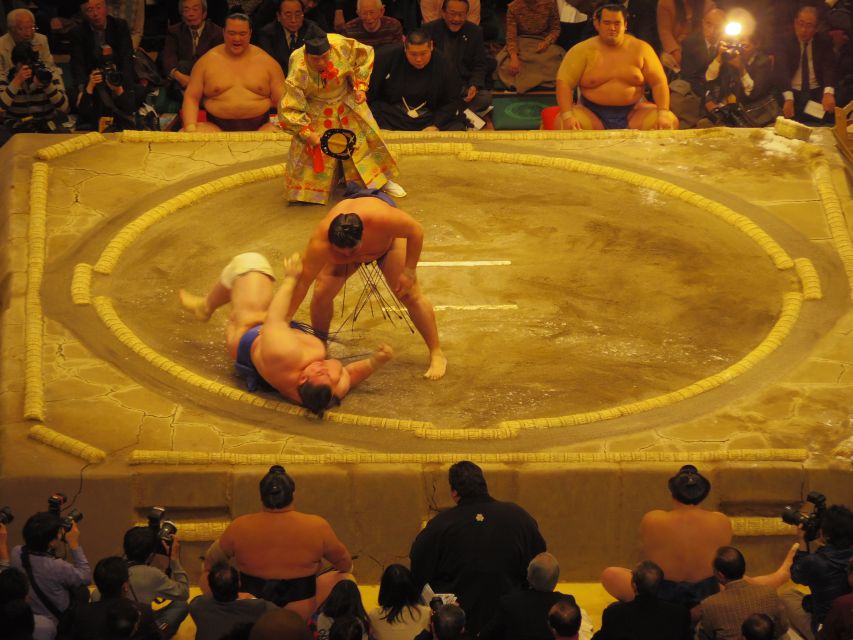
The strongest part of this booking is the English-speaking guide. Sumo can look confusing at first. You see a ring, elaborate clothing, repeated gestures, and wrestlers with different levels of fame. Without context, the event is still striking, but much of its meaning remains hidden.
A good guide explains the ranking system, the history and customs, and the basic ways a wrestler can win. Guides also help identify the competitors and explain why certain bouts matter. Some prepare a printed sheet with the day’s matches and the wrestlers’ current positions, which is especially useful if this is your first tournament.
The guides named in the supplied feedback include Taka, Mieko, Mia, Hiro, Yuko, Sho, Michiko, Naomi, Kaz, and others. Their approach may differ, but the repeated strength is clear: a guide who loves sumo can make the event easier to follow and more fun to join.
You may hear advice about which wrestler to support, when to cheer, and what is happening between matches. That personal connection helps turn a series of unfamiliar bouts into a competition you can follow. It also gives the group a shared reason to react instead of simply watching in silence.
The guide is not necessarily giving a constant translation of every second. In some versions, the most useful help comes before the tournament and during selected moments. If you want a formal lecture or nonstop commentary, confirm the option details. If you want a friendly introduction and help with the basics, this format is well suited.
Choosing between 2F chairs and 1F box seats
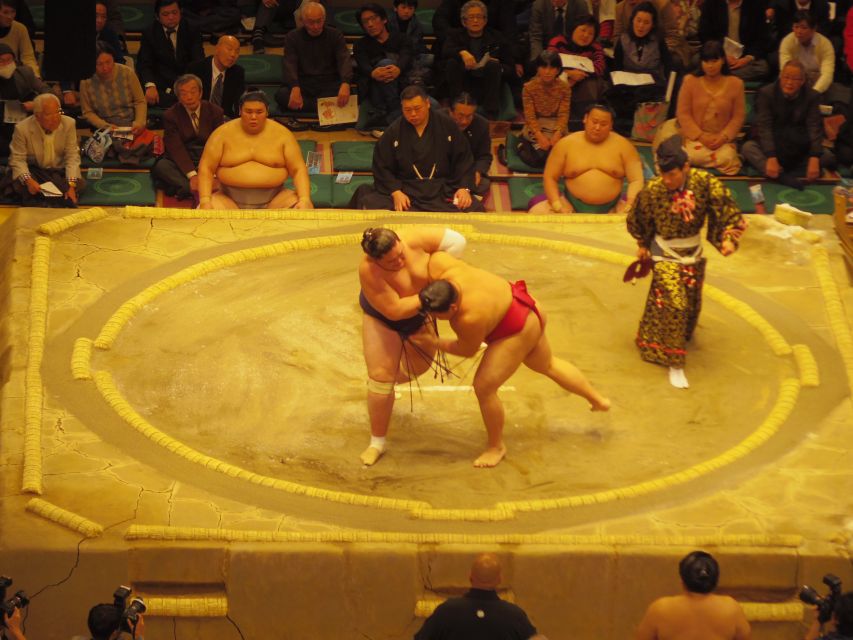
The advertised price is $141 per person, with 2F chair seats or 1F box seats depending on the option selected. For many people, the price is less about the physical ticket alone and more about access to a difficult-to-book event.
The 2F chair seats are the standard choice. You cannot select a specific chair, and some seats are near the top of the arena. That sounds discouraging until you consider the layout. Ryogoku Kokugikan is not a giant stadium, and several people found the elevated view more than adequate for seeing the ring and following the matches.
The tradeoff is distance. You will not feel as close to the wrestlers as you would in a lower seat, and one account found the seats small and far away. Bring realistic expectations. This is a good view for understanding the entire ring, not a ringside experience.
The 1F option uses box seats rather than individual chairs. The important difference is that you have your own seating space without sharing it with other groups. If comfort, privacy, or a lower position matters more than price, compare the box-seat option carefully before booking.
Ticket distribution also varies. For 2F chair seats, the guide hands over the tickets on the tour date. Large luggage cannot go into the seating area, so leave suitcases at your hotel or use suitable storage before meeting the group.
Sumo customs make the afternoon more than a sports match
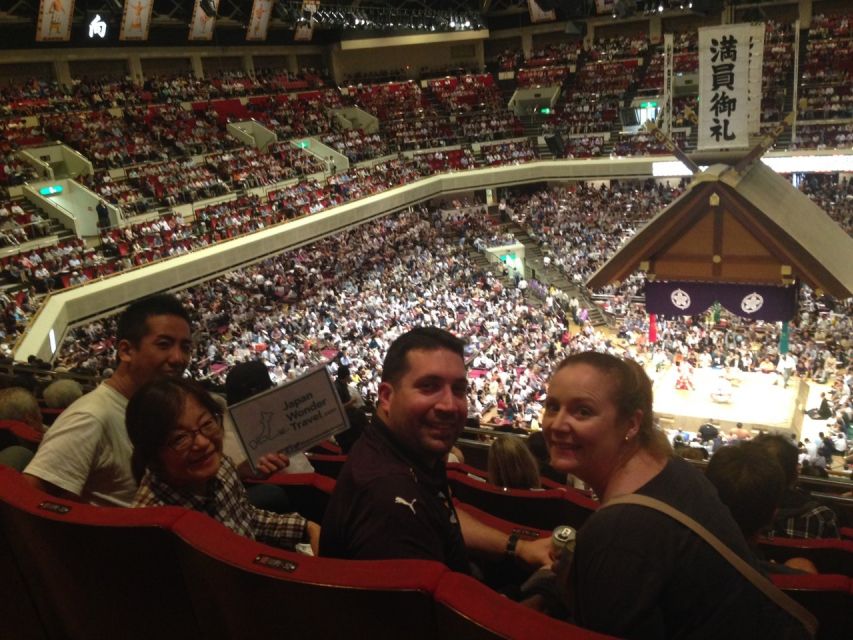
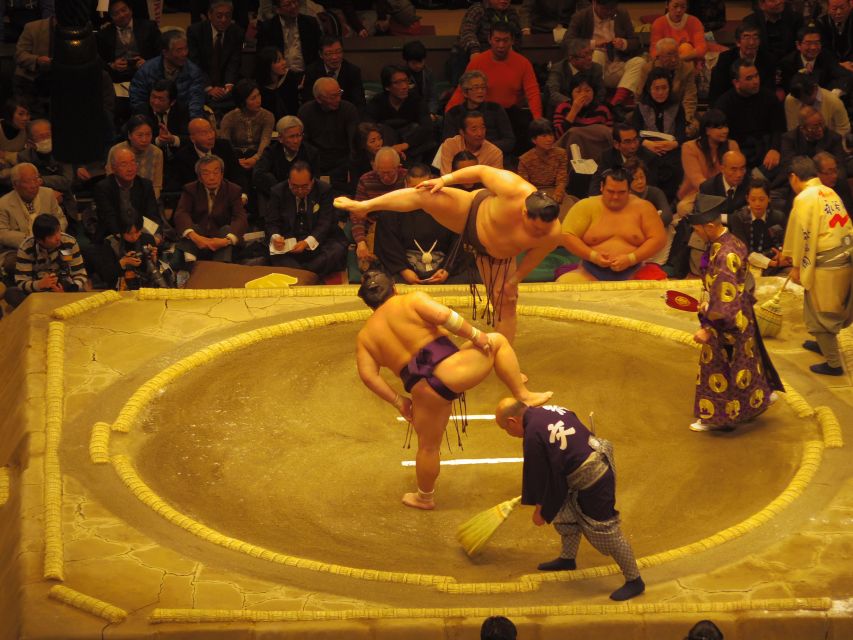
Sumo’s appeal is partly physical and partly ceremonial. The wrestlers’ movements before a bout are not filler. They reflect a sport shaped by long-standing customs, strict ranking, and formal respect.
The ceremonies at 3:40 and 3:55 PM are therefore worth arriving for. If you enter only for the matches, you miss the part that helps explain why sumo feels different from ordinary wrestling or a modern sports league.
The crowd is another important piece. You are sitting with people who follow the sport, recognize the wrestlers, and react to the results. A supporter kit, when included with your selected option, gives you a simple way to cheer along. It can also make the event more approachable if you are unsure when to clap or support a particular wrestler.
The kit is not the reason to buy the tour, but it adds a bit of fun. More important is the chance to see the event as a Japanese audience sees it, rather than watching a simplified version arranged for an overseas audience.
Food, lunch options, and what to bring
Food and drinks are not included in the standard package. The arena has food and drinks available for purchase, and one account found the prices reasonable. Bring money or a payment method suitable for your visit, but do not assume a meal is part of the basic $141 price.
Some booking options include lunch, such as a packed meal or chanko nabe. Chanko nabe is closely linked with sumo, and one account found the hot pot enjoyable. Still, the lunch details are not identical across options. One person expected a hot pot meal that did not materialize, while another found the provided lunch box tasty.
Read the exact option name and inclusions before paying. If you have allergies or dietary restrictions, provide that information at booking or after reserving. Do not rely on the general tour description to tell you which meal, if any, you will receive.
For the stadium itself, travel light. Large luggage is not permitted in the seating area. Baby strollers are also not allowed, and the activity is not suitable for wheelchair users.
How much value do you get for $141?
At first glance, $141 is a high price for an afternoon ticket. The value improves if you have already tried and failed to buy directly, or if official tickets have sold out by the time you know your Tokyo dates.
You are paying for more than entry. Depending on your option, the package may include the guide, a supporter kit, lunch, and either a chair or box seat. The guide also saves you the trouble of handling an unfamiliar ticket system and finding the right entrance inside a large public venue.
The markup will not feel worthwhile to everyone. If you speak Japanese, understand sumo, and can obtain an official ticket easily, buying independently may cost less. If this is your only chance to see a tournament, the extra cost may be a fair exchange for certainty and explanation.
The 4.6 rating from 753 reviews suggests broad satisfaction, but your value calculation should focus on your priorities. Choose it for access and understanding, not because every seat is close or every version includes lunch.
Who should book this sumo experience?
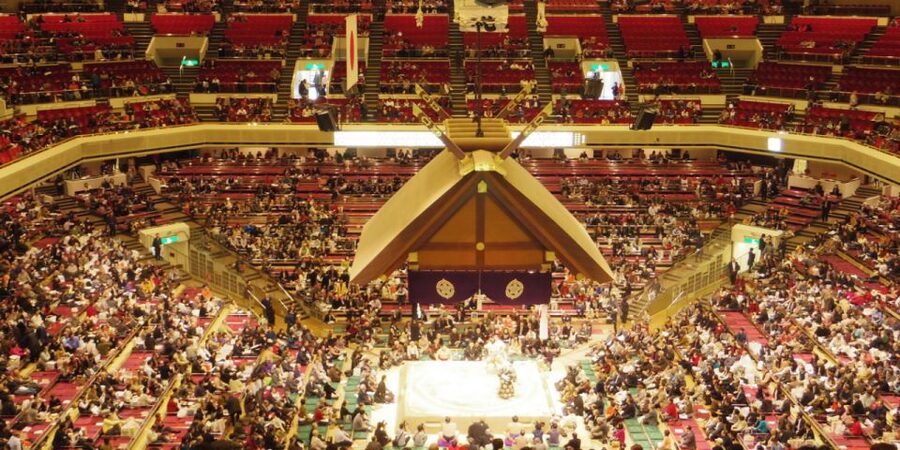
I would recommend it most strongly to first-time sumo spectators, visitors with limited time in Tokyo, and anyone who has struggled to find tournament tickets. Families can enjoy it too, though children aged 3 and under enter free without their own seat and must sit on an adult’s lap. Children aged 4 and older need their own tickets.
It also suits people who enjoy cultural events that are not polished for tourists. The matches are real, the result matters to the wrestlers, and the crowd’s response gives the afternoon its energy.
You may want to skip it if your schedule does not overlap with a tournament, if you need wheelchair access, or if you strongly dislike high seating. You should also compare the options if you want lunch or a 1F box, since those details change the experience.
Cancellation is flexible up to 24 hours before the activity for a full refund, and you can reserve now and pay later. That is useful when tournament dates fit your plans but you are still adjusting the rest of your Tokyo schedule.
Should you book it?
Book this tour if seeing live sumo is high on your Tokyo wish list and you want help making sense of the rituals, rankings, and wrestlers. The guide is the main advantage, while the ticket access is the practical one.
Choose 2F chairs for a broad view and the simplest price. Pay more for a 1F box only if shared seating and distance are likely to bother you. Check the meeting point, group color, seat type, lunch inclusion, and supporter kit before confirming.
If you happen to be in Tokyo during a tournament, this is one of those experiences worth building a day around. The matches may be brief, but the ceremonies, crowd, guide, and setting give the afternoon lasting character.
FAQ
Where does the tour meet?
The standard meeting point is the West Gate of JR Ryogoku Station at 2:15 PM. The exact meeting point may vary depending on the option booked, so check your booking instructions.
What time do the main ceremonies begin?
The Makuuchi ring-entering ceremony begins at 3:40 PM. The Yokozuna ceremony begins at 3:55 PM.
When do the Makuuchi matches start?
The Makuuchi Division matches start at 4:10 PM and the tournament finishes at about 6:00 PM.
Are the seats on the second floor?
The chair-seat option provides 2F seats, and you cannot choose the exact chair. The alternative 1F option uses box seats.
Are 1F box seats shared?
No. Those who select 1F Box Seats have their own seating space without sharing it with other groups.
Is food included?
Food and drinks are not included in the standard experience. Some options include lunch, so check the specific option details before booking.
Is an English-speaking guide included?
A professional English-speaking guide is included. The guide explains sumo culture, traditions, rules, rankings, and details about the wrestlers.
Can children attend?
Children aged 3 and under can enter free, but they do not receive their own seat and must sit on an adult’s lap. Children aged 4 and older need their own tickets.
Can I cancel the booking?
You can cancel up to 24 hours in advance for a full refund. The activity also offers a reserve-and-pay-later option.
Sumo Experiences, compared.
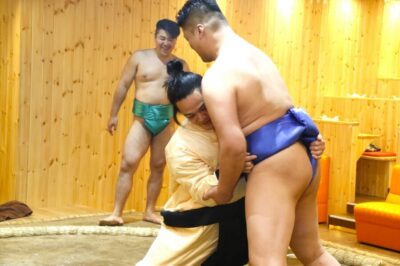 ★ 4.8Tokyo: Sumo Show Experience with Chicken Hot Pot and a PhotoFrom $1032 hours
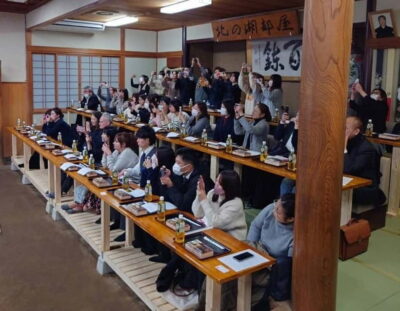 ★ 4.8Tokyo: Sumo Show and Dining ExperienceFrom $7990 minutes - 2 hours
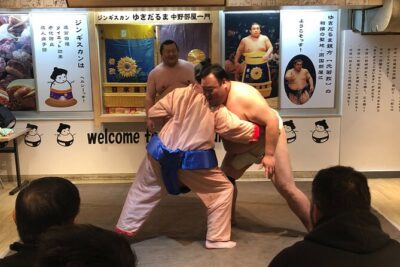 ★ 5.0the SUMO showFrom $89
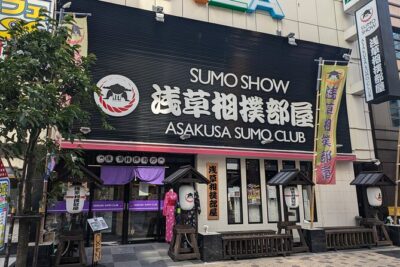 ★ 5.0Tokyo Sumo Entertainment Show with Chicken Hot Pot and PhotoFrom $106
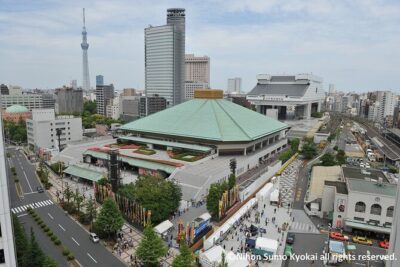 ★ 5.0Tokyo Grand Sumo Tournament Viewing Tour with TicketsFrom $124
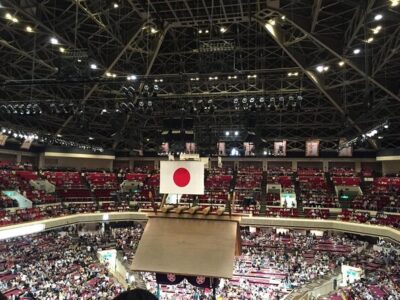 ★ 5.0Tokyo Sumo Wrestling Tournament ExperienceFrom $124