Reviewed · SUMO EXPERIENCES
Tokyo: Sumo Show and Dining Experience
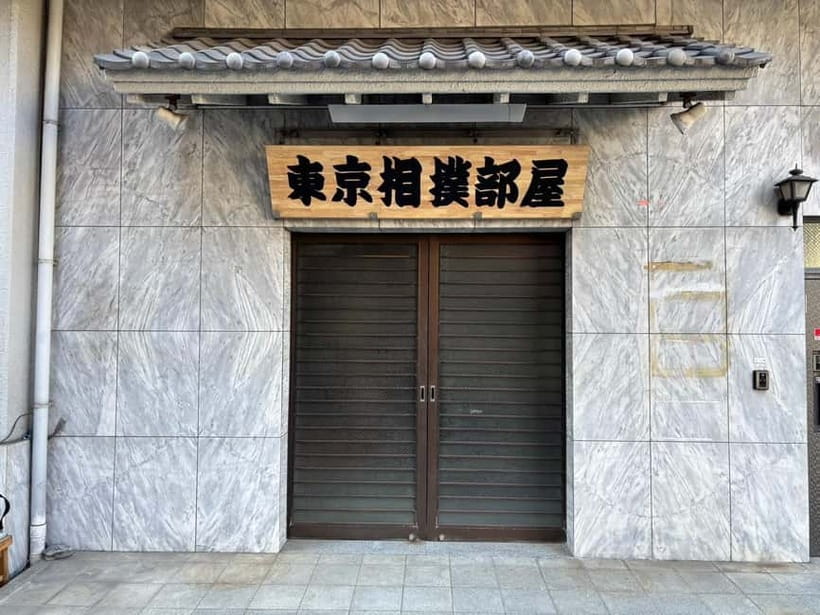
Tokyo Sumo Room puts you close enough to feel the floor shake when sumo wrestlers charge. Run by former Makuuchi wrestler Tokitsumi, this small Kiyosumi-Shirakawa venue combines a clear English explanation of sumo with demonstrations, bouts, humor, and a chance to test yourself against a rikishi. I especially like the small-room setting and the way the sport is explained before the action begins. The food, including chanko-style hot pot, gives the evening a useful taste of sumo life rather than just a photo opportunity.
In This Article
- Key points at a glance
- What makes Tokyo Sumo Room different
- Entering Kiyosumi-Shirakawa’s sumo room
- The English introduction to sumo rules and customs
- Training movements, practice, and live bouts
- Your chance to challenge a rikishi
- Chanko-style food and the important meal-plan detail
- How long the visit takes and what the pace feels like
- Who will enjoy this most
- Is $79 a fair price?
- Small details that improve the visit
- Should you book Tokyo Sumo Room?
- FAQ
- Where is Tokyo Sumo Room located?
- How long does the sumo experience last?
- Is food included with every show?
- Can I participate in the sumo activity?
- Is the presentation available in English?
- Can vegetarian meals be arranged?
The main thing to check is the meal option and show time. Food is included with the meal plan at the 11:00 AM and 7:00 PM shows, while the 3:00 PM show has no meal plan. At about $79 per person, this is good value if you want a cultural lesson, live performance, and dinner in one sitting, but less so if you only want to watch a short wrestling demonstration.
Key points at a glance
- Former Makuuchi wrestler Tokitsumi runs the venue: You get an introduction shaped by someone with direct experience of professional sumo.
- Audience participation is central: You may practice sumo movements or enter the ring for a playful match with a retired wrestler.
- The English presentation is easy to follow: The host explains rules, training, history, and customs before the bouts.
- Chanko-style food connects dinner to the sport: The hearty hot pot reflects what sumo wrestlers traditionally eat.
- Kiyosumi-Shirakawa location: The venue is reached by public transport, so allow time to find the room before the show.
- Show times affect the meal: The 3:00 PM performance does not offer a meal plan, so read the selected option carefully before paying.
What makes Tokyo Sumo Room different
Many Tokyo visitors see sumo on television or hope to catch a tournament during one of the year’s limited official seasons. Tokyo Sumo Room offers another route: a compact cultural performance where you learn the basics, watch wrestlers demonstrate their skill, and take part if you wish.
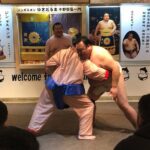
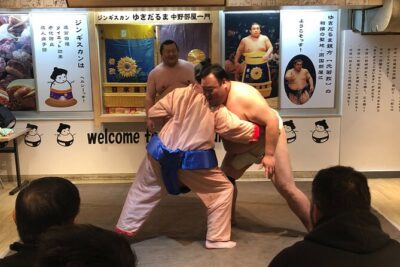
That last part matters. This is not a silent exhibition where you sit at a distance and admire a ceremonial sport. The wrestlers interact with the room, joke with the audience, and invite willing participants into the ring. Several recent sessions had people trying sumo exercises or facing a wrestler in a friendly contest. The result is lighthearted, but it also makes the sport’s physical demands plain very quickly.
I like that the venue is operated by former sumo wrestlers, including Tokitsumi. That gives the presentation a direct connection to the sport. You are not simply receiving a generic introduction prepared for tourists. The tone is informal, and the wrestlers can show rather than merely describe how much force, balance, and conditioning sumo requires.
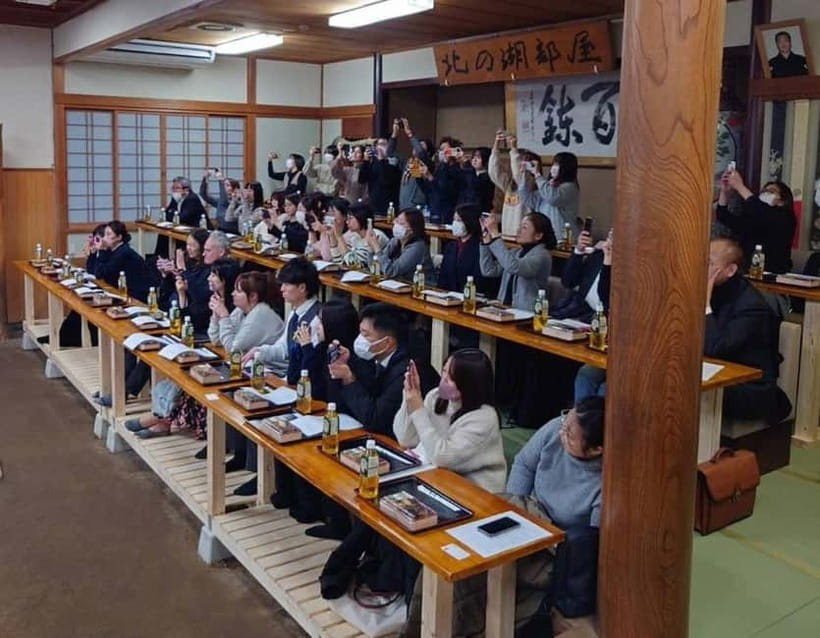
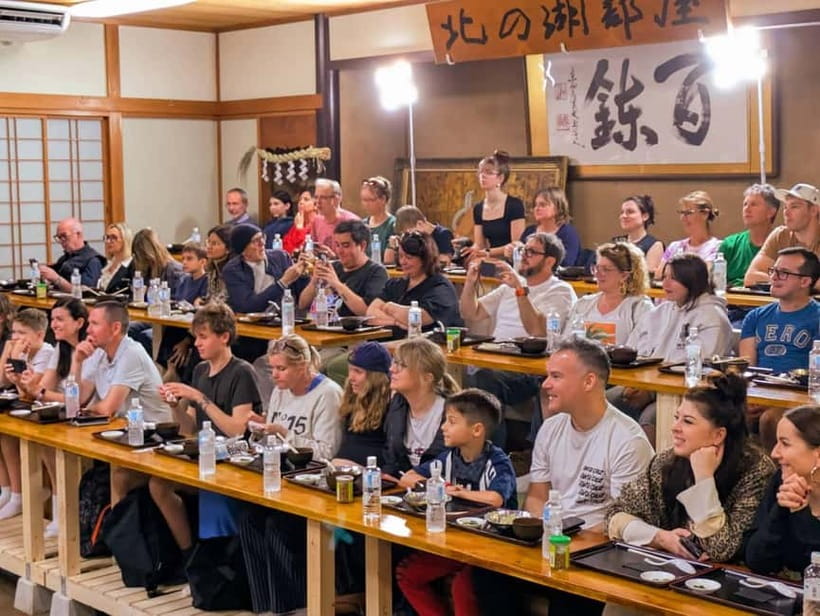
The setting also keeps the action close. A small group can make the session feel personal, with more opportunity to ask questions and join in. The room can hold more than 20 people, so your exact group size will vary. If you prefer a quiet museum or a formal lecture, the jokes and audience involvement may feel a little loud. If you enjoy being part of the show, it is one of the best features.
A few more Tokyo tours and experiences worth a look
Entering Kiyosumi-Shirakawa’s sumo room
Tokyo Sumo Room is in Kiyosumi-Shirakawa, an area with convenient public transport access. Transportation to and from the venue is not included, so plan your route before leaving your hotel and give yourself enough time to locate the entrance.
This is an especially practical choice if you want to pair sumo with another eastern Tokyo outing, though the activity itself lasts about 90 minutes to two hours. The listed time range allows for variation in the presentation, food service, and participation. You should not plan a tight connection immediately afterward, especially for the evening show.
On arrival, expect a friendly welcome and a room arranged around the performance space. Bring comfortable shoes, since you may be invited to participate and will want to move easily. A camera is also useful. Some people have had the team record their bout, but you should not assume filming is guaranteed for every person or session.
Smoking is not allowed, including indoors. The venue is wheelchair accessible, which makes this one of the more manageable cultural activities for people who need step-free access. Still, ask the provider directly about your specific seating or participation needs if you require more than general accessibility.
The English introduction to sumo rules and customs
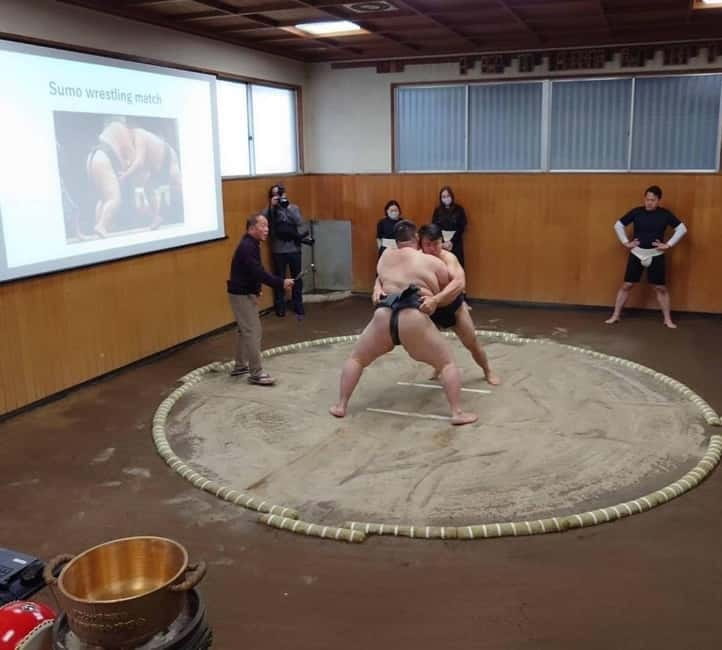
The presentation begins with an explanation of what you are about to see. The English-speaking host covers the history and rules of sumo in a way that first-time visitors can follow. You learn why the wrestlers perform their movements, how a bout is decided, and what makes the sport more than a simple test of body weight.
This opening is important because a short bout can otherwise be hard to read. Sumo matches may last only seconds. Without context, you see two large athletes collide and one leave the ring. With the introduction, you can watch for foot placement, balance, force, timing, and the tactics used to push or throw an opponent.
The host also keeps the lesson moving with humor. The tone is not solemn or academic. Families have found that children can follow the food, demonstrations, jokes, and participation, while adults get enough background to understand the sport’s traditions.
I would pay attention during this section even if you mainly came for the wrestling. It gives the rest of the program shape. You will better understand the training display, the formal movements, and the playful audience challenges once the basic rules are clear.
Training movements, practice, and live bouts
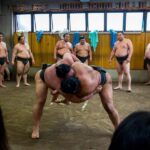
After the introduction, former wrestlers demonstrate sumo skills and training movements. The physical side is impressive because it shows what happens before a wrestler ever steps into a contest. Sumo is built on strength, but the demonstrations also reveal balance, timing, flexibility, and control.
The program includes several competitions or bouts, with some sessions featuring two wrestlers and others three. The exact lineup can change. You might watch former wrestlers face each other, see practice movements, and then watch them turn that power into a more entertaining contest for the room.
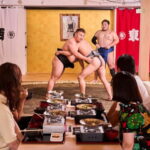
This is where the close seating earns its keep. You are not watching tiny figures across a large arena. You can see the wrestlers brace, shift their weight, and use their legs and hips. The scale of the performance is still theatrical, but the athletes are close enough for you to appreciate the work involved.
The bouts are designed for an audience, so expect comedy as well as sport. The wrestlers tease one another, play to the crowd, and keep the mood warm. That does not make the strength less real. In fact, the playful format helps you see how difficult it is for an ordinary person to move a trained sumo wrestler even an inch.
Your chance to challenge a rikishi
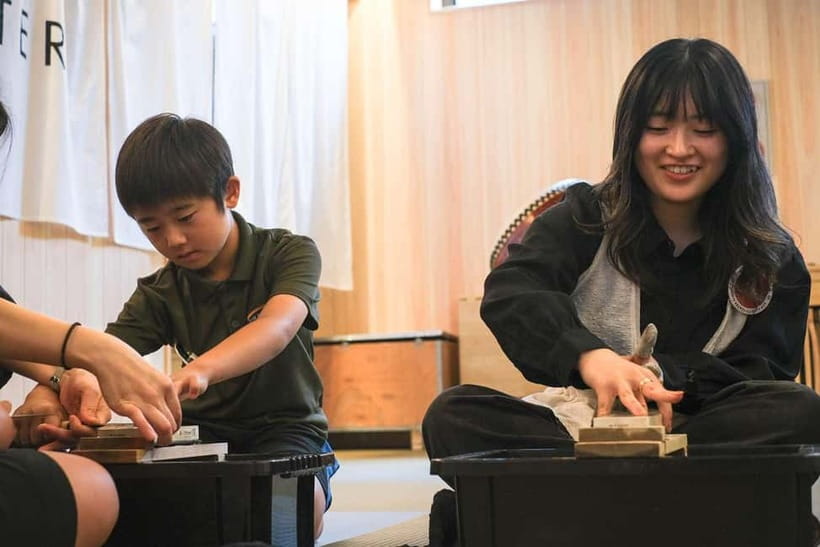
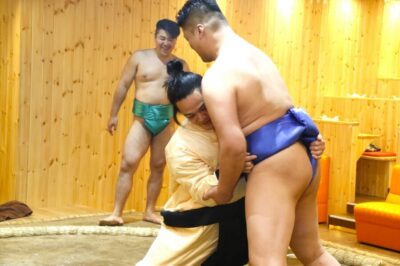
The audience participation is the part I would not skip. If you feel comfortable, you may practice sumo techniques or enter the ring for a simulated match with a retired wrestler. You do not need to be a sumo fan to enjoy this. The activity turns an abstract sport into something you can feel in your legs and shoulders.
Several participants have found that the wrestlers are far stronger than they expected. That should not surprise you, but the quick demonstration makes the point better than any speech. A participant may push with all their strength and still fail to shift the wrestler.
The mood is friendly rather than intimidating. The wrestlers guide the interaction and use humor to keep it fun. Children can enjoy watching a parent or another adult take the challenge, and families have made this a memorable shared moment. You can also remain seated and watch if you would rather not participate.
Wear comfortable clothing and shoes if you think you may join in. The supplied information specifically recommends comfortable shoes and a camera. A mawashi may be used for the activity, and one participant found it less uncomfortable than expected, but you can ask the staff about the current arrangements before taking part.
A few more Tokyo tours and experiences worth a look

Chanko-style food and the important meal-plan detail
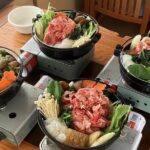
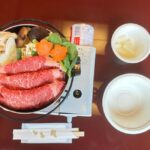
The meal adds real value when it is included in your booking. Chankonabe is the traditional hot pot associated with sumo wrestlers, and the menu is designed around hearty Japanese cooking. The food is meant to support the sumo theme, not distract from it.
Expect a filling meal rather than delicate tasting portions. The hot pot has been a highlight for many people, and the food service can include second helpings. Seasonal Japanese items may also appear, depending on the menu. Sake is available as a personal purchase, though drinks are not listed as included.
Here is the detail that deserves careful attention: the 11:00 AM and 7:00 PM shows can be booked with a meal option, while no meal plan is available for the 3:00 PM show. The wording of the booking choices matters. One booking description can make the show sound like it includes dinner, but you should confirm that your selected rate specifically says meal included.
If you are comparing the $79 price with a simple sumo demonstration, the meal changes the calculation. You are paying for food, a guided cultural presentation, live action, and participation in one visit. If you already have dinner plans or only want a short afternoon activity, the 3:00 PM option may suit you better, but it does not include Japanese cuisine.
Vegetarian choices are available on request and can also be modified on the day. Tell the venue about your needs in advance if possible. That gives the kitchen a better chance to prepare a suitable meal without slowing service.
How long the visit takes and what the pace feels like
Plan on 90 minutes to two hours. The range reflects the fact that participation, food service, and the number of wrestlers can vary. A session with a small group may move quickly, while a fuller room with several participants can take longer.
The program packs in a lot: an English explanation, demonstrations, competitions, audience interaction, and possibly a meal. That makes it feel active rather than drawn out. The show has enough structure for families, but the jokes and informal exchanges keep it from feeling like a school lesson.
At the same time, do not expect a full professional tournament. This is a demonstration and cultural entertainment format featuring former wrestlers. It gives you access to the sport and its customs, but it is not a replacement for attending an official Grand Sumo Tournament in Tokyo.
That distinction helps set the right expectations. If your goal is to see the national sport in its formal competitive setting, buy tournament tickets when the schedule permits. If your goal is to understand sumo up close, ask questions, eat related food, and possibly try the ring, Tokyo Sumo Room offers more personal contact.
Who will enjoy this most
I would recommend this activity to families, first-time visitors to Japan, and anyone who wants an evening that mixes food with culture. Children can watch the wrestlers, laugh at the interaction, and see an adult take part. Adults get the historical explanation and a better sense of the athletic skill behind the show.
It also works well for a multigenerational group. The activity does not depend on long walks or difficult language, and the English presentation helps everyone follow along. The wheelchair-accessible venue is another advantage for mixed groups.
Solo visitors should not worry about arriving alone. The welcoming format makes it easy to follow the show without a travel companion, and the staff can still include you in the activity. If you want to participate, simply let the host know. If you prefer to watch, you will still have a full program.
Sumo enthusiasts may appreciate the direct connection to a former Makuuchi wrestler, though serious fans should keep the format in mind. The show is introductory and entertaining, not a technical seminar for experts.
Is $79 a fair price?
At $79 per person, I consider this a fair Tokyo price when the meal is included. A separate dinner, a cultural performance, and a paid activity can quickly add up, especially in central Tokyo. Here those elements are combined, and the audience participation gives the event something a standard meal cannot provide.
The value is strongest for people who will use the interactive part. If you only plan to sit and watch, you may find the cost harder to justify compared with a free sumo-related sight or a less expensive cultural talk. The close setting, English guidance, and former wrestlers make it more than a restaurant meal, but the experience still depends on enjoying live audience entertainment.
The meal option also makes the 7:00 PM show convenient. You can turn it into a planned dinner rather than fitting another restaurant around the activity. For the 11:00 AM show, food may function more like a substantial early meal. The 3:00 PM show is the clear choice if you want the sumo program without paying for or arranging food.
Free cancellation up to 24 hours before the activity and reserve-now, pay-later booking add flexibility. Check the final conditions at booking, especially the exact meal selection and time.
Small details that improve the visit
Book in advance. The venue is small, and the most popular sessions can fill. This matters even more if you want a meal, need vegetarian adjustments, or are arranging a family group.
Bring a camera, but stay present during the bouts. The close action makes good photographs, and the staff may help record audience participation. Do not let filming take over the short program.
Wear shoes that are comfortable and easy to move in. You may not enter the ring, but being ready gives you the option. I would also avoid scheduling a rushed activity directly afterward because the session can run close to two hours.
Finally, keep your expectations honest. This is a warm, funny, participatory show built around sumo culture. It is not a formal tournament, and some of the comedy may feel broad. That is part of the format, not a flaw, as long as you know you are booking entertainment with cultural context.
Should you book Tokyo Sumo Room?
Book it if you want to understand sumo through a personal, friendly presentation rather than from the far side of a stadium. The former wrestlers, English explanations, close-up demonstrations, audience matches, and chanko-style meal create a strong package for about $79, especially at a meal-included show.
I would choose the 7:00 PM meal option for a memorable Tokyo night, or the 11:00 AM option if it fits your sightseeing plan. Choose the 3:00 PM show only if you specifically want the performance without food, and confirm the booking details before payment.
Skip it if you dislike audience participation, comedy, or organized entertainment. For most families, solo visitors, and first-time Japan visitors, though, this is a lively way to meet sumo at close range and leave with a much clearer idea of the sport’s power and discipline.
FAQ
Where is Tokyo Sumo Room located?
The venue is in Kiyosumi-Shirakawa on Honshu, Tokyo. It is accessible by public transport, but transportation to and from the venue is not included.
How long does the sumo experience last?
The activity lasts about 90 minutes to two hours. The exact length can vary with the show format, food service, and audience participation.
Is food included with every show?
No. Japanese cuisine is included when you select the meal option for the 11:00 AM or 7:00 PM show. The 3:00 PM show has no meal plan available.
Can I participate in the sumo activity?
Yes. Optional authentic sumo training and audience participation are available. You may have the chance to practice with or challenge a retired sumo wrestler, though participation is not required.
Is the presentation available in English?
Yes. The instructor and presentation language are English, including explanations of sumo rules, customs, and history.
Can vegetarian meals be arranged?
Yes. Vegetarian options are available upon request and can also be modified on the day of your visit. It is still sensible to mention your needs when booking.
More Dining Experiences in Tokyo

More Shows & Performances in Tokyo
More Sumo Experiences in Tokyo
More tours in Tokyo we've reviewed












Sumo Experiences, compared.
 ★ 4.8Tokyo: Sumo Show Experience with Chicken Hot Pot and a PhotoFrom $1032 hours
 ★ 5.0the SUMO showFrom $89
 ★ 5.0Tokyo Sumo Entertainment Show with Chicken Hot Pot and PhotoFrom $106
 ★ 4.6Tokyo: Sumo Tournament Tour with Chair Seat TicketsFrom $141
 ★ 5.0Tokyo Grand Sumo Tournament Viewing Tour with TicketsFrom $124
 ★ 5.0Tokyo Sumo Wrestling Tournament ExperienceFrom $124