Reviewed · MT FUJI DAY TRIPS
Mt Fuji & Hakone Cruise, Drum Show Bullet Train 1 Day from Tokyo
Mt Fuji is the star, but this full-day circuit gives you far more than a mountain lookout. You’ll ride a coach to the 5th Station, cross Lake Ashi by boat, rise above Hakone by ropeway, watch a Japanese drum performance, and return to Tokyo on a bullet train.
In This Article
- Key points to know before booking
- Why this day trip works for first-time visitors
- Starting in Tokyo and heading toward Fuji
- Mt Fuji 5th Station at 2,300 meters
- Lunch, Japanese drums, and a useful choice
- A short cruise across Lake Ashi
- Riding the Komagatake Ropeway
- Returning by Kodama Shinkansen
- Weather is the deciding factor
- Who will get the most from this tour
- Should you book the Mt Fuji and Hakone day trip?
- FAQ
- Where does the tour start and finish?
- Is lunch included?
- Can I see Mt Fuji in winter?
- What happens if the weather hides Mt Fuji?
- Is the bullet train seat reserved?
- Can I cancel for a full refund?
I like two things in particular: the efficient mix of transport and sights, and the way the return by Shinkansen saves you from another long road journey. Guides such as Joy, Miko, Shige, Maria, and Heroaki have been praised for clear explanations and practical help, including showing people how to find their platform in Tokyo.
The catch is the pace. Nearly 12 hours is a lot, and some stops are short. You may get only about 30 minutes at Mt Fuji’s 5th Station, while weather can hide the mountain completely. This is a strong sightseeing sampler, not a leisurely day in the Fuji and Hakone region.
Key points to know before booking
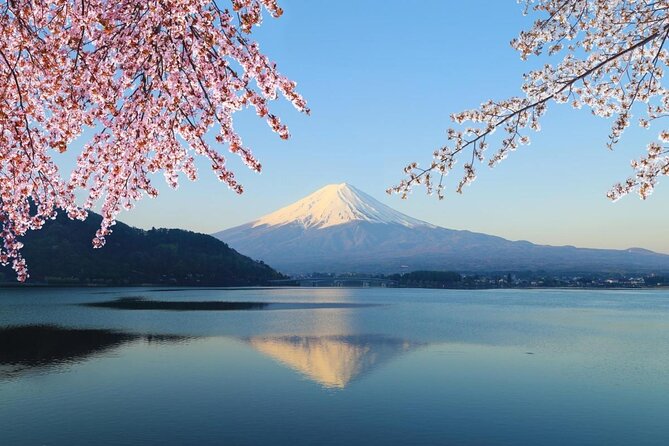
- Mt Fuji 5th Station reaches 2,300 meters: Expect cooler air, souvenir shops, shrines, torii gates, and mountain views when clouds cooperate.
- The day uses four kinds of transport: You’ll travel by coach, cruise boat, enclosed ropeway cabin, and Kodama Shinkansen.
- The Lake Ashi cruise lasts about 15 minutes: It is short but scenic, with views toward the surrounding peaks and Hakone’s famous boats.
- The Komagatake Ropeway includes a summit walk: At the top, you can visit Hakone Shrine Mototsumiya and look across Lake Ashi.
- The drum performance is a bonus, not a guarantee: The wadaiko show can be canceled or missed if delays affect the lunch stop.
- The return train has non-reserved seating: Large luggage over 160 centimeters in total dimensions cannot be taken into the non-reserved cars.
Why this day trip works for first-time visitors
The tour is built around a practical problem: seeing Mt Fuji and Hakone without arranging several separate train, bus, boat, and ropeway connections. From central Tokyo, you spend the morning on a guided coach ride, then finish with a 34-minute Kodama Shinkansen trip from Odawara to Tokyo Station.
That structure is the main value. At $149.94 per person, the price includes the guide, coach transport, cruise, ropeway, other listed admissions, and the bullet train. Lunch is included only with the lunch option. If you bought each part separately, you would still need to solve the timing and transfers yourself.
I also like the cultural touches. The Japanese-style meal and wadaiko performance give the day some local character, while the transport itself becomes part of the experience. The bullet train is not a sightseeing ride in the usual sense, but it is a fast, comfortable way to finish a long day.
You should book this with realistic expectations. The itinerary covers several major sights, but it does not allow much free time. If you want to hike, linger at the lake, or explore Hakone’s museums and hot-spring towns, spend at least one night in the area instead.
A few more Tokyo tours and experiences worth a look

Starting in Tokyo and heading toward Fuji
The meeting point is at Tokyo Station, at 1 Chome-9 Marunouchi. There is no hotel pickup or drop-off, so you need to reach the meeting point on time and make your own way back to your accommodation after the tour ends.
The morning road trip to Mt Fuji takes about two and a half hours. That is a long stretch in a bus, but it also lets you watch Tokyo give way to smaller towns, wooded hills, and farm plots between houses. Several guides have used the drive to explain Japanese regions, daily life, and local customs, which helps turn transit time into part of the tour.
The departure is early, and late arrivals can lose their reservation. Give yourself extra time to find the exact meeting location, especially if you are unfamiliar with Tokyo Station’s large underground and street-level layout.
Depending on group size, transportation may be a large bus, mid-size bus, small bus, or hired car. The maximum group size is 44 people. That makes the day fairly structured, with the guide keeping everyone on a fixed timetable.
Mt Fuji 5th Station at 2,300 meters
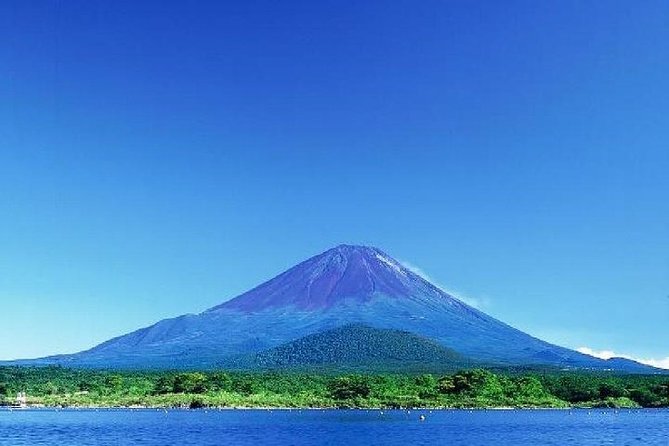
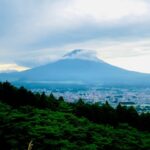
The coach climbs the Fuji Subaru Line toward Mt Fuji’s 5th Station, or the highest point accessible that day. At 2,300 meters, the 5th Station sits roughly halfway up the mountain and feels much cooler than Tokyo. Temperatures can reach about 14 degrees Celsius in summer daytime conditions and fall to around minus 5 degrees Celsius in winter, so bring a warm layer even if the city feels mild.
You get about 30 minutes here under the standard schedule. That is enough for a quick look around, photographs, souvenir shopping, and a visit to the shrines and torii gates. You may also see climbers preparing for an ascent.
The timing is the biggest limitation. A half-hour goes quickly, particularly if the coach has to unload and reload a large group. If Fuji appears, take your photographs first, then explore the shops. Do not count on having time for a relaxed snack and a long walk.
The view is never guaranteed. Clouds, mist, rain, and snow can hide Mt Fuji even when the tour reaches the station. The tour continues in poor weather and does not offer a refund simply because the mountain is not visible.
The 5th Station is normally visited from about late April through November. From around December to early April, the Fuji Subaru Line may close because of snow, ice, or unsafe road conditions. In that case, the tour may substitute places such as Lake Kawaguchi Oishi Park, Oshino Hakkai, the Fujisan World Heritage Center, the Fujisan Museum, or the Itchiku Kubota Art Museum.
Lunch, Japanese drums, and a useful choice
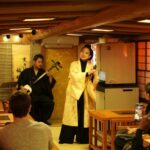
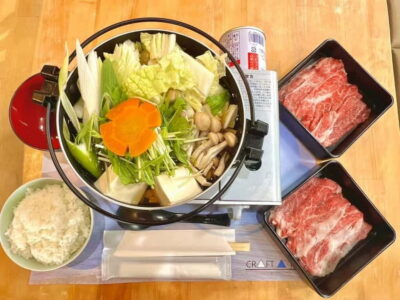
If you select the lunch option, you stop at Fuji Zakura Hotel for about 50 minutes. The meal is Japanese-style, with tea or coffee, and the stop also includes a wadaiko performance when conditions allow.
The drums are a pleasant cultural extra rather than the main reason to book. The performance may be brief, and it can be canceled without notice or missed if the bus arrives late. February 28, 2026 is specifically listed as a date when the performance will not be held.
The lunch choice deserves some thought. With lunch, you avoid searching for food during a tightly timed day. Vegetarian, Muslim-friendly, and Indian thali meals can be requested, but the Muslim-friendly option is not halal certified and contains no pork or alcohol. Vegetarian and Indian thali meals contain no meat or fish.
Allergy-friendly and gluten-free meals are not available. If you have those needs, choose the no-lunch option and arrange your own food. Do not leave this until the stop itself, since there are no cafes, restaurants, or other food outlets near the lunch break area.
Some meals have been described as tasty but less impressive when delays made the fried items cold. That is a fair risk on a road tour, since traffic and late returns from the 5th Station can affect the schedule.
A short cruise across Lake Ashi
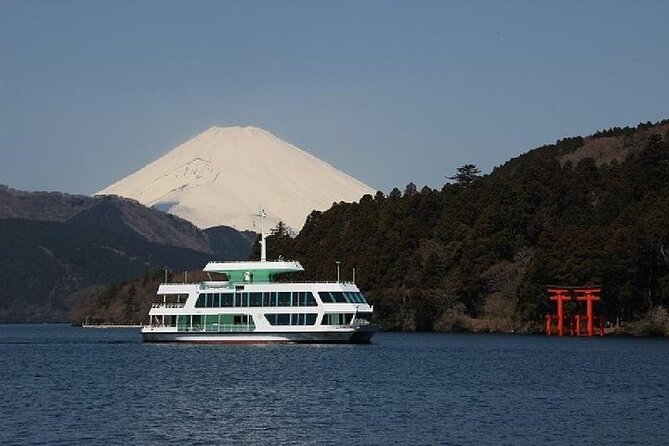
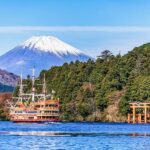
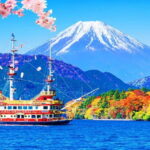
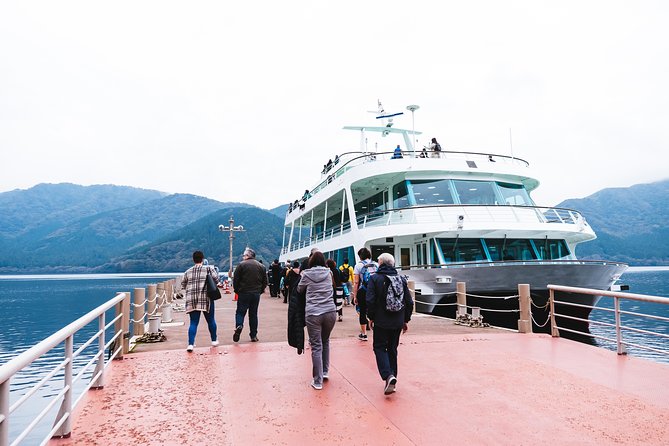
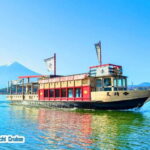
From the Fuji area, the coach continues to Hakone National Park and Lake Ashi. The cruise on the Sorakaze takes about 15 minutes. It is not a long lake voyage, but it gives you a quiet change of pace after the bus ride.
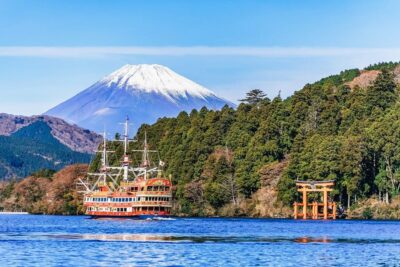
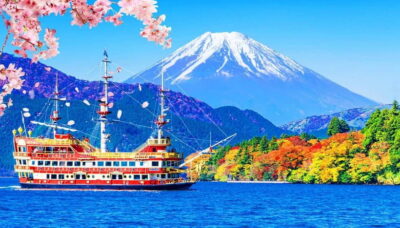
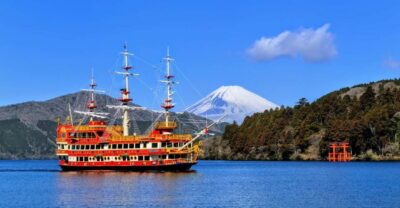
The lake is surrounded by wooded mountains, including Mt Komagatake, and Fuji may appear across the water in clear conditions. You may also see other boats, including Hakone’s distinctive pirate-style vessel. The scenery is the attraction here, not onboard entertainment.
Fifteen minutes is enough for photographs and a quick look from the deck or cabin, but it is not enough to explore the shoreline. In mist or rain, the views become softer and more limited. Still, the lake stop can remain worthwhile when Fuji is hidden because the water, forest, and mountain shapes create a different kind of view.
If the cruise cannot operate because of weather or other conditions, the operator may substitute another boat ride or a different Hakone or Fuji attraction. No refund is given for a substituted activity.
A few more Tokyo tours and experiences worth a look
Riding the Komagatake Ropeway
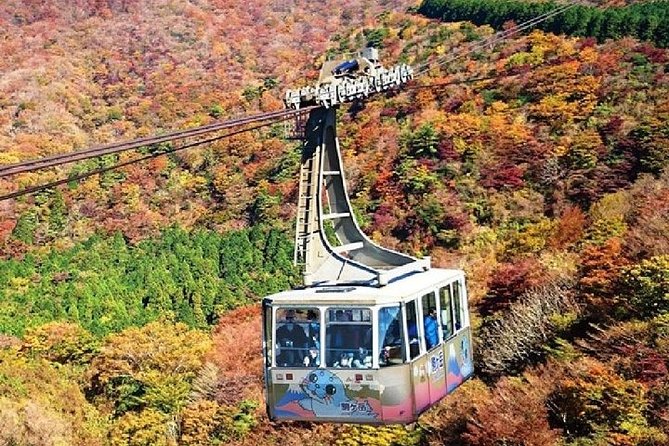
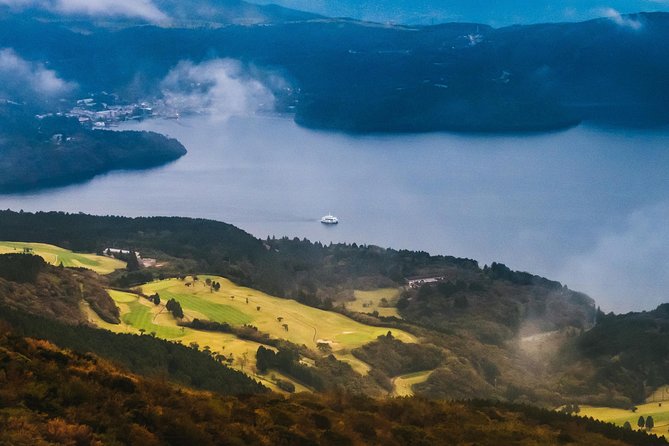
The Komagatake Ropeway is one of the day’s most enjoyable changes in elevation. An enclosed cabin carries you from the lakeside up Mt Komagatake, offering broad views during the ride when the weather is clear.
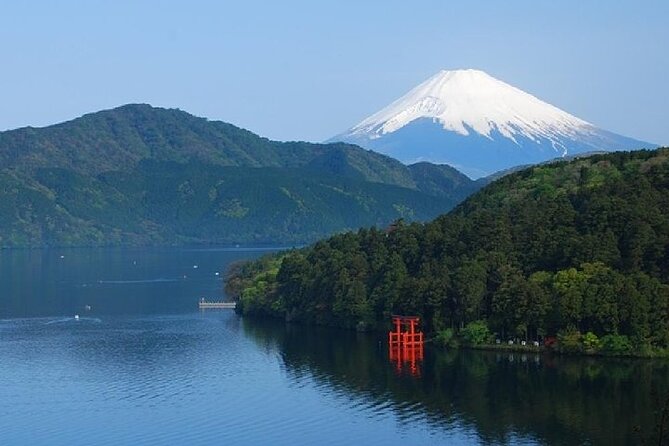
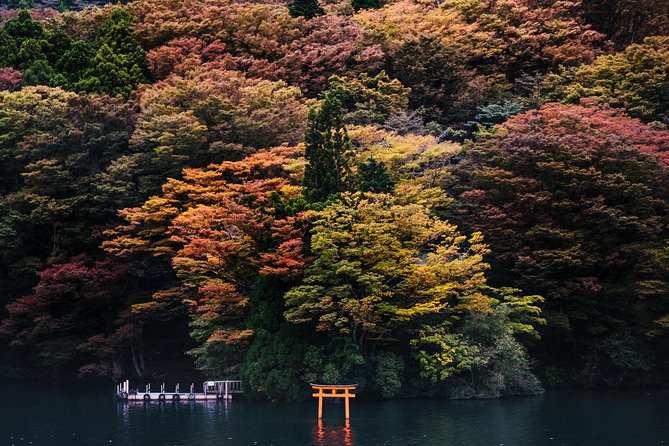
At the summit, you have time to look over Lake Ashi and Hakone National Park. A short trail leads to Hakone Shrine Mototsumiya, the original shrine at the mountaintop. The bright red shrine structures and open views give this stop a stronger sense of place than a simple cable-car ride.
The scheduled ropeway visit lasts about 50 minutes. That includes the ride, movement through the station, photographs, and a short walk. There are stairs, including roughly 30 steps reported near the cable-car area, so this is not a fully step-free experience. One review specifically noted that the tour was difficult for disabled participants, despite a successful day in the rain.
Weather matters here too. Strong wind, fog, or other conditions can close the ropeway or make the views disappear. Alternatives can include the Hakone Ropeway, Hakone-en Aquarium, a museum, a Hakone boat, Owakudani, Hakone Shrine, Odawara Castle, or other listed sites.
If Fuji is hidden at the 5th Station but the sky clears later, the ropeway area may offer your best view. That is one reason I prefer this tour to a simple Fuji lookout excursion. You get several chances to see the mountain from different angles, though none is certain.
Returning by Kodama Shinkansen
After Hakone, the coach takes you to Odawara Station. You board a Kodama Shinkansen in the non-reserved section for the 34-minute ride to Tokyo Station.
This is a smart ending. After hours on the road, you avoid another coach ride through evening traffic. The train is fast and comfortable, though the ride itself may feel uneventful if you are expecting a scenic rail journey.
The seats are not assigned. You need to follow the guide’s instructions and board the correct cars. The guide may not accompany you on the Shinkansen, although guides have helped people reach the platform and identify their final stop before boarding.
Large luggage is a problem. Bags whose combined height, width, and length exceed 160 centimeters cannot be brought into the non-reserved Shinkansen cars. Use a luggage delivery service separately if needed.
Arrival at Tokyo Station is expected between 5 p.m. and 8 p.m., depending on traffic and the day’s conditions. The tour ends there, not at your hotel or original accommodation. Tokyo Station is well connected, but it can be confusing at rush hour, so plan a little extra time for your onward journey.
Weather is the deciding factor
This is a weather-dependent day, and the policy is clear: the tour normally runs even when Fuji cannot be seen. That protects the schedule but creates a real risk for anyone booking mainly for the mountain.
Rain can affect every major highlight. At the 5th Station, you might see only cloud. At Lake Ashi, the cruise may be gray and misty. At Komagatake, the ropeway may close or deliver no views. One poor-weather day can turn the tour into a long coach journey with substitute attractions.
The operator does list alternatives, which is better than simply abandoning the day. You might visit a museum, aquarium, park, shrine, castle, or another boat or ropeway. But substitutions will not always feel equal to standing before Mt Fuji or looking across Hakone from a mountaintop.
Check the forecast before booking if your schedule allows. Clear mornings do not guarantee a clear afternoon, and cloudy forecasts do not always rule out a brief glimpse. Bring warm clothing, comfortable shoes, and rain protection. The higher stops can be cold even in summer.
Who will get the most from this tour
I would choose this tour if you have only one free day for Fuji and Hakone and want someone else to handle the complicated connections. It suits first-time visitors who value seeing several famous sights over spending long periods at one place.
It is also a good fit if you like variety. In one day you get mountain scenery, shrines, a lake cruise, a ropeway, Japanese food, traditional drums, and high-speed rail. The $149.94 price is reasonable for that collection of transport and admissions, especially when the return train is included.
Families can join, but young children under 5 may ride free without a bus seat or lunch. If you need either, book the child rate. Written parental permission is required for participants under 18, and anyone under 15 or not yet in middle school must be accompanied by a parent or guardian.
I would hesitate if you dislike early starts, long bus rides, fixed schedules, stairs, or weather risk. This is not the right choice for a slow Hakone visit, a serious Fuji photography day, or a relaxed meal. It is also not ideal if accessibility is essential, since the route includes coach transfers, stairs, elevated stops, and uneven walking areas.
Should you book the Mt Fuji and Hakone day trip?
Book it if you want a high-value sampler and accept that the schedule will feel busy. The combination of Fuji’s 5th Station, Lake Ashi, Komagatake, drums, and a Shinkansen return gives you a broad taste of the region with very little planning.
Do not book it expecting guaranteed Fuji views or generous time at each stop. For the best chance of clear scenery, choose a day with a favorable forecast, arrive early, pack warm clothes, and keep lunch and camera time organized. If the weather turns bad, judge the tour as a transport-efficient regional overview, not a guaranteed mountain portrait.
The free cancellation policy allows cancellation up to 24 hours before the start time for a full refund. After that cutoff, changes and refunds are not accepted.
FAQ
Where does the tour start and finish?
The tour starts and finishes at Tokyo Station, 1 Chome-9 Marunouchi, Chiyoda City. Hotel pickup and drop-off are not included, and you make your own way onward after arriving at Tokyo Station.
Is lunch included?
Lunch is included only if you select the With Lunch option when booking. The No Lunch option does not include food, and there are no cafes or restaurants near the lunch break area, so prepare your meal in advance.
Can I see Mt Fuji in winter?
The Fuji Subaru Line may be closed from around December to early April because of snow, ice, or road conditions. The tour then visits an alternative facility such as a museum, park, or Oshino Hakkai.
What happens if the weather hides Mt Fuji?
The tour continues and no refund is issued because of poor visibility. If the 5th Station cannot be visited, or if other activities close, the operator may provide one of several alternative attractions.
Is the bullet train seat reserved?
No. The return is in the non-reserved section of a Kodama Shinkansen from Odawara Station to Tokyo Station. Large luggage over 160 centimeters in combined dimensions cannot be taken into the non-reserved cars.
Can I cancel for a full refund?
Yes. You can cancel at least 24 hours before the experience starts for a full refund. Cancellations or changes made less than 24 hours before the start time are not accepted.
More Bay & River Cruises in Tokyo


More Hakone Day Trips in Tokyo
More Mt Fuji Day Trips in Tokyo
More tours in Tokyo we've reviewed

Mt Fuji Day Trips, compared.
 ★ 5.0Mt Fuji and Hakone 1-Day Bus Tour Return by Bullet TrainFrom $163
 ★ 4.4Tokyo Mt Fuji 5th St & Hakone Cruise Bus Tour w/Bullet TrainFrom $15410 hours
 ★ 4.5From Tokyo: Mount Fuji Full-Day Sightseeing TripFrom $6810 hours
 ★ 4.7Tokyo: Mt. Fuji Tour, Hakone Ropeway, Owakudani, Lake AshiFrom $5410 hours
 ★ 4.4Tokyo:Mt.Fuji,Kawaguchiko Oishi Park,Arakurayama Sengen ParkFrom $5410 hours
 ★ 4.2Tokyo: Mt. Fuji 5th Station & Hakone Cruise 1-Day Bus TourFrom $12911 hours