Reviewed · MT FUJI DAY TRIPS
Mt Fuji and Hakone 1-Day Bus Tour Return by Bus
Mt Fuji and Hakone fit together neatly on this 11-hour coach trip from Tokyo. You’ll visit the mountain’s 5th Station, take the Hakone Ropeway, and cruise Lake Ashi without arranging several trains, buses, and tickets yourself.
In This Article
- Key points to know before booking
- From Tokyo pickup to the Fuji road
- Mt Fuji 5th Station: mountain air and a quick look
- Buffet lunch at the foot of Mt Fuji
- Hakone Ropeway and the volcanic high country
- Lake Ashi cruise: the calmest half hour
- Why the schedule feels rushed
- The return: Shinjuku or Odawara
- Is $136.05 a fair price?
- Who should book this Fuji and Hakone day?
- Should you book it?
- FAQ
- How long does the tour last?
- Where are the pickup points?
- Does the tour always return to Shinjuku?
- Is lunch included?
- Are vegetarian meals available?
- Can I bring my own lunch?
- What languages are supported?
- Is Wi-Fi available?
- Will I definitely see Mt Fuji?
- What happens if the ropeway or cruise is canceled?
- Can wheelchair users join?
- What happens if I arrive late?
- Can I cancel for a full refund?
I like two things here: the route packs major sights into one day, and the guides, including Yui, Sora, Hiro, Aya, and Levin on different departures, add useful explanations and humor. The air-conditioned bus has Wi-Fi and multilingual audio, too. The catch is simple: you spend a lot of time riding and only a short time at each stop.
Key points to know before booking
- Mt Fuji 5th Station: A short stop at about 2,300 meters offers a shrine, mountain air, shops, and photo chances when the sky is clear.
- Hakone by ropeway and boat: The cable car and Lake Ashi cruise give you two very different views of this volcanic region.
- A tightly managed schedule: Most stops last about 30 to 40 minutes, so this suits sightseeing by highlights, not slow wandering.
- Lunch is optional: Choose the buffet in advance if you want a simple meal built into the day. Dietary choices need to be stated when booking.
- The return changes by date: Weekends and public holidays often finish at Odawara Station instead of Shinjuku because of road traffic.
- Weather controls the show: Mt Fuji may be hidden, and ropeway or cruise operations can change for safety reasons.
From Tokyo pickup to the Fuji road
The day begins at one of two central meeting points: Matsuya Ginza at 7:20 in the morning or the LOVE sculpture near Shinjuku at 7:50. The LOVE statue is also described as the final meeting place, so check your confirmation carefully and arrive early. If you miss departure, you cannot join later.
The coach is air-conditioned, and Wi-Fi is available. A professional English-speaking guide leads the group, while recorded guidance is offered in English, Spanish, French, Italian, German, Portuguese, and Ukrainian. The vehicle can carry up to 43 people, which helps explain the fixed stops and firm departure times.
The road trip is part of the price, but it also takes up a large part of the day. From central Tokyo, the ride to the Fuji area can take around two hours or more, especially on weekends and holidays. Traffic can stretch the return even further.
That tradeoff is the heart of this tour. You give up the freedom of a private car or independent rail trip, but you avoid planning a complicated route through the Fuji Five Lakes and Hakone areas. If you have just one free day and want to see several famous sights, that convenience has real value.
A few more Tokyo tours and experiences worth a look
Mt Fuji 5th Station: mountain air and a quick look
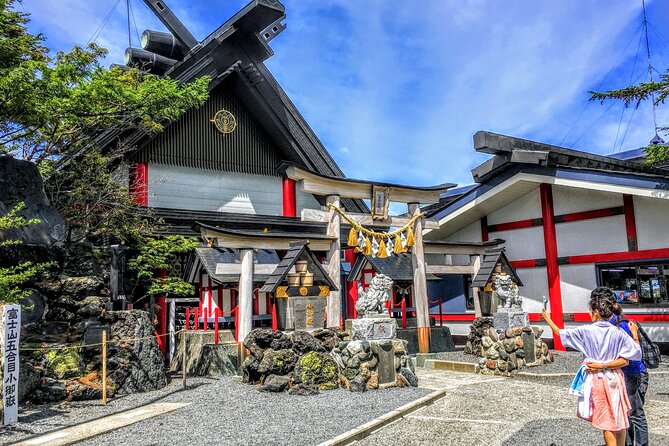
The first major stop is Mt Fuji Subaru Line 5th Station. It is the highest point reached by road on this route and gives you a chance to breathe cooler mountain air, visit a Shinto shrine, browse small shops, and take photographs.
The scheduled visit is about 30 minutes. That is enough to get your bearings, walk a little, and take pictures if the weather cooperates. It is not enough for a long hike, a relaxed shrine visit, or much time simply looking at the mountain.
Clear weather can produce the day’s best photographs, with Mt Fuji rising above the surrounding area. Clouds, rain, wind, or seasonal road restrictions can erase the view completely. The mountain is famous partly because it does not perform on command, so you should treat a clear sighting as a bonus rather than a promise.
The road to the 5th Station can also be affected by conditions. If the coach cannot go beyond a lower point, the company may use an alternative location. The tour may substitute places such as Oshino Hakkai or the Fujisan World Heritage Center, depending on the situation.
This stop works best for someone who wants a first encounter with Fuji, not for someone hoping to spend half a day near the summit. Wear shoes that handle uneven ground, and keep your camera ready because the stop passes quickly.
Buffet lunch at the foot of Mt Fuji
If you select the lunch option, you’ll have a Japanese buffet with local ingredients at the base of Mt Fuji. The meal is designed for speed and convenience, which makes sense on a full-day route with several timed activities.
The food has received mixed reactions. You might find a broad selection and plenty to eat, but some departures serve a more basic Western-style cafeteria buffet than the promotional images suggest. I would choose it for practicality, not for a special food experience.
Vegetarian and Muslim-friendly choices can be requested when you book. The buffet has nutrition labels, and typical items may include rice, vegetable soup, fruit, salad, vegetables, fried noodles containing pork, bread, desserts, and drinks. Seasonal changes are possible.
Halal-certified meals are not available. Vegan meals are also not supplied, and gluten-free choices may be limited. If your diet is strict, book without lunch and bring your own food rather than hoping the buffet will meet your needs.
You can also skip the lunch add-on, but choose the correct option in advance. Same-day changes may cost more or not be possible.
Hakone Ropeway and the volcanic high country
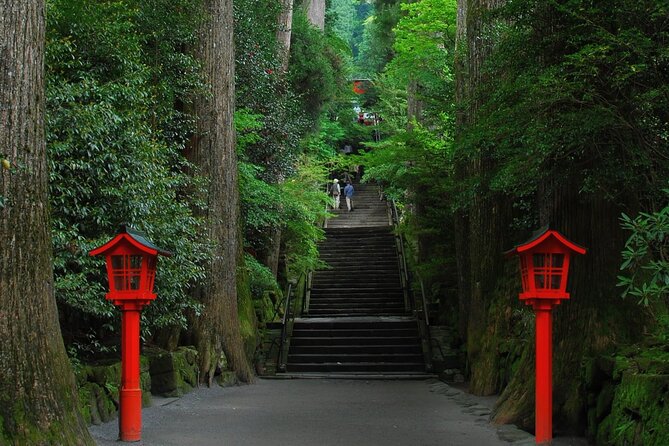
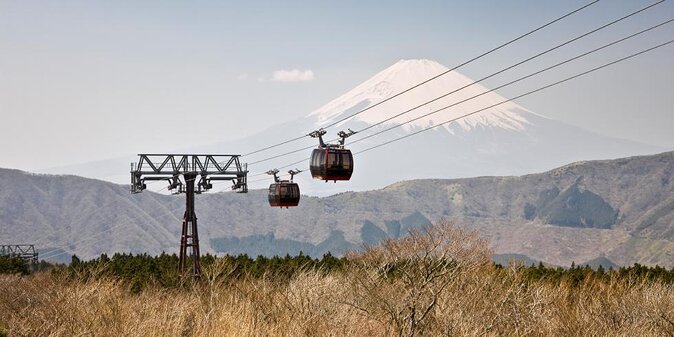
After lunch, the route turns toward Hakone. The schedule may include Mt Hakone or Mt Komitake, depending on operating conditions and the day’s route. The main attraction is the Hakone Ropeway, an aerial cable car crossing the high country.
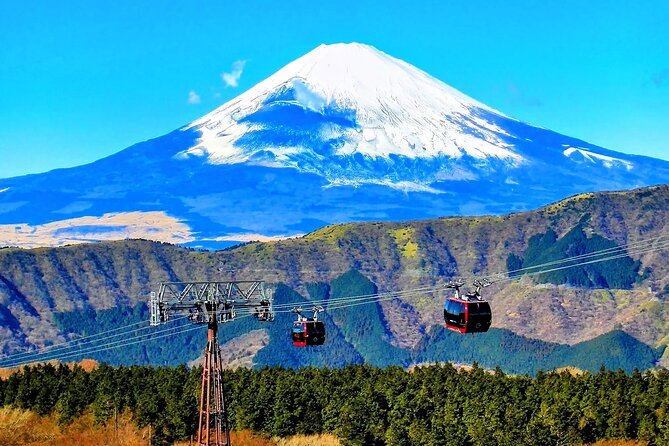
From the ropeway, you get broad views of Hakone’s wooded slopes and, on a clear day, Mt Fuji. The ride gives you a different perspective from the roadside lookout at 5th Station. Instead of standing at one point and taking a few pictures, you are moving above the area and watching the scenery change.
The scheduled ropeway portion is about 30 minutes, including the organized movement through the stop. Lines and road delays can reduce actual riding time. Several people have found the cable car one of the day’s most memorable parts, while others have missed it because traffic left too little time.
Operations can stop because of wind, weather, or other safety concerns. If that happens, the company may provide an alternative visit or another form of compensation, depending on the conditions. The published alternatives include sites such as Hakone Sekisho, Hakone Shrine, Odawara Castle, Minaka Odawara, or the Swan Lake Cruise Ship on Lake Yamanaka.
There is no refund for these changes. That policy matters because the ropeway is one of the included attractions and a key reason to book this particular route.
Lake Ashi cruise: the calmest half hour
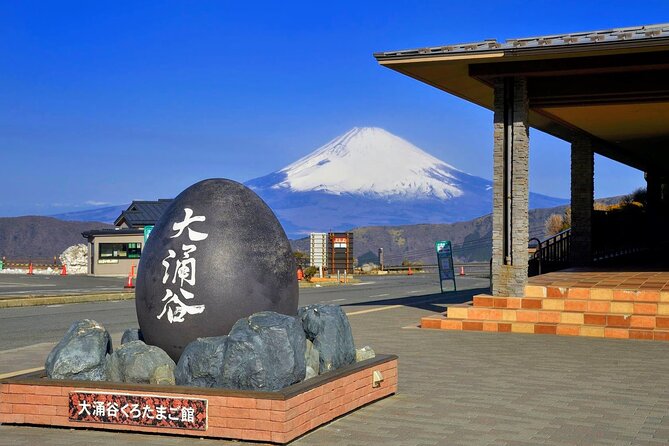
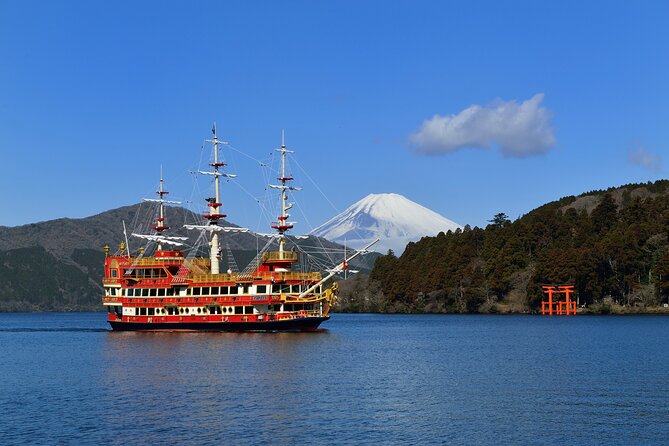
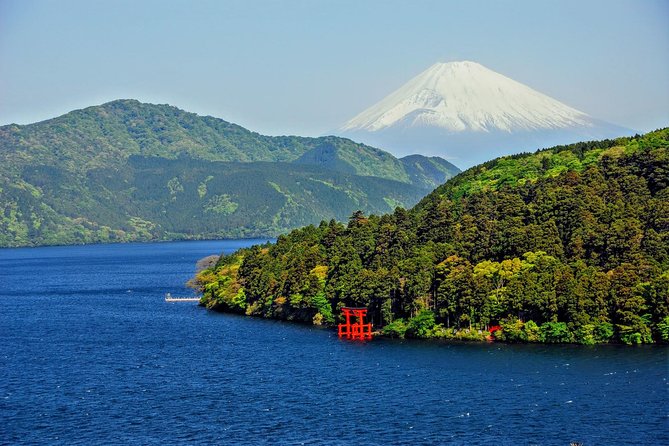
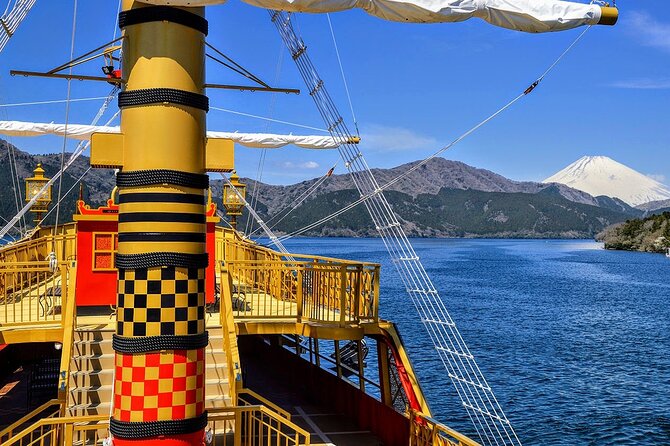
The Lake Ashi boat ride is usually the most restful part of the afternoon. Lake Ashi is a caldera lake surrounded by Hakone’s wooded hills, and the 30-minute cruise lets you sit back after the busy mountain stops.
On a clear day, you may see Mt Fuji from the water, though the view depends on both weather and the boat’s position. Even without Fuji, the breeze and open water provide a welcome break from the coach.
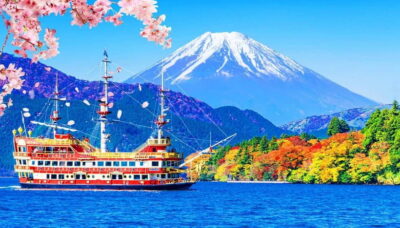
Do not assume the vessel will be the elaborate pirate-style ship shown in some promotional photographs. The boat may be a standard lake cruise vessel, similar to a ferry. It can also be crowded, and you may not find a seat during the short crossing.
The cruise is included, as is the ropeway fee. If boat operations are suspended, the company may switch to another activity. The order of the day can also change because of traffic, weather, or operating needs.
A few more Tokyo tours and experiences worth a look
Why the schedule feels rushed
The tour covers a lot of ground, but the cost is time. A full 11-hour day may include several hours on the road, with stops often limited to 20, 30, or 40 minutes. That leaves little room for an unplanned photo stop, a leisurely meal, or a quiet walk.
I would not book this if your main goal is to sit for hours admiring Mt Fuji or explore Hakone on foot. You may feel hurried at the 5th Station, during lunch, and around the ropeway connection.
I would book it if you value structure. The coach handles the long transfers, the guide gives meeting instructions, and the major admission fees are covered. You can see Fuji, the ropeway, and Lake Ashi in one ambitious day rather than spending your limited Tokyo time working out regional transport.
The guides are a major part of the experience. Yui has been praised for clear instructions and explanations of Japanese customs and history. Sora, Hiro, Aya, Levin, Masa, Tsubasa, Tommy, Hero, and others have also led departures, with several receiving praise for humor, warmth, and keeping the day moving.
Guide quality cannot change a cloudy sky or a traffic jam, but it can make a long bus ride feel less tiring. Recorded audio is available in several languages, though the combination of commentary, audio, and noisy passengers may not suit you if you prefer a quiet ride.
The return: Shinjuku or Odawara
The standard tour may finish at Shinjuku around 7 in the evening if traffic allows. The final drop-off is near the Mode Gakuen Cocoon Tower, close to Shinjuku Station.
On weekends and public holidays, the coach commonly ends at Odawara Station because traffic makes the drive back to Tokyo too slow. This is not a minor detail. Odawara is outside central Tokyo, so you need a plan for the final leg.
If you have a JR Pass or already have another way to continue, this standard product may work. Some people choose the bullet train return option instead, which includes a Shinkansen ticket and gets you back to Tokyo much faster. The supplied information specifically warns that the standard tour is not the best choice if you need a guaranteed coach return to Shinjuku on a busy date.
At Odawara, a JR Pass holder can take the bullet train toward Tokyo. If you carry luggage, note that large bags exceeding a combined height, width, and length of 160 centimeters cannot go into non-reserved Shinkansen cars. This is worth checking before you set off.
Is $136.05 a fair price?
At $136.05 per person, this is not the cheapest way to see Fuji and Hakone. The value comes from the bundled transport, guide, multilingual support, ropeway admission, and Lake Ashi cruise. Add lunch if you want a simple meal without finding food during a tightly timed day.
The price is easier to justify for a first visit when you want a broad sample of the region. It is less attractive if you care most about long stops, premium dining, or a guaranteed view of Mt Fuji. No coach tour can control clouds, traffic, ropeway shutdowns, or a crowded lake boat.
Compared with doing everything independently, the tour saves planning time but removes flexibility. You cannot usually linger at a favorite viewpoint or stop when the scenery looks especially good. You are paying for coordination, not for a slow and personal visit.
Who should book this Fuji and Hakone day?
I think this suits first-time visitors with one open day, families who prefer organized transport, and people who want to combine several headline sights. It also works for anyone who would rather listen to a guide than study regional train and bus connections.
You should be comfortable walking on uneven or unpaved surfaces and following a group timetable. The tour is not recommended for people with asthma, and it is not well suited to wheelchair users or anyone with limited mobility. Anyone needing assistance should bring a companion.
Pack water, weather protection, comfortable shoes, and a portable battery. Food and drinks are not generally included unless you choose the lunch option, and the company does not provide hotel pickup or extra drop-off service.
Allow for change. The weather may hide Fuji, and the company can replace stops if roads, boats, or the ropeway are closed. A refund is not provided when the published activities change for these reasons.
Should you book it?
Book this tour if your priority is seeing the main Fuji and Hakone sights in one organized day. The ropeway, lake cruise, clean coach, Wi-Fi, and lively guides such as Yui, Sora, Hiro, and Aya can make the route worthwhile, especially in clear weather.
Skip it if you want plenty of free time, quiet scenic stops, or a guaranteed return to Shinjuku on a weekend. In that case, plan independently or choose the bullet train return option. The best booking choice is to accept this as a fast regional sampler, not a relaxed mountain escape.
FAQ
How long does the tour last?
The tour lasts approximately 11 hours, beginning with a morning pickup in Tokyo and normally ending around 7 in the evening if there is no major traffic delay.
Where are the pickup points?
You can meet at Matsuya Ginza at 7:20 in the morning or at the LOVE sculpture near Shinjuku at 7:50. Hotel pickup and hotel drop-off are not provided.
Does the tour always return to Shinjuku?
No. On weekends and public holidays, the coach may finish at Odawara Station because of heavy traffic. You can book a separate returning-by-bullet-train option, or use a JR Pass if eligible.
Is lunch included?
Lunch is included only if you select the lunch option when booking. The buffet is served near Mt Fuji, and the restaurant may change for operational reasons.
Are vegetarian meals available?
Vegetarian and Muslim-friendly choices may be available if you request them when booking. Halal-certified and vegan meals are not available, and gluten-free choices may be limited.
Can I bring my own lunch?
Yes. If you need a vegan, Halal-certified, or highly specific meal, you should book without lunch and bring your own food.
What languages are supported?
The professional guide speaks English, and multilingual recorded guidance is available in English, Spanish, French, Italian, German, Portuguese, and Ukrainian.
Is Wi-Fi available?
Free Wi-Fi is available on the air-conditioned bus. Service quality can vary during the journey.
Will I definitely see Mt Fuji?
No. Visibility depends on weather conditions. The 5th Station and other stops may have no mountain view if clouds, rain, or mist cover Fuji.
What happens if the ropeway or cruise is canceled?
The company may substitute another location or activity because of weather, traffic, or operational problems. Refunds are not provided for these changes, though compensation may depend on the situation.
Can wheelchair users join?
The tour is not recommended for wheelchair users because some places have uneven or unpaved surfaces. Anyone with limited mobility who chooses to join should travel with a companion and follow the group schedule.
What happens if I arrive late?
You cannot join the tour after it has departed. Arrive early at your selected meeting point.
Can I cancel for a full refund?
You can cancel at least 24 hours before the local start time for a full refund. Cancellations or changes made less than 24 hours before departure are not refunded or accepted.
More 1-Day Tours in Tokyo


More Hakone Day Trips in Tokyo
More Mt Fuji Day Trips in Tokyo

More tours in Tokyo we've reviewed












Mt Fuji Day Trips, compared.
 ★ 5.0Mt Fuji and Hakone 1-Day Bus Tour Return by Bullet TrainFrom $163
 ★ 4.0Mt Fuji & Hakone Cruise, Drum Show Bullet Train 1 Day from TokyoFrom $149
 ★ 4.4Tokyo Mt Fuji 5th St & Hakone Cruise Bus Tour w/Bullet TrainFrom $15410 hours
 ★ 4.5From Tokyo: Mount Fuji Full-Day Sightseeing TripFrom $6810 hours
 ★ 4.7Tokyo: Mt. Fuji Tour, Hakone Ropeway, Owakudani, Lake AshiFrom $5410 hours
 ★ 4.4Tokyo:Mt.Fuji,Kawaguchiko Oishi Park,Arakurayama Sengen ParkFrom $5410 hours