Reviewed · 1-DAY TOURS
1-Day Tokyo Bus Tour
Tokyo is hard to grasp in one sitting, but this full-day coach trip makes a serious attempt. You move from the quiet cedar paths of Meiji Shrine to the old temple quarter of Asakusa, then rise above the city at Tokyo Skytree before finishing with a possible ferry ride across Tokyo Bay. It is a broad first look, not a slow study.
In This Article
- At a glance
- Why this works as a first day in Tokyo
- Meiji Shrine and the quiet side of Harajuku
- The Imperial Palace and Tokyo’s central landmarks
- Asakusa, matcha, and a practical Japanese lunch
- Senso-ji and Nakamise Avenue
- Tokyo Skytree at 350 meters
- Odaiba and the uncertain Tokyo Bay ferry
- What the coach ride adds, and what it cannot do
- Is $129.25 good value?
- Who should book this Tokyo day tour?
- Should you book it?
- FAQ
- How long does the Tokyo bus tour last?
- Where does the tour start and finish?
- Is Tokyo Skytree admission included?
- Is lunch included?
- Can I request a vegetarian or gluten-free meal?
- Is the Tokyo Bay ferry guaranteed?
- Is there an English-speaking guide?
- Is the tour suitable for people with limited mobility?
I like the way the day combines major sights with small cultural stops, especially the Uji matcha tasting and the karaage-and-tofu lunch. I also like having transport, Skytree admission, and a guide handled for you, which takes the strain out of Tokyo’s huge distances.
The tradeoff is its size and pace. Up to 43 people may share the coach, and some stops are brief. Traffic can also alter the order or shorten activities, while the ferry may be replaced by another site.
At a glance
- Meiji Shrine begins the day quietly: A walk through wooded shrine grounds gives you a calm contrast to Tokyo’s traffic and towers.
- Asakusa includes more than a temple visit: You get Nakamise shopping, Senso-ji, a matcha experience, and a Japanese set meal if you choose the lunch option.
- Tokyo Skytree admission is included: The Tembo Deck at 350 meters gives you a wide city view without arranging your own ticket.
- The ferry is conditional: High tide, maintenance, or other operating problems can replace the cruise with Hamarikyu Gardens or the Fukagawa Edo Museum.
- The coach covers a lot of ground: You pass areas such as Harajuku, Akihabara, Ueno, Tokyo Tower, and the National Stadium, though several are drive-by sights.
- The day suits first-time Tokyo visitors best: It gives you a useful map of the city before you return to favorite neighborhoods on your own.
Why this works as a first day in Tokyo
Tokyo is not one compact sightseeing district. Meiji Shrine sits beside Harajuku, the Imperial Palace occupies the center, Asakusa lies east along the Sumida River, and Skytree rises farther northeast. Odaiba is across the bay. Connecting these places by rail is possible, but it takes planning, transfers, and a fair amount of walking.
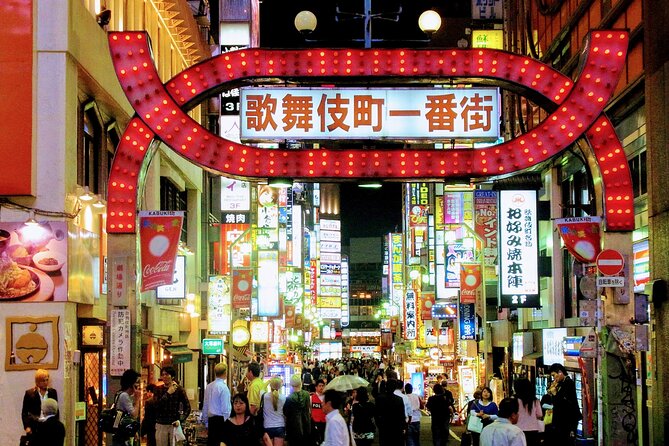
This trip handles the long jumps by coach. You can look out the window as the guide points out Akihabara’s anime and game culture, Ueno Park, Ameyoko market, Kappabashi’s kitchen shops, the National Diet Building, Tokyo Tower, Kabukicho, and the Olympic National Stadium. These are generally drive-by views, so do not expect a proper visit at each one.
That distinction matters. If you want to photograph every neighborhood or spend an hour browsing Akihabara’s arcades, this is not the right format. If you have one free day and want to understand where Tokyo’s main pieces fit, the route is useful.
The day begins early, with pickup listed at Matsuya Ginza at 7:20 a.m. or LOVE Shinjuku at 7:50 a.m. The stated meeting location is in Nishishinjuku, so check your booking details carefully. You finish around 6:10 p.m. near Shinjuku Station, with no hotel drop-off.
A few more Tokyo tours and experiences worth a look
Meiji Shrine and the quiet side of Harajuku
Meiji Jingu is a smart opening stop. Built in 1920 for Emperor Meiji and Empress Shoken, the Shinto shrine sits inside a broad wooded area. The city noise drops away as you walk along the approach, and the setting gives you a better sense of Japanese shrine design than a quick photo stop beside a busy road.
You have about 50 minutes here. That is enough for a walk through the grounds and time at the shrine, though not enough for a long, unhurried exploration. Wear shoes that can handle a fair amount of walking, since this is only the first major stop of a long day.
The route then passes through Harajuku, known for youth fashion and Japanese pop culture. You may see the streets and surrounding area from the coach, but Harajuku is not scheduled as a separate shopping stop. Save Takeshita Street or nearby Omotesando for another outing.
The Imperial Palace and Tokyo’s central landmarks
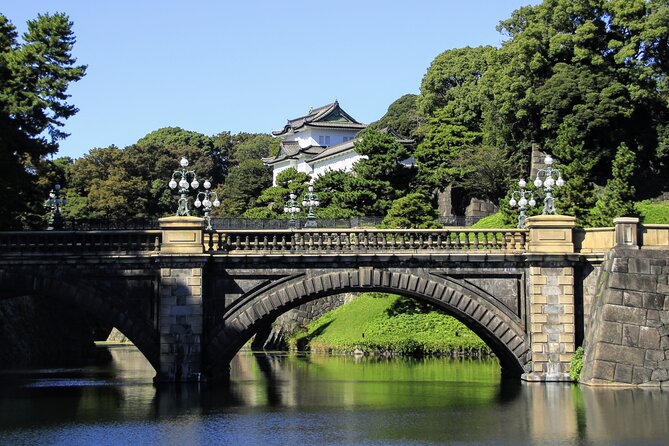
At the Imperial Palace, you spend about 30 minutes visiting either the East Garden or the Outer Garden around Niju-bashi Bridge. The choice is made according to the day’s operations, so you should not assume you will see both.
The palace occupies the former site of Edo Castle and remains the residence of Japan’s Imperial family. The East Garden offers traditional gardens, seasonal flowers, and remnants of the old castle grounds. Niju-bashi gives you the classic outer-palace setting, with the stone bridge and formal approach.
Thirty minutes is enough for an introduction and a few photographs. It is not enough to wander the gardens at leisure. The value here is the context: the palace sits at the heart of modern Tokyo, yet its grounds preserve links to the city’s shogunal past.
As the coach moves on, the guide may point out the National Diet Building, a symmetrical 1936 structure used by Japan’s parliament. You also pass Ueno Park, one of Japan’s oldest parks, and Ameyoko, a busy market street beside it. These glimpses are helpful, but consider them orientation rather than sightseeing stops.
Asakusa, matcha, and a practical Japanese lunch
Asakusa is the day’s most layered stop. This old district gives you a taste of Tokyo before the city’s modern towers took over the skyline. The centerpiece is Senso-ji, but the surrounding streets, food shops, and souvenir stalls are just as useful for understanding the area.
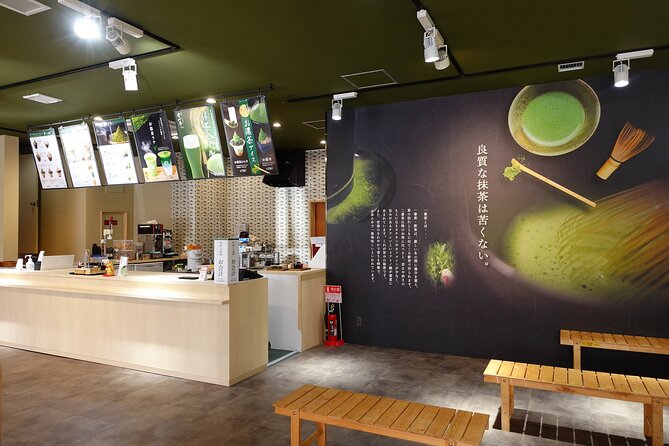
The matcha experience takes place in Asakusa and includes Uji matcha made from first-flush tea leaves. You may receive matcha tea or matcha gelato. This is a small activity, but it adds something that a standard landmark circuit often misses. You are not only looking at a temple; you are trying a familiar Japanese flavor and learning how it fits into local food culture.
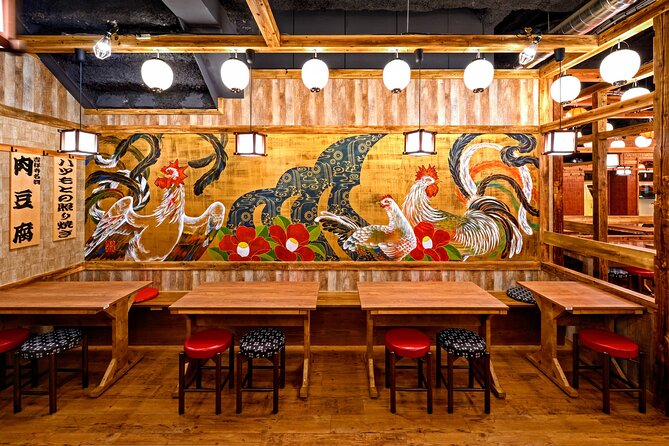
The optional lunch is a karaage and tofu set meal with a soft drink. Karaage is Japanese fried chicken, and the meal contains no pork or seafood. Keep in mind that the miso soup uses fish stock, so it is not suitable for a strict vegetarian diet.
A gluten-free meal with grilled chicken, rice, miso soup, and tofu is available if requested in advance. Muslim-friendly, lactose-free, and some allergy-specific meals are not available. Anyone with a serious allergy is advised to book without lunch. Select the needed meal when booking, since changes on the day may cost more.
One past concern with this part of the day was that lunch could be unevenly cooked. I would treat the meal as a convenient introduction, not as a reason to choose the tour. The matcha and the location are the more distinctive parts.
Senso-ji and Nakamise Avenue
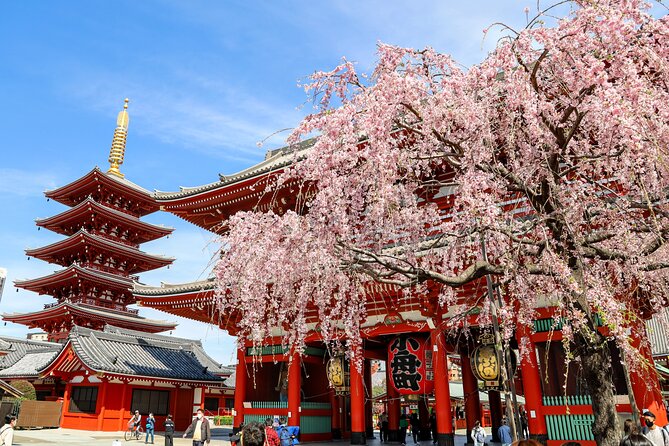
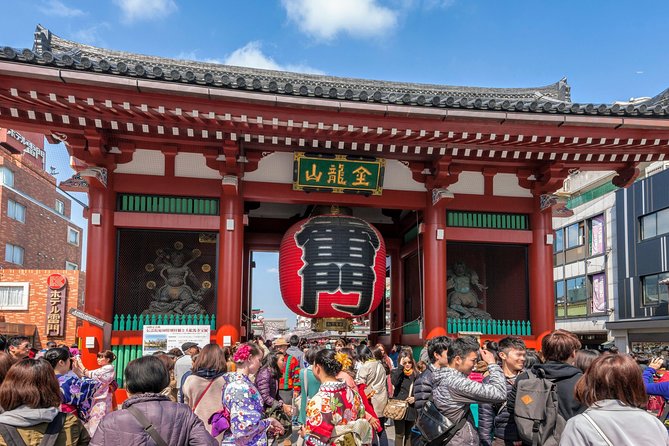
You get about 45 minutes at Senso-ji, Tokyo’s best-known Buddhist temple. Start at Kaminarimon Gate, with its large red lantern, then walk along Nakamise Avenue toward the temple. The shopping street sells souvenirs, sweets, small gifts, and traditional-style goods.
This stop gives you time to take photographs and shop, but it can feel short if you want to browse every stall. Keep an eye on the meeting time. In a large group, a late return can hold up the entire coach, and the operator says late arrivals cannot join the tour partway through.
Senso-ji is also a good place to notice the difference between a religious site and a shopping street built around it. You get both in one compact visit. The guide can add useful background, but the amount of explanation depends on the guide and the traffic schedule.
Guides named in guest feedback include Momo, Yuta, Aya, Lovely, Levin, Hiro, Yuty, and Ayu. The strongest experiences seem to depend heavily on who leads the group. Guides such as Momo, Aya, Yuta, and Levin were praised for clear organization, warmth, humor, and strong English. One weaker experience involved speech that was difficult to follow, while another suggested that the guide speak more slowly.

Tokyo Skytree at 350 meters
Tokyo Skytree is the visual high point of the afternoon. The tour includes admission to the Tembo Deck at 350 meters, along with skip-the-line access. That is important because arranging the tower on your own can mean dealing with ticket times and queues.
From the observation deck, you get a 360-degree view over Tokyo. On a clear day, the scale of the city becomes easier to read: dense districts, broad roads, rivers, towers, and low neighborhoods spread far beyond the center. You have about 90 minutes, which gives you time for the view and some browsing in the Sora-machi shopping complex below.
The tower is not merely a photo stop. It helps make sense of the city you have been crossing all day. After seeing Tokyo at street level in Asakusa and from the coach around central districts, you can finally see its full reach.
Weather matters here. Clouds or haze can soften the view, and the wider tour is subject to changes caused by weather and operations. If one activity cannot run, an alternative or small compensation may be offered, but refunds are not promised for individual changes.
Odaiba and the uncertain Tokyo Bay ferry
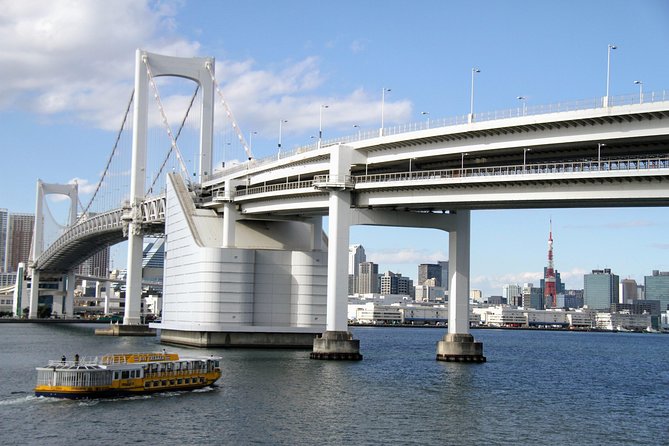
The final planned sightseeing stop is Odaiba, where the ferry may travel beneath Rainbow Bridge and across Tokyo Bay. The ride lasts about 20 minutes. It offers a light breeze, water-level views of the skyline, and a pleasant change after a long day on the coach.
Some of the most memorable moments can happen here, especially if the timing brings evening light. Still, keep your expectations measured. The ferry is not guaranteed. High tide, emergency maintenance, weather, or other operating problems can suspend it.
When the cruise is unavailable, the group may visit Hamarikyu Gardens or the Fukagawa Edo Museum instead. In that case, Odaiba is not visited and there is no refund for the substitution. Every Tuesday, the ferry is specifically suspended and one of those alternatives is scheduled.
One important inconsistency in the supplied details is that the cruise is described as crossing Tokyo Bay, while another section refers to a river ride. Either way, think of it as a short boat outing rather than a major cruise with a full sightseeing program. One poor experience involved low audio volume and little explanation on the boat, so the ride’s value comes more from the setting than from onboard commentary.
What the coach ride adds, and what it cannot do
The air-conditioned coach is the backbone of the day. Free Wi-Fi is available onboard, and multilingual audio guidance is offered in English, Spanish, French, Italian, German, Portuguese, and Ukrainian. The live guide speaks English, while the audio system provides extra support.
The coach makes this route practical, but traffic is part of Tokyo life. A day that looks tidy on paper can stretch or shift once the bus moves through central streets. The itinerary order may change, and some free time may appear between stops. One assessment found the day could have been about an hour shorter because of waiting between places.
You should also expect a lot of walking once you leave the bus. The operator does not recommend the activity for anyone unable to walk long distances. Comfortable shoes are essential, and the day is easier if you bring water and keep your belongings simple.
With a maximum of 43 people, this is not a private or intimate outing. The guide must keep everyone together, explain meeting points clearly, and repeat timing instructions. That can feel impersonal, but it also means you do not have to manage Tokyo’s transport system alone.
Is $129.25 good value?
At $129.25 per person, the price is fair if you use most of the inclusions. You receive coach transport, an English-speaking guide, multilingual audio, Tokyo Skytree admission, matcha, and the possible ferry or replacement attraction. Lunch is included only if you select the lunch option, so compare the exact booking choices before paying.
The strongest value comes from the time saved. Reaching Meiji Shrine, the palace, Asakusa, Skytree, and Odaiba independently would require several train rides and careful timing. You would also need to arrange Skytree tickets and decide how to handle the ferry.
The weak point is depth. You see many places, but you do not fully explore most of them. If you already know Tokyo or prefer long visits in fewer locations, buying your own transit and choosing two or three areas may give you a better day.
The tour has free cancellation up to 24 hours before the start time. Changes or cancellations inside that window are not accepted for a refund. Since weather and transport operations can affect the route, read the final confirmation closely.
Who should book this Tokyo day tour?
I would choose this for a first full day in Tokyo, especially if you have limited time or do not want to plan a complicated route. It also suits solo visitors who want a ready-made introduction, couples who prefer sightseeing over navigation, and families who value a coach between distant districts.
The tour is less suitable if you need a slow pace, have serious dietary restrictions, dislike group schedules, or want extended time in Harajuku, Akihabara, Ueno, or Odaiba. Those places are mostly passed from the coach or visited only briefly.
Guide quality matters, so the experience may feel different from one departure to another. The best fit is someone like Momo, Yuta, Aya, or Levin, who can keep a large group organized while adding history, local details, and humor. The multilingual audio helps, but it does not replace a clear live explanation.
Should you book it?
Book it if your goal is a broad, efficient introduction to Tokyo. The combination of Meiji Shrine, the Imperial Palace, Asakusa, matcha, Senso-ji, Skytree, and a possible bay ride covers the city’s major contrasts in one long day.
Skip it if you want to linger, shop seriously, or explore each neighborhood on foot. At $129.25, the tour earns its price through transport and coordination, not through quiet, detailed time at every stop. For a first visit, that bargain can be worthwhile. Use the day to learn Tokyo’s layout, then return on your own to the places that catch your interest.
FAQ
How long does the Tokyo bus tour last?
The experience lasts approximately 9 to 10 hours. The listed final drop-off near Shinjuku Station is around 6:10 p.m.
Where does the tour start and finish?
The stated meeting and drop-off location is 1-chōme-7-2 Nishishinjuku, Shinjuku City, near Shinjuku Station. Pickup options are also listed at Matsuya Ginza at 7:20 a.m. and LOVE Shinjuku at 7:50 a.m., so check your confirmation for the exact departure point.
Is Tokyo Skytree admission included?
Yes. Admission to the Tembo Deck at 350 meters is included, with skip-the-line access listed as part of the experience.
Is lunch included?
Lunch is included only when you select the lunch option. The standard meal is karaage, tofu, miso soup, and a soft drink.
Can I request a vegetarian or gluten-free meal?
You must request the meal when booking. A gluten-free option includes grilled chicken, rice, miso soup, and tofu. The regular miso soup contains fish stock, and Muslim-friendly, lactose-free, and some allergy-specific meals are not available.
Is the Tokyo Bay ferry guaranteed?
No. The ferry can be suspended because of high tide, emergency maintenance, weather, or other operating problems. Hamarikyu Gardens or the Fukagawa Edo Museum may replace it, and no refund is given for that change.
Is there an English-speaking guide?
Yes. A professional English-speaking guide accompanies the tour. Multilingual audio guidance is also available in English, Spanish, French, Italian, German, Portuguese, and Ukrainian.
Is the tour suitable for people with limited mobility?
The activity is not recommended for people who cannot walk long distances. You should expect walking at shrine, temple, garden, and observation-deck stops, as well as a full day away from the coach.
More 1-Day Tours in Tokyo


More tours in Tokyo we've reviewed












1-Day Tours, compared.
 ★ 5.0Mt Fuji and Hakone 1-Day Bus Tour Return by Bullet TrainFrom $163
 ★ 4.0Mt Fuji & Hakone Cruise, Drum Show Bullet Train 1 Day from TokyoFrom $149
 ★ 4.5Tokyo: DisneySea 1-Day PassportFrom $571 day
 ★ 4.6Tokyo Disneyland 1-Day PassportFrom $571 day
 ★ 4.2Tokyo: Mt. Fuji 5th Station & Hakone Cruise 1-Day Bus TourFrom $12911 hours
 ★ 5.0Tokyo Customized Private Tour (Must See Places in 1 Day)From $145