Reviewed · TICKETS
Tokyo: Hop-On Hop-Off Sightseeing Bus Ticket
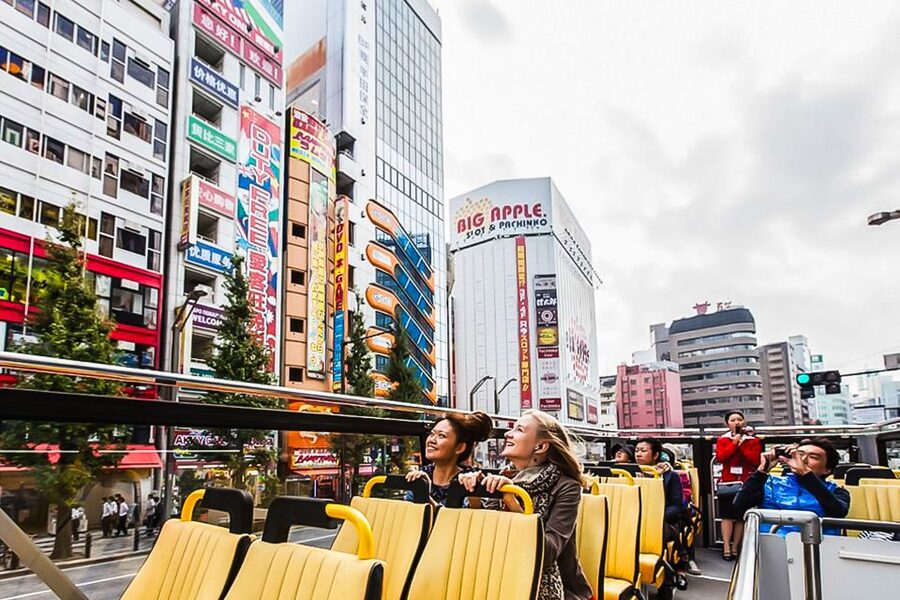
Tokyo’s open-top Sky Hop Bus gives you a quick, useful look at a city that can feel overwhelming on foot or by subway. In one ride, you can pass from Tokyo Tower and Ginza to Asakusa and Tokyo Skytree, then watch the skyline change from street level on the upper deck.
In This Article
- Key points to know
- What the Sky Hop Bus does well
- Route 1: Tokyo Skytree, Asakusa, Ueno, and Akihabara
- Route 2: Tokyo Tower, Zojo-ji, Tokyo Teleport, Tsukiji, and Ginza
- Route 3: Shinjuku, Harajuku, Meiji Jingu, and Shibuya
- Open-air seating, rain, heat, and wind
- Audio commentary on your own device
- How to plan one day or two
- Meeting point and boarding details
- Is $30 a fair price?
- Who should book the Sky Hop Bus?
- Should you book it?
- FAQ
- How long does the Tokyo Sky Hop Bus ticket last?
- Can I use the ticket on all three routes?
- Where can I board the bus?
- Does the ticket reserve a seat?
- Is the bus air-conditioned?
- What happens if it rains?
- Do I need to bring my own audio equipment?
- Which languages are available for the audio guide?
I like the freedom to use all three routes with one ticket, and I like the audio guide on your own phone, which supports 10 languages. The main catch is that this is not a bus every few minutes. A crowded bus or a missed connection can mean a long wait, so you need to watch the timetable and plan your hops carefully.
Key points to know
- Three routes cover different sides of central Tokyo: Choose the Skytree and Asakusa course, Tokyo Tower, Tsukiji, and Ginza, or the Shinjuku and Shibuya course.
- The upper deck is completely open-air: You get wide city views, but there is no air-conditioning and conditions can be hot, wet, or windy.
- Your phone replaces the built-in commentary: Bring your own smartphone or tablet and earphones for audio in Japanese, English, Korean, Chinese, French, German, Spanish, Thai, Vietnamese, or Indonesian.
- A full circuit takes time: Completing all three routes in one day is possible, but you will have little time for sightseeing stops.
- Buses may fill up: This ticket does not reserve a particular seat. If a bus is full, you must wait for the next one.
- The best use is often orientation: Ride first to decide which areas deserve a longer visit by subway or on foot.
What the Sky Hop Bus does well
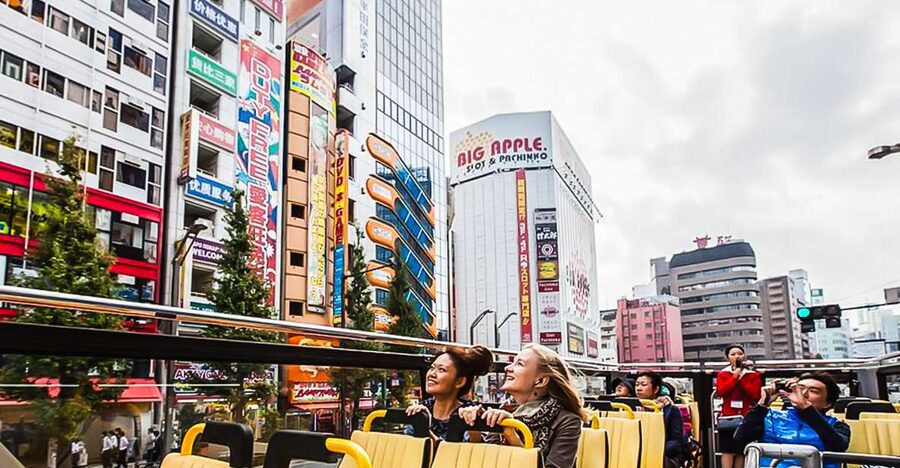
At $30 per person, this is not the cheapest way to move around Tokyo. The Tokyo Metro and JR trains will usually get you from point A to point B faster and for less money. The bus earns its price by adding a moving view of the city and an introduction to neighborhoods you might otherwise miss.
I especially like it for a first day in Tokyo. You can sit back, hear short explanations of buildings and areas, and mark the places that deserve a closer look later. It is also useful if you are traveling with someone who prefers not to navigate Tokyo’s large stations right away.
The bus is driven by English- and Japanese-speaking staff, and the operation is generally organized and punctual. The ride itself is simple rather than fancy. You board, take an upper-deck seat, listen to commentary, and decide where to get off.
The ticket lasts one or two days, depending on the option you choose. The two-day choice is easier if you want to stop at several sights. A one-day ticket works best if you mainly want the full circuits and a broad view of Tokyo.
A few more Tokyo tours and experiences worth a look

Route 1: Tokyo Skytree, Asakusa, Ueno, and Akihabara
The Tokyo Skytree course begins at the Marunouchi Mitsubishi Building and heads east through several districts with very different personalities. The listed stops are:
- Marunouchi Mitsubishi Building
- Kodemmacho Station
- Ryogoku Edo-Tokyo Museum
- Tokyo Skytree Station
- Asakusa Hanakawado
- Asakusa Tawaramachi
- Ueno Matsuzakaya
- Akihabara, Suehirocho
- Shin-Nihombashi Station
- Marunouchi Mitsubishi Building
This is the route to choose for old Tokyo, major shopping areas, and the city’s famous tower. Tokyo Skytree is the visual star, rising high above the eastern districts. The bus gives you a good first look at its scale, but the ticket does not include admission to the observation decks or aquarium.
The Asakusa stops are useful for visiting the Senso-ji area, though the exact sights you see depend on how long you stay off the bus. Asakusa has a more traditional feel than the glass-and-steel districts around Marunouchi. It is a good place to leave the bus, walk, and make the trip your own.
Ryogoku, home to the Edo-Tokyo Museum stop, connects the route with sumo culture and Tokyo’s past. Ueno is a practical stop for museums, parkland, and shopping. Akihabara offers a completely different side of the city, with its electronics, games, and pop-culture shops.
The drawback is timing. If you get off at Skytree, Asakusa, Ueno, and Akihabara, you will not simply be making quick photo stops. Each area can absorb several hours. I would use this route either as a sightseeing loop or as a way to choose one eastern Tokyo neighborhood for a proper visit.
Route 2: Tokyo Tower, Zojo-ji, Tokyo Teleport, Tsukiji, and Ginza
The Tokyo Tower, Tsukiji Ginza course follows this circuit:
- Marunouchi Mitsubishi Building
- Tokyo Tower
- Tokyo Prince Hotel and Zojo-ji Temple
- Tokyo Teleport Station
- Tsukiji Ginza
- Marunouchi Mitsubishi Building
This is probably the most balanced route for a first look at central Tokyo. Tokyo Tower gives you one of the city’s classic views, while nearby Zojo-ji Temple adds a quieter religious setting and a strong contrast with the tower’s orange steel frame.
The Tokyo Prince Hotel and Zojo-ji stop is especially useful because the two sights sit close together. You can see a major modern landmark and a temple in one stop, which neatly captures Tokyo’s habit of placing old and new side by side.
The route then reaches Tokyo Teleport Station before turning toward Tsukiji and Ginza. Tokyo Teleport connects with the waterfront side of the city. Tsukiji is associated with the former wholesale fish market, though the surrounding area is now more useful for food stalls, shops, and a look at Tokyo’s market culture than for seeing the old market operation itself.
Ginza brings polished department stores, luxury shopping, broad avenues, and a very different urban mood. If you want restaurants or shopping rather than temples and museums, this is the route that will help you plan.
One note about this course: an open-top bus can feel particularly exposed on faster stretches and bridges. Hold on to loose hats and scarves. The elevated views can be excellent, but wind is part of the deal.
Route 3: Shinjuku, Harajuku, Meiji Jingu, and Shibuya
The Shinjuku Shibuya course covers Tokyo’s western center:
- Marunouchi Mitsubishi Building
- Shinjuku-gyoemmae Station
- Shinjuku Station South Exit and Hotel Century Southern Tower
- Shinjuku Mitsui Building in Nishi-Shinjuku
- Shibuya City Hall, Harajuku, and Meiji Jingu Shrine
- Marunouchi Mitsubishi Building
This route is about Tokyo’s modern energy and big-city scale. Shinjuku is a dense commercial and office district, with tall buildings and a constant flow of trains, shoppers, and office workers. The Nishi-Shinjuku stop gives you a look at the skyscraper side of the area.
Harajuku and Meiji Jingu Shrine provide a change of pace. The shrine is set among trees and is one of the city’s best-known Shinto sites. The stop combines well with Harajuku’s shops and street culture, though you should allow enough time to walk between the areas.
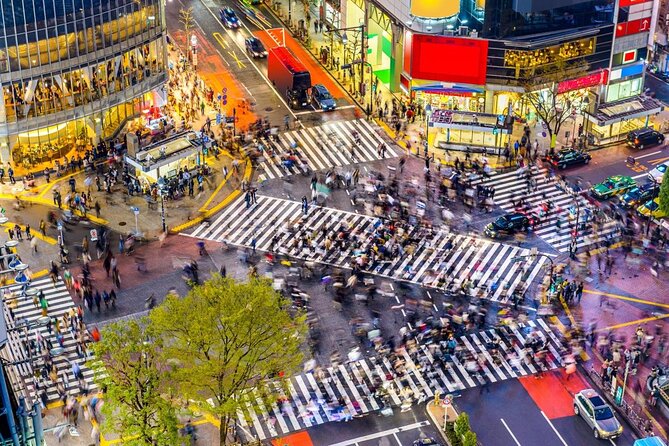
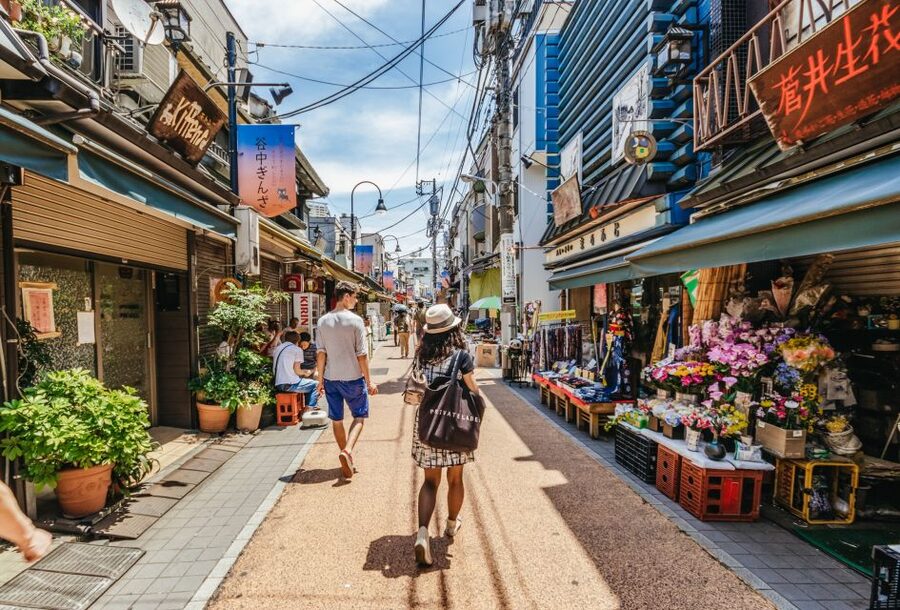
The Shibuya City Hall stop is your gateway to one of Tokyo’s best-known urban districts. The bus cannot replace time on foot here. Use it to get oriented, then walk the surrounding streets and decide which shops, viewpoints, or cafes you want to visit.
This course is also useful for photographs. The upper deck gives you a clean view of the changing skyline, but the bus moves through traffic, so do not expect a stop every time you see an interesting building. Keep your camera ready and take advantage of the larger views rather than waiting for perfect close-ups.
Open-air seating, rain, heat, and wind
The bus’s best feature is also its main practical weakness. All passenger seats are on the second floor, and the first floor is used for storage. There is no air-conditioning because the bus is open-air.
In mild weather, this is exactly what you want. You get a broad view over cars, storefronts, and buildings instead of staring through a window. At dusk, the city lights beginning to appear can make the ride especially appealing.
In summer, the same open deck can be punishing. August heat can make a long circuit uncomfortable, and there is no cool lower cabin to escape to. Staff may warn you about the conditions, and frozen towels have been provided in very hot weather, but you should still dress for the temperature and carry water.
Rain does not automatically stop the tour. Raincoats or ponchos are distributed when needed, and umbrellas are not allowed on board. In severe weather, including typhoons or thunderstorms, the service may not operate.
Wind is another factor. Bridges and faster road sections can be gusty, so secure hats and other loose items. If the forecast looks poor, consider using the bus as a short orientation ride rather than committing to a full day outside.
A few more Tokyo tours and experiences worth a look

Audio commentary on your own device
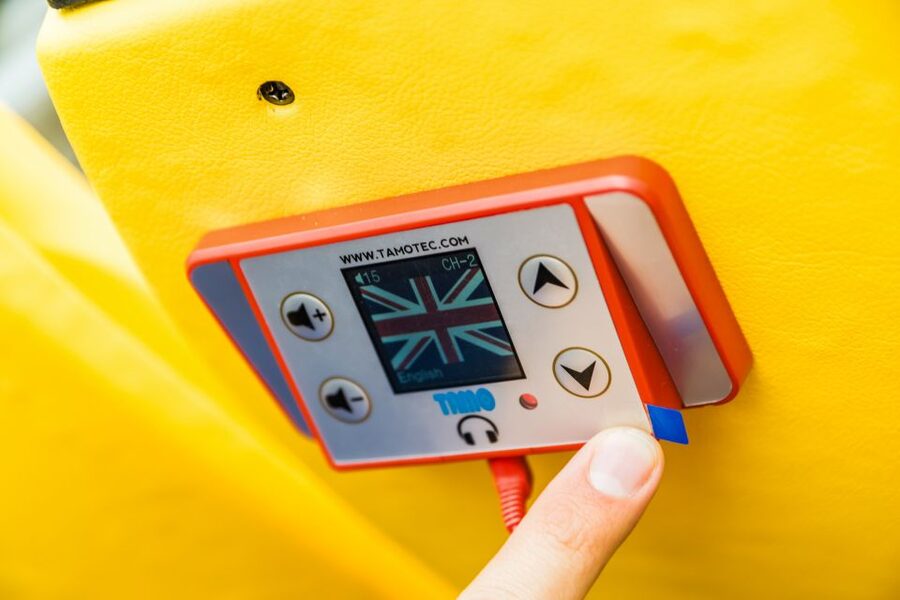
The new personal-device audio system is one of the more useful improvements. You bring a smartphone or tablet, connect to the service, and listen through your own earphones. It supports 10 languages:
- Japanese
- English
- Korean
- Chinese
- French
- German
- Spanish
- Thai
- Vietnamese
- Indonesian
The traditional vehicle-mounted system may also be available, but it is not guaranteed on every bus. Bring your own device and earphones so you are not depending on the seat equipment. Data charges may apply and are your responsibility.
The commentary is designed to match the route and stops. That helps you understand what you are seeing without having to stare at a printed guide. It also gives the ride more value than simple transportation.
Keep expectations sensible. This is recorded commentary, not a live guide walking you through every street. Some audio equipment has not worked perfectly, and recordings can occasionally cut off mid-sentence. Still, the system is helpful for basic cultural and historical context, especially on your first circuit.
How to plan one day or two
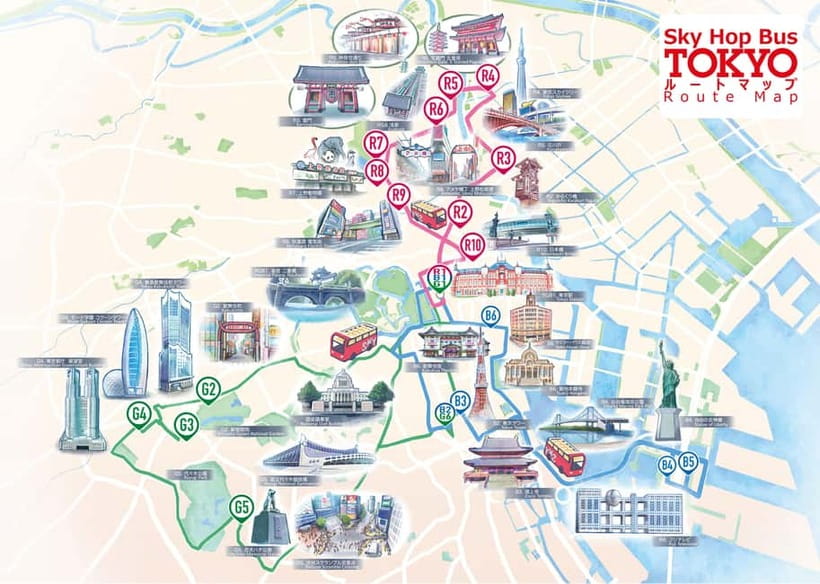
The biggest planning mistake is treating this like a city bus with constant service. It is a sightseeing operation, and gaps between buses can be long. Some waits may run 30 to 45 minutes, while a missed bus at a busy stop can create a much longer delay.
Before getting off, take a photo of the stop timetable. Also mark the stop in your phone’s map. This matters at Tokyo Tower and other large areas where the boarding point may not be directly beside the sight. Arriving 10 minutes late can mean waiting for the next bus rather than simply catching another one.
A practical one-day plan is to ride one or two full routes and choose one major stop for a visit. You can also begin early, complete one route, transfer at the central starting point, and ride another. Trying to complete all three routes and make several sightseeing stops is possible only with tight timing.
The two-day ticket is better for a relaxed visit. Use the first day to ride the routes and note what interests you. On the second day, get off at Tokyo Tower, Skytree, Asakusa, or another chosen stop and spend real time there.
The bus is not always the best way to move between separate sights. If you want to jump rapidly from Tokyo Tower to Shibuya to Asakusa, the JR line or Metro will usually be quicker. Think of the bus as sightseeing with transportation attached, not as Tokyo’s fastest public transit.
Meeting point and boarding details
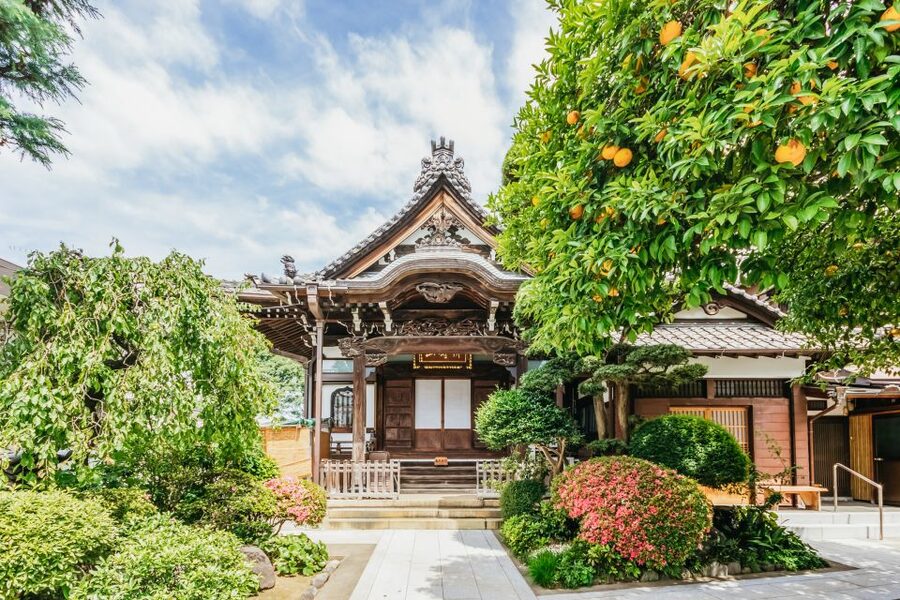
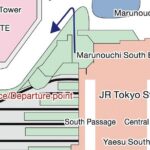
The main meeting point is in front of the Mitsubishi Building. You can also board directly at any listed bus stop in Tokyo using the QR code sent with your voucher.
The QR code does not reserve a particular seat or guarantee space on a particular departure. If the bus is full, you need to wait for the next one. This is most important during busy periods, at popular stops, and when several people are trying to board at once.
Staff can help with boarding and general directions, and English is available along with Japanese. Free shuttle service is included, but transfers to or from your hotel are not.
Cancellation is flexible if your plans change: you can cancel up to 24 hours in advance for a full refund. A reserve-now, pay-later option is also available.
Is $30 a fair price?
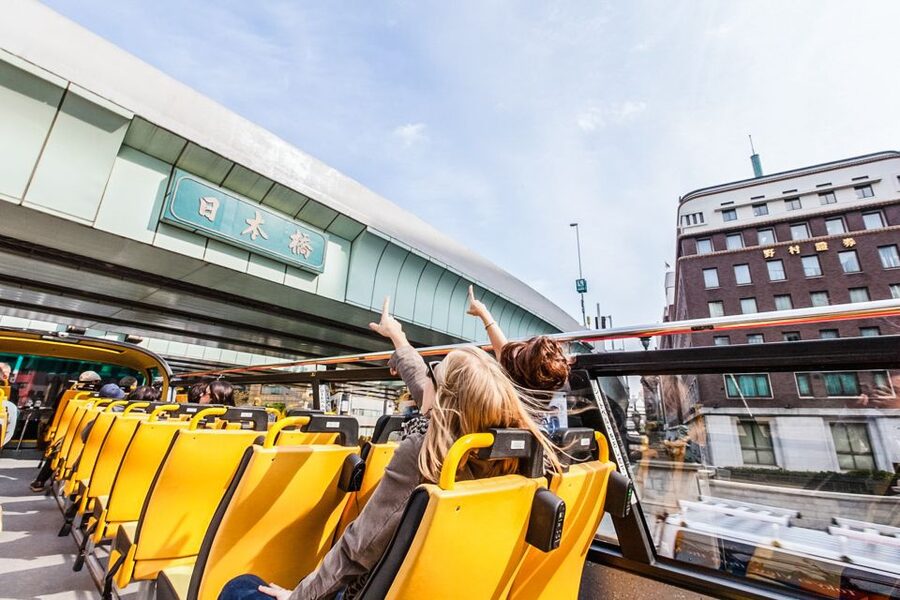
The value depends on how you use it. If you ride only one short segment to reach a sight, the Metro will almost certainly be the better bargain. If you complete several long sections, listen to the commentary, and use the bus to compare neighborhoods before deciding where to spend your time, $30 becomes easier to justify.
A one-day ticket offers the best value for a first orientation. A two-day ticket costs more, but it reduces the pressure created by slow bus frequency. You can ride the full circuits one day and use the second for selected stops.
I would not buy this ticket solely as a transportation pass. Tokyo’s rail system is faster for point-to-point trips. I would buy it for the open-air views, the route coverage, and the chance to see the city without constantly checking subway maps.
Who should book the Sky Hop Bus?
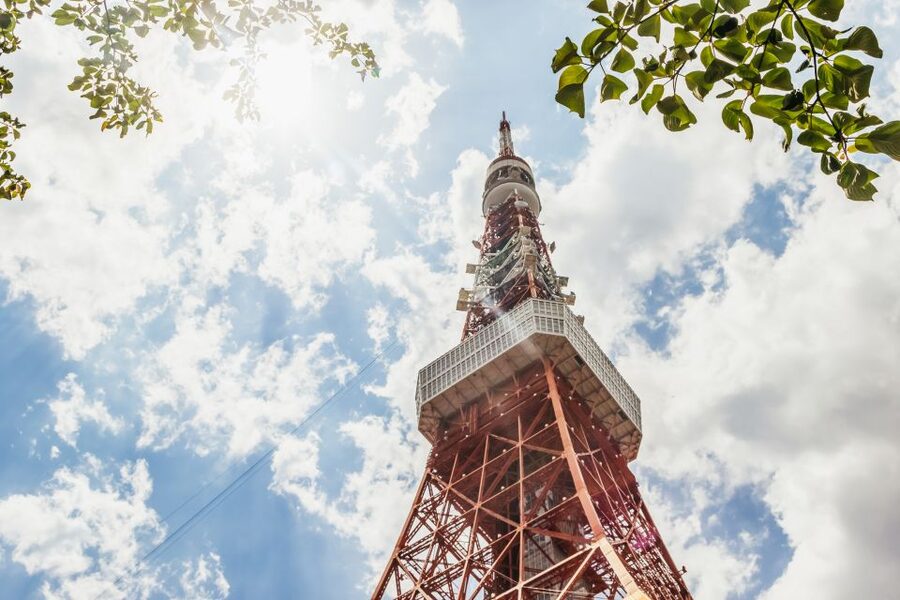
I think this suits first-time visitors, families, older travelers, and anyone who wants a broad introduction before tackling Tokyo’s stations. It is also a good choice if you have only one to three days and want to identify the areas worth revisiting.
It works best for people who enjoy seeing a city from above street level and can handle an outdoor ride. You should be comfortable sitting in heat, rain, or wind, and you should have enough flexibility to wait for the next bus.
If your priority is efficient transport, buy a transit pass instead. If you want to stop every few minutes, this service may test your patience. And if the weather is very hot or stormy, the open deck can turn a good idea into a hard afternoon.
Should you book it?
Book the Tokyo Sky Hop Bus if you want a well-organized first look at Tokyo, especially around Skytree, Asakusa, Tokyo Tower, Ginza, Shinjuku, and Shibuya. Start early, photograph every timetable, bring earphones, and use the first circuit to choose where to explore properly.
Choose two days if you want to get off often. Choose one day if you mainly want the view and commentary. For a memorable ride, consider an evening circuit when the city lights begin to come on, but check the operating times first.
FAQ
How long does the Tokyo Sky Hop Bus ticket last?
You can choose a one-day or two-day ticket. Check availability for the operating times on your selected date.
Can I use the ticket on all three routes?
Yes. The ticket provides access to all available routes, including the Tokyo Skytree course, Tokyo Tower, Tsukiji Ginza course, and Shinjuku Shibuya course.
Where can I board the bus?
The main meeting point is in front of the Mitsubishi Building. You can also board directly at any bus stop in Tokyo listed for the service by using the QR code on your voucher.
Does the ticket reserve a seat?
No. This is not a reservation for a specific bus or seat. If there are no free seats, you must board the next bus.
Is the bus air-conditioned?
No. The bus is open-air and has no air-conditioning. Passenger seating is on the second floor, while the first floor is used for storage.
What happens if it rains?
Raincoats are distributed when needed. Umbrellas are not permitted on board. The service may not operate during severe weather such as typhoons or thunderstorms.
Do I need to bring my own audio equipment?
Yes. For the personal-device audio system, bring your own smartphone or tablet and earphones. Data charges may apply and are your responsibility.
Which languages are available for the audio guide?
The personal-device system supports Japanese, English, Korean, Chinese, French, German, Spanish, Thai, Vietnamese, and Indonesian. A vehicle-mounted system may also be available in Japanese, English, Korean, Chinese, French, German, and Spanish, but it is not guaranteed on every bus.
More Tickets in Tokyo
More Tickets & Passes in Tokyo

More tours in Tokyo we've reviewed












Tickets, compared.
 ★ 4.5Tokyo: TOKYO SKYTREE® Admission ticketFrom $131 day
 ★ 4.6Tokyo: teamLab Planets TOKYO Digital Art Museum Entry TicketFrom $251 day
 ★ 4.6Tokyo Tower: Admission TicketFrom $91 hour - 3 days
 ★ 4.8Tokyo: Japanese Dance Cabaret Theater Asakusa-Kaguwa TicketFrom $492 hours
 ★ 4.5Tokyo: Kamakura & Enoshima Day Trip including Temple TicketsFrom $589 hours - 570 minutes
 ★ 4.5Tokyo: Samurai Restaurant Show Ticket with 2 DrinksFrom $551h 30m