Reviewed · SAMURAI & NINJA EXPERIENCES
Tokyo: Samurai Adventure! Authentic Sword Experience
Tokyo’s Samurai Adventure is less about wielding a real katana and more about learning how samurai scenes are built. Professional action actors guide you through stance, grip, swings, and defensive movements with wooden practice swords, then pair you with an instructor for a short action sequence.
In This Article
- Key points to know before booking
- What this Tokyo samurai class really offers
- Starting with warm-ups and samurai basics
- Watching Dai and Kume demonstrate the craft
- Choosing between the public and private courses
- The paired practice is where the lesson clicks
- Costume, photos, and the visual appeal
- How authentic is the experience?
- The $24 price and what you receive
- Who will enjoy this most?
- Practical planning for your Tokyo day
- Should you book the Samurai Adventure?
- FAQ
- Where does the samurai experience take place?
- Is the workshop in Tokyo?
- What kind of sword fighting will I learn?
- Will I use a real katana?
- Who teaches the class?
- Can a complete beginner join?
- Is there a private course?
- What happens in the public course?
- Is a costume included?
- What should I wear and when should I arrive?
- Who should not take this activity?
- Can I cancel for a refund?
I like the close-up demonstrations, where you can watch trained performers make simple movements look sharp and dramatic. I also like the friendly, hands-on teaching from Dai and Kume, who adjust their guidance for beginners and keep the session active without making it intimidating.
The main limitation is clear: this is a samurai action workshop, not combat training or a full historical lesson. It also involves standing and moving with a sword, so it is not suitable for pregnant people, wheelchair users, people with vertigo, back problems, or certain pre-existing medical conditions.
Key points to know before booking

- You practice Tate sword action, not real sword fighting: Wooden swords and controlled movements keep the lesson suitable for beginners.
- Dai and Kume lead the instruction: Their demonstrations and personal corrections are central to the experience.
- The public class has a Japanese connection: You may train alongside aspiring Japanese actors learning samurai action.
- Private and public courses offer different moods: Choose a private lesson for focused instruction, or a public class for a livelier shared session.
- The workshop begins with basics: Warm-ups, stance, grip, resting positions, swings, and defensive moves come before paired practice.
- The studio is near central Tokyo: Search Google Maps for Samurai Experience Photo Studio ICHI, with access from Tokyo Station, Ginza, and Tsukiji.
What this Tokyo samurai class really offers

Tokyo has plenty of polished cultural activities, but this one has a useful twist. You are not simply dressing up, posing with a sword, and leaving with a photo. You learn the physical language of samurai action from people who work as action actors.
That distinction matters. Tate is the staged sword-fighting style used in films, television, theater, and live performances. The goal is controlled movement, good timing, clear lines, and safe distance. You learn how a sword action scene looks and feels without facing the risks of actual combat.
The session is held at Samurai Experience Photo Studio ICHI, a name you can search directly on Google Maps. The workshop ends at the same meeting point. It is in central Tokyo, with access from the Tokyo Station, Ginza, and Tsukiji areas, though you are responsible for getting there and returning to your hotel.
The published price is $24 per person. That is a modest fee for a hands-on activity that includes instruction, demonstrations, wooden practice swords, an introduction to samurai history, and photos with the performers. A costume is not included in the base price, but it is available as an option.
A few more Tokyo tours and experiences worth a look

Starting with warm-ups and samurai basics
The workshop starts with warm-up exercises. This is not filler. Sword movements use the whole body, and warming up helps you get used to the stance and controlled footwork before you begin swinging.
You then learn the basic posture of a samurai. Expect instruction on how to stand, where to place your hands, how to hold the sword, and how to return to a resting position. These early movements may look simple, but they give you the framework for everything that follows.
The instructors introduce the sword gradually. You practice how to hold it safely, how to swing with control, and how to perform basic defensive actions. The emphasis is on form rather than force. You are not being asked to hit hard, move quickly, or prove your athletic ability.
That makes the session workable for first-timers. You do not need martial arts experience, and beginners are explicitly welcome. If you are unsure of a movement, Dai or Kume can demonstrate it again and help correct your position.
Wear comfortable clothes and closed-toe shoes suitable for physical activity. High heels are not allowed, and you should arrive 15 minutes early so the class can begin on time.
Watching Dai and Kume demonstrate the craft

The demonstrations are one of the best parts of the experience. Instead of hearing a long lecture about sword technique, you see the movements performed at full clarity and close range.
A professional action actor can make a controlled turn, draw, or strike look effortless. The demonstration helps you notice the difference between a wild swing and a clean stage movement. It also gives you a target to copy when you begin practicing.
Dai and Kume are repeatedly praised for being warm, patient, and good at offering useful corrections. That is important in an activity where a small change in hand position or posture can make a movement feel much more natural.
The class also has a social side. In the public course, you join Japanese students who are learning samurai action as aspiring actors. You practice alongside them rather than watching a performance from the sidelines. That connection gives the session more life and lets you see how local performers approach the same exercises.
Group size is not specified, so the amount of individual attention can vary. One public session may feel busy, while another may be small. If the group happens to be light, you could receive more direct help. For guaranteed personal instruction, the private course is the safer choice.
Choosing between the public and private courses

The public course is the better pick for most visitors who want a fun introduction. You observe a class in progress, learn the same basic movements, and practice beside Japanese students. The shared setting can make the activity feel less formal and more like a working rehearsal.
It is also the best option if you enjoy meeting people and do not need every minute tailored to your interests. The class gives you a taste of samurai action without asking you to commit to serious study.
The private course follows a more personal path. It begins with a short introduction to samurai history and culture. The action actor then adjusts the lesson to your level and goals.
That format makes sense for martial arts practitioners, people with a strong interest in Japanese culture, or anyone who wants more time to refine the movements. It should also appeal to couples or families who prefer a quieter session and more direct help.
The available information does not state the private-course price or the length of either format. Check those details at booking. The public price of $24 per person gives you a useful benchmark, but do not assume the private option costs the same.
The paired practice is where the lesson clicks
Once you have learned the basic movements, you practice in pairs with a professional samurai action actor. This is carefully controlled stage combat, not sparring with sharpened blades.
You follow a sequence that feels like a scene from an action film. The instructor sets the pace and keeps the movements safe. Your job is to remember the stance, hold the wooden sword correctly, and respond at the right moment.
This is often the point when the workshop becomes more than a photo opportunity. You have seen the movements, copied them alone, and now have to use them in relation to another person. Even a short sequence can show you why timing matters so much in sword action.
Do not expect a full fight lesson in one visit. One class cannot teach the complete art of samurai swordsmanship, and the workshop is designed for visitors. The value is in learning a few fundamentals, seeing them performed properly, and trying them under supervision.
If you have limited mobility, vertigo, a back problem, or another medical condition, take the restrictions seriously. The activity is not suitable for wheelchair users, pregnant people, or those with certain pre-existing conditions. Smoking, alcohol, drugs, drones, and explosive substances are not allowed.






Costume, photos, and the visual appeal

The final photo session gives you a souvenir of the class. You can take pictures with the samurai performers and preserve the moment in a way that a standard museum visit cannot match.
A samurai costume is available as an option, but it is not included in the base price. Some participants choose to wear traditional clothing during the session, including kimono-style garments, which can make the photos more memorable. Confirm the costume cost and timing before you book if this part matters to you.
The photo opportunity is not the whole point of the activity, but it is a nice finish. You have already learned the basic stance and sword movements, so the photos can reflect something you actually practiced rather than a quick pose with a prop.
Families and mixed-age groups may especially enjoy this closing moment. One three-generation group found the activity suitable as a shared memory, while couples have also used the lesson as a distinctive Tokyo date activity.
How authentic is the experience?

It is authentic in a specific, limited sense. You are learning from professional action actors who train in samurai performance, and you see the movements demonstrated in a working practice setting. The public class can also place you beside Japanese students preparing for acting work.
This is not a reconstruction of a samurai battlefield or a seminar led by a historical warrior. The swords are practice weapons, the lesson is designed for tourists, and the main subject is Tate performance. That does not make it fake. It simply tells you what kind of cultural experience you are buying.
I would describe it as a practical introduction to Japanese sword-action performance. You get a small amount of history and culture, then spend most of your time moving, practicing, and watching demonstrations.
That balance will suit you if you prefer learning by doing. If your main interest is samurai history, armor, politics, or the daily life of medieval Japan, you may want to pair this with a museum or historical site.
The $24 price and what you receive

At $24 per person, the public course offers good value for a central Tokyo activity. You receive a guided lesson, a live demonstration, a wooden sword, basic instruction, paired practice, and a photo session. The cost is also low enough to fit into a day that already includes more expensive Tokyo attractions.
The strongest value comes from the personal contact. You are not paying only to watch performers. You get to ask questions, copy the techniques, and receive help with the details of grip and movement.
Still, keep the limits in mind. Meals, drinks, transportation, and any optional samurai costume cost extra or are your responsibility. The listing does not provide a workshop duration, so check the current schedule before planning a tight connection with another reservation.
The reserve-now, pay-later option can help if your Tokyo plans are still shifting. Cancellation is allowed up to 24 hours in advance for a full refund, according to the stated policy.
Who will enjoy this most?

I would recommend it to first-time visitors who want an active cultural activity rather than another viewing stop. It also works well for families, couples, friends, and people who enjoy film choreography or martial arts.
It is a good fit for you if:
- You want to handle a practice sword under supervision.
- You enjoy learning short movement sequences.
- You would like to meet Japanese actors in training.
- You want a memorable photo that comes from a real activity.
- You are curious about the difference between staged sword action and actual fighting.
The private course may suit experienced martial artists or people who want a lesson shaped around their own goals. The public course is likely enough for most visitors who want a lively introduction at the listed price.
I would skip it if you dislike physical activity, have a condition affected by standing or controlled movement, or expect a long historical lecture. This is a practical workshop with cultural context, not a museum tour.
Practical planning for your Tokyo day
Give yourself extra time to find the studio. Search for Samurai Experience Photo Studio ICHI on Google Maps, and arrive 15 minutes before the scheduled start.
The activity is offered in Japanese and English. Comfortable clothing and closed-toe shoes are essential. Leave high heels at the hotel, and do not bring a drone or anything prohibited by the activity rules.
The workshop returns to the meeting point, so it is easy to continue on to another central Tokyo neighborhood afterward. Since no meal is included, plan food before or after the class rather than expecting refreshments as part of the experience. Water may be offered during the lesson, but meals and beverages are not included.
If you are choosing between the two course styles, decide based on your goal. Pick public for the social setting and lower stated price. Pick private for more focused instruction and a short cultural introduction tailored to you.
Should you book the Samurai Adventure?
Book it if you want to do something with samurai culture instead of only looking at it. The combination of live demonstrations, simple sword instruction, paired practice, and photos makes the $24 public course an appealing addition to a Tokyo itinerary.
Dai and Kume are a major part of the experience. Their friendly teaching style helps beginners relax, and their corrections keep the workshop from becoming a loose costume photo session.
Just book with sensible expectations. You will not learn real sword combat in one class, and you should check the private-course price, costume option, and timing before paying. For an active, approachable look at Japanese stage swordsmanship, this is an easy yes. If you want detailed samurai history or a fully traditional martial arts course, spend your money elsewhere and use this only as a fun supplement.
FAQ
Where does the samurai experience take place?
The meeting point is registered on Google Maps as Samurai Experience Photo Studio ICHI. The activity begins and ends at the meeting point.
Is the workshop in Tokyo?
Yes. It is held in central Tokyo on Honshu and is accessible from Tokyo Station, Ginza, and Tsukiji.
What kind of sword fighting will I learn?
You will learn basic Tate sword-fighting movements used in staged action. The lesson covers stance, grip, holding and swinging a sword, basic strikes, defensive movements, and paired practice.
Will I use a real katana?
No. The hands-on lesson uses wooden practice swords. You will not take part in actual sword fighting.
Who teaches the class?
Professional action actors lead the workshop. The instructors named for the experience are Dai and Kume.
Can a complete beginner join?
Yes. Beginners are welcome, and the instruction starts with warm-ups and basic movements.
Is there a private course?
Yes. You can choose a private course or a public course. The private lesson begins with a short introduction to samurai history and culture, then is adjusted to your level and goals.
What happens in the public course?
You join a class where aspiring Japanese actors are learning samurai action. After observing, you can practice alongside them and interact with the Japanese students.
Is a costume included?
No. A samurai costume is not included in the base activity price, but it is available as an option.
What should I wear and when should I arrive?
Wear comfortable clothes and closed-toe shoes suitable for physical activity. High heels are not allowed. Arrive 15 minutes early.
Who should not take this activity?
It is not suitable for pregnant people, wheelchair users, people with back problems, people with vertigo, or people with pre-existing medical conditions.
Can I cancel for a refund?
You can cancel up to 24 hours in advance for a full refund.
More Samurai & Ninja Experiences in Tokyo


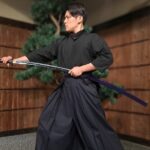
More tours in Tokyo we've reviewed












Samurai & Ninja Experiences, compared.
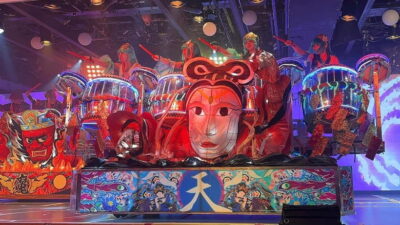 ★ 4.5Tokyo: Samurai Restaurant Show Ticket with 2 DrinksFrom $551h 30m
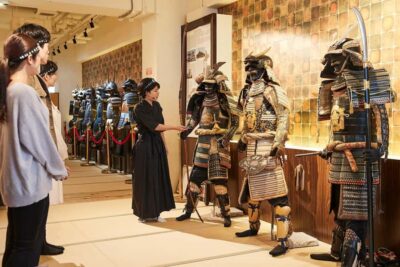 ★ 4.6Tokyo: Samurai Ninja Museum Guided tour and ExperienceFrom $27
 ★ 5.0Skip the lines Basic Ticket at SAMURAI NINJA MUSEUM TOKYOFrom $28
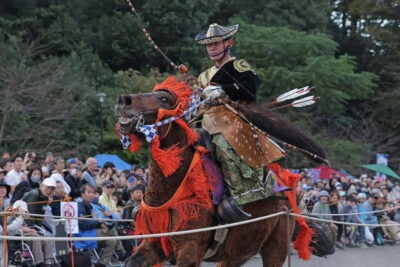 ★ 5.0Tokyo: Authentic Samurai Training at a DojoFrom $211
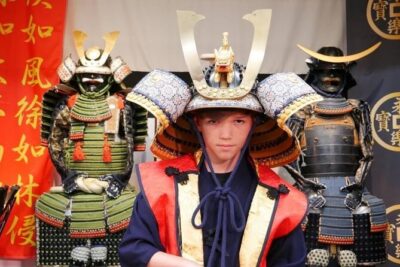 ★ 5.0Best Samurai Experience in TokyoFrom $65
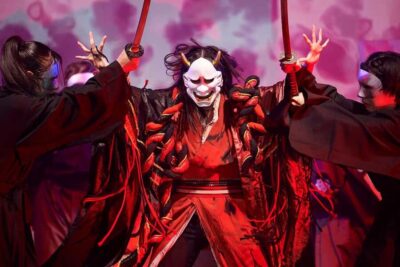 ★ 4.6Tokyo: Legend Samurai Entertainment Night in Kanda ShrineFrom $44