Reviewed · MT FUJI DAY TRIPS
One Day Tour to Oishi Park and Fruit Picking in Mt. Fuji Tokyo
The best part of this day is the mix: you pick seasonal fruit in Yamanashi, eat thick local houtou noodles, ride above Lake Kawaguchi, and finish near the clouds at Mt. Fuji 5th Station. I like the seasonal fruit picking and the included ropeway ride, since both offer experiences that are hard to arrange smoothly from Tokyo on your own. The catch is the long road day, and traffic or poor weather can shorten stops or remove Mt. Fuji from view.
In This Article
- Key points to know before booking
- What this Mt. Fuji day actually gives you
- Yamanashi fruit picking by season
- Houtou noodles and a short Yamanashi lunch
- Oishi Park beside Lake Kawaguchi
- The Mt. Fuji Panoramic Ropeway at 1,075 meters
- Mt. Fuji 5th Station and the limits of the road
- Seasonal versions of the day
- Guides, language, and group size
- Price, risk, and the cancellation rule
- Who should book this day
- Should you book the Mt. Fuji fruit-picking tour?
- FAQ
- Where does the tour start and finish?
- How long does the tour last?
- What fruit can I pick?
- Is the fruit picking always done directly from the plants?
- Is Mt. Fuji 5th Station guaranteed?
- Is lunch included?
I also like the practical setup. Your English or Chinese guide and Japanese-speaking driver handle the roads, while lunch and major admission costs are covered. Still, this is a large group tour, with up to 100 people, and the plan can change by season. One posted account describes being told four days before departure that the tour was unavailable, so I would confirm the operating status before building your whole trip around it.
Key points to know before booking
- Fruit picking changes by month: Strawberries generally run from December to May, cherries in June, peaches from mid-July to mid-August, grapes from mid-August to early October, and berries from October to mid-November.
- The day begins at 8:00 a.m. in Shinjuku: Meet at the Robert Indiana LOVE sculpture in Nishishinjuku, then return near Tokyo Mode Gakuen Cocoon Tower.
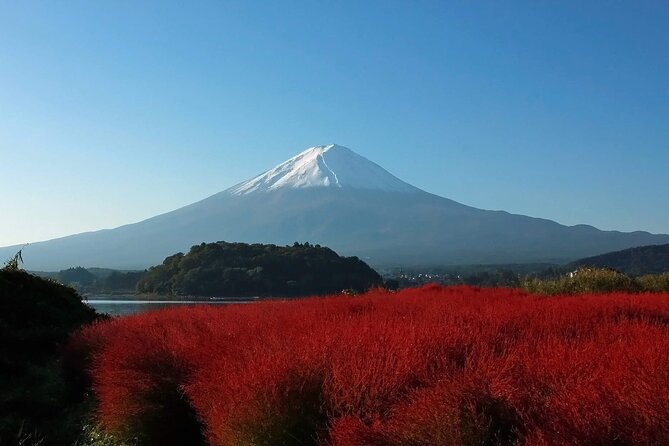
- Oishi Park is seasonal: You may see cherry blossoms, lavender, kochia, or autumn leaves, depending on the month.
- The ropeway ride is included: The Mt. Fuji Panoramic Ropeway reaches about 1,075 meters and gives wide views of Mt. Fuji and the surrounding area.
- Mt. Fuji 5th Station is not guaranteed: Snow, rain, road conditions, or traffic can send the group to the Fuji Visitors Center or Oshino Hakkai instead.
- Lunch is regional rather than fancy: Expect a houtou pot set with thick noodles, pork, and seasonal vegetables, with about 30 minutes set aside for the meal.
What this Mt. Fuji day actually gives you
At $125.39 per person, this is a value-focused way to reach several Yamanashi sights in one day. You get transport from central Tokyo, a guide, fruit picking, lunch, and the ropeway admission. If you tried to connect these places by train and local bus, you would spend more time changing vehicles and less time at the sights.
The tradeoff is control. You are not choosing how long to stay at each stop, and the road between Tokyo and the Fuji area can be slow. The advertised day lasts about nine to ten hours, but the schedule is exposed to traffic, weather, fruit conditions, and seasonal substitutions.
The group may be anything from a small minivan to a full coach. The maximum is 100 people, although a smaller group may use a minivan. That range matters. A small departure should feel easier to manage, while a large coach can mean slower boarding, longer restroom stops, and a less personal farm visit.
You meet at the Robert Indiana LOVE sculpture at 6-chōme-5-1 Nishishinjuku at 8:00 a.m. The return point is near Tokyo Mode Gakuen Cocoon Tower, also in Shinjuku. A shuttle to the meeting point is not included, so plan your own route through Tokyo. Keep your phone number or WhatsApp contact available when booking, since the operator requires one.
A few more Tokyo tours and experiences worth a look
Yamanashi fruit picking by season
The first major stop is a farm in Yamanashi Prefecture. The farm portion is scheduled for about three hours, which gives you more than a quick photo stop. You may receive a guided introduction to the farm, learn about its growing methods, meet farm animals, and walk among the orchards before picking fruit.
The exact fruit depends on the calendar and growing conditions:
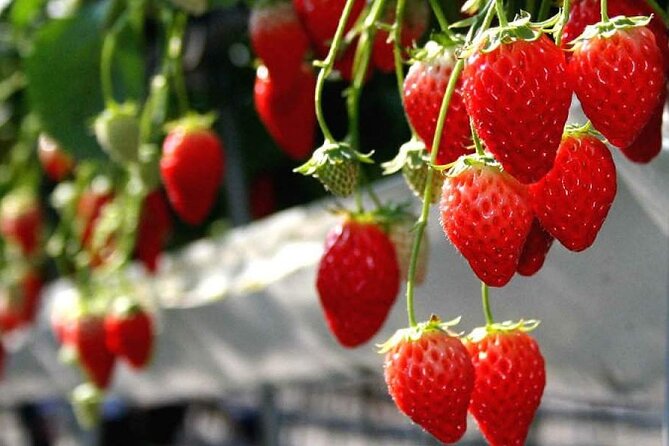
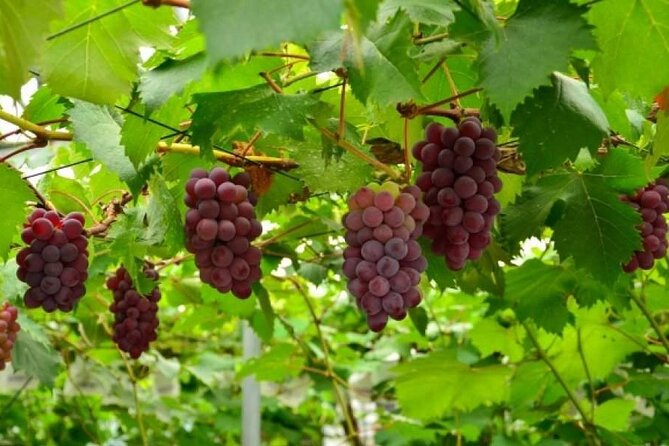
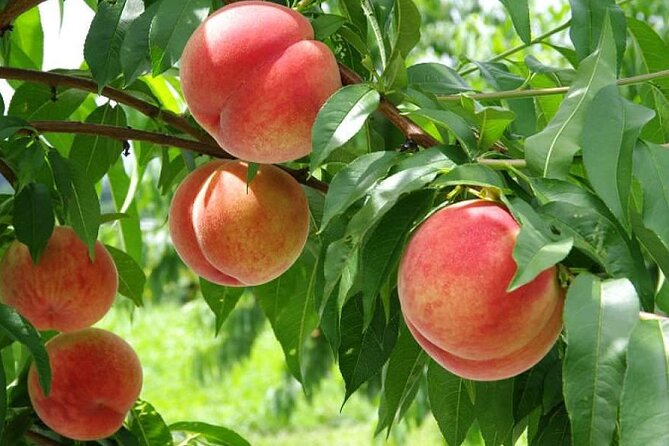
- Late December through early May: strawberries
- May through June: Japanese cherries
- July through August: peaches
- August through November: grapes
- Other possible fruit: apples, oranges, or berries, depending on timing
The all-you-can-eat format sounds simple, but the important detail is that the fruit must be ripe. If the crop is not ready for direct picking, the farm may provide fruit already picked for tasting or give you a fruit souvenir instead. That is not the same experience, so you should treat the picking as seasonal rather than guaranteed in a specific form.
This stop is likely the strongest reason to book the tour if you have already seen Tokyo’s main sights. Picking peaches in midsummer or eating strawberries in winter gives the day a local food angle. It also makes the trip appealing for families, though young children may find the long bus ride less exciting than the orchard.
Do not expect the same fruit every month. If cherries are your priority, June is the target. For peaches, aim for mid-July through mid-August. Grape season generally begins in mid-August and can continue into early or mid-October. Ask for the current farm crop before departure if a particular fruit is the main reason you are booking.
Houtou noodles and a short Yamanashi lunch
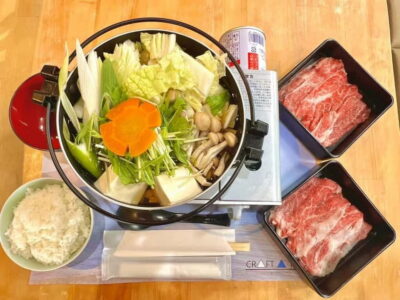
Lunch comes around the Yamanashi Fuji Fruits Park area at a local restaurant. The featured meal is a houtou pot set with thick noodles, pork, and fresh seasonal vegetables. Houtou is a Yamanashi specialty, and its broad noodles are served in a hearty broth rather than as a light bowl of standard udon.
The meal is included, which helps the $125.39 price make sense. You do not need to search for a restaurant while the bus schedule is ticking. The supplied timing allows about 30 minutes for lunch, so think of it as an efficient group meal, not a long regional food stop.
If you prefer a slow lunch or have dietary restrictions, check the meal details before paying. The supplied information specifically describes pork and vegetables, but it does not promise vegetarian, vegan, allergy-friendly, or religiously compliant alternatives. Personal expenses beyond the stated inclusions are your responsibility.
Oishi Park beside Lake Kawaguchi
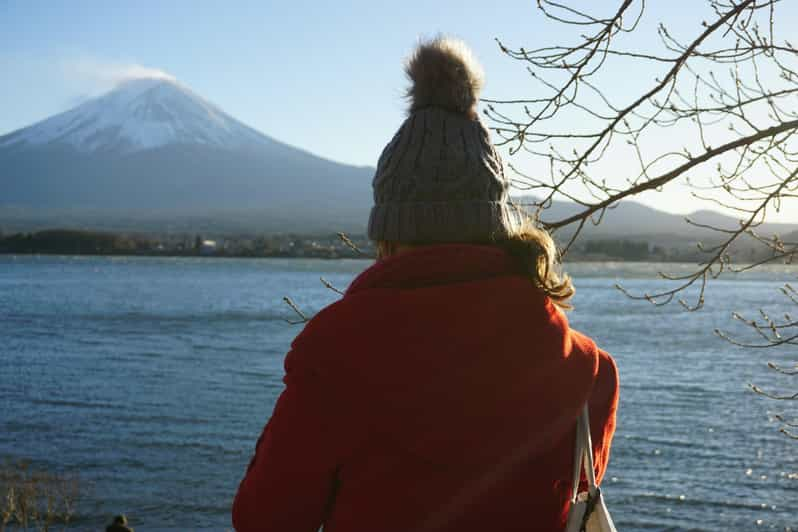
After lunch, the bus heads to Oishi Park on the northern shore of Lake Kawaguchi. The park is known for flower displays, open views toward Mt. Fuji, and a broad lakeside setting that gives you room for photographs.
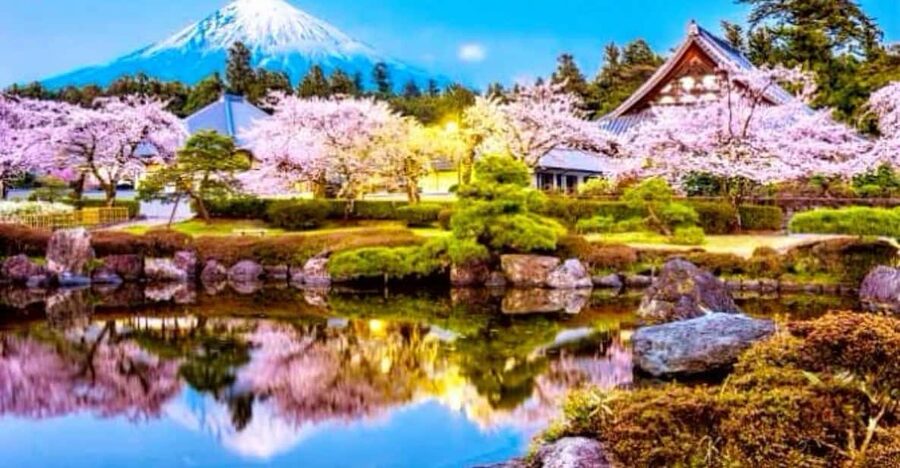
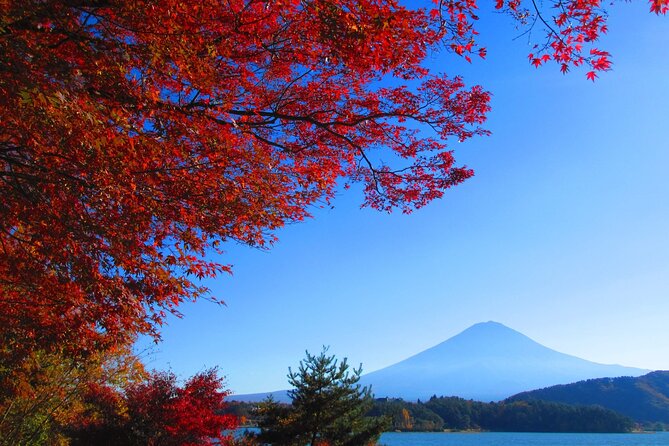
The view changes sharply through the year. Cherry blossoms are expected in April. Lavender flowers generally appear from late June through mid-July. Kochia, which turns a strong red tone, is associated with October, while autumn foliage is most likely in November.
This is a good place to slow down after the farm and lunch. You can walk through the flower areas, look across Lake Kawaguchi, and take the classic Fuji photograph if the mountain is clear. The stop is scheduled for about two hours when combined with the lunch period, though actual time at the park can shift.
The park visit may be replaced or adjusted during cherry blossom and autumn leaf periods. Kawaguchiko Lakeside Park or the Momiji Corridor may appear in the seasonal plan instead. That is useful if you want flowers or fall color, but it means the exact park should not be treated as fixed.
The main risk here is visibility. Mt. Fuji may be covered by cloud even when the rest of the day runs normally. The operator does not cancel or refund simply because the mountain cannot be seen, so you should book this as a Yamanashi day with a chance of Fuji views, not as a guaranteed mountain photograph.
The Mt. Fuji Panoramic Ropeway at 1,075 meters
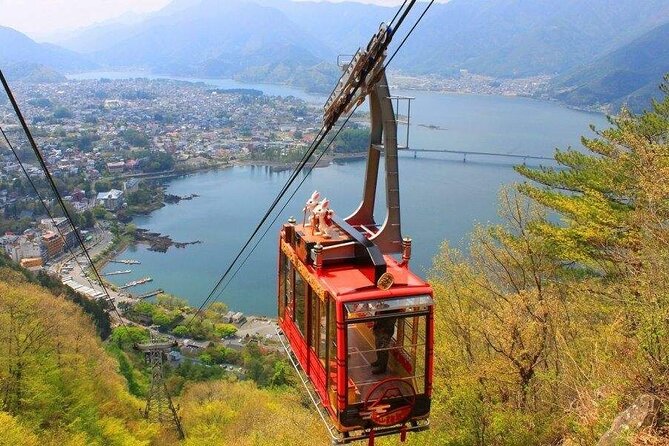
The ropeway is the most dependable major viewpoint in the program when weather cooperates. The ride reaches roughly 1,075 meters and gives you a high view over Lake Kawaguchi and the surrounding area. Mt. Fuji may appear across the lake, though clouds can still block it.
Admission is included, and the stop lasts about 90 minutes. That should give you time for the ride, views from the upper station, and photographs. The ride itself is short compared with the bus journey, but it changes your perspective. You are no longer looking only at Fuji from ground level. You are looking across the lake and nearby hills from above.
Crowds may affect the experience, especially in popular flower and foliage seasons. Since the group has a fixed schedule, you may need to follow the guide closely and return to the bus on time. This is not the place to wander indefinitely.
I would rank the ropeway among the tour’s best inclusions because admission is already covered and the viewpoint adds variety. If you are nervous about heights, the supplied information does not describe the ride in detail beyond its scenic purpose, so consider that before booking.
A few more Tokyo tours and experiences worth a look



Mt. Fuji 5th Station and the limits of the road
The final major sight is Mt. Fuji 5th Station, often called the Sky Palace. The tour allows about three hours for this part of the day, including the ascent and time to look around. At the station, you can visit the observation area, take mountain photographs, and hear about Fuji’s religious meaning and local folklore from the guide.
The station sits high on the mountain, but it is not the summit. It is a road-accessible stopping point and a common place to experience the upper slopes without undertaking a full climb. For many people, this is enough of a mountain encounter for one day.
The road is not always open or practical. Bad weather, snow, traffic, or other road problems can prevent the bus from reaching 5th Station. In that case, the schedule may change to the Fuji Visitors Center or Oshino Hakkai.
This substitution rule is important. If your main goal is to stand at 5th Station, you accept a real possibility that it will not happen. If your goal is a fuller Fuji-region day, the alternate stops protect the value of the outing.
The timing also deserves a warning. The stop is listed as three hours, but highway delays can reduce time at each location. The bus must return to Tokyo, and the driver must follow Japanese seat belt law. Wear yours even if the road appears calm.
Seasonal versions of the day
This is not one identical tour in every month. The seasonal plan may include different scenery or even a different cultural stop.
In winter, from late December through March, the program may visit Saiko Iyashi no Sato Healing Village, a traditional-style village with views toward Mt. Fuji. In April, cherry blossoms at Kawaguchiko Sakura may become the focus. From late April through late May, the Fuji Shibazakura Festival at Motosu Lake Resort may replace another flower stop.
Summer usually brings lavender at Oishi Park from June through July. In late summer, from August through September, the plan is more likely to emphasize Mt. Fuji 5th Station. October and November can bring autumn color at Oishi Park or the Momiji Corridor, also called the Maple Leaf Tunnel.
These changes are not merely cosmetic. A winter visit is less likely to offer the same fruit as a summer visit. A spring departure may spend more time around blossoms, while an autumn departure may adjust the park stop for foliage. Read the date-specific plan carefully and keep an open mind about the exact order.
Guides, language, and group size
The tour includes a Japanese-speaking professional driver or guide, plus an English or Chinese-speaking guide and translation service on the bus. That arrangement should make basic instructions, timing, and explanations easier for English and Chinese speakers.
The supplied information does not give individual guide names, so you should not expect to request a particular person. The guide’s most important job on a day like this is practical: getting everyone off and back onto the bus, explaining seasonal changes, and helping the group stay on schedule.
With up to 100 participants, the experience can feel more like organized transport than a private outing. That is not automatically bad. A large coach keeps the price manageable and removes the stress of driving unfamiliar mountain roads. But if you want long conversations with a guide or freedom to linger, a smaller tour would suit you better.
Most people can participate, and the meeting point is near public transportation. No separate accessibility details are provided, so contact the operator before booking if you need specific mobility arrangements.
Price, risk, and the cancellation rule
The $125.39 price covers the costly parts of the day: bus transport from Tokyo, the guide team, lunch, fruit picking, and ropeway admission. It is a fair package if you value convenience and want several attractions without planning separate tickets.
The value drops if you care only about Mt. Fuji 5th Station. The mountain road may close, clouds may hide Fuji, and traffic may shorten the stop. In that case, the fruit farm, lunch, ropeway, and seasonal park become the main reasons the day remains worthwhile.
The booking terms are strict. This experience is non-refundable and cannot be changed for personal reasons. If the operator cancels because of poor weather, you are offered another date or a full refund. Poor weather that merely hides Mt. Fuji does not trigger a refund.
One posted rating gives the experience two out of five and describes a message four days before departure saying the tour was unavailable. The overall rating is four out of five from three posted ratings, but the small sample tells you little about consistency. I would send a quick message to confirm that the tour is operating, especially if your booking date is important or your trip schedule is tight.
Who should book this day
I would recommend it to you if you have one free day in Tokyo and want a broad introduction to the Fuji area without renting a car. It works particularly well for first-time visitors, families who enjoy fruit picking, and anyone who wants a regional meal and seasonal flowers along with mountain views.
It also suits photographers who understand that weather controls the best image. Clear skies can produce fine views from Oishi Park, the ropeway, and 5th Station. Cloudy skies still leave you with orchards, noodles, flowers, and a mountain-region outing, but you should not expect the iconic peak in every frame.
I would hesitate if you dislike early starts, long coach rides, fixed meal times, or large groups. I would also hesitate if one particular fruit, the ropeway, or 5th Station is non-negotiable. The schedule is useful precisely because it covers a lot, but that also makes it vulnerable to road delays and seasonal changes.
Should you book the Mt. Fuji fruit-picking tour?
Book it if you want variety and convenience more than complete freedom. Fruit picking, houtou lunch, Oishi Park, the ropeway, and 5th Station create a full day with several chances for the outing to succeed, even if one view is lost to cloud.
Before paying, confirm the operating date, ask which fruit is expected, and check the seasonal replacement for Oishi Park or 5th Station. Go in comfortable shoes, keep your phone contact active, wear your seat belt, and treat the mountain view as a bonus rather than a promise. At this price, the tour is a sensible way to sample Yamanashi, provided you can accept its fixed schedule and weather limits.
FAQ
Where does the tour start and finish?
The tour starts at 8:00 a.m. at the Robert Indiana LOVE sculpture, 6-chōme-5-1 Nishishinjuku, Shinjuku City. It ends near Tokyo Mode Gakuen Cocoon Tower at 1-chōme-7-3 Nishishinjuku. A shuttle to the meeting point is not included.
How long does the tour last?
The day lasts approximately nine to ten hours. The listed sightseeing times can change because of road traffic, weather, or other conditions outside the operator’s control.
What fruit can I pick?
The fruit depends on the season. Strawberries are generally available from December through May, cherries in May or June, peaches in July and August, grapes from August through early October, and berries from October through November. Apples or oranges may also be available.
Is the fruit picking always done directly from the plants?
No. Fruit picking depends on ripeness and growing conditions. If the fruit is not suitable for picking, the farm may provide fruit picked in advance for tasting or give you fruit as a souvenir.
Is Mt. Fuji 5th Station guaranteed?
No. Bad weather or road conditions may prevent the bus from reaching 5th Station. The schedule may then change to the Fuji Visitors Center or Oshino Hakkai.
Is lunch included?
Yes. Lunch is included and features a Yamanashi-style houtou pot set with thick noodles, pork, and seasonal vegetables. About 30 minutes is allowed for lunchtime, and personal expenses not listed as included are separate.
More 1-Day Tours in Tokyo
More Mt Fuji Day Trips in Tokyo

More tours in Tokyo we've reviewed

Mt Fuji Day Trips, compared.
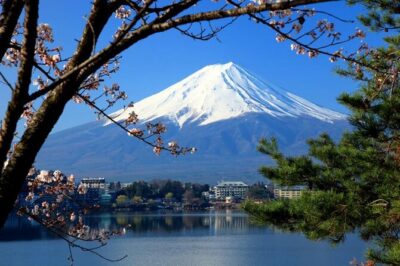 ★ 5.0Mt Fuji and Hakone 1-Day Bus Tour Return by Bullet TrainFrom $163
 ★ 4.0Mt Fuji & Hakone Cruise, Drum Show Bullet Train 1 Day from TokyoFrom $149
 ★ 4.4Tokyo Mt Fuji 5th St & Hakone Cruise Bus Tour w/Bullet TrainFrom $15410 hours
 ★ 4.5From Tokyo: Mount Fuji Full-Day Sightseeing TripFrom $6810 hours
 ★ 4.7Tokyo: Mt. Fuji Tour, Hakone Ropeway, Owakudani, Lake AshiFrom $5410 hours
 ★ 4.4Tokyo:Mt.Fuji,Kawaguchiko Oishi Park,Arakurayama Sengen ParkFrom $5410 hours