Reviewed · JDM & CAR CULTURE
Tokyo: Go Daikoku PA Fast & Furious 3 Sports car meet
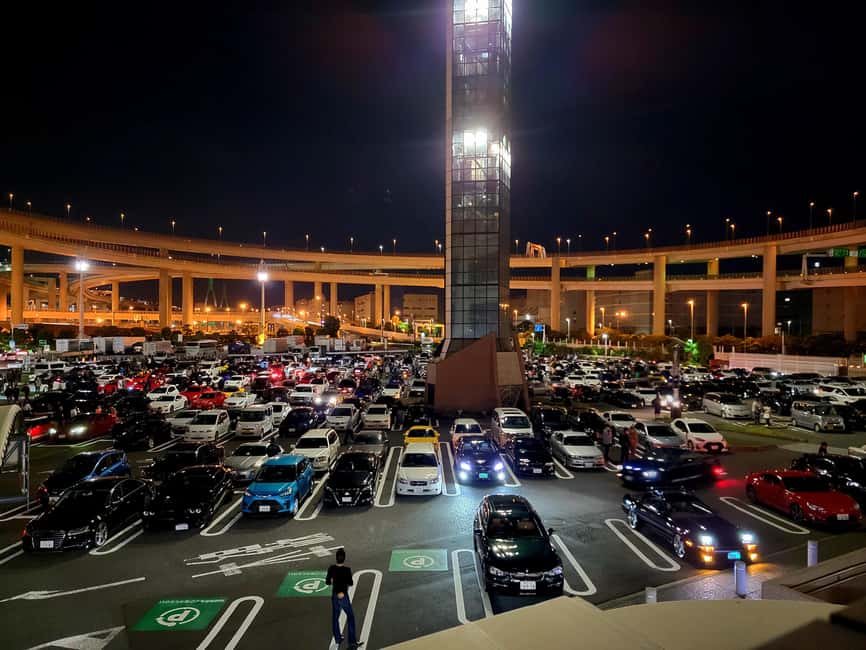
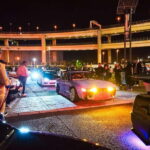
Daikoku PA is not an ordinary roadside stop. It is a gathering point for Japan’s car scene, reached by a night ride through the Wangan and C1 expressways, Tokyo’s long tunnels, and the Rainbow Bridge area. The drive is the main event, with Daikoku’s parked cars providing the payoff.
In This Article
- Key points to know before you book
- Why Daikoku PA is worth the late-night ride
- Starting at Tokyo Video Gamers in Akihabara
- Choosing among the sports cars
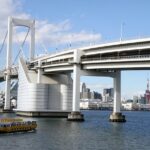
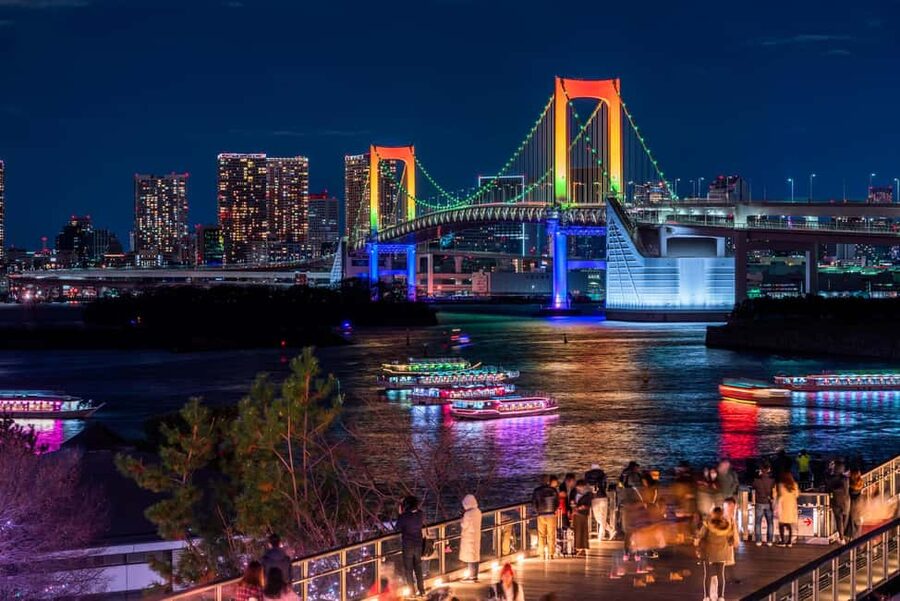
- The Wangan, C1, tunnels, and Rainbow Bridge
- One hour at Daikoku Parking Area
- Tokyo Tower, Shibuya Crossing, and the city finish
- Guides, music, and the social side
- Is $163 a fair price?
- Who should book this ride?
- Should you book the Daikoku PA tour?
- FAQ
- How long does the Daikoku PA tour last?
- Where does the tour start?
- How much time do I spend at Daikoku PA?
- Can I be picked up at my hotel?
- Which languages are available?
- Can I cancel the booking?
I like the mix of automotive culture and city sightseeing. You get an hour at Daikoku PA, then stops around Tokyo Tower and Shibuya Crossing, plus drop-off at a location in Tokyo’s 23 wards. I also like the friendly, personal feel: drivers such as Hiro, Kei, Lucy, Tavo, and Rui are praised for answering questions and making room for music, photos, and conversation.
The main drawback is timing. Three to four hours sounds generous, but one hour at Daikoku PA can feel short, especially when the car selection is good or the weather delays the evening. You should also understand that the exact car and driver are assigned by the operator, so a Nissan GT-R or Silvia is possible, not guaranteed.
Key points to know before you book
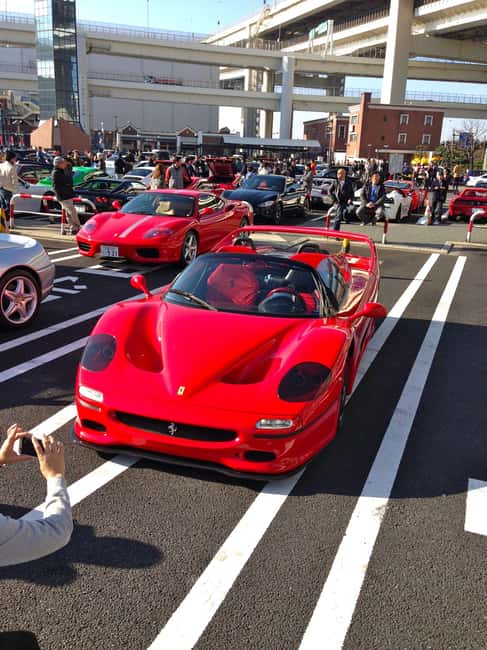
- Daikoku PA is the centerpiece: You get about one hour at Tokyo’s best-known car-meet location.
- The ride matters as much as the stop: Routes can include the Wangan, C1, tunnels, Rainbow Bridge, Tokyo Tower, and other city sights.
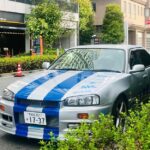
- The fleet changes by booking: Possible cars include a Nissan GT-R35 Nismo, Mitsubishi Evo 10, Skyline 34 GT twin-turbo, WRX STI, Nissan Silvia, BMW M3, and more.
- A van may be part of the plan: Some groups ride in a comfortable van to Daikoku, then change cars for the Tokyo drive.
- Hotel pickup is limited: Pickup is available for groups of at least three when arranged in advance with a full address and meeting details.
- Your return is flexible within Tokyo: Drop-off can be arranged at your hotel, Airbnb, or another chosen place in Tokyo’s 23 wards.
Why Daikoku PA is worth the late-night ride
Japanese car culture has a strong connection to modified street cars, performance machines, tuning shops, and long expressway drives. Daikoku Parking Area, usually called Daikoku PA, is one of the places where that culture becomes visible in one spot.
You are not simply being driven to a large parking lot. You are taken through the road network that gives the experience its character: the Wangan and C1 routes, tunnels, bridges, and industrial waterfront areas around Yokohama and Tokyo Bay. The exact road sequence can vary, but the point is to see Tokyo from inside a performance car rather than from a tour bus.
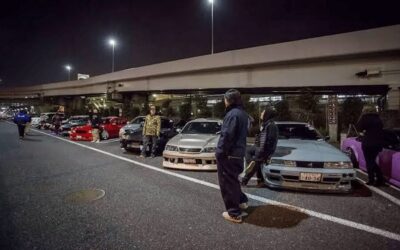
At Daikoku, you have roughly an hour to walk around, look at the cars, and take pictures. The mix can change from night to night, and weather affects what appears. One review specifically noted that rain reduced the number of interesting cars, so keep your expectations flexible. This is a living meeting point, not a museum display arranged for visitors.
I like that distinction. You might see a rare Japanese sports car, a heavily modified build, a classic model, or nothing quite as dramatic as you hoped. That uncertainty is part of the real car-meet experience.
The stop is also useful for people who have seen Daikoku in films and online videos but could not work out how to reach it on their own. Public access and transport logistics make it less straightforward than a normal Tokyo attraction. Here, the driver handles the route and timing.
A few more Tokyo tours and experiences worth a look
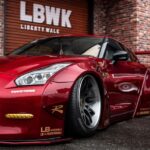
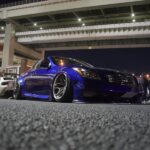
Starting at Tokyo Video Gamers in Akihabara
The meeting point is Tokyo Video Gamers inside Seek Base Oki Aki, about 200 meters from Akihabara Station, in the shops beneath the train line and toward UDX. Arrive at least 15 minutes early.
This is a more entertaining place to wait than a standard street corner. You receive a free Guaraná drink and can play retro arcade games before departure. That detail will matter if your group includes people who like games as much as cars, and it gives you something to do if another part of the group arrives slowly.
The tour ends back at the same meeting point unless you arrange a different drop-off within Tokyo’s 23 wards. If you book pickup, the operator asks for your hotel, Airbnb, or station details after reservation. Pickup is available for groups of at least three, and you should provide the information at least two hours ahead. The pickup vehicle arrives about 30 minutes before the start time.
For a smoother start, keep your phone available and activate WhatsApp notifications. The operator uses WhatsApp for messages, which can help if you are trying to find the meeting point or confirm pickup details.
Choosing among the sports cars
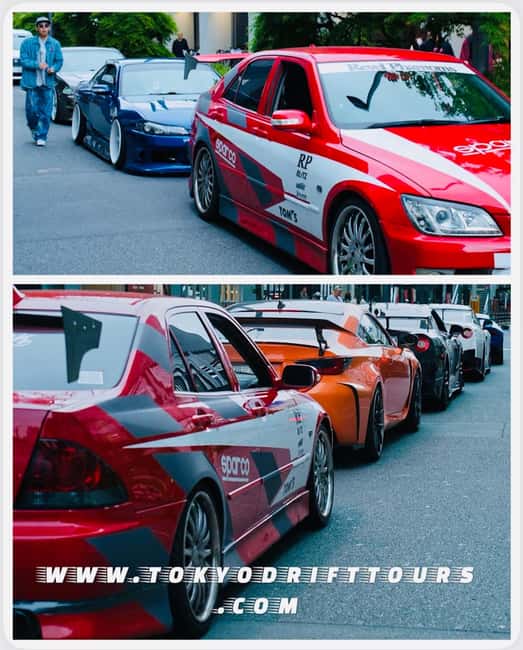
The advertised fleet covers a wide spread of Japanese and imported performance cars. Possible vehicles include:
- Mitsubishi Evolution 10
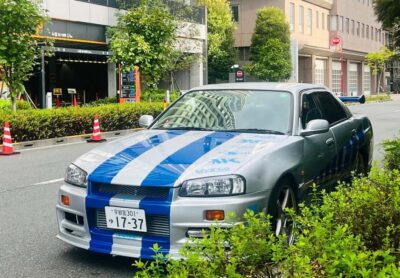
- Nissan Skyline 34 GT twin-turbo
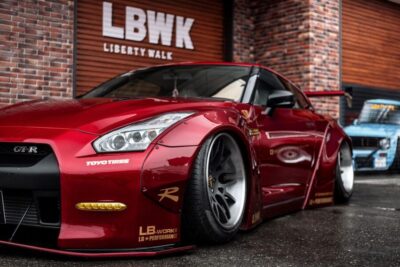
- Nissan GT-R35 Nismo
- BMW M3 Liberty Walk
- Lexus RC-F
- Subaru WRX STI
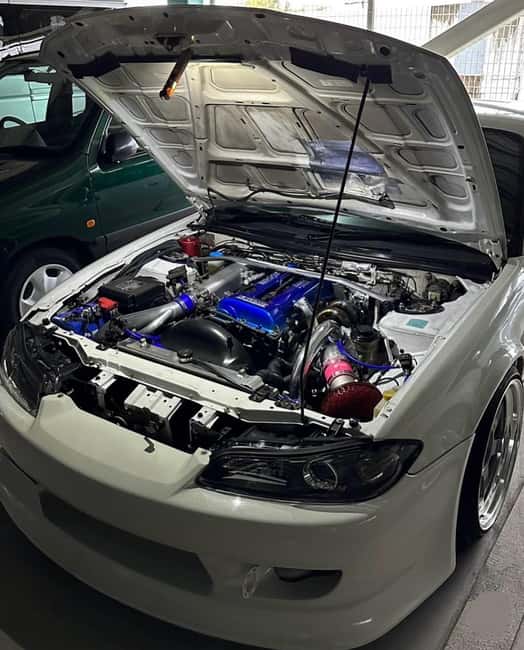
- Nissan Silvia S15 or S14
- Toyota Celica
- Mazda RX-8
- Chevrolet Camaro Bumblebee
- Subaru Legacy B4
- Lancer Evolution and other JDM cars
The exact assignment is not promised, and that is the most important point to understand. You may get the car you have always wanted, but you may also ride in a van or another vehicle from the fleet. Some groups have changed drivers and cars at Daikoku, which can add variety. One group first rode in a Subaru WRX, then continued in a Lancer Evolution after the stop.
If you care strongly about a certain model, contact the operator before booking rather than assuming the booking guarantees it. A guest who happened to ride in a Nissan GT-R described that as the highlight, while others enjoyed the experience just as much in a Civic Type R, Nissan, Subaru, or Lancer.
The vehicles are part of the show, but the driver matters just as much. The strongest part of this setup is the chance to ask questions, connect your music in some cars, and hear local explanations while the city passes outside. Drivers including Hiro, Kei, Rui, Tavo, Lucy, Ayumu, and Rebeka have been singled out for being friendly, clear, and willing to explain what you are seeing.
The Wangan, C1, tunnels, and Rainbow Bridge
Once you leave central Tokyo, the tour shifts from sightseeing to road culture. The Wangan and C1 routes are famous among car fans for their sweeping city views, expressway connections, tunnels, and links around Tokyo Bay.
You will spend much of this section seated in the car, so it is not a hop-on, hop-off sightseeing route. The value comes from the motion: the sound of the car, the road lighting, the tunnels, and the sense of Tokyo as a huge connected city after dark.
This is where the experience can feel closest to a car film, but you should keep the comparison in perspective. The tour is a legal passenger ride with professional drivers, not a chance to drive or race. Some enthusiastic descriptions use racing language, but you should not expect or encourage unsafe driving on public roads.
The operator states that its drivers are experienced and that safety and legal passenger transportation are priorities. That is reassuring, especially on expressways and in modified cars. Still, driving style can differ from one guide to another. If you want a calmer ride, say so clearly at the start.
The route also gives you a different look at Tokyo. Instead of concentrating only on temples, department stores, and train stations, you see the city’s infrastructure: ramps, tunnels, bridges, industrial zones, and glowing towers. I find that especially useful for repeat visitors who want a side of Tokyo that normal sightseeing rarely covers.
One hour at Daikoku Parking Area
Daikoku PA is the part most car fans are paying for. You get time to leave the vehicle, walk around, and photograph the cars gathered there.
An hour is enough for a good look if the scene is active and you move with purpose. It is not enough for a slow, relaxed car show visit, especially if your group wants photographs with every vehicle. Several people found the stop too short and would have preferred 90 minutes to two hours.
The number and type of cars can vary. A dry evening may bring a stronger selection, while rain can thin the crowd. You might find Japanese performance cars, tuned vehicles, drift-style builds, or unusual imported models. You might also find a quieter night. The operator cannot control the turnout.
Treat the parking area respectfully. These are private vehicles, not props. Take photos without blocking cars, listen to your guide, and follow any instructions about where you can walk. The best benefit of having a local driver is that you do not have to guess how the place works.
There is also a practical point here: access alone is not the whole value. You could theoretically reach a parking area and look at cars without paying for a tour, but the route, transportation, car ride, driver contact, and return arrangements are what make this booking useful. If your priority is only to see parked cars, the price may feel high. If you want the full ride and the social atmosphere around it, the cost makes more sense.
Tokyo Tower, Shibuya Crossing, and the city finish
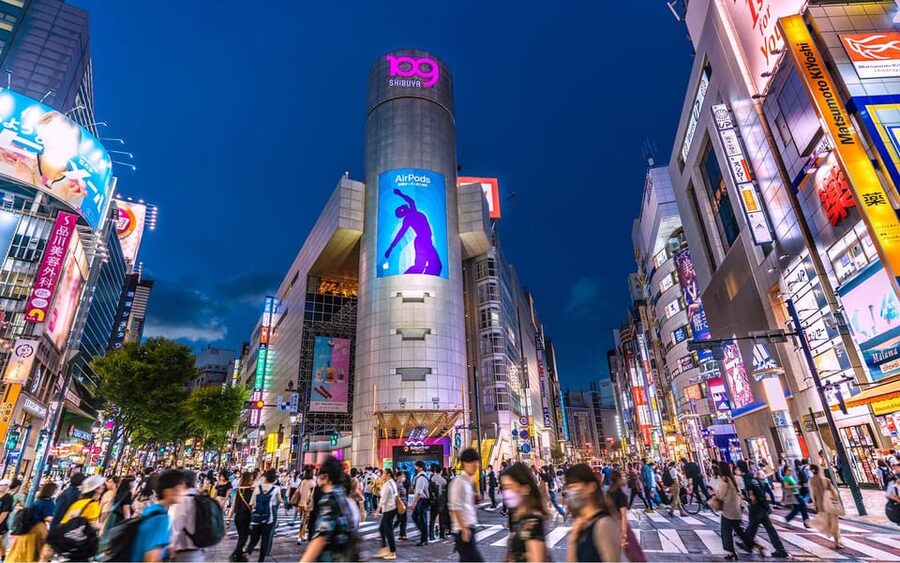
After Daikoku, the tour returns toward Tokyo for a shorter sightseeing section. Tokyo Tower is included among the city sights, followed by a photo stop at Shibuya Crossing of about 10 minutes.
These stops are brief, so plan your expectations accordingly. You are not climbing Tokyo Tower or spending an evening in Shibuya. You are getting a quick visual hit and a chance for photos before the drop-off.
Shibuya Crossing works well as a final stop because it gives the tour a clear contrast. Daikoku is about machines and open pavement. Shibuya is about people, signs, crossings, and central Tokyo energy. Ten minutes is enough for a quick picture, but not for exploring the surrounding streets.
The itinerary also lists about 30 minutes for Tokyo sightseeing. The exact order and length can shift with traffic, road conditions, and the group’s pace. If your main goal is photography, keep your phone or camera ready and do not spend too long at one stop.
Guides, music, and the social side
This is a social outing, not a quiet private transfer. The company offers guides in English, Japanese, Spanish, Portuguese, Afrikaans, and Tagalog. Language availability can depend on the departure, so confirm your preferred language when booking.
The personal reports about drivers are consistently warm. Hiro is described as a helpful guide who answered questions. Kei is praised for being friendly and welcoming. Rui is noted for explaining the car scene, while Tavo is described as especially attentive and good at making the evening feel personal.
That human contact is a real advantage. A driver who knows the city can explain what you are seeing, help you adapt to practical life in Japan, and offer tips about saving money and getting around. The tone appears informal and friendly rather than formal and scripted.
Music is part of the mood. You get good music in the car, and at least one participant was able to connect Bluetooth and play personal music. Do not assume every vehicle has identical audio equipment, but it is worth asking if your group cares about the soundtrack.
The social element can also vary. Some rides feel like a small group outing with several cars, while others use a comfortable van for part of the route. If you are hoping for a private tour, select that option if offered. One car enthusiast specifically advised choosing a private tour for a more personal experience.
Is $163 a fair price?
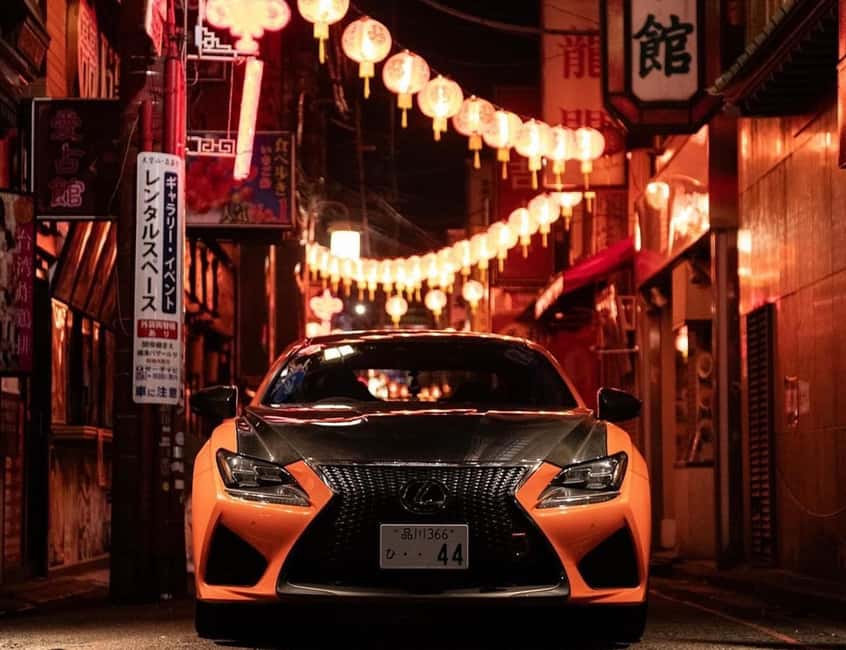
At $163 per person, this is not a cheap way to see Tokyo. The price makes sense only if you value the performance-car ride and the Daikoku access, not simply the short photo stops.
Your fare covers the guided transportation, the car-meet visit, the Tokyo road route, music, free arcade games at the start, filming and content creation during the outing, and drop-off at a preferred Tokyo location. Personal expenses are not included.
For a car fan, that package can be good value. You avoid figuring out the route to Daikoku, gain local car knowledge, and get the chance to ride in a performance vehicle. The drop-off is especially handy after a late evening.
For a casual sightseer, the value is weaker. Tokyo Tower and Shibuya Crossing receive limited time, and you can visit both independently. You also cannot guarantee a particular car, and the Daikoku scene depends on the night.
I would compare the price with your priorities. If your Tokyo wish list includes a GT-R, Evo, Skyline, Silvia, or Daikoku PA, this is one of the more direct ways to pursue it. If you are mainly interested in famous city sights, spend the money on a standard evening tour or public transport instead.
Who should book this ride?
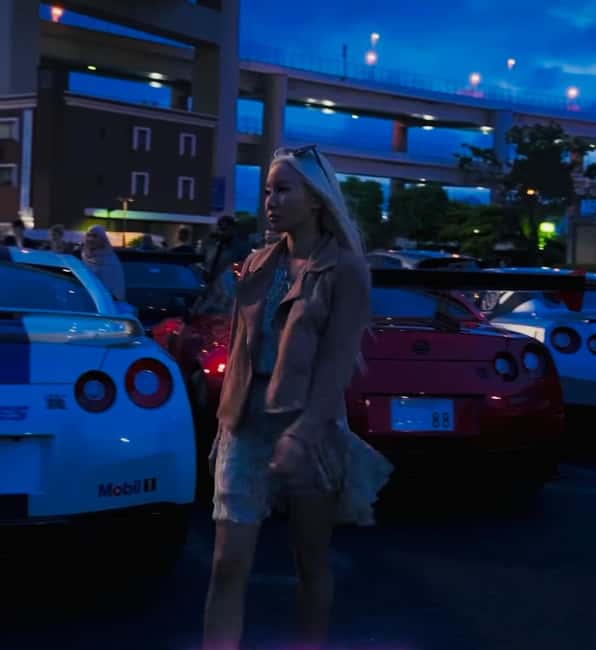
I would recommend it most strongly to:
- Japanese car and tuning fans
- People who want to see Daikoku PA without arranging complicated transport
- Repeat visitors looking for a different side of Tokyo
- Small groups celebrating a birthday or surprise occasion
- Visitors who enjoy informal conversation and shared music
- Anyone who values the ride itself, not just the stops
It may not suit you if you dislike enclosed spaces, since the tour includes cars and tunnels. The activity is also listed as unsuitable for people with epilepsy. It is wheelchair accessible, but you should still confirm your specific vehicle and transfer needs before booking.
Arrive early, keep your phone active, and wear comfortable clothes for walking around Daikoku. Bring a camera, but remember that the car selection and meeting atmosphere can change from one night to the next.
Should you book the Daikoku PA tour?
Book it if you want the full package: a high-performance car ride, Tokyo’s expressway system after dark, about an hour at Daikoku PA, and quick city photo stops. The warm driver interaction is a major part of the appeal, and names such as Hiro, Kei, Lucy, Tavo, and Rui have been associated with helpful explanations and a friendly atmosphere.
Skip it if you only want Tokyo Tower or Shibuya Crossing, or if you need a guaranteed specific car. The one-hour Daikoku stop may also frustrate serious photographers.
For the right person, this is less a sightseeing tour than a ticket into Tokyo’s car culture for one evening. Go with realistic expectations, ask about the vehicle assignment, and book it for the road experience as much as the parking area.
FAQ
How long does the Daikoku PA tour last?
The activity lasts about three to four hours. Starting times vary, so check availability when booking.
Where does the tour start?
The standard meeting point is Tokyo Video Gamers inside Seek Base Oki Aki, about 200 meters from Akihabara Station toward UDX, in the shops below the train line.
How much time do I spend at Daikoku PA?
The planned visit at Daikoku Parking Area lasts about one hour.
Can I be picked up at my hotel?
Pickup is available for groups of at least three people. After booking, provide your hotel, Airbnb, or train station address and meeting details at least two hours in advance.
Which languages are available?
Live guides may be available in English, Japanese, Spanish, Portuguese, Afrikaans, and Tagalog.
Can I cancel the booking?
You can cancel up to 24 hours before the activity for a full refund. The reserve-now, pay-later option is also available.
More JDM & Car Culture in Tokyo
More tours in Tokyo we've reviewed












JDM & Car Culture, compared.
 ★ 4.8Tokyo: Fast & Furious Tokyo Drift 3 Experience (Kaila Yu SP)From $157
 ★ 4.8Tokyo: FAST&FURIOUS EXPERIENCE Daikoku Tokyo Car ClubFrom $157
 ★ 4.8Tokyo Drift: GT-R Car Club R35 Liberty Walk Daikoku meetingFrom $240
 ★ 4.8Tokyo: Daikoku JDM Fast Furious Drift Style Car ExperienceFrom $123
 ★ 4.8Tokyo Drift: GO Daikoku Car Meet R34 Skyline Car ClubFrom $246
 ★ 4.7Tokyo Drift: Daikoku PA Supreme Car Experience 大黒PAFrom $583 hours