Reviewed · TOKYO FOOD TOURS
Private Tokyo Food Tour – A Journey Through Time Through Food
Tokyo tells its story through food on this five-and-a-half-hour private tour. You begin in Nihonbashi, where century-old shops introduce dashi, katsuobushi, kombu, amazake, mochi, and other traditional flavors. Later, you eat yakitori and noodles under the railway tracks in Yurakucho, then finish with modern desserts in Akihabara.
In This Article
- Key points at a glance
- Why this route works as a first Tokyo food tour
- Nihonbashi: old shops and the foundation of Japanese flavor
- Fukutoku Shrine: a short cultural pause
- Yurakucho: yakitori and noodles below the railway tracks
- Tokyo International Forum and Marunouchi: a useful walk between bites
- Tokyo Station: commuter food with a sweet finish
- Akihabara: traditional flavors with a modern twist
- What the private format adds
- Timing, transport, and the real cost
- Who should book this experience
- Booking and cancellation details to check
- Should you book the Tokyo food tour?
- FAQ
- How long does the private Tokyo food tour last?
- How many food tastings are included?
- Which Tokyo districts does the tour visit?
- Are subway fares included?
- Where does the tour start and end?
- Is this a private activity?
- Is hotel pickup available?
- What is the cancellation policy?
I like two things right away. First, the tour connects food with Tokyo’s changing past instead of treating each bite as an isolated sample. Second, a private guide can adjust the pace and explain customs, train routes, and unfamiliar dishes to your group. Guides including Yasu, Keiko, Miko, Paiva, Rohan, and Miko have been praised for humor, care, and help with navigation.
The main drawback is the price: $327.75 per person is a serious spend, especially since subway fares are extra. You also need to arrive hungry, manage several walking and transit segments, and check the cancellation terms carefully because the supplied booking information gives conflicting refund details.
Key points at a glance

- Four food eras in one route: Taste old-fashioned Nihonbashi snacks, postwar salaryman food, commuter favorites, and modern Akihabara sweets.
- Fourteen tastings: The food ranges from dashi and fried fish cake to yakitori, soba, tamagoyaki, fruit sandwiches, and fusion desserts.
- A genuinely private outing: Only your party takes part, so the guide can answer questions and tailor explanations to your interests.
- Two short subway rides: Transport costs are not included, but the route gives you useful practice with Tokyo’s rail system.
- A strong family option: Children aged 11 and 9 enjoyed trying new foods, and the tour can help ease first-day jet lag.
- A history lesson you can eat: Nihonbashi covers old ingredients, Yurakucho shows working-city Tokyo, and Akihabara points toward food’s future.
Why this route works as a first Tokyo food tour

Many food tours stay in one neighborhood. This one moves through Nihonbashi, Ginza and Yurakucho, Tokyo Station, and Akihabara. That wider route gives you a better sense of how Tokyo changes from district to district.
The central idea is simple: food reflects the time in which it is eaten. In Nihonbashi, you look at ingredients used for generations. Under the railway tracks in Yurakucho, you see how postwar industry shaped everyday eating and drinking. At the end, Akihabara supplies the forward-looking chapter, with desserts that mix old flavors and new ideas.
I like this structure because it prevents the tour from becoming a long parade of snacks. You are not just eating a mochi and moving on. You are learning why dashi matters, how izakayas served office workers, and why Akihabara became linked with technology, anime, maid cafes, and new food ideas.
Because this is private, the experience should feel more conversational than a large group outing. The guide can spend more time on questions about ingredients, etiquette, or Tokyo’s rail system. That matters in Japan, where a small explanation about shrine behavior, ordering, or a dish’s texture can make the whole day easier.
A few more Tokyo tours and experiences worth a look
Nihonbashi: old shops and the foundation of Japanese flavor
The tour begins at the Nihonbashi 1-chome Mitsui Building. This is a useful starting point because Nihonbashi is tied to Tokyo’s older commercial traditions, and the food stops focus on ingredients rather than flashy presentation.
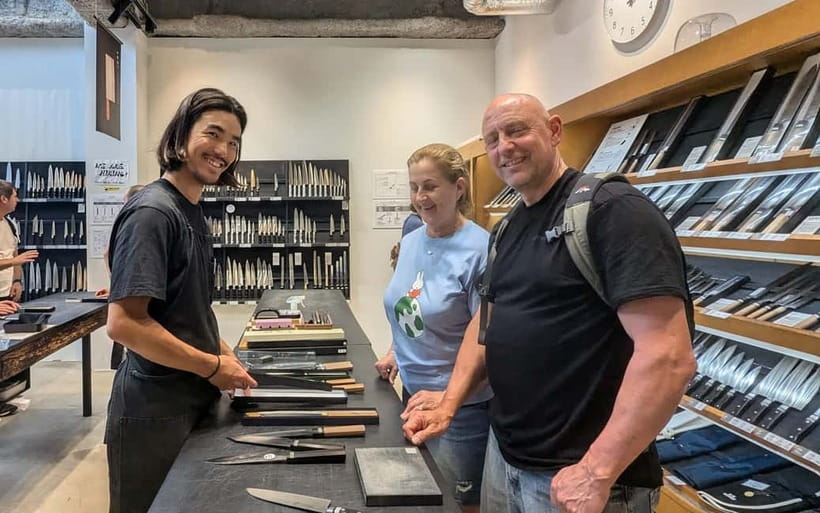
Your guide introduces dashi, the stock that forms the base of many Japanese dishes. The lesson centers on katsuobushi, dried and fermented bonito flakes, and kombu, the kelp used to bring depth and savoriness to the stock. Even if you have eaten Japanese food before, this is practical knowledge. Once you understand dashi, miso soup, noodle broths, and many simmered dishes make more sense.
The tastings here include satsuma-age, a fried fish cake; amazake, a fermented rice drink; imo kenpi, sweet potato chips; and daifuku, chewy rice mochi with a sweet filling. Dorayaki may appear instead of daifuku, and the supplied food details also include Pokemon taiyaki as part of the broader tasting lineup.
The shops selected for this section are more than convenient snack counters. They are described as being at least 100 years old, with several dating to the Edo period. That gives the food some context. A small sweet or fish cake becomes a link to long-running Japanese food traditions, not just a quick sugar stop.
You should arrive ready to sample foods with different textures. Mochi is soft and sticky, fish cake is springy, and imo kenpi is crisp and sweet. If your party includes picky eaters, tell the guide early. The tour is private, so this is the best point to explain strong dislikes or dietary concerns, although the supplied information does not promise substitutions.
Fukutoku Shrine: a short cultural pause
Fukutoku Shrine takes about 10 minutes. It is not a major sightseeing stop, but it adds an important cultural piece to the morning.
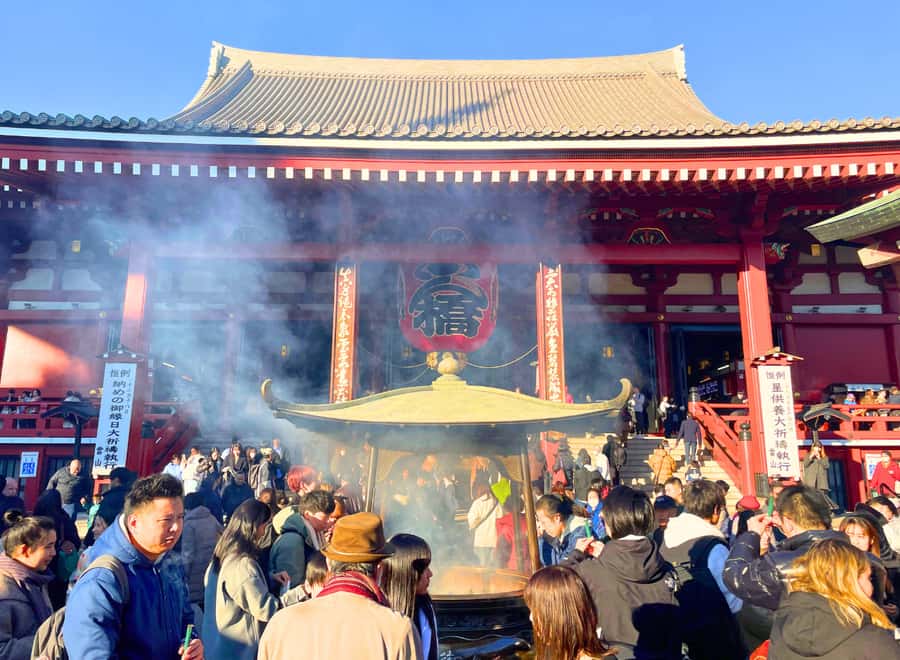
You learn the difference between a Shinto shrine and a Buddhist temple, then receive guidance on cleansing yourself and praying at a shrine. This is especially useful if you are new to Japan. Shrine customs can look simple from the outside, but a short explanation helps you take part with respect.
The stop is brief, so do not expect a long religious tour. Think of it as a pause between food districts and a chance to connect daily eating with Japanese customs and beliefs.
Yurakucho: yakitori and noodles below the railway tracks

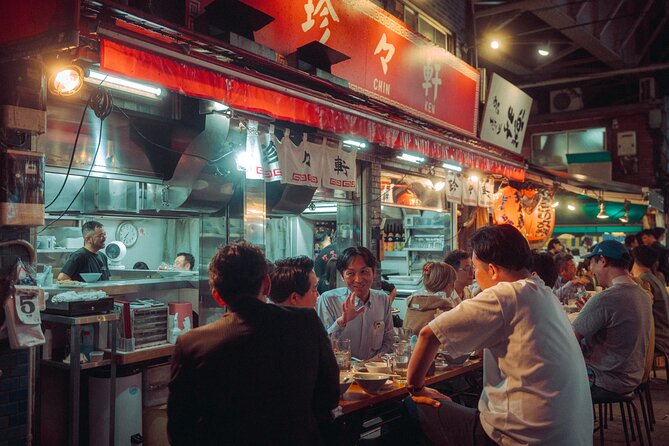
From Nihonbashi, the tour moves toward Ginza and Yurakucho. The story changes here. After Japan industrialized following the war, the salaryman became a familiar figure, and small restaurants and bars appeared beneath the railway tracks to serve workers before their commute home.
This is where you eat in the style of those office workers. The setting matters as much as the menu. Gado shita refers to the businesses built under or beside the elevated railway tracks, and these compact spots offer a very different feel from polished department-store dining.
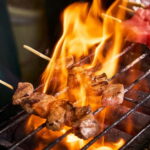
The meal includes yakitori, grilled meat on skewers, plus either tempura soba or curry udon. You also receive a lemon sour, a Japanese alcoholic drink. The combination gives you a good sample of casual city eating: smoky grilled food, a filling bowl of noodles, and a drink suited to an after-work stop.
The noodle choice is worth noting. Tempura soba gives you broth, noodles, and fried seafood or vegetables, while curry udon brings a thicker, stronger sauce and soft noodles. One guide’s curry udon was singled out as a favorite, but your exact selection may depend on the tour arrangements.
There is a practical catch. An izakaya and noodle stall under railway tracks may be compact and informal. That is part of the appeal, but it may not suit someone seeking a quiet, polished meal. The alcoholic drink is included, yet you can ask about alternatives if you do not drink. The supplied details do not specify a nonalcoholic replacement, so confirm this in advance.
Tokyo International Forum and Marunouchi: a useful walk between bites

After Yurakucho, you walk toward Tokyo Station and stop at the Tokyo International Forum. The stated visit lasts about 15 minutes, followed by a short stop at the Kitte Marunouchi building.
These are brief sightseeing pauses rather than full tours. Their value is in breaking up the meal and showing how the modern business district connects to the older railway-centered food culture you have just experienced.
The route then reaches Tokyo Station’s Marunouchi Ekimae Hiroba and Daimaru Tokyo. The two listed stops overlap in purpose, so you should think of them as part of one Tokyo Station food section rather than two separate meals.
A few more Tokyo tours and experiences worth a look


Tokyo Station: commuter food with a sweet finish

At Tokyo Station, the focus shifts to foods popular on the way home. You try tamagoyaki, a Japanese omelette, and a fruit sando, a soft Japanese milk-bread sandwich filled with fresh fruit and whipped cream.
Tamagoyaki is a good choice for a food tour because it looks familiar but tastes distinctly Japanese. The layers are soft, and the flavor can be lightly sweet. The fruit sando is another contrast: pillowy bread, cool cream, and fresh fruit in a neat sandwich format.
This part of the route shows how Japanese convenience and presentation work together. A commuter snack can be portable, attractive, and carefully prepared without becoming formal food.
For many people, this is also the point when the amount of food starts to add up. You have already sampled several traditional snacks, eaten yakitori and noodles, and now face an omelette and dessert-like sandwich. Come hungry in the morning, but do not assume every item will be a full portion. The experience is built around repeated tastings, not one large restaurant lunch.
Akihabara: traditional flavors with a modern twist

The final district is Akihabara, known here for electronics shops, maid cafes, anime culture, and its role in spreading new technology and subcultures.
The food theme shifts again. You try a selection of desserts that combine traditional ingredients or flavors with a modern fusion approach. The included items mention three fusion desserts, Pokemon taiyaki, and matcha bubble tea or matcha ice cream.
This is a smart ending. After learning about old shops and classic ingredients in Nihonbashi, you see how Japanese food keeps changing. Matcha is traditional, but bubble tea creates a newer format. Taiyaki has an established fish-shaped form, while a Pokemon version connects it to modern popular culture.
The Akihabara section lasts about 45 minutes, so it is shorter than the earlier food stops. That is enough time for several sweets and a talk about the district, but not enough for a broad tour of Akihabara’s shops and subcultures.
You may find the modern desserts more playful than profound. That is fine. Their purpose is to show experimentation and give the route a lighter finish. If you prefer savory food to sweets, this final section may be your least exciting part.
What the private format adds

The private setup is one of the strongest reasons to consider this experience. You are not following a large group through narrow streets or waiting while a guide answers the same question several times.
The guides named in the supplied information include Yasu, Keiko, Miko, Paiva, and Rohan. Specific praise focuses on Yasu’s humor and explanations, Paiva’s organization and promptness, Miko’s willingness to help after a flight delay, and Rohan’s ability to make the tour a good introduction to Tokyo.
Keiko was also credited with helping a participant understand the train system. That is a useful bonus because the tour uses two short subway rides, with fares paid separately. If you are just beginning your Tokyo trip, those rides can give you confidence for the rest of your stay.
One family used the outing with children aged 11 and 9 and found it a good way to try new Japanese foods while dealing with jet lag. That makes sense. The constant changes in taste, neighborhood, and activity can hold children’s attention better than a long museum visit, though younger children may tire during the walking portions.
Timing, transport, and the real cost
The tour lasts about five hours and 30 minutes. That is a substantial half-day, and the schedule includes food, walking, shrine customs, city sights, and two subway rides.
Pickup is offered from your Tokyo accommodation, which reduces the stress of finding the first meeting point. The official start is at the Nihonbashi 1-chome Mitsui Building, and the tour ends at Akihabara Station. Pickup details should be confirmed when you book, especially if you are staying outside the usual central Tokyo area.
The subway fares are not included. They are only two short rides, so they should not add much compared with the tour price, but carry a transit card or payment method that works for Tokyo transport.
At $327.75 per person, the price is high for a food walk. The value comes from the private guide, the long route through four distinct areas, 14 tastings, historical explanations, and help with navigating Tokyo. For a group of several people, the private format may make more sense than it does for one person, especially if group discounts apply.
You are paying for access and structure, not simply for the food’s retail value. If your main goal is the cheapest way to eat yakitori, soba, and sweets, this is not the right purchase. If you want a guided introduction to Tokyo’s food culture and city layout, the cost is easier to justify.
Who should book this experience
I would recommend it most strongly for a first visit to Tokyo, especially if you want an orientation that goes beyond the major sights. The route introduces food customs, shrine etiquette, casual dining, department-store food culture, and Tokyo rail travel in one outing.
It also suits families with older children, couples, and small private groups who want to ask plenty of questions. The flexible private setting is useful for people who feel unsure about unfamiliar dishes or Japanese dining customs.
You should think twice if you have strict dietary restrictions, dislike sweets, do not drink alcohol, or prefer a slow day in one neighborhood. The published details do not promise dietary substitutions or a nonalcoholic drink, and the food stops are spread across several districts.
The tour is near public transportation, and most people can participate. Still, the day includes walking, standing, food sampling, and subway transfers. Anyone concerned about mobility should ask for precise route details before booking.
Booking and cancellation details to check
Confirmation is received at booking, and the activity uses a mobile ticket. It is commonly booked well ahead, with an average lead time of 41 days, so reserve early if your Tokyo dates are fixed.
The supplied terms conflict. One section says a full refund, excluding booking and administration charges, is available more than one week before the tour, with a 50 percent refund between seven and two days before, and no refund within 48 hours or for lateness. Another section says the experience is non-refundable and cannot be changed for any reason.
Because those statements do not agree, ask the provider to confirm the exact policy before paying. Do not arrive late, since the terms specifically exclude refunds for late arrival or failure to attend.
Should you book the Tokyo food tour?
Book it if you want a guided food-and-city introduction, not just a meal. The best parts are the old Nihonbashi ingredients, the railway-track izakaya setting, the private explanations, and the way the route links traditional food to modern Akihabara.
Skip it if $327.75 feels too steep, if you want full-sized restaurant meals, or if you need guaranteed food substitutions. For everyone else, this is a well-shaped first-day experience that can help you understand what you are eating and get around Tokyo with more confidence.
FAQ
How long does the private Tokyo food tour last?
The tour lasts approximately five hours and 30 minutes.
How many food tastings are included?
The experience includes 14 tastings, covering traditional snacks, lunch items, alcoholic drinks, and modern desserts.
Which Tokyo districts does the tour visit?
The route includes Nihonbashi, Ginza and Yurakucho, Tokyo Station and Marunouchi, and Akihabara.
Are subway fares included?
No. You take two short subway rides, and those transport costs are paid separately.
Where does the tour start and end?
The stated start point is the Nihonbashi 1-chome Mitsui Building in Chuo City. The tour ends at Akihabara Station.
Is this a private activity?
Yes. Only your group participates in the tour.
Is hotel pickup available?
Pickup from your Tokyo accommodation is offered. Confirm the exact pickup arrangement when booking.
What is the cancellation policy?
The supplied booking information gives conflicting policies. One section describes partial or full refunds based on cancellation timing, while another says the experience is non-refundable. Confirm the current terms with Hello! Tokyo Tours before booking.
More Private Tours in Tokyo


More Food Experiences in Tokyo
More Tokyo Food Tours in Tokyo
More tours in Tokyo we've reviewed












Tokyo Food Tours, compared.
 ★ 5.0Tokyo: Shinjuku Food Tour (13 Dishes at 4 Local Eateries)From $86
 ★ 4.9Tokyo: Shinjuku Food Tour (13 Dishes and 4 Eateries)From $97
 ★ 5.0Tokyo Night Foodie Tour in Shinjuku – Seasonal Sushi, Wagyu BeefFrom $111
 ★ 5.0Eat and Drink Like a Local: Tokyo Ueno Food Tour-Taverns&RamenFrom $95
 ★ 5.0Tokyo: Shibuya Food Tour (13 dishes and 4 Eateries)From $77
Tokyo: Shinjuku Food Tour – 15 Dishes, 3 Drinks, 4 EateriesFrom $723 hours
★ 5.0Tokyo: Shibuya Food Tour (13 dishes and 4 Eateries)From $77
Tokyo: Shinjuku Food Tour – 15 Dishes, 3 Drinks, 4 EateriesFrom $723 hours