Reviewed · ASAKUSA TOURS
Tokyo Asakusa Temple & Shrine Walking Tour with Local Guide
Asakusa is easiest to enjoy when someone helps you read the details. This two-hour walking tour links the Sumida River, Kaminarimon Gate, Nakamise Street, Sensoji Temple, and Asakusa Shrine, while explaining rituals that are easy to miss when you explore alone.
In This Article
- Key points at a glance
- Why this Asakusa walk works well for a first visit
- Starting at Azumabashi Bridge and the Sumida River
- Kaminarimon Gate and its giant red lantern
- Nakamise Street for snacks, crafts, and souvenirs
- Hozomon Gate and the approach to Sensoji
- Sensoji Temple, Tokyo’s best-known Buddhist stop
- Asakusa Shrine and the blend of Shinto and Buddhism
- Temizu and omikuji, the details you might miss alone
- What $19.82 buys you
- Who should book this walk
- Practical details before you go
- Should you book the Tokyo Asakusa walking tour?
- FAQ
- How long does the Asakusa walking tour last?
- What is the price of the tour?
- What is the maximum group size?
- Where does the tour start?
- Where does the activity end?
- Which major sights are included?
- Are temple and shrine admission tickets included?
- Are snacks and souvenirs included?
- Can I cancel for a full refund?
I like the small group of no more than eight and the chance to try temizu cleansing, prayer, and omikuji fortune-telling rather than simply taking photos. At $19.82, it is also a modest price for a short cultural introduction, though the pace may feel brisk if you want a long shopping stop or quiet time inside each site.
Key points at a glance
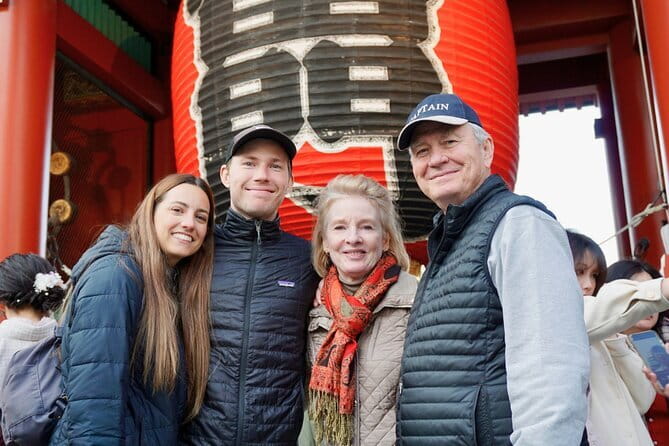
- A compact Asakusa route: Cover the district’s main sights in about two hours without spending time planning a map-based route.
- Real participation: Learn how to cleanse at a water basin, pray, and use an omikuji fortune slip.
- Small-group format: The maximum of eight people should make it easier to hear the guide and ask questions.
- A useful first look at Sensoji: See Kaminarimon, Nakamise Street, Hozomon Gate, Sensoji Temple, and Asakusa Shrine in one walk.
- Free-entry sights: The tour includes guided visits, while personal purchases such as snacks and souvenirs cost extra.
- Simple transport access: The meeting point is near public transportation and begins at Burger King Asakusa Azumabashi.
Why this Asakusa walk works well for a first visit
Asakusa can look simple on a map, yet its customs and landmarks make more sense when you understand how they fit together. Sensoji is a Buddhist temple, Asakusa Shrine is a Shinto shrine, and both sit within the same historic district. This walk helps you notice the difference instead of treating every gate and ritual as part of one general Japanese tradition.
The tour is built as a guided route rather than a long lecture. You move from the river toward the temple grounds, passing major landmarks in a logical order. That matters in Asakusa, where large crowds, side streets, shops, and temple entrances can make a short visit feel scattered.
I also like the group limit. Eight people is small enough for a guide to point out details without shouting to a large crowd. The listed rating is 4.9 from 52 reviews, with a 98 percent recommendation rate, so the experience has a strong record. Still, the tour’s value depends on what you want. It is an introduction, not a full-day study of Asakusa.
A few more Tokyo tours and experiences worth a look


Starting at Azumabashi Bridge and the Sumida River
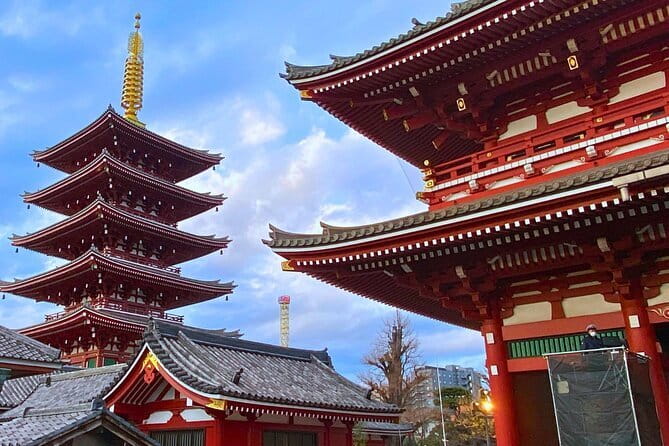
The walk begins at Burger King Asakusa Azumabashi, at Kaminarimon 2-chome, near the Azumabashi Bridge area. The first stop gives you a quick view of the Sumida River and Tokyo’s modern skyline.
This is a smart opening point. The river helps you see Asakusa as part of old Tokyo’s transport and trading life, rather than only as a temple district. Your guide introduces the area’s past and explains why the bridge has long served as a gateway toward Asakusa.
The stop is brief, so you should not expect an extended riverside walk. Think of it as a way to get your bearings and place the neighborhood in its wider setting. It also gives you an early contrast between traditional Asakusa and the modern buildings across the water.
Because the meeting point is near public transportation, the start should be manageable for most people. You receive confirmation when booking, and the activity returns to the same meeting point at the end.
Kaminarimon Gate and its giant red lantern
One of Asakusa’s most recognizable sights comes next: Kaminarimon, or Thunder Gate. The gate’s large red lantern weighs about 700 kilograms, and its repeated rebuilding reflects a practical fact of Tokyo life: fires have destroyed important structures many times.
A guide adds useful context here because the gate is easy to reduce to a single photograph. You learn why it is called Thunder Gate and why the lantern has such importance in Japanese culture. The size of the lantern also gives you a sense of the theatrical entrance to Sensoji.
This is likely one of the busiest points on the route. Give yourself room to stop without blocking the flow of people taking photographs. The guide’s navigation is especially useful here, since the entrance can be crowded and the visual details compete for attention.
The tour does not charge an admission fee for this or the other listed temple and shrine visits. You are paying for the route, explanations, and help with customs, not for an attraction ticket.
Nakamise Street for snacks, crafts, and souvenirs
From Kaminarimon, the route follows Nakamise Shopping Street toward the temple. This traditional shopping lane sells local snacks, small crafts, and souvenirs, making it one of the most colorful parts of the walk.
Your guide explains how the street developed around visits to Sensoji. That background helps you see the shops as part of the temple approach, not just as a modern retail strip. It is also a good place to learn what kinds of items are associated with Asakusa.
The main limitation is time. A two-hour tour has several major stops, so you may pass shops without having time to browse at length. Personal spending is not included, so if you spot a snack or souvenir, plan to pay separately.
My advice is to treat Nakamise as a preview. Note where you want to return after the tour, then come back on your own if you want to shop. The same route can feel less rushed once you no longer need to keep up with the group.
Hozomon Gate and the approach to Sensoji
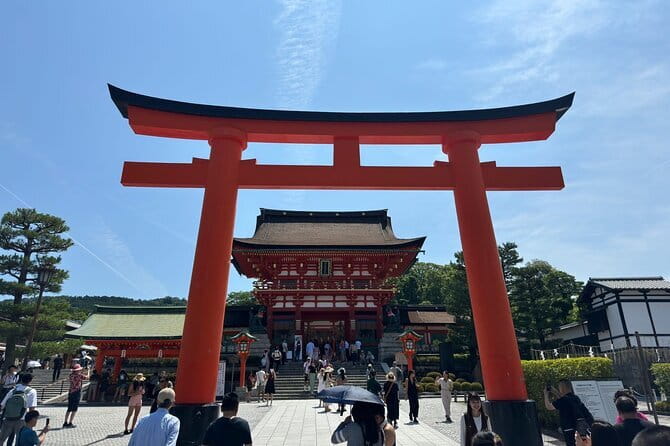
Hozomon Gate marks another important transition into the Sensoji grounds. It is an important cultural property, and the guide explains its design and symbolism as you pass through.
This second gate helps show that the temple complex is not just one building at the end of a shopping street. The approach has layers: river, city streets, Kaminarimon, Nakamise, Hozomon, and finally the temple. Each stage changes the mood and gives the visit a sense of progression.
You will probably get more from this section if you look upward and outward instead of focusing only on the central path. Gates carry visual messages about movement, protection, and entry. The guide’s role is to explain those ideas in plain terms while keeping the group moving.
Since the tour is on foot, comfortable shoes are a sensible choice. The supplied details say most people can participate, but they do not give a precise accessibility description. If you need specific assistance, confirm it before booking.
A few more Tokyo tours and experiences worth a look

Sensoji Temple, Tokyo’s best-known Buddhist stop
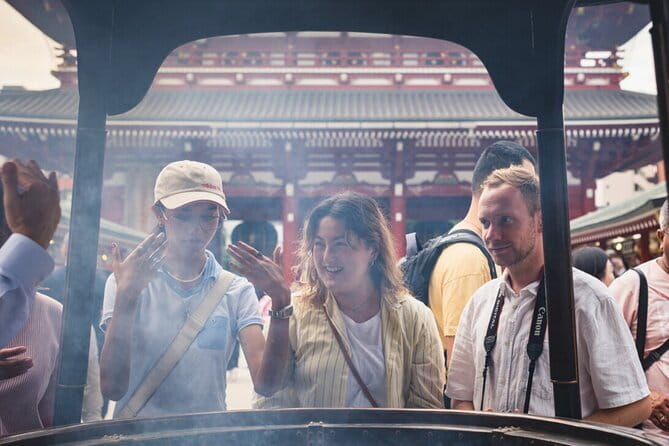
Sensoji is the centerpiece of the walk and Tokyo’s oldest and most famous Buddhist temple. Your guide covers its history, cultural role, architecture, and the stories connected with its major landmarks.
This is where the guided format earns its price. You can certainly visit Sensoji independently, but it is easy to see only the huge gate, the main hall, and the crowds. A guide helps explain what you are looking at and how the temple fits into Japanese religious life.
The temple visit also gives you a chance to connect the earlier stops. Kaminarimon is not an isolated photo point. Nakamise is not merely a shopping street. Hozomon is not just another gate. Together, they form the ceremonial route into Sensoji.
The itinerary repeats the Sensoji description several times, so you should understand the visit as one central temple stop rather than a series of separate temple entries. The two-hour duration suggests a focused introduction. If you want time to sit quietly, study every building, or photograph the grounds at leisure, plan to return after the walk.
Asakusa Shrine and the blend of Shinto and Buddhism
The tour also includes Asakusa Shrine, giving you a chance to compare Shinto practice with the Buddhist setting at Sensoji. This pairing is one of the most useful parts of the experience because both traditions are present in the same neighborhood.
The guide explains how the two forms of worship differ and how they have shared space in Japanese culture. You are not simply looking at architecture. You are learning why visitors wash their hands, how they approach prayer, and what behavior is expected at a shrine or temple.
This comparison suits first-time visitors who want cultural context without taking a formal religious class. It also helps you avoid common mistakes, such as treating a shrine and temple as interchangeable.
The tour includes hands-on rituals: temizu cleansing, prayer, and omikuji fortune-telling. These activities are optional in spirit, but they give the walk a practical quality. You learn by doing, then can repeat the customs at other sites during your time in Japan.
Temizu and omikuji, the details you might miss alone
Temizu is the hand-cleansing ritual performed before approaching a sacred place. Your guide explains the process so you can take part with more confidence and respect.
The tour also introduces omikuji, Japanese fortune-telling slips. You learn how the slips fit into a temple or shrine visit and what to do with the result. This is a small detail, but it can make later visits feel less confusing.
I value these moments because they turn observation into participation. You do not need prior knowledge, and the guide removes the awkwardness of guessing what to do next. There is also no language barrier during the explanation, which is useful when a ritual depends on order and small gestures.
Keep in mind that fortune-telling slips or other small purchases may count as personal expenses. The price covers the guided activity, not snacks, souvenirs, or items you choose to buy.
What $19.82 buys you
At $19.82 per person, this is priced as an accessible introduction rather than a premium private tour. You receive about two hours with an expert local guide, a route through the district’s main sights, and help understanding customs that would otherwise require research.
The strongest value comes from the time saved. If you have only one morning or afternoon in Asakusa, the guide points you toward the major landmarks without forcing you to plan an order yourself. The small group also gives the experience more personal attention than a large coach-style outing.
The price is less compelling if you already know the area or prefer exploring alone. Every stop is publicly accessible, and admission is free. Independent visitors can follow much of the same route at no cost, though they will miss the explanations and guided rituals.
For a first visit, I consider the fee reasonable, especially for people who want cultural background but do not want a long lecture. For repeat visitors, the choice depends on whether you want fresh context or simply more time to shop and wander.
Who should book this walk
This tour suits you best if you are visiting Asakusa for the first time, want a clear route, or feel unsure about Japanese temple and shrine etiquette. It is also a good fit for solo visitors and couples who prefer a small group to a large organized outing.
Families and older people may appreciate the short duration, though the experience remains a walking tour and the exact route conditions are not specified. Most people can participate, and the start is near public transportation.
You should think twice if your main goal is shopping. Nakamise is included, but the tour will not give you unlimited browsing time. The same applies if you want an unhurried photography session at Sensoji.
The group may include a guide whose background is not necessarily Japanese. One guide described in the supplied material was a young man from the United Kingdom spending a gap year in Japan, yet he was able to explain the route and local subjects well. That detail is a useful reminder: ask for clear cultural explanations, but do not assume every guide will be a long-term Asakusa resident.
Practical details before you go
The activity lasts approximately two hours and ends back at the starting point. The meeting location is Burger King Asakusa Azumabashi, Japan, 111-0034, Taito City, Kaminarimon, 2-chome 20-6, Cross Building Royal Palace.
A mobile ticket is provided, and confirmation arrives at booking. The maximum group size is eight people. Personal expenses are separate, including food, drinks, and souvenirs purchased during the walk.
Free cancellation is available if you cancel at least 24 hours before the local start time. Cancellations or changes made within 24 hours are not accepted for a refund.
I would arrive with comfortable footwear and a phone showing the meeting details. Since Asakusa’s main approach can be crowded, leave enough time to find the exact meeting point. The tour is short, so arrive ready to walk rather than expecting long breaks.
Should you book the Tokyo Asakusa walking tour?
Book it if you want a low-cost, tightly planned introduction to Asakusa with explanations of Sensoji, Asakusa Shrine, Kaminarimon, Nakamise, and Japanese rituals. The small group, free-entry sights, and hands-on customs make $19.82 a fair price for a first visit.
Skip it if you already know Asakusa well, want extensive shopping time, or prefer setting your own pace. For most first-time visitors with two hours to spare, this is a practical way to get oriented, learn the basic etiquette, and decide which parts of the district deserve a longer return visit.
FAQ
How long does the Asakusa walking tour last?
The tour lasts approximately two hours.
What is the price of the tour?
The listed price is $19.82 per person.
What is the maximum group size?
The group is capped at eight people.
Where does the tour start?
It starts at Burger King Asakusa Azumabashi, at Kaminarimon 2-chome 20-6, Cross Building Royal Palace, Taito City, Tokyo 111-0034.
Where does the activity end?
The tour ends back at the meeting point.
Which major sights are included?
The route includes Azumabashi Bridge, Kaminarimon Gate, Nakamise Shopping Street, Hozomon Gate, Sensoji Temple, and Asakusa Shrine.
Are temple and shrine admission tickets included?
The listed temple and shrine visits have free admission, and the guided walk includes visits to Sensoji Temple and Asakusa Shrine.
Are snacks and souvenirs included?
No. Personal expenses, including snacks and souvenirs purchased during the tour, are not included.
Can I cancel for a full refund?
Yes. You can cancel for a full refund up to 24 hours before the experience start time. Changes or cancellations made less than 24 hours before the start are not accepted for a refund.
More Walking Tours in Tokyo


More Temples & Meditation in Tokyo
More Asakusa Tours in Tokyo
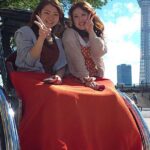
More tours in Tokyo we've reviewed
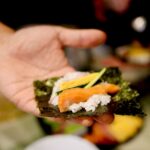

Asakusa Tours, compared.
 ★ 4.8Tokyo: Japanese Dance Cabaret Theater Asakusa-Kaguwa TicketFrom $492 hours
 ★ 4.7Tokyo: Meiji Shrine, Asakusa, Skytree Bus Tour and CruiseFrom $12210 hours
 ★ 4.9Tokyo: Roll and Authentic Sushi Making Class in AsakusaFrom $581h 40m
 ★ 4.8Tokyo: Asakusa Walking Tour with Sensoji Temple VisitFrom $222 hours
 ★ 5.0Tokyo Asakusa Rickshaw TourFrom $42
 ★ 4.5Tokyo Panoramic 1 Day: Meiji Shrine, Asakusa, Odaiba and SKYTREE®From $85