Reviewed · TSUKIJI MARKET TOURS
Tokyo Tsukiji Fish Market Food and Culture Walking Tour
Tsukiji is less a single market than a maze of food stalls, counters, shops, and wholesale displays. This three-hour walk gives you a local guide to steer you through it, with tastings of sushi or a seafood bowl, Wagyu beef, fish cakes, omelette, fruit, and Japanese snacks along the way. You may also see uni, pufferfish, or a tuna-cutting display.
In This Article
- Key points to know before you book
- Starting beside Tsukiji Honganji Temple
- Walking through Tsukiji Jogai Market
- What you actually taste in the market
- The old Tsukiji Market and the wholesale reality
- Kitchen tools, shopping, and practical local help
- Why the guide matters more than the route
- Three hours on your feet in a crowded market
- Is $99.49 a fair price?
- Who should book this Tsukiji food walk?
- Should you book it?
- FAQ
- Where does the tour meet?
- Does the tour end at the meeting point?
- How long does the experience last?
- Is lunch included?
- What foods may be included?
- Can vegetarians join?
- Can someone who does not eat fish join?
- What should I wear?
- Is the Uogashi wholesale market open every day?
- What happens if I arrive late?
- What is the cancellation policy?
I like two things here. First, the guide turns a confusing food district into a readable place, explaining what you are seeing and how Japanese cooks use it. Second, the tour connects food with culture, from the Tsukiji Honganji Temple meeting point to dashi, green tea, kitchen tools, and local customs. The main caution is that the wholesale fish market is not the old Tsukiji market, and the tasting portions may feel light for a very hungry eater.
Key points to know before you book
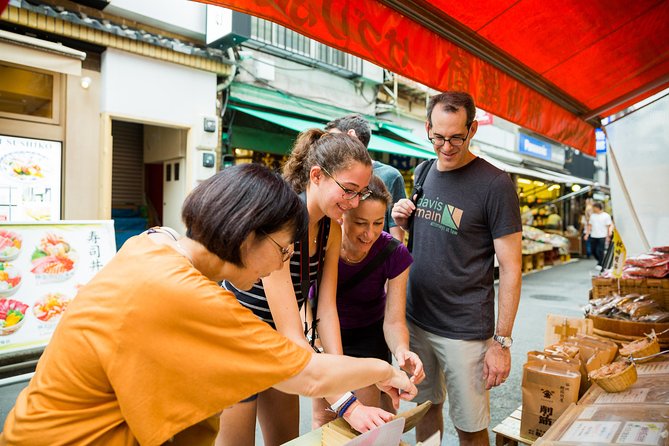
- You eat your way through the outer market: Expect several samples, including seafood, Wagyu, fish cakes, omelette, fruit, tea, and a final sushi or seafood-bowl meal.
- The guide is the real value: Guides such as Kiyo, Naz, Shoko, Yuki, Masa, and Nick have helped visitors understand ingredients, customs, and market etiquette.
- The former wholesale market is no longer here: Tsukiji’s outer market remains active, but the main wholesale fish operation moved elsewhere.
- Market conditions change by day: The Uogashi wholesale section is closed on Wednesdays, Sundays, and holidays, with some food stops unavailable on those days.
- Wear proper walking shoes: You will walk through crowded lanes and spend about three hours on your feet.
- The tour costs $99.49: That is fair if you want guidance and a planned meal, but less appealing if you prefer to browse slowly and choose your own food.
Starting beside Tsukiji Honganji Temple
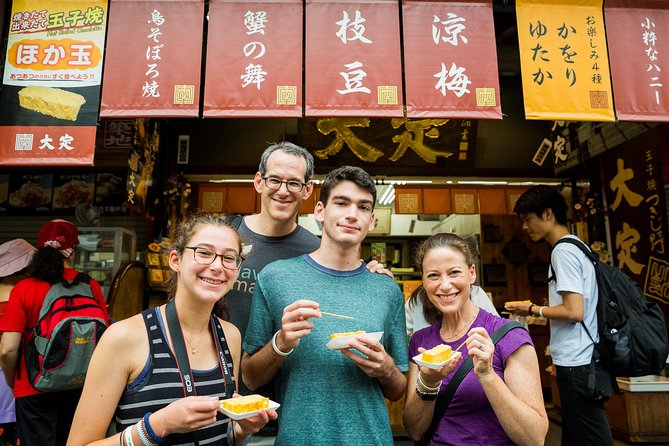
Your meeting point is the main gate of Tsukiji Honganji Temple, at 3-chōme-15-1 Tsukiji. This detail matters. The directions specify the front side of the temple, not the rear side that can appear in some map results.
The tour leaves sharply at its scheduled start time. Arrive early enough to find the gate, use the nearby transport connections, and locate your guide without rushing. A late arrival cannot be added to the end of the tour, and same-day late arrivals or cancellations do not receive a refund.
The temple itself gives the morning a useful cultural opening. One guide, Kiyo, explained the unusual building and the ideas that influenced its design. Other guides have also used the temple as a chance to introduce local customs before leading the group into the market.
That is a better start than meeting at a random street corner. You begin with a place of worship, then move into one of Tokyo’s great food districts. The contrast helps you see Tsukiji as part of neighborhood life, not just a sightseeing stop.
A few more Tokyo tours and experiences worth a look
Walking through Tsukiji Jogai Market
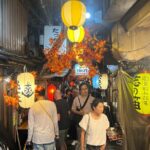
The first major section is Tsukiji Jogai Market, the outer market. Allow about 90 minutes here. This is where you find the smells, narrow lanes, shop signs, seafood displays, cooking ingredients, and small food counters that make Tsukiji memorable.
The outer market has an approximately 80-year story as one of Japan’s best-known fish-market districts. Your guide explains why local cooks and professional chefs come here for seafood and ingredients. You might pass boxes of sea urchin, tanks holding pufferfish, or large tuna being cut for sale.
You should not expect every stop to look the same on every visit. Market stalls open and close according to their own schedules, and particular foods depend on the day. The tour provider says that the exact final meal may be sushi or a seafood bowl, depending on conditions.
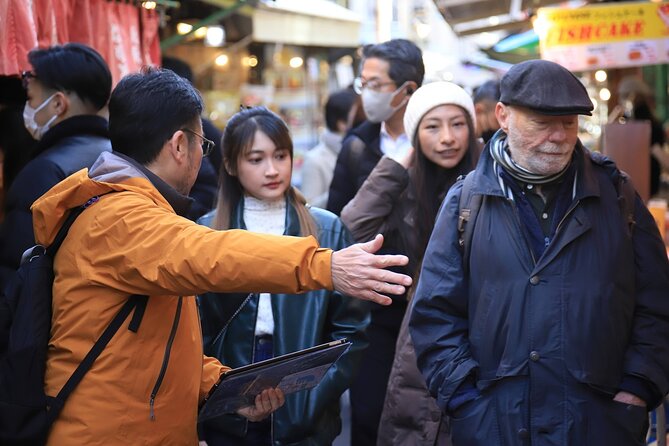
This is where a guide earns the fee. On your own, you can see plenty, but it is easy to walk past unfamiliar foods without knowing what they are. A good guide points out items you might otherwise miss, explains how they fit into Japanese cooking, and helps you move through the crowds without constantly stopping to decipher signs.
Several guides have received especially warm praise for this part of the outing. Shoko has helped with ingredient choices and explained how she uses foods and spices in her own cooking. Nick has connected tastings with nearby urban sights and Japanese food traditions. Masa has been valued for a calm pace, humor, and clear explanations.
The small-group format can also make a real difference. The maximum group size is 20, though some departures have been much smaller. Groups of four, for example, can hear the guide more easily and have more room to pause at a shop. A smaller group may also allow some flexibility for shopping, though the scheduled route still controls the day.
What you actually taste in the market
The food is the reason to book, but set your expectations correctly. This is a guided tasting walk with lunch, not a three-hour feast at a series of full restaurants.
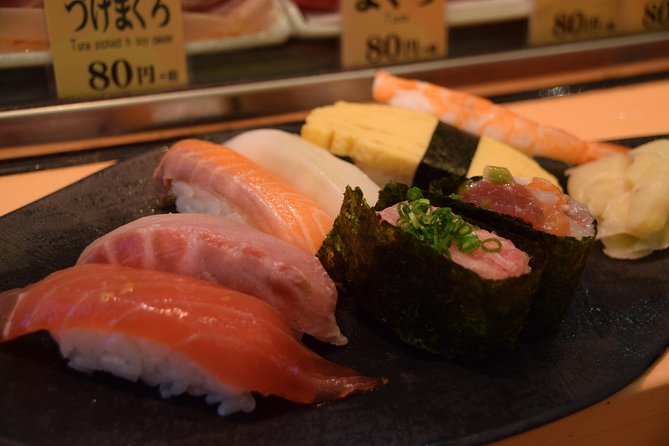
Early samples can include dashi soup and green tea, followed by items such as fish cakes, Japanese omelette, seaweed, seasonal fruit, and seafood. You may also receive tuna, squid, eel, tempura, or other available specialties. Wagyu beef skewers are part of the planned food selection, and seafood remains central throughout.
The variety is a strength. You are not simply eating sushi and leaving. You get small examples of different textures, preparations, and ingredients. A person who has never tried sushi may find this format less intimidating, since the portions allow you to test something new without ordering a large serving.
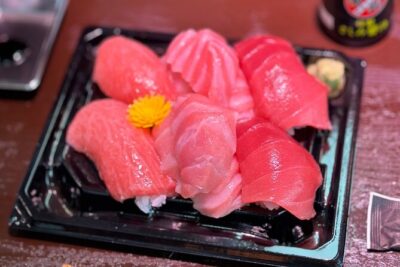
The final meal is generally sushi or a seafood bowl. It is served during the last 30 minutes at Tsukiji Fish Market. Some departures have included a sashimi lunch and a demonstration of fish preparation. One guide-led visit included the chance to watch sea bass being prepared and make sushi.
Still, do not arrive expecting unlimited food. One criticism of the tour is that the experience can feel more like looking at and discussing food than eating large amounts of it. I would have a light breakfast first, especially if you normally eat an early lunch. You should leave satisfied in ordinary circumstances, but the amount depends on the day, the stops, and your appetite.
The tour cannot accommodate vegetarian, halal, gluten-free, or allergy-related requests. If you cannot eat fish, this is not the right food walk. Under-20 visitors receive another drink in place of an alcoholic option, since the minimum drinking age for the included drink is 20.
The old Tsukiji Market and the wholesale reality
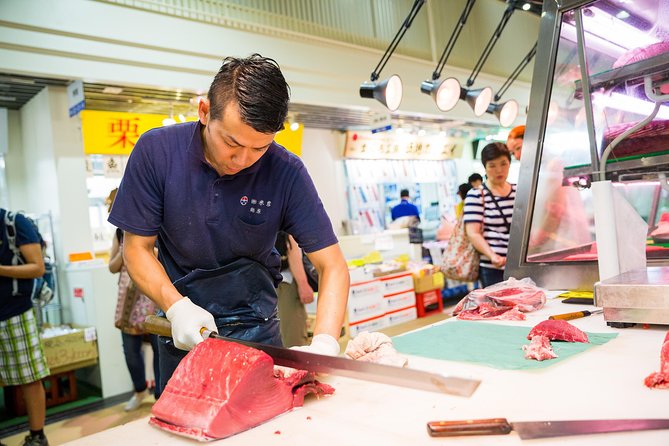
The itinerary includes about 30 minutes in the old Tsukiji Market area. This section helps explain what changed and what remains.
The famous inner wholesale fish market once made Tsukiji a major destination for watching the seafood trade. That wholesale operation has since moved to Toyosu. The outer market around Tsukiji Honganji Temple remains open, with retail stalls and food businesses, but it is not the old wholesale floor many people picture from television and guidebooks.
This distinction is important when deciding what you want. If your dream is to watch the full wholesale auction or see the original wholesale market in operation, this tour will not deliver that at Tsukiji. The route instead focuses on the outer stalls, retail food culture, and the market area’s continuing role in Tokyo life.
The Uogashi section is a smaller wholesale market with many kinds of fresh fish. It is scheduled for about 30 minutes, but it is closed on Wednesdays, Sundays, and holidays, along with other market closure days. On those days, Japanese omelette, fish cake, and fruit stops cannot be served because the relevant shops are closed.
That makes the day of your booking more important than it might first appear. If the Uogashi section is a top priority, avoid a Wednesday, Sunday, or listed holiday when possible. If your schedule allows only one of those days, understand that the tour can still include other market areas and tastings, but the route will not be identical.
Kitchen tools, shopping, and practical local help
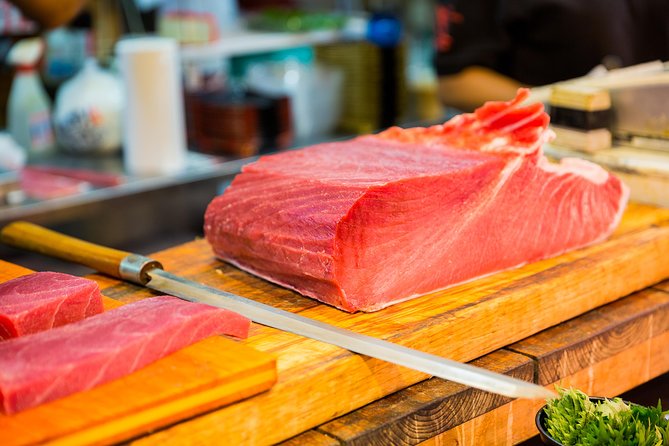
The market is not only about eating. The tour may stop at a shop selling kitchen tools if you need something for your home kitchen. This can be one of the more useful parts of the walk because Japanese cooking tools and ingredients are difficult to judge when you are shopping alone.
A guide can explain what an item is used for, how a food is prepared, or which products make sensible souvenirs. Shoko, for example, has helped people choose ingredients to take home and explained how she uses them in daily cooking. Another guide accommodated a request to visit an extra shop after the scheduled tour ended.
Do not assume every personal shopping request can be added. The group must keep moving, and the market can be crowded. But a small group gives you a better chance to ask questions or spend a few minutes looking at something that catches your eye.
Some groups have also arranged a sake tasting when they wanted one, with the guide leading them to a suitable place. That kind of flexibility depends on the guide, timing, and the shop’s availability, so treat it as a possible bonus rather than a promise.
Other walking tours we've reviewed in Tokyo

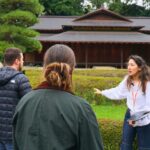


Why the guide matters more than the route
The route itself is useful, but many of the strongest moments depend on who leads your group. The guide must do more than point at food. You want someone who can explain the market clearly, keep the group together, answer basic questions, and adjust the pace.
The best accounts of this experience describe guides who are friendly, easy to understand, and well informed about history, food, and customs. Names that have been singled out include Kiyo, Naz, Miky, Kayoko, Joy, Yuki, KK, Shoko, Sean, Take, Nick, Masa, and Yuko.
Naz has introduced unusual foods that participants would not have found alone. Miky has helped people navigate the many vendors. Kayoko has made smaller groups feel almost private while explaining ingredients and local history. Joy has kept the tone warm and encouraged a visitor’s attempt at basic Japanese.
The less successful outings show the risk. A young or inexperienced guide may leave long pauses, move too slowly, or lack enthusiasm for the food. Another guide was described as difficult to understand. These problems are not easy to predict when booking, since guide assignments can change.
The tour’s high overall rating, 4.9 from 3,184 ratings, and 97 percent recommendation figure indicate a strong general record. They do not guarantee that every guide will suit every group. If you value clear English, lively storytelling, or a gentle pace for an older relative, tell the operator what matters to you when possible.
Three hours on your feet in a crowded market
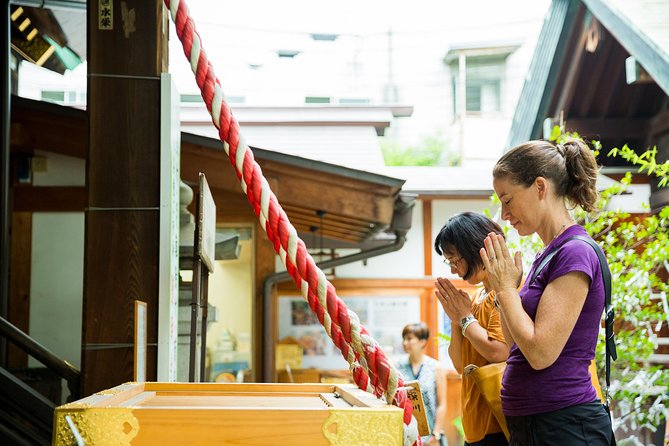
The duration is about three hours, divided among the outer market, old market area, Uogashi, and the final meal. The walking is manageable for anyone with a moderate fitness level, but this is not a seated food class.
Wear comfortable walking shoes. You will stand, turn through narrow lanes, and move between food stops. A crowded market is not the place for stiff footwear, large luggage, or a complicated outfit.
The meeting point and ending point are the same, at Tsukiji Honganji Temple. Hotel pickup, transportation to Tsukiji, extra food and drinks, and personal purchases are not included. Plan your route to the temple in advance, and leave enough time to find the correct gate.
The mobile ticket is convenient, but it does not change the need to arrive on time. The group leaves at the stated start time, and the tour cannot be extended for late arrivals.
Is $99.49 a fair price?
At $99.49 per person, this is not the cheapest way to eat at Tsukiji. You can walk through the outer market independently and buy individual snacks or a meal for less.
The price makes more sense if you want a planned introduction to unfamiliar food. You are paying for the guide’s market knowledge, explanations, route planning, tastings, and included lunch or snack. That is useful on a first visit, especially if you do not read Japanese or feel unsure about ordering seafood.
The value is weaker if you already know Tsukiji well, prefer to choose every dish yourself, or want a large amount of food. The final meal is included, but the earlier portions are tastings, and the selection changes by day.
I would compare the price with your priorities. For a first morning in Tokyo, a small group, and a desire to learn what you are seeing, it can be money well spent. For a confident eater who enjoys wandering alone, buying food one item at a time may offer better value.
Who should book this Tsukiji food walk?
I would recommend it to first-time visitors who want an easy introduction to Japanese seafood and market customs. It is also a good fit for curious eaters who want to try fish cakes, seaweed, squid, eel, Wagyu, or other foods without having to research every stall.
Families and mixed-experience groups can benefit from the guide’s explanations. Someone who has never eaten sushi can start with small portions, while an experienced eater may discover shops or ingredients they would have missed.
I would not book it if you need vegetarian, halal, gluten-free, or allergy-sensitive food. I would also skip it if you cannot eat fish, if you expect the old wholesale market, or if you want a long, relaxed lunch with complete control over the menu.
Book at least 24 hours before the start time if you need the option of a full refund. Cancellations made less than 24 hours before the start time are not refunded, and changes inside that period are not accepted.
Should you book it?
Book this tour if you want a guided first look at Tsukiji’s food culture, with enough tastings to make the market feel approachable and a seafood lunch to finish. Guides such as Shoko, Nick, Masa, and Yuki have shown how much better the market can be when someone explains the ingredients and local habits as you walk.
Skip it if your main goal is the former wholesale market, a huge meal, or a low-cost do-it-yourself outing. Go on a day when the Uogashi section is open, arrive early at the front gate of Tsukiji Honganji Temple, and eat a light breakfast first. With those expectations, the $99.49 price is easiest to justify.
FAQ
Where does the tour meet?
The meeting point is the main gate of Tsukiji Honganji Temple at 3-chōme-15-1 Tsukiji, Chuo City, Tokyo 104-8435, Japan.
Does the tour end at the meeting point?
Yes. The activity ends back at the Tsukiji Honganji Temple meeting point.
How long does the experience last?
The tour lasts approximately three hours.
Is lunch included?
Yes. Lunch and snacks are included. The final meal is either sushi or a seafood bowl, depending on the day and time.
What foods may be included?
Possible tastings include Wagyu beef skewers, sushi or a seafood bowl, fish cakes, Japanese omelette, seasonal fruit, tuna, dashi soup, green tea, and other seafood items.
Can vegetarians join?
No. Vegetarian, halal, gluten-free, and allergy-related requests cannot be accommodated.
Can someone who does not eat fish join?
No. The tour is not suitable for anyone who cannot eat fish.
What should I wear?
Comfortable walking shoes are recommended because the experience involves walking through the market for about three hours.
Is the Uogashi wholesale market open every day?
No. The Uogashi wholesale market is closed on Wednesdays, Sundays, holidays, and other market closure days.
What happens if I arrive late?
The group leaves at the scheduled start time and cannot wait. The tour cannot be extended for late arrivals, and same-day late arrivals are not eligible for a refund.
What is the cancellation policy?
You can cancel at least 24 hours before the experience start time for a full refund. Cancellations or changes made less than 24 hours before the start time are not accepted or refunded.
More Food Experiences in Tokyo



More Walking Tours in Tokyo
More Tsukiji Market Tours in Tokyo


More tours in Tokyo we've reviewed












Tsukiji Market Tours, compared.
 ★ 5.0Tokyo: Tsukiji Fish Market Food and Walking tourFrom $30
 ★ 4.9Tokyo: Tsukiji Fish Market Guided Walking TourFrom $222 hours
 ★ 5.0Tokyo Sushi Making Class in Tsukiji with Professional ChefFrom $49
 ★ 5.0Tsukiji Fish Market Guided Tour and Sushi Making with Pro ChefFrom $104
 ★ 4.7Tokyo: Tsukiji Fish Market Food and Culture Walking TourFrom $963 hours
 ★ 5.0Tsukiji Fish Market: Street Food & Culture Walking TourFrom $33