Reviewed · IMPERIAL PALACE & SHOGUN TOURS
Tokyo: Imperial Palace and Shogun Walking Tour
The most revealing part of this Tokyo walk is not the modern palace itself, but the old Edo Castle hidden beneath it. Massive stone walls, moats, guardhouses, and the castle tower base show where the Tokugawa shoguns actually held power. A guide turns what could be a quiet garden stroll into a clear lesson in how Japan moved from feudal rule to the modern state.
In This Article
- Key points to know before you book
- Why Edo Castle is the real story
- Starting at Wadakura Fountain Park
- Ote-Mon Gate and the first ten minutes
- The Imperial Palace grounds in 15 minutes
- Hyakunin Bansho Guardhouse and the working castle
- Fujimi-yagura and the vanished castle tower
- East Gardens: history with room to breathe
- Ninomaru Garden and the koi ponds
- What the guides add
- Is two hours enough?
- Price, comfort, and practical limits
- Who should book this Imperial Palace walk?
- Should you book it?
- FAQ
- How long does the Tokyo Imperial Palace and Shogun Walking Tour last?
- How much does the tour cost?
- Where does the tour begin?
- Where does the tour finish?
- What language is the tour conducted in?
- Which parts of the former Edo Castle site are visited?
- Can I see koi during the tour?
- Is the tour wheelchair accessible?
- Can I cancel for a refund?
- Can I reserve now and pay later?
I like the strong two-hour format. It gives you real historical context without swallowing half your day. I also like the peaceful Ninomaru Garden, where koi glide through ponds just minutes from central Tokyo. The main consideration is that this is an outdoor walking tour, so weather, walking comfort, and the exact guide you receive will shape the experience.
Key points to know before you book

- Edo Castle comes before the Imperial Palace: You see the foundations and defenses of the shogun’s former stronghold rather than touring grand palace rooms.
- Ninomaru Garden is the calm center: Expect seasonal plantings, ponds, and koi in a carefully arranged garden setting.
- Guides make the difference: Tony, Blake, Jim, Embla, Miguel, Dylan, and others are praised for clear explanations, friendly conversation, and useful Tokyo advice.
- The tour begins and ends at one easy landmark: Meet at Starbucks Kokyo Gaien beside Wadakura Fountain Park, then return there after two hours.
- The cost is low for a guided introduction: At $16 per person, the tour offers context that is hard to pick up from signs alone.
- You need to plan around the weather: It is a walking experience through open grounds, though one guide has been noted for lending an umbrella and another for building in a short vending-machine break.
Why Edo Castle is the real story
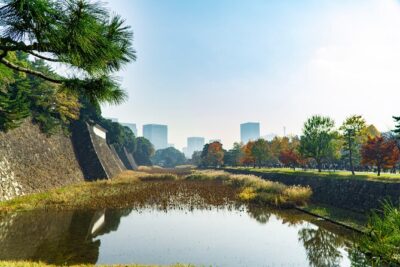
Many first-time visitors hear Imperial Palace and picture a grand royal residence open for inspection. This experience is different. It takes you through the East Gardens, on the former site of Edo Castle, where the Tokugawa shogunate ruled Japan for more than two and a half centuries.
That distinction matters. The gardens are peaceful today, but the ground beneath your feet once held a military and political headquarters. The tour helps connect the stones to the people who used them: samurai officials, shoguns, guards, and members of a tightly controlled feudal system.
I especially like this approach for anyone who finds Japanese history hard to organize. A guide can explain the sequence from shogun rule to the imperial era and then to modern Tokyo. Tony has been especially good at linking old political decisions with the city you see today, while Jim Allen is praised for making the subject lively with unusual and memorable details.
The setting helps. You are not sitting in a classroom listening to dates. You are looking at gates, moats, stone foundations, and garden paths while the story unfolds around you. That physical connection makes the shift from Edo to modern Japan easier to grasp.
A few more Tokyo tours and experiences worth a look


Starting at Wadakura Fountain Park
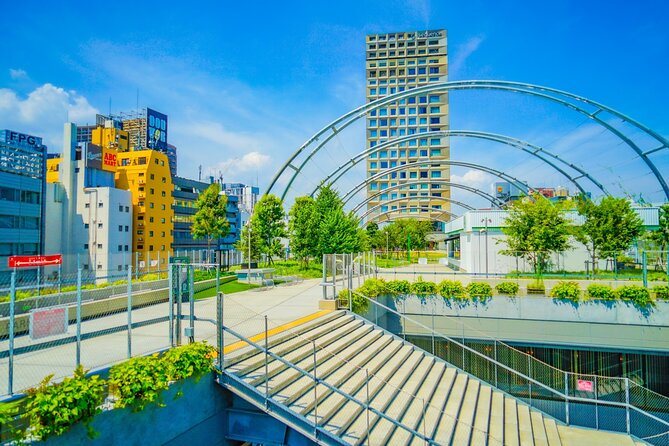
The meeting point is in front of Starbucks Kokyo Gaien at coordinates 35.6830391, 139.7614181. It is beside Wadakura Fountain Park, a useful open-space landmark near the Imperial Palace grounds.
The tour returns to this same Starbucks after the walk. That is handy if you want to continue toward another central Tokyo sight, pause for a drink, or use the area as a simple meeting point for your group.
Arrive with enough time to locate the café and your guide. The experience is conducted in English, and the guide leads the walk from the meeting point into the palace area. Since the tour is only two hours, a late start would cut into the time spent inside the gardens.
Ote-Mon Gate and the first ten minutes
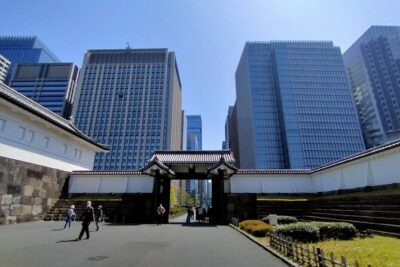
Ote-Mon Gate is the natural opening chapter. It was a major entrance to Edo Castle, and its scale gives you an immediate sense that this was more than a pretty residence.
Your guide spends about ten minutes here, explaining the gate’s defensive purpose and how people moved through the castle complex. Look closely at the relationship between the entrance, the moat, and the stonework. These features were not decoration. They controlled access and helped protect the shogun’s seat.
This is also where a guide earns the $16 price. Without explanation, a large gate can simply look old and impressive. With context, you begin to read it as part of a working system of power and security.
The Imperial Palace grounds in 15 minutes
The next stop is listed as Tokyo Imperial Palace, with about 15 minutes for a guided visit. The focus remains on the grounds and their historical setting, not on a long indoor palace tour.
That is worth understanding before you book. You are coming for the East Gardens, former Edo Castle remains, and the story of political change. If your main goal is to enter imperial rooms or see a broad selection of palace interiors, this is not that type of visit.
For a first look at the palace area, the stop works well. It places the present imperial institution beside the earlier shogunal center and lets your guide explain how those roles changed over time. Several guides are praised for connecting Japanese history with daily life and modern Tokyo, which gives this brief stop more value than a quick photo break.
Hyakunin Bansho Guardhouse and the working castle

The walk continues to Hyakunin Bansho Guardhouse for around ten minutes. This is one of the spots where the old castle feels practical rather than ceremonial.
A guardhouse helps you picture the people who kept the complex running and watched those passing through its gates. Your guide can use the site to explain samurai service, castle routines, and the layers of control around the shogun.
The stop is short, but that is sensible. Two hours goes quickly, and the tour needs to balance historical structures with the gardens themselves. You will hear enough to understand why the guardhouse mattered, then keep moving rather than getting stuck on one building.
Other walking tours we've reviewed in Tokyo





Fujimi-yagura and the vanished castle tower
Fujimi-yagura receives about 15 minutes of guided sightseeing. A yagura was a watchtower and defensive structure, and this one helps show the castle’s former size and strength.
The tour also visits the remains of the castle tower base. The original tower is gone, so do not expect a restored keep rising over the trees. What remains is the heavy stone foundation, which is compelling precisely because it asks you to imagine what once stood there.
This is one of the best places to think about scale. The stones are not just old masonry. They represent the base of a structure tied to the highest political authority in Edo Japan. Guides such as Blake and Miguel are praised for explaining these details in a friendly, easy-to-follow way.
A drawback is that ruins require a little imagination. If you want a complete castle building with furnished rooms, this stop may feel spare. If you enjoy reconstructing the past from foundations and walls, it is one of the tour’s most meaningful moments.
East Gardens: history with room to breathe

The Imperial Palace East Gardens receive about 30 minutes, giving you time to move beyond military history and see how the former castle site is used today.
The gardens blend formal design, open paths, stone remains, ponds, and carefully maintained plantings. Their seasonal appearance will change during the year, so the exact color and feel of the garden depend on when you visit. That changing quality is part of the appeal, but it also means you should not book expecting one fixed view.
I like the contrast here. Tokyo can feel intense and crowded, yet the palace grounds offer a quiet pause in the middle of the city. The calm does not erase the site’s political past. Instead, it makes the old defenses and foundations easier to notice.
The pace seems designed for explanation rather than speed. Todd specifically praised the pace as comfortable, and other guides have been described as patient and interactive. You should still expect to walk for most of the two hours, with time spent standing while the guide talks.
Ninomaru Garden and the koi ponds
Ninomaru Garden is given another 30 minutes and is likely the visual highlight for many people. This was once the shogun’s inner garden, but today it is a tranquil place of paths, ponds, seasonal beauty, and koi.
The koi ponds give the visit a softer rhythm after the gates and guardhouses. Watch the fish moving through the water, then look back at the surrounding garden design. The setting shows a different side of authority in Edo Japan, one tied to controlled beauty, leisure, and careful arrangement rather than walls and weapons.
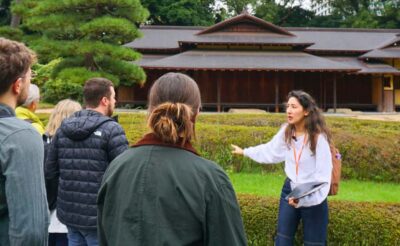
Do not rush this section. The half-hour is long enough to appreciate the garden, take photographs, and listen without feeling that you are being pushed along. Ellen appreciated a short pause during her tour to sit and buy a drink from a vending machine, a useful reminder that the walk is not nonstop marching.
Ninomaru is also where the tour suits mixed groups well. Children and teenagers may connect more easily with koi, ponds, and the visual setting, while adults can follow the political story. One family found that guide Jim kept teenagers interested with clear explanations and stories.
What the guides add
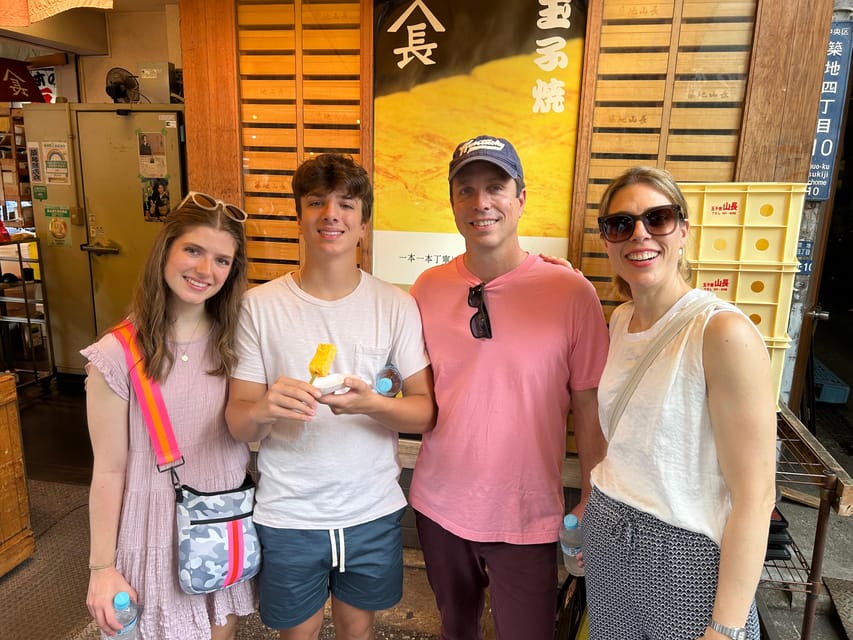
The strongest pattern across the guide team is an ability to make history understandable. Tony is repeatedly praised for clear explanations, good organization, and useful suggestions for food and other activities in Tokyo and beyond.
Blake is often described as friendly, patient, interactive, and good at bringing the garden to life with imaginative details. Jim Allen is praised for his passion, patience, and quirky facts about the shogun dynasty. Embla receives credit for explaining Edo Castle and the surrounding gardens with warmth and detail.
Other named guides include Miguel, Dylan, Thomas, Lasse, Mayumi, Michi, Sneha, Izzy, Manny, Christian, Joe, and a Dutch guide whose name one participant did not remember. The range of names suggests that you should book the tour for its format and location, not for a guarantee of one particular guide.
That said, the guide can affect how much you get from the walk. At $16, you are not paying for luxury transport or a long museum program. You are paying for a person who can explain what you are seeing, answer questions, keep the group on time, and add practical Tokyo suggestions. The feedback gives strong reason to expect a personable guide, but individual styles will vary.
Is two hours enough?
Two hours is a good length for this particular introduction. The route covers Ote-Mon Gate, the palace grounds, Hyakunin Bansho, Fujimi-yagura, the East Gardens, and Ninomaru Garden before returning to the starting point.
You get a clear arc:
- The gate and guardhouse explain protection and access.
- The tower base and stone walls show the castle’s scale.
- The palace grounds connect the old shogunate with imperial Japan.
- Ninomaru Garden provides the quiet finish.
The tradeoff is depth. You will not examine every garden corner or hear an extended lecture on each period of Japanese history. Instead, you get a well-shaped first visit that leaves room for other Tokyo plans.
Several guides have also offered recommendations for nearby food and additional sights. That makes the tour particularly useful early in your stay, when you still need help placing Tokyo’s history and neighborhoods in context.
Price, comfort, and practical limits
At $16 per person, this is an unusually accessible way to add structure to a palace visit. You could walk through public garden areas on your own, but the stone walls and ruins do not explain themselves. The guide supplies the missing connections.
The tour is wheelchair accessible, and the published duration is two hours. English is the only listed tour language. Starting times vary, so check availability for the date you want.
Wear shoes suited to a garden walk. The information provided does not give a precise distance or a detailed surface description, so I would plan for regular walking and standing rather than assume a short stroll from one monument to the next.
Weather deserves attention. The gardens are outdoors, and conditions can affect your comfort. Bring protection from sun or rain. A past guide lent an umbrella, but you should not rely on that as part of the service.
Free cancellation is available up to 24 hours before the start for a full refund. You can also reserve now and pay later, which helps if your Tokyo schedule is still shifting.
Who should book this Imperial Palace walk?
I would choose this tour if you are visiting Tokyo for the first time and want a firm grasp of the city’s political past. It is also a good fit for history lovers who prefer real walls, gates, and ruins to a museum-only introduction.
Families may like the mix of stories, open space, koi, and manageable timing. Business groups can use it as a simple shared activity, as one large group did with guide Thomas. You can ask questions, meet other people, and get suggestions for the rest of your stay.
I would be more cautious if you dislike walking outdoors, need a highly specialized academic lecture, or mainly want access to imperial interiors. The tour is about the former Edo Castle site and East Gardens, with the present palace providing context.
Should you book it?
Book this Imperial Palace and Shogun Walking Tour if you want clear history at a modest price, a peaceful garden break, and a guide who can explain why Tokyo looks and functions as it does today.
The best timing is early in your visit, when Tony, Blake, Jim, Embla, or another guide can help shape your plans for the rest of Tokyo. Go with realistic expectations: this is a guided outdoor walk through castle remains and gardens, not an interior palace tour. For two hours and $16, that is a fair trade, and the combination of Ninomaru’s koi ponds with Edo Castle’s formidable stones gives you both beauty and substance.
FAQ
How long does the Tokyo Imperial Palace and Shogun Walking Tour last?
The tour lasts two hours, including the walk through the palace grounds and East Gardens before returning to the starting point.
How much does the tour cost?
The listed price is $16 per person.
Where does the tour begin?
You meet in front of Starbucks Kokyo Gaien at Wadakura Fountain Park. The coordinates are 35.6830391, 139.7614181.
Where does the tour finish?
The tour returns to Starbucks Kokyo Gaien, the same place where it begins.
What language is the tour conducted in?
The tour is conducted in English with a live English-speaking guide.
Which parts of the former Edo Castle site are visited?
The route includes Ote-Mon Gate, Hyakunin Bansho Guardhouse, Fujimi-yagura, the castle tower base remains, the Imperial Palace East Gardens, and Ninomaru Garden.
Can I see koi during the tour?
Yes. Ninomaru Garden includes ponds with koi swimming in them.
Is the tour wheelchair accessible?
Yes. The activity is listed as wheelchair accessible.
Can I cancel for a refund?
Yes. You can cancel up to 24 hours in advance for a full refund.
Can I reserve now and pay later?
Yes. The booking option allows you to reserve your place and pay nothing today.
More Walking Tours in Tokyo
More Imperial Palace & Shogun Tours in Tokyo



More tours in Tokyo we've reviewed












Imperial Palace & Shogun Tours, compared.
 ★ 4.9Tokyo: Imperial Palace Japanese History Walking TourFrom $32
 ★ 5.0Imperial Palace East Garden and Edo Castle Walking Tour in TokyoFrom $25
 ★ 4.8Tokyo: Imperial Palace East Gardens Walking TourFrom $192h 30m
 ★ 4.5Tokyo: Imperial Palace, Sensō-ji Temple, & Tokyo Tower TourFrom $404 hours
 ★ 5.0Tokyo Castle, Imperial Palace, Shogun & Garden Walking TourFrom $31
 ★ 4.7Tokyo: Edo Castle & East Garden of the Imperial Palace TourFrom $422 hours