Reviewed · IMPERIAL PALACE & SHOGUN TOURS
Tokyo Castle, Imperial Palace, Shogun & Garden Walking Tour
Tokyo’s Imperial Palace grounds are less about grand palace rooms than stone walls, gardens, castle foundations, and the stories that connect the shoguns with modern Japan. This two-hour walk takes you through the East Gardens and former Edo Castle site, where a good guide helps you picture buildings that no longer exist.
In This Article
- Key points to know before booking
- Why this tour works better than wandering alone
- Meeting at Wadakura Fountain Park
- Passing through Ōtemon Gate
- Edo Castle ruins and the missing palace
- Guardhouse remains and samurai-era stories
- Ninomaru Garden and a quieter side of Tokyo
- What the two-hour schedule really gives you
- Price and value at $31.84
- Weather, walking comfort, and timing
- Who should book this Imperial Palace walk?
- Should you book it?
- FAQ
- How long does the Tokyo Imperial Palace walking tour last?
- Where does the tour begin?
- Where does the tour end?
- Can I enter the Imperial Palace itself?
- What places are included?
- How many people are in the group?
- Is admission included?
- Is there a dress code?
- What happens if the weather is poor?
I like the small-group format, with the advertised limit listed as either 10 or 15 people, and I like the easy meeting point beside the Wadakura Fountain Park. Guides such as Mika, Natsumi, Lakki, and Nicola have been praised for clear English, useful historical explanations, and help with photographs.
The main consideration is simple: you cannot enter the palace itself, and much of the old castle is gone. If you expect lavish interiors, this may feel thin. If you enjoy gardens, castle defenses, and Japanese history brought to life by a guide, the $31.84 price is reasonable.
Key points to know before booking
- You visit the East Gardens, not the Emperor’s private palace: The Inner Palace is closed to the public.
- Ōtemon Gate sets up the castle story: This imposing entrance helps you understand how visitors once approached Edo Castle.
- The tour focuses on foundations and ruins: Much of the original castle disappeared, so the guide’s maps, images, and explanations matter.
- Ninomaru Garden adds a peaceful pause: Expect landscaped grounds, koi, seasonal color, and a quieter side of central Tokyo.
- The group is kept small: The tour information gives a maximum of 10 in one section and 15 in another, so check your booking details.
- It is a gentle but outdoor walk: Summer heat, winter cold, rain, and wet paths can affect comfort.
Why this tour works better than wandering alone
The Imperial Palace grounds cover a large area, and the East Gardens contain enough gates, walls, mounds, and planted areas to make a self-guided visit feel disconnected. You can see the stones, but without context it is harder to understand what once occupied the site or why the castle was built this way.
A guide gives those remains a purpose. You learn how Edo Castle functioned, how samurai power shaped Tokyo, and how the shogunate and Imperial family fit into Japan’s changing political story. The best part is not a single grand building. It is the link between what you see underfoot and the history behind it.
This is also a useful choice if you do not want to spend hours studying maps before arriving. The guide leads you from the meeting point toward Ōtemon Gate and through the garden route, so you can focus on the views and explanations instead of checking your phone at every turn.
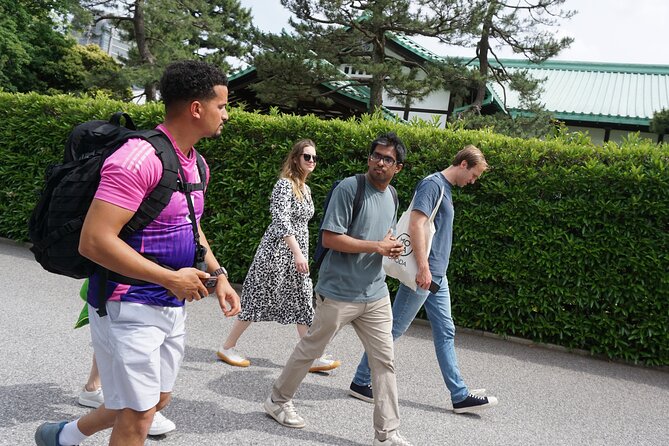
The pace appears suited to questions and photographs rather than a forced march. Several guides have been praised for stopping to explain details and for helping with group photos. That matters in a place where a quick glance at a wall tells you very little.
A few more Tokyo tours and experiences worth a look


Meeting at Wadakura Fountain Park
The tour begins at Starbucks Coffee in Wadakura Fountain Park, at 3-1 Kōkyogaien in Chiyoda City. This is a practical meeting point near public transportation and close to the palace grounds.
Give yourself time to find the correct Starbucks and arrive early enough to spot the guide. The tour ends back at the same meeting point, which makes planning the rest of your day easier. You are not left at a different gate with a long walk back to the station.
Because the tour is outdoors, wear shoes you can walk in comfortably. There is no dress code, and tattoos are welcome. In hot weather, bring water and sun protection. In colder months, the gardens can feel exposed, while rain can make the experience less pleasant even though some people have still enjoyed the walk in wet conditions.
Passing through Ōtemon Gate
The first major sight is Ōtemon Gate, the grand entrance to the East Gardens. It gives the tour an immediate sense of scale. This was not simply a decorative entrance. It formed part of a fortified castle complex, and the route toward the inner grounds was designed with security in mind.
This is where the title’s Tokyo Castle and shogun references begin to make sense. The Imperial Palace occupies the former Edo Castle site, linking today’s ceremonial center of Japan with the military government that ruled from Edo, the old name for Tokyo.
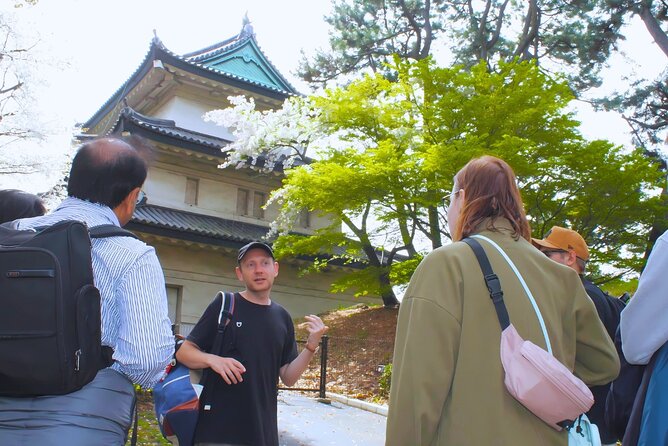
Your guide explains the gate, the castle approach, and the defensive logic of the grounds. One particularly useful feature is the attention to castle defenses. You may never expect to be under siege, but the details help you understand why walls, gates, bends in the route, and guard positions were arranged as they were.
Do not expect a preserved castle building beyond the gate. The value here comes from reading the site. A guide can point out where a structure once stood and explain how the area worked as part of a much larger fortress.
Edo Castle ruins and the missing palace
The East Gardens include the remains of Edo Castle, including stone foundations and the base of the former castle tower. This is the point where expectations matter most.
The castle and palace buildings were destroyed over time, including a major fire in the 1600s. The original structures were not fully rebuilt, so the site does not offer the sort of complete wooden castle interior you might see elsewhere in Japan. What remains are stone platforms, walls, garden areas, and smaller historic structures.
I would not book this tour expecting to walk through a palace hall or climb a restored castle keep. You will not. The Inner Palace, where the Emperor and Imperial family have access, is not open to the public.
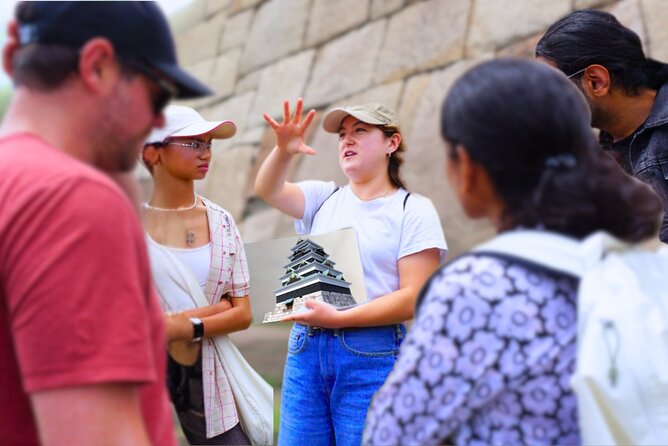
Still, the ruins can be rewarding when the guide explains what is missing. Maps and images have been used during some tours to help visitors picture the original layout. That extra visual aid is important because the broad stone base alone may not communicate the size or importance of the former castle.
This is also why the tour may suit a second visit to Tokyo especially well. On a first trip, you may prefer places with more visible architecture and a stronger immediate wow factor. On a later visit, the palace grounds offer a calmer way to connect the city you see today with the political center of old Japan.
Guardhouse remains and samurai-era stories
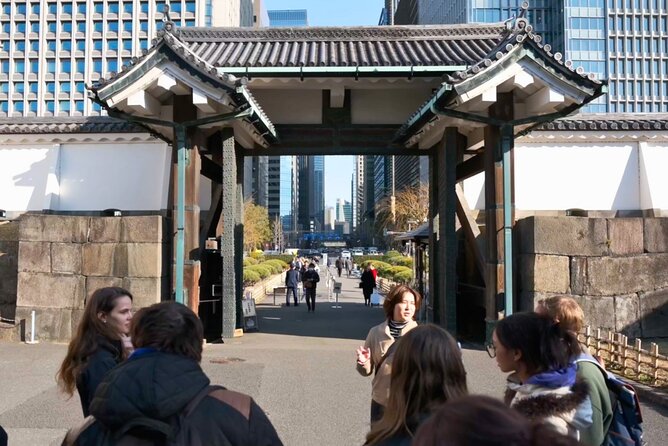
The route includes guardhouse ruins and other traces of the old castle system. These smaller remains are easy to pass without noticing, but they help explain daily security inside the castle grounds.
Your guide connects the physical site with the samurai era, the shoguns, and the shift toward modern Tokyo. The strongest explanations appear to be the ones that connect several periods instead of treating the grounds as an isolated museum.
Guides have included Mika, Natsumi, Lakki, and Nicola, among others. Their approach may differ, but the tour is designed around spoken history rather than a long printed guide. Some guides have also shared suggestions for local restaurants and shrines, which can be handy if you are still planning your Tokyo days.
English ability is an important part of the experience. Most available feedback describes the guides as easy to understand and able to answer questions. One less positive experience involved unclear speech and limited historical explanation, so guide quality can vary. The high overall rating of 4.9 from 211 ratings is encouraging, but it does not remove that small risk.
Other walking tours we've reviewed in Tokyo






Ninomaru Garden and a quieter side of Tokyo
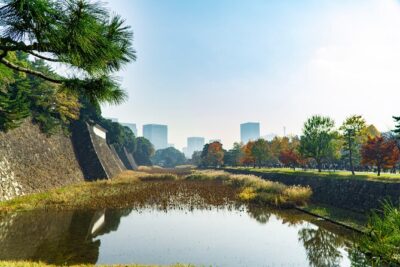
Ninomaru Garden provides a welcome change after the castle remains. The grounds are carefully maintained, with ponds, plantings, and koi. Depending on the season, you may find cherry blossoms or lush green foliage, while winter brings a quieter, more restrained appearance.
This is one of the tour’s strongest contrasts. Tokyo is famous for speed, crowds, signs, and constant movement. Inside the East Gardens, you get a calmer walk without leaving the center of the city. The garden is not only attractive. It also shows how the castle grounds combined defense, residence, status, and carefully planned nature.
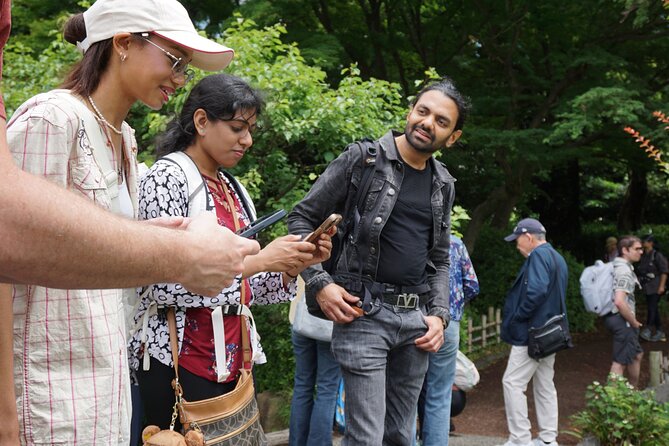
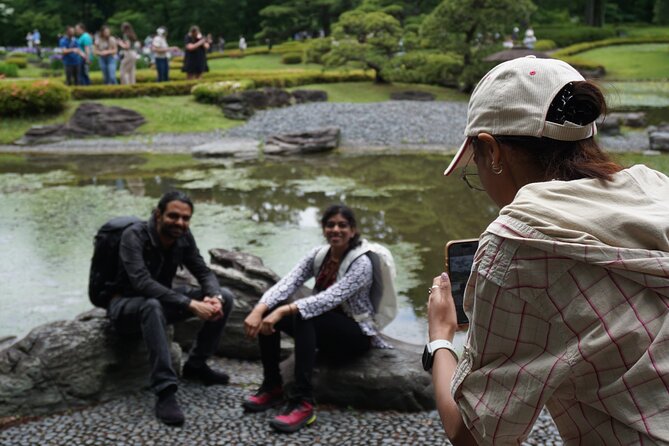
Your guide points out photo locations, and the tour description specifically encourages you to ask for help finding them. Guides have also taken photographs for members of the group, a small service that is useful when you want a picture of everyone together.
Allow time to stop and look. The garden is not a place to rush through while listening to a long lecture. The best rhythm is a short explanation, a little walking, and time for photographs or questions.
What the two-hour schedule really gives you
Two hours is long enough for a clear introduction to the East Gardens and Edo Castle site. It is short enough to fit before lunch or alongside another Tokyo activity.
You get a guided route through Ōtemon Gate, the guardhouse remains, former castle foundations, and Ninomaru Garden. You also get historical context about the Edo period, samurai rule, the shoguns, the Emperor, and modern Tokyo.
You do not get an exhaustive palace tour. The Inner Palace is not included, and the East Gardens are only one part of the wider Imperial Palace area. Think of this as a focused orientation walk, not a full-day study of the Imperial household or Japanese castle design.
The pace is described as relaxed, with room for pictures and questions. That makes it a good fit for families. One guide held the attention of children aged 11, 13, and 15 by using historical references and an engaging style. Older children who enjoy stories about samurai and castles should have plenty to take from it.
Price and value at $31.84

At $31.84 per person, this is not the cheapest way to see a garden, especially since admission to the grounds is free. You are paying for the guide, route planning, historical interpretation, and the chance to ask questions.
That value depends heavily on your expectations. If you only want to stroll among trees and ponds, you can visit the grounds without paying for a tour. If you want to understand the stone walls, castle base, political history, and garden design, the guide adds the main value.
I consider the price fair for a two-hour small-group walk, particularly in a city where a good guide can save you time and help you avoid missing the important details. It is less compelling if you are already well read on Edo history or if you hoped to enter the palace building.
The small group helps. A maximum of 10 is given in the additional information, while the main tour details list 15. That discrepancy is worth checking before booking. Either size is more personal than a large coach tour, but a group of 10 should make questions and photographs easier.
Weather, walking comfort, and timing
The tour requires good weather. If poor conditions force a cancellation, you are offered another date or a full refund. You can also cancel for a full refund up to 24 hours before the start time. Inside 24 hours, the payment is not refunded, and changes are not accepted.
The weather clause matters because this is entirely an outdoor activity. The gardens can be pleasant in winter and beautiful during cherry blossom season, but heat, cold, and rain will shape the experience. In summer, bring water and prepare for sun. On a rainy day, an umbrella and suitable shoes will make the walk easier.
Most people can participate, but you should be comfortable walking outdoors for about two hours. The route is not presented as a strenuous hike, yet the palace grounds are large, and the surface may not feel easy for everyone in poor weather.
Who should book this Imperial Palace walk?
I would recommend it to you if you want historical context, prefer a guided introduction, or find castle ruins more interesting once someone explains their purpose. It is also a good choice for families with older children, first-time visitors who want a simple route, and repeat visitors looking for a quieter Tokyo morning.
It suits photographers who enjoy gardens, stonework, gates, koi, and seasonal scenery. The guide’s help with photo spots is a useful bonus, especially when you want to include the whole group in a picture.
I would be cautious if your main goal is to enter the Imperial Palace. You cannot do that here. I would also think twice if you need a fully preserved castle, ornate rooms, or a long visit with many indoor exhibits.
The tour is strongest when you treat the grounds as an open-air history lesson. The stones and gardens are the evidence. The guide supplies the explanation that connects them.
Should you book it?
Book this tour if you want to understand what you are seeing at the Imperial Palace East Gardens rather than simply walk past it. The price buys a route, stories, photo help, and a chance to ask questions in a small group.
Skip it if palace interiors are your priority, since the Inner Palace is closed to the public and the former castle was not fully rebuilt. For a first Tokyo visit packed with limited time, you may prefer more visually complete sights. For a second visit, a family outing, or a history-minded morning, this is a pleasant and useful choice.
FAQ
How long does the Tokyo Imperial Palace walking tour last?
The tour lasts approximately two hours.
Where does the tour begin?
It begins at Starbucks Coffee in Wadakura Fountain Park, 3-1 Kōkyogaien, Chiyoda City, Tokyo 100-0002, Japan.
Where does the tour end?
The activity ends back at the meeting point.
Can I enter the Imperial Palace itself?
No. The Inner Palace is not open to the public. The tour focuses on the East Gardens, the former Edo Castle site, and related remains.
What places are included?
The route includes Ōtemon Gate, guardhouse ruins, Edo Castle ruins, and Ninomaru Garden.
How many people are in the group?
The tour information gives two different limits: a maximum of 10 people in the additional information and a limit of 15 in the main description. Check the booking details for your selected departure.
Is admission included?
The guided walk includes admission to the relevant Imperial Palace grounds, and no separate admission ticket is listed.
Is there a dress code?
No. The tour has no dress code, and tattoos are welcome.
What happens if the weather is poor?
The activity requires good weather. If it is canceled because of poor conditions, you can choose another date or receive a full refund. You may cancel for a full refund up to 24 hours before the start time.
More Walking Tours in Tokyo
More Imperial Palace & Shogun Tours in Tokyo



More tours in Tokyo we've reviewed












Imperial Palace & Shogun Tours, compared.
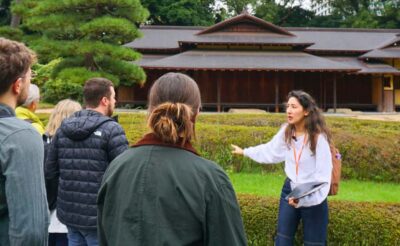 ★ 4.9Tokyo: Imperial Palace Japanese History Walking TourFrom $32
 ★ 4.9Tokyo: Imperial Palace and Shogun Walking TourFrom $162 hours
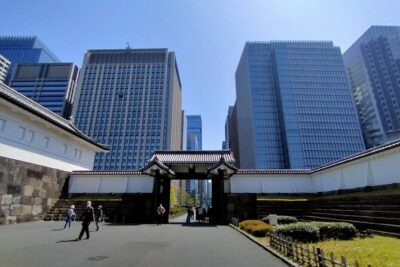 ★ 5.0Imperial Palace East Garden and Edo Castle Walking Tour in TokyoFrom $25
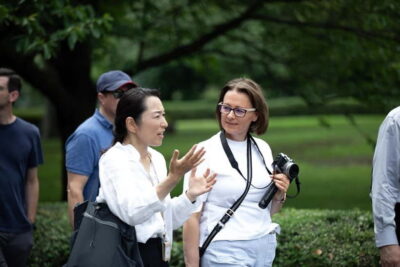 ★ 4.8Tokyo: Imperial Palace East Gardens Walking TourFrom $192h 30m
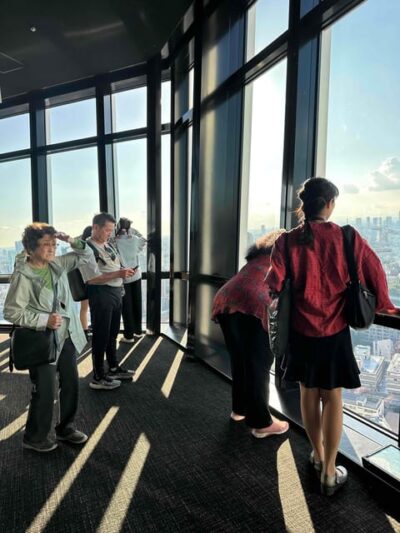 ★ 4.5Tokyo: Imperial Palace, Sensō-ji Temple, & Tokyo Tower TourFrom $404 hours
 ★ 4.7Tokyo: Edo Castle & East Garden of the Imperial Palace TourFrom $422 hours


![[1 Group Only] Tokyo Shinjuku Food Tour for Family - Starting at Shinjuku 3 Chome with okonomiyaki](https://tokyoezine.com/wp-content/uploads/2026/08/1-group-only-tokyo-shinjuku-food-tour-for-family.jpg)