Reviewed · CRAFT WORKSHOPS
Tokyo: Calligraphy on Kanji Fan & Scroll with Drink
Japanese calligraphy becomes much more personal at Shodo Cafe 7557. Instead of copying a stock phrase, you can work with your own name or a favorite word, then place it on a traditional paper fan and hanging scroll. The class also explains why each brush stroke matters, so you leave with more than a souvenir.
In This Article
- Key points to know before booking
- Why this Roppongi calligraphy class feels personal
- Arriving at Shodo Cafe 7557 from Roppongi Station
- The opening lesson: brush, ink, and the logic of each stroke
- Choosing your kanji name or favorite word
- Making the uchiwa fan and kakejiku scroll
- The hanko stamp and the bundle of souvenirs
- Matcha, coffee, soda, or beer during the class
- What the teaching is like for children and adults
- Is $53 a good value in central Tokyo?
- Who should book this Roppongi activity?
- Should you book the Shodo Cafe 7557 class?
- FAQ
- Where is Shodo Cafe 7557 located?
- How do I get to the studio from Roppongi Station?
- How long does the calligraphy activity last?
- What drinks are included?
- Is English instruction available?
- What do I make during the workshop?
- What should I provide when booking?
- Is cancellation allowed?
I like the calm pace and the patient teaching, especially for first-timers who worry that their handwriting is hopeless. I also like the value: for $53, you receive the lesson, materials, a drink, your handmade pieces, a hiragana hanko stamp, and several smaller gifts.
The main consideration is timing. The advertised session lasts 80 minutes, but the actual activity can run from 60 minutes to two hours. That flexibility is useful, though you should avoid booking it immediately before a hard-to-miss train, meal, or show.
Key points to know before booking
- Three minutes from Roppongi Station: Use Toei Oedo Line Exit 7 and look for the large crane sign near the National Art Center.
- Make useful personal souvenirs: Your work can include a kakejiku hanging scroll, uchiwa fan, and a hiragana hanko stamp with your name.
- English guidance for complete beginners: Instructors explain brush order, basic strokes, and the meaning of your selected kanji.
- A drink is part of the class: Choose matcha latte, green tea, coffee, soda, or beer.
- Extra gifts add real value: The package includes a kanji tote bag, keychain, coaster, and pouch.
- Plan for a flexible end time: The session is listed at 80 minutes but may last between one and two hours.
Why this Roppongi calligraphy class feels personal
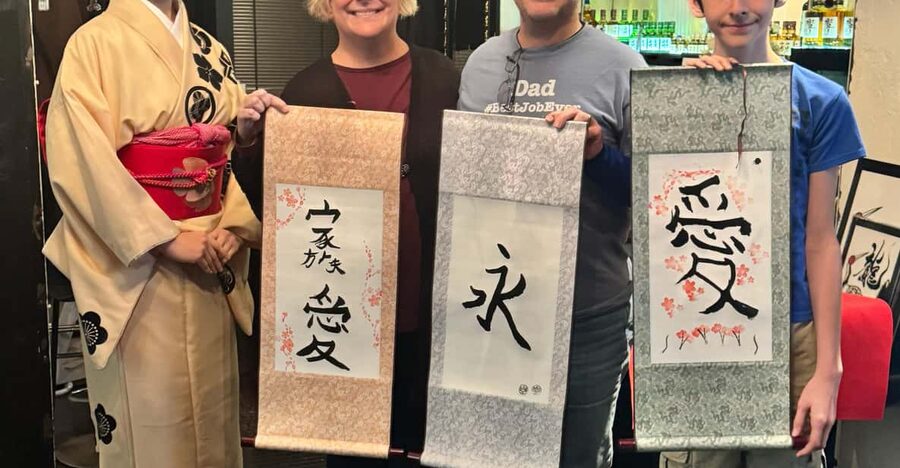
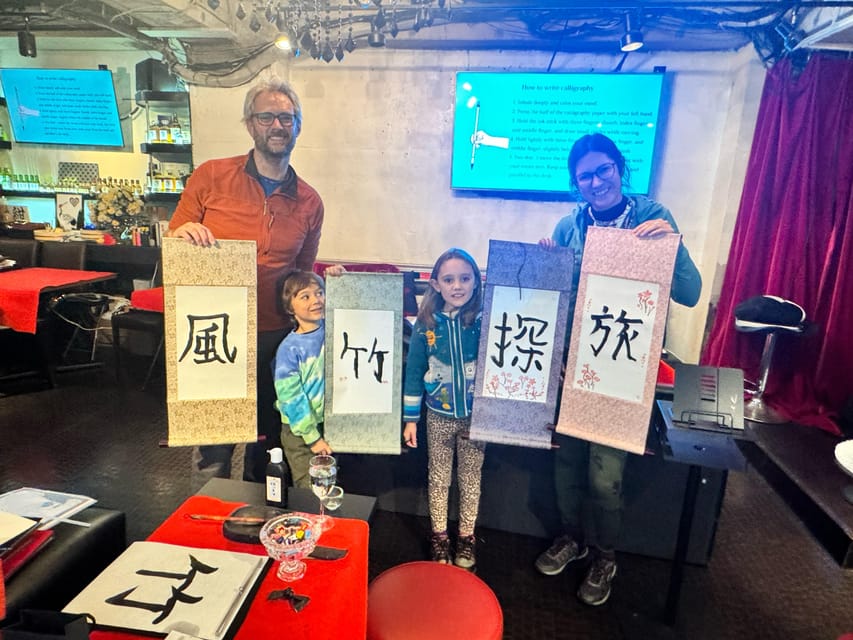
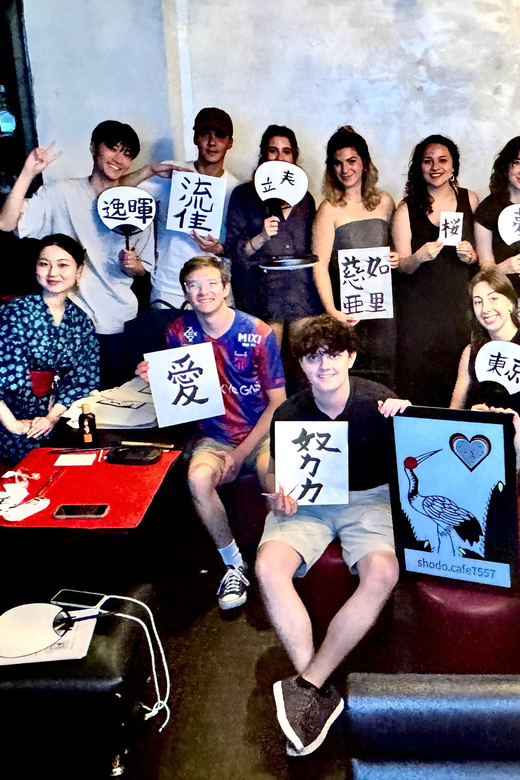
Many cultural activities in Tokyo give you a quick demonstration and send you home with a mass-produced keepsake. This one asks you to make the central souvenirs yourself. That small change matters. Your brushwork will not be perfect, but the uneven edges and slight variations are part of the memory.
The class begins with the basics of shodō, the Japanese art of calligraphy. You learn how the brush is held, how much ink to use, and how pressure changes the line. The teachers also explain the meaning behind the characters, which helps prevent the activity from becoming a purely decorative craft.
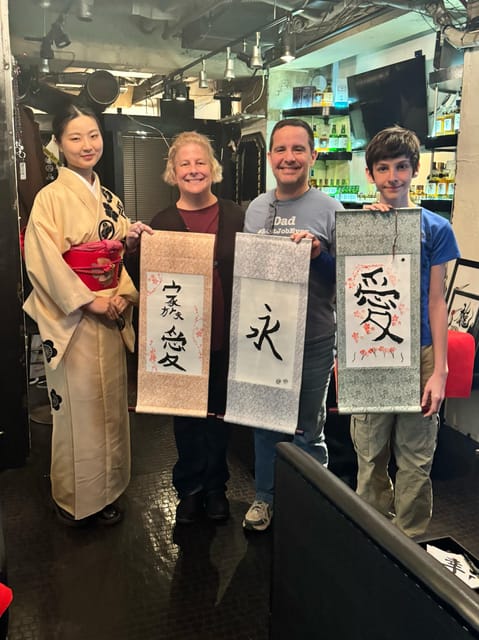
You can write a favorite kanji character or have your name translated. If you provide every participant’s name in English during booking, the staff can prepare a special animated video showing the names in kanji and their meanings. This may be shown during the class or sent afterward.
That name preparation is a thoughtful touch, but it also means you should submit the information carefully. If you have a favorite word in mind, share it ahead of time if possible. One participant found it useful to tell the staff when they wanted a different word instead of their name.
A few more Tokyo tours and experiences worth a look

Arriving at Shodo Cafe 7557 from Roppongi Station
The studio is at 7-9-3 Roppongi, Minato-ku, on the second floor of the Crest Roppongi Building. It is close to Roppongi Station and the National Art Center Tokyo, but the entrance is in an ordinary city building rather than a grand cultural venue.
For the simplest route, take the Toei Oedo Line to Roppongi Station and use Exit 7. Cross toward Family Mart, turn right, and walk toward the National Art Center along Bijutsukan Dori. Watch for a large crane sign on the left, then enter the Crest Roppongi Building and go to the second floor.
The directions are specific enough to save time, but I would still open the map before leaving the station. You can search for Shodocafe7557 in Google Maps, which is likely easier than relying on the building name alone. A taxi driver can be shown the studio name and the Crest Roppongi Building address near the National Art Center Tokyo.
This location works well in a day plan. You could visit the National Art Center before or after the class, though you should allow extra time if you are unfamiliar with Roppongi’s large roads and station exits.
The opening lesson: brush, ink, and the logic of each stroke
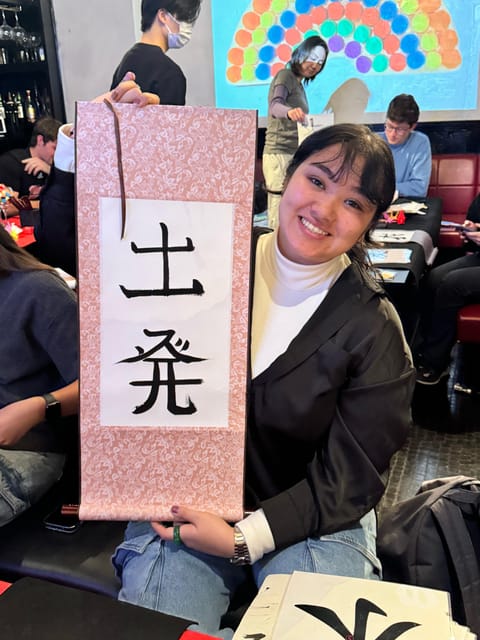
Once seated, you begin with practice rather than being pushed straight toward the final artwork. The instructors introduce the basic brush strokes and show the proper order for writing characters.
That order is important. Kanji calligraphy is not simply drawing an attractive symbol. The direction, sequence, pressure, and balance of the strokes all affect the result. Even if you cannot read Japanese, this explanation gives the activity a clear purpose.
The early practice sheets are where the class earns its reputation for patience. New brush users often need time to control the ink and keep a line steady. The teachers, including Kana and Kanako in several sessions, are described as calm, encouraging, and willing to give repeated guidance.
You should expect to make several attempts. That is not wasted time. The practice lets you find a brush pressure that feels comfortable before you commit your work to a fan or scroll. One of the best features is the chance to keep trying until you feel ready, rather than receiving one quick attempt and moving on.
The tone is relaxed, not competitive. Children, adults, complete beginners, and people already interested in kanji can all take part. The activity is also wheelchair accessible, though the supplied information does not describe the exact room layout or restroom arrangements, so you may want to confirm those details if they matter for your visit.
Choosing your kanji name or favorite word
The most meaningful choice comes when you decide what to write. You can use your own translated name, select a favorite kanji, or ask for help choosing a character that fits your idea.
A name translated into Japanese may be represented in hiragana, while the artwork focuses on kanji characters. The staff can explain the meaning prepared for your name, and the animated name presentation gives the class a personal, playful moment.
If you already have a word in mind, communicate it when booking or in a follow-up message. The staff may prepare a name sheet and meaning in advance, so a little notice helps them tailor the session.
This is also the point where cultural care matters. A kanji character is not just a cool-looking mark. Its meaning, reading, and associations matter. The instructor’s explanation helps you choose something you will feel comfortable displaying at home.
You do not need to know Japanese. English instruction is provided, and the lesson focuses on understanding the basic form and meaning rather than memorizing vocabulary. That makes the activity a good fit for someone who wants a small introduction to Japanese writing without signing up for a language class.
Making the uchiwa fan and kakejiku scroll
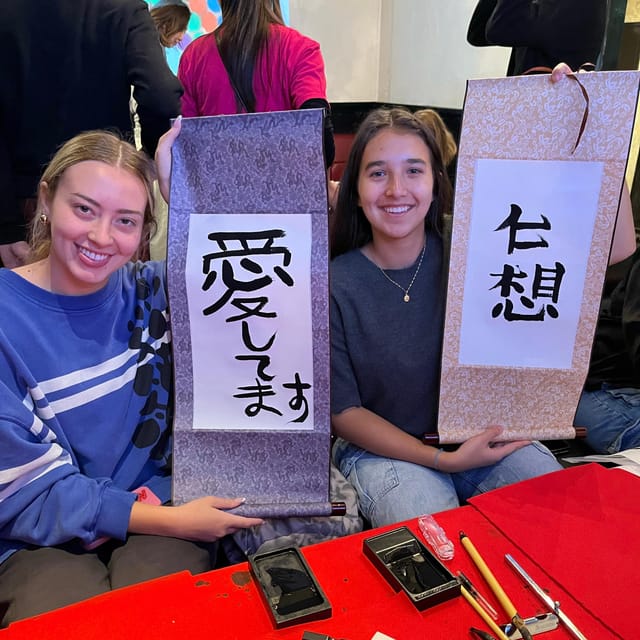
The class includes a calligraphy board and a choice involving a folding fan or hanging scroll. The activity description specifies both a kakejiku hanging scroll and an uchiwa traditional paper fan, so you should confirm the exact combination offered when you book if the distinction matters to you.
The fan is a particularly practical souvenir. It is light, easy to pack, and clearly connected to Japanese design. The hanging scroll feels more like a display piece, giving your calligraphy a place on a wall or in a home display.
Do not expect museum-grade calligraphy from a first lesson. That is not the point. The value comes from learning the stroke method, making several practice attempts, and then placing your own chosen character on a finished object.
The instructors guide you through the final writing rather than leaving you alone with a brush. This is where patience makes the largest difference. A small correction in pressure or brush angle can change a thick, shaky line into something far more balanced.
You may finish more than one piece during the session. The exact pace depends on how quickly you learn the strokes and how much individual guidance you need. Since the activity may last longer than the advertised 80 minutes, keep your schedule open.



The hanko stamp and the bundle of souvenirs
The personalized hanko is one of the most unusual inclusions. It is a Japanese-style name stamp prepared in hiragana, and you take it home as a small personal mark. It is not the same as writing your name with a brush, so it adds a second kind of connection to the culture.
The package also includes several kanji-themed items:
- A kanji tote bag
- A kanji keychain
- A kanji coaster
- A kanji pouch
- Your original fan and hanging scroll
- A personalized hiragana hanko stamp
The information lists the kanji keychain twice, but you should think of the package as including the listed assortment rather than counting on two keychains. The tote bag and pouch are useful for carrying small purchases during the rest of your Tokyo visit, while the coaster and keychain are easy to pack.
This large souvenir bundle is a major reason the $53 price feels fair. A simple calligraphy lesson might justify the fee on its own, but the combination of instruction, drink, materials, handmade art, stamp, and gifts gives you more tangible value.
Still, the best value is not the quantity of objects. If you only want a cheap souvenir, a shop in Asakusa or a museum store may be faster. Book this class if you want to understand how the item was made and remember the effort behind it.
Matcha, coffee, soda, or beer during the class
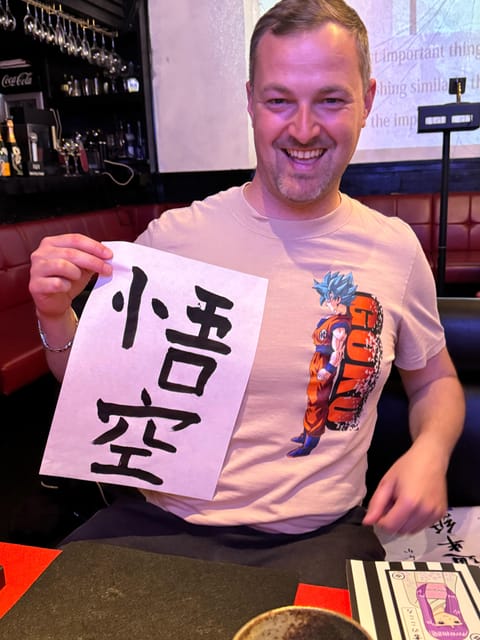
A matcha latte is included, but you can choose green tea, coffee, soda, or beer instead. That makes the class easier for people who do not enjoy matcha or who want something familiar during a quiet afternoon.
The drink helps shape the pace. This is not a rushed craft counter where you grab a brush and leave. You have time to sit, listen, practice, and talk with the instructors while your drink is served.
The matcha latte received specific praise, but it is best to choose based on your own taste. Additional food and drinks are not included, so anything beyond the included beverage costs extra. The supplied details do not describe a full meal service, so plan to eat elsewhere.
For me, the drink is a pleasant extra rather than the reason to book. The real appeal is the hands-on lesson and the personalized artwork. If your group has mixed interests, the drink choice makes the activity easier to enjoy together.
What the teaching is like for children and adults
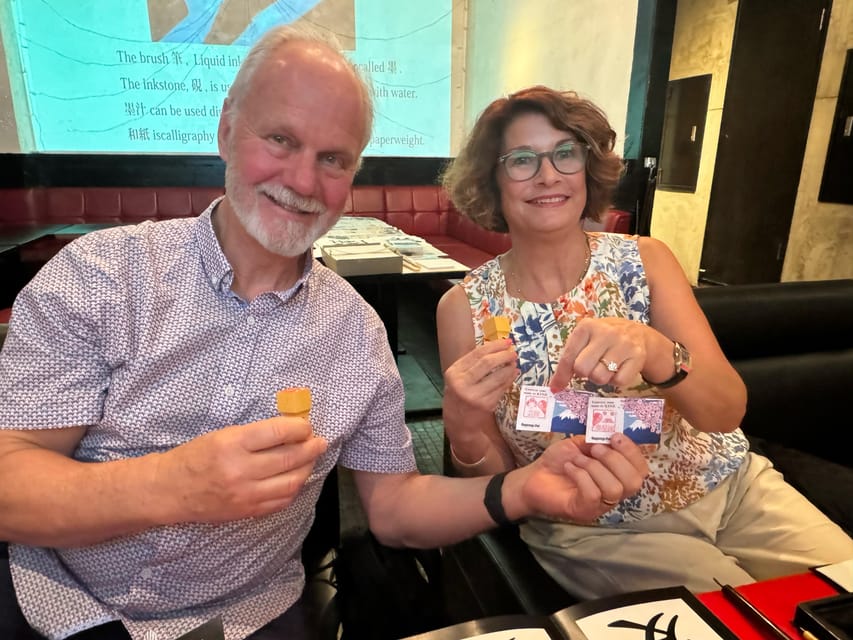
This workshop suits families, couples, solo visitors, and small groups with different skill levels. The instructors use encouragement rather than pressure, which matters when a child or adult is holding a calligraphy brush for the first time.
The activity is also suitable for people who already love Japanese writing. You can spend more time refining the form, asking about character meanings, or choosing a word beyond your own name.
The main physical limitation is the stated age restriction for people over 95. No other age exclusions are given. Since the session can take up to two hours, anyone who needs frequent breaks should ask the studio about the setup before booking.
English instruction is included. The teachers explain the history and philosophy of brushwork in accessible terms, then move into practical instruction. The class is not presented as a formal academic course, but it gives you enough context to understand why the strokes are written in a particular way.
The warm teaching style is a strong part of the experience. Kana is repeatedly singled out for patience and kindness, while Kanako and Tomi are also named as supportive instructors in different sessions. Staffing can change, but you can expect English-speaking guidance and close help with the brush.
Is $53 a good value in central Tokyo?
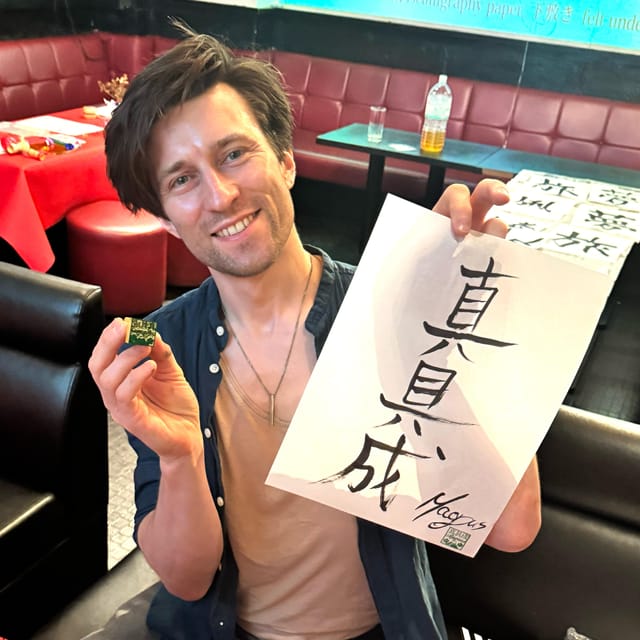
At $53 per person, this is not the cheapest creative activity in Tokyo. The price makes more sense when you count everything included: an 80-minute scheduled session, calligraphy instruction, tools, a drink, the fan or scroll, a personalized hanko, and several kanji gifts.
The fee also buys time with an instructor. You are not simply handed supplies and told to copy a character. The repeated practice and personal corrections are central to the class, and they are what turn a souvenir into something you made.
I would consider the price especially reasonable for a parent and child, a couple, or anyone who wants one substantial cultural activity during a Tokyo stay. It may feel less attractive if you prefer large museum visits, dislike crafts, or want a fast stop between other plans.
The reserve-now-pay-later option keeps your schedule flexible, and cancellation is free up to 24 hours before the activity for a full refund. Check the available start times before booking, since the duration can vary and the class may run longer than 80 minutes.
Who should book this Roppongi activity?
Book it if you want a calm break from Tokyo’s busy streets and a souvenir with your own name or chosen meaning on it. It is also a strong choice for first-time visitors who want a small, guided introduction to Japanese culture without committing to a full-day class.
Families should appreciate the hands-on format and patient instruction. Couples can create matching or contrasting words. Solo visitors get more room to ask questions and refine their brushwork.
I would be cautious about booking if your itinerary is packed tightly. The studio is easy to reach, but the flexible end time means this is not ideal before a timed attraction. It is also not the right pick if your priority is food, sightseeing, or a large performance.
Should you book the Shodo Cafe 7557 class?
Yes, if you value personal souvenirs and patient instruction. The class gives you a clear introduction to brush strokes, lets you write a name or meaningful kanji, and sends you home with your own fan or scroll, a hiragana hanko, and useful small gifts.
Book with an open block of time, provide participant names in English, and tell the staff if you have a favorite word. That preparation can make the animated name presentation and final artwork feel much more personal.
Skip it only if you want a very short activity or have no interest in making things by hand. For most visitors, the mix of quiet practice, cultural context, included drink, and generous take-home items makes this one of the better-value creative stops in Roppongi.
FAQ
Where is Shodo Cafe 7557 located?
The studio is on the second floor of the Crest Roppongi Building at 7-9-3 Roppongi, Minato-ku, Tokyo. It is near the National Art Center Tokyo.
How do I get to the studio from Roppongi Station?
Take the Toei Oedo Line to Roppongi Station and use Exit 7. Cross toward Family Mart, turn right, and walk toward the National Art Center along Bijutsukan Dori. Look for the large crane sign on the left, then enter the Crest Roppongi Building.
How long does the calligraphy activity last?
The scheduled duration is 80 minutes. The actual activity can last between 60 minutes and two hours, so allow extra time afterward.
What drinks are included?
You can choose a matcha latte, green tea, coffee, soda, or beer. Additional drinks and food are not included.
Is English instruction available?
Yes. The calligraphy lesson and guidance are provided in English.
What do I make during the workshop?
You learn basic brush strokes and write a favorite kanji character or translated name. The included artwork consists of a calligraphy board and folding fan, or a hanging scroll. The activity description also refers to creating both a kakejiku and an uchiwa, so confirm the exact format when booking.
What should I provide when booking?
Provide the names of all participants in English. The staff may use them to prepare a special animated video showing the names in kanji and explaining their meanings.
Is cancellation allowed?
You can cancel up to 24 hours in advance for a full refund. The reserve-now-pay-later option lets you book without paying immediately.
More Craft Workshops in Tokyo

More tours in Tokyo we've reviewed












Craft Workshops, compared.
 ★ 4.8Chopstick Making Workshop in GinzaFrom $251 hour
 ★ 5.0Kintsugi Experience: Art of Golden Joinery in TokyoFrom $59
Tokyo: Shinjuku Chopstick Making ClassFrom $121 hour
★ 5.0Kintsugi Experience: Art of Golden Joinery in TokyoFrom $59
Tokyo: Shinjuku Chopstick Making ClassFrom $121 hour
 ★ 5.0Private Craft Your Own Ring Handmade Experience in Asakusa, TokyoFrom $21
 ★ 5.0Authentic Pure Gold Kintsugi Workshop with Master Taku in TokyoFrom $142
 ★ 5.0Let’s experience calligraphy in YANAKA, Taito-ku, TOKYO !!From $75