Reviewed · TEMPLES & MEDITATION
Tokyo: Ibaraki Shrine, Seafood Market & Flower Sea Day Tour
Ibaraki gives you three very different Japanese experiences in one long day: a quiet coastal shrine, a seafood market, and Hitachi Seaside Park’s seasonal flower fields. The fresh seafood stop and the changing flowers are the strongest reasons to make the trip.
In This Article
- Key points to know before booking
- Why this Ibaraki day trip is appealing
- The Tokyo meeting point needs careful attention
- Misaki Jingu Shrine beside the open sea
- Nakaminato Fish Market turns lunch into an activity
- Hitachi Seaside Park and its changing flowers
- The four-hour bus ride is the tradeoff
- What the guide service really includes
- Is $86 a fair price for the day?
- Who should book this Ibaraki excursion?
- Should you book it?
- FAQ
- How long does the Tokyo to Ibaraki tour last?
- What places are included?
- Is food included in the tour price?
- How much is admission to Hitachi Seaside Park?
- What languages are available?
- What happens if the tour does not reach the minimum group size?
I like that the tour handles the long Tokyo to Ibaraki journey in an air-conditioned vehicle, with pickup and drop-off in the designated area. I also like the freedom to choose your own meal at Nakaminato, instead of being sent to one fixed restaurant.
The main caution is simple: this is closer to a transport-and-sightseeing day than a deeply guided cultural tour. The bus ride takes about four hours round trip, and the guide may give only limited explanations before leaving you to explore independently.
Key points to know before booking
- Three very different stops: Visit Misaki Jingu Shrine, Nakaminato Fish Market, and Hitachi Seaside Park in one packed day.
- About four hours on the road: Expect roughly two hours by bus each way from Tokyo.
- Seafood is extra: Choose and pay for sashimi, grilled fish, seafood donburi, or other market dishes yourself.
- Flower timing matters: Hitachi Seaside Park changes with the seasons, but bloom dates can move earlier or later.
- Guiding may be light: English, Japanese, and Chinese support is offered, but much of the sightseeing time is independent.
- Park admission is not included: The regular adult price is 450 JPY, with a seasonal price of 700 JPY during certain spring and autumn periods.
Why this Ibaraki day trip is appealing
Tokyo can keep you occupied for weeks, but it does not offer the same combination of open coast, working fish market, and broad flower fields. This tour gives you a quick look at a less urban side of the Kanto Region without asking you to arrange several train connections or rent a car.
The appeal is variety. At Misaki Jingu Shrine, you get a quiet start beside the sea. At Nakaminato Fish Market, the focus shifts to food and local commerce. At Hitachi Seaside Park, you spend the afternoon outdoors among seasonal plantings and wide walking areas.
That variety also explains the tour’s limits. You are not spending half a day at any one place. The shrine receives about an hour, the fish market about 90 minutes, and the park around two hours and 20 minutes. Those blocks are enough for a taste, but not enough for a slow, detailed visit.
I would book this for an easy day outside Tokyo, not for a specialist cultural tour. If your main goal is a guide who explains every site in depth, the format may feel thin. If your main goal is to see several attractive places without planning the transport, the arrangement makes more sense.
The Tokyo meeting point needs careful attention
The listed meeting point includes SMBC Bank Shinjuku Nishiguchi, and the exact starting point can vary with the option you book. The departure details, including meeting time, location, guide information, and vehicle details, are sent by email the night before.
This is not the sort of departure where I would arrive at the last moment. Plan to be there 10 minutes early, then look for a guide holding a yellow flag marked GOGODAY. One previous booking experience found the meeting location hard to locate and reported that the vehicle left at 8 a.m. as scheduled.
That warning matters in Tokyo. Large stations can turn a simple street address into a small expedition, especially if you are unfamiliar with Shinjuku. Read the final email closely, save the details before leaving your hotel, and allow extra time to find the correct exit and street corner.
Cell service was also a concern in one account of the meeting experience. I would not rely on calling the guide once you are lost inside the station. Get your bearings before departure day if possible.
The tour has a minimum of four participants. If that number is not reached, the operator may cancel or offer a different date by email. Keep an eye on your inbox before the trip.
Misaki Jingu Shrine beside the open sea
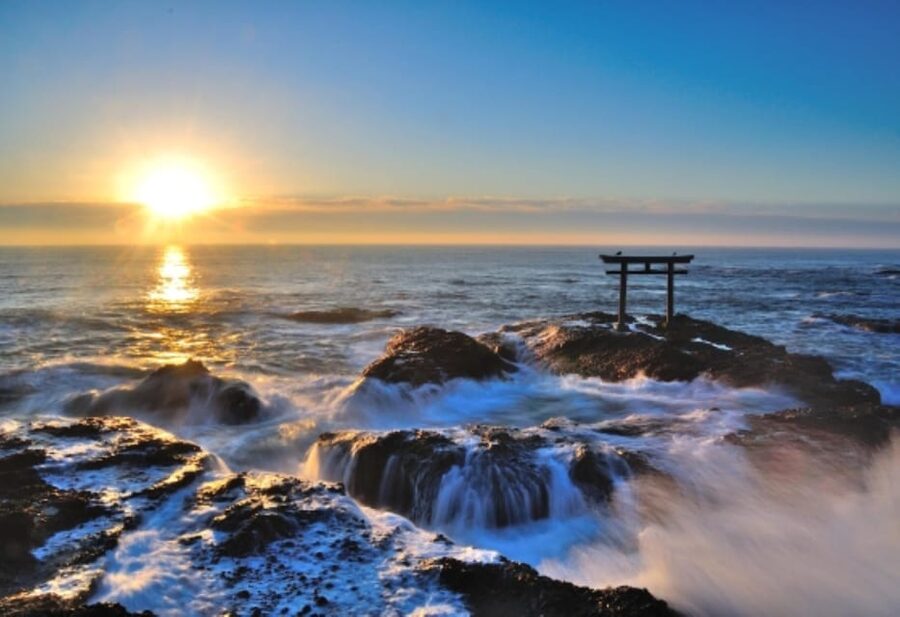
The first sightseeing stop is Misaki Jingu Shrine, a coastal religious site with the sea behind it. Its value is the contrast with Tokyo: instead of dense streets and tall buildings, you get a more peaceful setting, traditional shrine details, and the sound and sight of the coast.
You will have about an hour of free time here. That is enough to walk through the grounds, look at the craftsmanship, take photographs, and enjoy a quiet pause before the food stop. If you like Japanese shrines for their atmosphere rather than long lectures, this can be a pleasant beginning.
Do not arrive expecting a full guided lesson in Shinto or a large collection of monuments. The supplied schedule gives you time at the site but does not promise a detailed explanation. In practice, the guide may tell you when to return and leave you to explore.
It is also important to set your expectations about what is not included. One account expected a 124-meter-high Buddha at the sanctuary and felt disappointed when it was not part of the visit. The listed attraction is Misaki Jingu Shrine, so you should treat the shrine itself as the destination rather than assume that a separate giant Buddha statue is included.
For the best use of the hour, walk slowly at first, note the shrine’s coastal position, and save enough time to return to the vehicle. The day runs on a fixed schedule, and a late return at one stop can reduce time at the next.
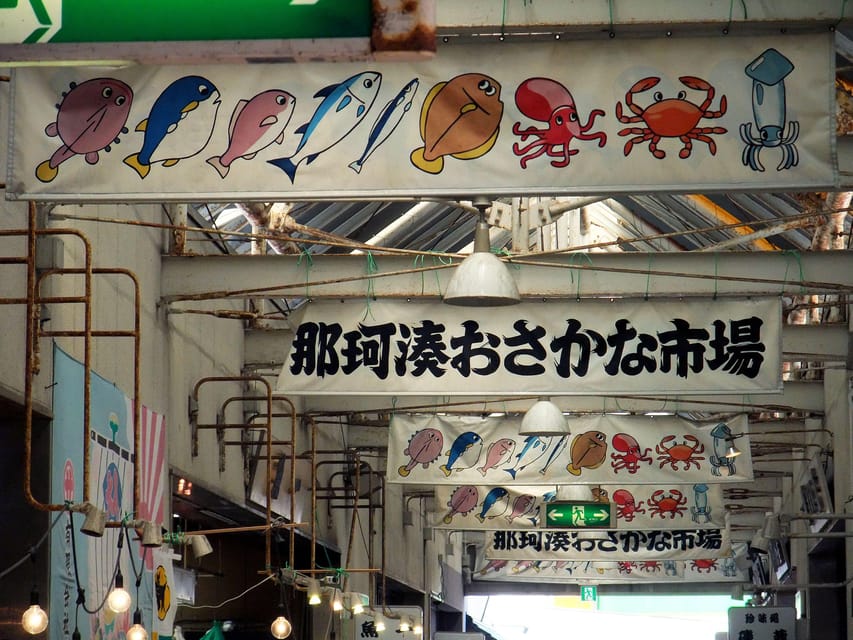
Nakaminato Fish Market turns lunch into an activity
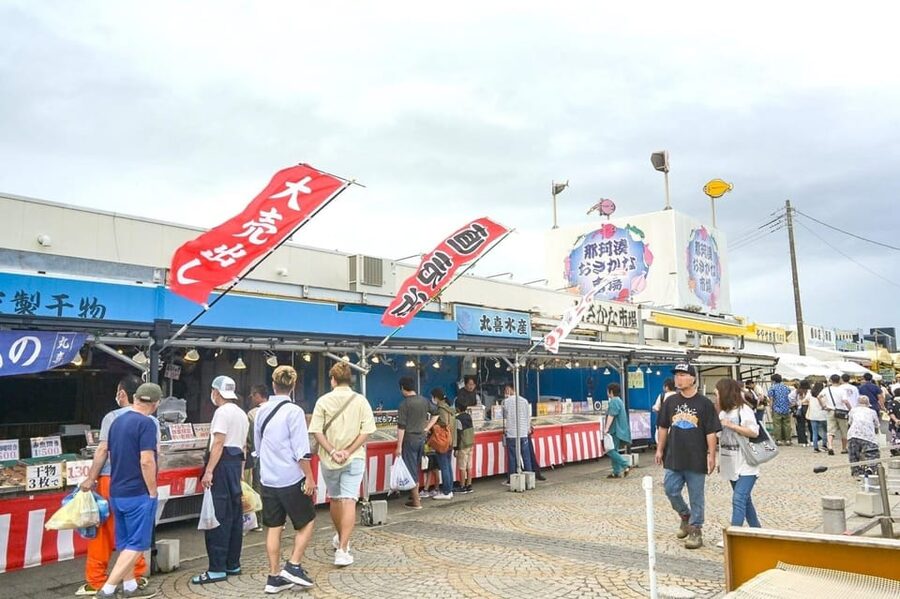
Nakaminato Fish Market is the most practical stop for food lovers. Instead of sitting down at a predetermined restaurant, you can browse the market and decide what appeals to you. Choices may include sashimi, grilled fish, and seafood donburi, all paid separately.
I like this arrangement because it gives you control over both price and appetite. You can keep the meal simple or spend more on a larger seafood selection. You can also look around before choosing, which is part of the fun in a market setting.
The free time here is about 90 minutes. That sounds generous, but it must cover browsing, ordering, eating, and getting back to the meeting point. If you are traveling with several people, agree on a return time before splitting up.
Food and drinks are not included in the $86 tour price. This is a key part of the value calculation. Your actual day cost will be the tour fare, park admission, and whatever you choose to eat at the market.
I would carry some flexibility in your food budget. The tour does not specify a set menu or meal allowance, so you are responsible for selecting and paying for your own dishes. The freedom is useful, but it also means the final price varies from person to person.
The market stop is also a good reason to choose this day trip over a simple garden excursion. It adds a direct connection to the coast and gives you something more substantial than sightseeing alone. Just remember that the guide may not conduct a food tour or explain every stall.
Hitachi Seaside Park and its changing flowers
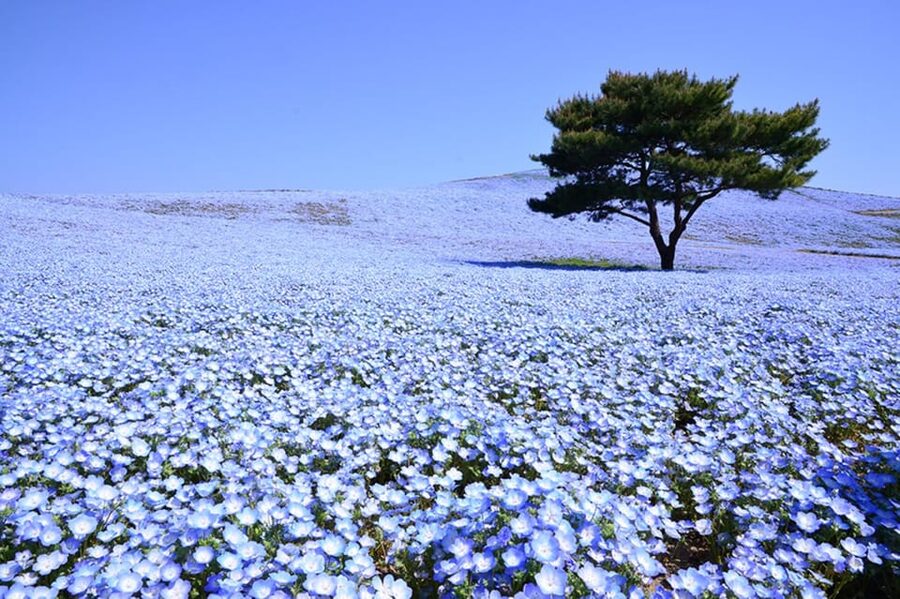
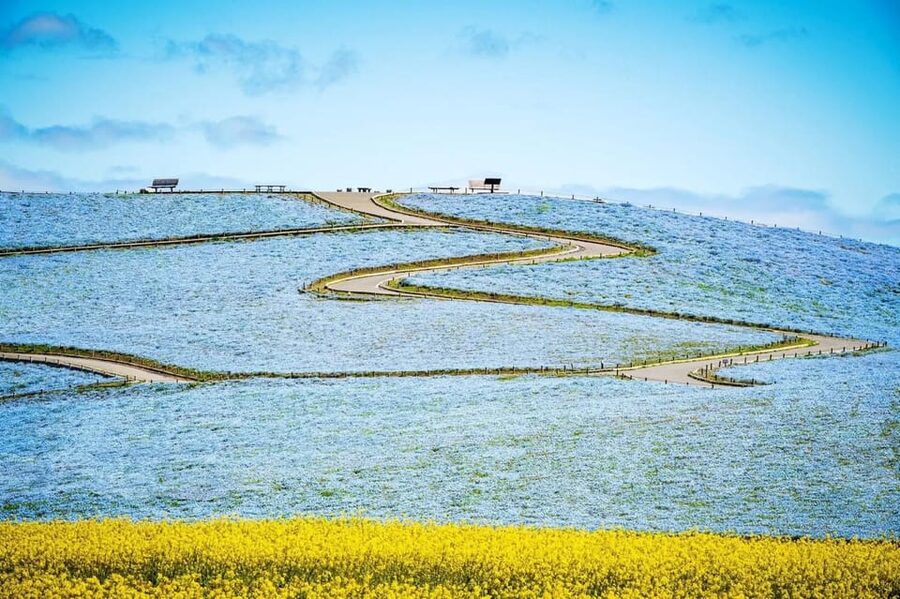
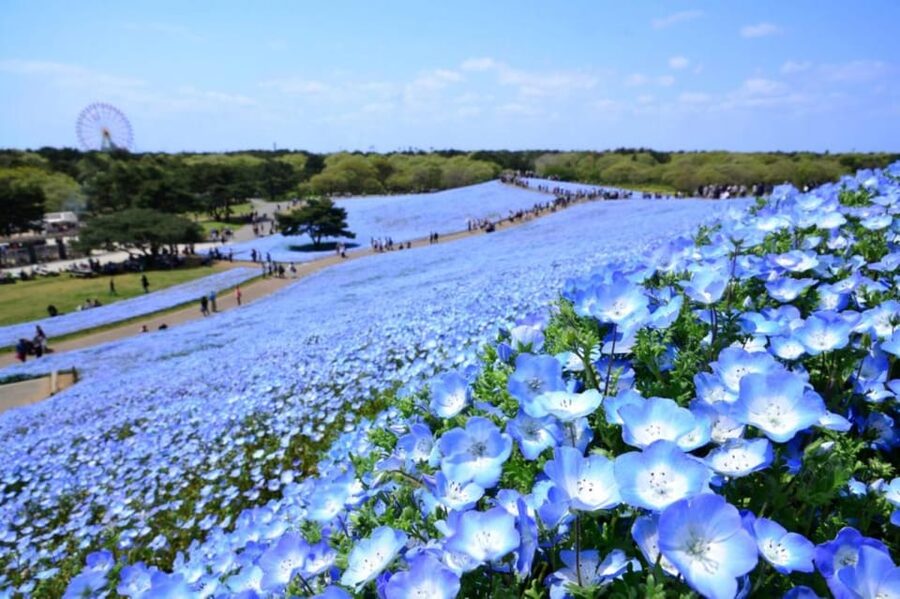
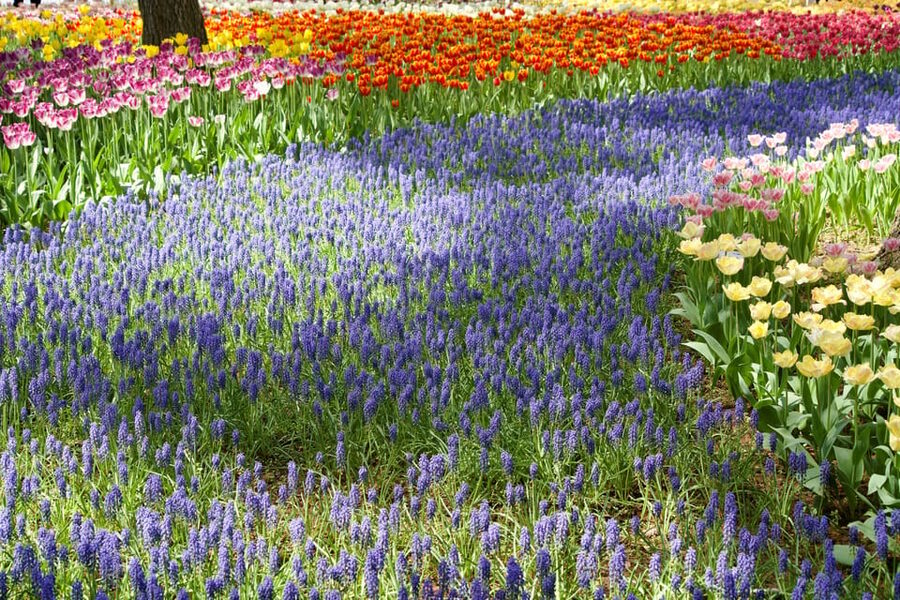
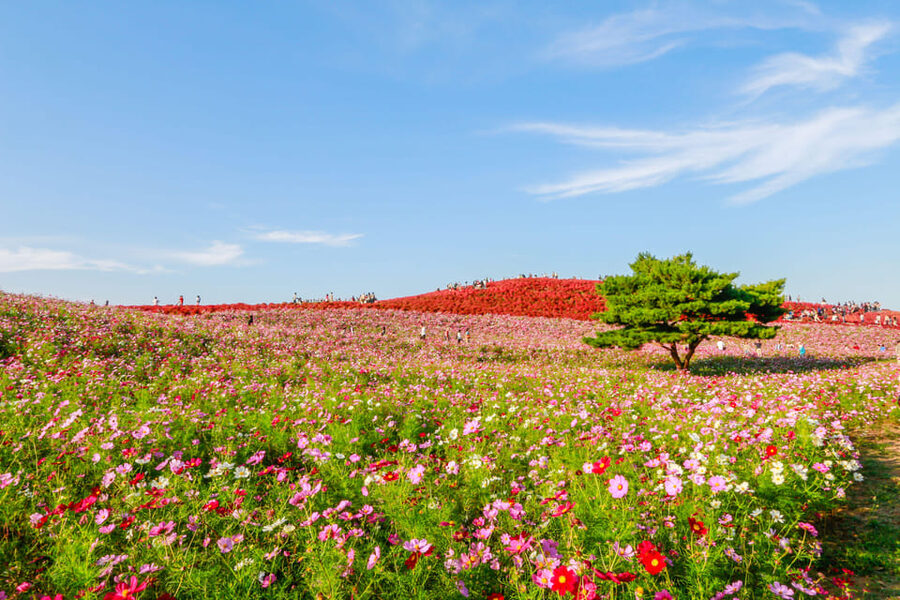
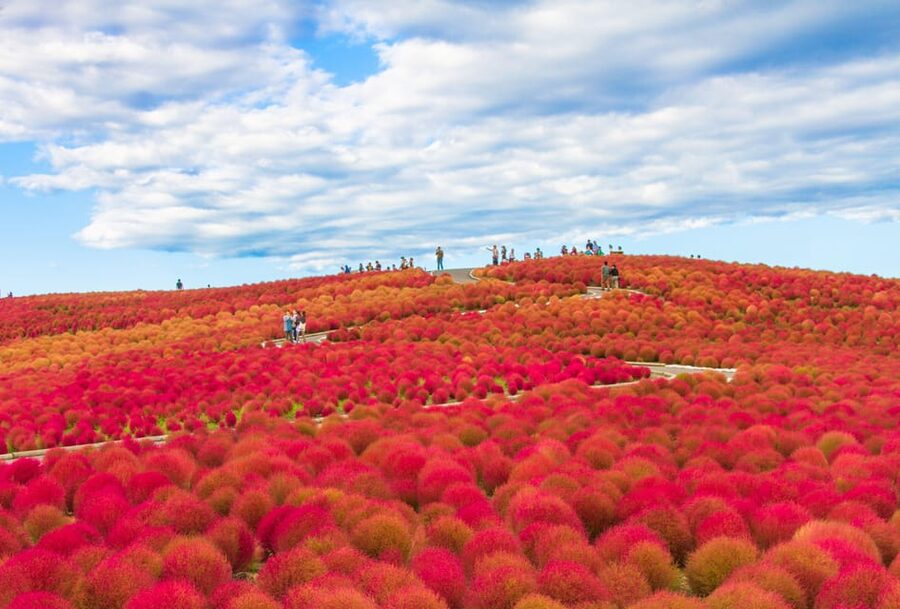
Hitachi Seaside Park is the visual focus of the afternoon. You have around two hours and 20 minutes to walk through the park and see the seasonal plantings.
The flowers change through the year:
- Spring: Rapeseed flowers bring broad yellow areas to the park.
- Summer: Sunflowers provide strong yellow color, while hydrangeas add blue and purple tones.
- Autumn: Cosmos flowers bloom among golden tones, and pink broomsedge creates a soft haze.
- Winter: Evergreen growth and plum blossoms provide interest during the quieter season.
These seasonal details are important because the same tour can feel very different depending on your date. Blooming conditions depend on the year’s weather and plant growth, so the flowers may appear earlier or later than expected. A promotional image cannot guarantee peak color on your exact visit.
Admission is separate. Adults aged 15 and over pay 450 JPY under the regular rate. During certain seasonal periods, the adult ticket rises to 700 JPY. The seasonal rate applies for roughly 20 days between April and May and about 10 days in mid-October, with the exact timing based on growing conditions.
Two hours and 20 minutes gives you a useful look at the park, but it is not unlimited. You will need to choose your walking route rather than expect to see every corner. The site is presented as a flower destination, yet one account found parts of it more like an amusement park than a pure garden. That is worth knowing if you want a quiet botanical visit with no extra activity around it.
I would think of Hitachi Seaside Park as a large public recreation area with major flower displays, not as a formal Japanese garden. That broader setting may suit families and mixed-interest groups. If you want only refined garden design, the park may feel less focused than expected.
The four-hour bus ride is the tradeoff
The journey from Tokyo takes about two hours each way. That is the price of reaching Ibaraki’s coast and Hitachi Seaside Park in a single day.
The benefit is convenience. You do not need to work out the route, change trains, find a local connection, or manage the return journey after a full day outdoors. An air-conditioned vehicle and designated pickup and drop-off keep the basic logistics simple.
The cost is energy. Four hours in transit is a large share of a 10-hour tour. If you have limited time in Japan, ask yourself how strongly you want these particular stops. You are giving up a substantial part of the day for the chance to see them.
Road and weather conditions can change the timing. The guide may adjust the schedule if conditions make the original plan difficult. That flexibility is sensible, but it means the advertised stop lengths should be treated as a plan rather than an absolute promise.
Bring water, a phone charger, and something to occupy you during the longer rides. The supplied information does not promise onboard commentary, Wi-Fi, or entertainment. I would also wear shoes suitable for walking at the shrine and park.
What the guide service really includes
The tour provides a professional driver-guide team, air-conditioned transport, and pickup and drop-off in the designated area. Live support is available in English, Japanese, and Chinese.
The wording suggests a driver-guide service more than a full lecture-led excursion. You should expect help with the route, timing, and meeting points, but you may spend much of each stop on your own. Accounts of the experience describe the guide mainly telling the group when to meet again, with little explanation of the places.
That is not automatically a flaw. Some people prefer freedom to choose their own food, walking route, and photo stops. Others book a day tour precisely to hear the history and local context without doing their own research.
I would bring a little background reading if you want more from Misaki Jingu Shrine or the flower park. The tour can get you there efficiently, but you may need to supply some of the interpretation yourself.
Luggage also needs planning. Vehicle space is limited, so you should notify the operator in advance if you have an infant or luggage. Each person is limited to one piece of luggage. For a normal day bag, this should be manageable, but a large suitcase could create problems.
Is $86 a fair price for the day?
At $86 per person, the tour is not simply an entrance ticket and a short transfer. It covers a 10-hour day, round-trip transport from Tokyo, a driver-guide team, air conditioning, and designated pickup and drop-off.
That is reasonable if you value convenience and want three distant stops in one day. Organizing the same route independently would require careful timing and several transport decisions. The tour removes that work.
The price is less attractive if you mainly want a guided cultural experience. Food, drinks, and Hitachi Seaside Park admission are extra, and the guiding may be limited. Add the 450 or 700 JPY park ticket and your market meal, then compare the total with what you want from the day.
The current rating is 2.8 from four reviews, which is a modest result rather than a strong endorsement. The praise centers on the pleasant weather, the beauty of the shrine and garden areas, and the chance to see these places. The main complaints concern the difficult meeting point, the long ride, and the lack of explanation.
I would call it fair value for transport and access, but weak value if you expect an expert-led tour. That distinction should guide your decision more than the headline price.
Who should book this Ibaraki excursion?
This tour suits you if you want:
- A simple way to leave Tokyo for a full day
- Coastal scenery and a traditional shrine
- Fresh seafood with freedom to choose your own meal
- Seasonal flower displays
- English, Japanese, or Chinese tour support
- A fixed vehicle schedule rather than independent route planning
It may not suit you if you want:
- A short trip with little time on the road
- A detailed explanation at every stop
- A quiet formal garden without amusement-park elements
- A fixed meal included in the price
- A guaranteed peak flower display on a particular date
Families and mixed-interest groups may appreciate the variety. One person can focus on seafood, another on photography, and another on the shrine or flowers. Solo visitors should be comfortable exploring independently and watching the return time.
Should you book it?
Book this tour if you see it as a convenient Ibaraki sampler. The shrine, market, and flower park offer three distinct reasons to go, and the transport makes a complicated day easier.
Skip it if a four-hour bus ride sounds tiring or if personal guiding is central to your enjoyment. Before booking, check the flower season, read the final meeting instructions carefully, and budget separately for lunch and park admission.
The best fit is a flexible visitor who wants to see more of the Kanto Region and does not mind that the guide service may be light. Go for the coast, seafood, and seasonal flowers. Do not book expecting a fully narrated cultural tour.
FAQ
How long does the Tokyo to Ibaraki tour last?
The experience lasts about 10 hours. The bus journey takes roughly two hours each way, with free time at the shrine, fish market, and Hitachi Seaside Park.
What places are included?
The tour visits Misaki Jingu Shrine, Nakaminato Fish Market, and Hitachi Seaside Park in Ibaraki Prefecture.
Is food included in the tour price?
No. Food and beverages are not included. You choose and pay for your own meal at Nakaminato Fish Market.
How much is admission to Hitachi Seaside Park?
Adult admission for people aged 15 and over is 450 JPY. A seasonal ticket of 700 JPY applies during certain spring and autumn periods.
What languages are available?
Live tour guide support is available in English, Japanese, and Chinese.
What happens if the tour does not reach the minimum group size?
The minimum number of participants is four. If fewer than four people book, the operator may contact you by email to cancel the tour or change the travel date.
Temples & Meditation, compared.
 ★ 4.7Tokyo: Meiji Shrine, Asakusa, Skytree Bus Tour and CruiseFrom $12210 hours
 ★ 4.8Tokyo: Asakusa Walking Tour with Sensoji Temple VisitFrom $222 hours
 ★ 4.5Tokyo: Kamakura & Enoshima Day Trip including Temple TicketsFrom $589 hours - 570 minutes
 ★ 4.5Tokyo: Nikko Toshogu Shrine and Kegon Waterfall TourFrom $8410h 30m
 ★ 4.5Tokyo Panoramic 1 Day: Meiji Shrine, Asakusa, Odaiba and SKYTREE®From $85
 ★ 5.0Asakusa Senso-ji Temple and Old Tokyo Walking TourFrom $20