Reviewed · SHINJUKU TOURS
The Dark Side of Tokyo – Night Walking Tour Shinjuku Kabukicho
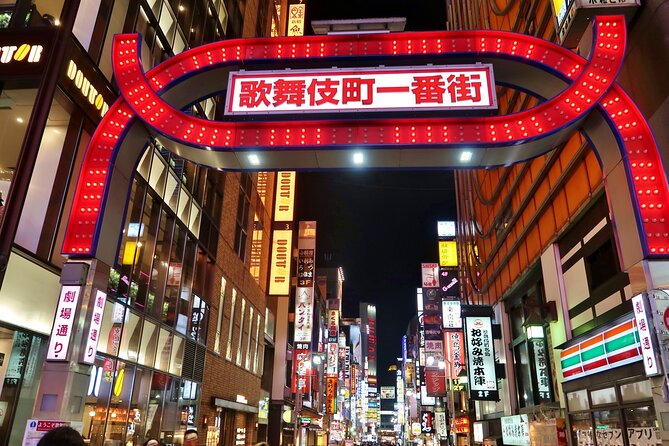
Tokyo’s dark side is less about danger than about the parts of Shinjuku most visitors would never understand from a daytime sightseeing bus. This two-hour walk enters Kabukicho, Omoide Yokocho, the narrow bar lanes, a Shinto shrine, and Tokyo’s LGBTQI district, often called Gay Town.
In This Article
- Key Points Before You Book
- Why Shinjuku’s Nightlife Needs a Guide
- Meeting at Shinjuku East Exit
- Omoide Yokocho: Tokyo’s Famous Drinking Alley
- Kabukicho and the Neon Heart of Shinjuku
- Godzilla Head and the After-Dark Show
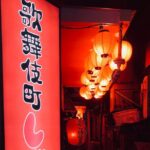
- The Narrow Bar District
- A Shinto Shrine Among the Night Streets
- Tokyo’s LGBTQI District, Often Called Gay Town
- What the Two Hours Feel Like
- Is $25 a Fair Price?
- Who Should Book This Walk?
- Cancellation and Practical Booking Notes
- Should You Book The Dark Side of Tokyo?
- FAQ
- How long does The Dark Side of Tokyo walking tour last?
- How much does the tour cost?
- What is included in the price?
- Where does the tour begin?
- Where does the tour finish?
- How large is the tour group?
- Can I cancel for a full refund?
I like the small maximum group of 12, since a guide can answer questions instead of delivering a speech to a crowd. I also like the practical sense of place: guides such as Polina, Gray, Danny, and Loc explain the district’s history, nightlife rules, adult businesses, food, hotels, and local customs.
The main drawback is that this is a walking introduction, not a dinner or bar-hopping evening. Food and drinks cost extra, the tour ends around Shinjuku 3 Chome rather than at the starting point, and rain can make it harder to keep the group together.
Key Points Before You Book
- Kabukicho without guesswork: Learn how the district works, including its nightlife and adult entertainment zones, with a guide leading the way.
- Omoide Yokocho and narrow bar lanes: See two of Shinjuku’s most atmospheric areas, though you will not receive dinner or drinks as part of the tour.
- A small-group format: The group can include up to 12 people, with smaller departures possible.
- Godzilla Head after dark: Stop to see the famous landmark and its show as part of the evening route.
- A broader view of Tokyo: The route includes a Shinto shrine and the city’s largest LGBTQI district, not just neon nightlife.
- Useful first-night orientation: The finish near Shinjuku 3 Chome gives you a practical starting point for exploring on your own afterward.
Why Shinjuku’s Nightlife Needs a Guide
Shinjuku can feel like several cities packed into one station district. You have giant signs, tiny drinking alleys, hotels, restaurants, shrines, adult businesses, and entertainment streets all within a short walk. The challenge is not simply finding the area. It is knowing what you are looking at.
That is where this tour earns its $25 price. You are paying for context and direction, not admission to a show or a meal. A guide helps you move through Kabukicho without wandering into places that do not suit you, and explains the legal and social lines that are hard to read when the signs are mostly in Japanese.
I especially like the tour’s straightforward treatment of the area’s adult industry. The guides explain how businesses operate around Japanese laws and how workers and establishments manage those rules. This gives you a more useful picture than the usual tourist version of Kabukicho, which reduces the district to neon, cocktails, and suggestive signs.
The subject matter is adult in tone, so this is not the best choice for anyone seeking a quiet cultural walk. It is also not designed as a moral lecture. The value comes from hearing how a real urban district functions, including its subcultures, business practices, and unwritten boundaries.
A few more Tokyo tours and experiences worth a look
Meeting at Shinjuku East Exit
The tour begins at the police box by Shinjuku Station East Exit, at 3-chōme-38-1 Shinjuku. This detail matters. A police box is a small neighborhood police station, not a telephone box, and that distinction has caused confusion for some people arriving at the meeting point.
Give yourself time to get out of Shinjuku Station. The station is large, and the East Exit area has plenty of signs, crowds, and competing visual noise. Your mobile ticket confirms the booking, but it does not replace a few extra minutes for finding the correct exit and police box.
The walk lasts about two hours. The group limit is 12, though some departures may be much smaller. One particularly small group had only four people, which shows why this can feel more like a guided conversation than a standard city tour.
Several guides receive praise for their delivery. Polina is described as clear, calm, and willing to explain the less familiar parts of Japanese culture. Gray is known for humor and an inclusive approach, while Danny is often singled out for keeping the group engaged and on schedule. Loc is praised for answering questions in good English and explaining the district with confidence.
Guide quality can vary on any scheduled walk, but this experience appears to place real weight on personality. That matters here. A dry lecture would make the subject feel clinical, while an overly theatrical guide could turn local life into a sideshow. The strongest guides seem to find the useful middle ground.
Omoide Yokocho: Tokyo’s Famous Drinking Alley
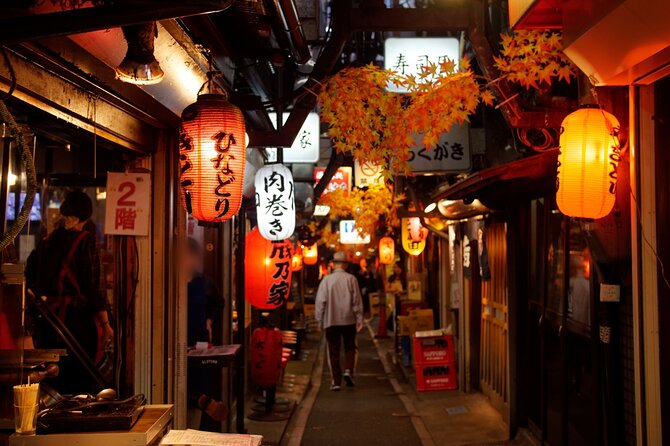
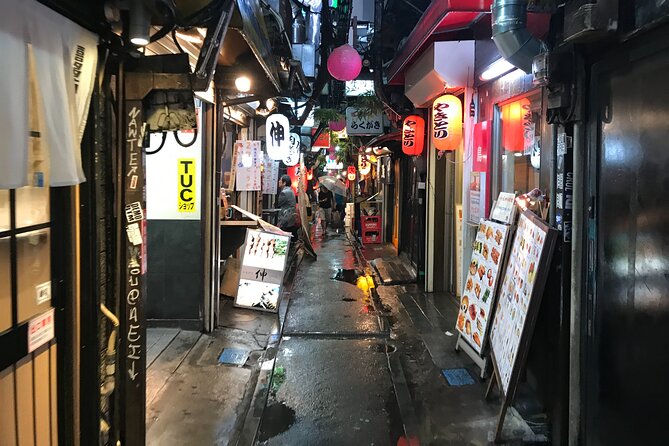
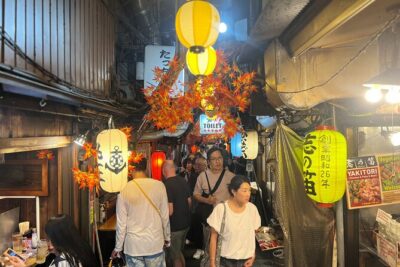
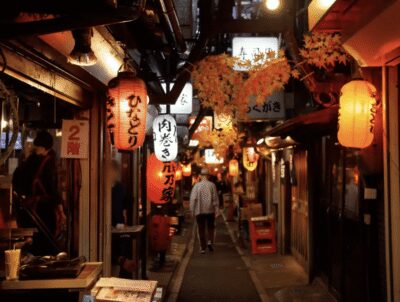
One of the first major areas is Omoide Yokocho, the famous drinking alley near Shinjuku. Its narrow lanes and compact food stalls offer a sharp contrast to the wide avenues and towering signs around the station.
This is the kind of place that rewards an explanation. On your own, you can see the small restaurants and atmospheric alleyways, but you may not know what role the district plays in Shinjuku’s nightlife or how it connects to the city’s food culture.
Do not expect dinner to be included. The tour specifically excludes food and drinks, so you should treat this stop as an introduction rather than a meal reservation. That arrangement keeps the walk moving and the price low, but it also means you will need to budget separately if you want to eat afterward.
Omoide Yokocho can feel tight, and the tour takes place after dark. Stay close to the guide, especially if the route is busy or rain reduces visibility. The walking format gives you a close look at the district, but it does require attention to the group.
Kabukicho and the Neon Heart of Shinjuku
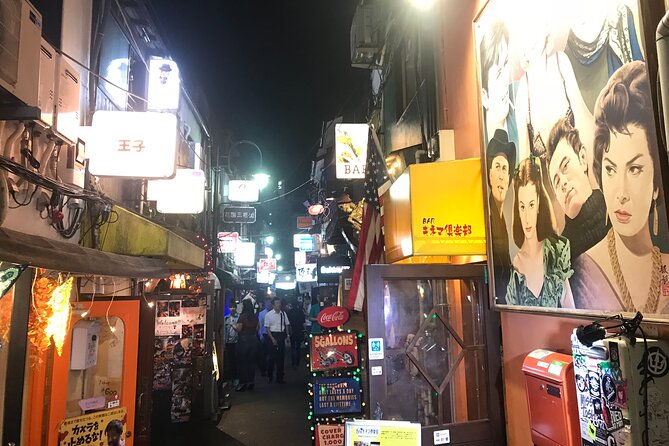
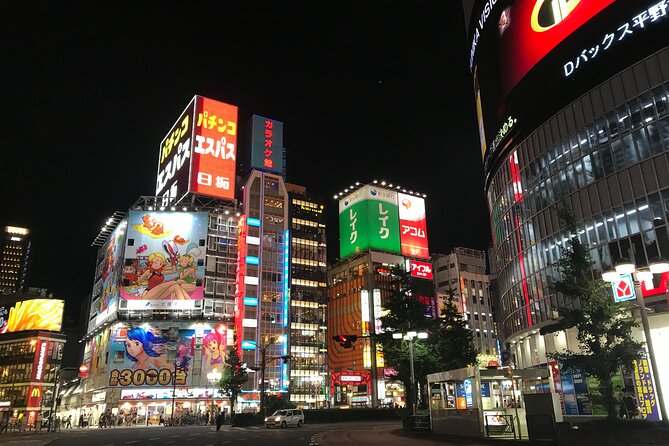
Kabukicho is the tour’s main subject. It is Tokyo’s biggest nightlife area, filled with entertainment venues, restaurants, hotels, bars, and signs that can be difficult to interpret from the street.
The guide’s role here is not merely to point at bright buildings. You learn about who operates in the area, how the nightlife economy works, and which parts of the district are aimed at different kinds of customers. The tour also covers local food, hotels, traditions, and the adult industry.
That information is especially useful if this is your first evening in Tokyo. A first visit can bring sensory overload, and a guide helps you build a mental map before you return independently. You can learn which streets interest you, which areas feel too intense, and how to avoid getting pulled into places you did not intend to visit.
The word dark can make this sound more dangerous than it is. The tour’s appeal is really its look at the city’s less openly discussed side. You are not promised secret access or scandalous entertainment. You are given a guided walk through a district where business, pleasure, tradition, and modern urban life overlap.
Godzilla Head and the After-Dark Show
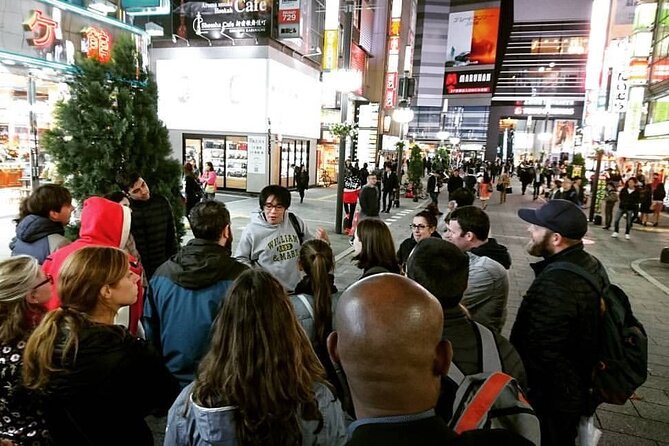
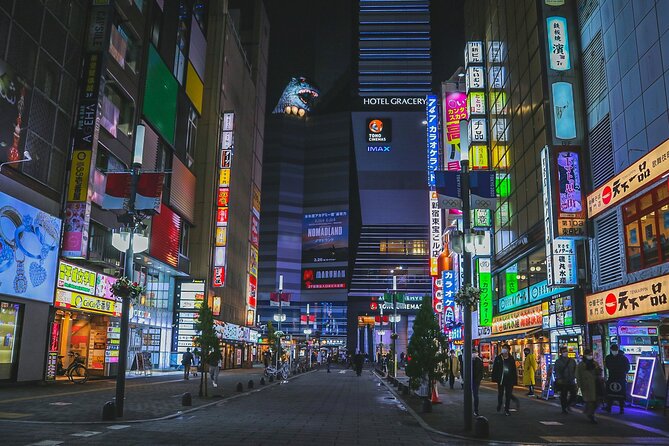
The route includes the famous Godzilla Head, a landmark perched above the Kabukicho area. You stop to see the head and its show, adding a playful pop-culture moment to an evening otherwise focused on social history and nightlife.
This is a good pacing choice. A two-hour walk dealing with adult businesses and local regulations could become heavy if every stop were purely explanatory. Godzilla gives you a familiar visual marker and a chance to enjoy one of Shinjuku’s most recognizable sights.
Do not expect a long attraction visit or a theme-park experience. It is a stop within a walking tour, so the time spent there forms part of the wider route. If you want extensive photos or a close look at the surrounding building, you may need to return later.
A few more Tokyo tours and experiences worth a look





The Narrow Bar District
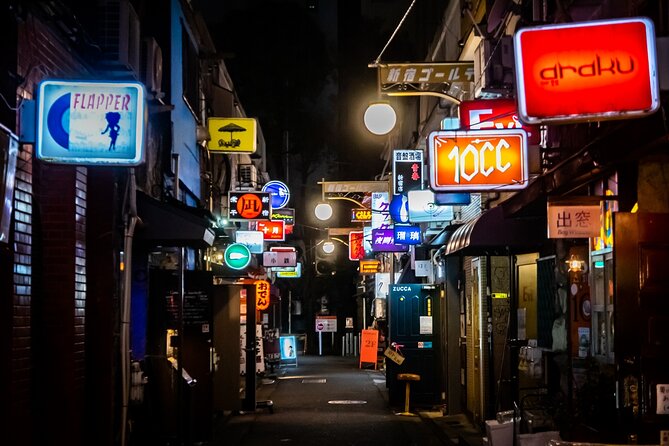
The tour also enters the narrow bar district, a compact area where tiny venues sit close together. These lanes show another side of Tokyo nightlife: intimate spaces with limited room, distinct identities, and a very different feel from the large entertainment streets of Kabukicho.
The guide can help you understand why these places matter. Without local context, a row of small doors may look closed, private, or difficult to approach. With an explanation of the area’s culture, you can better understand its place in Shinjuku’s evening life.
Again, food and drinks are not included. The walk is not a pub crawl, and there is no promise that you will enter a bar. That is a strength for people who want information without committing to a venue, but a limitation if you want an evening built around drinking.
If you plan to continue your night afterward, the guide’s recommendations can be useful. One of the route’s practical benefits is that you finish with more ideas for food and drinks than you had at the start.
A Shinto Shrine Among the Night Streets
A Shinto shrine may seem like an odd stop on a tour titled The Dark Side of Tokyo, but it provides an important contrast. Shinjuku is not only neon, nightlife, and commercial entertainment. Traditional religious spaces remain part of the city, sometimes just a short walk from crowded streets.
The shrine stop helps you see how older customs sit alongside modern Tokyo. The point is not to turn the visit into a full shrine tour. Rather, it gives the route a moment of quiet and a reminder that the district has more than one identity.
This balance is one of the tour’s best features. You move from food alleys to nightlife streets, from Godzilla to a Shinto site, and then to the LGBTQI district. The walk presents Shinjuku as a lived-in part of the city instead of a single attraction.
You should still follow the guide’s lead on respectful behavior. The supplied details do not promise a formal ceremony or special access, so think of this as a brief cultural stop within the larger walk.
Tokyo’s LGBTQI District, Often Called Gay Town
The route includes Japan’s biggest LGBTQI town, commonly called Gay Town. This is a key reason to choose the tour over a basic Kabukicho stroll. You are introduced to a major part of Shinjuku’s social life that may be easy to miss if you do not know where to look.
The guide provides cultural and neighborhood context rather than simply pointing out bars. That distinction matters. LGBTQI districts are communities, not decorative nightlife zones, and a good explanation helps you approach the area with respect.
This stop also broadens the meaning of Tokyo nightlife. The city’s evening culture is not one single scene. Different streets serve different communities and interests, and the tour gives you a clearer sense of that variety.
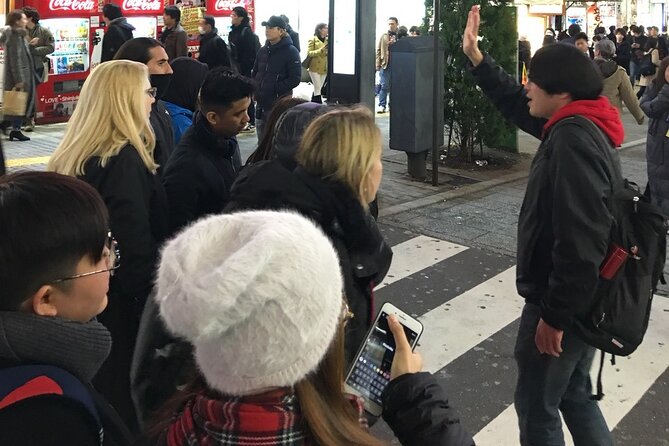
The district may be active and crowded, so stay with the group. One rainy evening, it was easy for people to lose sight of one another among other walking groups and pedestrians. A bright guide sign or another clear group marker would help, but you should still keep the guide in view rather than relying on the tallest person in the group to lead the way.
What the Two Hours Feel Like
The pace is generally described as informative, fun, and well organized, but one account described a much longer, fast-paced experience of more than three hours. Since the official duration is approximately two hours, you should plan around that stated time while allowing some flexibility for the actual evening.
This is a walking tour, not a seated talk. You will move through several districts and should expect city streets, crowded areas, and changing weather. Comfortable shoes are sensible, although the supplied details do not specify a required dress code or fitness level.
The experience works well as a standalone activity. It also works as the first part of a night out because it finishes near Shinjuku 3 Chome, an area where you can continue looking for food or drinks. The finish is not a loop back to the starting point, so do not assume you will end at the East Exit police box.
That one-way route is both useful and slightly inconvenient. You gain a wider look at Shinjuku instead of retracing your steps, but you need to orient yourself for the trip back to your hotel or station.
Is $25 a Fair Price?
At $25 per person, the tour is priced as an accessible introduction to Shinjuku. The fee covers the guide, while dinner, drinks, and any personal spending are extra.
I consider that good value if you want local explanation. A self-guided walk costs nothing, but English information on the streets is limited, and it is easy to miss the meaning behind what you see. The fee buys two hours of organization, translation, neighborhood background, and a safer route through areas you may not understand.
The value is lower if you mainly want photographs or a meal. You can see neon signs and Godzilla Head without booking a tour, and this experience does not include food, bar entry, or admission to an attraction.
The strongest reason to book is the information. Guides explain the history and legal framework around nightlife, discuss local food and hotels, and answer questions about the area. For a first night in Tokyo, that orientation can shape the rest of your stay.
Who Should Book This Walk?
I would suggest it to first-time Tokyo visitors who want to understand Shinjuku before exploring alone. It suits curious adults interested in nightlife, urban culture, Japanese traditions, LGBTQI communities, and the adult entertainment industry.
It is also a good fit if you want a short evening activity rather than a full dinner reservation. You can take the walk, note the places that interest you, and continue your night near Shinjuku 3 Chome.
I would hesitate to recommend it to anyone looking for a calm, conventional sightseeing route. The subject matter is frank, the streets can be crowded, and the group may be harder to track in bad weather. It is also not a complete food tour, bar tour, or return-to-start walking loop.
The tour is near public transportation, and most people can participate. Service animals are allowed. If rain is forecast, pay attention to the weather policy, since the experience requires good weather and may be moved or canceled with a choice of another date or a full refund.
Cancellation and Practical Booking Notes
You receive confirmation when booking, and the ticket is mobile, so you do not need a printed voucher. Free cancellation is available up to 24 hours before the start time for a full refund.
Changes or cancellations made less than 24 hours before the start are not accepted for a refund. The cut-off uses Tokyo local time, so check the clock carefully if you are arranging plans from another time zone.
The tour can include no more than 12 people. Its small format is one of the clearest advantages, particularly if you want to ask about sensitive topics without being lost in a large crowd.
Should You Book The Dark Side of Tokyo?
Book this walk if you want more than neon photographs. The route gives you a grounded introduction to Kabukicho, Omoide Yokocho, the narrow bar district, a shrine, Godzilla Head, and Shinjuku’s LGBTQI quarter, with a guide explaining how these very different places connect.
I would place it early in a Tokyo visit, ideally on a first evening, so you can use the orientation later. Choose it for the guide’s local explanations and small-group attention, not for included food or drinks.
Skip it if you want a conventional sightseeing tour or a structured night of dining. For everyone else, $25 is a modest price for a two-hour look at a side of Shinjuku that is easy to see but much harder to understand alone.
FAQ
How long does The Dark Side of Tokyo walking tour last?
The tour lasts approximately two hours.
How much does the tour cost?
The listed price is $25 per person.
What is included in the price?
The price includes the tour guide fee. Dinner, food, and drinks are not included.
Where does the tour begin?
The meeting point is at the police box by Shinjuku Station East Exit, at 3-chōme-38-1 Shinjuku, Shinjuku City, Tokyo 160-0022, Japan.
Where does the tour finish?
The tour finishes around the Shinjuku 3 Chome area. It does not necessarily return to the starting point.
How large is the tour group?
The experience allows a maximum of 12 travelers.
Can I cancel for a full refund?
Yes. You can cancel at least 24 hours before the experience start time for a full refund. Cancellations or changes made less than 24 hours before the start are not accepted, and poor weather may result in a different date or a full refund.
More Walking Tours in Tokyo
More Night Tours in Tokyo
More Shinjuku Tours in Tokyo
More tours in Tokyo we've reviewed












Shinjuku Tours, compared.
 ★ 5.0Tokyo: Shinjuku Food Tour (13 Dishes at 4 Local Eateries)From $86
 ★ 5.0Tokyo Bar Hopping Tour in Shinjuku (All-You-Can-Drink + Dinner)From $106
 ★ 4.9Tokyo: Shinjuku Local Bar and Izakaya Guided Walking TourFrom $343 hours
 ★ 4.9Tokyo: Shinjuku Food Tour (13 Dishes and 4 Eateries)From $97
 ★ 5.0Tokyo Night Foodie Tour in Shinjuku – Seasonal Sushi, Wagyu BeefFrom $111
 ★ 5.0Tokyo: Shinjuku Local Bar & Izakaya Crawl TourFrom $39