Reviewed · SAMURAI & NINJA EXPERIENCES
Samurai Sword Experience (Family Friendly)at SAMURAI MUSEUM TOKYO
A replica katana, a samurai outfit, and a room full of eager beginners make this one of Tokyo’s more playful cultural activities. You learn a short sequence of sword movements, pose in armor and a helmet, and try rubber ninja stars before touring the museum. Ryo, Kenny, Momo, and Jack are among the instructors associated with the sessions, and the teaching is geared to first-timers.
In This Article
- Key points to know before booking
- What this Tokyo samurai experience actually offers
- Getting dressed as a samurai
- Learning the sword sequence
- Trying ninja stars after the sword lesson
- Touring the Samurai and Ninja Museum
- How authentic is the sword practice?
- Is the $65.41 price good value?
- Best age range and family fit
- Timing, meeting point, and practical planning
- What can go wrong, and how to avoid it
- Who should book this activity?
- FAQ
- Where does the Samurai Sword Experience take place?
- What time does the activity start?
- How long does the experience last?
- What does the activity include?
- Is the sword real?
- Can children participate?
- How many people can join?
- Is transportation included?
- Is the experience near public transportation?
- Can I cancel for a full refund?
- Should you book it?
I like the mix of hands-on practice and history, especially for families who want more than a display case. I also like the small-group aim, which makes it easier to hear the instructor and get help with the movements. The main caution is that the published group-size information is inconsistent, and a crowded session or late arrivals can reduce practice time.
Key points to know before booking
- You practice three basic sword movements with wooden or foam swords before handling a non-sharp replica sword.
- You dress in hakama and samurai costume, with a helmet and armor available for photos.
- You throw hard rubber ninja stars into Styrofoam as part of the activity.
- The museum adds cultural context, but it is a compact venue and can feel crowded.
- The advertised group size varies, with information ranging from four to eight and up to 16 participants.
- Children under six cannot enter, while older children can use foam swords during the lesson.
What this Tokyo samurai experience actually offers
This is a short cultural activity in Asakusa, not a martial-arts course and not a chance to cut bamboo or other targets with a live blade. You use safe practice weapons and a replica sword while an instructor demonstrates the basic form.
That distinction matters. The experience gives you the feel of holding and moving a samurai sword, but the focus is on controlled motions, costume, photographs, and entertainment. If you want formal sword training, this will feel light. If you want a fun introduction to samurai culture with enough history to give the activity meaning, it fits well.
The meeting point is Samurai Ninja Museum Asakusa Tokyo at 1-chōme-8-13 Nishiasakusa, Taito City. The activity begins at 2:00 pm and ends at the same place. It is near public transportation, and the surrounding area has shops that can make the outing easy to combine with other Asakusa plans.
One practical note deserves attention: the supplied details give several different maximum group sizes. Some describe a maximum of eight, another says 16, and another says four. The experience may be run in smaller groups at some times and larger combined sessions at others. I would confirm the expected group size when booking, especially if personal instruction matters to you.
A few more Tokyo tours and experiences worth a look
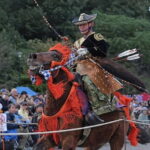

Getting dressed as a samurai
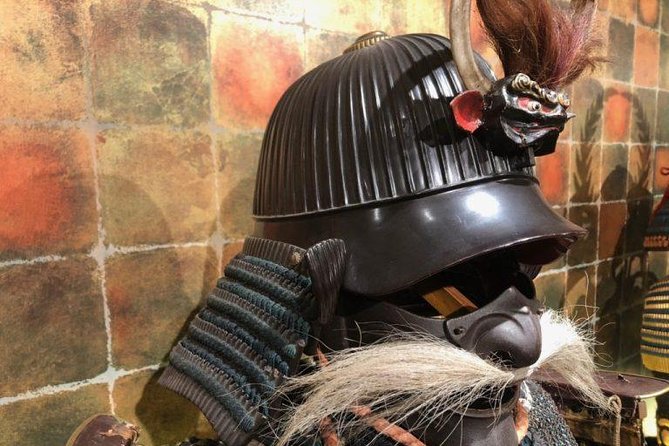
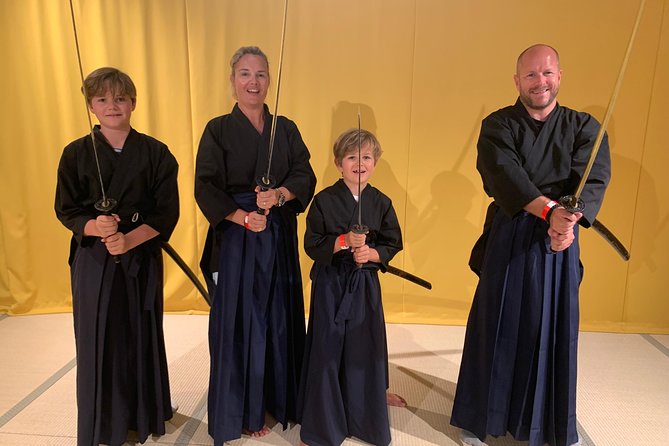
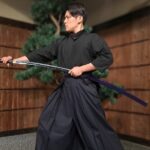
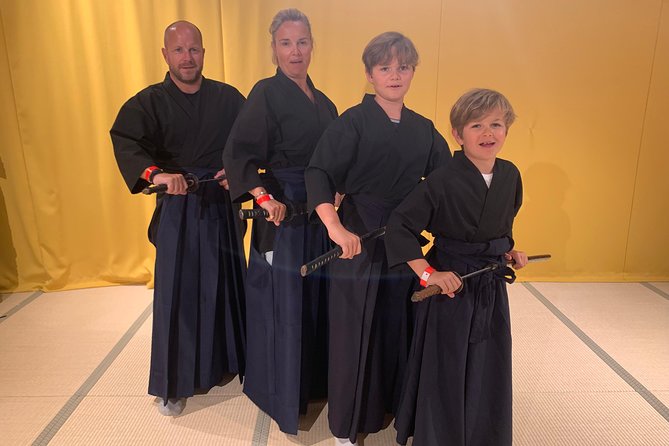
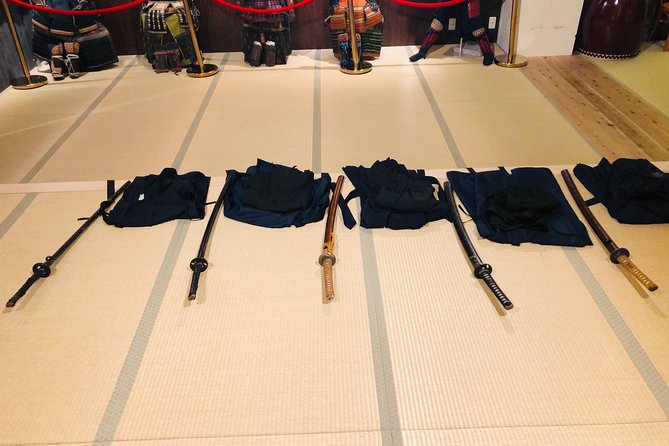
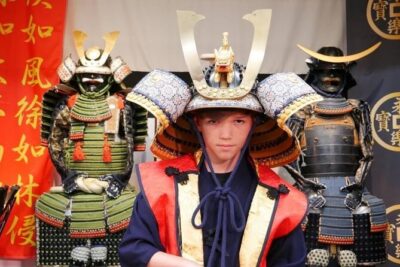
The session begins with costume preparation. You wear a hakama, the traditional pleated garment associated with samurai dress, then add a samurai outfit. A helmet and armor are available for the photo portion.
This is not just a quick picture booth. Getting dressed helps children and adults shift from museum visitor to participant, and it gives the instructor a useful way to explain how samurai are represented in popular culture. Still, the armor is imitation armor rather than historical equipment. One detailed account describes it as rubber armor that looks convincing in photographs.
You should expect the costume to be designed for fun and movement rather than perfect historical accuracy. That is a fair trade for a short family activity. The outfit makes the sword lesson more memorable, and the photos give you a souvenir beyond another museum snapshot.
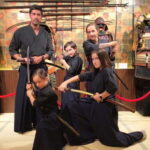
The photo process can take time. Staff may arrange people in groups, pose them against samurai-themed backgrounds, and record short videos of the sword movements. If the room is full, you may spend more time waiting for other people to finish their pictures than you expect.
Learning the sword sequence
The sword lesson is the heart of the experience. The instructor first demonstrates how to hold and move the sword, then has the group practice with wooden swords. Younger children can use foam swords, which keeps the activity safer and more manageable for small hands.
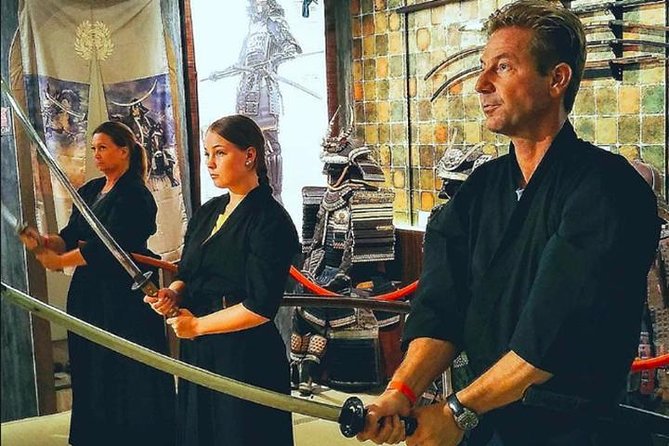
The basic routine consists of three movements. You practice the sequence as a group, then use a non-sharp replica sword for the final presentation. The instructor may divide the participants into groups and film each group performing the movements.
This is a good setup for families. Children can copy the teacher without needing previous experience, and adults do not have to worry about being the only beginner in the room. The instructors are described as patient, funny, and comfortable speaking English. That helps when the lesson depends on timing and body position rather than long explanations.
The session is also more entertaining when the instructor plays the part. Ryo has been described as a highly skilled teacher from a long samurai family line, while Kenny has been singled out as a strong instructor. Momo and Jack are also associated with clear, engaging history explanations. Staff can vary, but the teaching style appears to combine demonstration, repetition, and humor.
Do not book this expecting an individual sword performance. You are not normally given a long solo routine, and you do not chop anything with a real katana. The sword is a safe replica, and the goal is to learn a few movements well enough for a group performance and photographs.
There is some disagreement about the lesson length in the available information. The advertised activity lasts about 1 hour 15 minutes, while the provider has described the sword portion as roughly 40 minutes, with the full combination of activities sometimes taking 90 to 120 minutes. Delays, costume changes, and photo sessions can affect the pace.
Trying ninja stars after the sword lesson
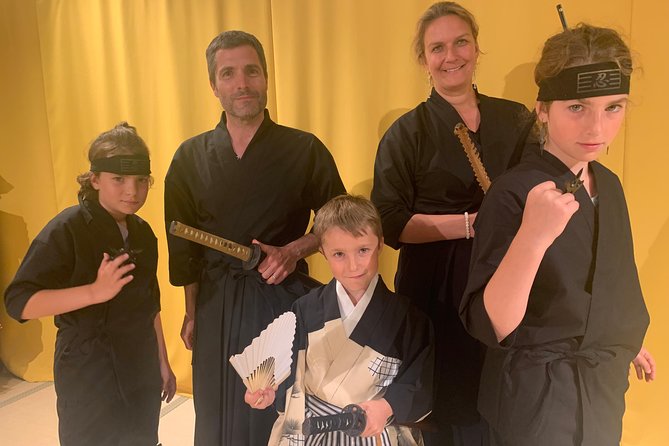
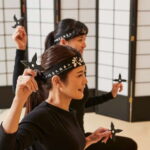
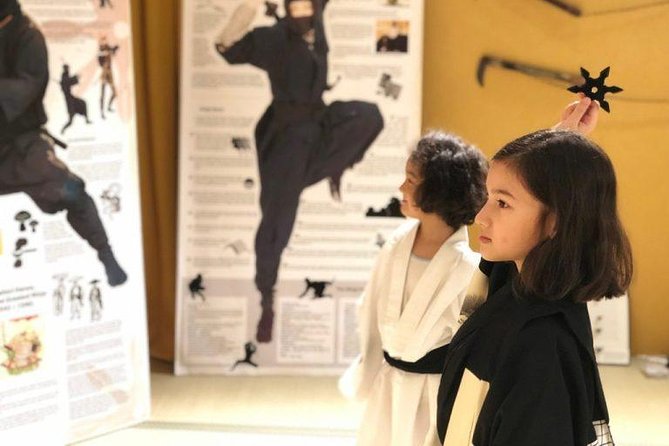
The ninja portion is shorter but often a hit with children. You throw hard rubber ninja stars into Styrofoam, giving you a simple target activity after the more structured sword practice.
This is not a serious throwing lesson, but it adds variety. If a child loses interest during the history talk, the chance to throw stars can bring the energy back. Adults often find it surprisingly competitive, too.
The stars are designed for the activity rather than real combat use. As with the sword lesson, the value is in trying a traditional image in a controlled setting. You get a physical activity, a few laughs, and photographs that look different from the usual Tokyo sightseeing pictures.
The timing can feel uneven if the group is large. Everyone needs a turn, and the staff must manage the room and equipment. A smaller group will usually make this part feel more relaxed.
Touring the Samurai and Ninja Museum
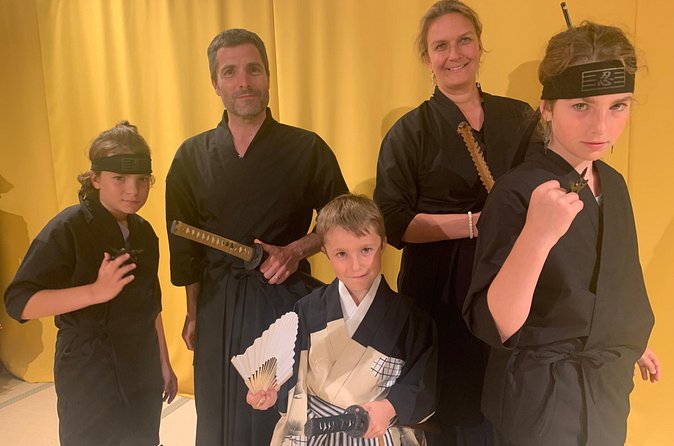
The museum tour provides the context that the costume session alone would lack. You see samurai and ninja displays, historical objects, and explanations of Japanese warrior culture. Several guides are praised for making the history accessible in English and keeping the tone lively.
Set your expectations correctly. This is a small museum, not a full-scale institution where you spend half a day reading every panel. The displays are compact, and the tour moves at a set pace. That makes it manageable for families, but it can also feel rushed.
If the venue is crowded, viewing the exhibits becomes harder. A large group may bunch up in the smaller rooms, and people taking photographs can slow the movement. One account describes waiting for the museum tour to begin after the costume activity, while another says there was not enough time to see many exhibits.
I would treat the museum as a useful introduction rather than the main reason to book. The sword practice, costume, and ninja stars are the core attractions. The museum gives those activities a cultural frame and helps answer basic questions about samurai and ninja life.
The order may vary. Some sessions begin with the museum and move to the activity, while others appear to handle the costume and sword work first. Allow more time than the stated 75 minutes if you have a train, meal, or timed attraction afterward.
Other museum experiences in Tokyo



How authentic is the sword practice?
The experience has a real hands-on element, but authenticity comes in degrees. You wear traditional-style clothing, follow a sword form, and hear about samurai culture from instructors who present the subject with confidence. That is more engaging than simply posing beside a plastic sword.
At the same time, you use a replica blade, imitation armor, and a short beginner routine. There is no live-blade work, cutting practice, or extended martial-arts instruction. The experience is best understood as a safe cultural demonstration with audience participation.
That balance is useful for families. The activity lets you try the movements without the risks and strict requirements of a formal sword school. It also gives children a physical connection to history, which can make the museum material easier to remember.
Adults looking for serious training should choose a specialist martial-arts lesson instead. Adults who want a light, well-organized introduction will likely find enough substance here, provided they do not expect a full samurai apprenticeship in one afternoon.
Is the $65.41 price good value?
At $65.41 per person, this is not the cheapest family activity in Tokyo. The price makes more sense when you treat it as a combined package: costume use, guided sword practice, ninja-star throwing, photographs and videos, and a museum tour.
For a family that would otherwise pay separately for a museum visit and a themed activity, the combination can be worthwhile. The value is strongest when everyone participates. If one member of your party dislikes dressing up or group activities, that person may not feel the price is justified.
The quality of the visit also depends on crowd size and timing. In a small group, you get more room, clearer demonstrations, and less waiting for photos. In a crowded session, the same price buys less personal attention.
I would book it for the shared memory rather than the depth of instruction. The instructors, especially those described as patient and entertaining, add much of the value. The activity works best when you want something social and visual, not when you are measuring the price against minutes of formal training.
Best age range and family fit
Children under six cannot enter the samurai venue. Older children can take part, with foam swords available for younger participants within the permitted age range.
The format suits families with children who enjoy role-play, history, ninjas, or hands-on activities. It also works for adults who want amusing photos and a short cultural break from temples and shopping.
The activity is not limited to families. Couples, friends, and solo visitors can enjoy the sword routine, though a larger family group may get more from the shared costume and group performance.
Most people can participate, and the venue is near public transportation. The information does not give detailed accessibility specifications, so anyone with mobility or space concerns should ask the provider before booking.
Timing, meeting point, and practical planning
The listed start time is 2:00 pm at Samurai Ninja Museum Asakusa Tokyo. Since the activity ends at the meeting point, it is easy to pair with other plans in Asakusa.
Do not schedule a tight afternoon connection. Costume changes, late arrivals, photo-taking, group organization, and museum crowding can stretch the visit. The published duration is approximately 1 hour 15 minutes, but the provider has also described combined sessions lasting 90 to 120 minutes.
Arrive early enough to find the venue and check in without pressure. Late arrivals can disrupt the group and may force the instructor to repeat steps. Rain can also lead to more people arriving by taxi or shifting into different sessions, which may affect the flow.
The mobile ticket is convenient. Transportation to and from the attraction is not included, so you arrange your own route to Asakusa.
Free cancellation is available up to 24 hours before the start time for a full refund. Cancellations or changes made less than 24 hours before the start are not accepted for a refund.
What can go wrong, and how to avoid it
The biggest risk is crowding. The experience is promoted in small-group terms, but the supplied details allow for up to 16 people and describe different group limits. A full room can mean less time with the instructor and more waiting for pictures.
The second risk is a loose schedule. Late participants can delay costume changes and the museum tour. If you are visiting during rain, allow extra time for possible congestion and session changes.
The third risk is expecting something more advanced than the activity provides. You learn three basic movements with safe weapons. You do not train with a sharp katana or receive a private lesson.
I would ask three questions before committing: How many people are expected in my session? How long will the sword lesson last? Will the museum tour follow immediately? Clear answers can help you decide if the activity fits your day.
Who should book this activity?
Book it if you want a family-friendly introduction to samurai culture with plenty of participation. It is especially suitable for children old enough to follow instructions, adults who enjoy costumes, and anyone who likes a cultural activity with a physical component.
It is also a good choice if you want photos that feel more personal than standard sightseeing shots. The combination of hakama, armor, helmets, replica swords, and ninja stars gives you several photo opportunities.
Think twice if you dislike group activities, waiting, or staged photography. You should also choose another option if your main goal is serious sword study, historical depth, or a quiet museum visit.
FAQ
Where does the Samurai Sword Experience take place?
It starts and ends at Samurai Ninja Museum Asakusa Tokyo, located at 1-chōme-8-13 Nishiasakusa, Taito City, Tokyo 111-0035, Japan.
What time does the activity start?
The listed start time is 2:00 pm.
How long does the experience last?
The listed duration is approximately 1 hour 15 minutes. The provider also describes the combined activities as sometimes lasting 90 to 120 minutes.
What does the activity include?
It includes a hands-on samurai sword lesson, hakama and samurai clothing, a samurai helmet, an armor trial, photo opportunities, ninja-weapon practice, and a tour of the Samurai and Ninja Museum.
Is the sword real?
You practice with wooden or foam swords and then use a non-sharp replica sword. You do not cut anything with a real katana.
Can children participate?
Children under six cannot enter the samurai venue. Older children can participate, and foam swords are available for children during the lesson.
How many people can join?
The supplied information gives different limits, including four, eight, and 16 participants. Confirm the expected group size for your date when booking.
Is transportation included?
No. Transportation to and from the attraction is not included.
Is the experience near public transportation?
Yes. The meeting point is described as being near public transportation.
Can I cancel for a full refund?
Yes, if you cancel at least 24 hours before the local start time. Cancellations or changes made less than 24 hours before the start are not accepted for a refund.
Should you book it?
I would book this for a family afternoon in Asakusa, particularly if your group likes history presented through costumes, movement, and humor. The sword sequence, ninja-star practice, and photographs give children something to do, while the museum and guide explanations add cultural value.
I would not book it as a serious martial-arts lesson or a full museum tour. Confirm the group size and timing first, then leave plenty of room in your schedule. With those expectations in place, the $65.41 cost can buy a memorable shared activity, not just a costume photograph.
More Museum Experiences in Tokyo
More Samurai & Ninja Experiences in Tokyo


More tours in Tokyo we've reviewed












Samurai & Ninja Experiences, compared.
 ★ 4.5Tokyo: Samurai Restaurant Show Ticket with 2 DrinksFrom $551h 30m
 ★ 4.6Tokyo: Samurai Ninja Museum Guided tour and ExperienceFrom $27
 ★ 5.0Skip the lines Basic Ticket at SAMURAI NINJA MUSEUM TOKYOFrom $28
 ★ 5.0Tokyo: Authentic Samurai Training at a DojoFrom $211
 ★ 5.0Best Samurai Experience in TokyoFrom $65
 ★ 4.6Tokyo: Legend Samurai Entertainment Night in Kanda ShrineFrom $44