Reviewed · GO-KARTS
Tokyo: Guided Go Kart Tour from Harajuku to Shibuya Crossing
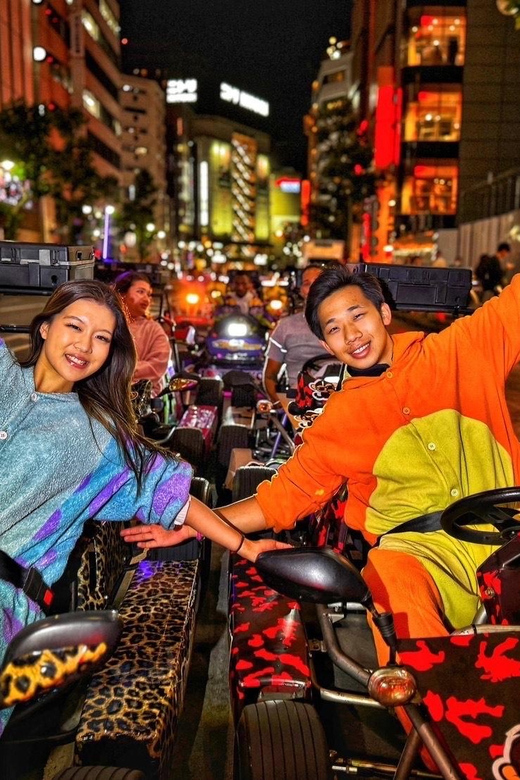
The wildest part of this Tokyo outing is also the simplest to explain: you drive on the city streets in a small, street-legal go-kart, following a guide through Shibuya, Harajuku, and Shinjuku. I like the short, well-planned route and the chance to pass through Shibuya Crossing, a scene that feels very different from the pavement below.
In This Article
- Key points to know before you book
- Taking Tokyo’s streets instead of sightseeing from the sidewalk
- Meeting near Shibuya Station
- Costumes, cameras, and the pre-ride setup
- Harajuku, where the city feels playful
- Shibuya Crossing from the driver’s seat
- Shinjuku and the central Tokyo streets
- Why the small group makes a difference
- Safety and what driving feels like
- The driving permit rules can make or break your booking
- Is $103 a fair price?
- Who should book this Tokyo go-kart ride?
- Final verdict: book it for the ride, not the sightseeing checklist
- FAQ
- How long is the Tokyo go-kart tour?
- Where does the tour meet?
- Which Tokyo districts does the route include?
- Is Shibuya Crossing part of the driving route?
- What driving permit do I need?
- Do drivers from some countries need extra documents?
- Are photos included?
- Can I wear a costume during the tour?
- What happens if it rains?
- Who cannot drive on this tour?
I also like the small groups of no more than five and the guide-led safety system. Guides such as Rakesh, Mirko, Lewis, and Gus have been praised for clear signals, good photos, and calm pacing. The main drawback is the price, $103 per person, and the fact that some riders received less than the full 75 minutes of driving time.
Key points to know before you book
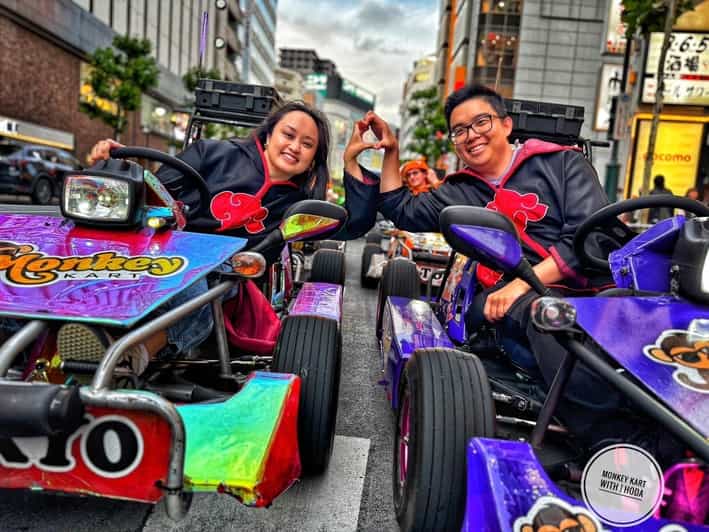
- Shibuya Crossing from behind the wheel: You pass through one of Tokyo’s best-known intersections rather than simply watching from a nearby viewpoint.
- Costumes are part of the fun: Pick from costumes, masks, and novelty glasses before setting off.
- A five-person maximum: The small group makes it easier to follow the guide and receive personal attention.
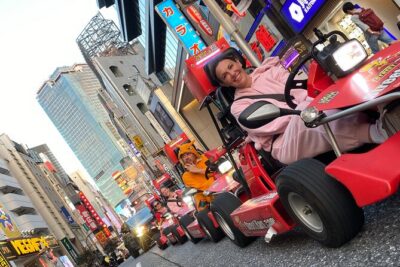
- Day or night atmosphere: Daytime offers clearer city views, while evening rides bring neon, traffic lights, and Tokyo’s glowing streets.
- Photos are included: The guide takes pictures during the route, then sends digital copies by AirDrop or email, with one hard copy included.
- The driving permit is serious business: Japan requires a valid paper 1949 Geneva Convention IDP, or a JAF Japanese translation for certain licenses.
Taking Tokyo’s streets instead of sightseeing from the sidewalk
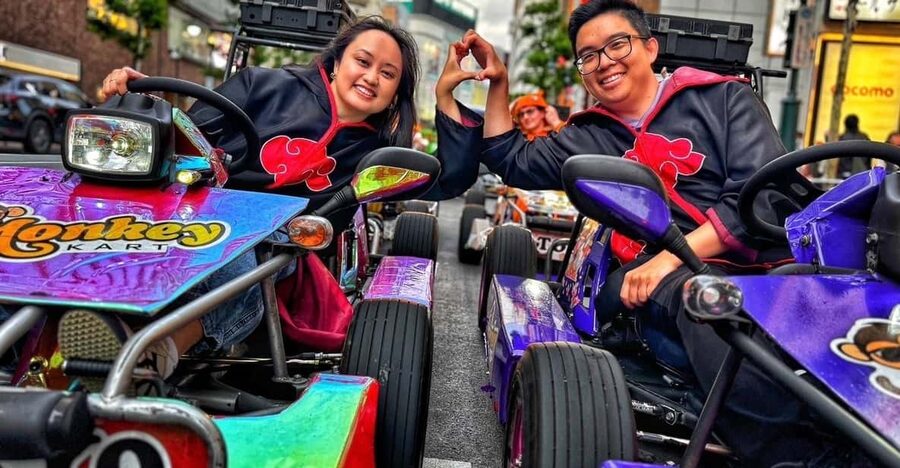
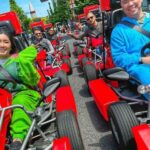
This is not a sightseeing bus with a guide pointing out buildings from behind glass. You sit low in an open go-kart, watch the traffic around you, and move through central Tokyo as part of the road scene.
That change in height makes familiar districts feel new. Cars, signs, pedestrians, towers, and intersections all seem closer. You are not racing, but you are driving a compact vehicle through real city traffic, so the experience has a real sense of occasion.
The tour begins with a safety briefing and instructions on using the kart. The guide leads the group and uses signals to keep everyone together. That matters in Tokyo, where the streets can feel complicated even when the traffic is orderly.
You should expect a guided road experience, not a track session. The karts are described as custom-built and street-legal, and one rider found them faster than expected. The guide controls the pace, but you still need to pay attention and drive responsibly.
A few more Tokyo tours and experiences worth a look
Meeting near Shibuya Station
The meeting point is on the main big street near Family Mart at 3-chome-17-3 Shibuya, Shibuya City. From Shibuya Station, use Exit C2 and walk about two minutes toward the central gate area.
Give yourself time to find the shop and the correct street. Shibuya Station has several exits and a large underground network, so arriving at the station is not the same as being at the meeting point.
The tour information describes the experience as starting from the Shibuya area, while the route includes Harajuku, Shibuya, Shinjuku, and nearby central districts. I would treat the meeting location as the important detail and consider the title a description of the route rather than a promise that the tour begins in Harajuku.
There is no hotel pickup or drop-off. You make your own way to the meeting point and return there after the ride.
Costumes, cameras, and the pre-ride setup
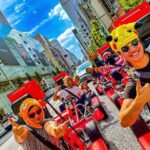
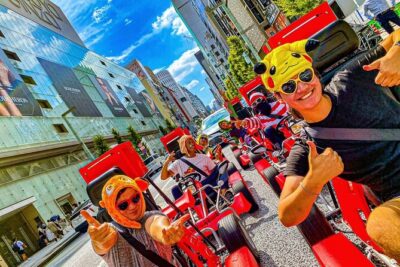
Before you leave, you can choose a costume. Options include colorful outfits, masks, and novelty glasses, according to the available choices described for the tour. You do not need a costume to enjoy the drive, but it adds a playful touch to photos and makes the karts easy for people on the street to notice.
The costume choice also affects what you wear underneath. Tokyo weather can change quickly, and you will be exposed to the outside air for the entire ride. Wear clothes that allow you to sit comfortably and move your arms freely. Bring a layer in cooler weather, and remember that rain can lead to a schedule change.
A guide takes photos at selected points along the way. You can also use the supplied action camera or Insta360 mount, which is useful if you want your own driving footage, though the information provided does not promise that a camera itself is supplied.
At the end, the photos are shared digitally through AirDrop or email. You also receive one hard copy photo. This is a practical touch: you can leave your phone in your pocket during the ride instead of trying to take pictures while driving.
Harajuku, where the city feels playful
Harajuku brings a lighter, more youthful mood to the route. It is known for fashion, creative street culture, and busy shopping areas, so a costume-clad line of go-karts fits the setting better here than it would in a quiet residential neighborhood.
You will see the area from the road rather than stopping for shopping or walking through its side streets. That is an important distinction. The tour gives you a moving view of Harajuku, but it does not replace time spent exploring the district on foot.
I like this part of the route because it shows a different side of Tokyo from the office towers and large intersections farther along. The guide may point out areas and landmarks as you go, as guides have done on past departures, but the main attraction is the act of driving through the district.
The group stays behind the guide. Follow the signals carefully and avoid focusing so much on the costumes or cameras that you miss the road instructions.
Shibuya Crossing from the driver’s seat
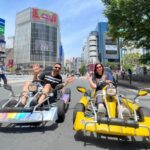
Shibuya Crossing is the tour’s headline moment. Most people see it from a pedestrian viewpoint, watching the crowd flow in every direction. Here, you approach it in a go-kart and pass through the surrounding road system with the guide.
The experience is thrilling because the crossing is part of normal city movement, not a staged attraction. You are surrounded by huge screens, tall buildings, traffic, and people, but you are also operating a vehicle. That makes the moment more memorable than taking another photo from the pavement.
The crossing itself can be brief. Do not book this expecting a long stop in the middle of the intersection or a chance to get out and pose there. The value comes from passing through as part of the route.
Several riders especially liked the feeling of driving through actual Tokyo streets, and I understand why. It gives you a short burst of participation in the city rather than another passive view of it.
A few more Tokyo tours and experiences worth a look



Shinjuku and the central Tokyo streets
The route continues toward Shinjuku and nearby central neighborhoods. Shinjuku changes the visual rhythm again, with large roads, commercial buildings, dense signs, and a strong after-dark glow.
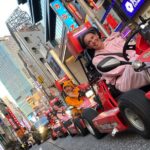
At night, this section can be the most dramatic. City lights reflect off cars and windows, and the ride feels more like a moving neon postcard. One rider who took a night tour described the city lights as a major reason to choose the evening departure.
Daytime has its own advantage. You can see the streets and buildings more clearly, and the ride may feel easier for a first-time driver who prefers maximum visibility. Check the available departure times and choose based on your priority: clearer views by day or glowing city scenes after dark.
Past routes have included a tunnel, and one rider found a faster stretch through a lightly trafficked tunnel especially exciting. That does not mean every departure will have identical traffic or pacing. The guide decides how the group moves, and road conditions can change.
Why the small group makes a difference
The group limit is five participants. That is a useful size for this activity because you need to stay close enough to see the guide’s signals and avoid losing the line at intersections.
A small group also gives the guide more time to check on each driver. Riders have praised guides for making sure everyone felt comfortable, keeping a steady pace, and explaining what to do before leaving.
Names praised in past tours include Rakesh, Mirko, Lewis, Gus, Ayrton, Kevin, Luna, Juani, and Shin. The guide assigned to your departure may be different, but the role is the same: lead the route, manage the group, take photos, and help you stay calm on the road.
If your group is smaller than five, you may receive more direct attention. One rider had a departure with only four drivers and found the personal interaction useful. A private departure is not promised, but the five-person ceiling keeps the group from becoming unwieldy.
Safety and what driving feels like
The safety briefing is not a formality to rush through. You need to understand the kart controls, the route signals, and the road rules before joining Tokyo traffic.
Past riders have specifically praised clear instructions, signaling, and a feeling of safety. That does not remove your responsibility. You must hold your line, watch the guide, obey traffic rules, and stay alert around other vehicles.
The karts are easy to use according to one rider, but another found that they went faster than expected. That combination is worth keeping in mind. You do not need advanced driving skills, but you should be comfortable controlling a vehicle and reacting to instructions.
Alcohol is not allowed in the vehicle. Do not plan this as a drinking activity before or during the tour. You also need to be at least 18 years old, and drivers under 18 cannot participate.
The tour is not suitable for pregnant women or people over 95. The activity may be rescheduled because of rain, so keep some flexibility in your Tokyo plans.
The driving permit rules can make or break your booking
This is the most important practical issue. You must bring a hardcopy paper booklet of a 1949 Geneva Convention International Driving Permit issued by the official agency in your country, such as AAA, AA, CAA, or another authorized organization.
An online copy, photocopy, or card-style license is not valid. A 1968 Vienna Convention permit is not recognized by Japan, and permits issued by IDA or IAA are also not accepted.
Drivers from France, Switzerland, Taiwan, Germany, Monaco, and Belgium need a Japanese translation of their local license. The physical translation can be obtained through the Japan Automobile Federation, or JAF.
The information also warns that permits from Indonesia, Pakistan, Saudi Arabia, Mexico, Brazil, Costa Rica, Colombia, Kuwait, Qatar, and some other countries may not allow driving in Japan. Check the rules for your nationality before booking, and obtain the required permit before leaving home.
Do not assume that any document labeled international driving permit will work. This is one case where checking the exact convention and format matters more than simply carrying your home license.
Is $103 a fair price?
At $103 per person, this is not a cheap way to see Tokyo. You are paying for the vehicle, guide, safety briefing, costumes, water, photography, digital images, one printed photo, and access to a route through some of the city’s best-known districts.
The price makes more sense if you value the driving itself. You are not just paying for transport between sights. You are paying for a novelty road experience, a small group, a guide, and photos that document something difficult to recreate on your own.
The value is weaker if your main goal is detailed sightseeing. Seventy-five minutes passes quickly, and the ride does not give you long walking stops, museum visits, shopping time, or deep explanations at each district.
Some riders felt the tour was worth every penny, while another found it expensive for what it offered. I think both views are fair. For a first Tokyo visit, it is best used as a fun break from temples, shopping, and train rides, not as your main city tour.
One practical caution: a 75-minute booking may include briefing and setup time. At least one rider reported 57 minutes of actual driving. Most accounts describe the experience as worthwhile, but I would ask at check-in how the time is divided.
Who should book this Tokyo go-kart ride?
You are a good match if you like unusual city activities, enjoy being part of the scene, and feel comfortable driving in traffic under a guide’s direction.
It works especially well for couples, friends, and small groups who want photos that look different from standard Tokyo vacation pictures. The costumes make it playful, while the route through Shibuya and Shinjuku gives the ride a strong city setting.
It may not suit you if you dislike traffic, want a quiet sightseeing experience, or prefer time to stop and explore. The karts are open to the weather, the schedule can change in rain, and the driving permit requirements are strict.
I would choose a night departure if your priority is atmosphere and city lights. I would choose daytime if you want clearer views and a calmer introduction to driving in Tokyo.
Final verdict: book it for the ride, not the sightseeing checklist
I would book this if you want a memorable, slightly silly, hands-on Tokyo experience. Passing through Shibuya Crossing in a costume, following a guide past Harajuku and Shinjuku, and receiving photos afterward gives you a story that a standard observation deck cannot provide.
I would skip it if $103 feels high for 75 minutes or if you are mainly seeking detailed information about Tokyo’s neighborhoods. Before paying, confirm your exact driving documents and understand that rain or road conditions may affect the schedule.
For the right person, this is a fun city adventure with strong guides, a manageable group size, and a route that delivers the promised sense of driving through Tokyo itself.
FAQ
How long is the Tokyo go-kart tour?
The listed duration is 75 minutes. This includes the guided go-kart experience, though the exact amount of time spent driving may vary because of the safety briefing and setup.
Where does the tour meet?
Meet near Family Mart at 3-chome-17-3 Shibuya, Shibuya City, Tokyo. The location is about a two-minute walk from Shibuya Station Exit C2, near the station’s central gate area.
Which Tokyo districts does the route include?
The route includes Harajuku, Shibuya, Shibuya Crossing, Shinjuku, and nearby central Tokyo neighborhoods.
Is Shibuya Crossing part of the driving route?
Yes. The tour includes passing through Shibuya Crossing as part of the guided road route.
What driving permit do I need?
You need a hardcopy paper booklet of a 1949 Geneva Convention International Driving Permit issued by the official agency in your country. Online copies, photocopies, card-style licenses, 1968 Vienna Convention permits, and IDA or IAA permits are not valid.
Do drivers from some countries need extra documents?
Yes. Drivers with licenses from France, Switzerland, Taiwan, Germany, Monaco, and Belgium need a Japanese translation of their local license. The physical copy can be obtained from the Japan Automobile Federation, or JAF.
Are photos included?
Yes. The guide takes photos during the tour, and the digital images are shared by AirDrop or email. One hard copy photo is also included.
Can I wear a costume during the tour?
Yes. Costumes are included, along with masks and novelty accessories. You can choose a costume before setting off if you want to add a playful look to the ride.
What happens if it rains?
The tour may be rescheduled due to rain. Free cancellation is available up to 24 hours in advance for a full refund, and the booking option allows you to reserve now and pay later.
Who cannot drive on this tour?
Drivers must be at least 18 years old. The activity is not suitable for pregnant women, people over 95 years old, or anyone under 18.
More Guided Tours in Tokyo


More Go-Kart Tours in Tokyo
More Shibuya Tours in Tokyo

More tours in Tokyo we've reviewed












Go-Karts, compared.
 ★ 5.0Flagship 2-Hours Official Street Go-Kart Tour – Tokyo Bay ShopFrom $642 hours to 2 hours 30 minutes (approx.)
 ★ 5.0Official Street Go-Kart in ShibuyaFrom $76
 ★ 5.0Official Street Go-Kart Tour – AkihabaraFrom $61
 ★ 5.0Tokyo Go Kart: Asakusa, Skytree, and Akihabara **IDP MUST**From $99
 ★ 5.0Shibuya Official Street Go-Kart in Shibuya AnnexFrom $69
 ★ 4.6Tokyo: Asakusa and Skytree Go-Kart Tour and Photo ShootFrom $67