Reviewed · GO-KARTS
Tokyo: Shibuya Crossing, Harajuku, Tokyo Tower Go Kart Tour
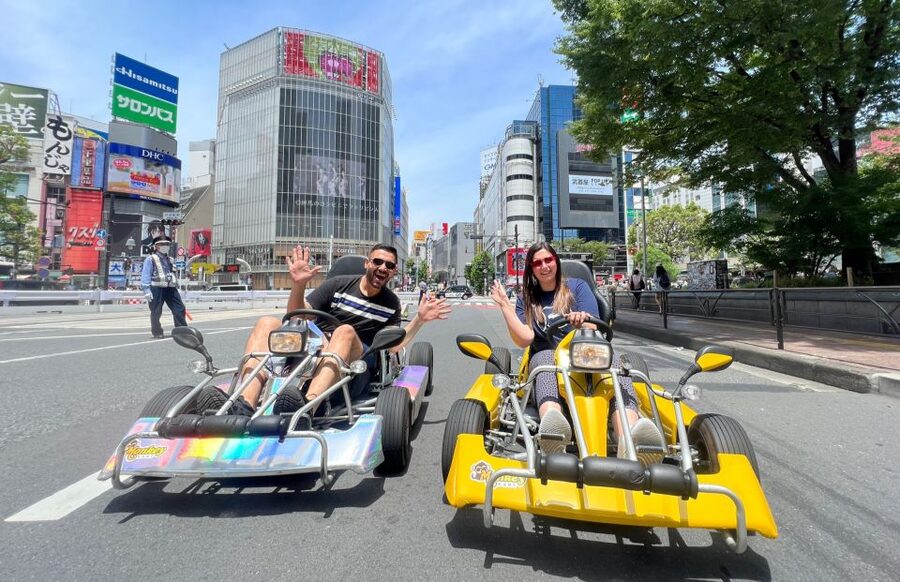
Tokyo is famous for trains, temples, and neon streets. This tour gives you a very different view: you sit low in a go-kart and follow your guide through regular city traffic, passing Tokyo Tower, Roppongi, Shibuya Crossing, and Omotesando in one fast-moving loop. It is part sightseeing, part adrenaline ride, and part public spectacle.
In This Article
- Key points to know before you book
- Why this go-kart tour feels different from normal sightseeing
- From Gotanda to Tokyo Tower
- Roppongi brings the city traffic close
- Shibuya Crossing is the big photo moment
- Omotesando and the return to Gotanda
- What the guide adds to the experience
- Cost, inclusions, and the real value
- The driving permit rule can make or break your booking
- Costumes, comfort, and the right kind of fun
- Who should book the Tokyo go-kart ride?
- FAQ
- How long does the go-kart tour last?
- Where does the tour start?
- Where does the tour end?
- Which Tokyo sights are included on the route?
- Is an English-speaking guide included?
- How many people can join the group?
- Is a costume included?
- Do I need an International Driving Permit?
- What happens if it rains?
I like two things right away. First, the route connects several major Tokyo sights without asking you to spend the day changing trains. Second, the guide stays with the group, takes photos, and adds local facts along the way. Guides named Andres, Pancho, Ken, Adam, Ren, Federico, and France have all been praised for being fun, attentive, and safety-minded.
The main catch is simple: you need the right driving permit before you leave home, and this is not a gentle sightseeing bus. Rain can force a change of date, and some riders find the speed and city traffic frightening as well as exciting.
Key points to know before you book
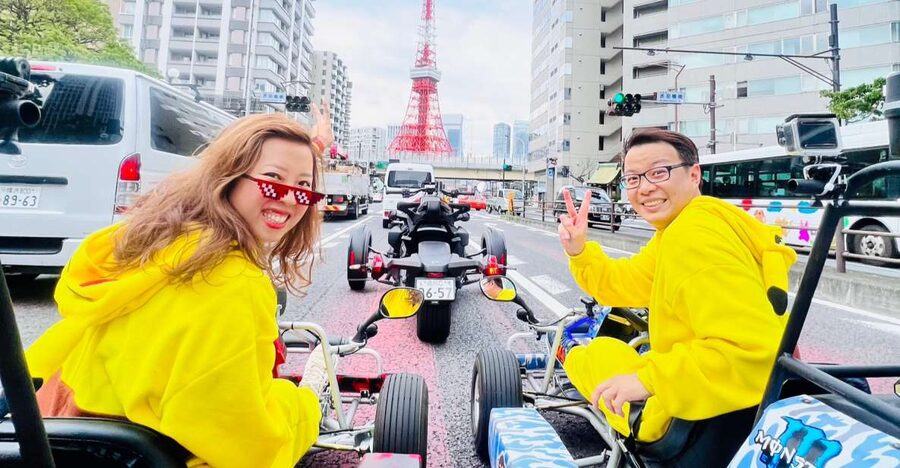
- The route packs in four Tokyo districts: Start near Gotanda, then drive to Tokyo Tower, Roppongi, Shibuya Crossing, and Omotesando.
- The group is capped at eight people: That keeps the convoy small enough for the guide to manage.
- Costumes are optional: You can choose a playful outfit for the ride, or keep your own clothes.
- Photos are included: Your guide takes pictures during the experience, while an action camera and Bluetooth speaker cost extra or are not included.
- The permit rules are strict: Japan requires a physical 1949 Geneva Convention International Driving Permit for most foreign drivers.
- Bad weather matters: The tour may be rescheduled in rain, so leave some flexibility in your Tokyo plans.
Why this go-kart tour feels different from normal sightseeing
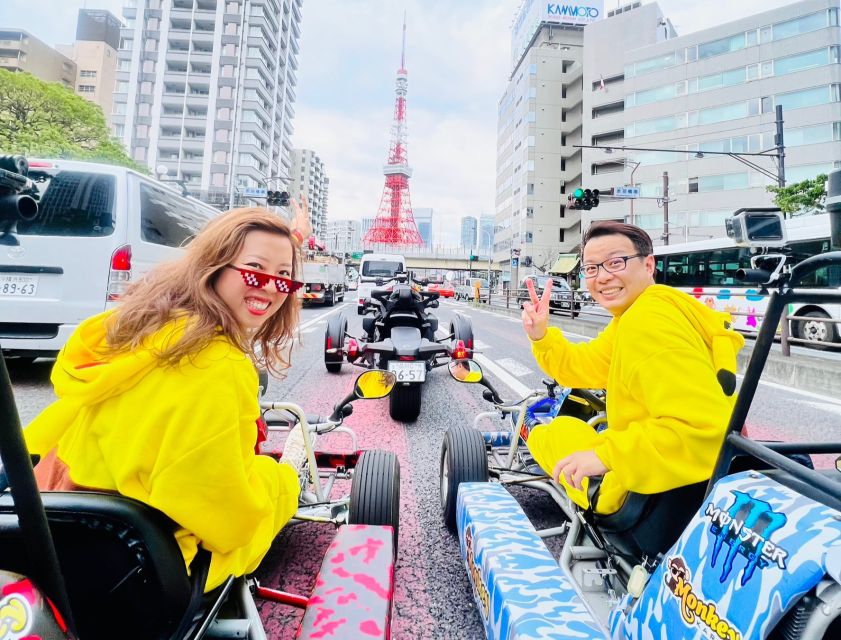
Most Tokyo sightseeing gives you a street-level view from a train platform, pavement, or observation deck. Here, you are part of the street scene. You drive in a line behind an English-speaking instructor, looking up at towers, signs, and office buildings from a very low seat.
That change in height matters. Tokyo traffic feels closer, faster, and more immediate. You are not simply looking at Shibuya Crossing from a nearby pavement. You are approaching one of the city’s most famous intersections as a driver, then moving on with the group once the route allows.
I would not book this as your only Tokyo sightseeing activity. It does not replace walking through Harajuku, exploring Shibuya on foot, or spending time inside the Tokyo Tower area. It gives you a quick, unusual look at several districts, with the added thrill of driving.
The mood can also vary by departure time. A daytime ride gives you clearer views of the streets and buildings. An evening ride adds city lights and can feel more dramatic. One particularly useful tip is to choose a time that begins in daylight and finishes after dark, if that option appears when you check availability.
A few more Tokyo tours and experiences worth a look
From Gotanda to Tokyo Tower
The meeting point is a seven-minute walk from JR Gotanda Station, in the Shinagawa area. That makes the start fairly practical if you are already staying or sightseeing south of central Tokyo, though you should allow time to find the exact shop and complete the pre-ride preparation.
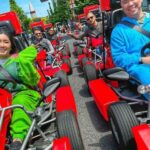
The tour begins with instructions from the guide. You receive a go-kart, petrol, and an instructor as part of the price. Since the guide leads the convoy, you need to pay attention to the briefing and follow the group rather than treating the ride as an independent rental.
Tokyo Tower is the first major stop on the route. It gives the outing an immediate visual marker: a tall, familiar structure that helps you understand where you are in the city. From a go-kart, you do not get the long panoramic view you would have from an observation deck, but you do get the pleasure of approaching the tower through Tokyo streets.
This first section also helps you settle into the vehicle. You are handling the kart while watching traffic and keeping the guide in sight. If you are nervous, the early part of the route is useful practice before the ride reaches the more famous central districts.
Roppongi brings the city traffic close

From Tokyo Tower, the group continues toward Roppongi. This is one of the livelier parts of the route, and it shows a different side of Tokyo from the more orderly feel of the tower area.
Roppongi is known for major roads, tall buildings, nightlife, and an international atmosphere. From the kart, you see the district as a place of movement rather than as a single attraction. The point is not to stop and tour Roppongi on foot. The point is to pass through it as part of Tokyo’s daily traffic flow.
That distinction is important when you set expectations. You will visit several named districts, but this is a driving route, not a stop-and-explore walking tour. The guide may share facts as you go, and the route gives you a strong sense of how these areas connect, but you will not have free time at each sight.
Some riders describe the experience as fast and exhilarating, especially on tunnel sections. Others find the traffic and speed intimidating. I would take that seriously. You do not need to be a racing driver, but you should feel comfortable operating a vehicle in a busy urban setting.
Shibuya Crossing is the big photo moment
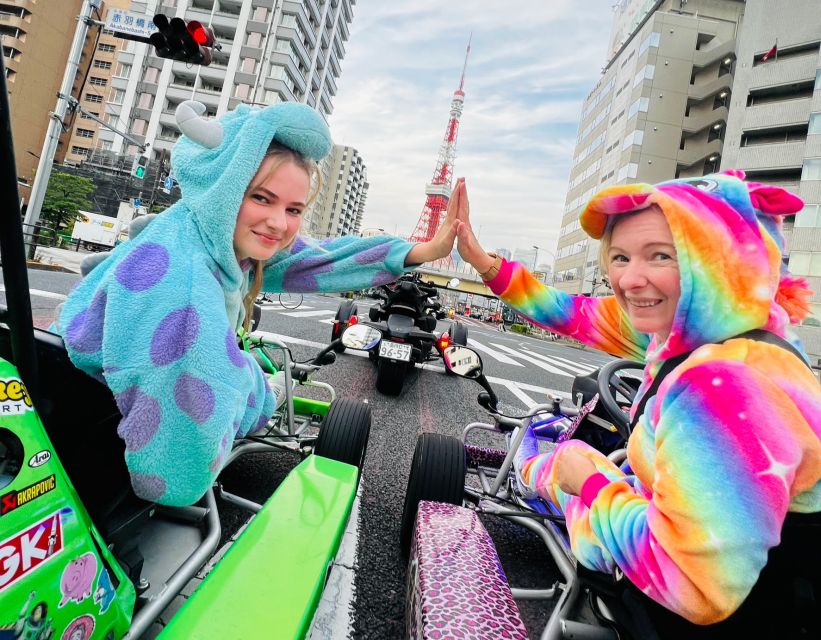
The approach to Shibuya Crossing is likely to be the emotional high point of the ride. This is the Tokyo scene most people picture when they think of crowds, giant screens, and a huge intersection filled with crossing pedestrians.
The go-kart format makes the arrival memorable. You are not standing above the street with a camera. You are moving through the district in a compact convoy, with people able to notice the group and your optional costumes. The guide takes photos during the tour, which is helpful because taking your own pictures while driving is neither practical nor sensible.
You should also understand the limits. Shibuya Crossing is not an attraction with a reserved viewing area or a long stop built into this experience. The tour uses the crossing as part of the driving route. You get the atmosphere and the landmark view, then continue along the streets.
That makes the tour especially good for anyone who has already seen Tokyo’s main sights from the usual angles and wants a fresh story to tell. It is also a strong choice for friends or couples who enjoy doing something slightly silly together. The costumes can make the scene even more noticeable, though they are not necessary for the ride.
Omotesando and the return to Gotanda
After Shibuya, the route heads toward Omotesando. This broad avenue is associated with fashion, polished storefronts, and modern architecture. It gives the tour another change of scenery after the heavy signs and crossing crowds around Shibuya.
You are still experiencing Omotesando from the road, not taking a shopping break. That can be a plus if you want to cover more ground in 105 minutes. It can be a drawback if you hoped to browse boutiques or stop for coffee. I would treat the route as a moving introduction, then return later by train if one of these neighborhoods deserves more time.
After Omotesando, you return to the original meeting point. The activity lasts 105 minutes, though the exact start times depend on availability. Since the tour begins and ends in the same place, it is easier to fit into a day than an excursion that drops you in another part of the city.
A few more Tokyo tours and experiences worth a look



What the guide adds to the experience
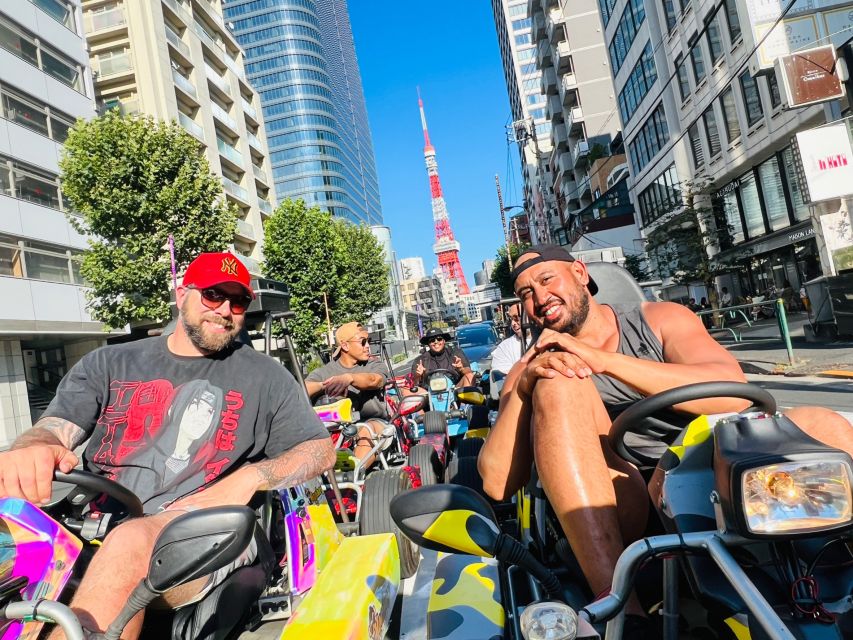
The guide is not only there to lead the karts. The strongest part of the format is having one person manage the group while also pointing out details and taking pictures.
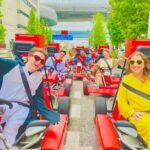
The group limit is eight participants, which is a useful size for an activity involving traffic. A smaller convoy is easier to keep together than a long line of vehicles. It also gives you a better chance to hear the guide and get individual attention.
Several guides have been singled out for different strengths. Andres has been praised for sharing facts during the ride. Pancho has been noted for keeping a group together and helping riders feel safe. Adam has been described as reassuring when a rider was nervous, while Ren and France were praised for taking plenty of photos. Ken has been remembered as both entertaining and responsible, and Federico handled a weather-related rescheduling situation well.
You cannot necessarily request one of these guides, so I would not book based on a particular name. The useful point is that the guide role matters here. A good leader keeps the group orderly, checks how people are doing, and turns a potentially stressful ride into a manageable one.
The instruction language is English. If you need guidance in another language, this experience may not suit you.
Cost, inclusions, and the real value
The price is $101 per person. That is more than a standard urban sightseeing ride, but the comparison is not quite fair. You are paying for a go-kart, petrol, an instructor, a small group, costumes, and guide-taken photos, along with the novelty of driving through several central Tokyo districts.
I see the value most clearly for people who want an activity rather than a passive tour. In 105 minutes, you cover a broad route and get a memorable experience that would be difficult to recreate on your own. The photos also save you from trying to document the ride while handling the kart.
The value is weaker if you mainly want detailed sightseeing at each stop. You will not spend a long time at Tokyo Tower, browse Omotesando, or explore Roppongi on foot. A traditional walking tour and public transport may give you more historical and cultural detail for less money.
An action camera is not included, and neither is a Bluetooth speaker. You should not assume that either accessory comes with the booking. The included photos are the practical souvenir feature.
The reserve-now, pay-later option can help if your schedule is still shifting. Free cancellation is available up to 24 hours before the activity for a full refund. The weather policy matters even more: rain may lead to rescheduling, so avoid putting this on the final available day of a short Tokyo stay.
The driving permit rule can make or break your booking
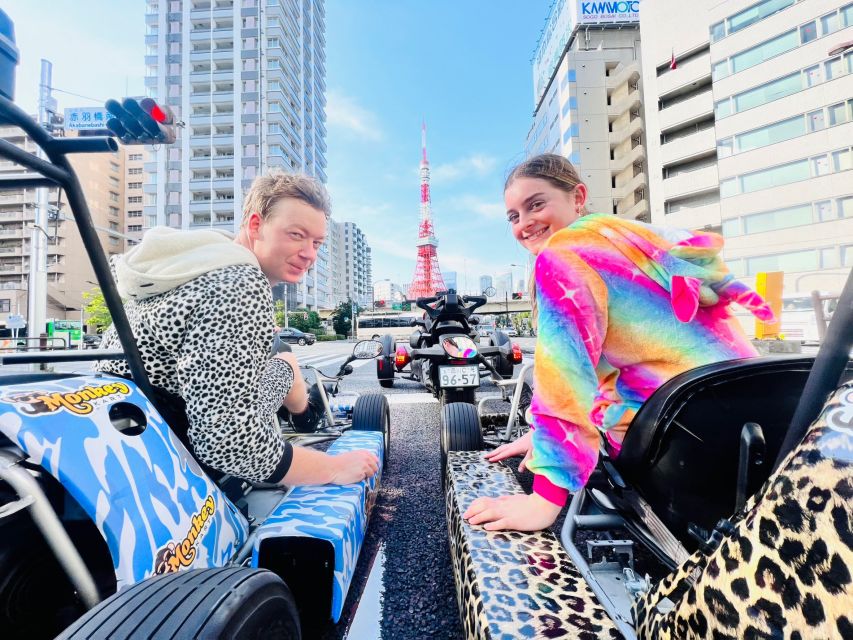
This is the most important practical detail. You need a hardcopy booklet containing a 1949 Geneva Convention International Driving Permit issued by the official agency in your country. An online version, scan, or soft copy is not valid.
A permit issued under the 1968 Vienna Convention is not recognized for this purpose. The information also specifically excludes permits issued by FIA, IDA, and IAA. You should obtain the correct physical permit before leaving your home country, not after arriving in Japan.
Drivers from France, Switzerland, Taiwan, Germany, Monaco, and Belgium need a Japanese translation of their local license. The physical translation can be obtained through a JAF office, the Japan Automobile Federation.
There are also restrictions for licenses from Indonesia, Pakistan, Saudi Arabia, Mexico, Brazil, Costa Rica, Colombia, Kuwait, Qatar, and some other countries. Check that your country issues the accepted 1949 Geneva Convention permit before paying for the tour.
Bring the permit in physical form on the day. A driver without the required license documentation cannot take part. The activity is also not suitable for people who do not have a driver’s license or for pregnant women.
Costumes, comfort, and the right kind of fun
Costumes are available if you want to add a comic touch. They are optional, so you can keep the focus on the city and the driving if dressing up is not your thing.
The costume choice changes the social side of the ride. People on the street may notice the convoy, and the guide’s photos will look more playful. If you prefer not to attract attention, ordinary clothing is the quieter option.
You should also dress with the weather in mind. The tour may be moved because of rain, but conditions can still affect your comfort if the ride goes ahead. The experience is open-air, and the route passes through city streets rather than an enclosed vehicle.
I would choose this for an outgoing couple, a group of friends, or a solo visitor who likes active sightseeing. It can work for a mixed group too, as guides have helped nervous riders feel more at ease. Still, you should be honest with yourself about traffic, speed, and driving confidence.
Who should book the Tokyo go-kart ride?
Book it if you want a memorable break from temples, department stores, and train stations. The route gives you a quick look at several famous parts of Tokyo, and the driving itself becomes the main attraction.
I would be especially keen to book it at night, or at a start time that moves from daylight into evening. That combination lets you see the city streets in two moods. A small group, English-speaking guide, and included photos add useful value.
Skip it if you do not have the correct physical permit, dislike driving in traffic, are pregnant, or want long stops at each landmark. It is also a poor choice for a rigid itinerary because rain can force a new date.
For the right person, $101 buys more than transport between sights. It buys a lively, slightly ridiculous, very memorable way to see Tokyo. Just handle the paperwork first, then let the guide lead you through the city.
FAQ
How long does the go-kart tour last?
The tour lasts 105 minutes. Starting times vary, so you need to check availability for the date you want.
Where does the tour start?
The meeting point is a seven-minute walk from JR Gotanda Station, in the Shinagawa area.
Where does the tour end?
The activity returns to the same meeting point near JR Gotanda Station.
Which Tokyo sights are included on the route?
The route goes to Tokyo Tower first, then Roppongi, Shibuya Crossing, and Omotesando before returning to the start.
Is an English-speaking guide included?
Yes. An English-speaking instructor accompanies the group and leads the go-karts.
How many people can join the group?
The tour is limited to eight participants.
Is a costume included?
Yes. Costumes are included, and you can choose to wear one if you wish.
Do I need an International Driving Permit?
Yes. Most drivers need a physical 1949 Geneva Convention International Driving Permit issued by the official agency in their country. Online copies are not valid.
What happens if it rains?
The tour may be rescheduled because of rain. You can cancel up to 24 hours in advance for a full refund, according to the activity terms.
More Go-Kart Tours in Tokyo
More Shibuya Tours in Tokyo

More tours in Tokyo we've reviewed












Go-Karts, compared.
 ★ 5.0Flagship 2-Hours Official Street Go-Kart Tour – Tokyo Bay ShopFrom $642 hours to 2 hours 30 minutes (approx.)
 ★ 5.0Official Street Go-Kart in ShibuyaFrom $76
 ★ 5.0Official Street Go-Kart Tour – AkihabaraFrom $61
 ★ 5.0Tokyo Go Kart: Asakusa, Skytree, and Akihabara **IDP MUST**From $99
 ★ 5.0Shibuya Official Street Go-Kart in Shibuya AnnexFrom $69
 ★ 4.6Tokyo: Asakusa and Skytree Go-Kart Tour and Photo ShootFrom $67