Reviewed · GO-KART TOURS
Tokyo: Street Kart Experience in Shibuya
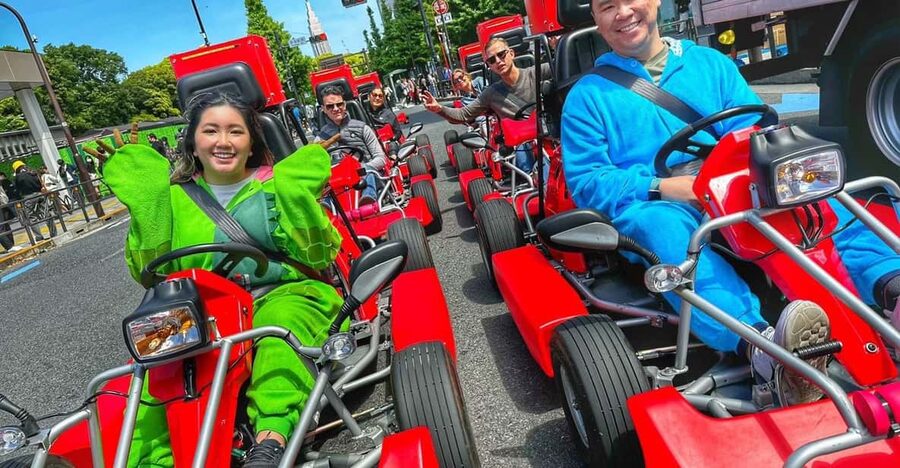
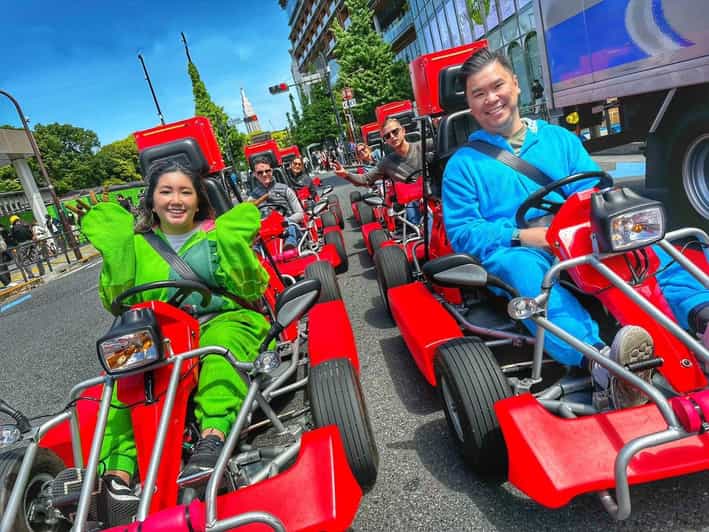
Driving a go-kart through Shibuya Crossing is about as far from a standard Tokyo sightseeing tour as you can get. You roll through the famous intersection more than once, then follow your guide toward Harajuku and Omotesando while pedestrians wave and snap photos.
In This Article
- Key points to know before booking
- Why this Tokyo tour is so unusual
- Starting in the semi-underground garage
- Safety comes before the Shibuya excitement
- Crossing Shibuya with the crowd watching
- Harajuku and Omotesando after the crossing
- Guides make or break the hour
- Photos are one of the strongest inclusions
- Daytime or evening?
- The documents you must arrange before Tokyo
- Who will enjoy this most?
- FAQ
- How long does the Street Kart Shibuya experience last?
- How much does the experience cost?
- Do I need an International Driving Permit?
- What documents must I carry?
- Can I use my cellphone during the ride?
- Can I record video?
- Are costumes included?
- Is the activity suitable for children?
- Where does the tour finish?
- Should you book this Shibuya kart ride?
I like the small group size, capped at six, and the fact that the guide handles photos while you focus on driving. Guides such as Eric, Riku, Daniel, Manuel, and Yoshi have earned strong praise for clear instructions and lively leadership. The main catch is that the advertised one hour may include preparation, with one guest estimating about 40 minutes actually spent on the road.
Key points to know before booking
- Shibuya Crossing from the driver’s seat: You pass through Tokyo’s best-known intersection multiple times, from different directions.
- A six-person maximum: The compact group makes it easier for the guide to keep everyone together in city traffic.
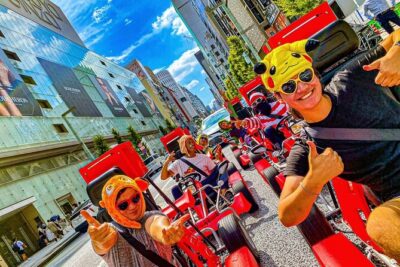
- Costumes and camera-ready moments: Costumes are included, and your guide takes photos during the activity.
- Harajuku and Omotesando route: After Shibuya, you cruise through two of Tokyo’s major fashion districts.
- Driving documents are essential: Most participants need a physical 1949 Geneva Convention International Driving Permit, plus a physical passport.
- One hour on the booking clock: Ask yourself if roughly 40 to 60 minutes of driving is enough value for the $99 price.
Why this Tokyo tour is so unusual
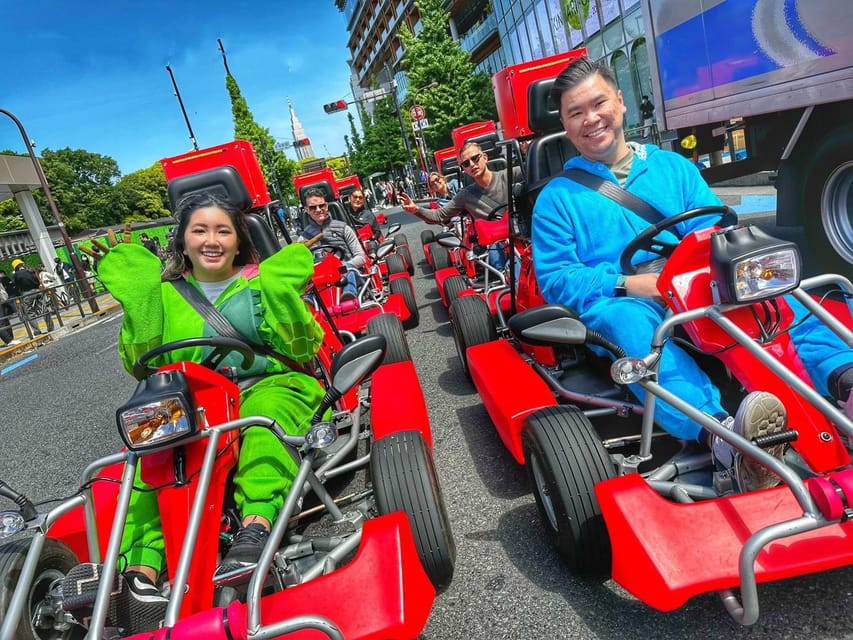
Tokyo offers plenty of ways to see the city: trains, observation decks, walking tours, and river cruises. This experience gives you something none of those can provide. You become part of the street scene, sitting low in a small kart as pedestrians look over, wave, and take in the passing parade.
That attention is the heart of the activity. You are not quietly observing Shibuya. You are moving through it in a costume, with a small convoy of karts and a guide leading the way. If you prefer to blend into the city, this is not your tour. If you enjoy a little theater and want a story to tell at dinner, it has plenty of appeal.
The experience costs $99 per person. That is not a cheap way to cover Tokyo, and you should not judge it as a practical transportation option. You are paying for the unusual access, the guide, the kart, fuel, insurance, costume use, and the photos taken during the ride.
I see the price as fair for a special occasion or a final-day splurge, especially if you value the photographs and the novelty. It is harder to justify if you mainly want a long driving session, since the road time may be closer to 40 minutes than a full hour.
A few more Tokyo tours and experiences worth a look
Starting in the semi-underground garage
The meeting point is not a grand storefront. The shop sits in a semi-underground garage, entered from the street by an outside staircase. Look for the neon logo on the outside wall. Inside, the garage has wall-to-wall mirrors, and a hot pot restaurant occupies the second floor of the building.
Give yourself enough time to find the entrance. The setting is functional rather than polished, and one person found the garage area a little untidy. That first impression does not appear to define the road experience, but it is useful to know so you are not expecting a glossy showroom.
The check-in team gets you ready, confirms your documents, and explains the basic rules. You receive your kart, gasoline, insurance, goggles, and a raincoat if the weather calls for one. Costumes are included, so this is the point to choose something that will show clearly in photos.
You cannot use your cellphone during the activity. That rule makes sense for safety, but it means you should not plan to film the ride with your own phone. If you want video, an action camera, micro-SD card, and mounting equipment are optional extras.
Safety comes before the Shibuya excitement
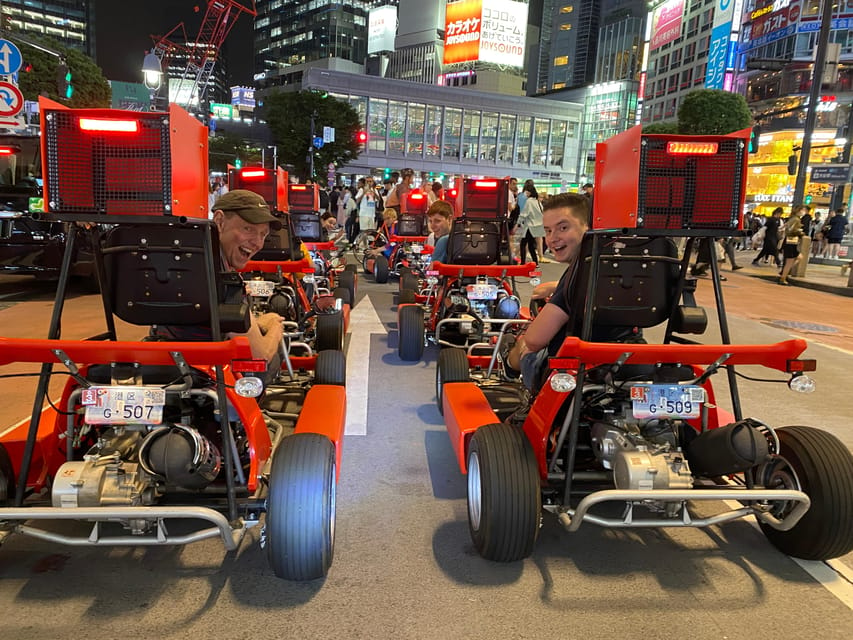
Driving on Tokyo’s public roads is very different from riding a kart at a dedicated track. You need the correct documents, a physical passport, and the ability to follow the guide’s directions and signals. The staff provides safety information before departure, and the guide leads the group throughout the route.
The small group limit of six matters here. A guide can keep a compact line together more easily than a large convoy, and the guide’s position at the front gives you a clear pace to follow. Several participants specifically appreciated the explanations, hand signals, and efforts to keep the group together.
You should still take the road setting seriously. This is not a bumper-car ride, and the excitement comes from sharing city streets with normal traffic. Reports of the karts feeling quick are part of the fun, but speed is not a reason to ignore instructions or push beyond your comfort level.
The experience is not suitable for children under 18, pregnant women, people with mobility impairments, wheelchair users, or people with back problems. It is also not suitable for people with hearing impairments. Slippers and high heels are prohibited, as are alcohol and drugs.
Crossing Shibuya with the crowd watching
The main event is Shibuya Crossing. You have likely seen the intersection in films, advertisements, and photographs, but crossing it in a kart changes your point of view completely. Instead of watching the waves of pedestrians from the pavement, you pass through the surrounding streets as the crossing becomes part of your route.
The karts go through the crossing multiple times from different directions. That gives you more than one quick glimpse and lets the guide organize the group through this major traffic point. It also creates several chances for the guide to photograph you in the middle of one of Tokyo’s most recognizable scenes.
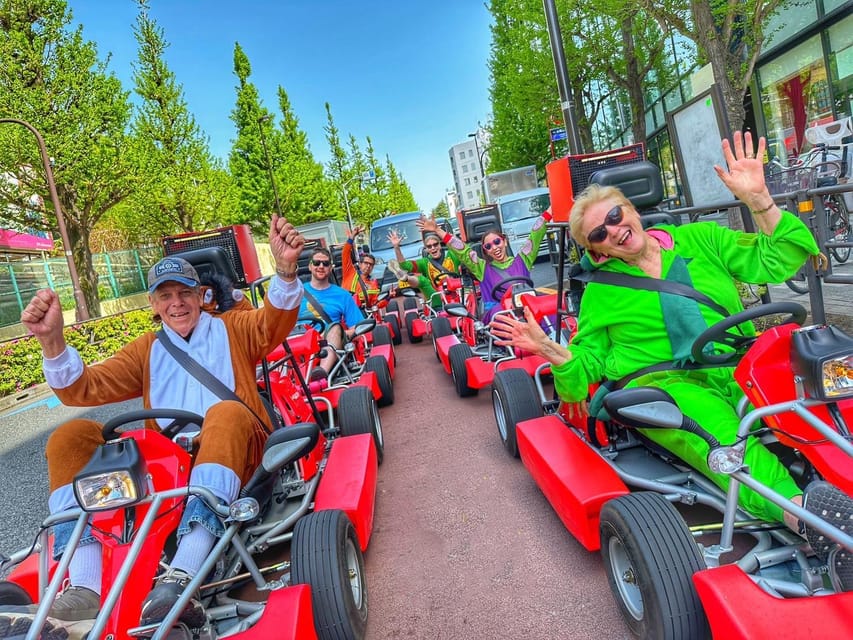
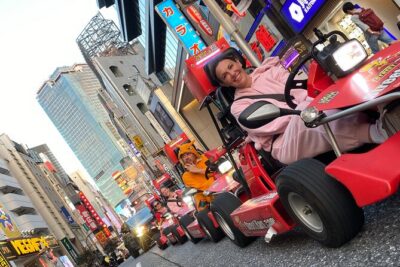
This is where the costume choice pays off. A brightly dressed group is hard to miss, and people on the sidewalks often wave or stop to look. You should expect attention, not privacy. Some people will love feeling like the main feature of a moving parade. Others may find the public display a little much.
The experience works best if you treat the attention as part of the activity rather than an interruption. Smile, keep your eyes on the road, and let the guide manage the pace. The photos can capture the moment better than trying to look toward every person holding up a camera.
Harajuku and Omotesando after the crossing
Once you have made the Shibuya section, the route heads toward Harajuku and Omotesando. These districts give the ride a different setting from the large intersection.
Harajuku is one of Tokyo’s best-known fashion centers, associated with youth style and eye-catching street culture. Omotesando is another major fashion area, with a more polished shopping feel. From a kart, you will not stop for a shopping visit or a long explanation, but the route lets you connect two districts that many visitors explore on foot.
The value here is movement. You see the relationship between Shibuya, Harajuku, and Omotesando while following a guide who knows the course. It is not a replacement for wandering Takeshita Street or browsing Omotesando’s shops, but it gives you a quick street-level look at this part of Tokyo.
Keep your expectations clear: this is a driving activity with sightseeing along the way, not a full city tour. The guide’s first job is to keep the group safe and together. You will get a taste of the districts, not a detailed history lesson or time to stop at individual sights.
A few more Tokyo tours and experiences worth a look



Guides make or break the hour
The guide is the one part of the experience you cannot choose in advance, but it has a major effect on the day. The strongest feedback consistently focuses on guides who are energetic, funny, clear, and reassuring.
Eric has been praised for putting nervous drivers at ease and keeping the group under control. Riku is known for an upbeat welcome, clear explanations, and a positive presence on the road. Daniel has been especially good at explaining the rules and taking a large number of photos, with one group receiving more than 100 images.
Manuel, Yoshi, JD, Salah, Clinton, Allen, Alexis, and Roi, also known as the Banana man, have all been singled out for making the ride fun and safe. Those names matter because a guide who keeps the mood light can make first-time road drivers feel much more comfortable.
You do not need a theatrical guide to enjoy the route, but this activity clearly suits someone who likes a social, high-energy atmosphere. If the guide is calling out directions, posing the group for photos, and keeping spirits high, the one-hour session feels like an event rather than a simple vehicle rental.
Photos are one of the strongest inclusions
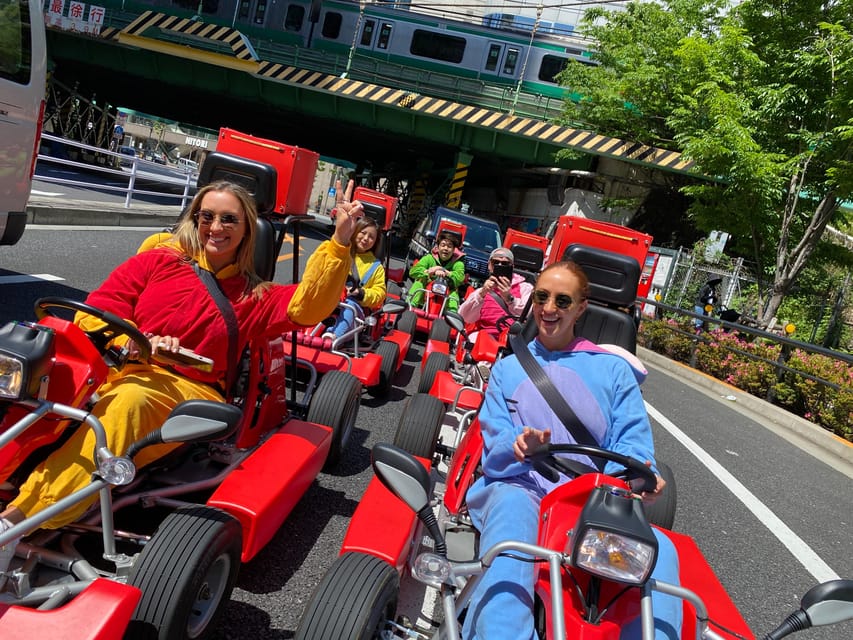
Your guide takes as many photos as possible during the activity, and the photo data is included. This is a major benefit because you are not allowed to use your cellphone while driving, and stopping to take your own pictures would defeat the point of the ride.
The guide can photograph the group at different points, including the Shibuya area. Some people have received more than 100 images, though the number will depend on the route, timing, traffic, and guide. You receive the data after the activity rather than needing to manage a camera while driving.
Video is separate. You can rent an action camera and a mount for your head or chest, and you can purchase a micro-SD card for the footage. These extras are not included, so factor them into the cost only if video matters to you.
For most people, the included photos are enough. You get to enjoy the road, wave back at pedestrians, and keep both hands available instead of worrying about recording every second.
Daytime or evening?
The experience runs at different starting times, so check availability when you book. Evening departures have a clear appeal: Shibuya’s lights make the ride feel more theatrical, and the illuminated streets create stronger night photos.
Daytime may suit you better if you want a clearer view of the route and prefer maximum visibility. Evening gives you the city-light effect, but you should be comfortable driving in that setting and following the guide closely.
Rain does not automatically mean the activity is impossible. Raincoats are available, and one booking was rescheduled because of rain. Still, weather can affect comfort and scheduling, so check the provider’s current arrangements if the forecast looks poor.
The documents you must arrange before Tokyo
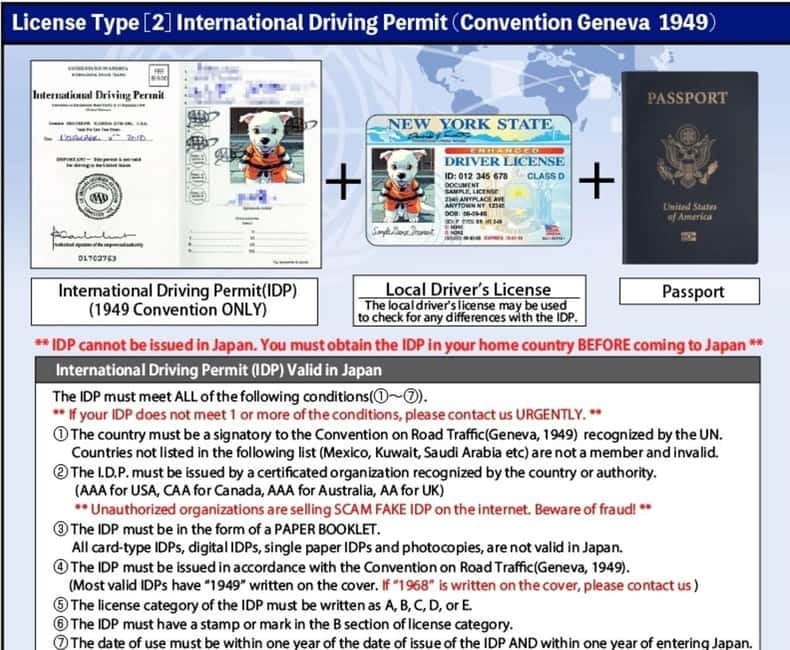
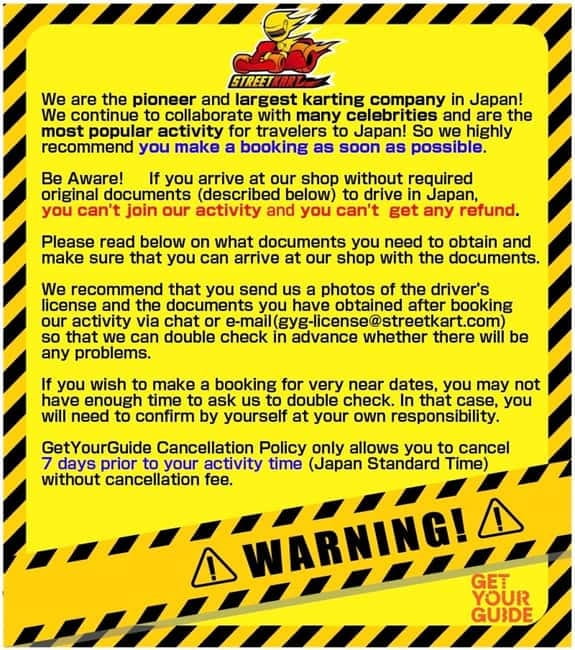
Do not leave the driving paperwork until you reach Japan. The provider emails guidance after booking, but you must arrive with the correct physical documents.
For most countries, you need an International Driving Permit issued in booklet form under the 1949 Geneva Convention. It must be issued by the same country that issued your domestic license. An online permit obtained while already abroad is not accepted.
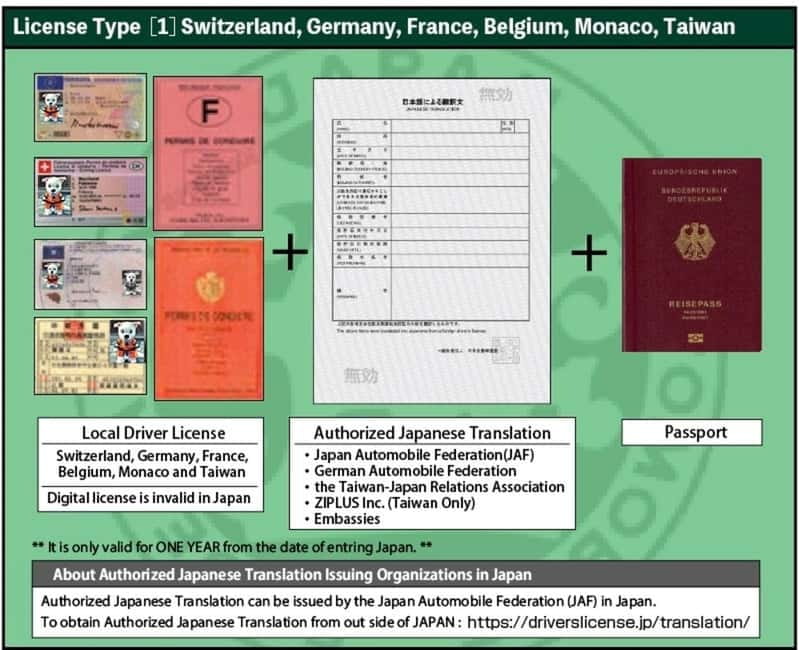
Drivers from Switzerland, Germany, France, Taiwan, Belgium, and Monaco need a Japanese translation of their license from the Japan Automobile Federation, known as JAF. In those cases, bring the physical domestic license and the official translation.
Licenses from countries not covered by the 1949 Geneva Convention, including China, Indonesia, Mexico, Qatar, and Saudi Arabia, are not permitted for driving in Japan under the stated rules. Bring your physical passport as well as the permit or translation. If you lack the required documents, you cannot simply rely on a digital copy.
This is the most important practical point in the entire booking. Confirm your eligibility before paying, and check your paperwork again before leaving home.
Who will enjoy this most?
I would recommend the ride to adults who want an unusual Tokyo memory and do not mind being seen. It works especially well for friends, couples, solo participants who enjoy meeting an international group, and families with adult children.
The activity is also a good fit if you want photos that feel different from ordinary sightseeing pictures. A costume, a kart, and Shibuya Crossing create a clear sense of place without requiring you to pose in a studio.
I would hesitate to recommend it to anyone seeking a quiet tour, a long route, or detailed cultural commentary. The road time may feel short if you expected a full hour behind the wheel, and the public-road format demands attention. People with the listed medical, mobility, or hearing restrictions should choose another activity.
Cancellation is free up to seven days in advance for a full refund. That is useful for planning, but you should still sort out the driving documents before the cancellation deadline.
FAQ
How long does the Street Kart Shibuya experience last?
The stated duration is one hour. The actual time spent driving may be shorter, with one account estimating about 40 minutes on the road, so consider the full session as preparation plus the ride.
How much does the experience cost?
The listed price is $99 per person. Kart use, gasoline, insurance, costumes, goggles, a raincoat on rainy days, an English-speaking guide, and guide-taken photo data are included.
Do I need an International Driving Permit?
Most participants need a physical, booklet-format International Driving Permit that complies with the 1949 Geneva Convention. It must be issued by the same country as your domestic driving license.
What documents must I carry?
Carry your physical passport and your physical International Driving Permit. Drivers from Switzerland, Germany, France, Taiwan, Belgium, and Monaco instead need their physical domestic license plus an official Japanese translation from JAF.
Can I use my cellphone during the ride?
No. Cellphones are not allowed during the activity. Your guide takes photos, and the photo data is included afterward.
Can I record video?
Video recording is possible with optional action-camera equipment. The action camera, micro-SD card, and head or chest mount are not included in the base price.
Are costumes included?
Yes. Costumes are included, so you can dress up for the ride and the photographs.
Is the activity suitable for children?
No. Participants must be at least 18 years old.
Where does the tour finish?
The activity ends back at the original meeting point, the semi-underground garage with the neon logo and outside staircase.
Should you book this Shibuya kart ride?
Book it if you want a playful, highly visible way to experience Shibuya and you already have the correct driving documents. The combination of multiple Shibuya Crossing passes, Harajuku and Omotesando, costumes, guide-led safety, and included photos gives you a memorable hour that ordinary sightseeing cannot match.
I would choose an evening departure for city lights, and I would confirm the expected driving time before booking if the one-hour promise is important to you. I would also arrive with comfortable, closed footwear and every required physical document in hand.
Skip it if you dislike public attention, need a longer driving route, or want a calm introduction to Tokyo. For everyone else who sees the value in a little silliness on the streets of Shibuya, this is a strong $99 splurge, especially when a guide such as Eric, Riku, or Daniel turns the ride into a well-managed group experience rather than a nervous lap around town.
More Go-Kart Tours in Tokyo
More Shibuya Tours in Tokyo

More tours in Tokyo we've reviewed












Go-Kart Tours, compared.
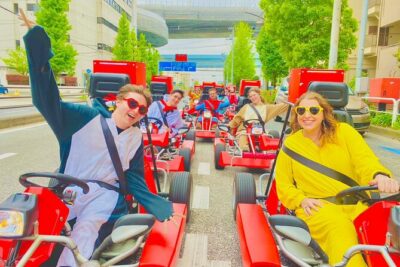 ★ 5.0Flagship 2-Hours Official Street Go-Kart Tour – Tokyo Bay ShopFrom $642 hours to 2 hours 30 minutes (approx.)
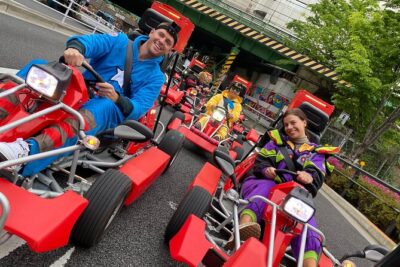 ★ 5.0Official Street Go-Kart in ShibuyaFrom $76
 ★ 5.0Official Street Go-Kart Tour – AkihabaraFrom $61
 ★ 5.0Tokyo Go Kart: Asakusa, Skytree, and Akihabara **IDP MUST**From $99
 ★ 5.0Shibuya Official Street Go-Kart in Shibuya AnnexFrom $69
 ★ 4.6Tokyo: Asakusa and Skytree Go-Kart Tour and Photo ShootFrom $67