Reviewed · SHIBUYA TOURS
Tokyo: Shibuya Highlights Walking Tour
Shibuya’s famous crossing is only the opening act. This 90-minute walk starts at Hachiko’s statue, takes you through the great human tide of Scramble Crossing, then turns into side streets, restaurant lanes, local bars, and lesser-known viewpoints. It gives you a useful first read on a district that can otherwise feel like a wall of neon and noise.
In This Article
- Key points at a glance
- Starting beside Hachiko and the Shibuya station maze
- Walking across the famous Scramble Crossing
- Moving from neon streets to local food and bars
- Finding quieter corners and local manners
- What the guides add to the walk
- Why 90 minutes is enough, and why it is not
- Price, group size, and practical value
- Rain, mobility, and meeting-day details
- Who should book this Shibuya walk?
- Should you book the Shibuya Highlights Walking Tour?
- FAQ
- Where does the tour meet?
- How long does the walking tour last?
- What language is the tour offered in?
- How many people can join the group?
- Is the tour wheelchair accessible?
- Does the price include food or drinks?
- Is hotel pickup provided?
- What should I bring in rainy weather?
I like the small groups of up to six, which make it easier to ask questions and keep up in crowded streets. I also like the practical local guidance: Sakura, Hiroko, Rick, and other guides have pointed people toward ramen shops, shopping areas, quieter corners, and respectful photo practices. The main drawback is time. Ninety minutes gives you a sharp introduction, not a full tour of every corner of Shibuya.
Key points at a glance
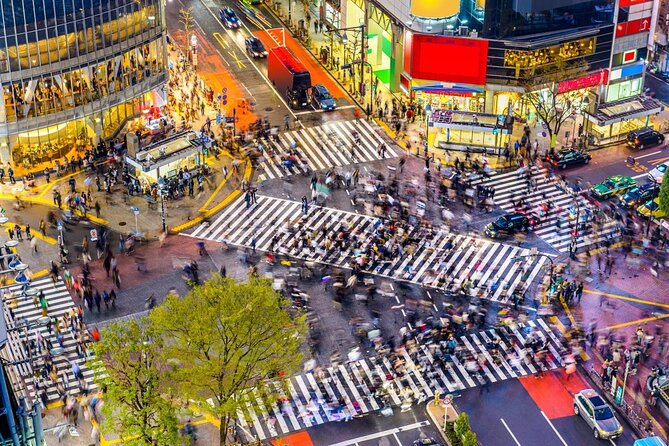
- Start at Hachiko’s statue: Meet at the SHIBU HACHI BOX tourist information center by the famous dog statue and begin with the story behind one of Shibuya’s best-known meeting places.
- Cross Scramble Crossing: Walk through the world-famous intersection instead of merely photographing it from the edges.
- Find better views: The guide takes you to a viewing spot where you can see the crossing and surrounding streets from above.
- See local Shibuya: Move beyond the main signs and department stores into restaurant streets, pubs, and quieter lanes.
- Get useful Tokyo advice: Ask about food, shopping, local customs, and places to explore after the tour.
- Keep it personal: The group is limited to six, and sometimes the walk becomes a private or nearly private experience.
Starting beside Hachiko and the Shibuya station maze
Your meeting point is the SHIBU HACHI BOX tourist information center, directly in front of the Hachi statue. Come out of the Hachiko Exit of JR Shibuya Station, then tell the desk staff that you are joining the tour.
That detail matters. Shibuya Station is a maze of exits, rail lines, underground passages, and signs. Give yourself extra time to reach the statue, even if you are usually good at navigating cities. The guide can wait only five minutes, and late arrivals cannot join partway through the walk.
The statue is more than a convenient landmark. Hachiko is tied to one of Japan’s most familiar stories of loyalty, and the area around it has become one of Tokyo’s classic meeting points. Your guide begins by explaining the background of the statue and the surrounding district, giving you a little context before the crowds take over.
This is a good place to start your Shibuya visit because you immediately learn how the area works. You see where the station exits lead, how people gather, and how the main pedestrian routes connect. If you arrive in Tokyo with no feel for Shibuya, the first few minutes help you get your bearings fast.
A few more Tokyo tours and experiences worth a look


Walking across the famous Scramble Crossing
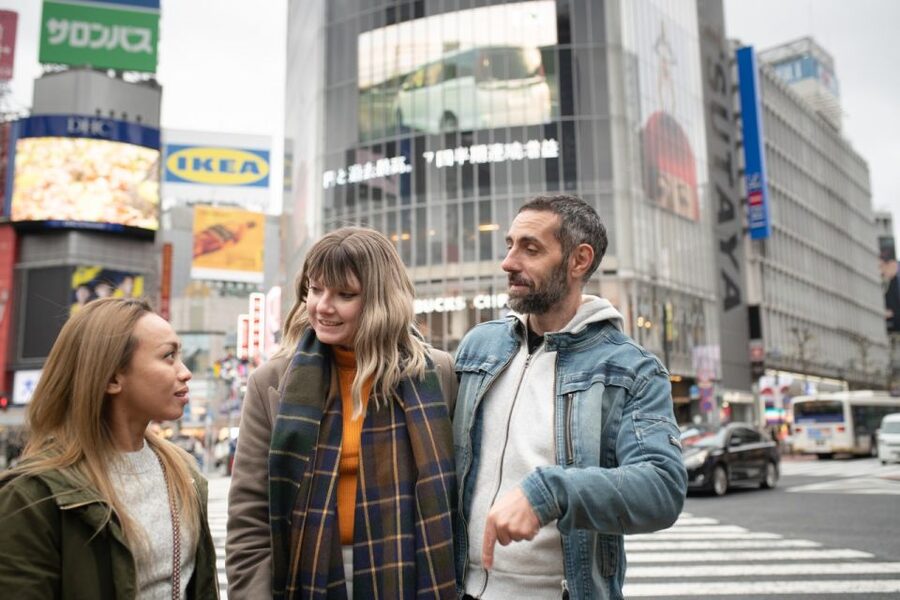
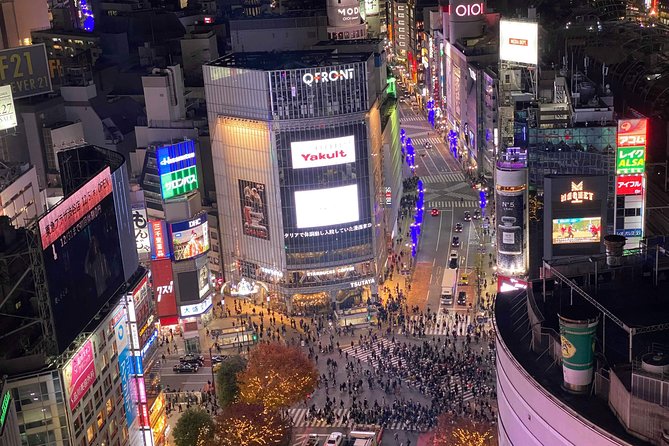
From Hachiko, the tour heads toward Shibuya Scramble Crossing. The crossing is often called the busiest in the world, and its appeal is easy to understand. Traffic stops in every direction, the signals change, and large streams of people move across the intersection at once.
You will walk through it with the group, not simply watch from a café window. That is the point. From inside the crossing, the intersection feels less like a single attraction and more like a carefully timed part of daily city life.
Your guide helps you handle the moment without turning it into a frantic photo stop. You can pay attention to the flow of people, the enormous screens, and the surrounding buildings, then regroup on the other side. The crossing itself takes only a short time, but it gives the tour its essential Shibuya snapshot.
The better part comes afterward. Instead of leaving you at the most obvious viewing area, the guide takes you to a spot with a clear look back at the crossing. Several guides have been praised for finding a good angle away from the thickest crowds. That can make a real difference when you want a photo or simply want to watch the intersection without being pressed into a packed viewing area.
Moving from neon streets to local food and bars
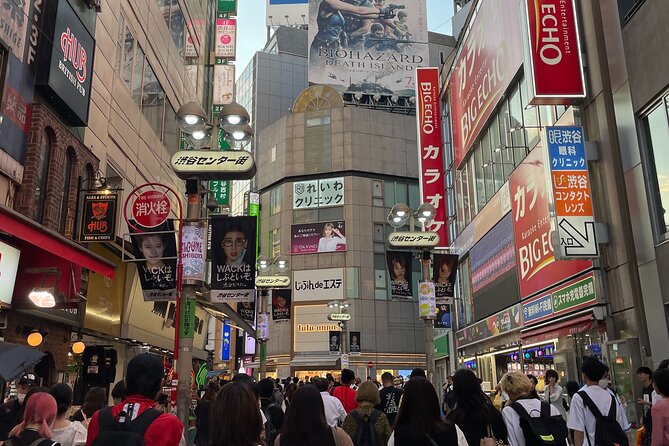
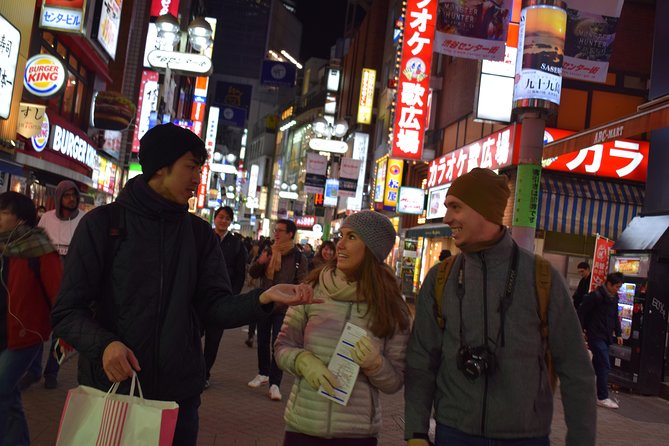
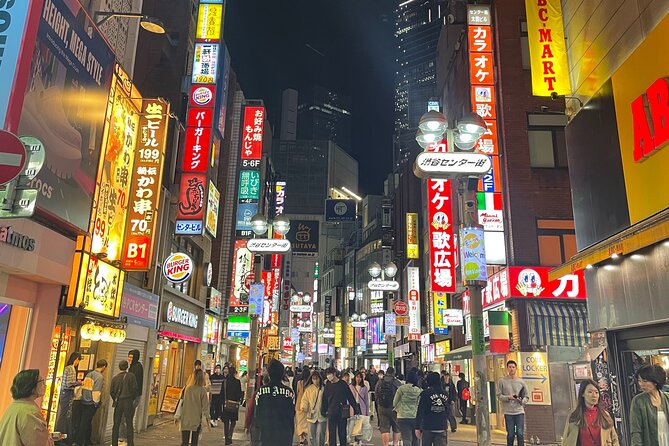
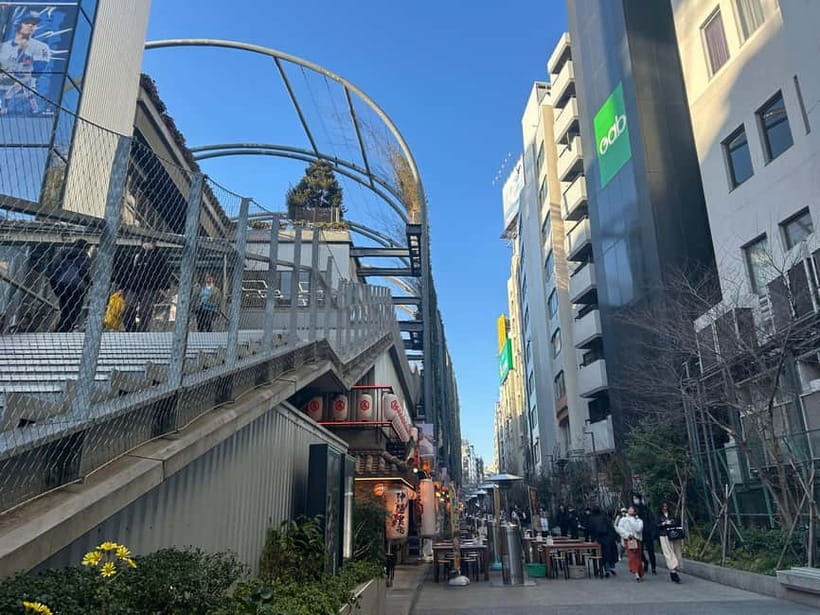
Shibuya is often reduced to giant advertising screens, shopping towers, and young crowds. This walk tries to show you a broader neighborhood. After the crossing, you move past restaurants, bars, pubs, and streets that are easy to miss when you are following the main tourist routes.
The guide’s value here is not just naming places. A local can explain what sort of street you are walking through, which areas are suited to a quick meal, and where you might return later. Food advice comes up often, with guides offering suggestions for ramen, lunch, and other local restaurants.
You should treat these tips as a starting list, not a fixed meal plan. The tour does not include food or drinks, and you are not promised a tasting stop. That keeps the price low, but it also means you should plan to eat before or after the walk.
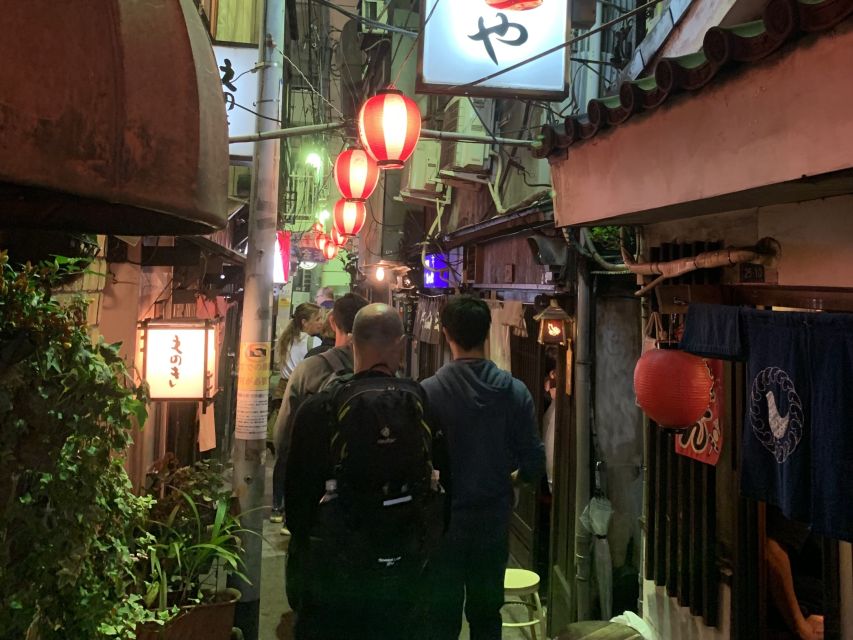
The bar and pub areas give you a different view of Shibuya. You see where the district shifts from major shopping streets to places aimed at evening diners and drinkers. For many people, this is the most useful part of the tour because it turns an overwhelming area into a set of smaller places you can return to later.
Some of the streets can feel crowded, and the pace may slow around busy station routes. That is normal for Shibuya. Comfortable clothes and sensible walking shoes will help, though the supplied information specifically lists comfortable clothing as the main thing to bring.
Finding quieter corners and local manners
The tour does not stay in the loudest center. You move away from the main rush to see quieter streets and spots that are less obvious on a first visit. The exact route can vary with the guide, timing, and conditions, so you should not expect a rigid list of named stops.
That flexibility is useful. Guides such as Sakura, Hiroko, Fumino, Izumi, Roko, Yoshi, and Hayato have each been praised for shaping the walk around questions and interests. Some people receive more food advice, some ask about shopping, and others spend more time on local history or photo locations.
There is also a cultural benefit. One guide, Rick, pointed out places where taking pictures was inappropriate. That is exactly the sort of small warning you may not pick up from a map or a standard sightseeing list. The point is not to make you nervous about using your camera. It is to help you notice that a busy public district can still contain spaces with different expectations.
The quieter sections also give the tour a better rhythm. Scramble Crossing provides the spectacle, while the side streets show how Shibuya works when you look past the famous image. You may find restaurants, shopping routes, and small lanes that you would not have chosen on your own simply because they are not the first things visible from the station.
What the guides add to the walk
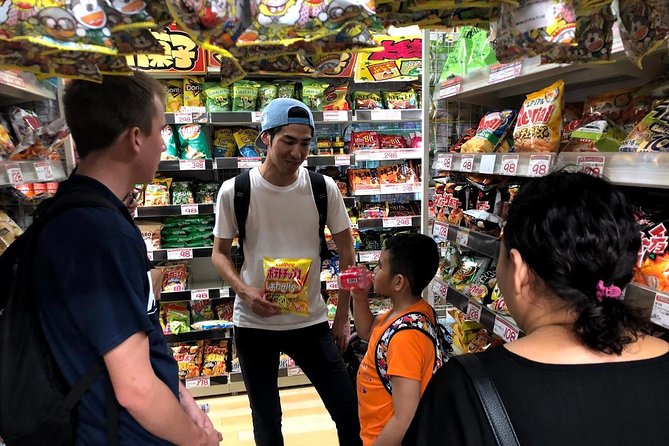
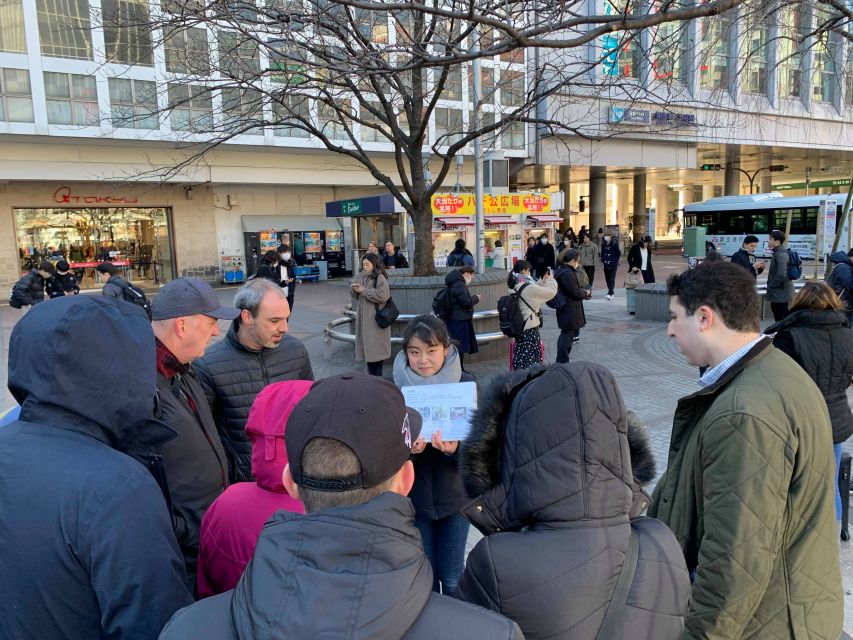
The strongest feature of this experience is the human scale. The tour uses English-speaking local guides, and the group is limited to six participants. That is small enough for a conversation rather than a march behind a flag.
Several guides have been singled out for their warm manner and clear English. Sakura is often described as enthusiastic and helpful, with strong suggestions for food and shopping. Hiroko has been praised for keeping children involved as well as explaining the district. Fumino has led walks for just one participant, turning the outing into an informal private conversation.
That small-group setup can change the experience. You can stop to ask why a place matters, request a restaurant suggestion, or check the best way to return to a location later. In a group of 20 or 30, those questions often get lost. Here, they are part of the value.
The guide may also take photos of you along the way. This has been a welcome touch for some groups, especially when everyone wants a picture at Hachiko or with the crossing in the background. It is not listed as a formal included service, so think of it as a possible kindness from your guide rather than something to book solely for that reason.
A small group is not automatically perfect for everyone. If you prefer to walk alone, set your own pace, or stop for long periods in shops, an organized walk may feel restrictive. But for a first look at Shibuya, the limited size is a strong advantage.
Other walking tours we've reviewed in Tokyo



Why 90 minutes is enough, and why it is not
The 90-minute length works well as an orientation. You cover the major image of Shibuya, get a look at restaurant and pub streets, hear some background, and finish with ideas for your own afternoon or evening.
It is also easy to fit into a Tokyo schedule. You could take it soon after arriving in Shibuya, use it as a first activity in Japan, or book it before a separate shopping and dining session. One person found a late afternoon start in winter especially attractive because the light began to change as the sun went down. That timing can add atmosphere to the signs and views, though availability depends on the date.
The limit is coverage. Shibuya has far more shops, shrines, arcades, restaurants, and side streets than any 90-minute walk can include. One person felt the route covered a fairly short area, even while recommending it as a way to know the district.
I would think of this as a map in human form. After the walk, you will not have seen all of Shibuya. You will have a better idea of where to return, where to eat, where to photograph the crossing, and which streets deserve another look.
Price, group size, and practical value
At $19 per person, this is an inexpensive way to get a local introduction to one of Tokyo’s most confusing districts. The price covers the walking tour and English-speaking guide. It does not cover food, drinks, transport, or hotel pickup and drop-off.
The value comes from saved time and better choices. You could walk around Hachiko and Scramble Crossing for free, but finding a good viewing spot, understanding the station exits, identifying useful restaurant areas, and learning local photo manners would take more trial and error.
The group limit of six makes the price especially appealing. A larger tour might offer similar facts, but it would be harder to have a real exchange with the guide. If your group is small and the booking does not fill, you might receive an almost private walk without paying a private-tour price.
This is not the right choice if you expect entry to attractions, a meal, or a long list of major sights. It is a guided neighborhood walk, and its strength is explanation and orientation rather than included extras.
You can cancel up to 24 hours in advance for a full refund, and you can reserve now and pay later. Those terms are helpful when Tokyo weather or a crowded itinerary makes your plans uncertain.
Rain, mobility, and meeting-day details
The tour runs rain or shine, so bring an umbrella or raincoat when rain is expected. Shibuya can be awkward in wet weather because crowds bunch beneath station entrances and covered walkways. You will want clothing that lets you walk comfortably and shoes suited to city pavement.
The activity is listed as wheelchair accessible. Because the walk passes through busy public streets and station areas, it is sensible to confirm any specific access needs with JLB Tours before booking, especially if you need information about the exact route.
Transportation is not included. You must reach the Hachiko Exit of JR Shibuya Station on your own, and the guide will not collect you from your hotel. Keep the meeting coordinates handy, at 35.6591253, 139.7008004, and allow more than five minutes for station navigation.
English is the listed tour language. The guides have been praised for clear English, and some use a picture book with English text to help explain information while walking. That can be useful when the streets are noisy or when a cultural point is easier to understand visually.
Who should book this Shibuya walk?
I would recommend it most strongly to first-time Tokyo visitors who want help making sense of Shibuya before exploring alone. It is also a good fit if you care more about local food advice and neighborhood context than ticking off a long attraction list.
Families can benefit, too. A guide such as Hiroko has kept younger children engaged, while the short duration avoids the fatigue of a full-day outing. Groups of young adults may like the combination of shopping advice, restaurant suggestions, photo stops, and evening pub streets.
It is less suitable for someone who already knows Shibuya well or wants an in-depth specialist tour. It may also disappoint you if you want to spend a long time inside shops, eat during the activity, or visit several formal attractions.
Should you book the Shibuya Highlights Walking Tour?
Book it if you want a friendly, low-cost introduction with real local pointers, a small group, and a good view of Scramble Crossing. The strongest reason to choose it is not simply that it visits famous places. It helps you understand how the area fits together, then sends you off with ideas for your own meal, shopping route, and evening.
Skip it if your schedule is already packed with independent plans or if you want a food tour with tastings. For most first visits, though, $19 and 90 minutes is a sensible trade: you get the headline sight, quieter streets, useful advice, and a local guide who can answer the questions a map cannot.
FAQ
Where does the tour meet?
It meets at SHIBU HACHI BOX, the tourist information center in front of the Hachi dog statue. Exit JR Shibuya Station through the Hachiko Exit.
How long does the walking tour last?
The tour lasts 90 minutes.
What language is the tour offered in?
The live tour guide speaks English.
How many people can join the group?
The group is limited to six participants.
Is the tour wheelchair accessible?
Yes, the activity is listed as wheelchair accessible.
Does the price include food or drinks?
No. Food and drinks are not included.
Is hotel pickup provided?
No. Hotel pickup and drop-off are not included, and transportation is not provided.
What should I bring in rainy weather?
The tour runs rain or shine. Bring an umbrella or raincoat when it rains, along with comfortable clothing for walking.
More Walking Tours in Tokyo
More Shibuya Tours in Tokyo



More tours in Tokyo we've reviewed












Shibuya Tours, compared.
 ★ 5.0Official Street Go-Kart in ShibuyaFrom $76
 ★ 5.0Shibuya Meltdown Nightlife Tour: All-You-Can-Drink Bar HoppingFrom $106
 ★ 4.9Tokyo: Street Kart Experience in ShibuyaFrom $99
 ★ 5.0Shibuya Official Street Go-Kart in Shibuya AnnexFrom $69
 ★ 5.0Tokyo: Shibuya Food Tour (13 dishes and 4 Eateries)From $77
 ★ 5.0Best of Shibuya Food TourFrom $217