Reviewed · SUMO EXPERIENCES
Morning Sumo Practice Viewing in Tokyo
Morning sumo practice gives you something a tournament ticket cannot: a close look at the daily work behind Japan’s national sport. You sit inside a real wrestler’s stable, watch warmups and practice bouts at close range, and see the rituals that give sumo its force and discipline.
In This Article
- Key points to know before booking
- Why morning practice is different from a sumo tournament
- Starting beneath Tokyo Skytree at 7:30 am
- Sitting inside Naruto-beya for two hours
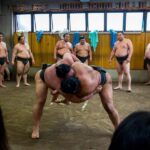
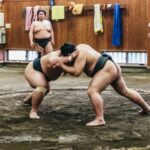
- What you will see during training
- Guides who make the action easier to follow
- Photos, lunch, and what is not guaranteed
- Is $99.08 a fair price?
- Who will enjoy this most
- Practical planning for the morning
- My verdict on this close-up sumo visit
- FAQ
- Where does the tour begin?
- Where does the tour end?
- How long does the experience last?
- Do I sit on a chair during the practice?
- Are photos with the wrestlers guaranteed?
- Is lunch included in the ticket?
I like the small group size, capped at 10 people, and the short briefing that helps you follow the action. I also like that your payment includes a donation to the stable, rather than treating the training space as just another sightseeing stop. The main drawback is simple: you sit on a cushion on the floor for about two hours, with no chairs and no toilet at the stable.
Key points to know before booking

- Watch practice from inside Naruto-beya: You are not looking through a stadium barrier. You sit within the stable and watch wrestlers train at close range.
- Meet at Tokyo Skytree Station at 7:30 am: The early start helps you reach the stable before practice is well underway.
- Learn the rules before the action begins: Your guide explains basic sumo moves, stable etiquette, and the sport’s Shinto roots.
- Expect a floor cushion, not a chair: Everyone must sit on a flat floor, so this suits you best if you can manage a long seated session.
- A photo session may follow practice: Photos with wrestlers are likely, but they are not guaranteed.
- Chanko nabe is not clearly included: The tour description mentions a possible lunch of the traditional wrestler’s hot pot, but the included list does not promise it.
Why morning practice is different from a sumo tournament

A tournament is polished public sport. Morning practice is the working side of sumo. There are no bright arena lights or formal presentation. Instead, you watch wrestlers warm up, stretch, repeat drills, and test one another in practice bouts.
That difference is the whole point. You see the sport at close range, where the heavy foot stamps, sudden shoves, and long pauses feel more physical than they do from a distant seat. The session can last two to three hours, giving you time to understand that sumo is not just about one explosive collision.
The stable, called a beya, is both a training place and a home base for wrestlers. Access is difficult to arrange on your own, which makes a guided visit useful. You are entering a working space, not a show built for tourists, so quiet behavior and careful attention matter.
Your ticket also includes a donation to the stable. I consider that a meaningful part of the price. You are paying for a guide and access, but some of the money also supports the place allowing you inside.
A few more Tokyo tours and experiences worth a look
Starting beneath Tokyo Skytree at 7:30 am
The meeting point is Tokyo Skytree Station at 1-chome-1-4 Oshiage in Sumida City. The start time is 7:30 am, so plan your route the night before. The early hour is not a minor detail. Morning training takes place before the wrestlers move on with the rest of their day, and a late arrival could mean missing part of the session.
The first part lasts about 30 minutes near Tokyo Skytree. The tower is an easy landmark, and your guide uses this time to explain how to watch sumo and which rules you need to follow inside the stable.
This briefing is valuable because sumo can look slow or puzzling if you do not know what you are watching. You learn the basic moves and get context for the warmups, rituals, and practice matches. Guides have also provided handouts and profiles of the wrestlers, which can help you keep track of who is training.
The exact route from the station to the stable is part of the guided arrangement. Hotel pickup and drop-off are not included, so you need to reach Tokyo Skytree Station yourself and make your own way home from the stable afterward.
Sitting inside Naruto-beya for two hours
From Skytree, the group visits Naruto-beya in Mukojima, at 1-chome-22-16 Mukojima. The tour ends at the stable. The main viewing period lasts about two hours, though the full experience is listed at roughly three hours.
Inside, you sit on a cushion on a flat floor. There are no chairs, so think carefully about your knees, hips, and back before booking. The session is not a quick photo stop. You remain seated while the wrestlers train, and getting up or shifting around may distract from the practice.
There is also no toilet at the stable. Use one before entering and keep this in mind if you are traveling with children or anyone who needs frequent facilities.
The tradeoff is worthwhile for many people. Floor seating puts you close to the wrestlers and makes the practice feel immediate. One particularly memorable arrangement can place a viewer close to the stable master, giving a clear view of the training area. That closeness also means you must follow the guide’s instructions carefully and avoid treating the practice like a loud sports event.
What you will see during training

The session can include warmups, repeated drills, and practice bouts. The wrestlers are working, not performing a set routine for the group, so the exact order and intensity can vary.
Your guide helps you notice the details. The pre-practice movements connect to sumo’s Shinto roots, and the rules of the sport make more sense once you know what each wrestler is trying to do. A bout may end with a quick push, a foot going out, or a wrestler losing balance. Other exchanges take more effort and show how much strength and control are needed to move an opponent.
I like this format for people who already enjoy sports but do not know much about sumo. You get a lesson before the action, then enough time to watch the ideas in practice. The guide can explain the meaning behind the rituals instead of leaving you to guess.
The experience also works for people interested in Japanese culture beyond temples and city views. The stable shows an old sporting tradition in its daily setting. It is a quieter, more disciplined side of Tokyo, and it asks you to observe rather than rush from one photo spot to the next.
Guides who make the action easier to follow

The tour includes an English-speaking local certified guide. Several guides have been singled out by name in the tour material, including Joji, Dawn, Jeff, and Aki. Their roles are not limited to pointing out the stable. They explain the background of sumo, review the rules, and prepare you for the behavior expected inside.
A good briefing matters here more than on many ordinary walking tours. You are watching an activity with its own vocabulary, gestures, and customs. Without help, a long practice session could become a blur of similar-looking bouts.
Guides have used written information, wrestler profiles, and simple explanations of the moves. That gives you something to refer to while sitting quietly. The small group limit of 10 also gives you a better chance to ask questions than you would on a large coach tour.
The quality of the guide is one variable you cannot fully control, since the specific guide may change. Still, the listed format gives you a local certified guide in English, and the tour is built around explanation rather than silent observation.
A few more Tokyo tours and experiences worth a look

Photos, lunch, and what is not guaranteed

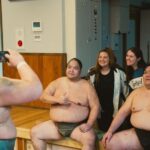
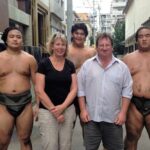
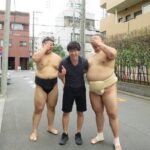
After practice, you will probably have the chance to take photos with the wrestlers. This can be a special part of the visit, since it gives you a personal reminder of the stable rather than only pictures of the training floor.
Treat the photo opportunity as a possibility, not a promise. Training schedules and stable customs can change, and the included information says most probably rather than guaranteed.
The tour description also mentions a chance to refuel with chanko nabe, the hot pot traditionally associated with sumo wrestlers. However, lunch is not listed among the confirmed inclusions. I would not book this experience on the assumption that a meal is covered. Plan your food for afterward unless your booking details clearly confirm it.
The confirmed inclusions are the stable donation and English guiding. Hotel pickup and drop-off are not included. Admission tickets are not charged separately for the Skytree briefing or the stable visit, but the tower observation deck is not part of this experience.
Is $99.08 a fair price?

At $99.08 per person, this is not a budget attraction. You are paying for around three hours, a small group capped at 10, an English-speaking guide, access that is difficult to arrange alone, and a donation to the stable.
The value depends on what you want. If you only want to see a sumo match, this may feel expensive, especially since you are watching practice rather than a tournament bout. If you want a close look at how sumo is trained and explained, the price is easier to justify.
I see three parts of the cost that matter:
- Access: Getting into a stable is the hardest part to arrange independently.
- Interpretation: The guide helps you understand the sport instead of watching two hours of unfamiliar movement.
- Small group attention: Ten people is far more manageable than a large bus group in a confined training space.
Group discounts may be available, which could improve the value if you are booking for several people. The tour is also booked an average of 19 days ahead, so waiting until the last minute may not be wise if your Tokyo dates are fixed.
Who will enjoy this most

I would recommend this to you if you like sports, traditional culture, or experiences that feel tied to daily life rather than staged for sightseeing. It is especially good for first-time sumo viewers because the guide explains the basics before the practice begins.
Families and older visitors should focus on the seating requirement. Most people can take part, but everyone must sit on a cushion on the floor for an extended period. Children who cannot stay quiet or seated may find the session difficult, and anyone with mobility concerns should think carefully before booking.
This is also a good choice if your Tokyo schedule does not line up with a sumo tournament. You still get to see wrestlers train, and the setting is more intimate than a stadium. It is not a replacement for a tournament atmosphere, but it offers a different kind of access.
I would skip it if you dislike early mornings, cannot sit on the floor for two hours, or need a predictable meal and restroom stop during the activity. The experience has real limits, and knowing them in advance will make the morning much easier.
Practical planning for the morning
Arrive at Tokyo Skytree Station before 7:30 am rather than cutting it close. The guide needs to brief the group and reach the stable at the right time, and the practice schedule is not something you should expect to wait for late arrivals.
Wear clothing that allows comfortable seated movement. You may be sitting in one position for a long stretch, so avoid planning a physically demanding activity immediately afterward unless you know you will be comfortable.
Use a restroom before entering the stable. Since there is no toilet inside, this is one of the most useful small preparations you can make.
Keep your expectations realistic. You may get photos with the wrestlers, and you may have a chance to eat chanko nabe, but neither should be treated as certain unless your final booking information says otherwise. The confirmed core experience is the guided visit and morning practice.
The tour requires good weather, according to the supplied conditions. If poor weather causes cancellation, you are offered another date or a full refund. For cancellations on your side, you receive a full refund if you cancel at least 24 hours before the local start time. Changes or cancellations inside that window are not accepted.
My verdict on this close-up sumo visit
I would book this if you want a genuine look at sumo training, not simply a quick photo or a tournament-style spectacle. The stable access, strong guide-led introduction, small group size, and included donation give the experience substance.
The decision comes down to the floor seating and early start. If you can reach Skytree Station by 7:30 am and sit comfortably on a cushion for about two hours, the morning offers a rare view of a working sumo stable. If that sounds uncomfortable, the price will not rescue the experience.
For the right person, this is one of Tokyo’s more memorable cultural outings. Go prepared to sit quietly, listen closely, and watch the sport as disciplined daily work.
FAQ
Where does the tour begin?
It begins at Tokyo Skytree Station at 1-chome-1-4 Oshiage, Sumida City, Tokyo. The start time is 7:30 am.
Where does the tour end?
The tour ends at Naruto-beya Sumo Stable at 1-chome-22-16 Mukojima, Sumida City, Tokyo. Hotel drop-off is not included.
How long does the experience last?
The full experience lasts approximately three hours. About 30 minutes are spent near Tokyo Skytree for the briefing, followed by around two hours inside the stable watching practice.
Do I sit on a chair during the practice?
No. All participants sit on a cushion on a flat floor, and no chairs are available.
Are photos with the wrestlers guaranteed?
No. A photo session will most probably be available after practice, but it is not guaranteed.
Is lunch included in the ticket?
Lunch is not listed as a confirmed inclusion. The description mentions a possible chance to eat chanko nabe, so you should not assume that a meal is covered unless your booking information confirms it.
More Morning in Tokyo
More Sumo Experiences in Tokyo

More tours in Tokyo we've reviewed












Sumo Experiences, compared.
 ★ 4.8Tokyo: Sumo Show Experience with Chicken Hot Pot and a PhotoFrom $1032 hours
 ★ 4.8Tokyo: Sumo Show and Dining ExperienceFrom $7990 minutes - 2 hours
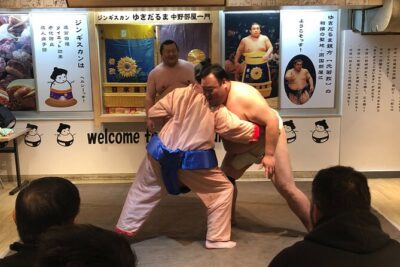 ★ 5.0the SUMO showFrom $89
 ★ 5.0Tokyo Sumo Entertainment Show with Chicken Hot Pot and PhotoFrom $106
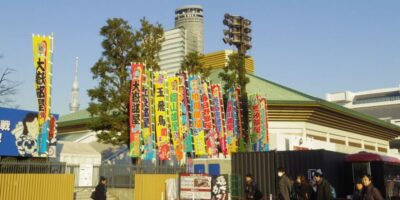 ★ 4.6Tokyo: Sumo Tournament Tour with Chair Seat TicketsFrom $141
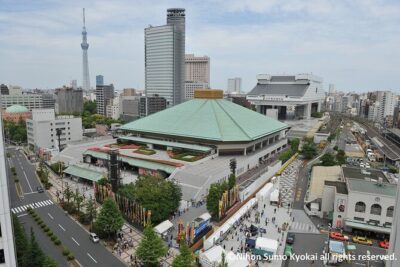 ★ 5.0Tokyo Grand Sumo Tournament Viewing Tour with TicketsFrom $124