Reviewed · SUMO EXPERIENCES
Tokyo: Sumo Morning Practice Viewing Tour
Tokyo’s sumo wrestlers do not train in a theater built for tourists. They practice inside working stables, where young rikishi live together, eat together, and train for the next tournament. This tour gives you a rare look at that daily routine from only a few feet away. I like the genuine setting and the chance to watch the wrestlers work without a staged dinner show. I also like the English explanations, often delivered through quiet notes or cards while the practice continues. The main drawback is that you must sit still and remain silent until the session ends, and the experience can feel long or repetitive if you do not enjoy watching training details.
In This Article
- Key points to know before booking
- Why a sumo stable is more revealing than a tournament seat
- Meeting in Ryogoku and reaching the stable
- Entering a working stable
- Watching 60 to 90 minutes of morning practice
- The guide’s role when everyone must be quiet
- Meeting wrestlers and taking photographs
- What $81 means in practical terms
- Who should book, and who should skip it
- Making the most of your Ryogoku morning
- Should you book this sumo morning practice tour?
- FAQ
- How long does the sumo morning practice tour last?
- What time does the practice usually end?
- Is the tour conducted in English?
- Can I take photos with the sumo wrestlers?
- Can I record video inside the stable?
- What behavior is required inside the stable?
- Is the tour suitable for children or people with mobility impairments?
I especially like that the tour can make a later tournament visit easier to understand. Guides such as Yuko, Noriko, Mako, Kaz, and Oku-san have explained the rules, customs, techniques, and stable life in clear English. The tradeoff is practical: the stable is a workplace, not a visitor center. No video, flash, food, drinks, hats, or sunglasses are allowed, and the exact stable, meeting point, group size, and chance for a photo can vary.
Key points to know before booking
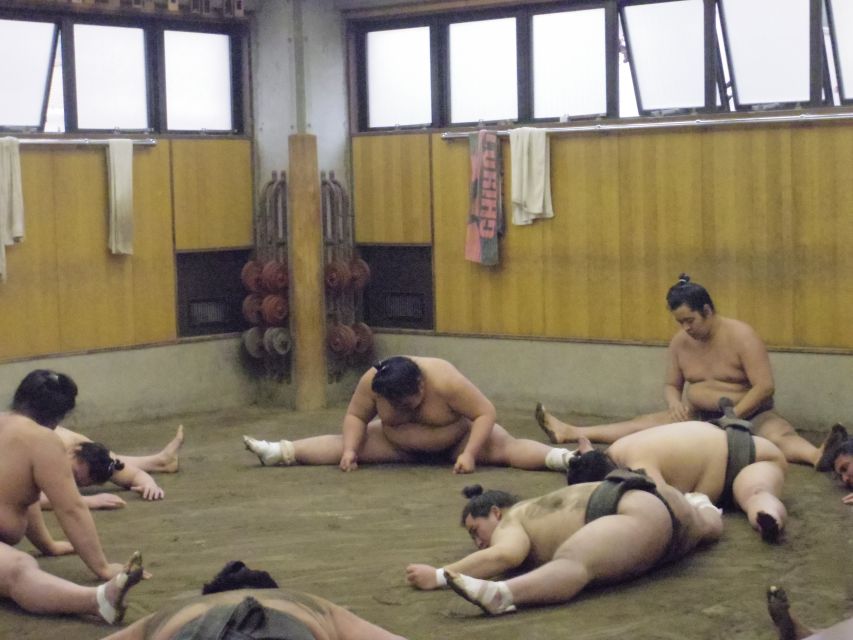
- Watch up close inside a real stable: You sit near the practice area as wrestlers perform drills, bouts, and strength work.
- Training is quiet and serious: You must stay seated, keep your phone silent, and avoid moving during practice.
- Ryogoku is the right setting: The tour takes place in Tokyo’s sumo district, near the National Sumo Arena and other stables.
- The session lasts about 60 to 90 minutes: You must remain until the practice ends, usually around 9:00 to 10:00 in the morning.
- A photo may be possible afterward: Photos with wrestlers depend on the day and the stable’s schedule.
- The $81 price buys access, not a show: You are paying for rare entry into a private working space and an English-speaking guide.
Why a sumo stable is more revealing than a tournament seat
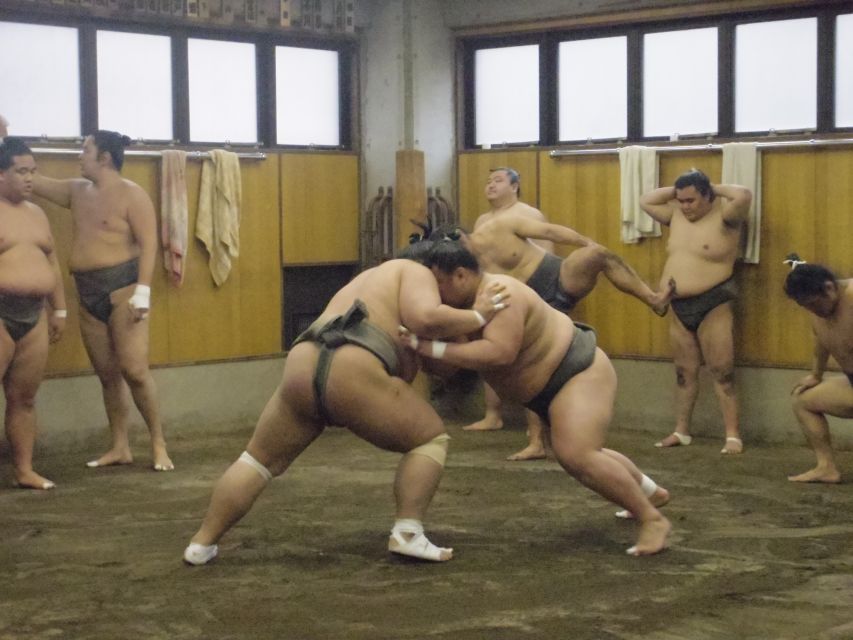
A tournament gives you the drama: formal entrances, chanting, judges, banners, and a bout that can end in seconds. A morning practice shows the work behind that drama. You see wrestlers repeat movements, test balance, push into one another, and absorb the demands of a sport in which a tiny mistake can decide everything.
Sumo is tied to Shinto beliefs and follows strict customs. The basic aim is simple: force an opponent outside the ring or make any part of his body, other than the soles of his feet, touch the ground. The training is not simple at all. Strength matters, but so do timing, footwork, posture, balance, and the ability to react under pressure.
That is the value of this experience. You are not just looking at large athletes in a ring. You are watching a disciplined routine that has shaped Japanese sporting culture for centuries. The wrestlers train for the six annual tournaments, and the stable is where they chase the ranks that lead toward the top divisions.
You may also see the stable master overseeing the work. On some days, famous wrestlers or former champions are present. One particularly fortunate group saw former yokozuna Terunofuji with the stable, as well as wrestlers including Enho and Takerufuji. That kind of sighting is possible, but it should never be the reason you book. The stable’s schedule controls what you see.
A few more Tokyo tours and experiences worth a look

Meeting in Ryogoku and reaching the stable
The tour begins in Ryogoku, Tokyo’s traditional sumo neighborhood. The meeting point can change depending on the option you book, so check your confirmation closely and arrive early. One person had trouble locating the exact spot and suggested that a clearer meeting-point photo would help.
After the guide gathers the group, you may take a train to the stable. The walk from the meeting area can take about 15 minutes, and guides often use that time to explain sumo customs and point out the character of the district. Ryogoku is close to the National Sumo Arena, and you might pass other stables along the way.
That short transfer matters because it changes the mood. You are not being dropped at a large attraction with signs and ticket windows. You are being led through a sumo neighborhood to a place where athletes actually live and train.
Guides have also added bits of local background during the walk. Noriko, Yuko, Oku-san, Taku, and others have been praised for keeping the group together, explaining the rules, and making sure everyone knows how to behave before entering. The exact guide is not guaranteed, but an English-speaking guide is included.
Entering a working stable
The stable is a place of work. That fact shapes the entire visit. You are not free to wander, browse rooms, or chat whenever you like. You sit in the assigned viewing area and watch the wrestlers follow their routine.
The most important rule is silence during practice. Keep your phone on silent, do not stand up, and do not move around. Flash photography and video recording are forbidden. You can take still photographs only when permitted, and you may be asked to wait until the practice is over.
This quiet can feel unusual at first. The guide may explain things before practice begins, then pass written notes or explanation cards during the session. Some guides have used small English information sheets to identify wrestlers and explain a drill without interrupting the room.
The setup has a real advantage: you can focus on what is happening. You hear the thud of bodies, the force of a collision, and the calls from the stable master. One person described the impact of the training as powerful enough to make you shudder before you get used to it. Television does not give you that sense of weight.
There is also a practical drawback. If a bout is especially noisy, it can be hard to hear a guide speaking quietly. Written notes help, but you should expect the experience to rely more on careful observation than constant commentary.
Watching 60 to 90 minutes of morning practice
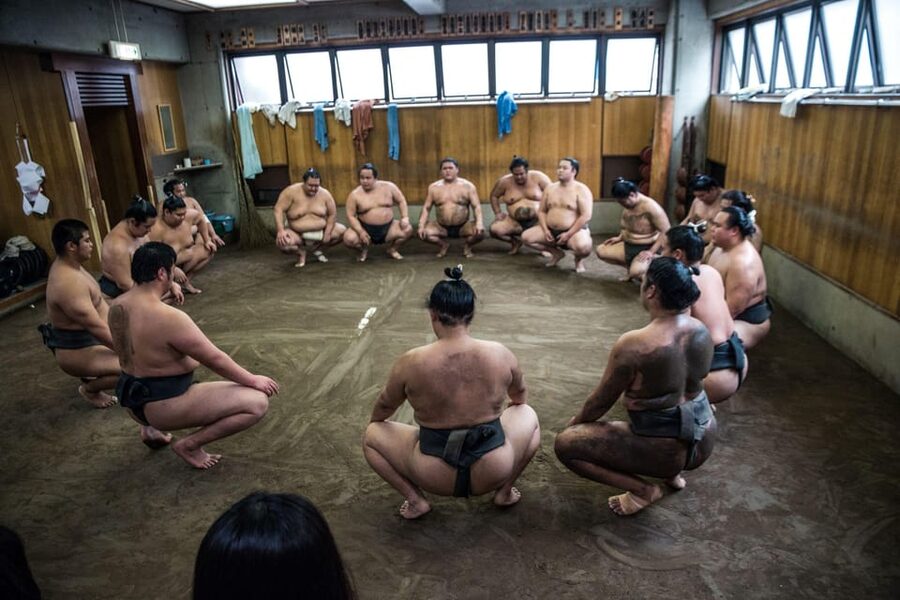
The practice session is the heart of the tour and normally lasts about an hour to an hour and a half. The full activity runs roughly 90 minutes to two hours, depending on the transfer and the stable’s schedule.
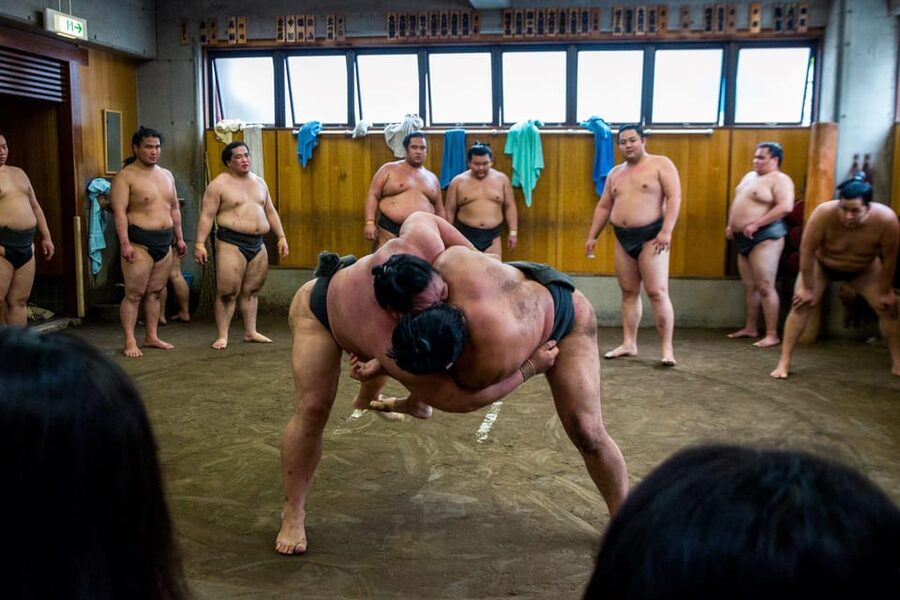
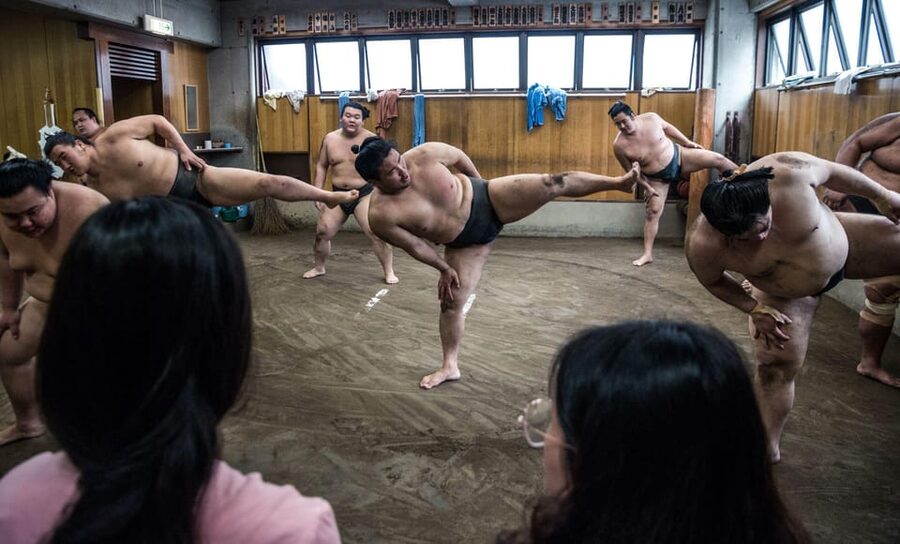
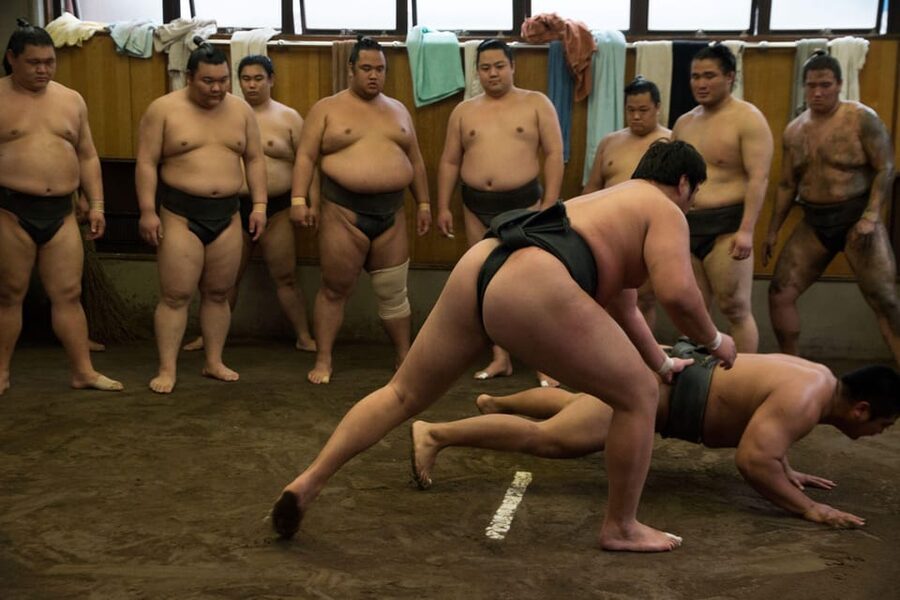
You may see warm-ups, repeated drills, practice bouts, stretching, and other parts of the morning routine. The wrestlers do not perform a neat program for the audience. Some sections may be intense and noisy, while others may seem repetitive. That is exactly what makes the visit useful for anyone who wants to understand the daily effort behind a tournament.
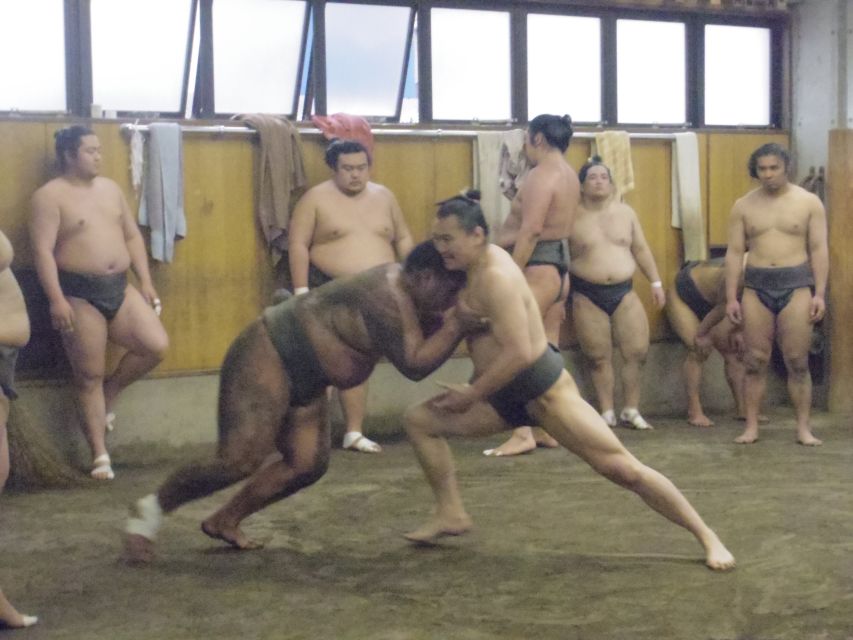
The training can be surprisingly technical. Wrestlers work on how they plant their feet, absorb a charge, control the center of the ring, and force an opponent to give ground. If you have an interest in martial arts, you may find the tactics especially rewarding. If you know little about sumo, the guide’s explanations can help you notice why a bout is won or lost.
You will also see the difference between a competition and preparation. There may be no grand entrance and no formal match announcement. Instead, you watch athletes repeat movements until they become instinctive. The room’s seriousness is part of the experience.
A group can include around 30 people, though some sessions are much smaller. One visitor ended up as the only person in the group, which allowed more time for questions and a very close view. You should not count on that. Seating is generally assigned by arrival, and early arrivals may get the best positions.
That point is worth taking seriously if photography matters to you. One person found another group already occupying the entire front row and ended up farther to the side. Arriving early can improve your view, but the operator cannot promise a particular seat.
The guide’s role when everyone must be quiet
The guide does more than lead you from a station. Before entering, the guide explains the sport, the stable’s customs, and the behavior expected inside. This short briefing is important because the rules are not decorative. A stable master and the wrestlers are giving up part of a normal work morning to allow the visit.
Guides including Yuko, Noriko, Mako, Taku, Kaz, and Oku-san have been singled out for clear explanations and careful organization. Their approach varies. Some speak more on the walk, while others use short notes during the practice and save questions for afterward.
I like this format because it respects the wrestlers. You are not asked to choose between hearing a lecture and watching the training. You get context before and during the session, then have a chance to ask questions when the active practice has finished.
The guide may also point out wrestlers by name and explain the significance of a rank or technique. That information turns a group of imposing athletes into individuals with different roles and ambitions. You begin to watch for details rather than simply waiting for the biggest collision.
A few more Tokyo tours and experiences worth a look



Meeting wrestlers and taking photographs
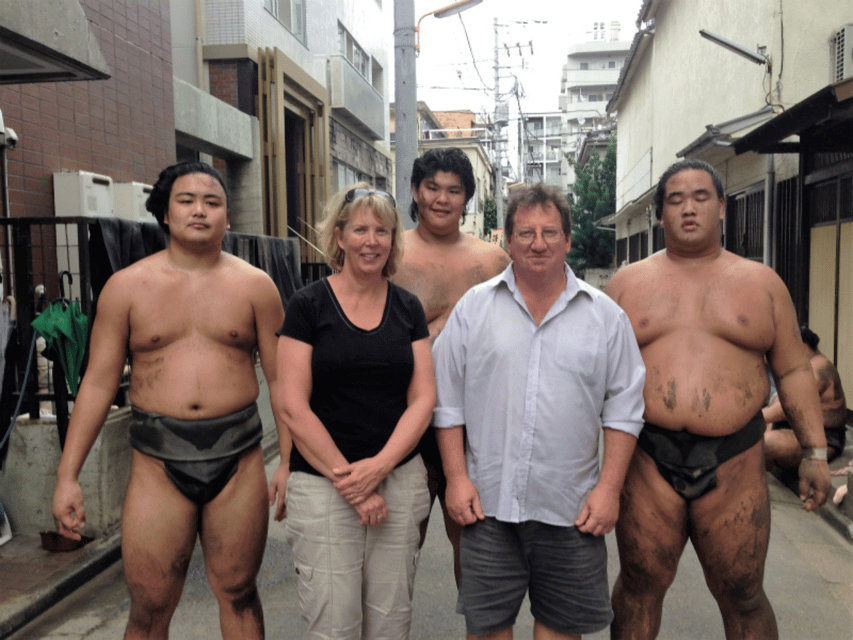
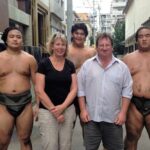
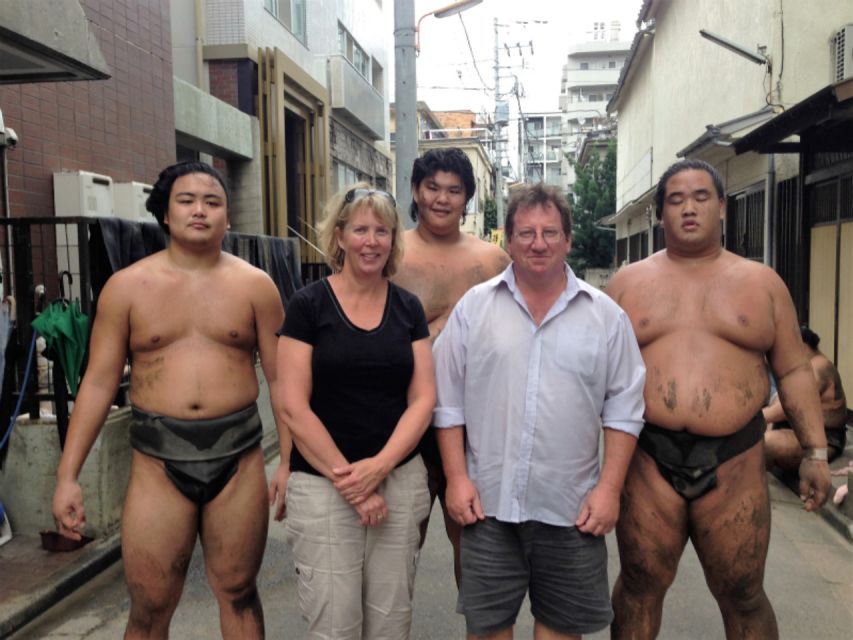
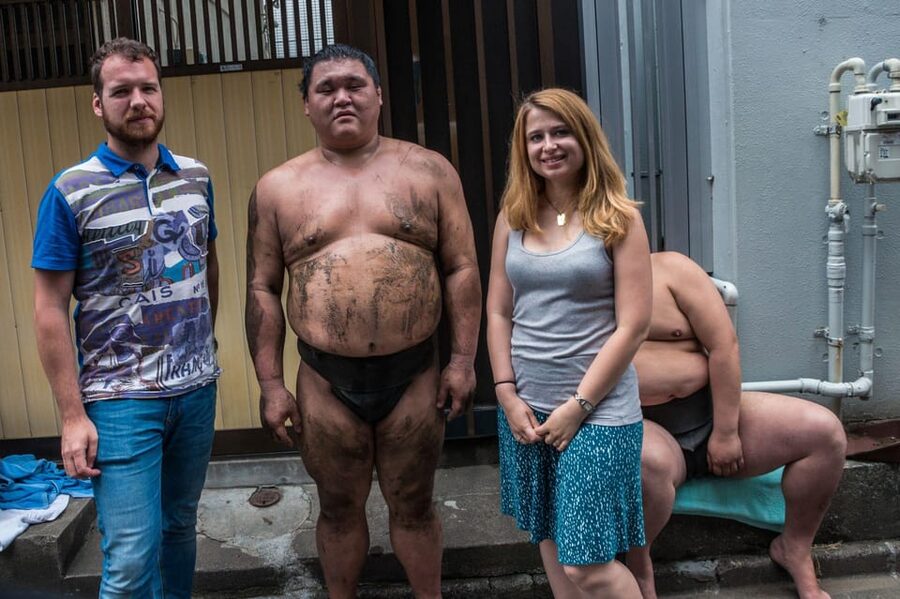
Photos with wrestlers may be offered after practice, but they are not guaranteed. The opportunity depends on the stable’s schedule, the wrestlers’ availability, and the rules for that particular day.
When it happens, it is a pleasant extra rather than the main event. The real value is the training itself, and the photo should not be treated as a promised meet-and-greet. Some groups have photographed with two wrestlers, while others have simply watched and asked questions.
You may also have a chance to speak with the stable master or coach. One former wrestler answered questions about the sport and life at the stable, adding a personal layer that you cannot get from watching a tournament alone. Again, this depends on the day. The stable’s work comes first.
Do not bring the expectation of an informal social visit. The wrestlers are athletes in the middle of their morning. Any contact after practice is a privilege, and the guide will explain what is appropriate.
What $81 means in practical terms
At $81 per person, this is not a cheap way to fill a spare morning. You are paying for an English-speaking licensed guide, the transfer guidance, the explanations, and access to a place that is usually closed to the public except for sponsors and approved visitors.
The price makes more sense if you value access and context. A tournament ticket shows you the finished product. This visit lets you see the training culture that produces it, from a few feet away, in a setting that has not been built around sightseeing.
The cost may feel high if you mainly want to see a dramatic bout or take photographs. A tournament is the better choice for ceremony and competition. This tour is better for the behind-the-scenes side of sumo, especially if tournament tickets are unavailable or your visit falls outside a tournament period.
I also see value in pairing the morning practice with an afternoon tournament when the calendar allows. The training session can teach you what to watch for later: the warm-up habits, the role of the stable master, the importance of balance, and the speed of a bout. One visitor did exactly this and found the arena experience easier to follow afterward.
The flexible cancellation policy adds some useful protection: you can cancel up to 24 hours before the activity for a full refund. You can also reserve and pay later. Those terms are helpful when you are planning a Tokyo schedule around changing availability, but confirm the conditions at booking.
Who should book, and who should skip it
I would choose this for adults and older children who can sit on the floor, remain quiet, and pay attention for up to 90 minutes. The minimum age is 11, and the activity is not suitable for people with mobility impairments.
This is a strong choice for:
- First-time visitors who want a cultural experience beyond major sights
- Sumo fans who want to see training close up
- Martial artists interested in technique and discipline
- Visitors who cannot obtain tournament tickets
- Anyone planning to visit a tournament later in the trip
- People who appreciate real workplaces more than staged performances
I would skip it if you need to move around often, dislike sitting on the floor, or want a lively, interactive show. Young children are not allowed, and even older children may struggle with the quiet rules and the repeated nature of practice.
Dress modestly. Leave hats and sunglasses behind, and do not bring food or drinks into the stable. Wear something that lets you sit comfortably and respectfully for the full session.
Making the most of your Ryogoku morning
Arrive early. It helps with the meeting point and may improve your position inside the stable. It also gives you a calmer start before the group walks or rides to the practice location.
Keep the morning open after the tour. Practice may finish earlier or later than expected, and you must stay until the end. The usual finish is around 9:00 to 10:00 a.m., but the timing depends on the day. If you have a reservation or train to catch, tell the operator in advance.
Plan to explore Ryogoku afterward. The district is known for its sumo connection, and you can continue to the National Sumo Arena area or look for a restaurant serving sumo-style meals. The ending location may differ from the meeting point, so do not assume you will finish exactly where you began.
Do not plan on filming. This restriction may disappoint you, especially when two wrestlers collide with a force that begs for a replay. Still, the ban keeps the room quiet and protects the stable’s normal routine. Take in the sound and movement while you are there.
Should you book this sumo morning practice tour?
Book it if you want to see sumo as a way of life, not just as a contest. The rare stable access, close view, strong English guidance, and chance to see the wrestlers’ demanding routine make this one of Tokyo’s more unusual cultural activities.
Think twice if you want guaranteed photos, a particular stable, famous wrestlers, or a tournament atmosphere. None of those are assured. The stable and schedule can change, seating depends partly on arrival, and the session requires patience.
For the right person, $81 is fair value for an intimate look at a private sporting world. Arrive early, follow the rules, and give the practice your full attention. You may leave with a much greater respect for the athletes, and with a better idea of what to watch the next time a sumo bout lasts only ten seconds.
FAQ
How long does the sumo morning practice tour last?
The activity lasts about 90 minutes to two hours. The actual morning practice usually takes 60 to 90 minutes, depending on the day.
What time does the practice usually end?
You must stay until the end of the practice, which is usually around 9:00 to 10:00 a.m. The schedule can run a little shorter or longer.
Is the tour conducted in English?
Yes. An English-speaking live guide is included.
Can I take photos with the sumo wrestlers?
Photos with wrestlers may be available, but they depend on the day and the stable’s schedule. They are not guaranteed.
Can I record video inside the stable?
No. Video recording and flash photography are not allowed.
What behavior is required inside the stable?
You must wear modest clothing, stay seated, avoid moving around, keep your phone on silent, and remain quiet during practice. Hats, sunglasses, food, and drinks are not allowed.
Is the tour suitable for children or people with mobility impairments?
The tour is not suitable for children under 11 or for people with mobility impairments. You should also be comfortable sitting on the floor and remaining still for an extended period.
More Morning in Tokyo
More Sumo Experiences in Tokyo

More tours in Tokyo we've reviewed












Sumo Experiences, compared.
 ★ 4.8Tokyo: Sumo Show Experience with Chicken Hot Pot and a PhotoFrom $1032 hours
 ★ 4.8Tokyo: Sumo Show and Dining ExperienceFrom $7990 minutes - 2 hours
 ★ 5.0the SUMO showFrom $89
 ★ 5.0Tokyo Sumo Entertainment Show with Chicken Hot Pot and PhotoFrom $106
 ★ 4.6Tokyo: Sumo Tournament Tour with Chair Seat TicketsFrom $141
 ★ 5.0Tokyo Grand Sumo Tournament Viewing Tour with TicketsFrom $124