Reviewed · SUMO EXPERIENCES
Watch Sumo Morning Practice at Stable in Tokyo
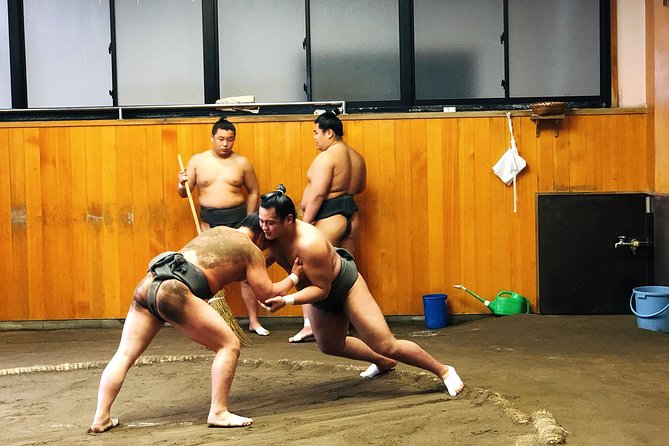
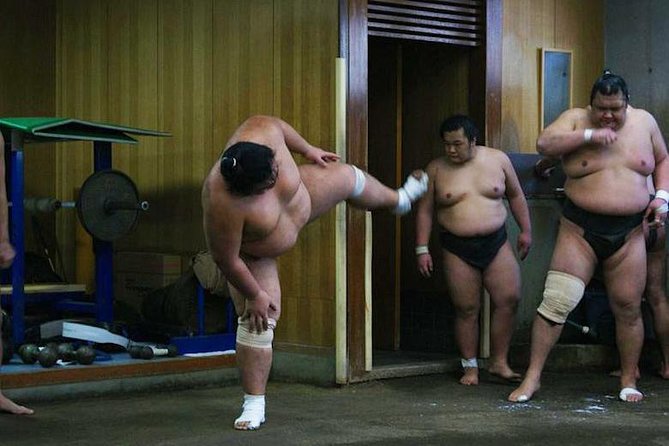
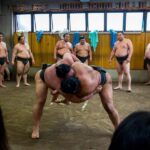
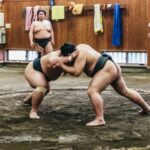
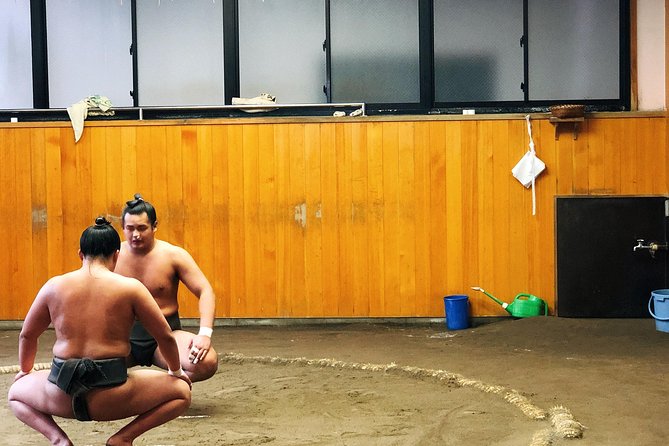
Sumo morning practice is not a staged show. You sit quietly beside the dohyo, or ring, and watch professional wrestlers stretch, stomp, push, grapple, and sharpen their technique. The slow build from ritual and warmup to heavy contact is the heart of the experience.
In This Article
- Key points before you book
- What makes this sumo experience special
- Meeting in Tokyo and reaching the stable
- Inside the sumo stable
- Why silence and etiquette matter
- Floor seating is the biggest practical issue
- Practice length and Tokyo tournament season
- Photos with the wrestlers
- What you get for $95.77
- Who should book this morning visit
- Booking, confirmation, and cancellation details
- Should you book this sumo stable visit?
- FAQ
- How long does the sumo practice last?
- What time does the activity take place?
- Where does the activity start and end?
- Is food or drink included?
- Can I take photos during practice?
- Do I need to sit on the floor?
- What is the minimum age?
- Can I cancel for a full refund?
I like the close view and the access to a part of Japanese life most people never see. I also like the small-group format, with a maximum of 10 people, plus the chance for photos with the wrestlers afterward. The main drawback is simple: you may sit on the floor for up to two hours, often without much explanation.
Key points before you book
- Watch real morning training: This is a working practice, not a performance arranged for an audience.
- Sit close to the ring: You observe stretching, technique drills, rituals, and sparring from inside the stable.
- Expect near silence: Do not eat, talk loudly, or use bright flash photography or intrusive camera sounds.
- Plan for floor seating: You must be able to sit on the floor for an extended period. A stool or chair may be available by request, but the view can be poorer.
- Practice length changes: Normal practice lasts about 60 to 90 minutes, but it can be only 30 to 40 minutes during Tokyo tournament season.
- Photos are included: A short photo session with sumo wrestlers takes place at the end when the schedule allows.
What makes this sumo experience special
The best part of this activity is its lack of show-business polish. You are not watching a choreographed demonstration with a narrator explaining every move. You are watching athletes train in their own space, under the stable’s normal rules.
That makes the visit feel unusually direct. The wrestlers may begin with stretching and repeated exercises that look almost plain at first. Then the work gets harder. Bodies collide with startling force, and the contrast between the quiet preparation and the explosive impact tells you a great deal about sumo.
I especially like the way the practice reveals sumo as a discipline, not just a contest. The rituals, warmups, hierarchy, repetition, and concentration matter as much as the final bouts. You may also see older wrestlers correct or encourage younger ones, giving the session the feel of a serious sports team at work.
The experience has earned a rating of 4.2 from 268 ratings, which fits the nature of the activity. People who value authenticity and close observation tend to find it memorable. People expecting a polished cultural presentation can find it slow, uncomfortable, or short on explanation.
A few more Tokyo tours and experiences worth a look
Meeting in Tokyo and reaching the stable
You make your own way to the arranged meeting point in Tokyo. The meeting location and stable details may depend on the stable’s schedule, and the exact venue can be confirmed only about one week before the visit.
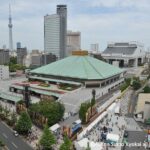
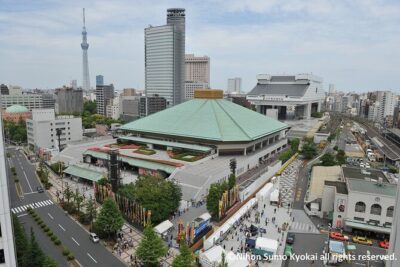
That matters. The activity is associated with the Ryogoku Kokugikan area, Tokyo’s traditional sumo district, but you should not assume the stable itself is directly beside the arena. Some bookings have involved locations farther from central Tokyo, and an address in Japanese can help if you use a taxi.
Give yourself extra time. A prearranged meeting point keeps you from having to find the stable alone, but this is not the sort of appointment where arriving at the last minute is wise. One useful local tip is to consider a taxi from Asakusa if the final address proves awkward to reach on foot. The address should be available in Japanese for the driver.
The activity ends back at the meeting point. Since practice can run longer than expected, avoid scheduling a tight museum visit, train connection, or restaurant reservation immediately afterward.
Inside the sumo stable
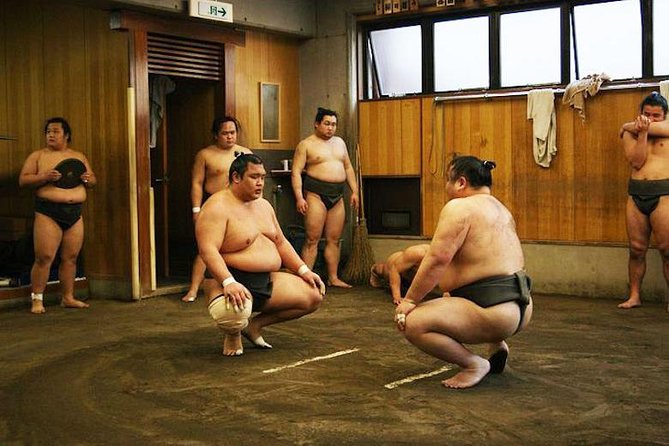
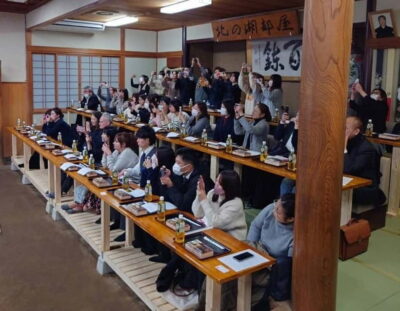
After meeting the guide and the small group, you enter the stable and take a seat along the side of the training area. The atmosphere is formal. You are expected to watch quietly and avoid distracting the wrestlers.
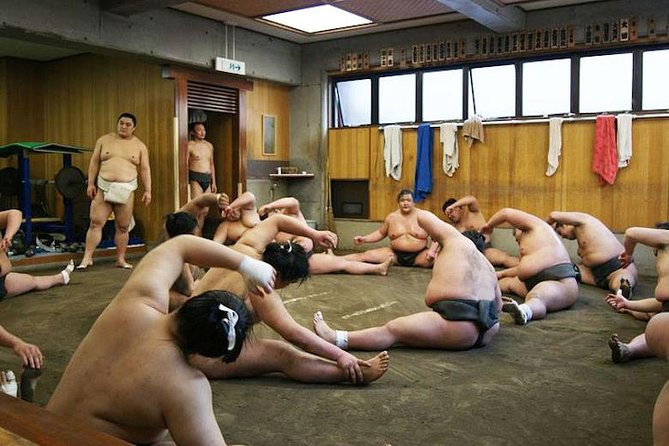
The session usually begins with stretching and warmup exercises. Sumo training can look repetitive, but repetition is part of the point. You see the wrestlers prepare their legs, hips, balance, and striking movements before the more forceful work begins.
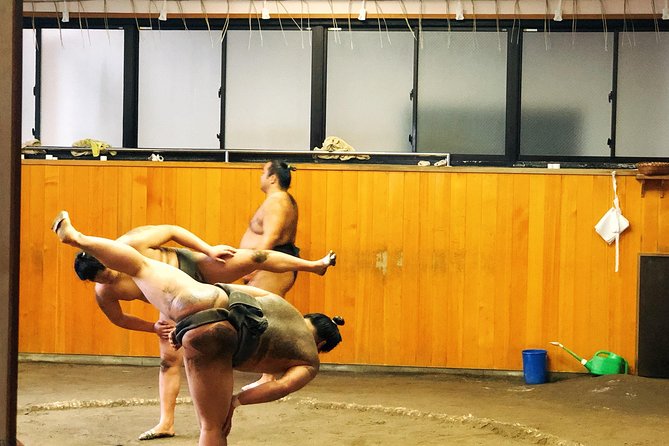
The shiko, the high leg lift and stomp associated with sumo, is one of the movements you may recognize. You may also see wrestlers practice pushing, absorbing contact, and positioning inside the ring. The exercises build gradually, so do not judge the session by its first 15 or 20 minutes.
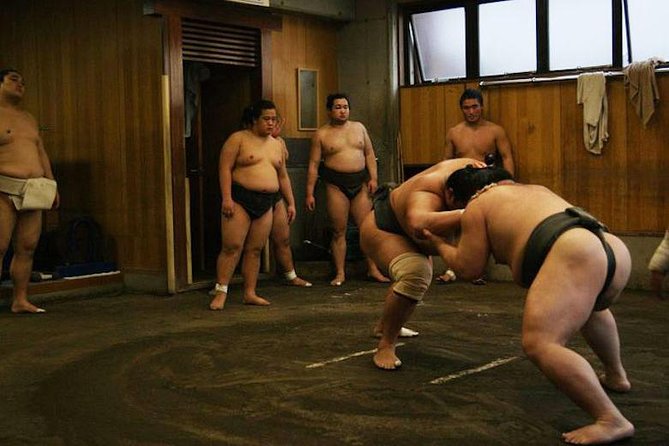
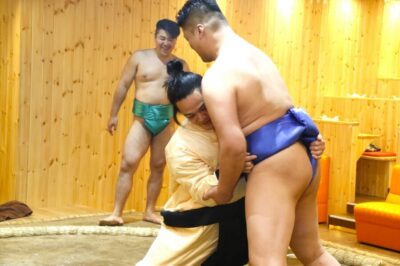
Later, the practice can become much more intense. The wrestlers collide chest to chest, drive one another backward, and work through moves at close range. From the floor, you feel the scale and power in a way that television cannot quite convey.
This is also where the limits of the experience become clear. You are there to observe, not to ask questions during practice. Some sessions include an introduction or a guide who explains sumo history and hierarchy. Other arrangements may provide little more than an escort into the stable. If learning the rules is important to you, read about the basic ranks, ring rituals, and winning conditions before you arrive.
Why silence and etiquette matter
The stable is a workplace. The wrestlers are not putting on a private show for your group, even though you have been allowed to watch.
Do not eat or drink during the practice. Keep conversation to a minimum, and turn off bright flashes and intrusive camera sounds. Avoid pointing your feet toward the ring, and be prepared to remain still for long stretches.
This quiet can feel strict if you expect a guided attraction. I see it differently: the silence lets you notice details that would disappear in a noisy room. You can watch the order of the exercises, the way wrestlers wait their turn, and the changes in mood as practice moves from warmup to sparring.
Still, the etiquette should be made clear before you enter. If your guide does not offer much explanation, take responsibility for arriving prepared. This is an observation experience first, and a lesson second.
Floor seating is the biggest practical issue
The floor is the part you need to think about most carefully. You may sit cross-legged or in another position for 60 to 90 minutes, and the total visit can take close to two hours depending on introductions, movement, and photos.
A thin mat over a hard floor can become painful, especially if you have back, hip, knee, or ankle problems. Some seating with a stool or chair may be available on request, but it can provide a worse view. Availability is limited, so do not count on a comfortable chair appearing when you arrive.
Arrive early if your arrangement allows it and seating order affects your position. A place near the front gives you a clearer view, while people behind several rows may struggle to see the ring. The stable is not a theater with raised seats.
This makes the activity a poor choice for anyone who cannot sit on the floor for an extended period. It can work well for older children and teenagers who understand the need for quiet. The minimum age is 13.
A few more Tokyo tours and experiences worth a look


Practice length and Tokyo tournament season
The advertised schedule is generally 8:00 to 10:00 in the morning, Monday through Saturday during the stated operating periods. The actual observation time is usually 60 to 90 minutes, but the ending time changes from day to day.
During Tokyo’s January, May, and September tournaments, normally around the 15th to 25th of the month, the practice may last only 30 to 40 minutes. Tournaments take place elsewhere during other months, and the stable can be closed. Exact dates change each year.
The price does not drop when practice is shorter. That can feel disappointing if you book mainly for a long training session. On the other hand, tournament season can be the only time your Tokyo schedule works, and even a short session may give you a close look at the athletes and their routines.
Stable conditions are confirmed only about a week before the activity. Keep checking your booking messages, and leave flexibility in your morning plans.
Photos with the wrestlers
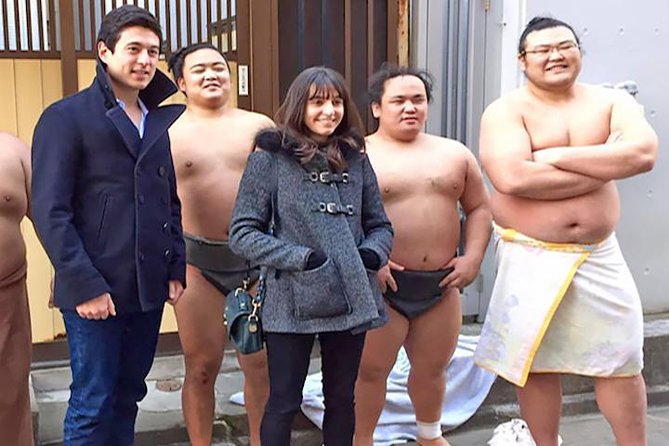
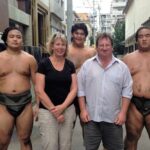
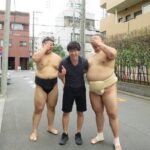
A photo opportunity with the wrestlers is included at the end. This is a welcome extra, but it depends on the practice schedule and the stable’s timing.
One practical warning: practice can run long, and a delayed finish may cause you to miss the photo session or leave before it begins. The activity provider has acknowledged that exact timing is difficult to predict because the wrestlers decide when practice ends.
Treat the photo as a possible bonus rather than the main reason to book. The valuable part is watching the training itself. If the photo matters greatly to you, do not plan an immediate appointment elsewhere, and ask your guide about the schedule once you arrive.
What you get for $95.77
At $95.77 per person, this is not a cheap way to fill an hour. You are paying for access to a restricted setting, an arranged meeting, entrance to the practice, and the chance to observe a working stable at close range.
The value depends on your interest. If you already follow sumo, this can be one of the strongest cultural experiences in Tokyo because it takes you beyond the tournament arena. You see how much effort goes into preparation, and you notice the hierarchy and discipline that a regular match may not show.
If you know little about sumo and want a polished cultural tour, the price may feel high. Food and drinks are not included, and the amount of guiding can vary. You are not paying for a meal, a lecture, or a full sightseeing route. You are paying for access and proximity.
Group discounts are available, which may help families or larger parties. The stated maximum is 10 people, though seating remains the key issue. A small group does not automatically mean a comfortable seat, so ask about floor seating needs when booking.
Who should book this morning visit
I would recommend it to you if you enjoy watching real work rather than staged entertainment. It suits people interested in Japanese customs, traditional sports, photography, and the daily discipline behind elite competition.
It can also work well for families with teenagers aged 13 or older. Young people who enjoy physical sports may find the warmup, repeated drills, and sudden collisions gripping. The session is particularly rewarding if you explain the basics of sumo before arriving.
You should think twice if you dislike silence, repetitive training, or floor seating. It is also a weak fit for a packed sightseeing day. The start is early, the stable location can change, and the finish is not exact.
For the best experience, watch a sumo documentary or read a short introduction before your visit. Learning the difference between warmup drills, ritual movements, and sparring will give the quiet time more meaning.
Booking, confirmation, and cancellation details
Confirmation is sent within 48 hours of booking, subject to availability. Since stable schedules are only settled close to the date, keep an eye out for later location information.
The experience is listed for selected dates from February 2 to February 14, March 31 to April 30, and May 1 to May 9, 2026, Monday through Saturday, from 8:00 to 10:00 in the morning. Availability can change with the stable’s schedule.
You can receive a full refund if you cancel at least six full days before the start time. A cancellation made two to six full days ahead receives a 50 percent refund. Less than two full days ahead receives no refund, and changes are not accepted inside the stated cutoff. Another condition says date changes are not allowed within three days, so treat the final days before departure as fixed.
If poor weather causes cancellation, you are offered another date or a full refund. Flight delays, illness, and other late problems are treated as cancellations rather than flexible date changes.
Should you book this sumo stable visit?
Book it if you want an honest look at sumo training and can sit quietly on the floor. The strongest reasons are the close view, the serious atmosphere, and the chance to see the wrestlers build from controlled warmups to powerful sparring.
Skip it if you need comfortable seating, detailed live interpretation, or a guaranteed two-hour session. The activity is best understood as a quiet morning at a working sports stable, not a conventional tour.
For an interested and prepared visitor, $95.77 is fair for rare access. Bring patience, arrive early, leave your schedule open afterward, and value the practice even if the photo session or final sparring changes. That mindset gives you the best chance of seeing sumo as a living discipline rather than a staged attraction.
FAQ
How long does the sumo practice last?
The practice usually lasts between 60 and 90 minutes. During Tokyo tournament season in January, May, and September, it may last only 30 to 40 minutes.
What time does the activity take place?
The listed operating hours are 8:00 AM to 10:00 AM, Monday through Saturday, during the available operating periods.
Where does the activity start and end?
You meet in Tokyo at the arranged meeting point, then go to the sumo stable. The activity ends back at the meeting point.
Is food or drink included?
No. Food and beverages are not included.
Can I take photos during practice?
You must avoid bright flash photography and intrusive camera sounds. A photo session with the wrestlers is included at the end when the schedule permits.
Do I need to sit on the floor?
Yes. Participants should be able to sit on the floor for an extended period. A chair or stool may be available by request, but the view may not be as good.
What is the minimum age?
The minimum age is 13.
Can I cancel for a full refund?
Yes, if you cancel at least six full days before the experience start time. Cancellations made two to six full days ahead receive a 50 percent refund, while cancellations less than two full days ahead are not refunded.
More Morning in Tokyo
More Sumo Experiences in Tokyo

More tours in Tokyo we've reviewed




Sumo Experiences, compared.
 ★ 4.8Tokyo: Sumo Show Experience with Chicken Hot Pot and a PhotoFrom $1032 hours
 ★ 4.8Tokyo: Sumo Show and Dining ExperienceFrom $7990 minutes - 2 hours
 ★ 5.0the SUMO showFrom $89
 ★ 5.0Tokyo Sumo Entertainment Show with Chicken Hot Pot and PhotoFrom $106
 ★ 4.6Tokyo: Sumo Tournament Tour with Chair Seat TicketsFrom $141
 ★ 5.0Tokyo Grand Sumo Tournament Viewing Tour with TicketsFrom $124