Reviewed · TEMPLES & MEDITATION
Tokyo: Meiji Shrine Walking Tour — Shinto & Imperial System
Meiji Shrine is one of Tokyo’s best surprises: a broad, quiet forest where the city seems to switch off. The tour leads you beneath a 12-meter wooden torii, past sake barrels and into Japan’s most visited Shinto shrine while explaining how faith, nature, and the imperial family fit together.
In This Article
- Key points at a glance
- Why Meiji Shrine feels far from Tokyo
- The first torii and the rules of a sacred path
- Wine barrels, sake, and a visual history lesson
- The big torii made from ancient cypress
- Emperor Meiji and Japan’s turn toward modernity
- Paying respects at Meiji Shrine
- Omamori and the Omigokoro fortune
- Tea and souvenirs at Mori no Terrace
- How the guides shape the experience
- Is $23 a fair price?
- Who should book this Meiji Shrine walk?
- FAQ
- Where does the Meiji Shrine walking tour start?
- How long does the tour last?
- How much does the tour cost?
- How large is the tour group?
- What language is the tour conducted in?
- What does the tour visit?
- Can I buy charms or fortunes at Meiji Shrine?
- Is food included at Café Mori no Terrace?
- Can I cancel the booking for a full refund?
I like the small group size, which gives you room to ask questions and get help with shrine customs. I also like the way the guides connect the shrine to Japan’s shift from samurai rule to modern government. The main consideration is time: at 90 to 135 minutes, you get a focused introduction, not an unhurried study of every corner.
Key points at a glance
- A silent forest in central Tokyo: Walk beneath roughly 100,000 trees on a shaded route from Harajuku.
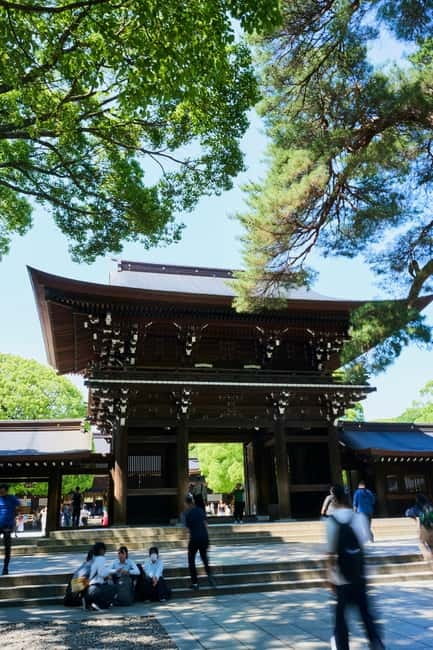
- The giant cypress torii: Pass beneath a 12-meter gate made from 1,500-year-old Taiwanese cypress.
- Practical Shinto guidance: Learn how to approach the shrine, where to walk, how to bow, and how to make an offering.
- Imperial history with a clear timeline: Connect Emperor Meiji’s era with the end of the samurai period and Japan’s modernization.
- A small group of up to 10: Guides such as Keiko, Yuuka, Yuki, Ayaka, and Nonoka are praised for clear English and personal help.
- A gentle finish at Mori no Terrace: Stop for tea, light snacks, and shrine-themed souvenirs after the walk.
Why Meiji Shrine feels far from Tokyo
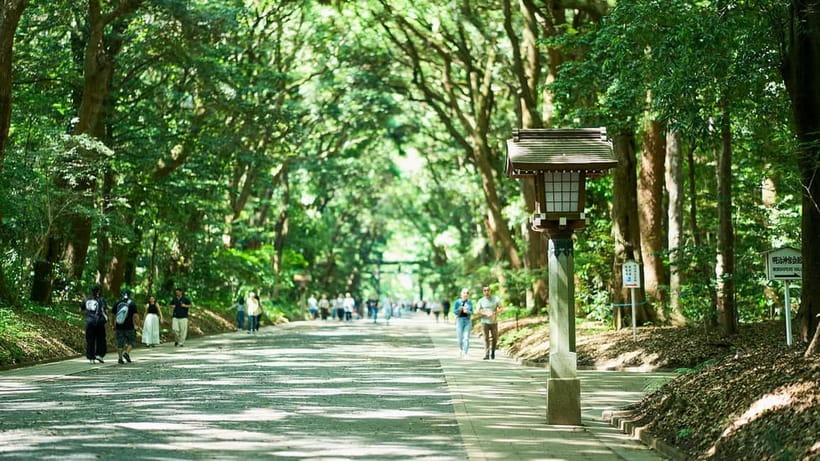
You meet near Harajuku Station, then leave the crowds behind surprisingly quickly. Harajuku is famous for fashion and packed shopping streets, but the approach to Meiji Shrine gives you a very different view of the district.
The forest contains approximately 100,000 trees. Their age and density create shade, bird sounds, and a steady sense of quiet. The tour’s title calls this a mysterious forest, and that is a fair description of the mood, though the path itself is easy to follow.
This quiet is not an accident of location. Meiji Shrine was built in a wooded setting to honor Emperor Meiji and Empress Shoken, and the forest has become part of the shrine’s identity. Your guide helps you notice details you could easily pass without a second look, including the ceremonial route, the placement of offerings, and the difference between a Shinto shrine and a Buddhist temple.
You should expect to walk for much of the experience. The route is not a strenuous hike, but comfortable shoes will make the shaded paths more pleasant. Since the tour takes place outdoors, your experience will also change with the season and weather.
A few more Tokyo tours and experiences worth a look


The first torii and the rules of a sacred path
The walk begins at Meiji Jingu Ichino Torii, the first major gateway. This is more than a convenient meeting point. Torii mark the transition from ordinary space into a Shinto sacred area, so your guide will likely explain how the meaning of the walk changes once you pass through.
One useful custom is where you walk. The center of the approach, called seichu, is traditionally reserved for the deities. You are asked to keep to the left or right side instead. This is an easy rule to remember, and it gives you an immediate way to show respect without needing prior knowledge of Shinto.
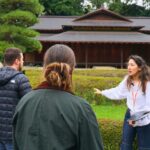
Guides including Keiko, Yuuka, Nonoka, Ayaka, and Yuki have a strong record of explaining customs in plain English. Several also help with photographs, answer detailed questions, and show old images of the grounds before construction. That extra context matters because the forest can look timeless, even though the shrine belongs to a specific period in Japan’s past.
Wine barrels, sake, and a visual history lesson
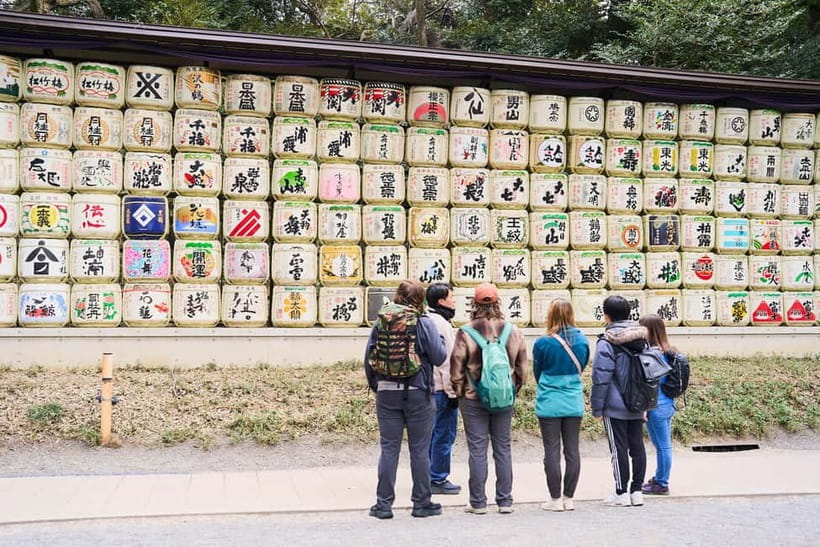
One of the early stops is a wall of consecrated wine barrels. You will see colorful French wine barrels offered by wineries, a visual reminder of Japan’s long relationship with imported culture and ceremony.
Nearby are consecrated sake barrels. These wooden barrels are closely tied to Shinto offerings, and they make an excellent stop for understanding how food and drink can be presented to the divine. The barrels are also photogenic, but the explanation gives them more meaning than a quick photo stop would.
The itinerary allows roughly 10 minutes at the wine barrels and five minutes at the sake barrels. That is enough time for an explanation and photographs, but not for a long pause. If you enjoy visual details, listen closely here because these stops pass quickly.
The big torii made from ancient cypress
The tour then reaches Meiji Shrine’s largest wooden torii. It rises 12 meters and was crafted from a Taiwanese cypress said to be 1,500 years old.
The scale is impressive, but the guide also explains how to pass through respectfully. Keep to the side rather than the middle, and remember that the gate marks a change in space. This small ritual helps the visit feel less like a sightseeing checklist and more like an encounter with a living place of worship.
The torii is also a good example of what this tour does best. You could walk beneath it on your own, take a photograph, and continue. With a guide, you learn why the gate matters, what the path represents, and how the shrine’s natural setting supports its religious purpose.
Emperor Meiji and Japan’s turn toward modernity
Meiji Shrine is not an ancient shrine in the usual sense. It honors Emperor Meiji and Empress Shoken, figures connected with the Meiji period and Japan’s rapid transformation from a samurai-led society into a modern state.
The tour uses the shrine as a starting point for that larger story. You learn about Japan’s 2,600-year-old imperial system, then place Emperor Meiji’s reign within the period when Japan changed its political structure, industry, international outlook, and relationship with the outside world.
This historical section is especially useful if Japan is new to you. A first visit can leave you with attractive but disconnected images: samurai, bullet trains, Shinto gates, imperial ceremonies, and modern Tokyo. The guide helps connect those pieces without turning the walk into a long classroom lecture.
The exact balance depends on your guide and group. Yuki, Yuuki, and Ayaka have been praised for making the transition from samurai-era Japan to the modern country easy to follow. Nonoka has also been noted for explaining the differences between Shinto and Buddhism, as well as the difference between haiku and waka poetry.
That sort of comparison is valuable because Japanese religious and cultural terms can blur together during a short visit. A good explanation gives you a framework you can use at other shrines and temples during the rest of your trip.
Other walking tours we've reviewed in Tokyo





Paying respects at Meiji Shrine
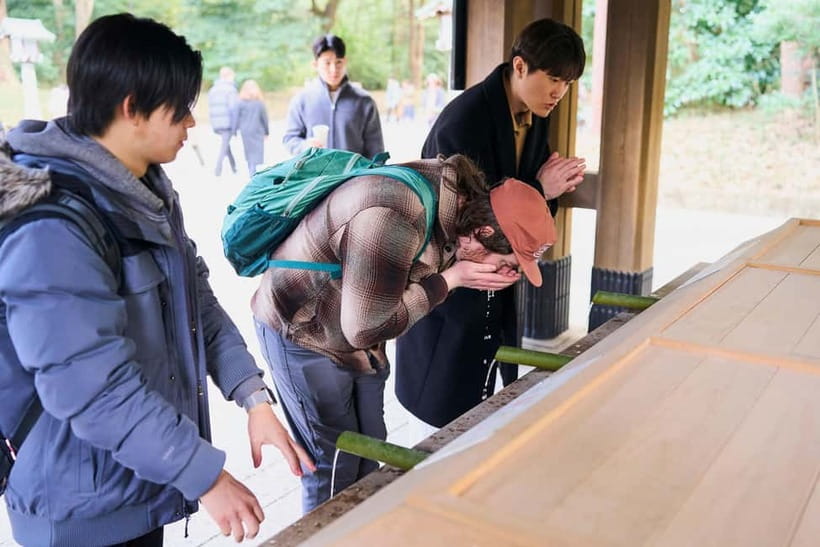
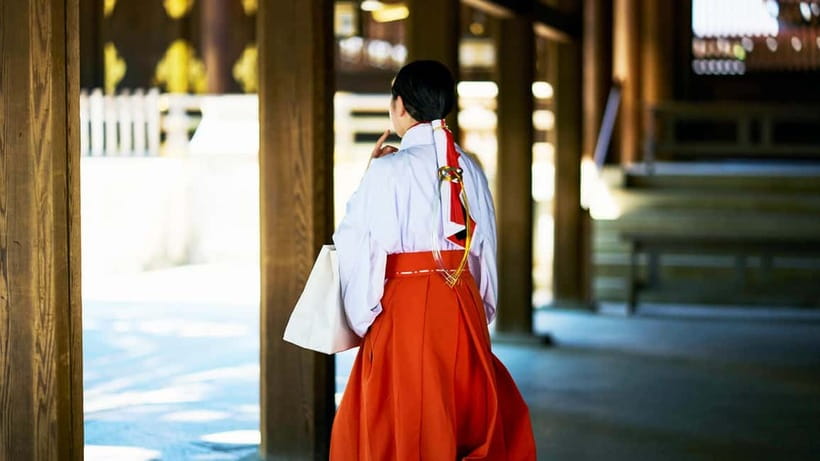
The main shrine is the heart of the walk, and you receive about 45 minutes here. That is the longest stop, wisely so. You have time for a guided explanation, personal reflection, photographs, shopping, and the basic shrine activities.
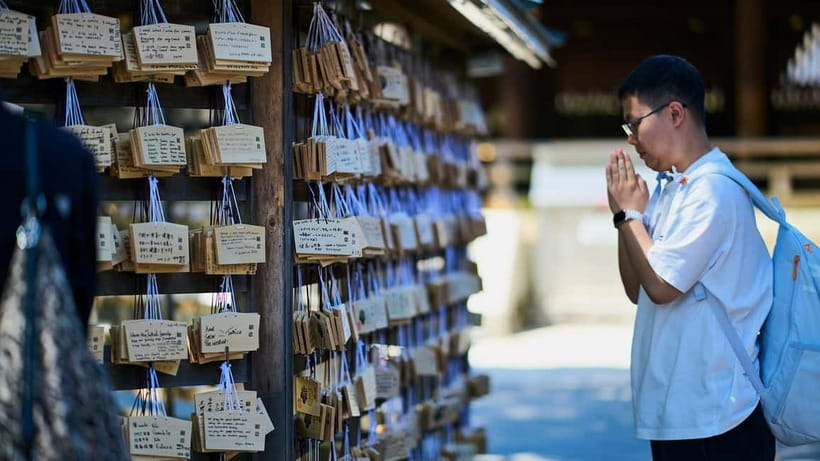
Your guide explains how to behave at the entrance and how to make an offering. One guide even provided coins when a participant had none, while others helped visitors write wishes, choose charms, interpret fortunes, and take pictures. This practical help is one of the tour’s biggest advantages. You do not have to guess what to do while a line forms behind you.
Shinto centers on respect for nature and harmony with the divine. The visit is not designed to convert you or ask you to take a religious position. Instead, it gives you a respectful way to observe and participate in a Japanese tradition.
You may see wedding activity at the shrine, especially on a busy weekend, though it is not guaranteed. The possibility adds a sense of everyday life to the visit. Meiji Shrine is a major attraction, but it remains a functioning place of worship rather than a museum set aside for tourists.
Omamori and the Omigokoro fortune

After paying your respects, you can browse omamori, the protective charms sold at the shrine. These make meaningful souvenirs because they relate directly to the place you visited rather than simply carrying a logo.
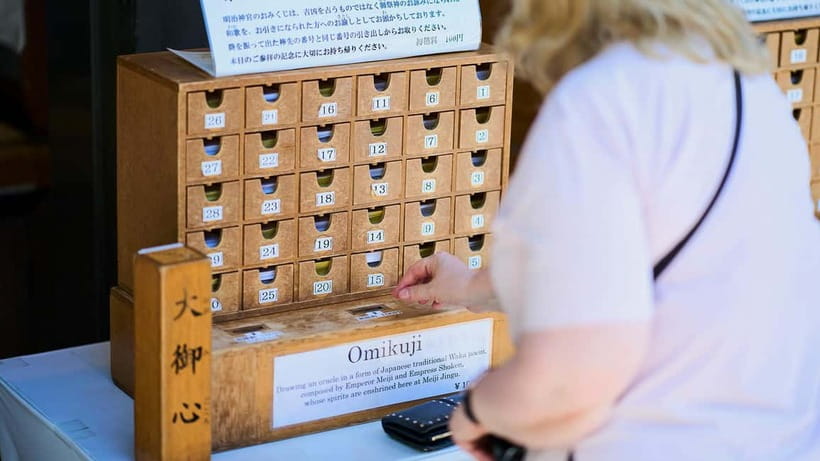
A particularly distinctive option is the Omigokoro fortune. It features poems written by Emperor Meiji and Empress Shoken, with English translations available. This gives international visitors a way to engage with the imperial connection through poetry rather than only through dates and political events.
The fortune is not presented as a standard tourist trinket. It connects the shrine’s religious setting, imperial associations, and written tradition in a compact form. If you plan to buy a charm or fortune, the guide can help explain the choices and customs.
Keep in mind that shopping is part of the free time at the shrine, not the main point of the tour. You will have an opportunity to browse, but this is not a dedicated souvenir-shopping excursion.
Tea and souvenirs at Mori no Terrace
The final stop is Forest Terrace Meiji Jingu and Café Mori no Terrace. You can pause for Japanese tea and light snacks while looking back at the wooded surroundings.
This break gives the walk a comfortable ending. The shrine grounds involve steady walking, and a short pause helps you absorb the information before returning to Harajuku Station. The stop lasts about 15 minutes, so think of it as a brief refreshment break rather than a full meal.
The gift shop sells unusual mementos, including eco-blocks made from fragrant Japanese camphor and miniature barrels of sacred sake. These are more distinctive than generic Tokyo souvenirs, particularly if you want something tied to the shrine’s forest and ceremonial traditions.
Food and drinks at the café are not listed as included, so plan to purchase them separately if you want them. The tour ends with a return to Harajuku Station, making it easy to continue to nearby shopping or another Tokyo sight.
How the guides shape the experience
The guide makes a real difference here because the shrine’s visual appeal is easy to appreciate without understanding it. The most praised guides include Keiko, Yuuka, Yuki, Yuuki, Ayaka, Nonoka, Nono, and Tomo.
Their strengths are consistent: clear English, patience, friendly energy, and a willingness to adjust the explanation to the group. Some guides help with shrine rituals and photographs. Others bring historical images or offer suggestions for food and further sightseeing. One participant received what was effectively a private tour because nobody else had booked that time.
The group limit is 10 people, which is a sensible size for a shrine walk. It lets you hear the guide without the feel of a large tour bus group. Still, small group does not always mean private, so you should expect to share the guide’s attention.
The tour is English only. There is no Japanese language support, so book it if you want the explanations in English. If you already have a strong background in Shinto and the Meiji period, some of the introduction may feel basic, but the etiquette guidance can still be useful.
Is $23 a fair price?
At $23 per person, this is good value if you want cultural context and practical instruction. Entry to the shrine itself is not the main expense. You are paying for a guide who explains what you are seeing, helps you take part respectfully, and connects the grounds to a major turning point in Japanese history.
The 90 to 135-minute length also fits well into a Tokyo schedule. A shorter start time keeps the visit efficient, while a longer version allows more questions or a slower pace. The itinerary includes about 10 minutes at the first torii, 10 minutes at the wine barrels, five minutes at the sake barrels, 10 minutes at the big torii, 10 minutes on imperial poetry, 45 minutes at the shrine, and 15 minutes at the café.
That breakdown tells you what this tour is not. It is not a full-day historical seminar, a food tour, or a broad exploration of Harajuku. It is a focused introduction to Meiji Shrine, Shinto practice, and the imperial story linked to the site.
Free cancellation up to 24 hours before the start and the option to reserve now and pay later add useful flexibility. Check the exact meeting point when booking because it can vary by option, even though the main starting area is Harajuku Station.
Who should book this Meiji Shrine walk?
I would choose this tour for a first visit to Japan, especially if you want cultural bearings early in your trip. It is also a smart choice for anyone who has already seen the shrine but felt unsure about the rituals, symbols, or historical background.
Families may appreciate the short format and the help with offerings, fortunes, and photographs. Couples and solo visitors can also benefit, particularly if they want more meaning than a self-guided walk provides.
You may not need it if you prefer to wander silently, already understand Shinto etiquette, or have very limited time in Harajuku. The central forest is free to explore on your own, and a self-guided visit gives you complete control over the pace.
For most visitors, though, $23 buys useful understanding rather than just directions. The forest provides the atmosphere, but the guide supplies the key: how to enter, how to behave, what the offerings mean, and why this shrine belongs to the story of modern Japan.
FAQ
Where does the Meiji Shrine walking tour start?
The tour has starting options near Harajuku Station, also written as 原宿駅. The exact meeting point may vary depending on the option booked.
How long does the tour last?
The stated duration is 90 to 135 minutes. Available starting times vary, so check the schedule when booking.
How much does the tour cost?
The price is $23 per person.
How large is the tour group?
The tour is limited to 10 participants, making it a small-group experience.
What language is the tour conducted in?
The tour is conducted in English only. Japanese language support is not available.
What does the tour visit?
The route includes Meiji Jingu Ichino Torii, consecrated wine barrels, consecrated sake barrels, the large torii, imperial poetry connected with Emperor Meiji, Meiji Shrine, and Café Mori no Terrace.
Can I buy charms or fortunes at Meiji Shrine?
Yes. You can purchase omamori protective charms and the Omigokoro fortune, which includes poems by Emperor Meiji and Empress Shoken with English translations.
Is food included at Café Mori no Terrace?
The tour includes a break at the café, where you can enjoy Japanese tea and light snacks, but the provided activity details do not state that food or drinks are included in the tour price.
Can I cancel the booking for a full refund?
Yes. You can cancel up to 24 hours in advance for a full refund. You can also reserve now and pay later.
More Walking Tours in Tokyo
More Temples & Meditation in Tokyo



More tours in Tokyo we've reviewed










Temples & Meditation, compared.
 ★ 4.7Tokyo: Meiji Shrine, Asakusa, Skytree Bus Tour and CruiseFrom $12210 hours
 ★ 4.8Tokyo: Asakusa Walking Tour with Sensoji Temple VisitFrom $222 hours
 ★ 4.5Tokyo: Kamakura & Enoshima Day Trip including Temple TicketsFrom $589 hours - 570 minutes
 ★ 4.5Tokyo: Nikko Toshogu Shrine and Kegon Waterfall TourFrom $8410h 30m
 ★ 4.5Tokyo Panoramic 1 Day: Meiji Shrine, Asakusa, Odaiba and SKYTREE®From $85
 ★ 5.0Asakusa Senso-ji Temple and Old Tokyo Walking TourFrom $20