Reviewed · FOOD & DRINK
Tokyo Wagyu Culinary Tour Cooking Culture and Tasting
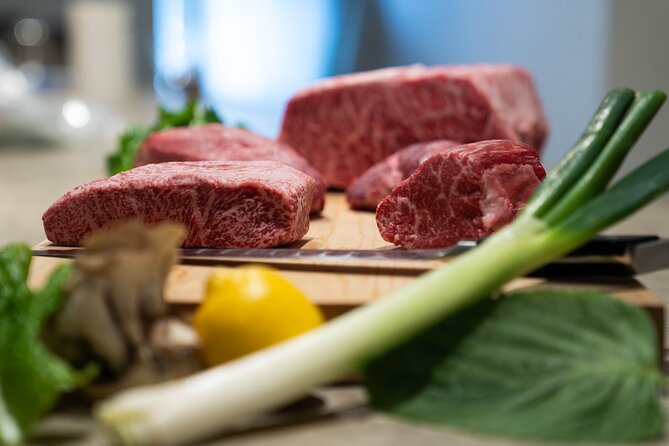
Tokyo Wagyu Culinary Tour Cooking Culture and Tasting puts the prized beef on your cutting board, not just on a restaurant plate. In about two hours, you learn how Wagyu is graded, watch cuts such as sirloin and tenderloin being prepared, then cook several pieces yourself with guidance from the chef.
In This Article
- Key points at a glance
- Why this Wagyu class is different from a restaurant meal
- Starting at Oshiage with a seasonal drink
- Learning what makes Wagyu special
- Watching sirloin and tenderloin become cooking cuts
- Practicing seasoning, timing, and heat control
- Cooking different cuts with the chefs’ help
- Tasting the finished Wagyu with paired drinks
- The cultural conversation after the meal
- Is $920 a fair price for two hours?
- Who will get the most from this experience?
- Booking details worth knowing
- Should you book the Tokyo Wagyu Culinary Tour?
- FAQ
- How long does the Tokyo Wagyu culinary tour last?
- Where does the activity start and finish?
- How many people can join the class?
- What will I learn during the class?
- Can dietary restrictions be accommodated?
- What is the cancellation policy?
I like the hands-on cooking and the small group limit of six. You are not simply watching a demonstration and eating an expensive bite. You practice seasoning, timing, and heat control, the very skills that help you cook steak better at home. I also like the cultural thread, from the seasonal welcome drink to the discussion of Wagyu’s place in Japanese food.
The main drawback is the $920 price, which makes this a serious splurge for a two-hour activity. You should also note that the published details do not say exactly how much beef or how many drinks are included, so ask before booking if that matters to your budget.
Key points at a glance
- Cook several Wagyu cuts yourself: Practice with cuts including sirloin and tenderloin, rather than only watching a chef.
- See a butchery demonstration: Learn how the beef is prepared before it reaches the pan.
- Keep the group small: A maximum of six people allows more direct help during the cooking session.
- Learn practical steak skills: Seasoning, temperature control, and timing apply to Wagyu and ordinary steak alike.
- Meet near Oshiage: The class starts and ends at 3-chōme-25-17 Oshiage, Sumida City.
- Enjoy a seasonal welcome drink and pairings: Drinks bookend the meal and are selected to complement the beef.
Why this Wagyu class is different from a restaurant meal
A restaurant can serve you beautifully cooked Wagyu, but it cannot always show you why one cut behaves differently from another. This class is built around that missing piece. You see the beef, hear how the cuts differ, and then put the advice to work.
That matters with Wagyu because its fat and texture reward careful handling. The experience focuses on seasoning and heat control rather than treating the beef like an ordinary steak. You learn what to watch for as the meat cooks, then taste the result while the lesson is still fresh.
I like this format for anyone who wants a food memory with some use beyond the holiday. The cooking tips are not limited to Wagyu. Proper seasoning, pan temperature, and timing can improve the steak you make at home, even if you never buy Japanese beef again.
The cultural side also gives the meal more shape. You are not only learning a product name. You are discussing the care behind the beef and its role in Japanese cuisine, linking the ingredients on the table with Tokyo’s food traditions.
If you're still narrowing it down, here are other tours in Tokyo we've reviewed.



Starting at Oshiage with a seasonal drink
The class begins at 3-chōme-25-17 Oshiage, Sumida City, Tokyo 131-0045. You return to that same meeting point at the end, so there is no separate drop-off point to arrange.
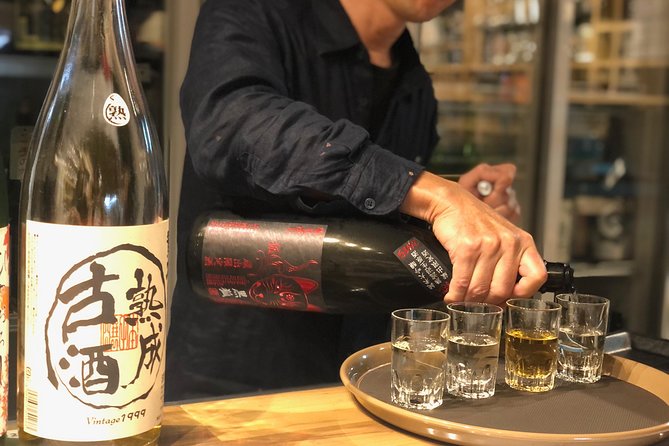
Your first taste is a welcome drink inspired by seasonal flavors in Japan. This is a small detail, but it sets the tone well. The drink introduces the idea that Japanese cooking pays attention to season and balance before the main food even arrives.
The meeting point is useful to note carefully. The address is specific, and the activity ends where it begins. Since the supplied information does not include a walking route, station directions, or a neighborhood schedule, give yourself enough time to locate the exact address.
The tour uses a mobile ticket, which keeps the booking simple. Confirmation comes at the time of booking. For a cooking class with a fixed start time, having the ticket ready on your phone is sensible.
Learning what makes Wagyu special
The first teaching section covers Wagyu’s origins, what makes it special, and how it is graded. This is important because Wagyu can be reduced to a luxury label, while the grading system and cut selection have a real effect on what you eat.
You learn to distinguish different cuts and understand why they are used in different ways. That gives you a better basis for judging a menu later in your trip. If you see sirloin and tenderloin listed at different prices, you will have some idea of what the kitchen is offering.
The class also explains the care behind each slice. That helps put the price of Japanese beef into context, though it does not automatically make a $920 activity good value for every budget. The lesson is strongest for people who want to understand the craft, not only consume the finished dish.
Ask questions during this section. The group is capped at six, so the setting should give you a better chance to ask about fat, texture, grading, and cooking use than a large demonstration would.
Watching sirloin and tenderloin become cooking cuts
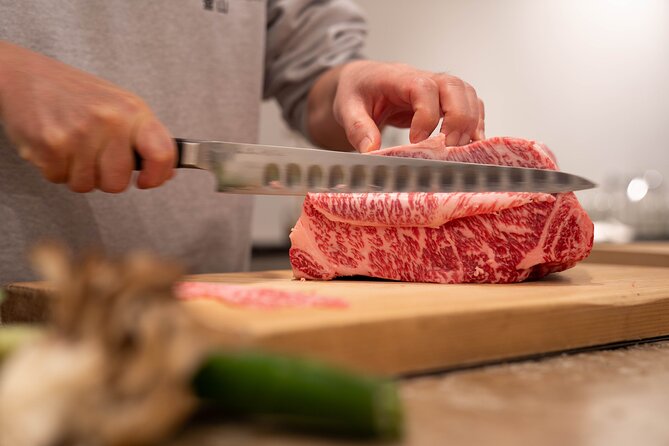
Next comes the butchery demonstration. You see how the cuts are prepared before cooking, with sirloin and tenderloin among the examples. This is one of the more distinctive parts of the experience because it connects the neat piece on the plate with the work that comes before it.
The demonstration should help you see that a cut is not just a shape or a price tag. Sirloin and tenderloin have different qualities and uses, and the class explains what sets them apart. That knowledge is practical when choosing beef at home or ordering it in Japan.
You should keep your expectations realistic. The available details do not promise a full butchery workshop where you handle a knife yourself. It describes a demonstration, followed by cooking practice. If your main interest is meat cutting, rather than cooking and tasting, this distinction matters.
For most people, though, the demonstration is a useful bridge. You first learn the cut, then see it prepared, then cook it. The sequence makes the later tasting more meaningful.
Practicing seasoning, timing, and heat control
The cooking demonstration focuses on the points that can make or ruin a steak: seasoning, temperature control, and timing. You watch the chef explain the proper way to cook Wagyu, then use those methods yourself.
Heat control is especially valuable because expensive beef does not forgive careless cooking any more than inexpensive beef does. The lesson gives you a method to follow rather than leaving you to guess when the pan or meat is ready.
The same goes for timing. A short class cannot turn you into a professional cook, but it can give you a clearer sense of how closely you need to watch the meat. You learn by seeing the process and then repeating it under supervision.
I would pay close attention to the chef’s small corrections here. The useful part of a cooking class is often not the formal demonstration. It is the moment someone points out an adjustment in seasoning or heat before the food is finished.




Cooking different cuts with the chefs’ help
After the demonstration, you cook Wagyu yourself. You prepare different cuts with help from the chefs, including the types introduced earlier. This is the heart of the activity.
The hands-on format gives you a chance to compare how the cuts respond to the same kitchen principles. You are not simply told that sirloin and tenderloin differ. You handle and taste them after preparing them.
A small group makes a real difference here. With no more than six people, the chef can give more attention to individual cooking than would be possible in a crowded class. The published information does not promise a private lesson, but the group size keeps it intimate enough for direct guidance.
Dietary restrictions can be accommodated if you tell the provider in advance. The details do not list specific substitutions, so be clear about your needs when booking. Also mention any concern before the class rather than waiting until the food is being prepared.
This part suits people who enjoy doing rather than sitting back. If you want a quiet meal with no participation, a Wagyu restaurant may suit you better. If you want to learn and accept a little kitchen work, this class offers more value.
Tasting the finished Wagyu with paired drinks
Once the cooking is finished, you taste the dishes you prepared. Beverages are served to complement the flavor of the Wagyu, giving the meal a planned finish rather than a simple sample of meat.
This tasting is where the earlier lesson becomes clear. You can compare the cuts, notice the effect of seasoning and heat, and decide which texture and flavor you prefer. Since you cooked the food yourself, you also have a better sense of how the result was achieved.
The welcome drink is inspired by seasonal Japanese flavors, while the later beverages are chosen to pair with Wagyu. The supplied details do not name the drinks, so do not book this expecting a particular sake, wine, tea, or other beverage.
One useful tip comes from the guide, Mike. He was praised for explaining Wagyu clearly and for offering recommendations for food and activities in Tokyo. If you want local ideas, come with a short list of questions. A cooking guide who knows the city can be helpful beyond the two-hour class.
The cultural conversation after the meal
The class closes with a discussion of Wagyu’s role in Japanese culture. This final section keeps the experience from becoming only a luxury food tasting.
You leave with practical tips for cooking Wagyu at home and a clearer sense of how the beef fits into Japanese culinary traditions. That is a good ending because it sends you away with both a memory and a skill.
I would especially recommend this portion to first-time visitors who want food to explain place. Tokyo’s cuisine can be hard to understand through restaurant menus alone. A guided look at one important ingredient gives you a more focused way to think about Japanese food.
The cultural discussion is not described as a long history lecture, and the whole activity lasts only about two hours. That is a benefit if you want a compact food experience, but a limitation if you hope for an extended study of Wagyu production or regional Japanese beef.
Is $920 a fair price for two hours?
At $920, this is not a casual add-on. You are paying for a short, specialized class with a maximum of six people, Wagyu tasting, chef guidance, a butchery demonstration, drinks, and practical instruction.
The value depends on what you want. If you compare it only with the cost of a steak dinner, the price will feel steep. If you want a small-group lesson, several cuts, hands-on cooking, and cultural context in one sitting, the calculation becomes more reasonable.
Still, the available information does not state the exact quantity of Wagyu, the number of drinks, or whether the price is per person or for another booking arrangement. Confirm those points before paying. They are central to judging value at this level.
I would reserve this for a food-focused splurge, a special occasion, or someone who truly wants to learn about Wagyu. It is harder to recommend for a general Tokyo itinerary when your main goal is simply to eat excellent beef.
Who will get the most from this experience?
This class fits you well if you enjoy cooking, want to understand Japanese ingredients, or plan to recreate the meal at home. It also works for a small group that values direct help and conversation over a large class with a lower price.
Mike’s food and Tokyo recommendations add another reason to come prepared with questions. The experience can serve as both a cooking lesson and a chance to improve the rest of your food plans in the city.
You may want to skip it if you dislike hands-on activities, have very limited time, or are uncomfortable with the price. A two-hour duration is convenient, but it also means the class cannot cover every part of Wagyu production, grading, butchery, and Japanese food culture in great depth.
The small group, practical instruction, and tasting are the strongest reasons to book. The price and the lack of detail about portions are the main points to settle first.
Booking details worth knowing
You receive confirmation at booking, and the ticket is mobile. The activity starts and finishes at 3-chōme-25-17 Oshiage, Sumida City, Tokyo.
There can be no more than six people in the class. Tell the provider about dietary restrictions so they can plan an accommodation.
Cancellation is free up to 24 hours before the start time, with a full refund. If you cancel or request changes within 24 hours, you will not receive a refund, and changes are not accepted. Cut-off times use Tokyo local time, so check the clock carefully if you are booking from abroad.
Should you book the Tokyo Wagyu Culinary Tour?
Book it if you want more than a Wagyu dinner. You will learn the cuts, watch them being prepared, cook them with chef support, and taste the results with paired beverages. The maximum group size of six is a strong advantage.
I would not book it blindly at $920. Confirm what the price includes, especially the serving size and drink details. If those match your expectations and you enjoy food classes, this is a focused, useful way to spend two hours in Tokyo. If you only want a memorable steak, put the money toward a restaurant meal instead.
FAQ
How long does the Tokyo Wagyu culinary tour last?
The experience lasts approximately two hours.
Where does the activity start and finish?
It starts at 3-chōme-25-17 Oshiage, Sumida City, Tokyo 131-0045, Japan, and ends back at the same meeting point.
How many people can join the class?
The activity has a maximum of six people.
What will I learn during the class?
You will learn about Wagyu’s origins, special qualities, grading, different cuts, butchery preparation, seasoning, heat control, and cooking timing.
Can dietary restrictions be accommodated?
Yes. You should tell the provider about your dietary restrictions so accommodations can be arranged.
What is the cancellation policy?
You can cancel at least 24 hours before the start time for a full refund. Cancellations and changes made within 24 hours are not accepted, and the amount paid will not be refunded.
More tours in Tokyo we've reviewed












Food & Drink, compared.
 ★ 5.0Tokyo: Shinjuku Food Tour (13 Dishes at 4 Local Eateries)From $86
 ★ 5.0Tokyo Tsukiji Fish Market Food and Culture Walking TourFrom $99
 ★ 5.0Tokyo: Tsukiji Fish Market Food and Walking tourFrom $30
 ★ 4.9Tokyo: Shinjuku Food Tour (13 Dishes and 4 Eateries)From $97
 ★ 5.0Eat and Drink Like a Local: Tokyo Ueno Food Tour-Taverns&RamenFrom $95
 ★ 5.0Tokyo: Shibuya Food Tour (13 dishes and 4 Eateries)From $77