Reviewed · SAMURAI & NINJA EXPERIENCES
Samurai sword cutting experience
Cutting rolled tatami with a Japanese sword more than 100 years old is the heart of this Tokyo experience. You do not simply swing a blade for a photo. You first change into iaido clothing, practice the movements, and learn the greetings and mental focus linked to samurai sword work.
In This Article
- Key points
- What the $93 price buys you
- Starting at Samurai Theater Tokyo
- Changing into iaido clothing
- Greetings, meditation, and mental unity
- Learning what makes a Japanese sword different
- Practicing the swing before cutting
- Watching the teacher cut first
- Making two cuts through rolled tatami
- Armor, old swords, and the atmosphere of the room
- The closing ritual and commemorative photo
- What the strongest praise tells you
- Who should book this sword experience
- A practical decision at $93
- Should you book it?
- FAQ
- Where does the samurai sword cutting experience begin?
- Where does the activity end?
- How much does the experience cost?
- What languages are available?
- Do I use a real Japanese sword?
- How many times do I cut the tatami?
- Can I take photos or videos?
I like the clear progression from practice sword to real sword, and I like that a genuine teacher of Battoushi Do leads the session. The armor display adds a strong sense of age and place. The main drawback is that this is not a casual family activity: children under 14, pregnant women, wheelchair users, and people with visual impairments cannot take part.
Key points
- Cut rolled tatami twice: Follow the teacher’s timing and technique for two controlled cuts.
- Use traditional iaido clothing: Changing clothes helps mark the shift from sightseeing to formal practice.
- Handle historic Japanese swords: Swords more than 100 years old are part of the experience.
- Learn samurai ritual: Greetings, meditation, and mental unification give the activity more meaning than a simple sword demonstration.
- Train with a Battoushi Do teacher: You receive instruction before attempting the cut yourself.
What the $93 price buys you
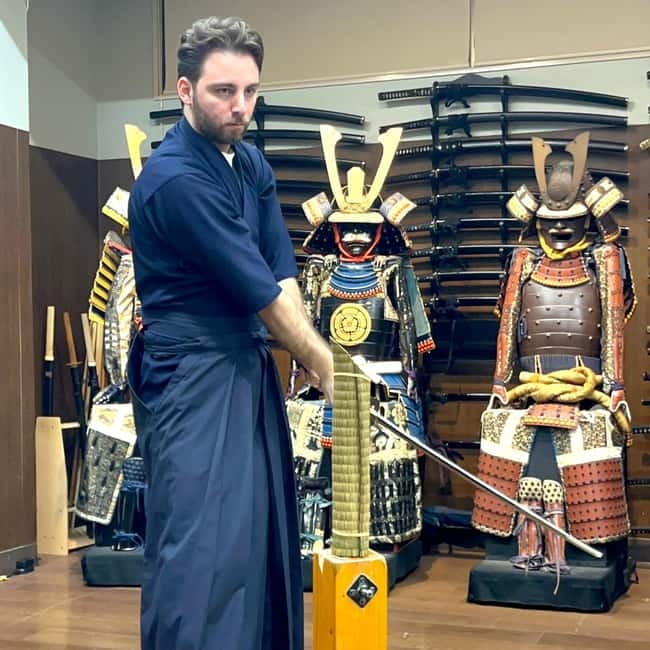
The price is $93 per person. That is not bargain entertainment, but it covers much more than a quick demonstration. Your booking includes the instructor, sword explanation, practice, traditional practice clothing, an imitation sword, a practice sword, a real sword, rolled tatami mats, the teacher’s demonstration, and photography and video recording.
I see the value in the hands-on structure. You are not paying only to watch somebody else perform. You receive instruction, prepare in costume, rehearse the motion, and make two attempts at cutting the mat. The teacher’s performance also gives you a chance to see the technique at full speed and with greater control.
The price makes the most sense if you want a focused cultural activity rather than a general sightseeing stop. A museum can show you old armor and swords. This experience lets you handle the subject through ritual and movement, though the session is still guided and carefully structured.
There is no duration or group size provided, so I would not book it expecting a fixed half-day program or a private lesson. Treat it as a specialized activity with a clear sequence. If your main goal is a dramatic souvenir video, the included recording helps. If you want a long course in iaido, two cuts will feel like an introduction rather than full training.
A few more Tokyo tours and experiences worth a look


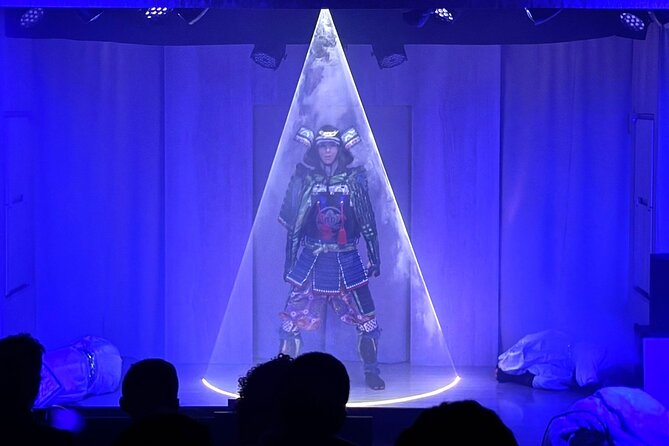
Starting at Samurai Theater Tokyo
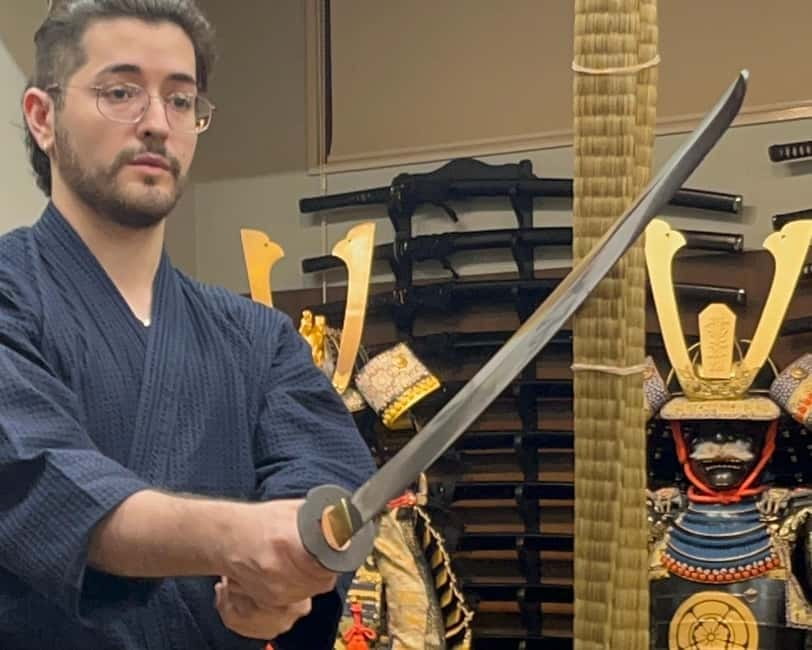
The meeting point is Samurai Theater Tokyo. To find it, search Google Maps for Samurai Theater Tokyo. The activity ends back at the same meeting point, which keeps the arrangement simple and avoids an unfamiliar final drop-off.
I would allow time to find the building before the start. The supplied meeting instructions are brief, so your phone map is important. Since the activity is conducted in English and Japanese, you should also confirm the meeting details when booking if you have any trouble locating the entrance.
The location gives the experience a clear stage. You arrive as a sightseer and then change into practice clothing inside the venue. That physical change matters. It separates this activity from the usual quick stop at a themed attraction, even if you have visited other samurai displays during your time in Japan.
Changing into iaido clothing
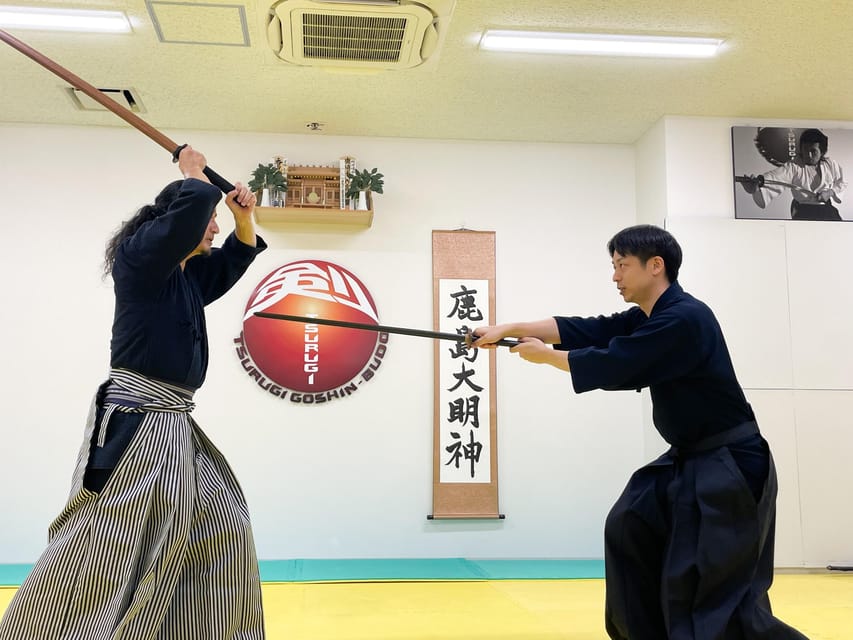
The session begins with traditional iaido clothing. This is not just a costume photo opportunity. Iaido clothing signals that the class will follow a formal order, with attention to posture, greetings, and controlled movement.
I like this opening because it sets the right mood. You are asked to slow down before handling a sword. The outfit also makes the photographs more memorable than ordinary street clothes would be, especially if you use the included photography and video recording.
The clothing may feel unfamiliar if you have never worn traditional practice gear. That is part of the point, but it also means you should expect a structured activity rather than a relaxed dress-up session. Follow the instructor’s directions and avoid treating the sword as a prop.
Greetings, meditation, and mental unity
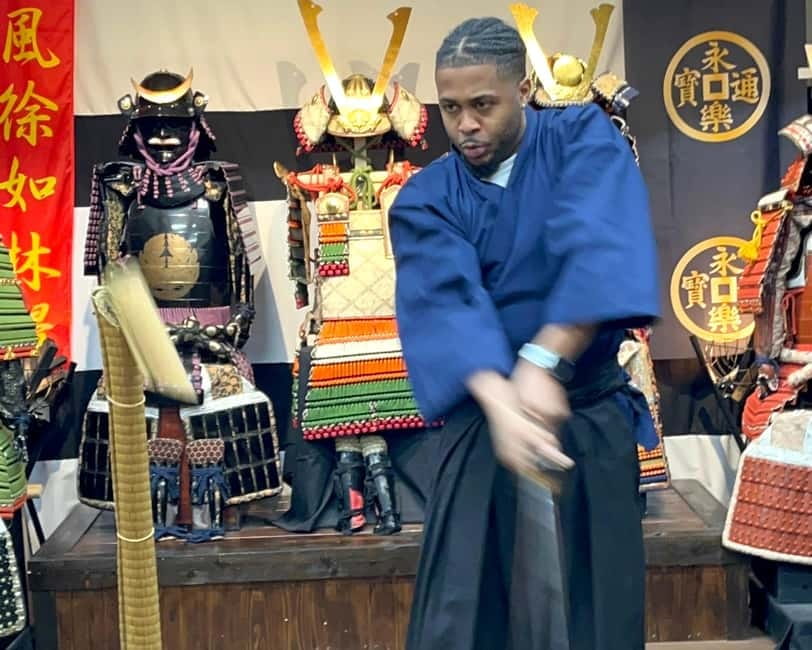
Before the cutting begins, you take part in greetings and meditation. The program describes this as mental unity, a preparation for concentration and disciplined action.
For me, this is one of the most worthwhile parts. The ritual explains why iaido is more than the act of drawing or swinging a blade. The focus is on control, attention, and respect. Even a short session gains weight when you understand that the formal opening is part of the practice.
You should not expect a long spiritual retreat. The information does not give the length of the meditation or describe a separate lecture. Still, this step helps you understand the activity on its own terms. It also gives the teacher a chance to establish the serious mood needed for safe sword handling.
Learning what makes a Japanese sword different
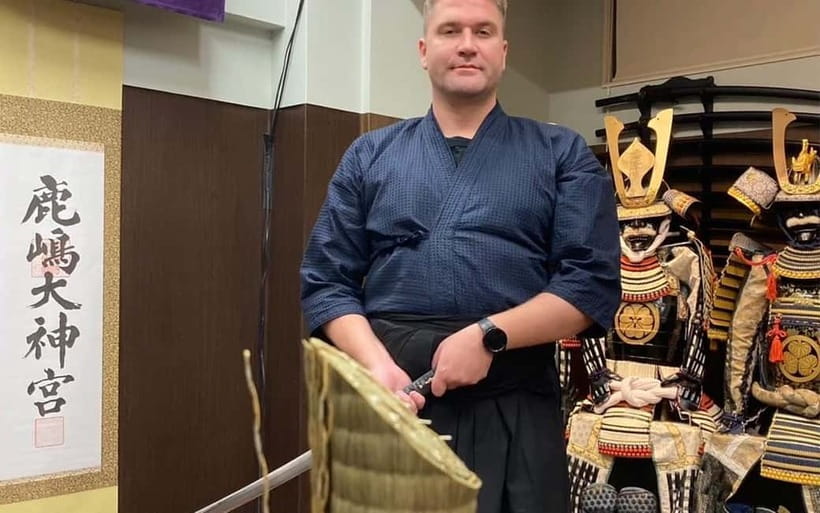
The teacher explains the Japanese sword before you begin the physical practice. This section provides context for the equipment you will use and helps you understand the distinction between the imitation sword, practice sword, and real sword included in the session.
That distinction is important. Beginners often focus on the visual drama of a curved blade, but the experience is built around handling it correctly. The explanation gives you a reason to listen carefully before trying any movement.
The session includes real Japanese swords more than 100 years old. That detail adds genuine historical weight, though you should not assume you will freely handle every antique on display. The teacher directs the process, and you should treat the equipment as valuable objects as well as training tools.






Practicing the swing before cutting
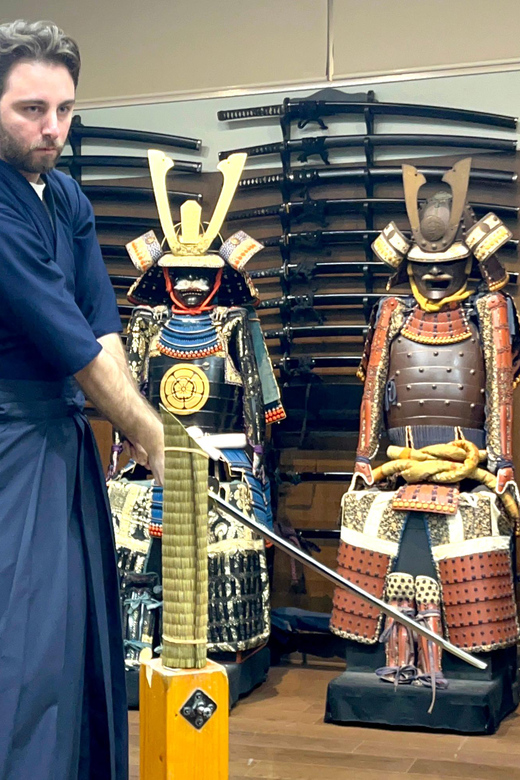
You first practice swinging the sword. This is where the activity moves from ceremony to physical instruction. The teacher shows you how to follow the movement, and you repeat it with the practice equipment before attempting the tatami.
I like that the cut comes late in the sequence. Two attempts are not much if you have had no preparation. Here, the practice gives you a basic sense of the motion and timing, while the teacher can correct your approach before you use the real sword.
Do not expect the practice swing to turn you into a samurai. The experience offers an introduction, not a qualification in iaido. Your goal is to follow the teacher safely and carefully, not to create a large theatrical slash.
Watching the teacher cut first
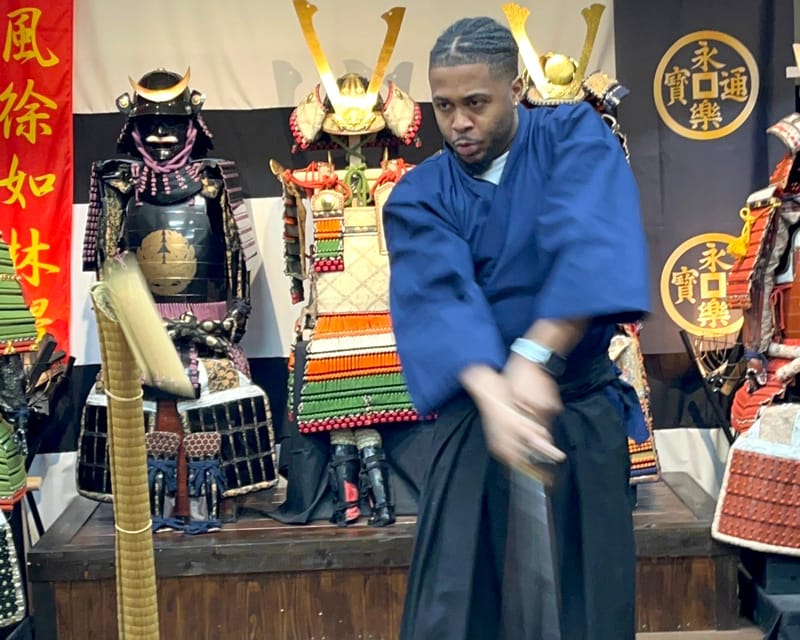
The instructor demonstrates the cutting technique before you try it. This is one of the most useful moments because you can see the complete action without having to think about your own hands and timing.
A good demonstration also shows the difference between a controlled cut and random force. The teacher’s performance sets a standard for posture and movement. You may find it looks easier than it feels, which is exactly why the demonstration belongs before your attempts.
The teacher is described as a real instructor of Battoushi Do. That gives the activity more substance than a generic sword-themed photo session. You receive direction from someone whose role is to teach the practice, not simply hand you a blade and point you toward a target.
Making two cuts through rolled tatami
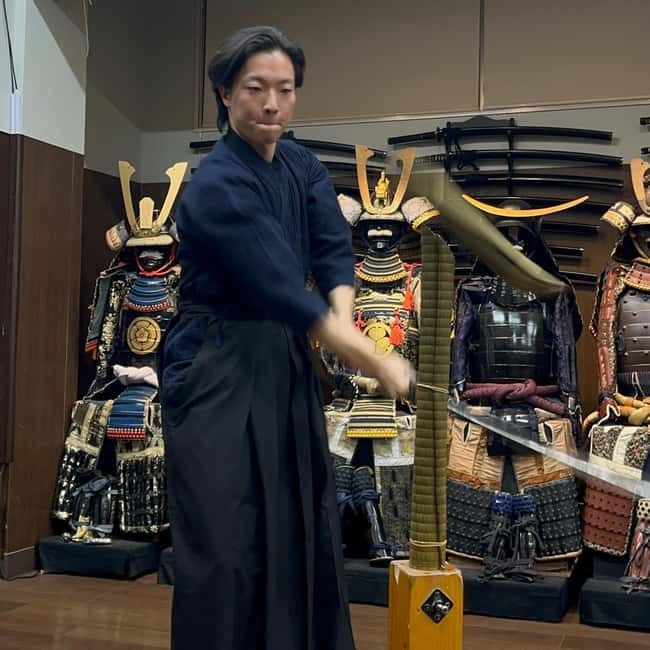
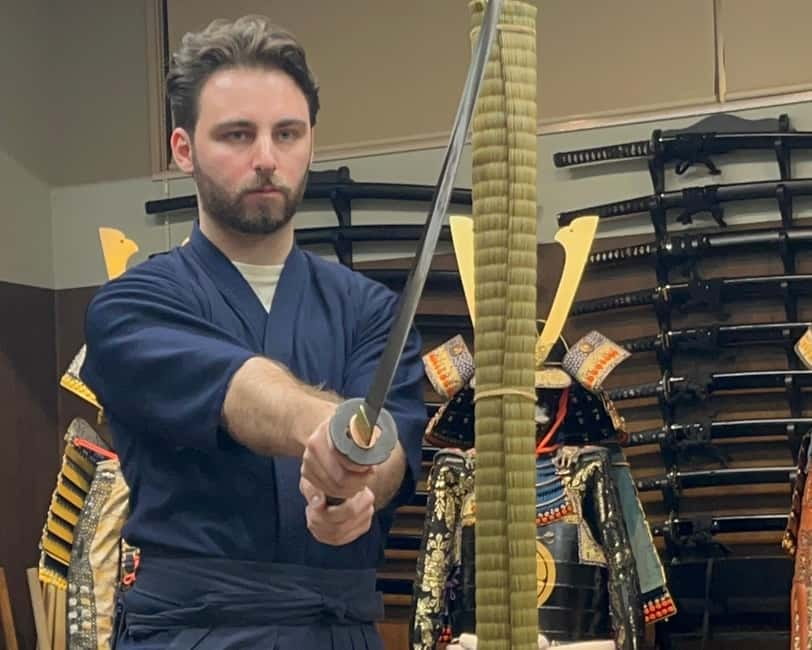
The main task is to follow the instructor’s instructions and cut a rolled tatami mat twice. You cut at the timing you choose, within the teacher’s guidance. This gives you a small amount of personal control while keeping the session organized.
The two-cut format is useful for beginners. One attempt can feel like a test of nerves. The second gives you a chance to use what you learned from the first, even if the result is not perfect. You should focus on following the teacher’s instructions rather than trying to force the blade through the mat.
Rolled tatami provides a clear target and a traditional feel, but it does not make the activity risk-free. This is still real sword handling. Pay close attention during the explanation and practice, and do not improvise movements.
The experience description allows photos and videos of you cutting the tatami. That is a practical inclusion because your own attempt can be difficult to watch while you are concentrating. If recording matters to you, confirm the process with the teacher on arrival and follow the venue’s instructions.
Armor, old swords, and the atmosphere of the room
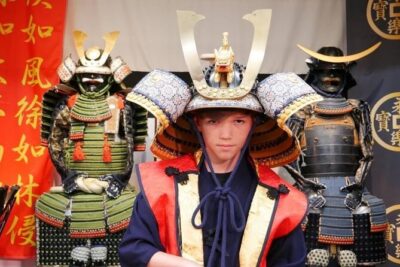
Armor is on display throughout the experience. These pieces help place the sword in a wider samurai setting. Instead of seeing only a blade and a mat, you get visual reminders of the equipment and status associated with the warrior class.
The armor also makes the activity appealing to people who care about material culture. You can look at the construction and age of the objects while taking part in a modern instructional session. The result is a blend of display and participation.
Do not expect the armor display to replace a full museum visit. The available information does not promise a guided history tour or detailed explanation of every item. Think of it as an atmospheric layer that supports the sword lesson.
The closing ritual and commemorative photo
After the cutting, you watch the teacher’s performance. The program then returns to greetings and mental unification before the commemorative photo and optional questions.
That closing matters because it prevents the activity from ending with a quick applause and a rushed exit. The opening and closing frame the cutting as a formal practice. You leave with a photo, but also with a clearer sense of the discipline behind the performance.
Use the question period if you want to understand more about the sword, the movements, or the teacher’s practice. The activity specifically allows questions, though it does not promise a long private conversation. English and Japanese are the stated languages, so you can ask in either of those languages.
What the strongest praise tells you
The most positive responses focus on two things: the explanations are easy to follow, and the activity feels like a special treat. That matches the design of the session. It gives you a rare physical task, but it does not throw you into it without preparation.
The experience works best when you enjoy learning by doing. You will change clothes, take part in formal greetings, listen to a sword explanation, practice the swing, watch a demonstration, and then make two cuts. Each stage supports the next.
The praise should not lead you to expect a full martial arts course. The session is short in scope, with two tatami cuts at its center. It is a memorable introduction to samurai sword practice, not a substitute for regular iaido instruction.
Who should book this sword experience
I would recommend it to adults and teenagers 14 or older who want an unusual cultural activity in Tokyo. It suits you especially well if you like Japanese history, martial arts, traditional clothing, or hands-on demonstrations.
It is also a good choice if you want an activity that produces clear photographs and video without reducing the whole event to a costume pose. The old swords, armor, meditation, and formal greetings give the session several layers.
You should think twice if you dislike ritual, close instruction, or activities that demand concentration. This is not designed as a loose drop-in attraction. You will need to listen carefully and follow the teacher’s directions.
The experience is not suitable for children under 14, pregnant women, wheelchair users, or people with visual impairments. Those limits are important because the activity involves sword practice and cutting. If any of those conditions apply to you, choose a different Tokyo cultural activity.
A practical decision at $93
At $93, this is a specialist experience. You pay a premium for direct instruction, traditional clothing, sword handling, a teacher’s demonstration, two tatami cuts, and recorded memories.
I think the price is fair if you value participation and want something more personal than watching a samurai show. It is less convincing if you only want to see old armor or hear a history talk, since the experience is built around practice and performance.
The full refund cancellation option applies when you cancel at least 24 hours in advance. You can also reserve and pay later, which helps if your Tokyo plans are still shifting. Those policies reduce some of the risk of booking a higher-priced activity.
Should you book it?
Book this experience if you want to put on iaido clothing, learn the formal mindset behind sword practice, and make two carefully guided cuts with a real Japanese sword. The teacher, antique equipment, armor, and included recording give the $93 price a clear purpose.
Skip it if you want a cheap photo stop, a family activity for younger children, or an accessible program for wheelchair users or people with visual impairments. For the right person, this is a focused and memorable encounter with samurai sword culture, provided you treat it as instruction rather than a stunt.
FAQ
Where does the samurai sword cutting experience begin?
It begins at Samurai Theater Tokyo. Search Google Maps for Samurai Theater Tokyo to find the meeting point.
Where does the activity end?
The activity ends back at the meeting point at Samurai Theater Tokyo.
How much does the experience cost?
The price is $93 per person.
What languages are available?
The experience is available in English and Japanese.
Do I use a real Japanese sword?
The experience includes a real Japanese sword, along with an imitation sword and a practice sword. Real Japanese swords more than 100 years old are part of the program.
How many times do I cut the tatami?
You follow the instructor’s directions to cut a rolled tatami mat twice.
Can I take photos or videos?
Yes. Photography and video recording are included, and you may take pictures and videos of yourself cutting the tatami if you wish.
More Samurai & Ninja Experiences in Tokyo


More tours in Tokyo we've reviewed











Samurai & Ninja Experiences, compared.
 ★ 4.5Tokyo: Samurai Restaurant Show Ticket with 2 DrinksFrom $551h 30m
 ★ 4.6Tokyo: Samurai Ninja Museum Guided tour and ExperienceFrom $27
 ★ 5.0Skip the lines Basic Ticket at SAMURAI NINJA MUSEUM TOKYOFrom $28
 ★ 5.0Tokyo: Authentic Samurai Training at a DojoFrom $211
 ★ 5.0Best Samurai Experience in TokyoFrom $65
 ★ 4.6Tokyo: Legend Samurai Entertainment Night in Kanda ShrineFrom $44