Reviewed · IMPERIAL PALACE & SHOGUN TOURS
Tokyo Private Tour! Edo Castle & Imperial Palace East Gardens
The most useful thing about this tour is that it turns a free public garden into a guided lesson in Tokyo’s past. In two hours, you walk through Edo Castle ruins, Ote-mon Gate, Ninomaru Garden, old bridges, and palace grounds while your guide explains what you are seeing.
In This Article
- Key points at a glance
- What you actually see in two hours
- Ote-mon Gate and the first sense of Edo Castle
- Edo Castle ruins and Tokyo’s changing power
- Ninomaru Garden and the quieter side of the visit
- Imperial Palace views without entering the Inner Palace
- Why the private format can be worth $65.41
- A calm break from central Tokyo
- How the guides shape the experience
- Timing, entry, and cancellation details
- Who should book this East Gardens walk?
- Final verdict: a worthwhile guide, with one clear caveat
- FAQ
- Is this a tour inside the Imperial Palace?
- How long does the tour last?
- What sights are included?
- Is admission to the East Gardens included?
- Is this a private tour?
- Where does the tour start and end?
- What should I know about baggage?
I like the private format, since your group can ask questions and often set the walking pace. I also like the range of guides, including Naoko, Shigeru, Akiyoshi, Mikio, Yoshiko, Ishida, and Taka, who bring different angles on Japanese life and the Imperial Family. The main caution is simple: this is not an inside visit to the Imperial Palace, and the East Gardens themselves are free to enter.
Key points at a glance
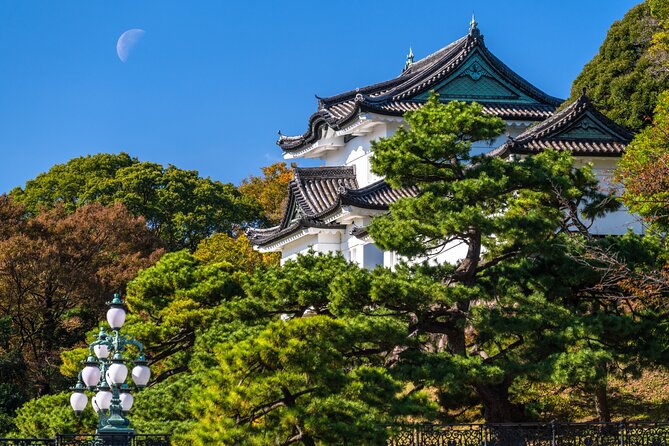
- Edo Castle ruins: See the former seat of the Tokugawa shoguns and learn how the castle shaped Tokyo.
- Ninomaru Garden: Pause among traditional Japanese garden scenery, ponds, plants, and carefully arranged views.
- Private two-hour walk: Your group receives the guide’s full attention, with room for questions and pace changes.
- Free public grounds: The tour fee pays for guiding and interpretation, not admission to the East Gardens.
- Strong guide feedback: English ability and teaching style are usually praised, especially for guides such as Mikio, Naoko, Shigeru, and Ishida.
- Practical entry rule: Expect a baggage inspection, and leave knives or similar items in a locker before meeting the guide.
What you actually see in two hours
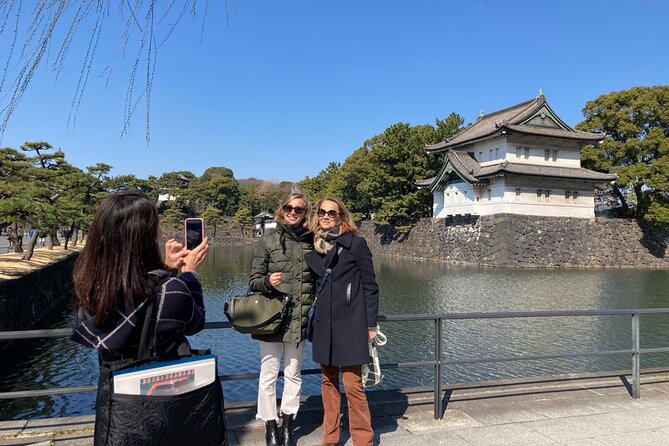
This is a walking tour of the Imperial Palace East Gardens, not a tour inside the working Imperial Palace. That distinction matters. The East Gardens occupy part of the former Edo Castle site, so the visit is mainly about open grounds, historic stonework, garden design, gates, bridges, and views toward palace-related buildings.
You meet at Wadakura Fountain National Park, at 3-1 Kōkyogaien in Chiyoda City. The tour ends back at the same meeting point, making it easier to continue your day from a known location. The activity is near public transportation, though no specific station or route is provided, so check your meeting instructions before setting out.
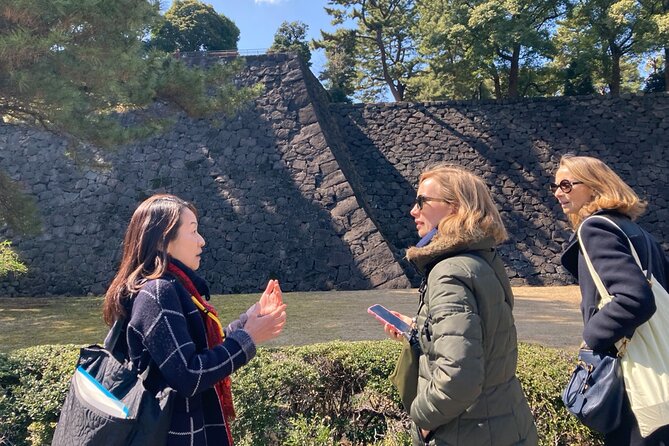
The guide handles the route. That is helpful in a large central park where a map can tell you where you are but not why a stone wall, gate, or garden arrangement matters. You will walk around the palace grounds, hear about the royal family, and connect the site to the Edo period and the growth of modern Tokyo.
At about two hours, the tour is long enough to provide context without taking over your day. It is also short enough to fit before lunch, after a morning visit elsewhere, or between major Tokyo sights.
A few more Tokyo tours and experiences worth a look


Ote-mon Gate and the first sense of Edo Castle
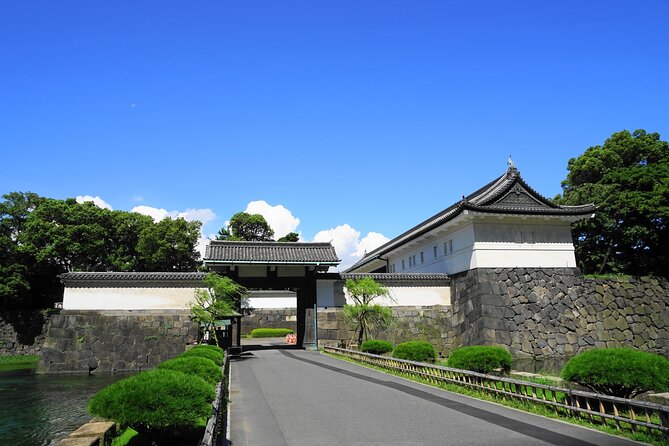
Ote-mon Gate is one of the natural starting points for understanding the site. It was an important entrance to Edo Castle, the enormous fortified seat of the Tokugawa shoguns. The gate and surrounding defenses help you picture a very different Tokyo, one organized around military power, rank, and controlled access.
A guide adds value here because the remains can otherwise seem like isolated walls and stones. A well-prepared guide can explain how the castle functioned, what the gates meant, and how the grounds changed as Japan moved from shogunal rule into the modern imperial era.
This is also where the tour’s focus becomes clear. You are not touring lavish indoor rooms or private palace chambers. You are reading the past through surviving structures and the shape of the grounds.
There is a baggage inspection when you enter the Imperial Palace grounds. If you have bought Japanese knives or other objects that could be used as weapons at Tsukiji, Asakusa, or elsewhere, put them in a coin locker or another secure place before the meeting. This is an easy detail to miss, and it can save you an awkward delay at the entrance.
Edo Castle ruins and Tokyo’s changing power
The castle ruins are the historical heart of the walk. Edo Castle was closely tied to the Tokugawa shogunate, and the site gives you a physical setting for learning how political authority worked in Japan before the modern state took shape.
The appeal is not only the remains themselves. It is the contrast between the quiet garden paths and the scale of the city around them. You are in central Tokyo, yet the gardens provide space to slow down and consider how the city developed from a fortified political center.
The guides who have received the strongest praise tend to explain the site in clear, human terms. Shigeru has been singled out for detailed answers and careful explanations, while Mikio has been praised for connecting castle history with Japanese life and the continuing role of the Imperial Family. Akiyoshi is also noted for discussing both history and present-day Japan.
That wider context is one reason to choose a guide instead of simply entering on your own. You can read signs and admire the stones independently, but a conversation can link the shoguns, the imperial institution, and modern Japanese culture in a way that a short label cannot.
Ninomaru Garden and the quieter side of the visit
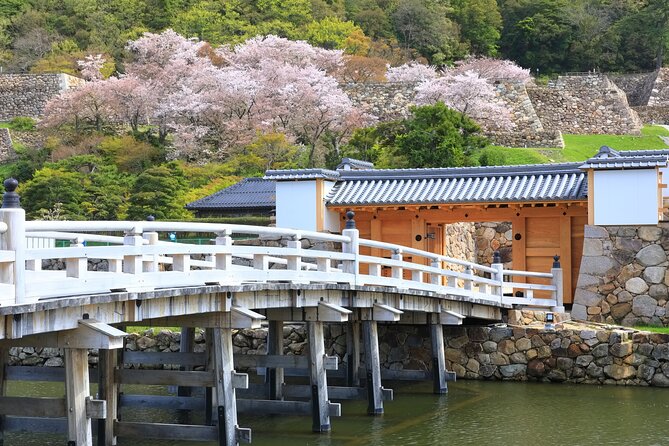
Ninomaru Garden changes the mood. After the castle walls and historical discussion, you move into a traditional Japanese garden setting with water, bridges, plants, and carefully planned views. It is a pleasant place to stop, take photographs, and enjoy a calmer side of Tokyo.
The garden is not presented only as decoration. Your guide may explain how Japanese gardens use composition, borrowed scenery, seasonal plants, and movement through space. One guide, Shigeru, has been praised for explaining plants in detail, so this part may appeal especially to anyone interested in gardening or flowers.
Spring is a particularly attractive time for the gardens, with cherry blossoms blooming in March and April. The exact display depends on the season, but the gardens offer plant interest throughout the year. Do not expect a flower-only tour. The garden is one part of a broader walk that combines nature, architecture, and political history.
The heat can affect the experience. One tour took place in 35°C weather, and the guide supplied umbrellas and neck coolers to make the walk easier. Another guide adjusted the pace for a fast-moving group, while other accounts describe taking a break in the garden during hot weather. Still, you should dress for an outdoor walk and plan your expectations around the season.
Imperial Palace views without entering the Inner Palace
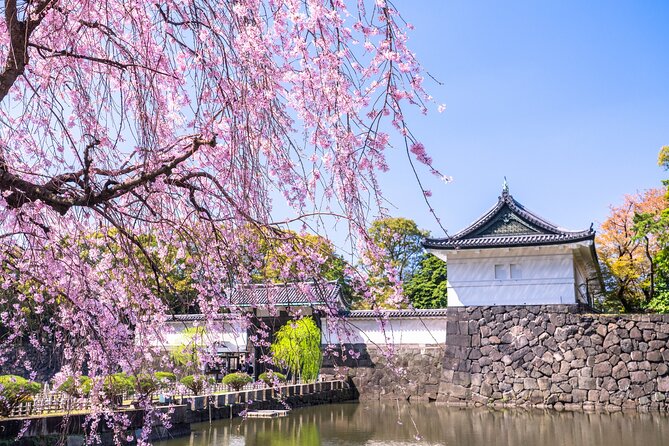
The tour lets you explore the East Gardens and surrounding palace grounds, but it does not include admission to the Inner Palace. This is the most important booking point.
The word Imperial Palace can create an image of indoor state rooms and direct access to the residence. That is not what this activity provides. You will see gardens, historic remains, bridges, gates, and heritage structures around the grounds. The inner area is not part of the route.
The East Gardens are free to the public, so the $65.41 per-person price is for the private guide rather than an entry ticket. That can be good value if you want historical explanation, help with navigation, and a flexible conversation. It is less compelling if you are happy to walk through a free garden with your own guidebook or phone notes.
I would book this for a first visit to the site, especially if you want to understand what you are seeing rather than simply take a walk. If your goal is to enter the palace itself, this is the wrong product.
Other private tours in Tokyo





Why the private format can be worth $65.41
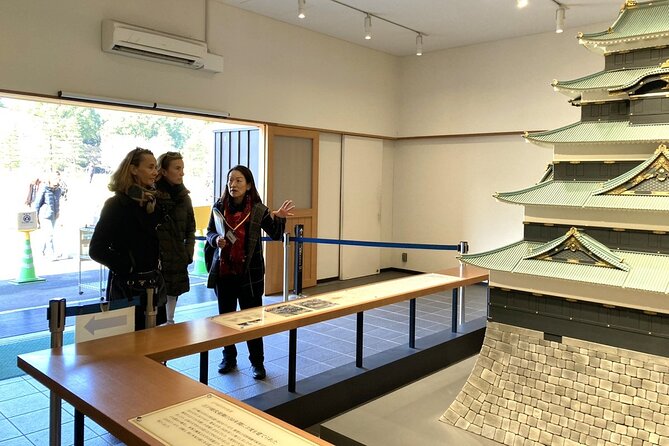
A private tour costs more than joining a large group, but the price buys attention. Only your group participates, so you can ask about Japanese history, garden plants, imperial customs, or modern life without waiting for a guide to finish addressing a crowd.
The format also allows some pace control. One account describes a guide meeting the group on time and matching a fast walking speed while still providing the requested information. Families can ask for explanations suited to children, while history-focused adults can spend more time on the castle or the Imperial Family.
The strongest guide experiences appear to combine three traits: clear English, strong subject knowledge, and a warm manner. Naoko has been praised for being lively and easy to talk with. Mikio is noted for answering questions in detail. Ishida is praised for excellent English and clear explanations, and Yoshiko for keeping the walk enjoyable in hot weather.
There is one important qualification. At least one booking ended after about 45 minutes because the guide’s English was too difficult for the group to understand. That appears to be an exception among the supplied experiences, but it is still worth acknowledging. If precise English communication is essential for your visit, contact the operator before booking and ask about guide-language arrangements.
A calm break from central Tokyo
The East Gardens offer a welcome change from Tokyo’s crowded streets and packed train stations. You are still in the center of the capital, but the setting gives you room for a slower walk and a thoughtful look at the city’s foundations.
I especially like this balance. You get a major landmark without the pressure of a tightly packed indoor attraction. The garden paths and open grounds also create repeated photo opportunities, from bridges and old stonework to plants and historical buildings.
The quiet should not lead you to expect an empty park. The grounds are open to the public, and the tour shares that space with other visitors. Your guide’s job is to make the setting meaningful, not to provide exclusive access to every view.
The tour works well for families, couples, solo visitors who prefer company, and anyone who wants a short cultural activity near central Tokyo. Most people can participate, but remember that it is a walking experience outdoors. If heat is a concern, a morning time may be more comfortable, though the supplied information does not promise a particular departure schedule.
How the guides shape the experience
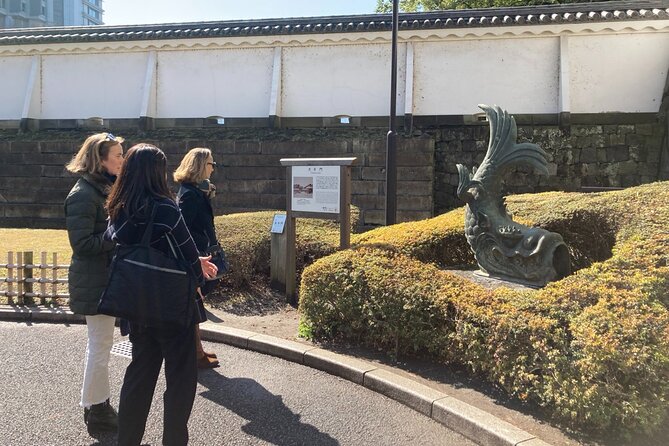
The operator uses several guides, and the personality of your guide may shape the day as much as the site itself. Naoko’s style is described as lively and friendly. Shigeru is associated with detailed explanations, plant knowledge, and patient answers. Mikio brings a gentle manner and broad discussions of Japanese life.
Akiyoshi focuses on history, daily life, and the Imperial Family. Ishida has been praised for clear English and detailed Japanese history. Yoshiko has shown care with pacing and hot weather, while Taka has been credited with bringing the palace grounds to life through personal perspective.
One especially memorable touch came from Shigeru, who made small souvenirs from Japanese paper for the group. That is not listed as a standard inclusion, so do not book expecting a gift. It does show how a private guide can add personal details that are not part of a fixed script.
The experience is at its best when you come with questions. Ask how Edo Castle relates to Tokyo today, what changed after the shogunate, how the Imperial Family’s role has evolved, or what a garden feature represents. The supplied experiences show that several guides are happy to go beyond a basic route.
Timing, entry, and cancellation details
The tour lasts approximately two hours and includes a guide. Admission to the East Gardens is listed as free, while admission to the Inner Palace is not included and is not part of the visit.
You receive confirmation when booking, and the activity is near public transportation. The meeting point and end point are both Wadakura Fountain National Park. Check your confirmation carefully for the exact meeting instructions and local timing.
Free cancellation is available if you cancel at least 24 hours before the start time. Cancel later than that, or request changes within 24 hours, and the payment is not refunded. The operator also requires a minimum number of participants. If that minimum is not met and the activity is canceled, you are offered another date or experience, or a full refund.
Who should book this East Gardens walk?
Book it if you want the former Edo Castle site explained in plain English, prefer a private guide, or have limited time in Tokyo. It is particularly useful for first-time visitors who want a historical framework for later sightseeing.
Families may appreciate the shorter duration and the chance to ask questions. Garden lovers should look for a guide who can discuss plants and seasonal features. History fans will get the most from the castle ruins, gates, and discussion of the shogunate and Imperial Family.
I would skip it if you only want palace interiors, private access, or a formal tour of the Inner Palace. I would also skip it if you are comfortable exploring free public gardens alone and do not value guided interpretation.
Final verdict: a worthwhile guide, with one clear caveat
At $65.41 per person, this is a fair price for a private two-hour explanation of one of Tokyo’s most important historic sites. The free admission means you are paying for the guide’s time, route planning, language help, and ability to connect ruins and gardens to Japanese history.
The strongest reasons to book are the private setting, the chance to ask questions, and the repeated praise for guides such as Naoko, Mikio, Shigeru, and Ishida. The main caveat is that you visit the East Gardens and Edo Castle remains only. You do not enter the Inner Palace.
Book it when you want context, not just scenery. Before paying, make sure the description matches your expectations and, if English clarity is especially important, ask which guide is likely to lead your group.
FAQ
Is this a tour inside the Imperial Palace?
No. The tour visits the Imperial Palace East Gardens and surrounding historic grounds. It does not go inside the Imperial Palace or provide admission to the Inner Palace.
How long does the tour last?
The tour lasts approximately two hours.
What sights are included?
The route includes the Imperial Palace East Gardens, Edo Castle ruins, Ninomaru Garden, Ote-mon Gate, an old bridge, natural scenery, historical buildings, and heritage features.
Is admission to the East Gardens included?
The East Gardens are listed with free admission. The tour price covers the guide. Admission to the Inner Palace is not included.
Is this a private tour?
Yes. Only your group participates in the activity.
Where does the tour start and end?
It starts at Wadakura Fountain National Park, 3-1 Kōkyogaien, Chiyoda City, Tokyo 100-0002. It ends back at the same meeting point.
What should I know about baggage?
Visitors are subject to a baggage inspection when entering the Imperial Palace grounds. Leave Japanese knives or other objects that could be used as weapons in a coin locker or similar location before the meeting.
More Private Tours in Tokyo
More Imperial Palace & Shogun Tours in Tokyo



More tours in Tokyo we've reviewed












Imperial Palace & Shogun Tours, compared.
 ★ 4.9Tokyo: Imperial Palace Japanese History Walking TourFrom $32
 ★ 4.9Tokyo: Imperial Palace and Shogun Walking TourFrom $162 hours
 ★ 5.0Imperial Palace East Garden and Edo Castle Walking Tour in TokyoFrom $25
 ★ 4.8Tokyo: Imperial Palace East Gardens Walking TourFrom $192h 30m
 ★ 4.5Tokyo: Imperial Palace, Sensō-ji Temple, & Tokyo Tower TourFrom $404 hours
 ★ 5.0Tokyo Castle, Imperial Palace, Shogun & Garden Walking TourFrom $31