Reviewed · TOKYO
Traditional Japanese Kumihimo Artform Experience
The most unusual part of this Tokyo activity is that you do not simply copy a craft at a tourist shop. At DOMYO’s Studio Museum, you see historical braids, working tools, and demonstrations tied to a company founded in 1652. Then you sit down and make your own piece.
In This Article
- Key points at a glance
- Why DOMYO gives kumihimo more meaning
- Inside the Kagurazaka Studio Museum
- Seeing the tools and the working method
- Making your own bracelet or strap
- What the historical displays add
- A realistic look at the two-hour schedule
- English instruction and the group size
- Is the $54.79 price fair?
- Who should book this activity?
- Booking and cancellation details to know
- Should you book DOMYO’s kumihimo experience?
- FAQ
- Where does the kumihimo experience take place?
- How long does the experience last?
- Does the activity begin and end at the same place?
- What can I make during the workshop?
- Is the instruction available in English?
- How many people can join the activity?
- Can beginners participate?
- Can I cancel for a full refund?
I like the small group of no more than eight, which gives the instructor time to help beginners. I also like the clear finish line: you leave with a bracelet, strap, or keychain-style item you made yourself. The main consideration is that the project uses an accessible pattern, so anyone hoping to tackle an advanced braid may find the making portion a little basic.
Key points at a glance
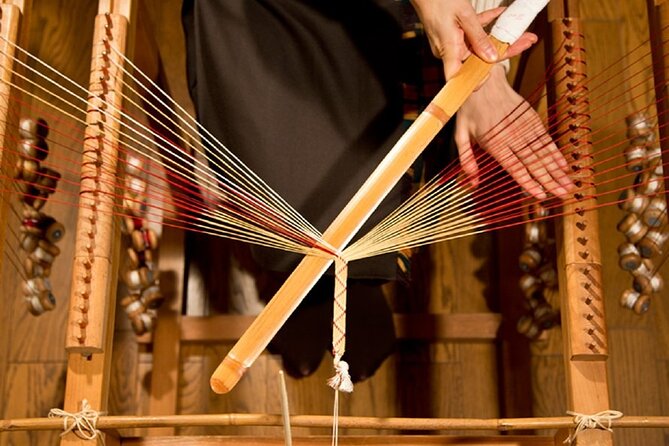
- A working kumihimo museum: See tools still used in production, along with historic braids and restored cultural pieces.
- More than decoration: Learn how kumihimo served samurai armor, geisha belts, and other traditional clothing and equipment.
- A two-hour hands-on visit: The experience combines museum interpretation, demonstrations, and practical making.
- Small groups help beginners: The maximum group size is eight, with patient instruction in understandable English.
- Take-home craft: Make an original bracelet or strap, with the option reflected in past visits to create a keychain-style piece.
- Easy to fit into Tokyo plans: The meeting point is near public transportation in Kagurazaka, and the activity returns to the same place.
Why DOMYO gives kumihimo more meaning
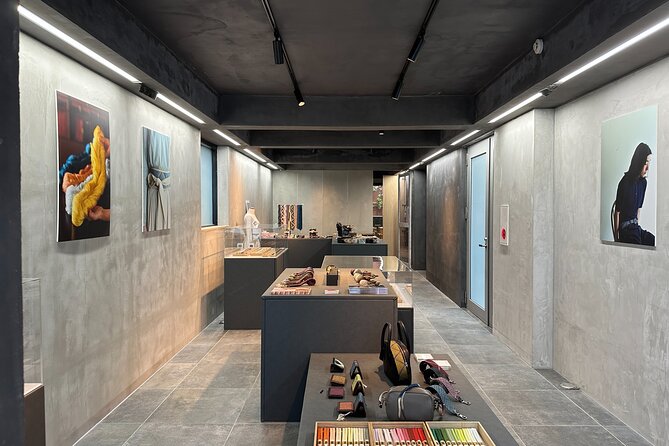
Kumihimo means braided cord, but that plain translation does not tell you much about its place in Japanese life. The craft has been used for clothing, accessories, ceremonial items, and the cords that held together parts of samurai armor.
DOMYO traces its work to 1652, during the Edo period. The company continued a tradition of studying classical examples, including research associated with samurai culture. That long time span matters because you are not learning a generic weaving project with Japanese styling added afterward. You are seeing a craft with its own methods, tools, patterns, and design language.
I find the historical setting especially useful for first-time visitors. Before you begin moving threads, you learn why the braid has a particular structure and what the design can communicate. That small bit of context keeps the activity from feeling like a detached souvenir workshop.
The craft also developed across Japan after the Meiji period. DOMYO’s archive of restored cultural objects helps show those changes. You can trace how braid forms and uses shifted over time, rather than seeing only one narrow version of kumihimo.
If you're still narrowing it down, here are other tours in Tokyo we've reviewed.



Inside the Kagurazaka Studio Museum
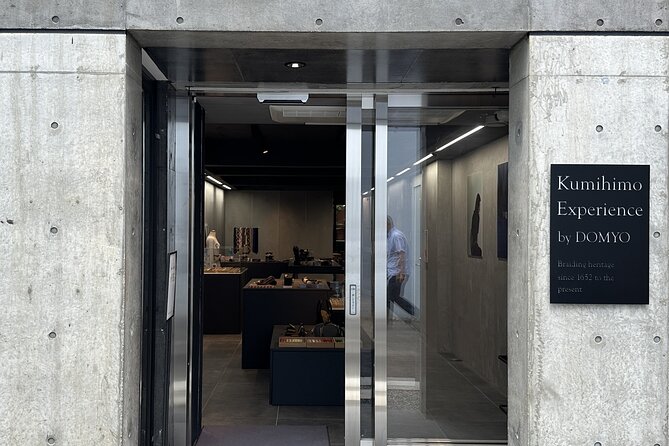
The meeting point is Kumihimo Experience by DOMYO at 6-chōme-75 Kagurazaka, Shinjuku City. The activity begins and ends there, so you do not need to manage a transfer between a museum and a separate workshop.
Kagurazaka is a practical location for this type of visit. It is near public transportation, and the address is specific enough to enter into your phone before setting out. The mobile ticket is useful for keeping your booking details close at hand.
The museum portion gives you a look at old and new kumihimo. Historic braids and restored pieces show the precision of earlier makers. Modern collaborative works connect the craft with fashion, art, and architecture, giving you a sense of how DOMYO is trying to keep the form in use rather than leaving it only in a display case.
This balance is one of the strongest parts of the experience. If the visit showed only antique objects, you might admire them without understanding how the craft continues. If it focused only on making a souvenir, you could miss the skill and cultural setting behind the technique.
Seeing the tools and the working method
A demonstration lets you watch the basic technique before attempting it yourself. You see the tools used in actual kumihimo production and learn how the strands are arranged and moved.
The work is precise, but the class is designed so a beginner can finish a braid. English instruction has been praised as clear and easy to follow, and the instructor takes time to explain each step. That is important here because the first challenge is not strength or speed. It is remembering which strands move, and when.
The method can feel oddly calming once the pattern becomes familiar. You make repeated motions and gradually see the braid take shape. One practical advantage is that you do not need to arrive with craft experience. The activity is structured so someone who has never heard of kumihimo can get started.
At the same time, you should set your expectations correctly. This is an introduction, not a full apprenticeship. The pattern is approachable, and that makes a finished piece likely for most people. It also means you may not get to attempt the hardest design available in traditional kumihimo work.
Making your own bracelet or strap
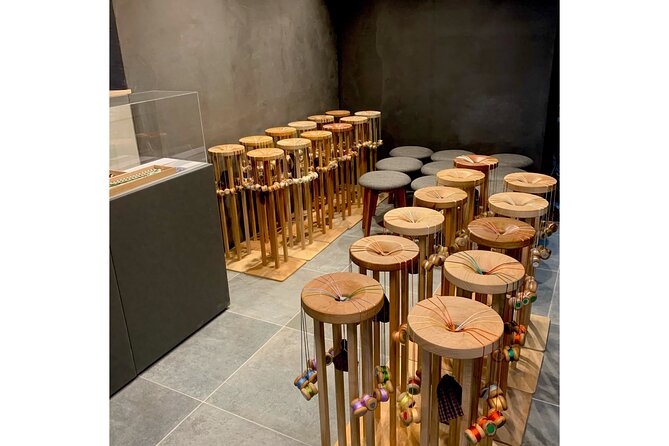
The hands-on part is the reason to book this rather than visit a museum alone. After the explanation and demonstration, you make an original item that you can take home.
The finished object can be a bracelet or strap. Past participants have also used the project as a keychain-style souvenir, which is a useful choice if you do not wear bracelets. The item is small, packable, and tied directly to something you did in Tokyo. That gives it more personal value than a ready-made trinket bought from a shelf.
The process rewards patience. At first, the threads and movements may seem confusing. The instructor’s role is important, and the small group limit helps. With no more than eight people, there should be room to ask for a correction instead of quietly repeating a mistake.
I would not book this expecting a quick craft that requires no attention. You need to watch the order of the movements and keep your hands steady. But the class is not presented as an ordeal. The repeated action becomes relaxing for many people, and the completed braid gives you a clear sense of progress.
If you are traveling with a partner, this can work well as a shared activity without requiring identical skill levels. You can each choose your own item and work at your own pace. Families and older children may also enjoy it, but the supplied information confirms only that most people can participate, not a specific minimum age.
What the historical displays add
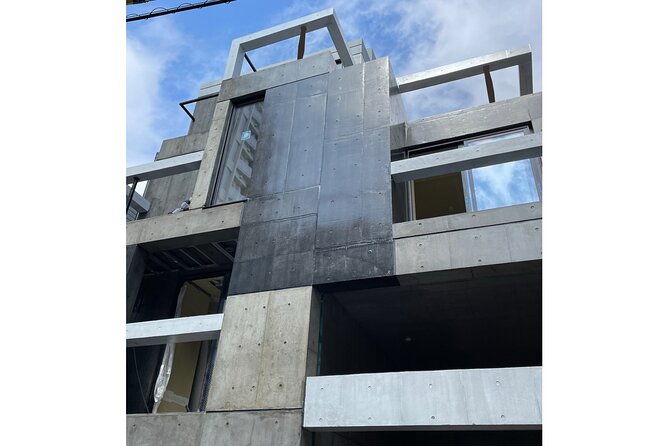
The museum displays are not filler before the craft begins. They explain why the braid in your hands has value.
Kumihimo was used for the cords that entangled or secured parts of samurai armor. It also appears in traditional geisha belts and other clothing-related forms. Those examples help you notice the difference between a simple cord and a carefully planned braid made for a particular purpose.
The historical pieces also give you a better eye for detail. Once you have tried to keep a small pattern consistent, the older examples become easier to appreciate. You understand that the maker had to control tension, color placement, and structure across the whole length.
DOMYO’s restoration archive is another useful part of the visit. It allows the museum to show how historical designs were studied and recreated. You are not just told that the craft is old. You can see the evidence in the objects and the methods.
The modern works broaden the picture. Collaborations with people working in fashion, art, and architecture show that kumihimo can function as a design material, not only as a traditional accessory. This section may appeal most to visitors interested in textiles or contemporary Japanese design.





A realistic look at the two-hour schedule
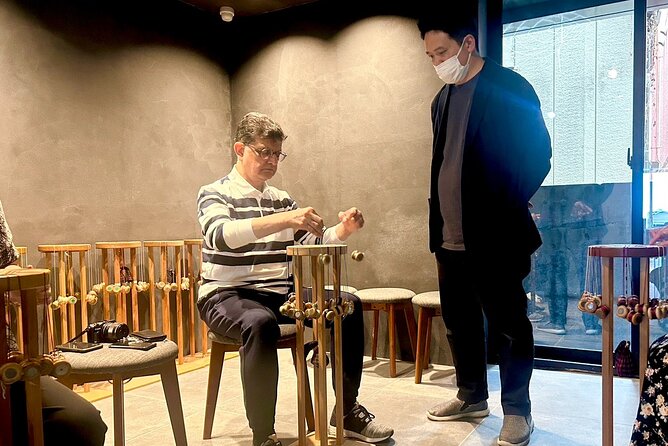
The total duration is about two hours. The exact balance between viewing, explanation, demonstration, and making may vary, but you should expect a compact visit rather than a full-day course.
A typical flow includes:
- Arrival at the DOMYO location in Kagurazaka
- An introduction to the company and the history of kumihimo
- Viewing historical braids, restored objects, tools, and modern collaborations
- A demonstration of the braiding method
- Hands-on work on your bracelet, strap, or similar small item
- Finishing the piece and returning to the meeting point
This length works well in Tokyo. You get enough time to understand the craft and complete something without giving up half a day of sightseeing. It is also a good rainy-day plan because the central activity takes place indoors, though the supplied details do not make a specific weather guarantee.
You should allow a little mental space after the class if you want to visit other places in Kagurazaka. Since the activity ends where it begins, it is easy to continue your day from the same neighborhood. Do not count on a guide escorting you onward, since transportation beyond the meeting point is not part of the experience.
English instruction and the group size
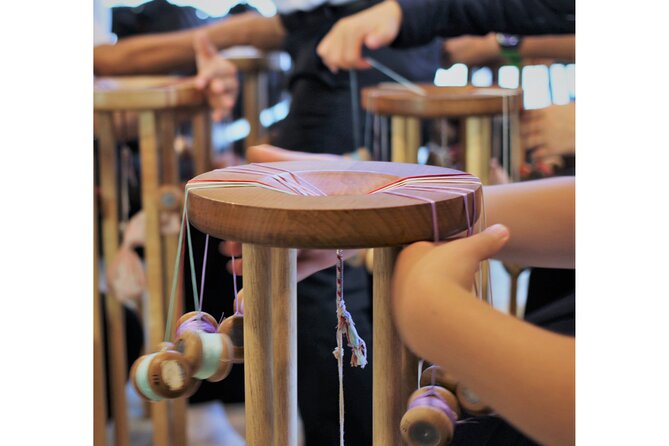
The instructor explains the process in English, and the teaching style is patient and friendly. That matters more than a long lecture because kumihimo is learned through movement. You need someone who can spot where your sequence went wrong and show you how to fix it.
The class has a maximum of eight people. That is a strong number for a practical workshop. A large group could turn a simple mistake into a frustrating delay, while a very private lesson would likely cost much more.
The class is also a good match for people who do not think of themselves as artistic. You are following a method, not being asked to invent a complicated design from scratch. The result comes from careful repetition, so your success depends more on attention than on drawing or craft talent.
One limitation is that the instructor’s name is not provided, so you cannot request a particular teacher. The useful point is that English support and hands-on help are part of the experience, rather than an optional extra.
Is the $54.79 price fair?
At $54.79 per person, this is not the cheapest craft activity in Tokyo. The value depends on what you want from the visit.
You are paying for more than the material in a small bracelet or strap. The price includes access to a specialist studio museum, an explanation of DOMYO’s long work with kumihimo, historical examples, a demonstration, instruction, and your finished item. If you are interested in Japanese textiles, traditional design, or hands-on cultural activities, that combination makes the cost reasonable.
The price is less attractive if you only want a quick souvenir. You can buy small Japanese gifts for less, and the beginner-level pattern may not satisfy someone who already has braiding experience. In that case, the museum displays may be the main reason to come.
The activity is booked an average of 47 days ahead, so it is sensible to reserve early if it is important to your Tokyo schedule. Confirmation arrives within 48 hours, subject to availability. That timing means you should not assume the booking is final until confirmation has been received.
Who should book this activity?
I would put this near the top of the list for:
- Visitors who want a traditional Japanese activity with context
- Couples or friends looking for a shared project
- Craft, textile, fashion, and design enthusiasts
- People who prefer a small group to a large demonstration
- Anyone who wants a useful, personal souvenir rather than a mass-produced item
- Beginners who appreciate patient instruction
It may be less suitable if you want a physically demanding activity, a long advanced workshop, or a broad tour of Tokyo. The experience stays focused on kumihimo, and the making portion uses an accessible pattern.
The calm pace is part of its appeal. You are not racing from one sight to another. You are watching your hands, listening to the explanation, and slowly producing a braid. That change of rhythm can be welcome after busy days in central Tokyo.
Booking and cancellation details to know
The activity accepts mobile tickets and takes place near public transportation. Most people can participate, and the maximum group size is eight.
You can cancel for a full refund if you do so at least 24 hours before the local start time. Cancellations or changes made within 24 hours are not accepted for a refund. Since confirmation is subject to availability, booking ahead is wise, especially given the average advance booking period.
The meeting point and ending point are the same: Kumihimo Experience by DOMYO in Kagurazaka. Plan your route before you leave, and keep the address available on your phone.
Should you book DOMYO’s kumihimo experience?
Book it if you want to understand a traditional Japanese craft by seeing its tools, historical examples, and modern uses, then trying the technique yourself. The small group, clear English instruction, and finished bracelet or strap make it approachable even if you have never braided anything before.
Skip it if your main goal is an advanced pattern or a low-cost souvenir. For most visitors, though, the $54.79 fee buys a thoughtful two-hour experience with a real connection to Japanese history and design. The best reason to go is simple: you leave with a small object that records your own time and effort in Tokyo.
FAQ
Where does the kumihimo experience take place?
It takes place at Kumihimo Experience by DOMYO, located at 6-chōme-75 Kagurazaka, Shinjuku City, Tokyo 162-0825, Japan.
How long does the experience last?
The activity lasts approximately two hours.
Does the activity begin and end at the same place?
Yes. The activity ends back at the DOMYO meeting point.
What can I make during the workshop?
You can make an original bracelet or strap and take home what you create. A keychain-style item is also an option reflected in the activity experience.
Is the instruction available in English?
Yes. The instructor provides English instruction, and the teaching is designed to be understandable for beginners.
How many people can join the activity?
The maximum group size is eight people.
Can beginners participate?
Yes. Most people can participate, and the activity is structured so beginners can complete a braid.
Can I cancel for a full refund?
Yes. You can cancel up to 24 hours before the experience start time for a full refund. Cancellations or changes made less than 24 hours before the start time are not refunded or accepted.
More tours in Tokyo we've reviewed









Tokyo, compared.
 ★ 5.0Mt Fuji and Hakone 1-Day Bus Tour Return by Bullet TrainFrom $163
 ★ 5.01-Day Tokyo Bus TourFrom $129
 ★ 4.6Tokyo: teamLab Planets TOKYO Digital Art Museum Entry TicketFrom $251 day
 ★ 4.0Mt Fuji & Hakone Cruise, Drum Show Bullet Train 1 Day from TokyoFrom $149
 ★ 5.0Tokyo: Shinjuku Food Tour (13 Dishes at 4 Local Eateries)From $86
 ★ 4.4Tokyo Mt Fuji 5th St & Hakone Cruise Bus Tour w/Bullet TrainFrom $15410 hours